
Crossing the Bar - McMicken Island
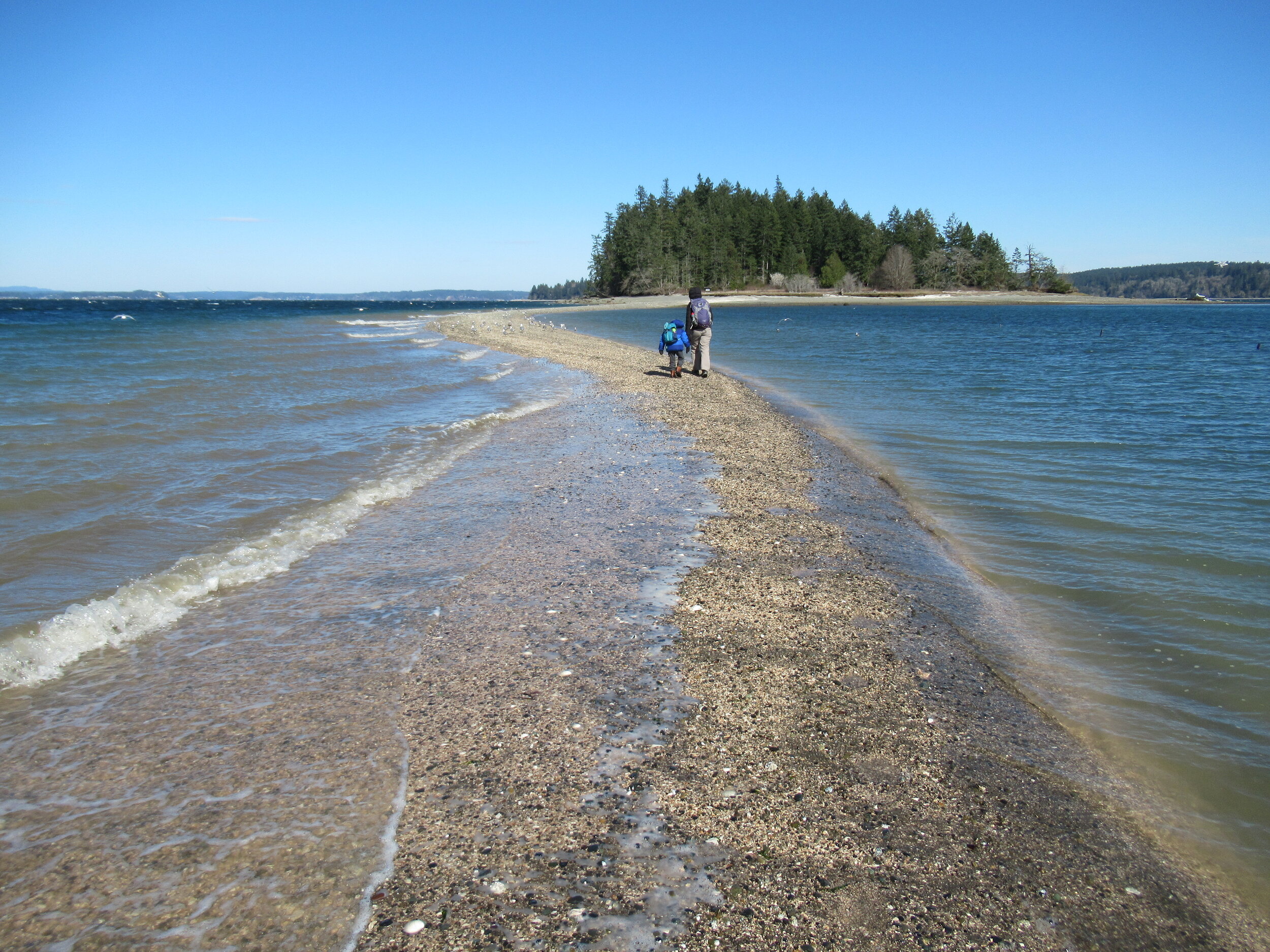
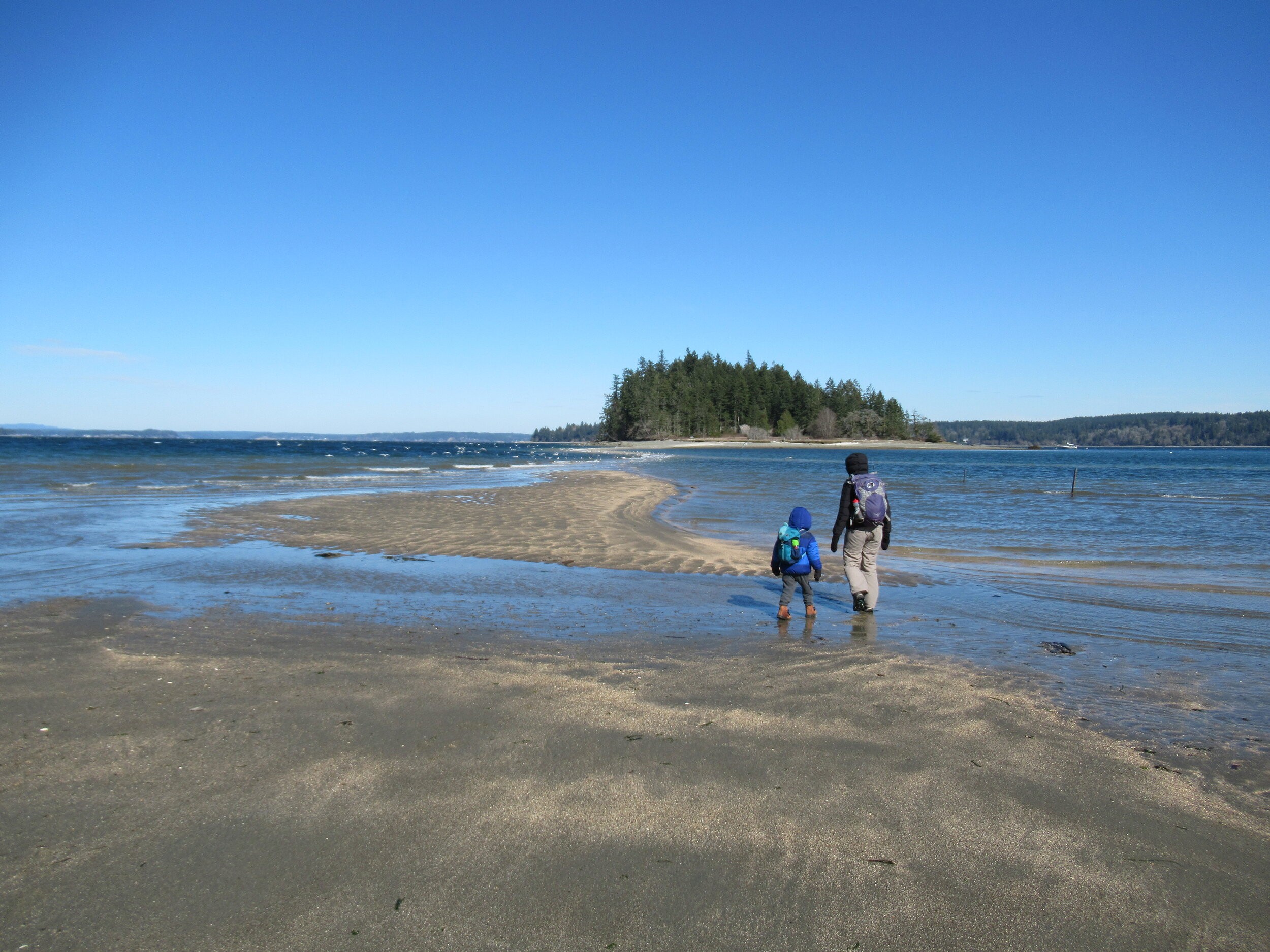
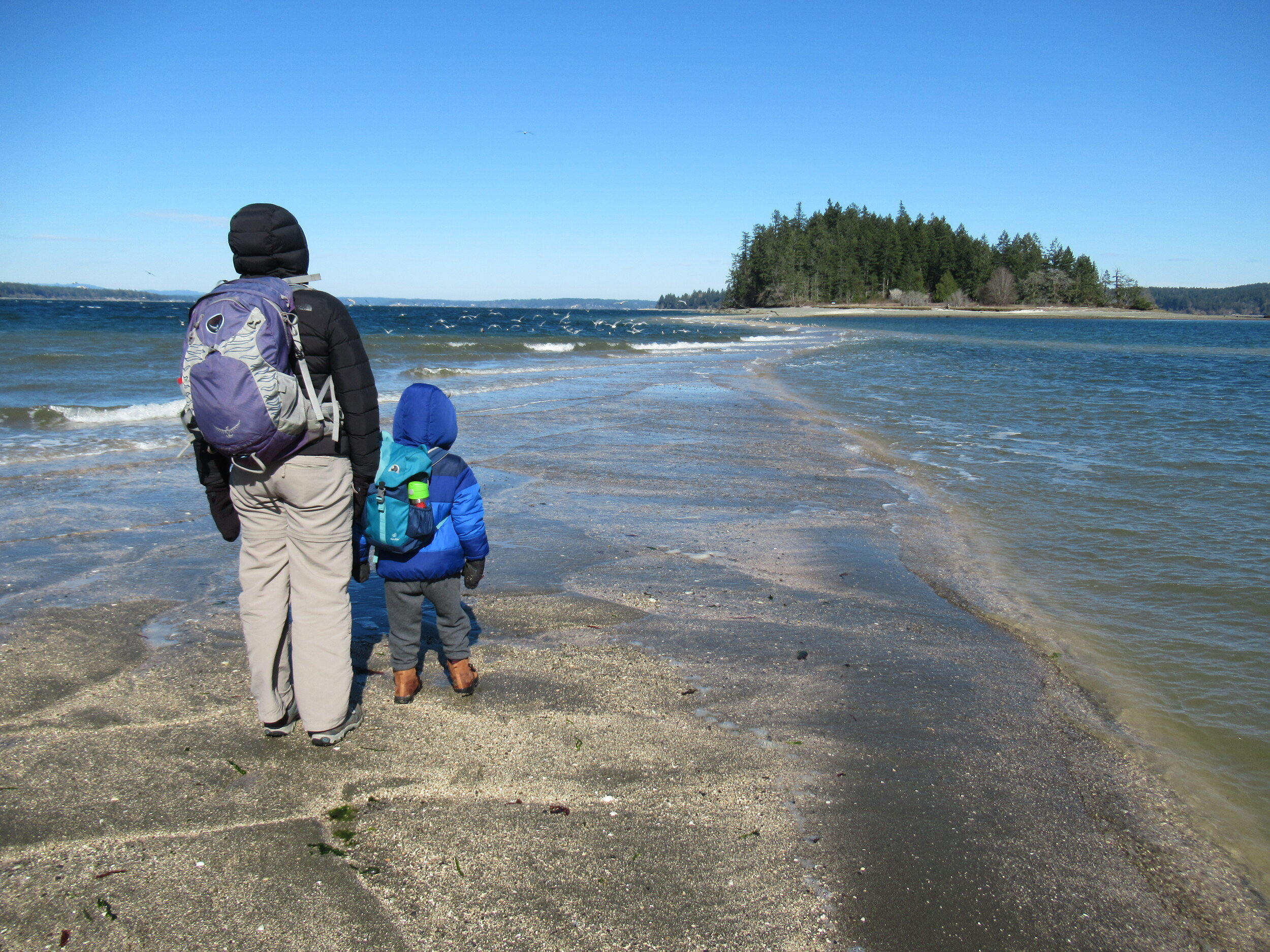
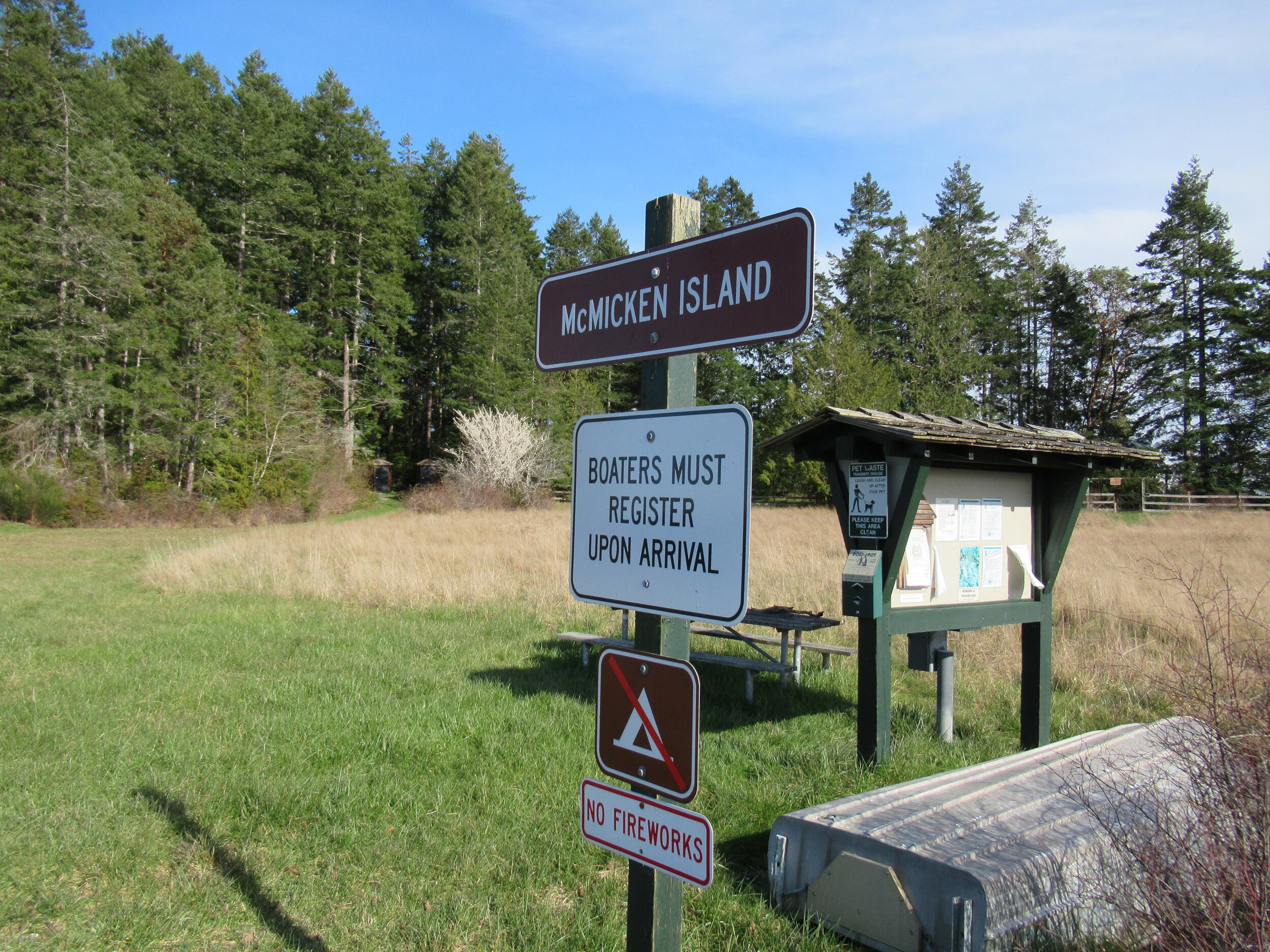
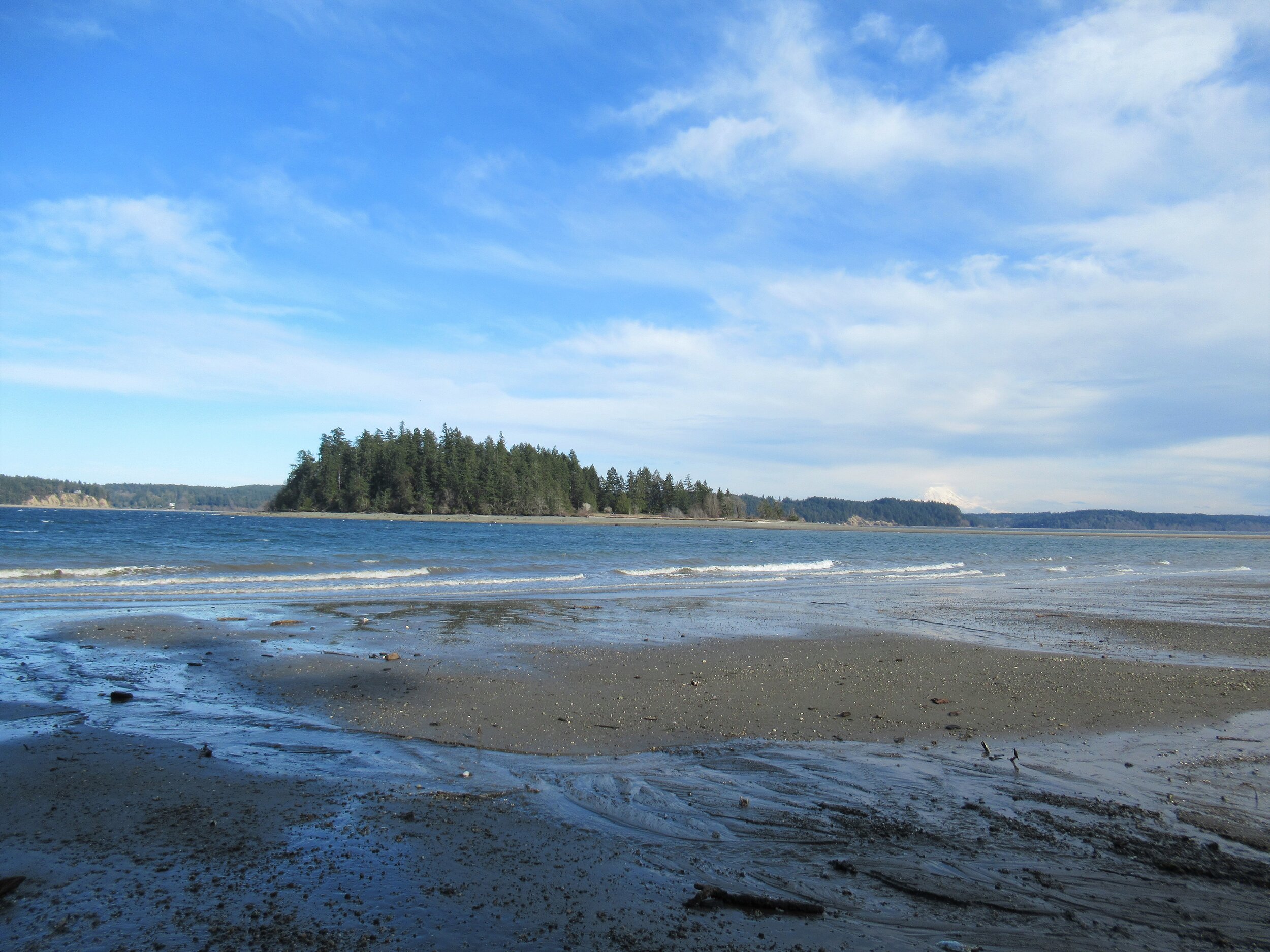
There are no bridges or causeways to little McMicken Island in Case Inlet. No ferry service either. But you don’t need a kayak or boat to visit. You can easily hike to this island which lies about 0.2 mile off of the eastern shore of Harstine Island. It’s all in the timing.
Craig Romano | Story & images
There are no bridges or causeways to little McMicken Island in Case Inlet. No ferry service either. But you don’t need a kayak or boat to visit. You can easily hike to this island which lies about 0.2 mile off of the eastern shore of Harstine Island. It’s all in the timing.

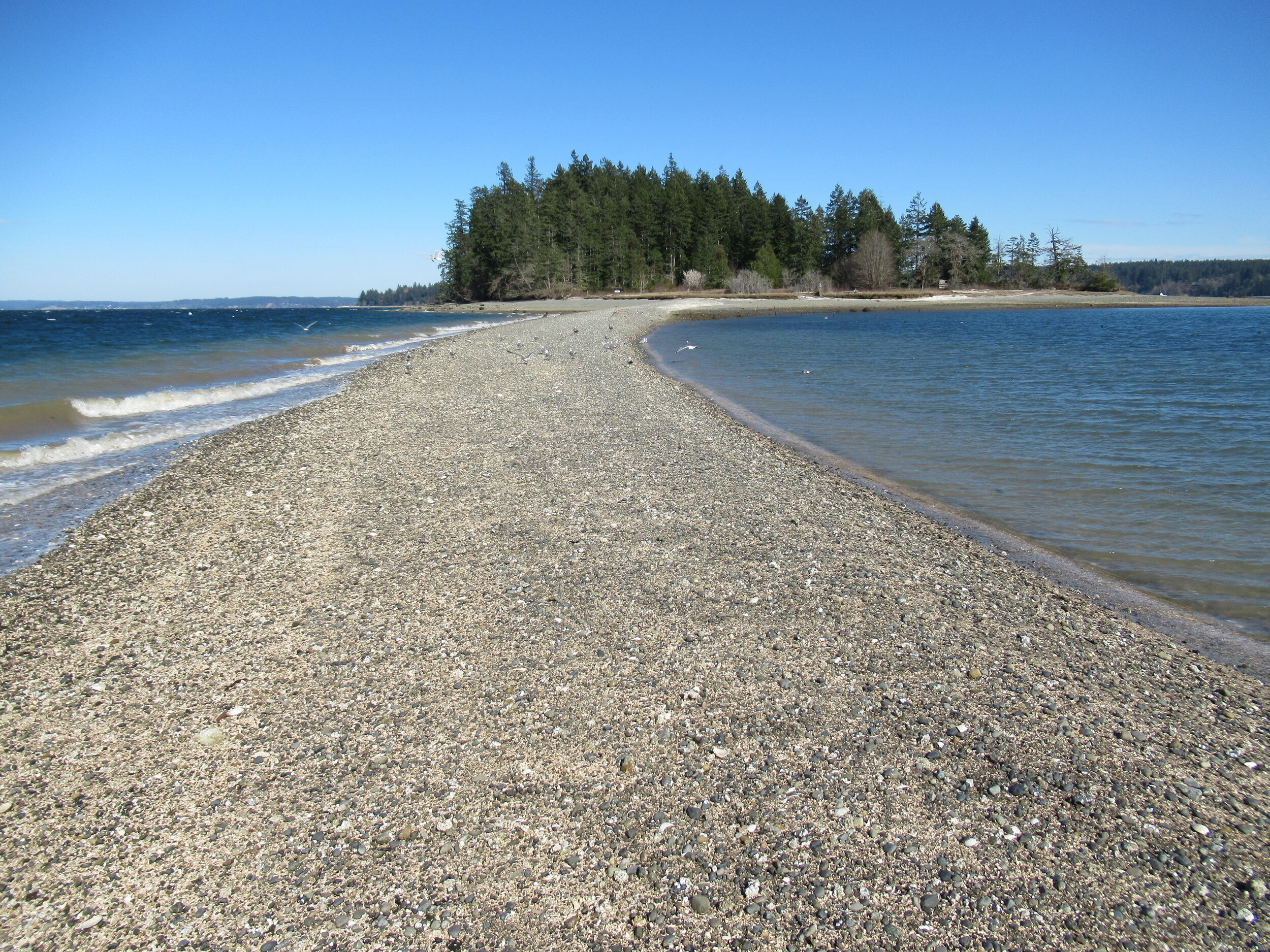
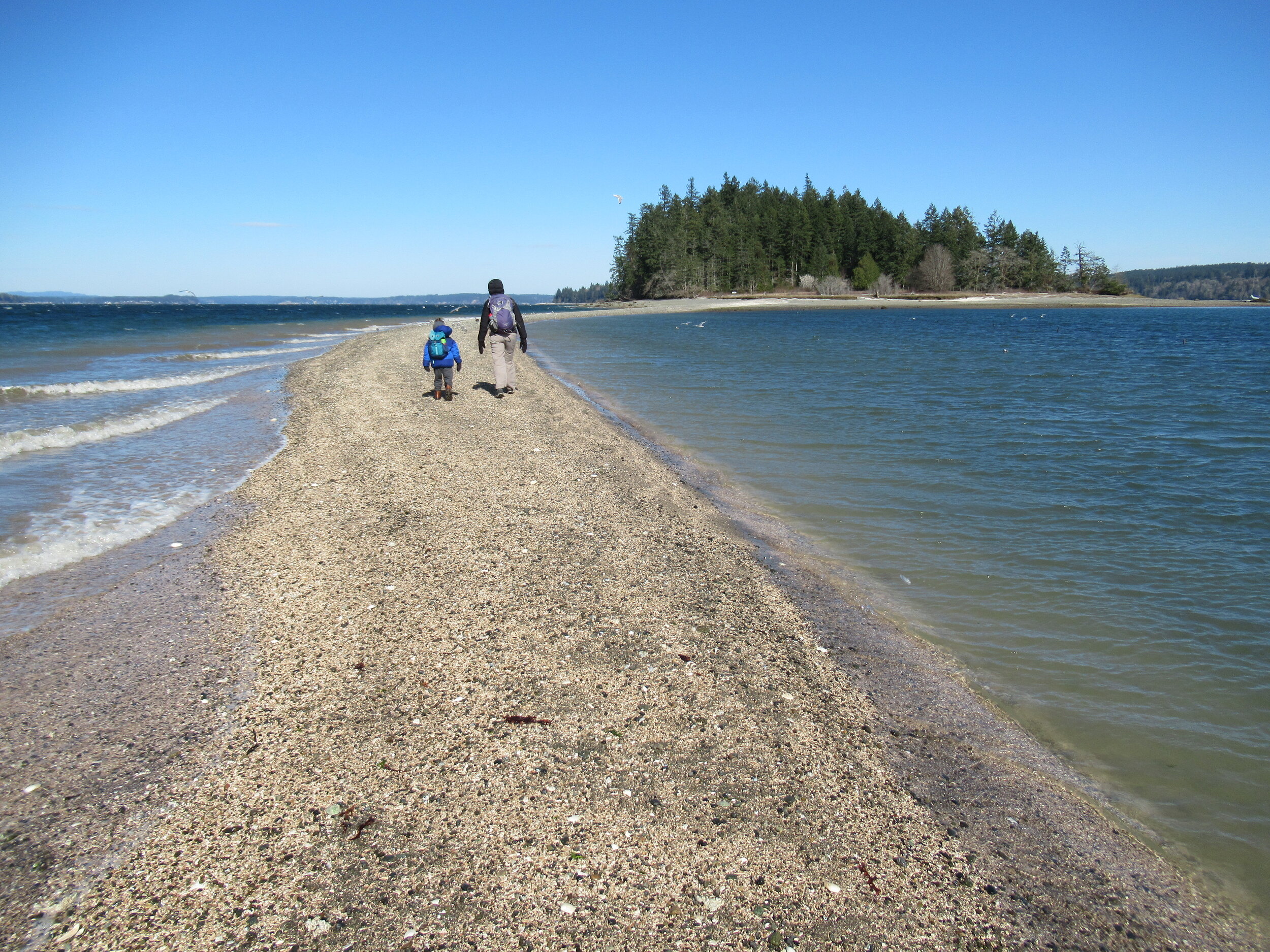
When the tide is low, a tombolo (a sandbar connecting the island to the mainland—or in this case another island) is exposed allowing you dry foot access to the island. You then can hike the island’s small half mile trail, picnic in its small meadow, or explore big barnacle-encrusted rocks in its intertidal zone. Just mind the incoming tide lest you make a big splash on your island exodus.


Hit the Trail
The hike to little 11.5 acre McMicken Island begins from the 300-acre Harstine Island State Park. A former Washington DNR property, most of the old timber was logged off, but small groves of old-growth remains on the property.
You want to head to the park’s beach reachable by the two trails taking off south from the parking lot. Take the one on the eastern end of the lot (away from the kiosk) for the more direct route.
The trail heads towards Case Inlet soon reaching the edge of a 100 foot high forested bluff. Continue along the bluff taking in glimpses of the remote beach below. The way then descends into a cool and dark ravine graced with big cedars and firs and reaches a junction.
The trail to the right loops back to the other main trail leaving the parking lot. Consider taking it upon your return from McMicken Island.
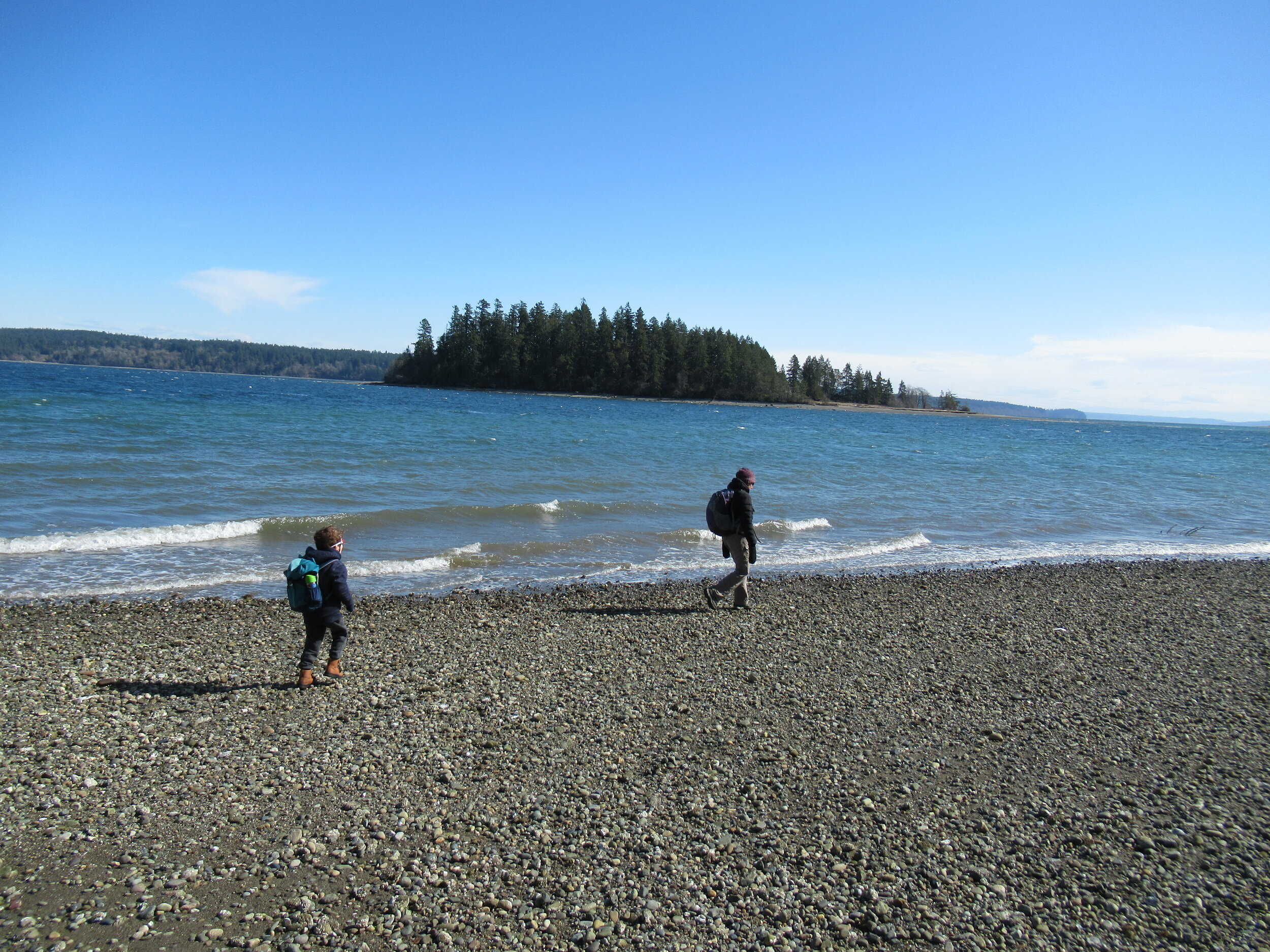
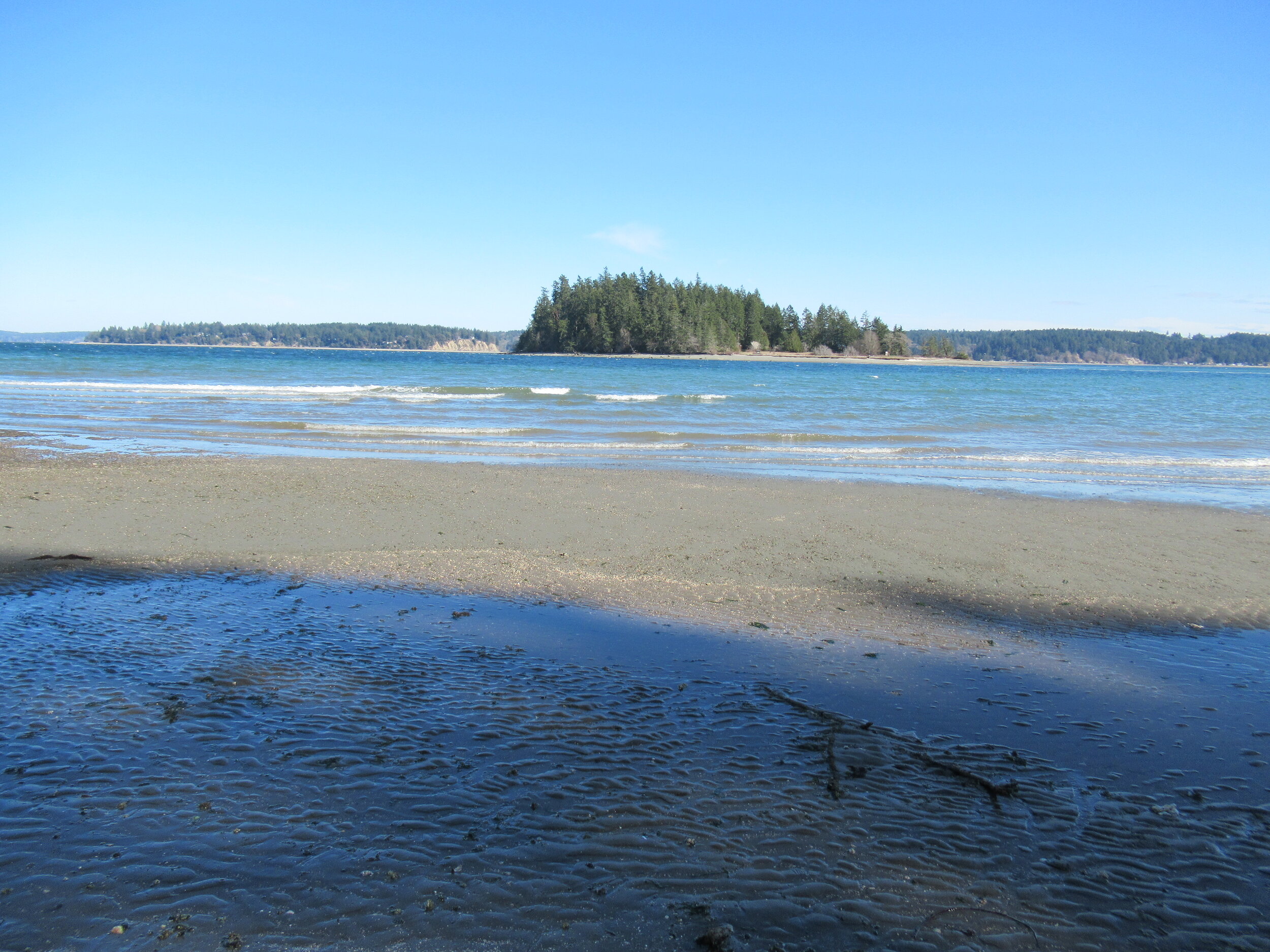
Head left through a row of big cedars and via a series of steps descend deeper into the ravine. After crossing a little creek the way emerges on a deserted beach. Look directly across Case Inlet to Herron Island and the Key Peninsula. Then look south and spot McMicken Island set against a backdrop of big beautiful Mount Rainier. If the tide is high, you’ll have to wait to hike the beach as overhanging trees prohibit passage. But in a low tide, a big wide easy to walk beach awaits your footprints.
Walk for more than a mile undulating between cobbles, mud and sand. Watch for sand dollars scatted across the tide flats. Look too for eagles, herons and a myriad of seabirds. Harstine is a wet place and plenty of side creeks fan out on the beach. You should be able to keep your shoes dry, but a pair of waterproof boots is not a bad idea. The entire way to the tombolo is on public tidelands. But there is a parcel of private property located between two large state park properties abutting the shoreline. Respect posted private property.
The tombolo is pretty distinctive in low tides—fairly wide and several feet raised above inlet waters. In high tides it’s completely submerged, although breakers will help you locate its position. It’s really fun to hike it when a receding tide first reveals it. Tap your inner Moses and part the seas watching the land bridge emerge as you amble along it.
Reaching the island
Once across the .2 mile sandy strip, reach McMicken Island. All of the little island except for a small fenced parcel with a couple of cabins is state park property. The private holding belongs to the family that once owned the entire island. They sold the island to the state withholding this small lot. Please keep out of it. The rest of the island however you are free to explore.
At the island’s western end is a small picnic area in a grassy opening. Here find some rare Garry oaks growing on a low bluff above the surf. Near a composting toilet at the eastern edge of the field is a small nature trail. Hike it! It weaves a half mile through towering firs and madronas to blufftop views on the eastern end of the island.
Be sure to explore the rocky tide flats surrounding the island too, and check out the large erratics scattered about. There is a particularly large one on the south side of the island. Enjoy your island wanderings and explorations—more than likely sharing it with no more than just a couple of other happy hikers. And be sure to keep track of the time and incoming tide so you don’t get trapped on the island.

Places to Stay
Waterfront cabin located on Harstine Is with beach access and a panoramic view of the Puget Sound, Mt. Rainier and McMicken island. Check availability
Hike back to Harstine Island State Park and call it a day or consider walking some more. The park contains three miles of trails. They traverse thick fir forests and swampy cedar groves and are family and dog-friendly.
McMicken Island Notes:

Forest Setting with Beach Access
Cross the bridge to Harstine Is. and enjoy a beautiful and quiet retreat in the woods. Relax in the comfortably furnished cabin or enjoy exploring the 5 acre property with meandering trails through a lovely forest. Check availability
Distance: 4.0 miles round trip
Difficulty: easy, pay attention to tides! Hike is only possible in low tides. Consult tide tables and plan accordingly. Dogs permitted on leash.
Trailhead Pass Needed: Discover Pass
GPS Waypoints: Harstine Island State Park Trailhead: N47 15.737 W122 52.236 McMicken Island Trailhead: N47 14.865 W122 51.780
Features: Kid and dog friendly, beach hiking, undeveloped coastline, small island reached via a sandbar, good bird watching, sublime views of Mount Rainier over Case Inlet.
Trailhead directions: From Olympia, head north on US 101 to Olympic Highway (SR 3) Exit in Shelton. Then turn and follow SR 3 east for 11.0 miles. Turn right onto Pickering Road (Signed for Harstine Island) and drive 3.3 miles. Then bear left onto Harstine Bridge Road and come to a T-junction upon entering Harstine Island. Go left on North Island Drive and after 3.0 miles turn right at the island community hall onto East Harstine Island Road. Proceed for one mile and turn left onto Yates Road. Continue 0.9 mile and turn right into Harstine Island State Park. Reach trailhead parking in 0.2 mile.

Taking Care of Our Stars
Starfish, or sea stars, are some of the ocean's most fascinating creatures. They lack brains and blood, digest food outside their bodies, and can regenerate lost limbs—sometimes even growing a new starfish from a single severed arm. In the colorful, thriving world of the Salish Sea, starfish stand out for their beauty and vital role in the ecosystem.

Text & images Thom Robbins
Starfish, or sea stars, are some of the ocean's most fascinating creatures. They lack brains and blood, digest food outside their bodies, and can regenerate lost limbs—sometimes even growing a new starfish from a single severed arm. In the colorful, thriving world of the Salish Sea, starfish stand out for their beauty and vital role in the ecosystem.
Beyond their striking appearance, starfish play a crucial role in maintaining balanced ecosystems. As keystone species, they regulate the populations of other marine animals, maintaining ecosystem balance. Without them, the entire system can become unbalanced, affecting many different species.
Starfish or Sea Stars?
While 'starfish' and 'sea star' are often used interchangeably, sea star is the scientifically accurate name. The reason is simple: sea stars are not actually fish. They lack scales, fins, and gills, which are essential characteristics of true fish. Regardless of this, 'starfish' remains the popular term in everyday language!
Diving into our local waters reveals a world of intricate ecological connections, with starfish acting as caretakers, maintaining the delicate balance of their underwater habitat.

One of everyone's favorites, the Ochre Sea Star, (shown above) with its vivid shades of purple, orange, and yellow, plays a crucial role in the Salish Sea. It's role of preying on oysters, mussels, and barnacles maintains an intertidal population balance and diverse marine ecosystem. Some aquaculture farmers may not agree, but without sea stars, oysters would dominate the habitat and disrupting the ecosystem balanc
30 Local Stars
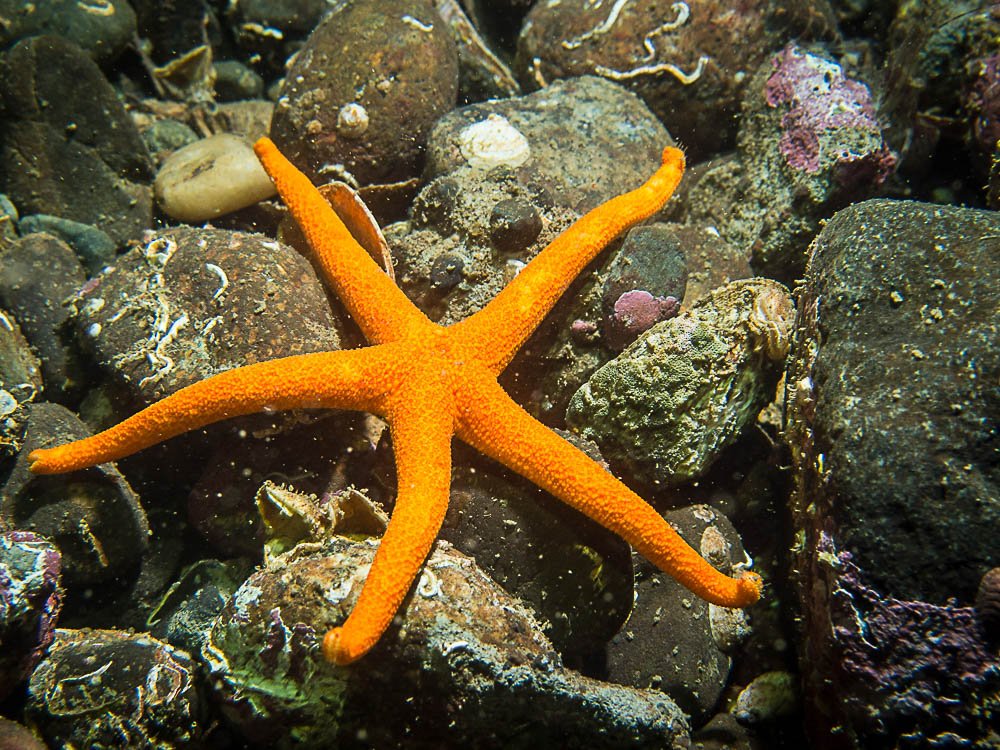
Of the 2,000 species worldwide, over 30 sea stars are found locally, adapted to the cool, nutrient-rich waters. This includes the vibrant Rainbow Star, known for its striking red and orange hues, often seen in rocky subtidal areas. This species is an active predator, feeding on urchins, snails, and even other starfish. Another intriguing species is the Vermilion Star, which inhabits deeper waters and stands out with its bright red hue. It primarily feeds on sponges and small invertebrates, slowly moving along the seafloor for prey.
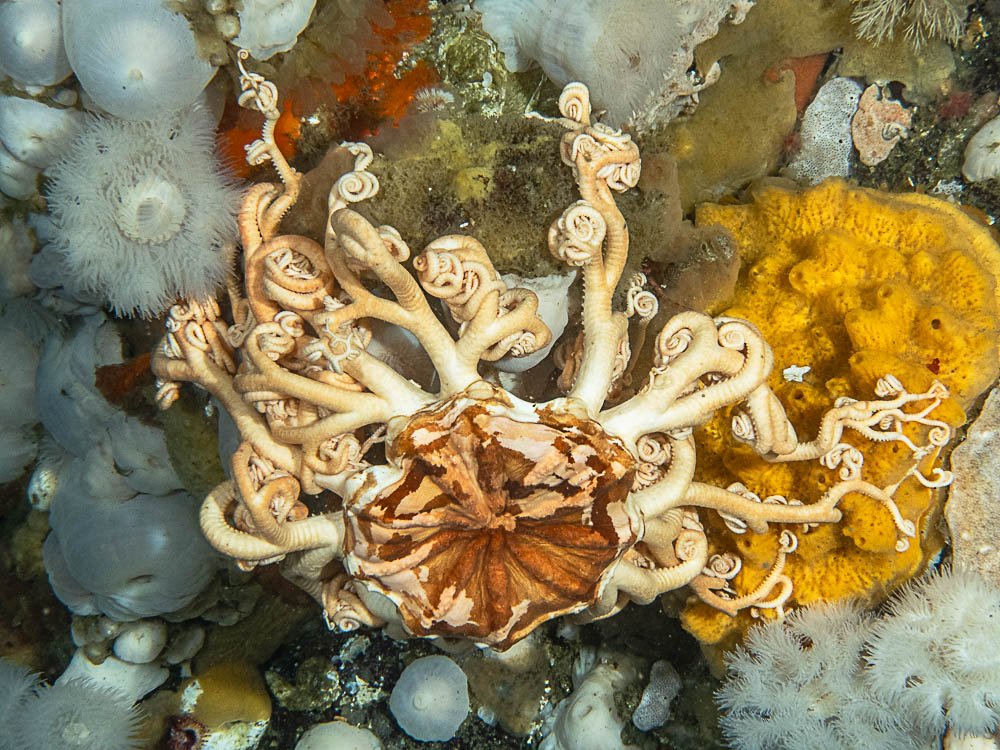
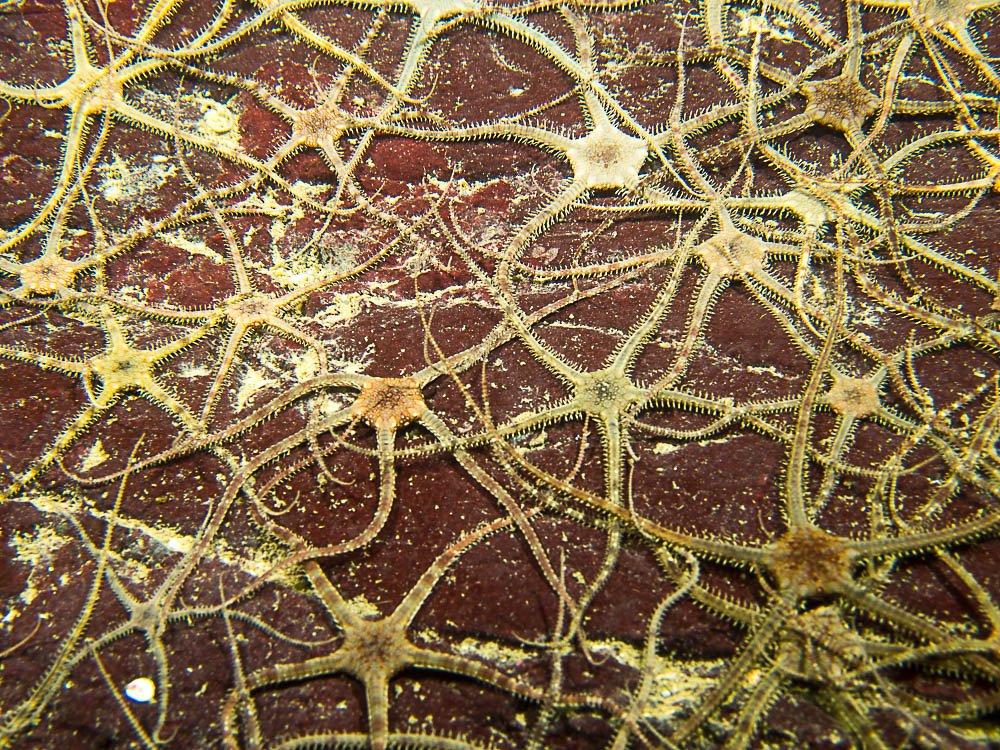
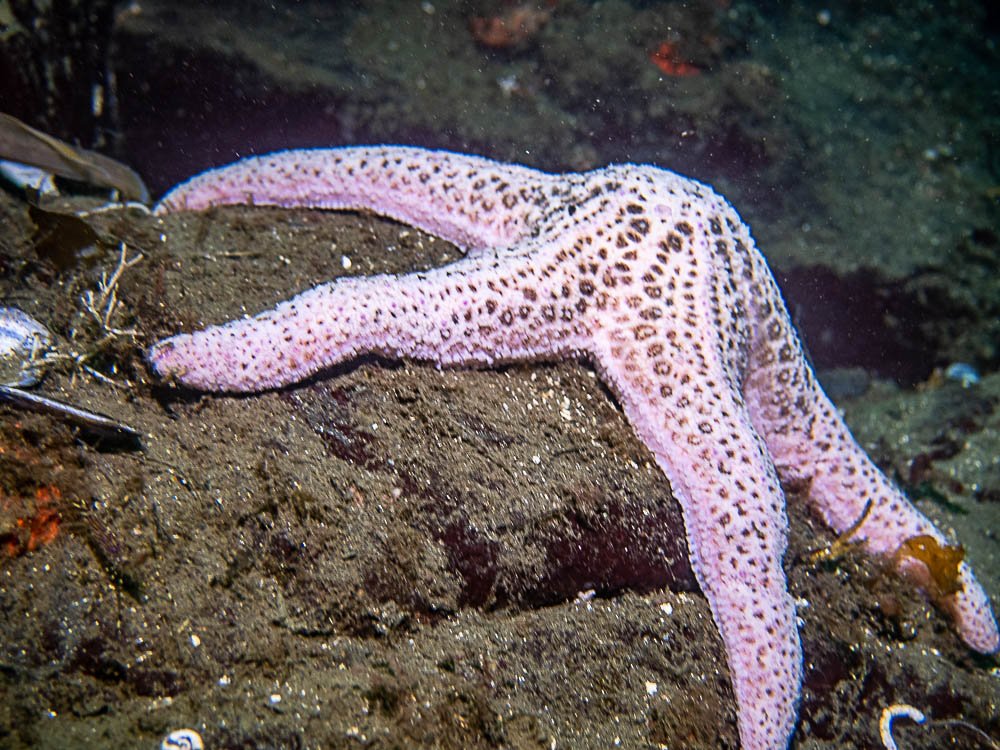
Starfish belong to a diverse group of marine animals called echinoderms, which include sea urchins, sand dollars, and sea cucumbers. Echinoderms are characterized by radial symmetry, often with a five-point structure, though some species can have more arms. They also have unique skin, which ranges from smooth and velvety to spiny and rough. Their internal skeleton is made of calcium carbonate plates, giving them strength and flexibility.
Water for Blood
Instead of blood, sea stars pump seawater through a network of canals called the water vascular system. This system powers their movement, helps them breathe, and delivers nutrients throughout their bodies. By filtering seawater stars can absorb the oxygen and nutrients they need to survive.
By pumping seawater, they extend and retract tiny tube feet on their arms, which act like suction cups. This enables them to crawl across the ocean floor, clinging to rocks and rough surfaces. Some species do this surprisingly fast. the Sunflower Sea Star can travel up to a meter per minute!

Vermillion Star
Some sea stars use their suction-cup tube feet to pry open mussels, clams and oysters, exerting pressure with their tube feet up to ten times their body weight, giving them the power to open even the most tightly closed shells.
Once a starfish has pried open a shell just enough, it does something extraordinary—it extends its stomach out of its body and into the shell. This allows it to digest the prey externally, turning the meal into a liquid form that it can absorb into its body. This method of external digestion makes it easier for starfish to consume prey that would otherwise be too large to eat.
Each species has evolved distinct feeding strategies. For instance, the Leather Star has been known to drill tiny holes into the shells of its prey, providing access to hard-to-reach food sources.
A New Limb
One of the most fascinating features of starfish is their incredible ability to regenerate. Losing a limb isn’t the end for a starfish; it’s an opportunity for renewal. They can grow back a severed arm and, in some cases, even regenerate an entire body from just a part of a limb, as long as it includes part of the central disc.
This ability comes from specialized cells in their arms that can transform into the various types of cells needed for regrowth. This regenerative power helps them escape predators, heal from injuries, and even reproduce, making them incredibly resilient. Scientists are studying this ability not just to understand marine life better but also to explore its potential applications in medical research, offering new insights into how cells can regenerate and repair.

Each starfish species has adapted to thrive in its niche within the diverse marine environment. For instance, the Blood Star is well-suited to the cooler, deeper waters of the Pacific, where it feeds primarily on organic detritus and sponges. Unlike intertidal species, the Blood Star can be found on rocky reefs and sandy bottoms. Its bright red or orange coloration helps it stand out. Yet, it has developed the ability to blend into its surroundings when threatened, making it resilient and adaptable.
Deep-dwelling species like the Giant Pink Sea Star prefer the quiet, dark seabed. These starfish are found moving across the ocean floor, searching for prey like sponges and other slow-moving animals. The Velcro Star is known for its smooth, fluid movement. Their tube feet glide effortlessly over different surfaces in a coordinated, wave-like pattern. This technique lets it navigate tricky terrains, such as rocky crevices and dense kelp beds, with agility and speed. Its graceful movement, combined with a varied diet of algae, small invertebrates, and detritus, makes the Velcro Star highly adaptable across Pacific marine habitats.
The Bat Star, are often found in tide pools using their arms to sense the world around them. Each species has found a way to survive and thrive, whether braving the harsh intertidal zone, navigating the deep sea, or at home in tide pools.
Who needs a Brain?
Starfish have a decentralized nervous system rather than a central brain. This system consists of a nerve ring around their mouth, which connects to radial nerves running down each arm. Each arm acts independently, allowing the starfish to respond to its environment without a central control center.

The radial nerves help the starfish detect changes in temperature, light, touch, and the presence of chemicals in the water. Starfish may not have eyes like ours, but their keen sense of their surroundings helps them survive and thrive in a complex and sometimes harsh environment. Through research, conservation efforts, and sustainable practices, we may ensure that these celestial emblems of the ocean continue to thrive.
Starfish Lifecycle
The lifecycle of a starfish begins with species releasing vast clouds of sperm and eggs into the water, allowing fertilization to occur freely in the open sea. Once these eggs are hatched, starfish begin life as tiny, free-swimming larvae called bipinnaria. The larvae look nothing like their star-shaped adult selves. They resemble translucent creatures with cilia that help them move. Feed on microscopic plankton, life is perilous for these young starfish. They drift with the currents, exposed to predators and other dangers, with only a fraction progressing to the next development stage. They gradually transform into brachiolaria larvae, developing the first signs of the star-like body.

After months of drifting, the larvae transform dramatically, settling onto the seafloor and developing into juvenile starfish. This stage is crucial as they switch from a free-swimming lifestyle to one anchored to the ocean floor. Once settled, they start to look more like the familiar star-shaped adults, with their tube feet ready to help them move and search for food. Different species have their unique spawning behaviors. The Sunflower Sea Star, known for its speed and many arms, can produce thousands of eggs simultaneously, increasing the chances that some will survive despite the high predation risk. In contrast, the Leather Star releases fewer eggs throughout the season, spreading their reproductive efforts. Starfish have surprisingly long lifespan. The Red Sea Star lives up to 20 years. Their longevity allows them to play a vital role in maintaining the balance of their ecosystems. Each stage of their lifecycle, from tiny drifting larvae to powerful adult predators, is a testament to their resilience, intricately linked to the currents and tides.
Wasting Disease

Starfish wasting disease
Sea stars are adapted to withstand harsh conditions, like as pounding waves, intense heat, and dry low tides. However, during the 2014-2016 marine heatwave, ocean temperatures made them more susceptible to sea star wasting disease causing a populations decline from Mexico to Alaska. Sea star wasting disease (SSWD) is a condition that causes lesions, limb loss, and disintegration. It has been linked to Sea Star-associated Densovirus (SSaDV). Researchers have found higher concentrations of this virus in sick sea stars compared to healthy ones. The virus attacks their tissues, breaking down the body and spreading through shared habitats and even the water. This has been especially devastating for the Sunflower Sea Star. By 2021, it was estimated that up to 90% of the West Coast Sunflower Sea Star population were lost due to this disease. As a primary predators of sea urchins, their absence has led to a surge in urchin populations. Sea urchins began to overgraze kelp forests, resulting in "urchin barrens," areas where kelp has been decimated, leading to the loss of shelter and food for fish and invertebrates. This imbalance's ripple effects highlight how crucial sea stars are to maintaining a healthy ecosystem. Their decline affects the immediate species they prey on and can lead to broader shifts, impacting the entire marine food web. Researchers are exploring solutions including breeding disease-resistant sea stars. Some facilities have raised sea stars in captivity and released them into the wild, hoping to restore populations and introduce more resilient individuals. While challenges remain, efforts continue to understand this devastating disease.
As keystone species, starfish play a critical role in aquatic ecosystems. Today, starfish face numerous threats, from rising ocean temperatures and pollution to habitat loss and the spread of sea star wasting syndrome. Conservation efforts, such as breeding disease-resistant starfish and monitoring sea star health, are crucial to ensure these creatures continue to thrive.

Fresh Shellfish from the Source
Want to visit the farmers that wake up on the night tides to bring you the perfect oyster, clam or geoduck? Check out these farms on and around Hood Canal!
You’ve heard it before – those dang months with the “r.” Well, technically local oyster farmers don’t agree, bivalves have a much longer season, Some of the best shucks are in May – but there is something to be said for a fall or spring oyster over a “peak of the summer” one. That’s why March and April are the perfect time to follow the shellfish trail and visit local farms that grow the food you love.
In Search of Perfection
Want to meet the farmers that wake up on the night tides to bring you the perfect oyster, clam or geoduck? Check out these farms on and around Hood Canal!
Capital Oysters & Seattle Shellfish
South Puget Sound | capitaloyster.com
5th generation oyster farmer, Tom Bloomfield, tide tumbles Capital oysters that are suspended off the ground. The growing process results in a smooth, super deep shell as each oyster captures the essence of the beautiful ocean waters, free of sand and zero muddy tastes.

Chelsea Farms & Olympia Oyster Bar
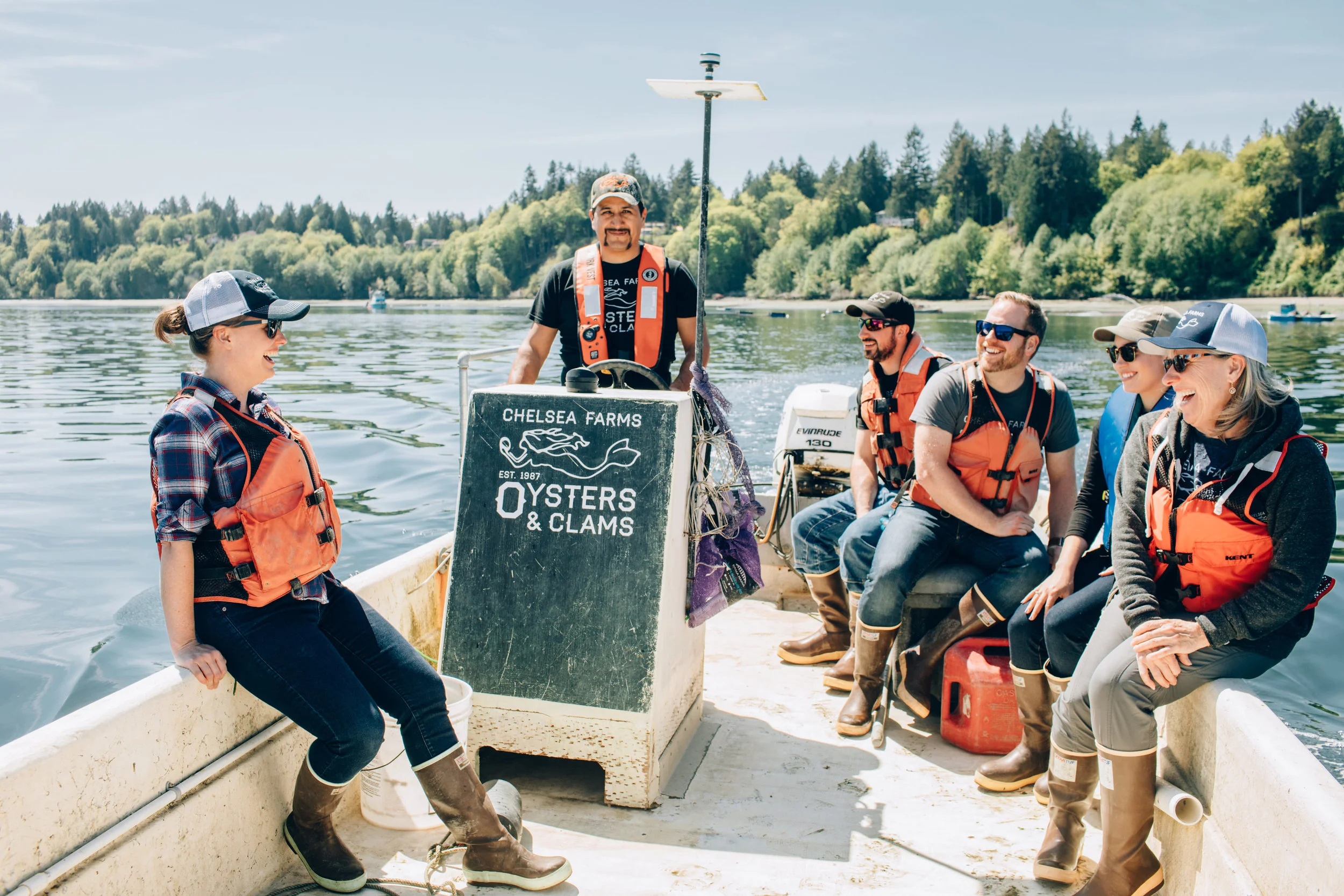
Chelsea Farms | photo:poppi photography
Eld & Totten Inlet
Chelsea Farms is a current working model of environmental sustainability. They have made a priority of farming the Olympia Oyster, a native oyster to Olympia, that was on it’s way to extinction. Specialties include their Chelsea Gem, Bonita, and Olympia Oysters, along with fresh clams and geoduck. Visit their Oyster bar in downtown Olympia to get the ultimate local seafood experience!
Let’s Go:
CHELSEA FARMS OYSTER BAR
222 CAPITOL WAY N, OLYMPIA, WA 98501
Phone: (360) 915-7784
Hours: TUES-FRI 11AM-9PM, SAT 10AM - 10PM | SUN 10AM - 9PM
menu
The Fjord Oyster Bank
Sea Nymph Oysters
Hoodsport & Hammersley | southsoundoysters.com
24341 N Hwy 101 Hoodsport | (360) 877-2102
For the last decade and a half the Hansen family has been raising oysters and clams on South Puget Sound's nutrient rich waterway, Hammersley Inlet. Through a tumble bag and a bag to beach process these oysters have distinct merrior as well as shape profiles resulting from their growth process despite being in the geographic. The tumble bag Hemingways have a sweet cucumber finish while the beach finished Sea Nymphs have a kelpy taste. Hemingway Sweets roll in deeper water and have a deep cup, sweet flavor and a full-body crunch. Hemingways (coined from Ernest Heminway's famous oyster quote) as well as Sea Nymphs, are available for raw and grilled preparation at their Hoodsport café and Oyster Bar, Fjord Oyster Bank.
Let’s Go:
Fjord Oyster Bank Oyster Bar
24341 N Hwy 101, Hoodsport
Phone: (360) 877-2102
Hours: THUR-SAT 10 AM-8PM, SUN10AM - 6PM | Closed MON-WED
menu
Hama Hama Oyster Farm

Lilliwaup, Hood Canal
A few years ago the Hama Hama Oyster Co opened their Oyster Saloon in Liliwaup. This high energy destination serves oysters pulled from the last tide and prepared to order with an ever changing menu of seasonal local ingredients. In their retail shop you can purchase a variety of their Hood Canal product including salmon and oysters smoked on site. Hama Hama is a 5th generation family run farm with a reputation for quality and environmental mindfulness.
Let’s Go:
HAMA HAMA OYSTER CO
35846 US-101, Lilliwaup, WA 98555
PHONE: (360) 877-5811
Spring Hours: Farm Store Daily 9:30 to 5:30
Oyster Saloon Check website for details
Shellfish is available in their retail store, Saloon and at parent restaurants throughout the Northwest. Product also available online and shipped directly to your home.
Olympic Oyster Co. & Mike’s Beach Resort

Eldon, Hood Canal
Third-generation farmers, Matthew and Sara are serious about producing some award winning oysters on site for market and available at restaurants as far away as New York. Guests staying on the active farm aka Mike’s Beach Resort have first dibs on some of the freshest oysters on the fjord!
Let’s Go:
Mike’s Beach Resort
38470 N US Highway 101, Lilliwaup, WA 98555
Phone (360) 877-5324
Waterfront cabins and rooms, with view of the canal.
Taylor Shellfish
South Puget Sound and British Columbia
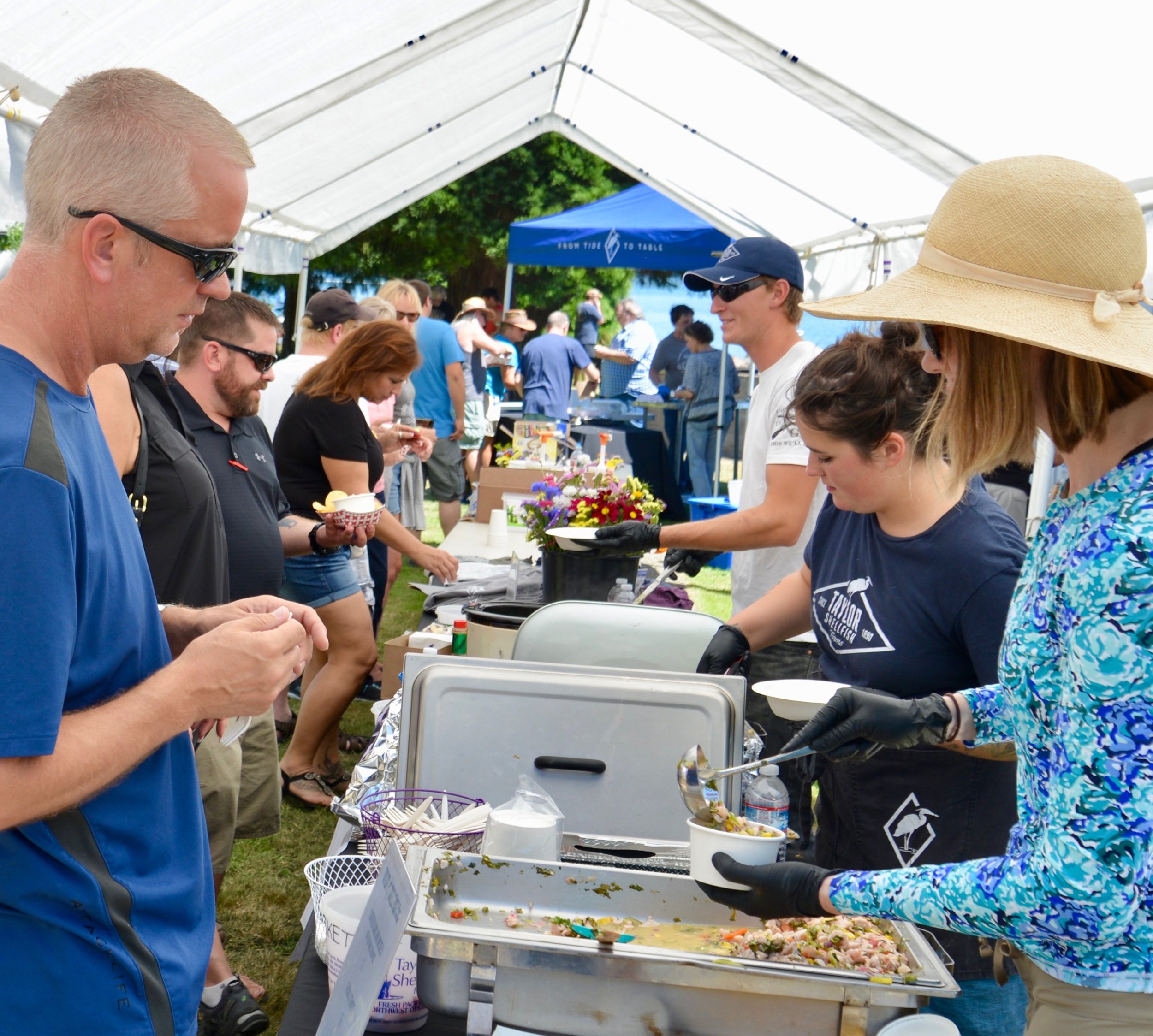
Stop in at Taylor Shellfish’s headquarters and visit their market near Shelton. Taylor’s specialties include the famed Kumamoto (sweet fruity flavor) and the Virginica (Crisp, briny, and buttery). The company has been farming oysters on Puget Sound since the 1890’s when great-grandfather Justin Taylor began farming Olympias. Five generations later, the company’s product line includes worldwide export of geoduck, clams, and mussels along with oysters.
Let’s Go:
TAYLOR SHELLFISH RETAIL STORE
130 SE Lynch RD Shelton WA, 98584
PHONE: (360) 432-3300
Hours: Open for Monday - Sunday: 10am - 6:00pm; Closed all major holidays
Shellfish is also available at one of their many locations throughout NW Washington. Product also available online and shipped directly to your home.
A Winter Guide to Our Local Tides
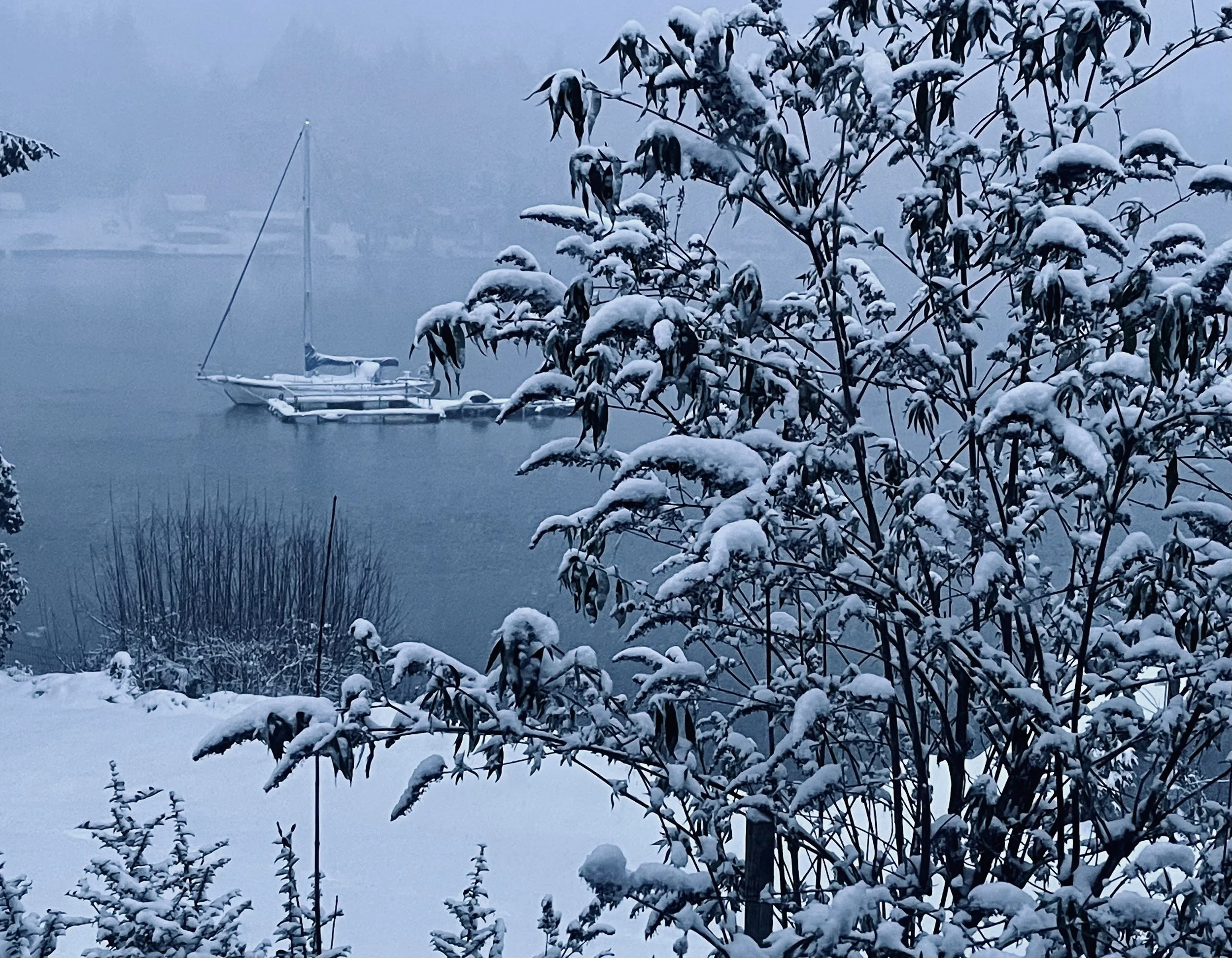
In winter, the tides along Hood Canal feel different. King tides push water higher than usual, low tides arrive before daylight, and currents move faster through familiar stretches of shoreline. Knowing how and why these tides shift can make winter outings safer and more rewarding.
H/T Tracing The Fjord | Winter ‘25
If you live or spend any time along Hood Canal or in the South Sound, you get used to checking the tides. They shape when people head out for recreation, plan a boat launch, or keep an eye on their waterfront. But the names we use for tides can feel a little mysterious until you break them down.
Tides are the rise and fall of the ocean caused by the gravitational pull of the moon and the sun. As the Earth turns, our area passes through these gravitational pulls, which is what causes the highs and lows we notice along the shoreline. Most of the Pacific Coast, including Hood Canal and South Puget Sound, experiences what’s called mixed semi-diurnal tides, meaning two highs and two lows every 24 hours. Still, each one is a little different in height. Regular tide-chart watchers recognize that pattern right away.
You’ll also hear terms like spring tides and neap tides. Spring tides aren’t tied to the season. They happen when the sun, moon, and Earth line up, which creates higher highs and lower lows. Neap tides are the opposite. They arrive when the sun and moon are at right angles to each other, pulling the water in different directions and producing milder highs and lows.
Another term that comes up often in winter is king tide. It’s not a scientific label, but a common nickname for the year’s highest tides. These happen when the moon is closest to Earth and lines up with the sun. Around Hood Canal, king tides can raise water levels several feet above normal. People may notice when the shoreline creeps inland and low-lying roads collect water.
In winter, tide shifts carry a different rhythm. Many of the lowest tides show up in the early morning or evening, long before daylight. Boaters and paddlers will see water levels changing faster through the Great Bend or around Ayock Point. Homeowners might keep an eye on their docks and pilings, since deep lows can expose more structure than usual.
Shellfish growers around the canal monitor winter tides too, since cold air paired with low water can stress their crops. And for anyone heading out to collect shellfish on local beaches, those low tides can be inviting—just make sure you have the proper license and check harvest openings before you go.
A better understanding of the tides helps explain what we see every day along the Canal. And for anyone heading out in the winter months, a quick tide check remains one of the easiest ways to stay safe and make the most of the season.
THE STILL ONES: LIFE AMONG PACIFIC NORTHWEST ANEMONES
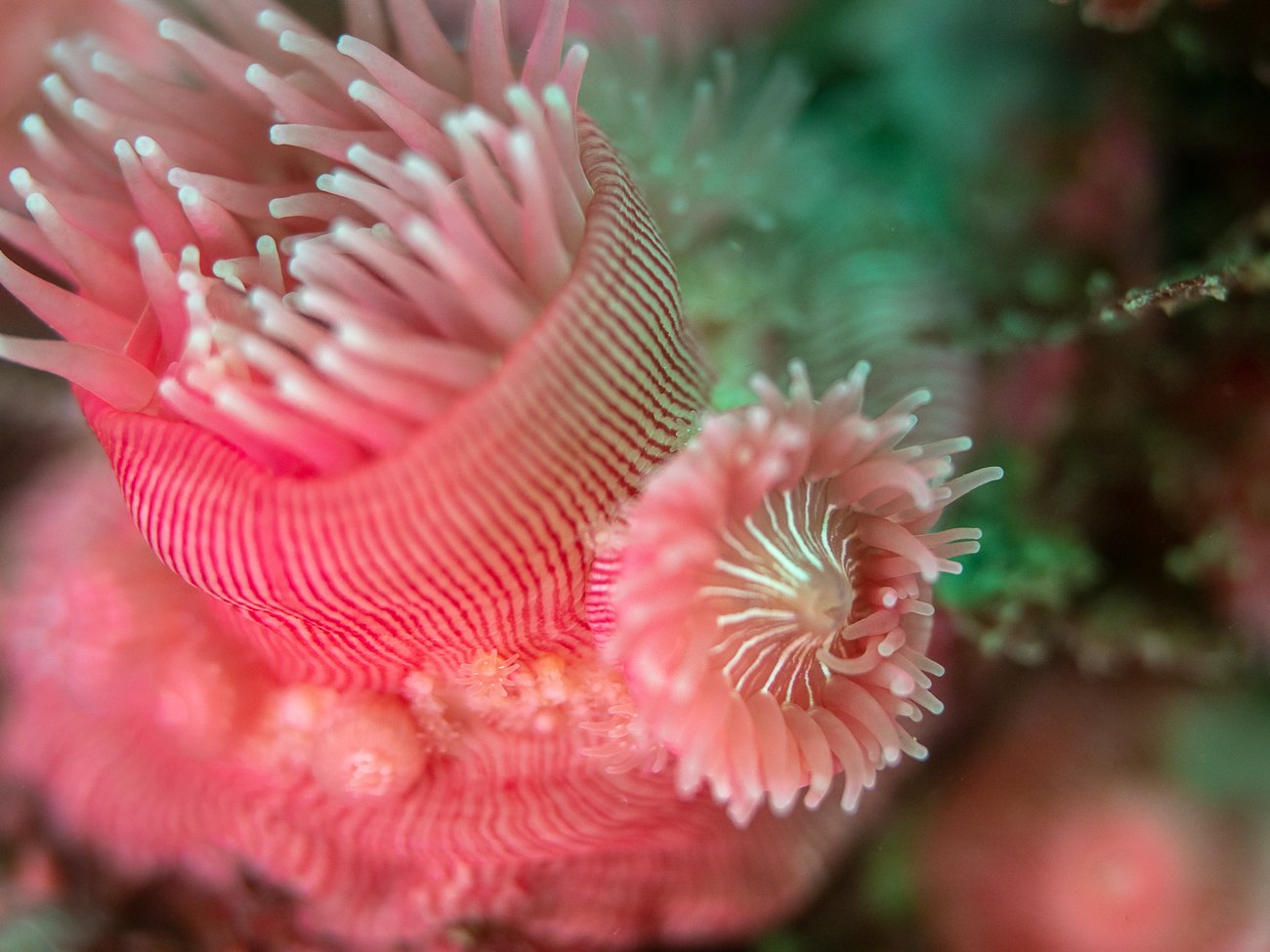
Drop beneath the surface of Hood Canal and the noise of the surface fades away. In the cold green water, sea anemones reveal themselves not as simple flowers, but as hunters, shelter, and the steady framework of the underwater world.
STORY & IMAGES: THOM ROBBINS
H/T Tracing The Fjord | Winter ‘25
Drop beneath the surface of Hood Canal, and the world does something strange. The noise you never realized you carried slips away. The cold presses close, the green water folds around you, and what felt familiar on the surface becomes something older, slower, more deliberate. Down here, even the smallest things can pull your attention, and few creatures lure you in like anemones.
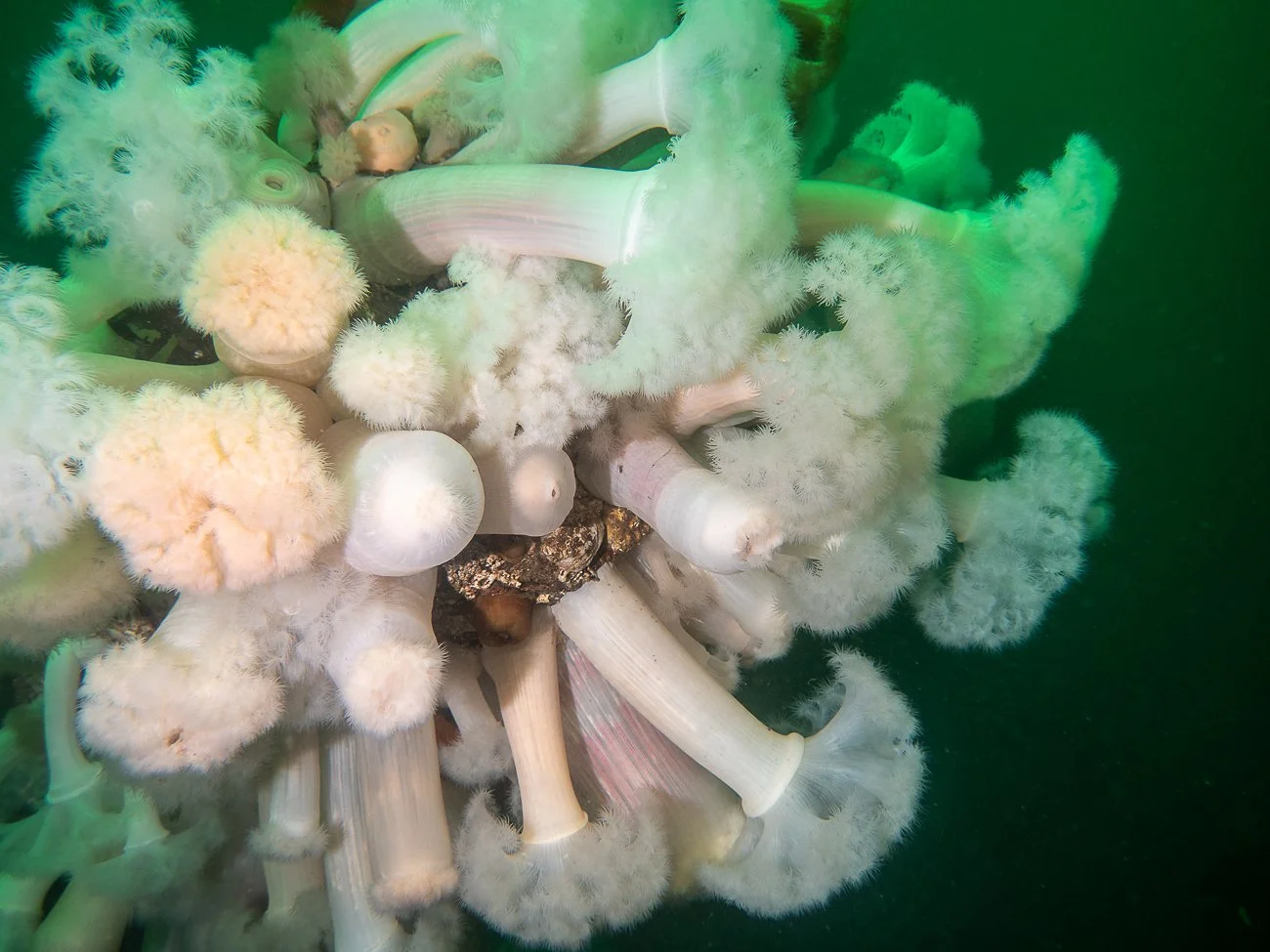
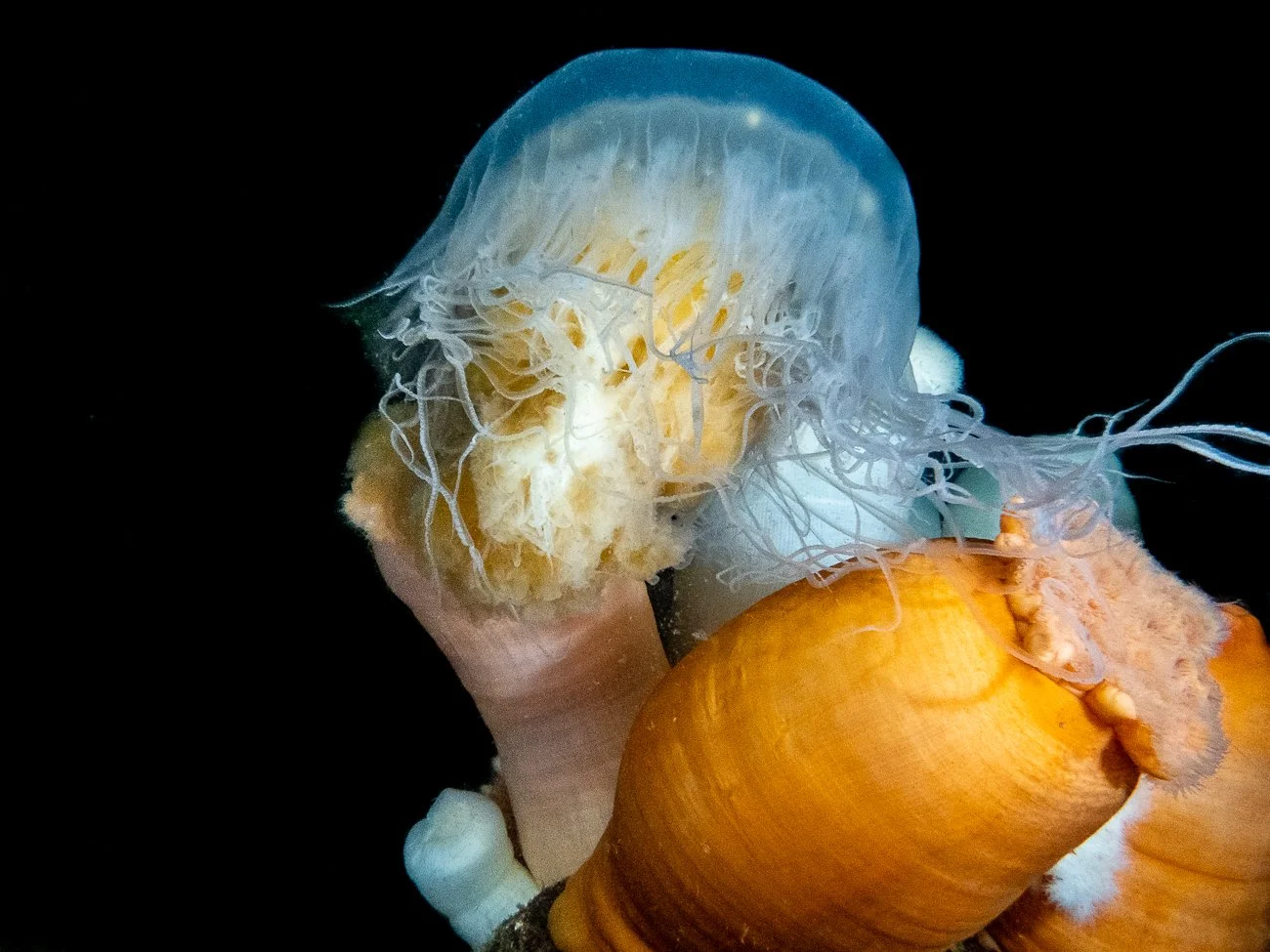
The first time I hovered eye-level with a pair of orange-and-white plumose anemones, anchored together, I realized I’d stopped breathing. They rose from the rock like a lantern someone forgot to snuff out, their feathery rings swaying with the patience of something that had never once needed to rush. I had dropped into the water that day looking for wolf eels, maybe a wandering Pacific octopus if I was lucky, but instead I found myself suspended in the water, staring at a creature that held the whole moment in its grip.
The light from my dive torch slid across its surface, and the anemone flared gently, as if waking. The muted fire of orange and white felt older than anything else on the reef. I stayed there longer than I meant to, caught by something anchored in place, looking back without eyes and waiting without fear.
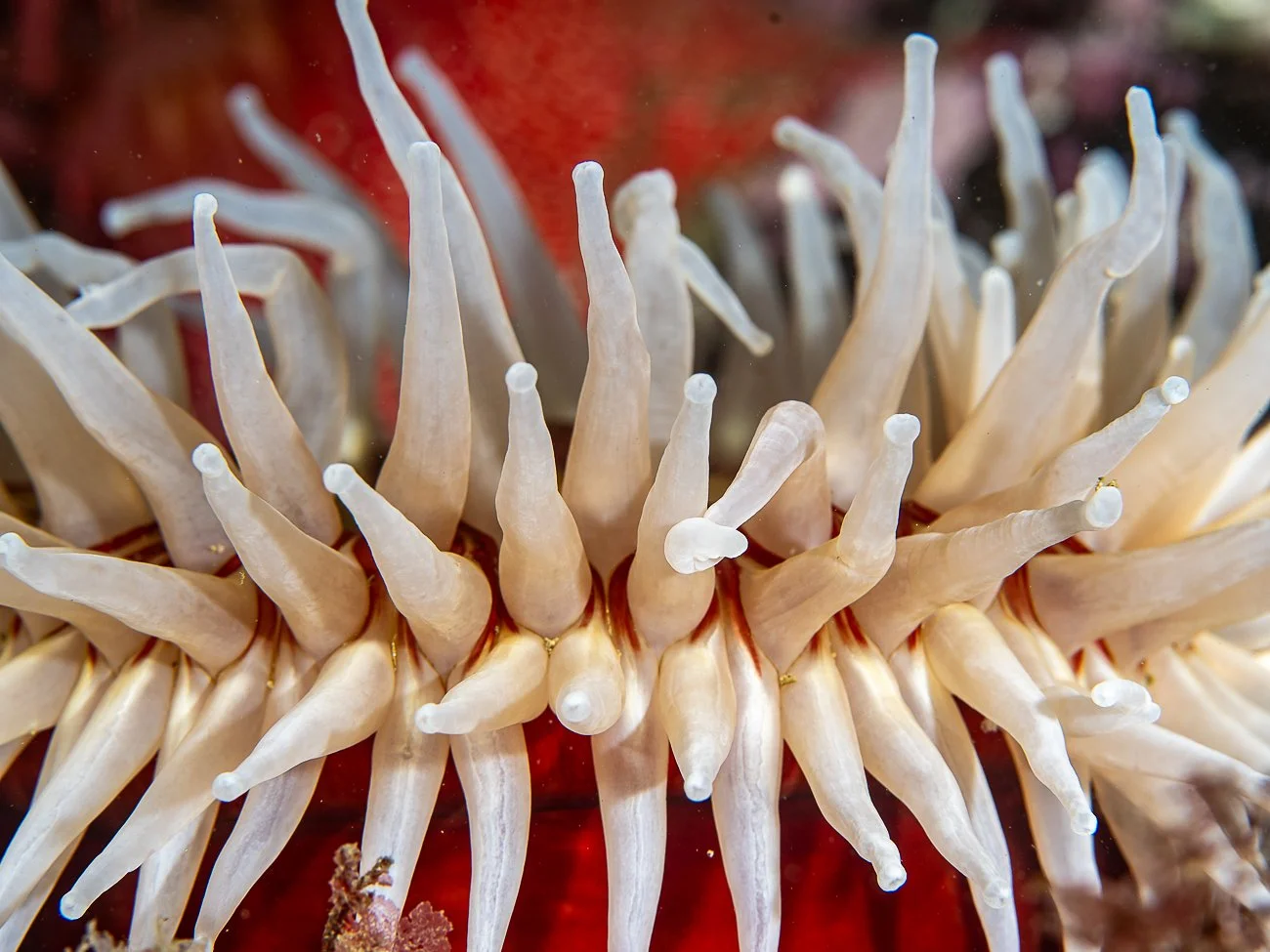
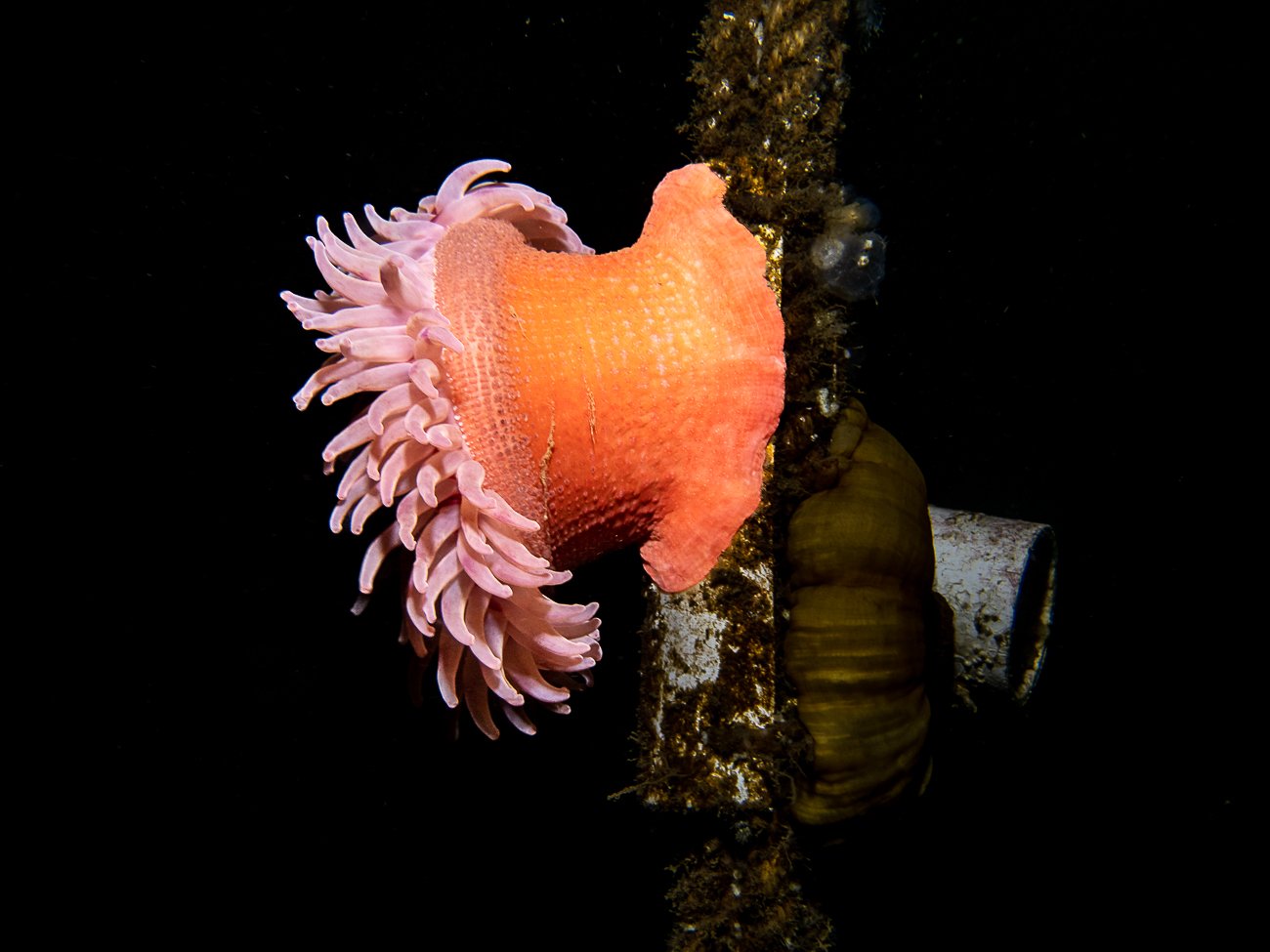
People often imagine anemones as simple flowers of the sea. They are anything but. Spend enough time underwater with them and you see the truth: they are predators, architects, survivors, and quiet powerhouses of the Pacific Northwest. They feed the ecosystem, help shape the seafloor, and provide shelter for everything from tiny shrimp to juvenile rockfish.
And they manage all of this without ever taking a single step.
Up close, anemones feel uncanny in a way only the sea manages—rooted creatures that still seem alert and watching. Divers tend to lump them together, these bright creatures pinned to the rocks, but the truth is far older and stranger than it appears. They all belong to the same ancient lineage, the class Anthozoa, animals that appeared long before fish, long before bones, long before anything with a face to show its intent.
Each anemone follows a familiar blueprint: a soft column crowned with tentacles and anchored by a disc. That disc holds the animal to rock, piling, sand, or shell and lets it ride out currents that could peel skin from stone. For a few species, it even becomes a getaway tool. When conditions turn bad, some Pacific Northwest anemones release their grip, inflate slightly, and drift away like pale balloons searching for safer ground.
Stillness is their choice, not their limitation.
In the Pacific Northwest alone, there are several dozen species of sea anemones. Within that shared design, each species holds its own personality, its own way of surviving a world that rarely shows mercy. Some anemones are patient hunters, waiting for fish or shrimp to brush against their tentacles so their stinging cells can fire like tiny traps tucked inside a single hair. Others are filter feeders, living a life where the current does the work, sweeping plankton across their tentacles. A few do both, depending on what the tides bring, switching strategies the way a writer changes pens—steady and deliberate.
Some swallow crabs whole. Others feed on jellies. Some are as small as scattered beads on the rock, and others rise tall enough to brush a diver’s mask.
They are family in the scientific sense, but in the water, they feel more like estranged relatives gathered in the rooms of the same old house. They share the same history, but each carries its own hidden secrets. Some shimmer with light borrowed from algae living inside them. Others wage quiet chemical war against their neighbors.
A few clone themselves into armies that spread across the seafloor like a slow tide. Others, despite their rooted appearance, quietly unstick and sail off into the dark if the world around them shifts.
They may look decorative at first, but spend enough time with them and the illusion dissolves. Beneath the calm is intention. Beneath the color is strategy. And beneath the soft drift of tentacles is a creature that has been perfecting survival since before the ocean knew anything more complicated than hunger and light.
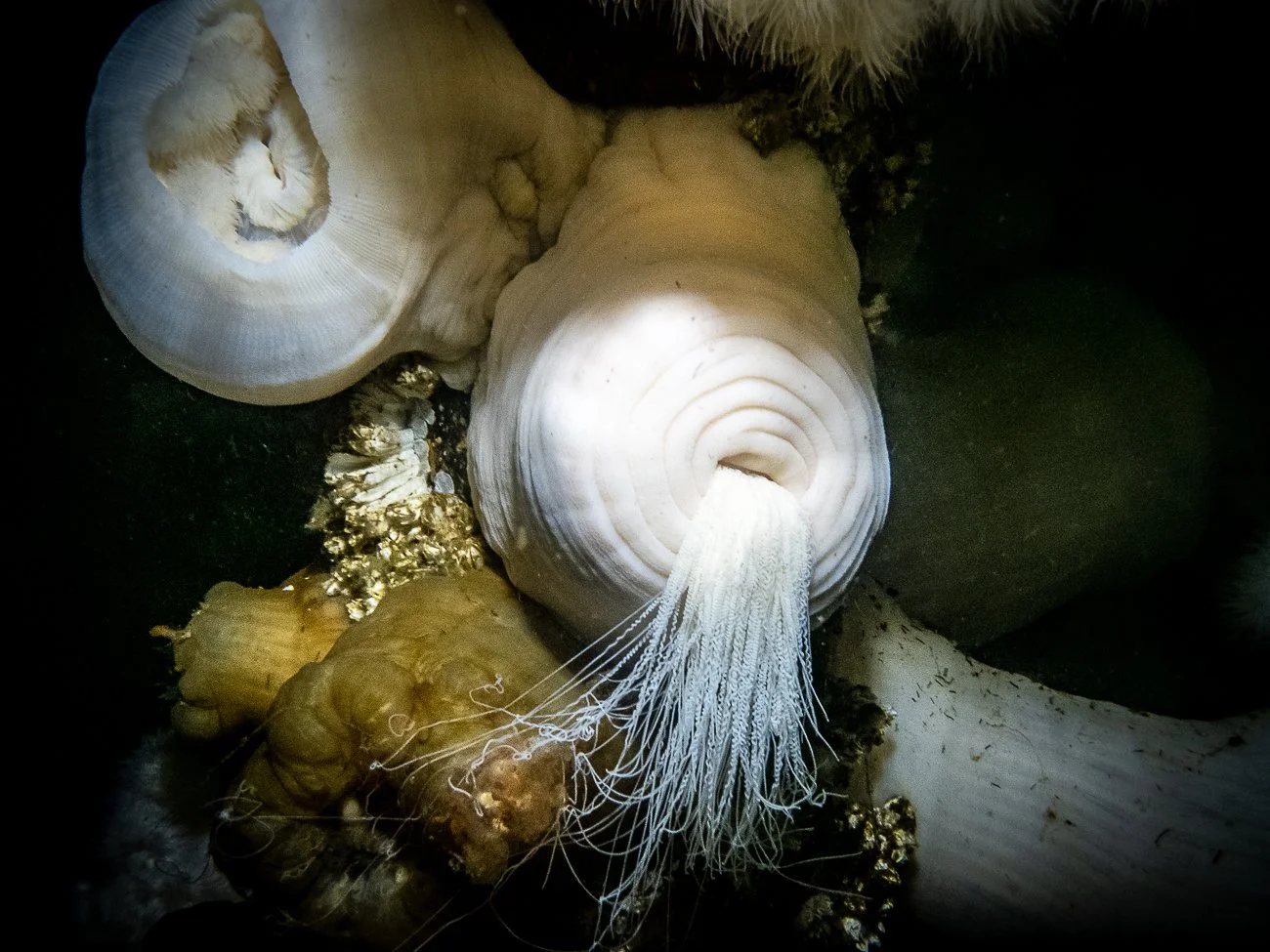
Once you start paying attention, their structure begins to make sense through function rather than form. At the top, the tentacles guard a single opening that leads into the coelenteron, the chamber where circulation, digestion, and waste share a common path. There is no heart or specialized organs, only water moving through the body to do the work. It is simple on the surface and efficient beneath, a design nature created early and never had reason to revise.
If you understand that basic framework, the distinctions between species sharpen, almost like personalities rather than anatomy.
Giant green anemones are usually the first to pull you in, their bodies lit from within as if they are holding on to every bit of sunlight they ever borrowed. The color runs deeper than the tissue because of the algae living inside their cells, tiny partners trading photosynthesis for shelter. Brush too close and the whole ring of tentacles snaps shut, quick and certain, a reflex shaped by millions of years of ambush. To us, the sting is little more than a pinprick. To anything small enough to count as prey, it is a door shutting for good.
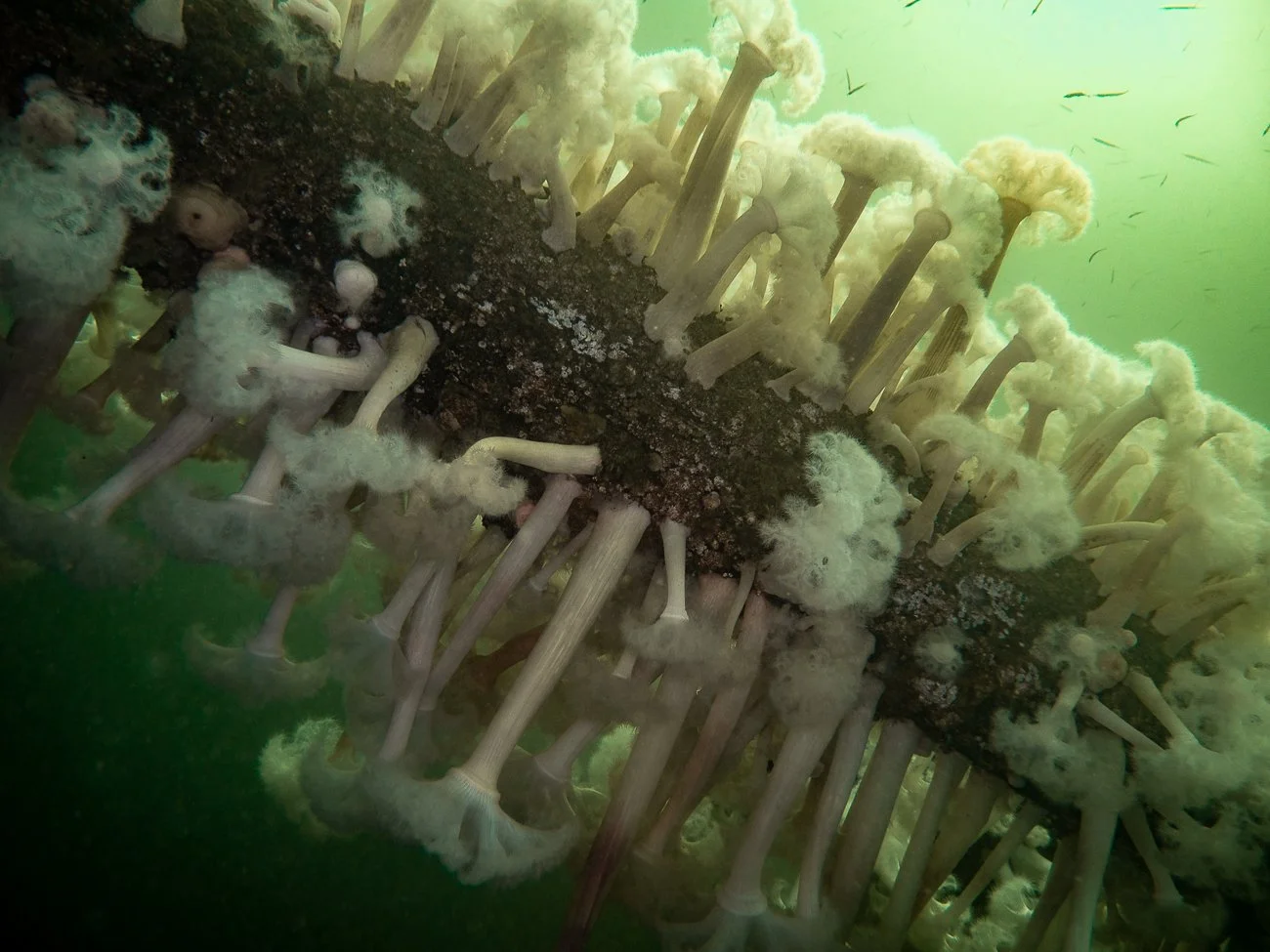
Plumose anemones follow the same plan but stretch it into something ghostly. They rise from pilings and rocky shelves as pale towers, their feathery tentacles blooming under a dive light. They do not hunt so much as gather. They stand in the current and let the world pass through their arms, sifting plankton with steady ease. On night dives, they look like candles lining some forgotten aisle, pale glimmers flickering each time a tide pulse rolls through. I have floated among them with only my breath for company and felt, for a moment, that I had wandered someplace sacred and not entirely safe.
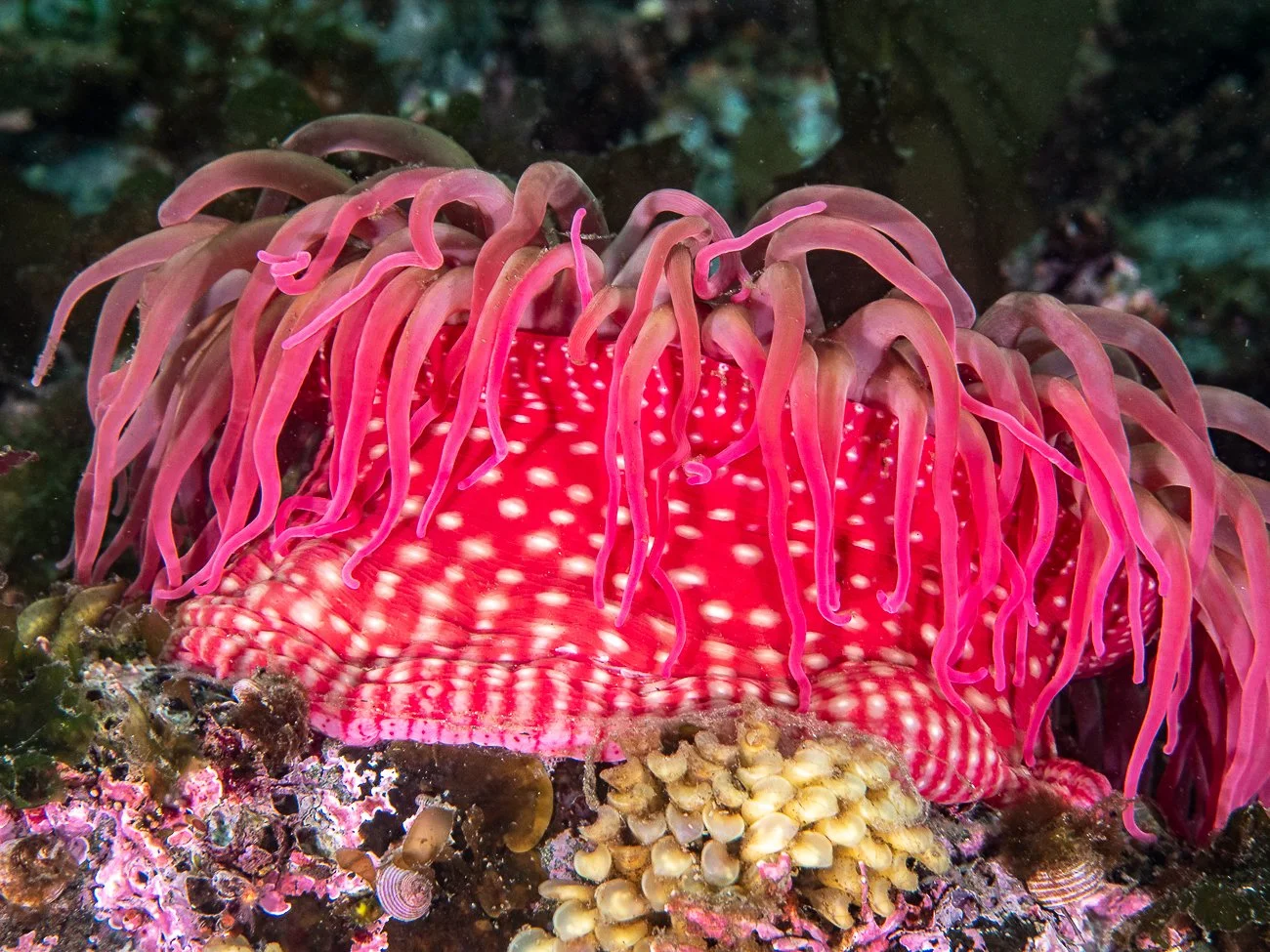
Painted anemones carry the same architecture but disguise it under carnival colors. Reds, purples, creams, and browns swirl across their columns, so vivid you almost doubt what you see through your mask. They hold perfectly still, predators that know stillness can be its own kind of lure. I once watched a hermit crab inch across the edge of a painted anemone, as if easing across ice that might crack beneath it. One careless touch, one stumble into the tentacles, and that would have been the end of him. The anemone never twitched. It didn’t need to. Time does the work.
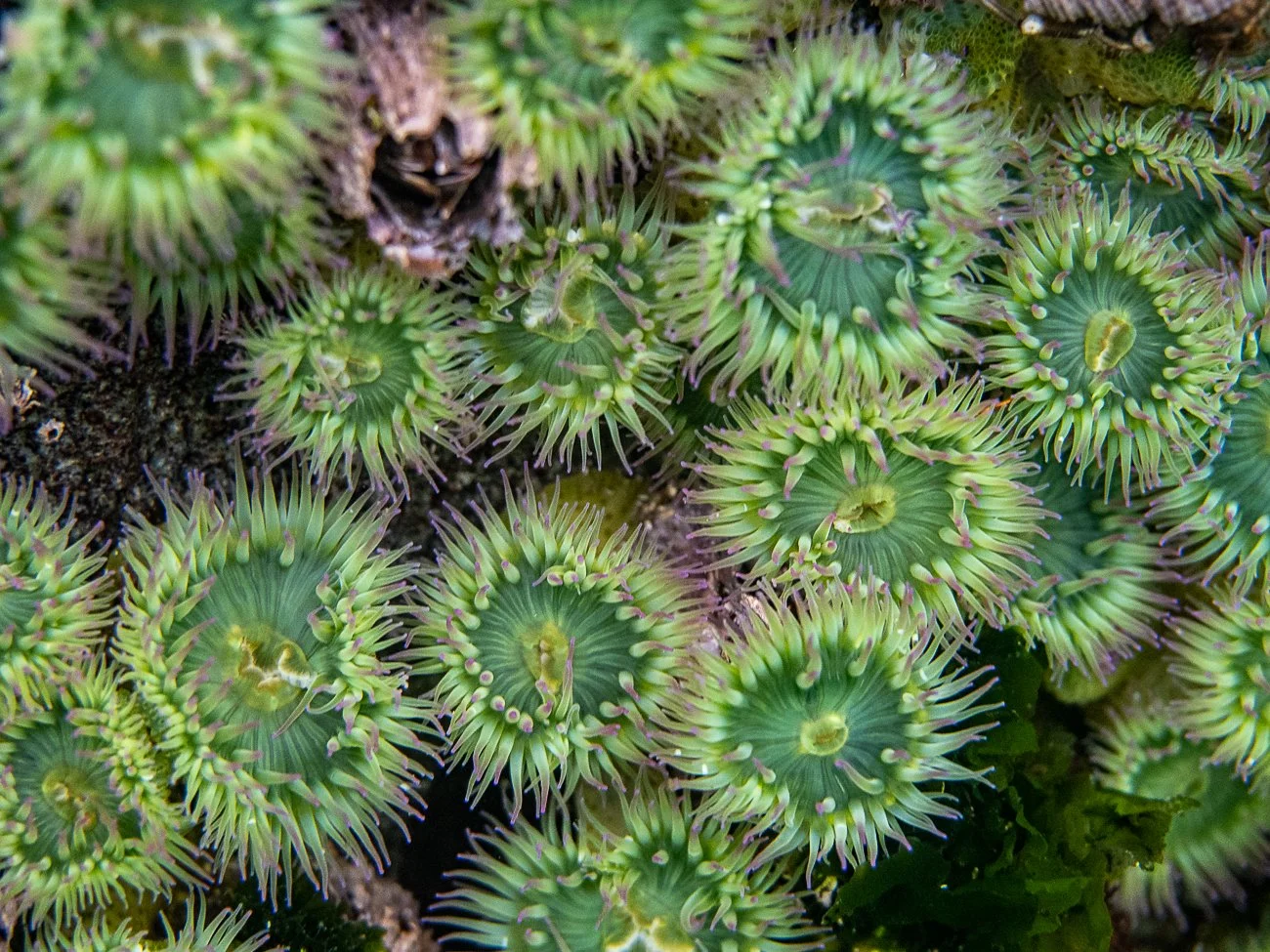
Then there are the aggregating, or clonal, anemones, the most abundant anemones on the tide-swept rocky shores of the Pacific coast. They repeat their small green design across whole stretches of reef, shrinking the instant a finger or wave brushes them. Most people never realize these harmless-looking colonies wage slow territorial wars, leaving chemical borders etched into the rock long after the fighting has ended.
And in the dimmer reaches of the walls, you find the strawberries—small and intensely bright, gathered in clusters that shine like embers against the rock. Their red and pink tones come from pigments in their own tissues, natural shields that help them handle shifting light rather than anything they eat. A single anemone barely catches the eye, but together they form tiny reefs, pockets of shelter where young fish slip out of the current. Shrimp thread themselves between the bodies, and tiny crabs wait out storms beneath the guarded crowns, trusting something that looks delicate yet stays anchored through anything the water delivers.
That is the truth anemones keep tucked beneath their soft crowns. They look like decoration, the ocean’s wildflowers, but nothing could be more wrong. They are shelter and glue, hunters and architects, patient predators and caretakers. They build structure where none would stand. They root the ecosystem in place. Without them, parts of Hood Canal would feel hollow in ways you only understand after you have spent years underwater, watching the quiet power of creatures that never move and never need to.
They are not background. They are the bones around which the seafloor grows.
For something anchored in place, anemones live complicated lives. They begin as drifting larvae, tiny specks carried wherever the tides push them. Most never make it, swept off or swallowed long before they touch stone. The few that survive settle on a rock, shell, piling, or even an old bottle and anchor there. Once they attach, they stay for life, which can stretch for decades if the currents and predators leave them be.
Once settled, anemones grow slowly and steadily, unfurling their tentacles to hunt. Those tentacles are loaded with tiny stinging cells called nematocysts. Under a microscope, they look like harpoons coiled in a trap, waiting for anything soft enough to touch.
Here’s a quiet bit of trivia: the same stinging machinery that makes box jellies deadly exists in Pacific Northwest anemones. Ours are far gentler, but the machinery is the same—just scaled down.
Some reproduce sexually by releasing eggs and sperm into the water, letting the current handle the matchmaking. Others, like aggregating anemones, clone themselves until an entire colony becomes one genetic individual. Kneel beside one and you might be looking at hundreds of copies of a single ancestor.
It’s an ancient strategy, and it works.
Underwater, alliances are messy, and enemies show up in strange shapes. Small crabs hide beneath anemones. Shrimp thread between their tentacles. Juvenile rockfish hover above them like nervous birds perched on an unseen rail. Anemones are living real estate, shelter for whatever needs protection from the current or from things waiting to strike.
Some fish even learn to hover close enough to avoid predators but not so close that they get stung. It’s an uneasy arrangement, but down here, even bad roommates can get along if the alternative is being eaten.
Crabs, strangely enough, are both protected by and prey to anemones. I have watched decorator crabs tiptoe across their tentacles with scraps of sponge strapped to their backs like makeshift armor. They move with a careful, testing gait, feeling for the slightest hint of danger. Sea stars sometimes pry anemones off rocks, consuming them in slow, patient mouthfuls. It is not a quick process. Nothing underwater ever is quick.
And then there are the battles you never see, the chemical duels between neighboring colonies. Aggregating anemones have specialized “fighter” polyps that they use to burn competitors. The line between territories is drawn in sting scars. Some anemones even fight themselves by accident, clone battling clone after currents shift them into the wrong arrangement.
Everything in the ocean is friend, enemy, or dinner. Sometimes it is all three at once.
If you ever want to understand the Pacific Northwest, descend into Hood Canal when the water turns green and the current softens. Look for the places where color gathers on the stone. Where tiny tentacles reach and sway. Where something motionless begins to feel like it is breathing with the sea.
Anemones are easy to overlook, but once you notice them, they pull you in. They are the quiet machinery of the ecosystem, visible only when you slow down enough to see them. They filter water, provide habitat, feed predators, and shape entire stretches of shore with time and patience.
On one late-winter dive, I found a single giant green anemone perched on a rock, its tentacles half-closed against the surge. I hovered there, just watching it. A whole world moving around a creature that stayed fixed in place. I raised my camera, took the shot, and realized something simple.
Not every marvel in the Salish Sea chases you or darts across your light, trying to be seen. Some simply wait to be noticed. And once you do, you begin to see the seafloor differently. You understand how much depends on what stays still.
THOM ROBBINS BIO
I spend as much time underwater as life allows, teaching diving and photography, chasing the perfect shot, and writing both nonfiction and fiction inspired by these waters. You can explore more of my work at www.thomrobbins.com.
Crabby Characters: Stories from the Seafloor
Spend enough time beneath the surface of Hood Canal, and the silence starts to speak not in words, but in motion. Everything down there moves slower in the cold except the crabs. The crabs are always busy. Always urgent. I’ve watched one spend ten full minutes excavating a hole no deeper than a coin is thick, only to abandon it and scuttle off as if remembering something more important.
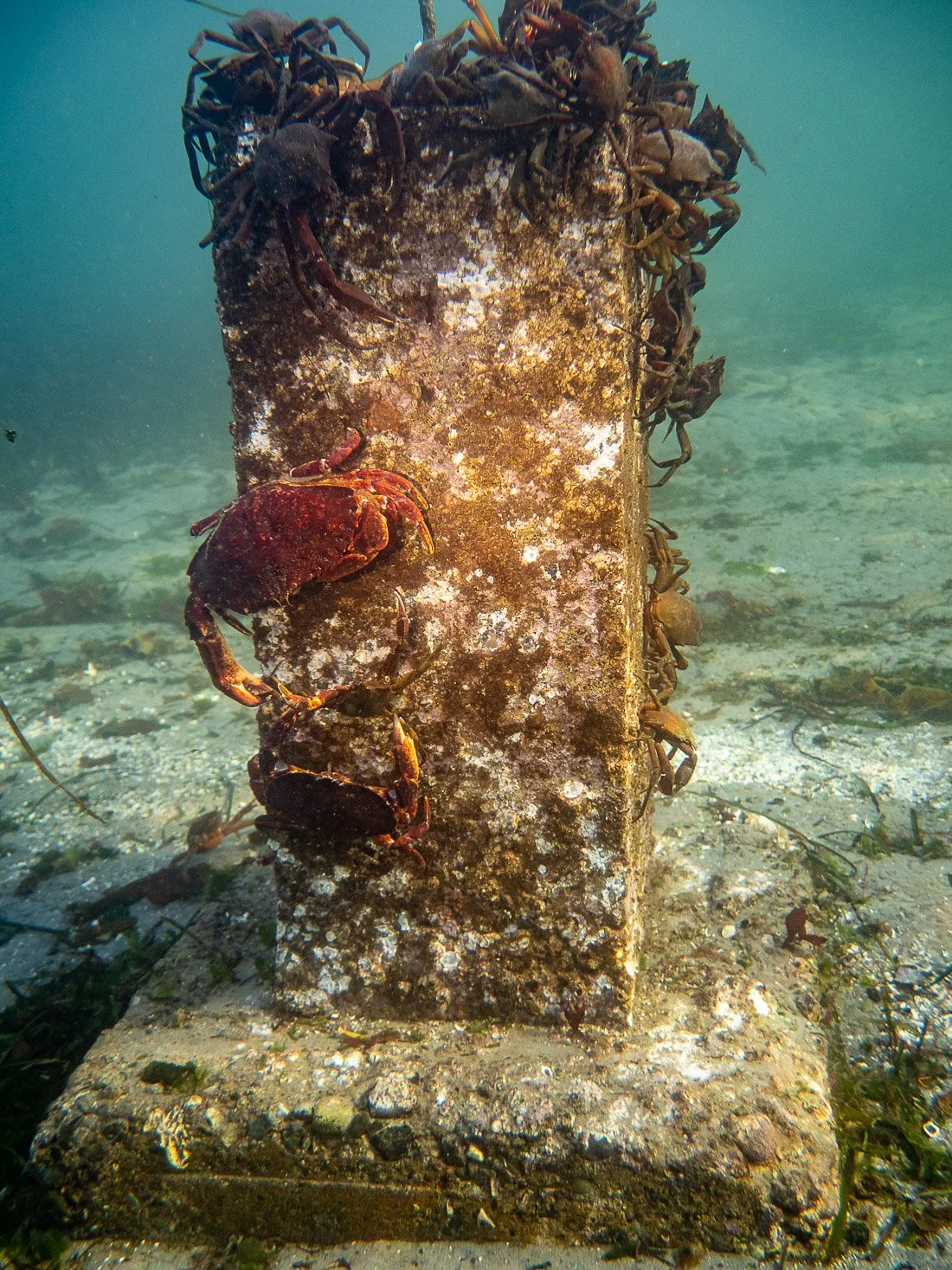
Thom Robbins | story and picturesSpend enough time beneath the surface of Hood Canal, and the silence starts to speak not in words, but in motion. Everything down there moves slower in the cold except the crabs. The crabs are always busy. Always urgent. I’ve watched one spend ten full minutes excavating a hole no deeper than a coin is thick, only to abandon it and scuttle off as if remembering something more important. One squared off with its own reflection in my camera dome, claws raised like a boxer waiting for the bell. And another cleaned algae off its shell, as if preparing for a first date.

They aren’t graceful like the kelp fish or hypnotic like moon jellies. They’re rough-edged little bulldozers, powered by instinct and old armor, constantly on patrol. You’ll find them under ledges, in discarded cans, perched on the pilings of a long-lost dock. Red Rock crabs, kelp crabs, decorator crabs, hermits dragging their spiral shells like tiny trailers behind them, all of them crawling, shoving, digging, sparring, eating, surviving.
To dive in Hood Canal is to enter their world, not as an observer but as a trespasser in a busy kingdom. And the deeper you go, the more you start to wonder: who’s really watching who?
There are over thirty species of crab living in the Salish Sea, and I swear I’ve startled half of them just getting my fins on. Big ones, small ones, legs like knitting needles—some so camouflaged they vanish if you look away. They're not background players down here. They're the quiet architects of the seafloor. Scavengers, cleaners, prey, and predators, they keep the submerged machine running.
Take the Dungeness crab. Everyone knows that name from a dinner menu, but out here, in the cold green quiet, you see the other side of it. These are not docile creatures. They fight like boxers in the sand, claw-to-claw. I once watched two square off over a fish head, each strike spraying up little clouds of silt. No hesitation, no mercy. The winner dragged the prize beneath a ledge and vanished. The loser waited a few beats, then started digging like it had never happened.
Red Rock crabs are the neighborhood bruisers, bad-tempered, road-shouldered, all edge. Their claws are darker than blood, twice as quick. You don’t want to get too close. They make sure you know when you’ve stayed too long.

Then there are the kelp crabs, graceful, spindly, with legs that seem to unfold forever. They cling to the long, swaying forests of bull kelp like sentries, their shells often coated in fuzz or film. I’ve seen them frozen in place for minutes, like a spider in a web—until they move. And when they do, they move fast.
But my favorite? The decorators. They’re the mad geniuses of the crab world—slow-moving and soft-shelled, but never unprepared. They tear pieces of sponge and algae from their surroundings, stitching them onto their backs like makeshift armor or fancy hats. Sometimes they vanish into the scenery. Other times, they look like moss-covered monsters crawling across the sand. I found one once with an entire anemone riding on its back, swaying as a crown.

Crabs do more than scuttle around at our feet. They oxygenate sediment, recycle waste, and form the base of countless food webs. Otters eat them. Octopuses hunt them. Even gulls have learned to flip them over like breakfast pancakes. But somehow, they endure.
Out here, beneath the weight of the water, they don’t feel small at all. They seem ancient, as if they’ve been here longer than we have. As if they know something we don’t, and maybe they do. Watch them long enough and you start to see why: crabs are built like tanks, only stranger. You don’t realize how alien they are until you’re face-to-face with one in the dark, thirty feet down. Your dive light catches the gleam off that hard, unblinking shell. They look back with stalked eyes, unmoving, weighing whether to run, fight, or decide you aren’t worth the thought.
Like spiders and shrimp, crabs are arthropods wrapped in an exoskeleton that is both armor and skeleton, with no bones inside and everything important protected on the outside. That shell, or carapace, is tough as old fiberglass, etched like a puzzle box, often scarred from past fights, and it doesn’t grow with them. When they get too big for it, they crack it open like a coffin and climb out soft and defenseless until the new shell hardens. I’ve found husks underwater that look like dead crabs until you realize they’re ghosts on the sand.
Most crabs have ten limbs, eight legs, and two claws, but don’t let the symmetry fool you. Those claws aren’t there just for show. They’re everything. I’ve watched crabs use them like tools, snapping open clam shells with surgical efficiency. I’ve seen them fight, claws locked like wrestlers on a mat, each trying to twist the other into submission. And once, on a night dive near an old piling field, I caught sight of a male crab slowly waving one claw back and forth in the beam of my flashlight, rhythmic, almost elegant, like conducting the tide. Mating display. Or maybe a warning. Hard to say. But whatever it was, it felt old. Practiced.
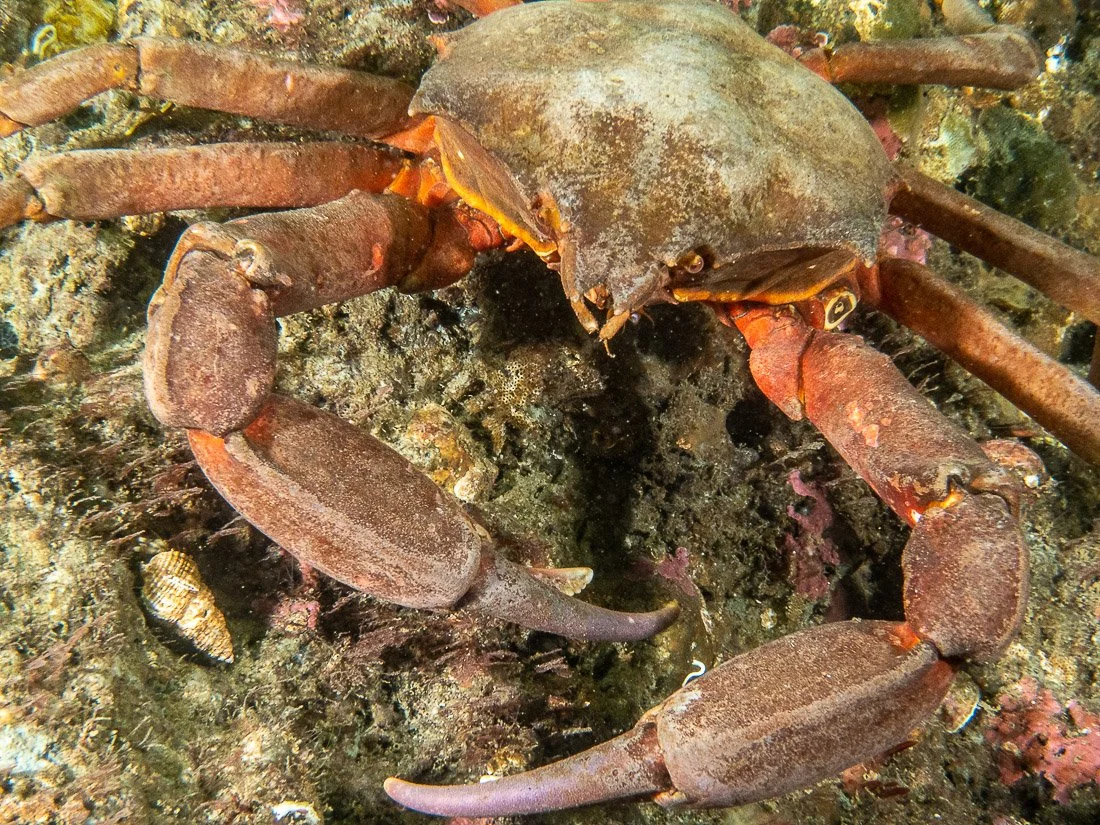
Even the Puget Sound king crab, the largest crab you’re likely to see in the Pacific Northwest, with a carapace that can span nearly a foot across, is unforgettable when you’re lucky enough to spot one. Its shell flashes red-orange under your dive light, edged with faint blue highlights as if brushed with frost.
Sometimes, you’ll notice asymmetry in its claws, with one noticeably larger than the other. This can happen after a molt, when a lost claw is still regrowing, or from years of favoring one claw over the other, like a boxer’s strong hand. That imbalance isn’t clumsy, it’s deliberate. Bigger doesn’t always mean better, but it does mean louder. That oversized claw speaks before the crab ever moves. It says: I’ve survived something you haven’t. I’ve fought. I’ve rebuilt.
Many of them have. Crabs here lose claws to predators, traps, and each other, but they don’t stay broken. They molt, wait, and grow it back slower, a little different, but the same. When you see that heavy claw raised like a crooked banner, it’s not just a weapon, it’s a story of survival, hard-won and costly.
Down here, everything fights to keep going—sometimes with teeth, sometimes with venom. Crabs fight with whatever they’ve got left, rebuilding one joint, one muscle fiber at a time. There’s an honesty in that brutality.
You never forget the first time you see a crab run. It’s not a graceful thing. Not smooth like a seal gliding past or a school of herring flickering in unison. It’s sharp. Sudden. Like something went off inside it. One second it’s there, perfectly still, and the next it’s gone—vanished sideways into the shadow of a rock or beneath a curtain of eelgrass.
That sideways sprint comes from design. A crab’s legs hinge on the sides, not underneath like ours. Each leg pushes like an oar, catching the bottom and shoving the body across the sand with precision. When you see it up close, there’s a rhythm to it, like a dancer on a single beat.
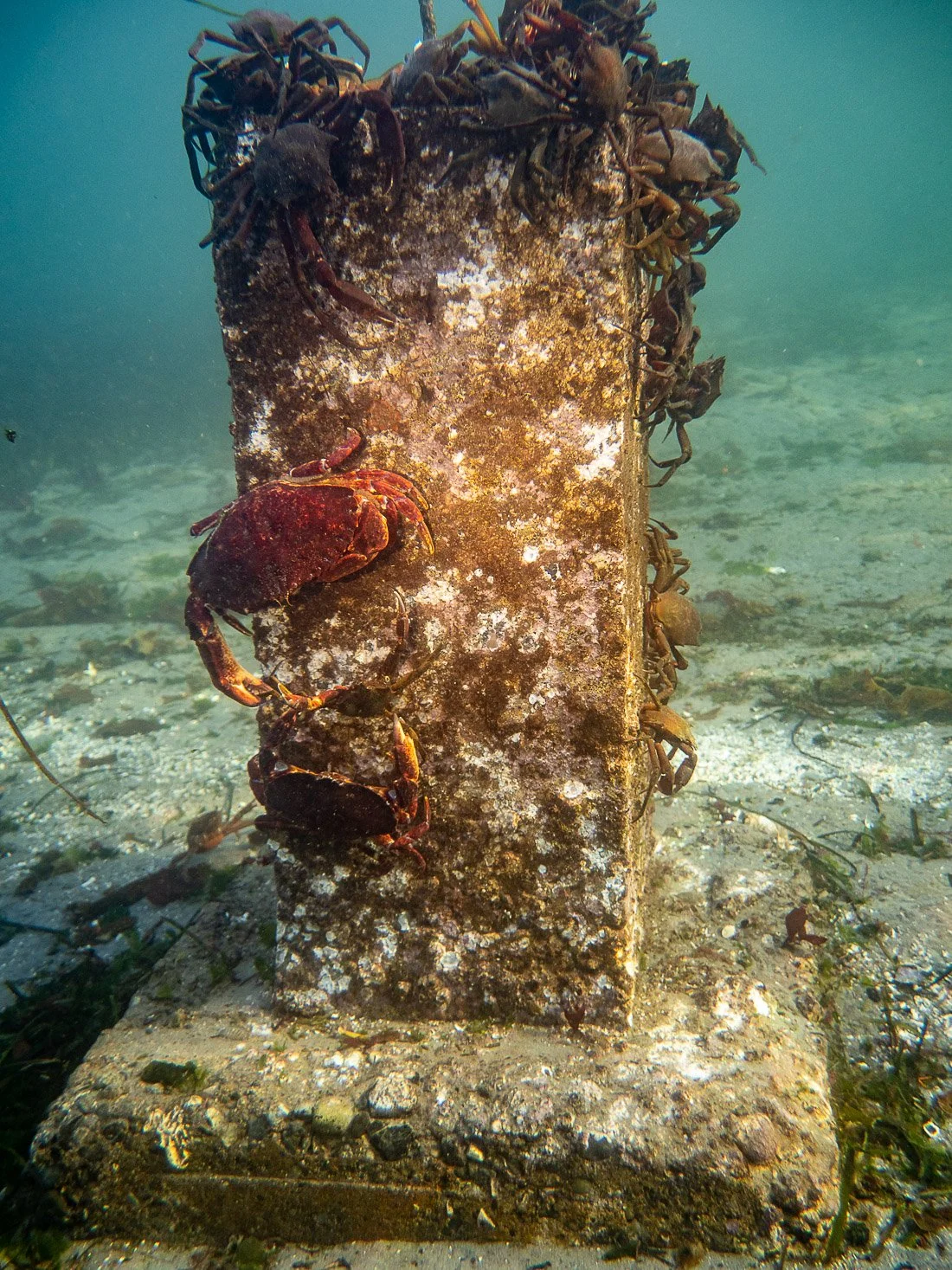
And when they move, they move faster than you'd think. The crabs here in Hood Canal—Red Rock, Dungeness, and the occasional Northern Kelp Crab aren’t built for land speed, but underwater? They’re spring-loaded traps. One second, they’re still, blending into sand or clinging to a piling; the next, gone. Just a blur of motion and a trail of stirred-up silt.
I’ve watched a Dungeness bolt sideways across a sandy shelf with such force it left a trench behind, vanishing beneath a ledge before I could even lift my camera. Kelp crabs don’t move quite as fast, but when they do, it’s sudden, those long, delicate legs pulling their mossy bodies up and over kelp blades like they’re trying to escape the light. Helmet crabs and graceful kelp crabs can vanish into the gloom in a blink if you come too close.
They don’t waste energy, every movement counts. When they go, it’s all at once, like something spooked in the woods, sharp and armed.

I’ve chased more than a few across the bottom camera in hand, bubbles rising just trying to land one clean shot. But more often than not, all I’m left with is a cloud of sand and a shape disappearing into shadow. That’s the game—they always win.
Not all of them run. Some freeze, legs tucked tight, trusting camouflage to outlast your curiosity. Decorator crabs are masters of this—covered in algae, sponges, and stitched-on debris, they hold so still you doubt they were ever moving at all. You notice them only when they twitch once, like something from a dream that leaves no footprints.
Others bluff. The Red Rock raises its claws in defiance, even when outmatched, daring you to come closer. And I’ve seen graceful kelp crabs pull themselves into near-vertical poses, legs extended, trying to look bigger. They don’t want to fight, but they’ll make you think.

Then there are the burrowers, smaller crabs like helmet crabs or hairy shore crabs. When spooked, they vanish downward instead of outward, kicking up sand as they wedge themselves under rocks or into old clam holes. They disappear.
Every crab makes a decision in that split second before it moves: fight, freeze, flee, or fade. They don’t choose wrong more than once. Here, hesitation means you get eaten. And if you’re lucky and quiet, you get to watch them make their choice. When they stop—when they finally wedge themselves beneath a rock or vanish into the reef’s contours—they don’t pant or pulse like a fish might. They just stop, as if nothing ever happened.
Down here, it’s not the fastest creature that survives. It’s the one that knows when to run, how to vanish, and what angle to take when it does. Crabs figured that out a long time ago.
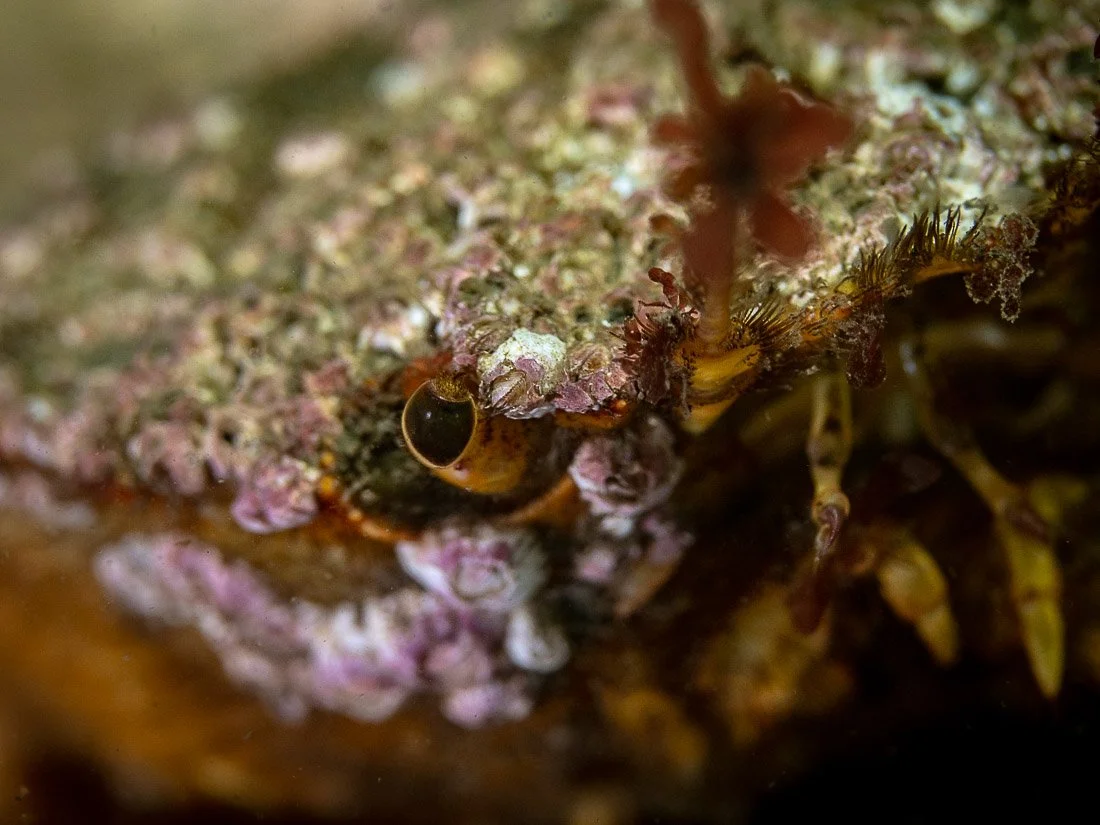
The eyes are the first thing you notice, two dark marbles on stalks, swiveling like radar dishes in the murk. They move independently, scanning front and back at the same time, and it’s unsettling in a way I can’t quite shake. I’ve knelt in the silt, barely breathing, and watched a crab watch me, one eye fixed on my mask while the other seemed to scan the reef behind it, like it was calculating the best escape route. Or maybe waiting to see what I’d do next.
But crabs aren’t just watching. They’re communicating in ways most people never notice. They tap, drum, raise, and wave their claws in deliberate patterns, not just to warn or threaten but to talk. Males might flash their chelae, the front claws built like living pliers—part weapon, part tool—each ending in a sharp, hinged pincer. Look at me. I’m strong. I’m ready. Don’t come any closer. It’s a kind of semaphore, silent and specific, evolved not for show but for survival. Some species send messages through the seafloor by drumming with their legs.
The closer you look, the more the body itself becomes a language.
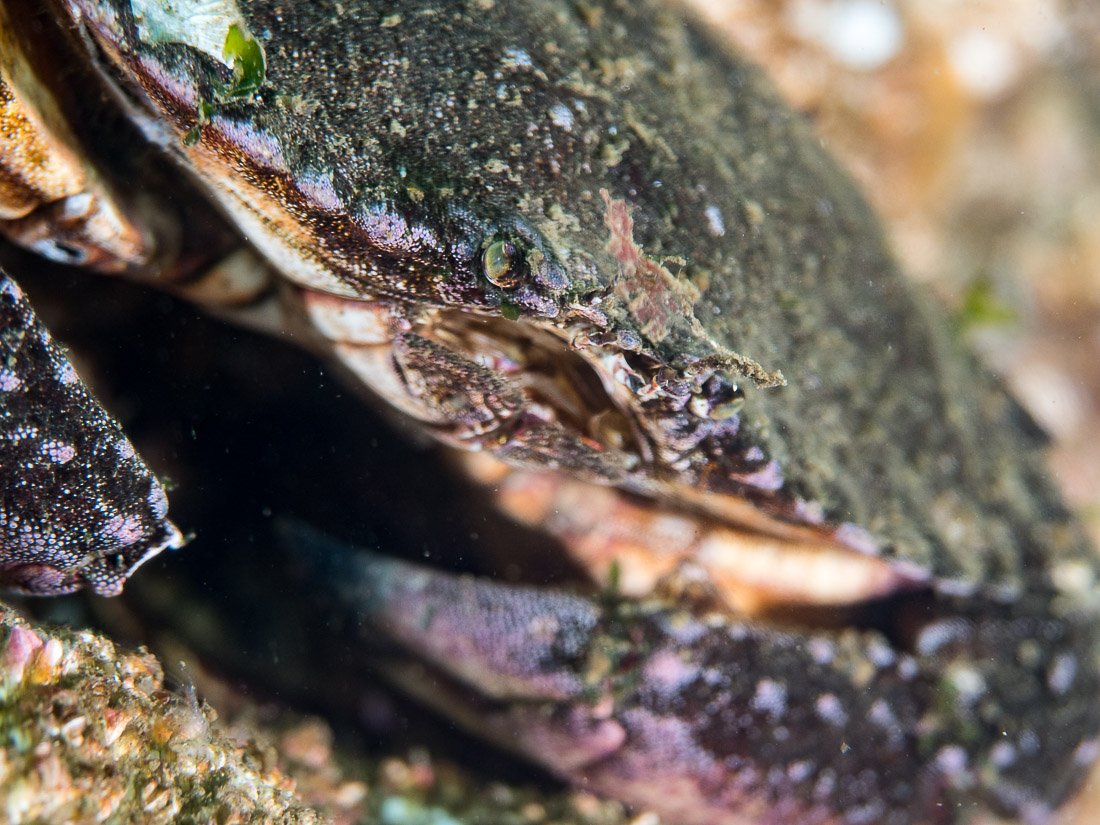
Beneath that armored face, their mouthparts are hidden in plain sight, tucked up under the shell like something secret. Most people never notice them. But divers have time. We wait. We watch. And if you’re patient, you’ll see those tiny, feathered appendages in constant motion, pulling in food, sorting it, filtering it, working like a factory line. It’s never still. Even when a crab looks motionless, it’s chewing through the world one particle at a time.
And they’re not picky. Crabs are opportunistic feeders—algae, plankton, fish scraps, rotting kelp, even other crabs if the tide turns cruel. I’ve seen it happen fast, almost clinical. No ceremony. No malice. Just need.
They speak through motion, posture, and action, enough where sound doesn’t carry and light doesn’t last.
Beneath the shell, hidden to most, lies one of the weirdest parts of crab biology: they breathe through gills, just like fish. The gills are tucked into chambers beneath the carapace, kept moist by leg movements and flaps called scaphognathites that pump water over them. I’ve seen crabs dug into damp sand during low tide, perfectly still but alive, waiting for the tide to return.

Here's something most folks don't realize: you can tell male and female crabs apart by flipping them over. Males have a narrow, pointed abdominal flap; females have a broad, rounded one shaped like a dome. That’s where they carry their eggs, thousands packed tight like orange caviar, gently fanned with back legs to keep oxygen flowing. It’s a strange kind of tenderness, watching it happen underwater. There’s something ancient about it. Something careful.
When you see a crab crawling across the bottom, it’s easy to think of it as just another bit of marine clutter, another scuttling shape in the gloom. But inside that shell is a creature perfectly engineered for survival, part armor, part instinct, part mystery. The more time I spend with them, the more I believe they’re not just part of the seafloor. They are the seafloor, living, crawling, biting proof that nature doesn’t waste time on beauty when function works better.

And still, somehow, they're beautiful.
Crabs aren’t just skittering distractions; they’re survivors in a complex life cycle that begins as floating larvae barely bigger than plankton. After hatching, young crabs go through multiple molts, shedding their exoskeletons to grow. These larval forms, called zoeae, drift with the currents—tiny, vulnerable—before settling to the bottom where the real battles begin.
Molting continues in adulthood. During these soft-shelled interludes, crabs are most vulnerable. Many hide in the sand or under rocks. For females, it’s the only time they can mate, making it a moment of both risk and opportunity.
Once fertilized, females carry eggs on their undersides like a clutch of orange grapes. Watching a crab fan her eggs with rhythmic leg flicks reminds you that even armored creatures tend their young with surprising delicacy.
Not all eggs survive, and not all crabs do either. For every empty shell tumbling in the current, another waits just out of view, ready to take its place.
As a diver, I’ve learned that the best moments often happen in the periphery. You come for the wolf eel or the octopus, but you stay because something small scuttles in and steals the show. Crabs are like that, endlessly watchable, hard-wired to move, eat, and thrive.
Next time you’re under the surface or in a tidepool, watch a crab at work. There’s a world in those legs, strange and alive as anything in the sea. A reminder, we’re only visitors in their kingdom.
Thom Robbins Bio
I am fascinated with the underwater world here in the Pacific Northwest. I have been a diver for over thirty years and have never been happier than underwater with a camera. I spend as much time underwater as possible, writing, shooting pictures, or teaching diving and photography. You can learn more about me at https://www.thomrobbins.com.
When not diving, I spend time with my wonderful, patient wife, Barb. We live in Shelton, Washington, where we relish a relaxed lifestyle close to world-class diving spots. Barb’s support has been instrumental in my passion for diving; she is my best and often harshest critic, constantly pushing me to capture better photos. Our 21-year-old son inspires me to be a better person every day. Completing our family are our two English Bulldogs, who bring us endless joy.

October is for Oysters in Mason County
With OysterFest the first weekend of October, we know its a great time to harvest oysters! Many of Washington’s public beaches are open year-round, and all you need is to check the tides and open beaches — grab your bucket, gloves, shucking knife, shellfish license, and head out to the local beach! As Jeff heads over to Verle's LLC to pick up his license and get tips on the best beaches to visit, join local harvesters Michael and Charlotte as they head to Hood Canal’s Eagle Creek beach to fill their frying pan and demonstrate shucking techniques and a quick and easy recipe for a beachside cookout! Can’t get any fresher!
With OysterFest the first weekend of October, we know it’s a great time to harvest oysters! Many of Washington’s public beaches are open year-round, and all you need is to check the tides and open beaches — grab your bucket, gloves, shucking knife, shellfish license, and head out to the local beach! As Jeff heads over to Verle's LLC to pick up his license and get tips on the best beaches to visit, join local harvesters Michael and Charlotte as they head to Hood Canal’s Eagle Creek beach to fill their frying pan and demonstrate shucking techniques and a quick and easy recipe for a beachside cookout! Can’t get any fresher!

Hundreds of varieties yet only five species | Oysters explained
There are over 150 varieties of oysters harvested and sold in North America, yet they comprise a total of only 5 species of oysters.
How does your Oyster Grow?
Have you ever wondered how the same species of oyster can have such varied flavors or textures? How does an oyster grown on Hood Canal taste brinier than one from South Puget Sound? The word to remember for your next oyster social occasion is “merrior.”
Like different wines with a “terrior,” oysters have a merrior, illustrating the fact that growing area and method make all the difference when it comes to flavor profile for your next Pacific oyster.
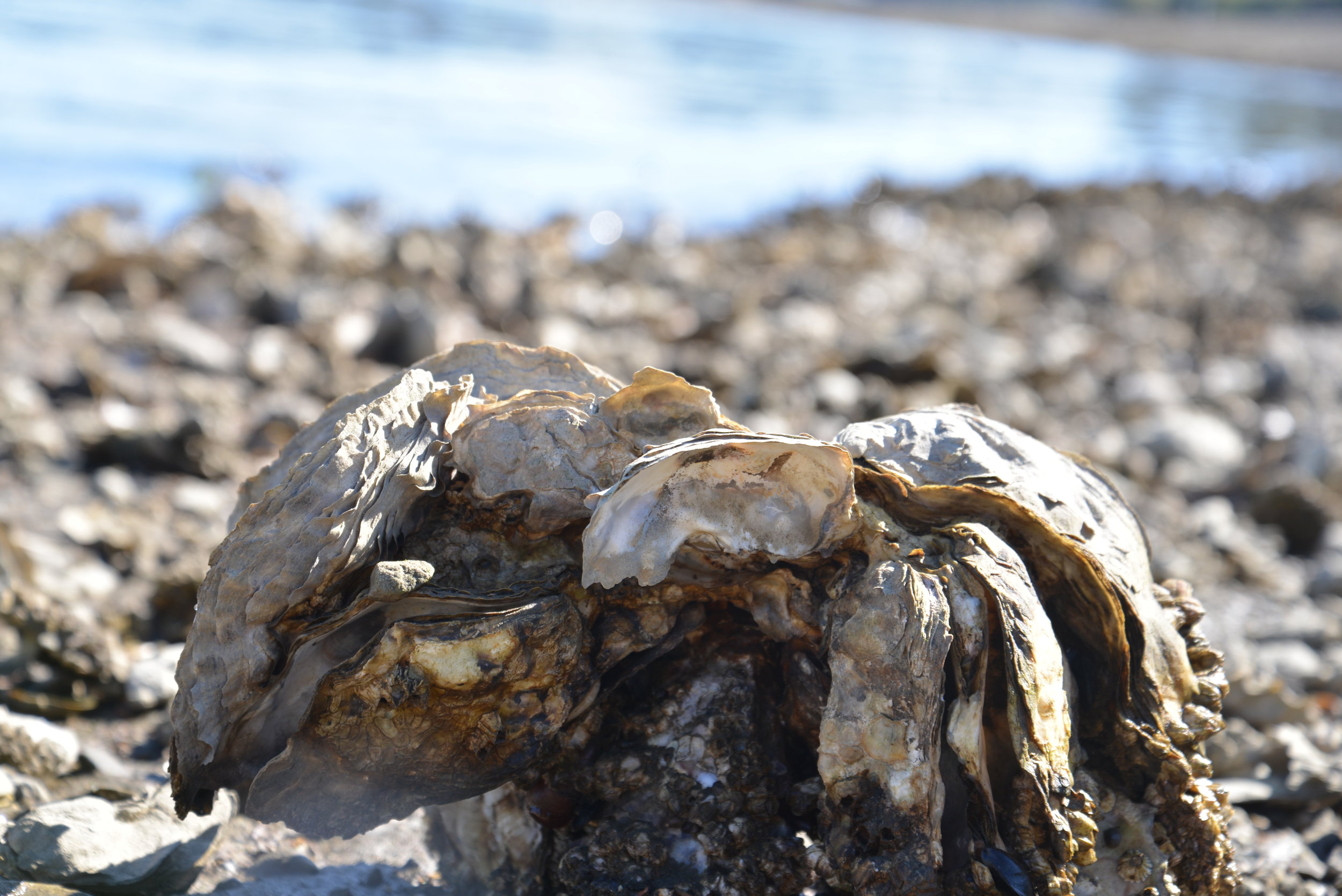
Not all beaches are created equal; some are muddy, some sandy, and some rocky. Each type of growing ground has opportunities and limitations for success. Muddy ground can inhibit the oysters’ ability to circulate water and food into their bodies. This had led to the adoption of culture techniques that suspend the oysters above the mud in long lines, stakes, nets or racks, and bags, while firm, sandy, or rocky bays allow for oysters to be grown right on the beach.
In addition to substrate type, location of the oysters on the beach will determine how long the oyster will take to achieve a marketable size. Oysters grown in the intertidal area are exposed to daily tidal inundation will have well developed adductor muscles and thicker shells thus being heartier for shipment. Oysters suspended in the water column for growing will have the benefit of a constant food source and thus grow quickly but will have delicate shells and be susceptible to the elements. Often times, suspended oysters are placed in the high energy intertidal environment for a few weeks prior to market to harden the shells for shipment and condition the oysters to hold their shells shut.
The method of growth can greatly change the shape of the oyster. A Pacific allowed to grow naturally on the beach will have a sturdy irregular shell with a great deal of frills. The regular exposure at low tide strengthens the shell protects the meat from heat and predators like sea stars and crabs. In Europe, where there is very limited tidal change, some farmers manually pull the oysters from the water for periods of time to mimic the tidal action.
The tumble bag creates an altered but very marketable shape for cultured oysters. Oysters are placed in the bag as small seed and the tide does the rest. The tidal flip and roll chip off the fragile lips and force the oyster to curve. The result is a deep cup in its lower shell.
“Eat shellfish to provide a healthy diet. Shellfish are low in saturated fats, containing the essential omega-3 fatty acids; are excellent protein sources; and are good sources of iron, zinc, copper and vitamin B-12.”
wsg.washington.edu
Each bay has its own selection of phytoplankton yielding oysters with different meat colors and flavors. Pacific oysters grown in Willapa Bay have a different merrior from those grown in Samish Bay. Hood Canal oysters are claimed to be more briny than the sweeter cucumber flavored bivalves grown in Hammersley Inlet or South Puget Sound waterways. Just like the well attuned vintners of the Rhone Valley, oyster connoisseurs are able to detect the subtleties of each bay by tasting the meat and observing the shell.

Know your oysters
There are over 150 varieties of oysters harvested and sold in North America, yet they comprise a total of only 5 species of oysters.
1. Olympia
OSTREA LURIDA /OSTREA CONCHAPHILA
The native oyster to Washington State, the Olympia oyster is a half dollar size with a metallic finish. The Olympia oyster fishery ran from the mid-1800s until about 1915 supplying California’s demand for oysters. The oysters were harvested from shallow bays of southern Puget Sound and Willapa Bay until pollution and over harvesting caused a collapse of the wild fishery.
2. Pacific
CRASSOSTREA GIGAS
Native to Japan, farmers began experimenting with the Pacific in 1904. Washington began importing commercial seed in the 1930’s and now it is now the most important commercial species on the West Coast. Beginning in the 1950’s researchers began to study Pacific reproduction to reduce the dependence on seed imports. Since the 1970’s local shellfish growers have relied on hatcheries for the production to meet the demand for Northwest oysters.
3. Virginica
CRASSOSTREA VIRGINICA
The decline of the Olympia oyster opened the door for the import of the Virginica from the east coast in the early 1900’s. The eastern oysters did not adapt well to local waters and experienced large die off when transplanted. There are still beds of Virginicas raised by WA shellfish farmers.
4. European Flats
OSTREA EDULIS
European Flats have smooth, round, saucer-like, flat shells with a shallow cup and seaweed-green color. They have a bold flavor with a meaty, almost crunchy texture, and intense mineral bite with a long-lasting seaweed flavor and gamey finish. There are not many farmers cultivating Flats.
5. Kumamoto
CRASSOSTREA SIKAMEA
The Kumamoto has a small deep cup and a sweet meat. Brought from Japan’s Kumamoto Prefecture, they are unable to reproduce in our cold waters so growers rely on hatchery stock. The prized cup of the Kumamoto and its limited supply has growers working with Pacifics to meet half shell demands. Growers use tumble bags to force the Pacific into a deeper cup. Oysters with names such as Kusshi, Shigoku, Sea Cow, Blue Pools, Chelsea Gems, and Baywater Sweets, are the result.

Why is it required to shuck oysters on the beach at public tidelands?
Oysters taken on public tidelands must be shucked on the beach and the shells left behind for the following conservation-based reasons according to the Washington Dept of Fish & Wildlife website, wdfw.wa.gov:
Oyster shells provide the best growing substrate for juvenile oysters. Removing the shells from a beach reduces the overall amount of setting surface. In addition, Pacific oyster shell provides an excellent setting surface for the native Olympia oyster. This is especially true in places like southern Puget Sound where the natural setting surface - Olympia oyster shells - was eliminated years ago by overharvest.
Another concern is that removing large Pacific oyster shells removes tiny oysters which are attached to the larger shells. Thus, removing a legal limit of 18 oysters may actually remove three to five times that number of oysters - young oysters which would otherwise remain on the beach and grow to edible size.
Removing oyster shells from beaches containing Japanese oyster drills (an oyster predator) may result in the inadvertent spread of these predators. Sport harvesters are unlikely to recognize these tiny predatory snails - or their egg cases - which attach to oyster shells and can survive long periods away from water. Once shucked, these shells often end up being returned to a nearby beach by well-meaning harvesters, potentially increasing the spread of the Japanese oyster drill in Washington by depositing the “hitchhikers” on a new beach.
Many public beaches already have these tiny predators, but the goal is to minimize the spread to other uninfected beaches. The surest way to prevent oyster drills or their eggs leaving an infected beach is to require oyster shells to remain on the beach.
So head to the beach and get shucking! You will need a shellfish license, an oyster knife and gloves. Adults may shuck a child's daily limit so long as the child participates in some way in the gathering. For illustrated details on two popular shucking methods, visit wdfw.wa.gov/fishing/shellfish.
Its time to paddle
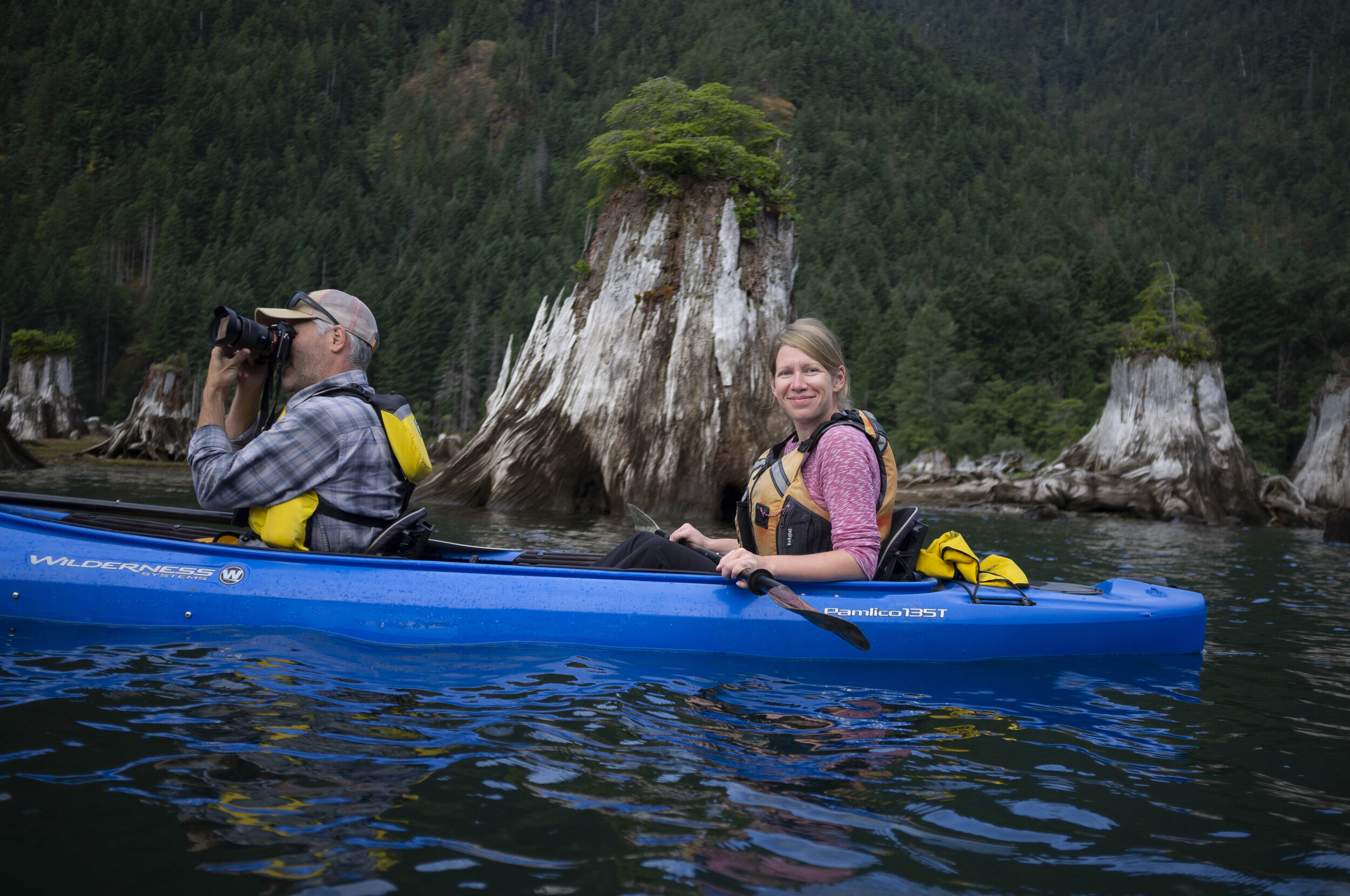
With balmier weather and longer days, it is time to get outside and explore the shores and waterways of Hood Canal and the inlets of Mason County. Kayaks, canoes and stand up paddleboards are a great way to be on the water without the expense or headache of a powerboat.
With balmier weather and longer days, it is time to get outside and explore the shores and waterways of Hood Canal and the inlets of Mason County. Kayaks, canoes and stand up paddleboards are a great way to be on the water without the expense or headache of a powerboat.
Get on the water
Whether you seek tide-ripped saltwater passages, challenging whitewater, or lakes big and small, Hood Canal is a kayaker, canoer, or paddleboarder’s ideal destination. Few places in the world can match the stunning scenery and easy access of the Hood Canal region. Sea kayakers can explore seemingly endless miles of pristine saltwater shoreline, cruise the reaches of lakes Cushman and Kokanee in the foothills of the Olympic Mountains, or ride the gentle currents of the Skokomish and Tahuya Rivers.
Wet your paddle with these adventure ideas:
Explore Skokomish River, using public put-in on Sunnyside Rd, just north of the Skokomish Valley Rd.
Launch at Shelton Marina or Walker Park and paddle (with the tide) out Hammersley Inlet to Hope Island. Ride the tide back for a little help with the paddling. There is a strong current in this passage that is difficult to paddle against but great to use to your advantage. It is necessary to be aware of the tides. If you miss the tide, head to the inlet shores to escape the prevailing currents. Hope Island can also be reached with an easy paddle from Arcadia Point boat launch. At the launch you will find plenty of parking and easy access to the water. Hope Island has sandy beaches all around the island for easy landing and plenty of trails to explore.

Hood Canal can be unpredictable with weather “outbursts” but generally putting it at Potlatch State park in early morning or in the evening after the afternoon breeze has settled can be rewarding.
Paddle the lower reaches of the Skokomish near Union, explore the shores of Hood Canal or explore any of the lakes.
A great Mason County destination is Lake Kokanee, or Lower Lake Cushman; this scenic lake channel wind, so watch the weather.

Rob Casey image | Salmon Bay Paddle Hammersley race.
An interesting two-hour paddle starts at the boat launch at Lake Isabella. At the far end of the lake, enter Mill Creek through a patch of water lily pads. Glide through the willows for half a mile before the stream drops and becomes too shallow to navigate.
The rivers of Olympic Peninsula are renown for their great beauty as well as their technically difficult white water rafting and kayaking routes. Placed high in the wilderness of the Olympics, the rivers that drain into Hood Canal are wild, steep and undeveloped. However, do you research before you go! Many are Class IV - V rapids and are not to be attempted by the novice paddler. For information on white water sites in the area, americanwhitewater.org provides excellent river classifications and descriptions. Gary Korb’s, A Paddlers Guide to the Olympic Peninsula (1997), is also an invaluable resource before attempting these rivers.

Case Inlet’s calm waters and sandy beaches are renown for paddling popularity
Kayak rentals
If you are just getting your paddles wet, or are a seasoned paddler, there are some great opportunities in Mason County for kayak or SUP rentals. Hood Canal Events offers organized excursions with catered meals. Hoodsport Kayak Rentals, offers hourly rentals and excursions with kayak or pedal boat drop off at nearby Kokanee Lake. Hood Canal Adventures, located in Brinnon, has a fleet of single and tandem vessels and offers biologist guided eco-tours by kayak or SUP.
Additional resources for rentals and guided tours available here.
Watch for paddling events
Hood Canal and South Puget Sound is often host to kayak and SUP races and events. SUPs, canoes, and kayaks lend themselves well to COVID sensitive planning with cute mottos like “keep a paddle distance apart.”
Salmon Bay Paddle recently included Hammersley Inlet in their paddling competition series this May complete with a sea kayak paddling clinic in their event held at Shelton, Hammer the Inlet.
Based out of Seattle, Salmon Bay Paddle is the leading provider of personalized one-on-one and small group stand up paddle board (SUP), kayak and surf ski lessons in the Pacific Northwest. Owner, Rob Casey, is the author of two paddling books and is considered a pioneer of stand up paddling by Stand Up Journal Magazine. Rob and his certified coaches travel the Northwest offering paddling skills and safety classes from beginner to advanced paddler. Salmon Bay Paddle’s event on Hammersley included guest speaker, ICF World Champion Fiona Wylde, hosting a SUP racing clinic at the Shelton Yacht Club; the Hammer the Inlet Race and on-site kayaking clinics.
Thirty-one paddlers participated including eighteen SUPs, eight kayaks, two rowers, an outrigger canoe, and one rowboat (romantically called Starlight). Beginning at Shelton’s Yacht Club, paddlers took the 1.9 knot ebb out from Shelton and the 1.4 knot flood current back up the winding picturesque inlet to where it empties into lesser Puget Sound.

Rob Casey Image | Hammer the Inlet Race 2021
Paddlers call this run the ‘Hammersley Shuttle’ for the tidal push allowing for a nice glide with the current. Back eddies and eddy-lines add a little spice or challenge around the various bends and curves at Skookum and Libby Points and Cape Horn. The fastest vessel to complete the grueling 15.3 mile Hammer the Inlet Race was a SUP that clocked in at 2:18:32.7. Participants faced a challenging race with strong 15 knot winds, cross current conditions, and a muddy, low tide finish line – resulting in some comical watercraft exits.
After the race, fourteen dozen local oysters were enjoyed from South Sound Mariculture. Part of the race proceeds were donated to the South Sound Restoration Project.
Be water smart:
Paddling events are a great way to share ideas on skills as well as water safety. Like the trails and parks filling to bursting, COVID restrictions have led to a rise in purchase of personal watercraft but perhaps not an increase in water safety awareness. Kayaks and SUPs, mass produced for the desperate consumers in dizzying shades of enticing colors, are available at every big box store promising a cheap and easy way to get freedom on Washington’s waterways. Although one can be delighted that sales surged and people got outdoors, the risk associated with little instruction on proper use offered by stores online or giants like Walmart or Dick’s has led to a much more disturbing fallout than litter and over-crowding in our parks.
Accidents and drownings statistics in 2020 were so alarming that a Bill was proposed to require safety certification for all people on the water — not just for those in powered boats over 15 HP.
The current rules are simple and common sense should prevail.
Wear a life jacket, understand your surroundings, educate yourself about winds, currents, tides, travel in groups and develop a safety plan. Take advantage of public events to educate yourself.
There are also plenty of useful online resources and books. Book yourself lessons with Salmon Bay Paddle and become a paddling pro –they even offer online courses, so you could learn some basics before you head out. Even if you aren’t using a watercraft with a 15 HP engine, the Washington State Boater safety course is only a short online course with an exam and costs $29.95 plus tax.
Additionally, the friendly staff at outdoor stores such as Verle’s, Hood Canal Adventures, and Hoodsport Kayak Rental can answer questions and make recommendations about water conditions, good local spots to check out and other queries you may have.

Searching for Shellfish
The traditions of clam digging and oyster harvesting run deeply through the historical veins of the Olympic Peninsula. Check out this easy itinerary from Shelton to Oakland Bay on South Puget Sound’s Hammersley Inlet.
The traditions of clam digging and oyster harvesting run deeply through the historical veins of the Olympic Peninsula. As one of the most bountiful places in the country when it comes to sea-fare,a visit compels us to unearthing our boots, shovels, and spades from the back of the garage.
With a thirst for adventure and a hankering for the freshest seafood around, we'll bee-line to our favorite digging grounds and want to take you with us as we embark on the adventure.
Caffeination Station | 9am
To get the most out of your endeavors, hitting the beach for the hour and a half before and the hour and a half after low tide is optimal. While it fluctuates over time, and you should always check the tide chart before heading out. If its morning, stop by Urraco Coffee Co. for an in-house roasted bean and a fresh baked goodie. Lounge on the dog friendly garden patio and be sure to take a bag of one of their deliciously gourmet beans with you.

Hitting the Beach
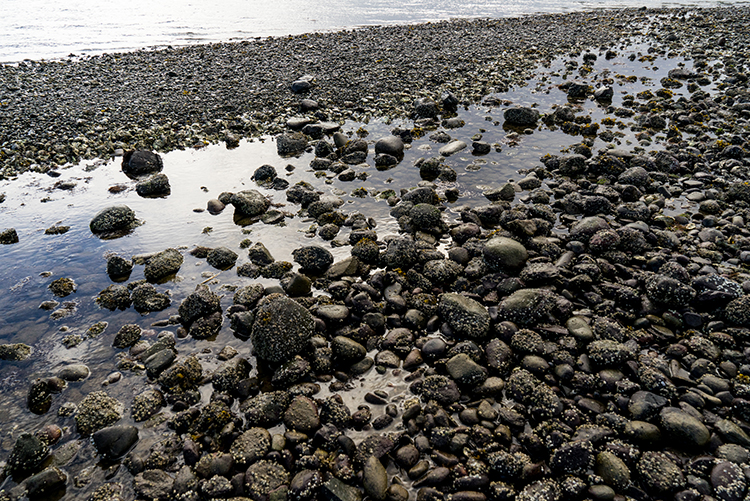
A short ten minute drive from Urraco takes you to the Oyster Reserves of Oakland Bay. Digging for both clams and oysters are permitted year-round. Most outdoor supply stores and even gas stations in the area will sell one, two, three day, or annual shellfish licenses for reasonable prices. Don't get caught without one! Don your rubber boots and your gloves, grab a bucket (regulations require that each adventurer has his own), and a clam rake and get to it!
Oakland Bay’s bounty is easily harvested at higher tides and requires little need to venture into the thick mud at the lowest point on the beach. Manila clams can be found in abundance and oysters can be spotted around every corner. Be sure to know the regulations of any site you visit.
Remember: the eats are only good if the creatures are alive and remain so until you are ready to throw them down the hatch. This means you should avoid broken shells or shells that aren't tightly closed. Leave damaged specimens in the ground, and keep up with current beach closures due to red tide and other harmful toxins here.

Enjoy the Harvest
Leisurely evenings in Hood Canal are second-to-none and that’s before you have a pot of Manila clams bubbling away in a savory sauce made with Hoodsport Winery riesling in front of you. There are a myriad of ways to prepare your shellfish harvest, but the experts from Taylor Shellfish Farms have a few tried-and-true recommendations that you can find here.

As the sun slowly sets on Hood Canal, remember that we love to see it all from your point of view. Share with #explorehoodcanal #hoodcanal and #wildsideWA and keep up with us on Instagram, Facebook, Twitter, and Pinterest for more adventure around the Olympic National Park. Happy gathering!
Monday – Friday: 6am to 7pm
Saturday: 7am to 7pm
Sunday: 7am to 5pm
Oyster Reserves of Oakland Bay
Rules (species specific)

Fresh Shellfish from the Source
Want to visit the farmers that wake up on the night tides to bring you the perfect oyster, clam or geoduck? Check out these farms on and around Hood Canal!
In Search of Perfection
Want to meet the farmers that wake up on the night tides to bring you the perfect oyster, clam or geoduck? Check out these farms on and around Hood Canal!
Chelsea Farms & Olympia Oyster Bar
Chelsea Farms | photo:poppi photography
Eld & Totten Inlet
Chelsea Farms is a current working model of environmental sustainability. They have made a priority of farming the Olympia Oyster, a native oyster to Olympia, that was on it’s way to extinction. Specialties include their Chelsea Gem, Bonita, and Olympia Oysters, along with fresh clams and geoduck. Visit their Oyster bar in downtown Olympia to get the ultimate local seafood experience!
Let’s Go:
CHELSEA FARMS OYSTER BAR
222 CAPITOL WAY N, OLYMPIA, WA 98501
Phone: (360) 915-7784
Hours: TUES-FRI 11AM-9PM, SAT 10AM - 10PM | SUN 10AM - 9PM
menu
Hama Hama Oyster Farm
Lilliwaup, Hood Canal
A few years ago the Hama Hama Oyster Co opened their Oyster Saloon in Liliwaup. This high energy destination serves oysters pulled from the last tide and prepared to order with an ever changing menu of seasonal local ingredients. In their retail shop you can purchase a variety of their Hood Canal product including salmon and oysters smoked on site. Hama Hama is a 5th generation family run farm with a reputation for quality and environmental mindfulness.
Let’s Go:
HAMA HAMA OYSTER CO
35846 US-101, Lilliwaup, WA 98555
PHONE: (360) 877-5811
FALL Hours: Farm Store Daily 9:30 to 5:30
Oyster Saloon Thurs - Mon 12:00 - 5:30 (Closed Tuesday & Wednesday Starting 9/5)
Shellfish is available in their retail store, Saloon and at parent restaurants throughout the Northwest.. Product also available online and shipped directly to your home.
Olympic Oyster Co. & Mike’s Beach Resort
Eldon, Hood Canal
Third-generation farmers, Matthew and Sara are serious about producing some award winning oysters on site for market and available at restaurants as far away as New York. Guests staying on the active farm aka Mike’s Beach Resort have first dibs on some of the freshest oysters on the fjord!
Let’s Go:
Mike’s Beach Resort
38470 N US Highway 101, Lilliwaup, WA 98555
Phone (360) 877-5324
Waterfront cabins and rooms, with view of the canal.
Taylor Shellfish
South Puget Sound and British Columbia
Stop in at Taylor Shellfish’s headquarters and visit their market near Shelton. Taylor’s specialties include the famed Kumamoto (sweet fruity flavor) and the Virginica (Crisp, briny, and buttery). The company has been farming oysters on Puget Sound since the 1890’s when great-grandfather Justin Taylor began farming Olympias. Five generations later, the company’s product line includes worldwide export of geoduck, clams, and mussels along with oysters.
Let’s Go:
TAYLOR SHELLFISH RETAIL STORE
130 SE Lynch RD Shelton WA, 98584
PHONE: (360) 432-3300
Hours: Monday - Sunday: 10am - 6:00pm; Closed all major holidays
Shellfish is also available at one of their many locations throughout NW Washington. Product also available online and shipped directly to your home.