
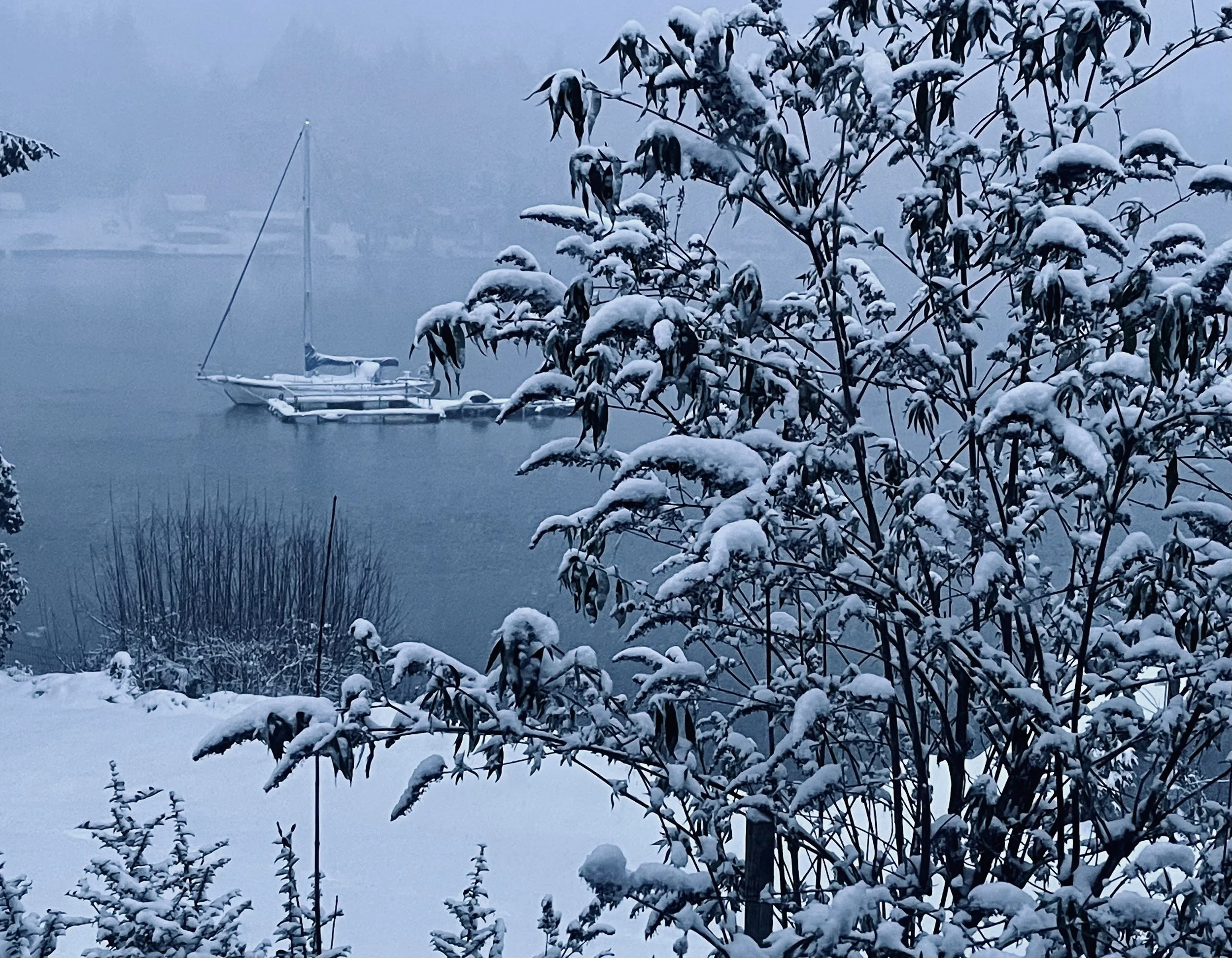
H/T Tracing The Fjord | Winter ‘25
If you live or spend any time along Hood Canal or in the South Sound, you get used to checking the tides. They shape when people head out for recreation, plan a boat launch, or keep an eye on their waterfront. But the names we use for tides can feel a little mysterious until you break them down.
Tides are the rise and fall of the ocean caused by the gravitational pull of the moon and the sun. As the Earth turns, our area passes through these gravitational pulls, which is what causes the highs and lows we notice along the shoreline. Most of the Pacific Coast, including Hood Canal and South Puget Sound, experiences what’s called mixed semi-diurnal tides, meaning two highs and two lows every 24 hours. Still, each one is a little different in height. Regular tide-chart watchers recognize that pattern right away.
You’ll also hear terms like spring tides and neap tides. Spring tides aren’t tied to the season. They happen when the sun, moon, and Earth line up, which creates higher highs and lower lows. Neap tides are the opposite. They arrive when the sun and moon are at right angles to each other, pulling the water in different directions and producing milder highs and lows.
Another term that comes up often in winter is king tide. It’s not a scientific label, but a common nickname for the year’s highest tides. These happen when the moon is closest to Earth and lines up with the sun. Around Hood Canal, king tides can raise water levels several feet above normal. People may notice when the shoreline creeps inland and low-lying roads collect water.
In winter, tide shifts carry a different rhythm. Many of the lowest tides show up in the early morning or evening, long before daylight. Boaters and paddlers will see water levels changing faster through the Great Bend or around Ayock Point. Homeowners might keep an eye on their docks and pilings, since deep lows can expose more structure than usual.
Shellfish growers around the canal monitor winter tides too, since cold air paired with low water can stress their crops. And for anyone heading out to collect shellfish on local beaches, those low tides can be inviting—just make sure you have the proper license and check harvest openings before you go.
A better understanding of the tides helps explain what we see every day along the Canal. And for anyone heading out in the winter months, a quick tide check remains one of the easiest ways to stay safe and make the most of the season.