
Wildside Harvest
A local super fruit salal contains compounds high in antioxidants that are full of health benefits, such as decreasing inflation, promoting cardiovascular health as well as a myriad of nutritional benefits.
Stella Wenstob | photos & story
Summer is fading, its warmth edged by the cool, crispness of fall. Theres a dampness that only can be shaken by a warm fire or a cozy drink. It is almost time to dig into the back of your closet and find that sweater that you forgot about last Spring, but you know that if you put it on in the morning, by lunch time you’ll be sweating it off. They call September a transition month, but menopausal might be more accurate. Salmon start working their way up inlets and streams and blackberries begin to rot on the vine.
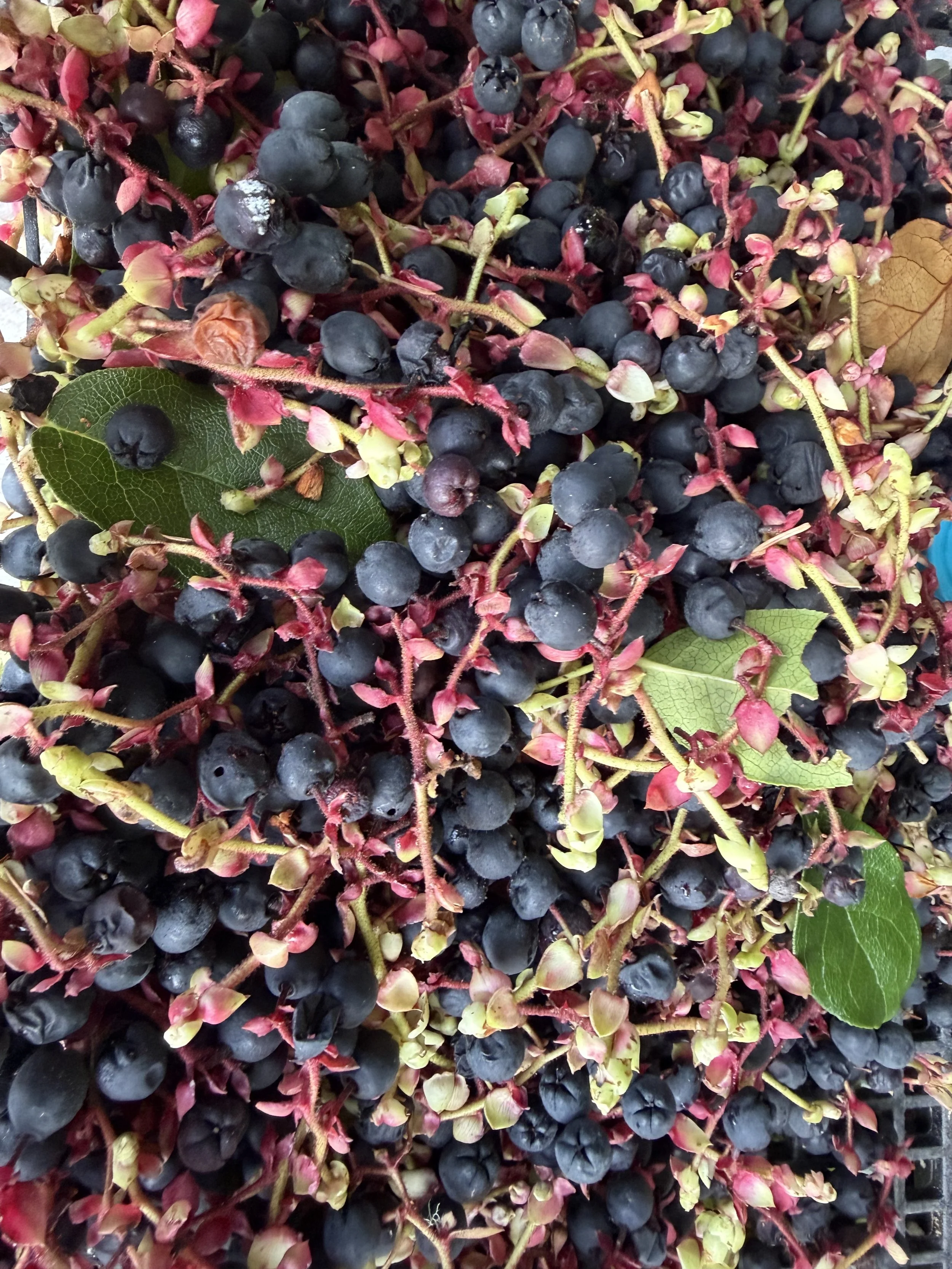
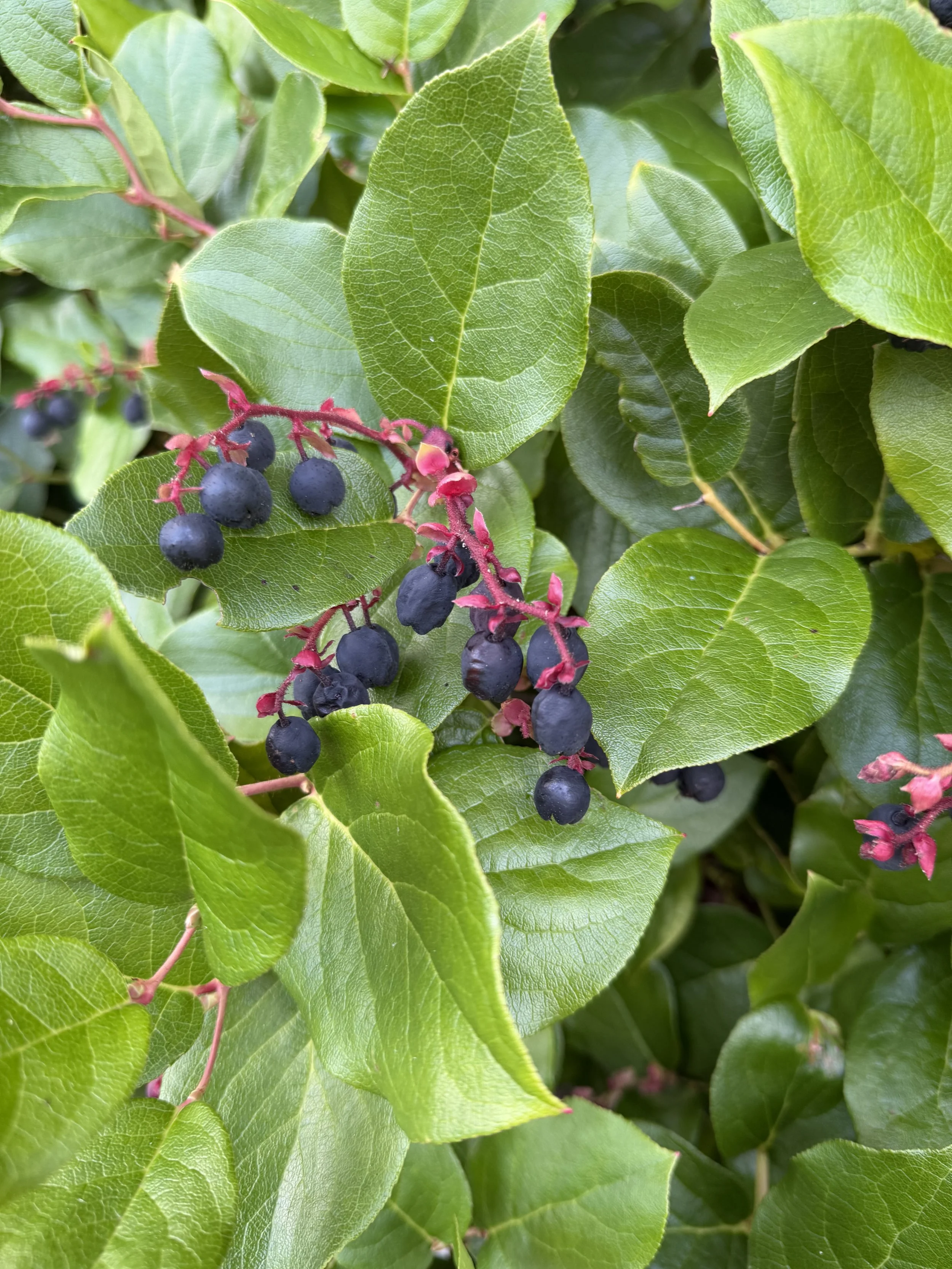
But this is not the end of the natural bounty of the Pacific Northwest. Oysters are ready for the picking. And local fruit, such as the purplish berry-like swollen sepal’s of salal (Gaultheria shallon) and the dark or sometimes bluish evergreen huckleberry (Vaccinium ovatum) are adapted to the dampness, they contain high proanthocyanidins, which have strong antimicrobial properties that deter moulding. These proanthocyanidins are a type of tannin that are found in tree barks, roots, leaves, and fruits of plants, but the salal berry’s content is charted as one of the highest in the berry world (higher in some healthy compounds than blueberry, lingonberry, and cranberry). A local super fruit salal contains compounds high in antioxidants that are full of health benefits, such as decreasing inflation, promoting cardiovascular health as well as a myriad of nutritional benefits.
SALAL
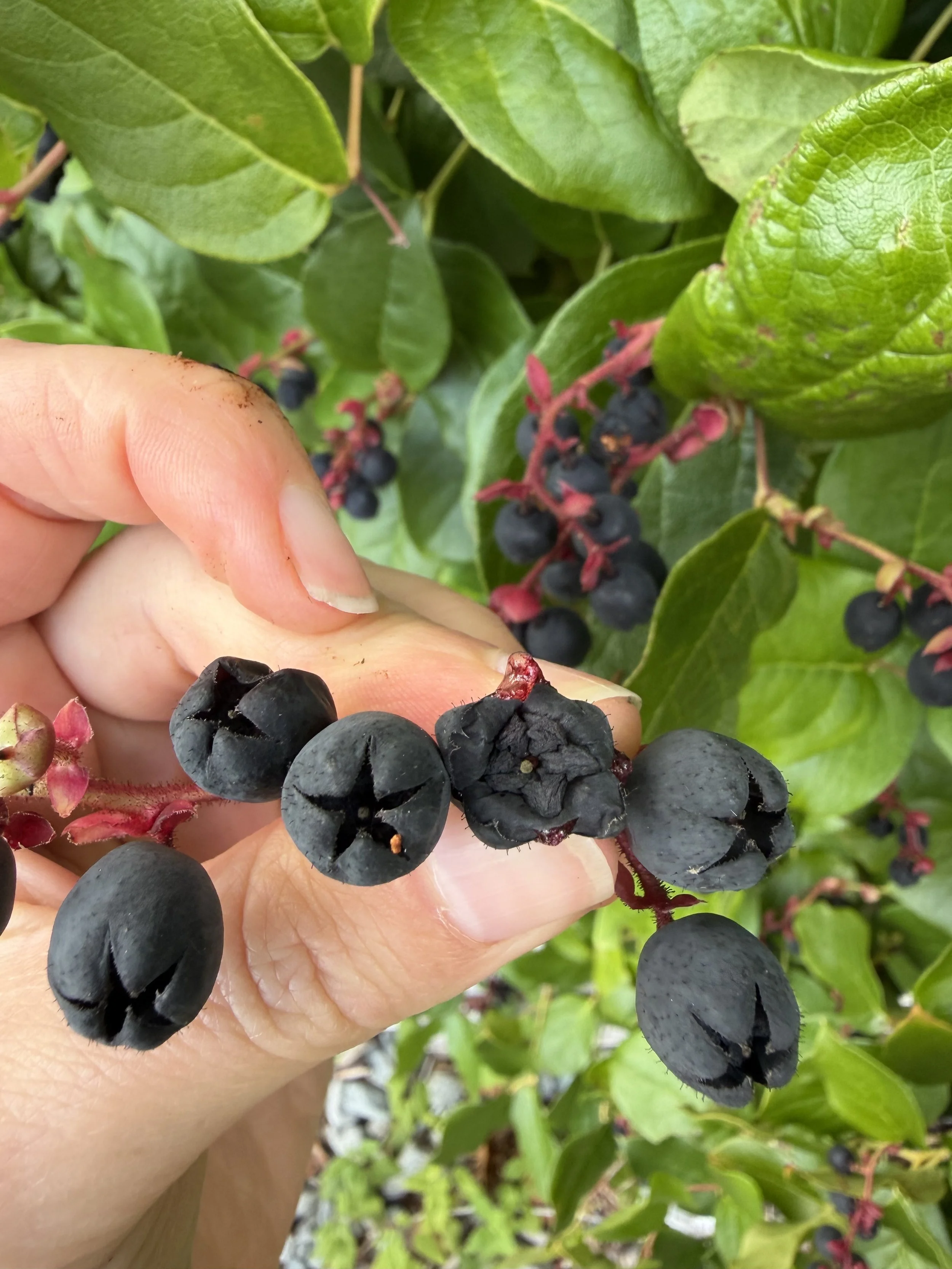
As a child I delighted in pinching the base of the slightly fuzzy fruit to pop them open revealing their inner five-pointed star shape. This shape marks salal as an untrue berry (or pseudoberry, according to botanists). True berries are formed by the swelling of the ovary or fruiting body of the flower, whereas salal (and other non-true berries like blueberry) are formed from the swollen outer sepals of the flower.
Growing up on the the west coast of Vancouver Island, I remember breaking off the reddish branches that the fruit form on in uneven clusters of 5 to 15 and pretending I was eating grapes. Which isn’t that far off since Shiraz grape berry skins are also famous for their high levels of proanthocyanidins (but still only roughly half the amount that salal does). There was a myth in my hometown that the Vinland that the Vikings discovered was not L’Anse Aux Meadows off the East Coast of Canada, but the Pacific Northwest with its dripping salal berries.
Of course, while fantasy versions of history are diverting, the truth is always more fascinating. salal was incredibly important to the Indigenous people of the Pacific Northwest. It is named in 30 languages, even language groups that didn’t see the plant growing locally (Turner 2014) but valued the berries as a trade good. [Just as an aside, there are over 50 distinct Indigenous languages spoken in the Pacific Northwest, that is the area from Alaska to Oregon– making this one of the most linguistically diverse parts of the world]. Along the Hood Canal, the Skokomish (Twana) have two words for salal: t́a’qe, which refers specifically to the plant, and t́a’qa?, which refers to the berry (Nile Thompson, undated, Skokomish Tribal Centre). The word salal comes from the Chinook Jargon, an Indigenous trade language, first recorded by the 1805-1806 Lewis and Clark expedition as variously shallon, shelwel or shellwell. This was later tightened up to salal or sallal by the Scottish botanist David Douglas (of Douglas Fir fame) when he visited Fort George (near present day Astoria) in 1825.
As its linguistic significance attests salal was widely enjoyed by Native Americans of the Pacific Northwest. There are extensive records of seeds and whole berries recovered from archaeological sites. And it is remembered how berries were harvested in huge numbers, Nancy Turner in her 2014 volume estimates this to be 100,000 to 200,000 berries per family per year. These were cooked using hot rocks and then dried into cakes that would last into the winter. These cakes were often traded from coastal tribes into the interior to tribes that did not have this delicacy. To take away the dryness, when eating them they were dipped in eulachan, seal or whale oil. The leafy branches are also useful in pit cooks. The berries were also crushed up and mixed with salmon eggs to make paint. And it is recorded that the leaves were used in teas to ease inflation and they were often chewed as a hunger suppressant. Even today salal still plays an important part in the Pacific Northwest’s economy. Known commonly as “lemon leaf” it is an ubiquitous green found in commercial floral arrangements.
My dad loves to pick ripe salal berries in late August to mid-September. He recently discovered a hack to separating the stems from the berries (a task that if often tedious and unsatisfactory as it often bursts the tender berries) – he picks the berries complete with their red stems and freezes them on baking trays overnight, the next day the frozen berries are firm enough to separate from the stems without damage.
My dad’s speciality is salal berry jelly, and it is a favorite with its rich, earthy flavou. My brother in-law calls it “medicine”. My dad is a creative cook, and I have a strong childhood memory of dad straining the tiny seeds from his boiled concoction with a pair of my mum’s pantyhose. Thankfully, dad now uses a metal strainer, but these seeds are important in the boiling stage for imparting lots of natural pectin that helps the jelly set. Another use my sister, over at the Fjord Oyster Bank, recently discovered was rendering the berries into a syrup which she used as a base for gelato! As a nod to more traditional methods of preparing salal, the internet abounds with recipes for making fruit leather with salal. I have not trued this, but its antimicrobial properties and its pulpy texture make it a natural fit for this method.
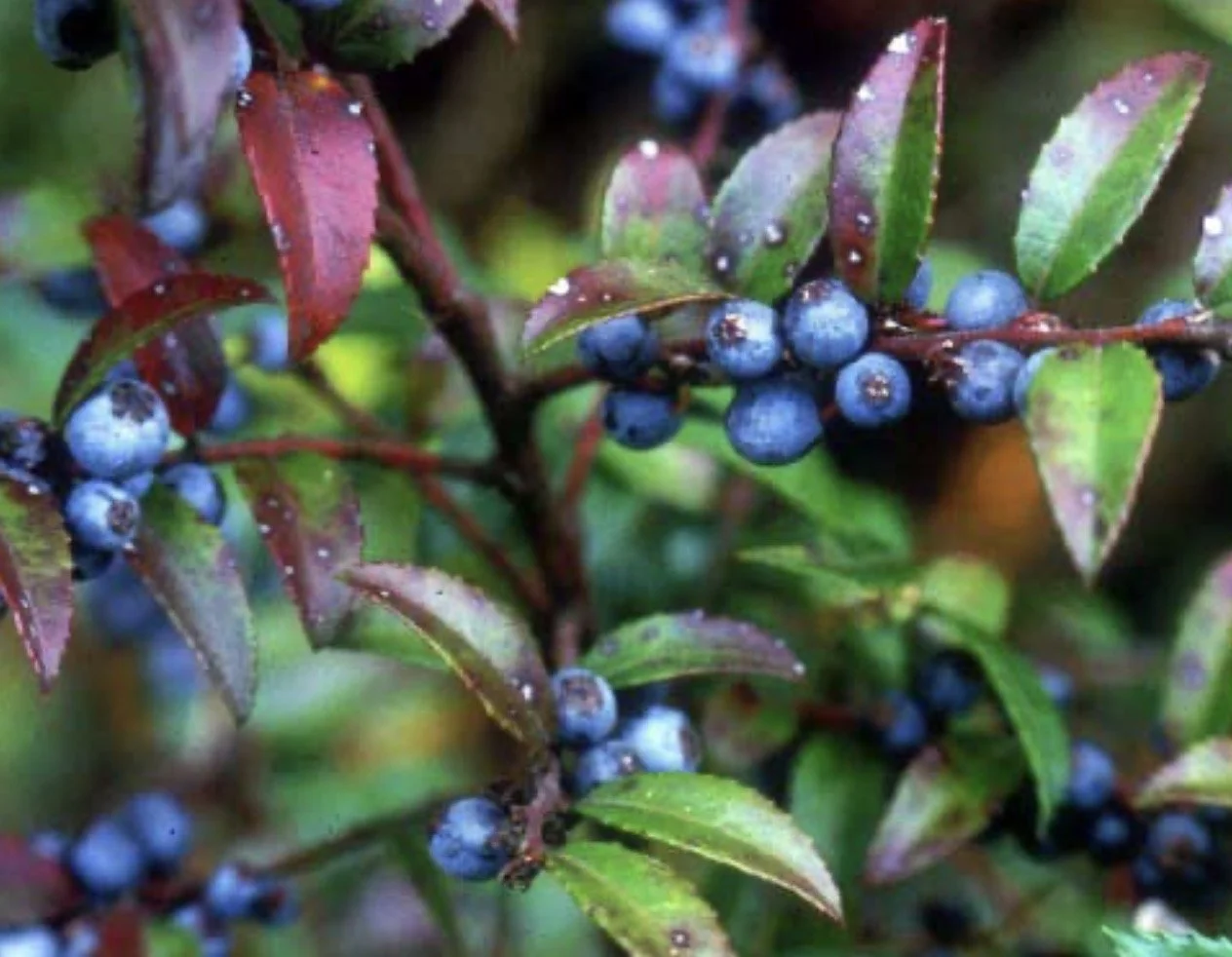
EVERGREEN HUCKLEBERRY
Evergreen Huckleberry (or cynamoka) is another local super fruit that becomes available in the Pacific Northwest from late summer to late fall (some even say the berries taste better after the first frost). They are known as the ya’ýaXbi (the bush) and ya’ýaX∂b (the fruit) to the Skokomish (Nile Thompson, undated, Skokomish Tribal Centre).
This sometimes dark and glossy or sometime cloudy and blue berry is my favourite berry to pick and preserve. I freeze them and love to have them with yogurt and homemade granola. They are also fantastic in baking, brightening up scones, muffins with their tangy flavor. Basically, anywhere you could use blueberries you can use these, but it will taste ten times better. Of course, my dad also like to make jelly of Evergreen Huckleberry too.
Like salal, Evergreen Huckleberry rates high on the healthy scale. According to Rossier’s survey of the literature around the healthfulness of Evergreen Huckleberry for her 2019 thesis documenting the traditional management and harvest of Evergreen Huckleberry amongst the Karuk, Yurok, and Hupa people of Northern California and Southern Oregon:
“Anthocyanins, a subclass of polyphenols that provides the blue, purple, and red pigments found particularly in dark berries such as V. ovatum, have been specifically researched regarding their ability to: 1) reduce Type II diabetes and associated issues (e.g. hyperglycemia, related kidney disorders, insulin resistance), obesity, and cardiovascular disease; 2) enhance vision; 3) be neuroprotective, 4) be antimicrobial against foodborne pathogens (e.g. Escherichia coli, Listeria monocytogenes, Salmonella enteritidis, among others) while preserving probiotic strains, and 5) be anti-inflammatory, anti-oxidant, and chemoprotective against a variety of cancers, including breast and colon cancers” (20-21, 2019).
Salal is a major food source for the Pacific Northwest people. The Makah of Northwestern tip of the Olympic (and possibly other Northwest tribes), were known to actively manage Evergreen Huckleberry bushes through pruning (also called by coppice) and by controlled burning (Turner 2014) to encourage berry productivity. Likewise, Evergreen Huckleberry is a popular cut green for floral arrangements commercially, though it is not as popular as salal.
Some people get fanatical about picking wild berries in season. They plan out their time off in terms of berry picking hours, make special berry picking buckets out of 8L ice cream buckets and rain pant bib straps, and drive dusty logging roads or hike out to find their special patch. I was raised valuing the berry-stained hands and the delicious taste of a sun warmed berry straight off the branch, I always travel with an empty bucket in the back of my car “just-in-case”, but the berry-picking process doesn’t have to be strenuous to be satisfying. It can be as easy as a walk in the park (literally). Not only is it a lovely way to spend your time, aside from a few bug bites and branch scratches, it’s a very healthy past time and people for millennia have been celebrating and enjoying these fruits of the earth.
Stella Wenstob is is historian and researcher residing on Vancouver Island's outer coast. She is a regular contributor to Tracing the Fjord.
Following fall around the Fjord
Autumn is one of the most stunning times to explore Mason County. With crisp air, golden leaves, and peaceful waterways, every turn offers a postcard-worthy view. Whether you’re a local looking for a weekend adventure or a visitor planning a scenic day trip, Mason County’s natural beauty truly shines this time of year.

Jeff Slakey | EHC contributor
This past week, I spent the day traveling around Mason County, capturing some of the incredible fall colors, and it couldn’t have been a better day for it.
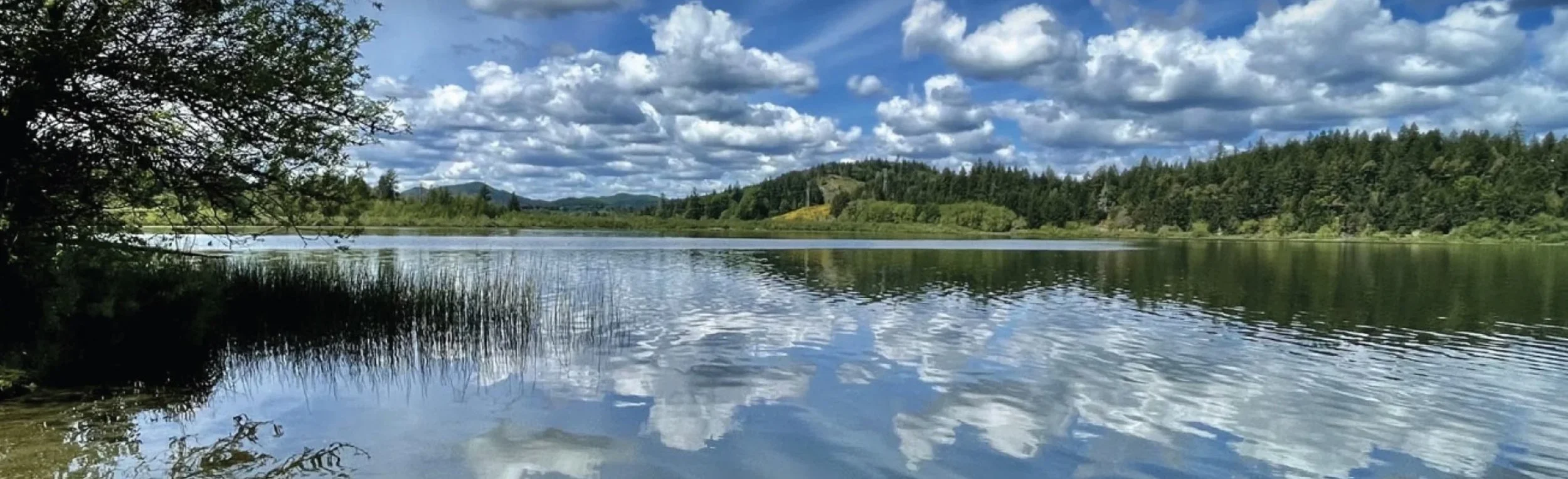
I started at a foggy Lake Isabella State Park before heading into Shelton to see the waterfall at the Teresa Johnson Trail. Along the way a great spot to pause and admire the view at Outlook Park just south of Shelton. Along with fantastic views of the Olympics and the fall colors over the terminus of Hammersly Inlet, you’ll be able to check out the 32’ oysterman mural posted for October’s OysterFest event. Soon he’ll be changed out for the iconic Santa Claus reproduction from 1965 — heralding yet another change of the season. From there I headed down through the impressive leafy tunnel descending into Shelton. A quick pitstop on Cota Street to grab a coffee at Marmos, then a right, following Highway 3 past the Oakland Bay Marina, where a few seals were playing near the docks. After that, I cranked up KMAS and hit the road again with stops at Oakland Bay Preserve to check out the salmon runs.
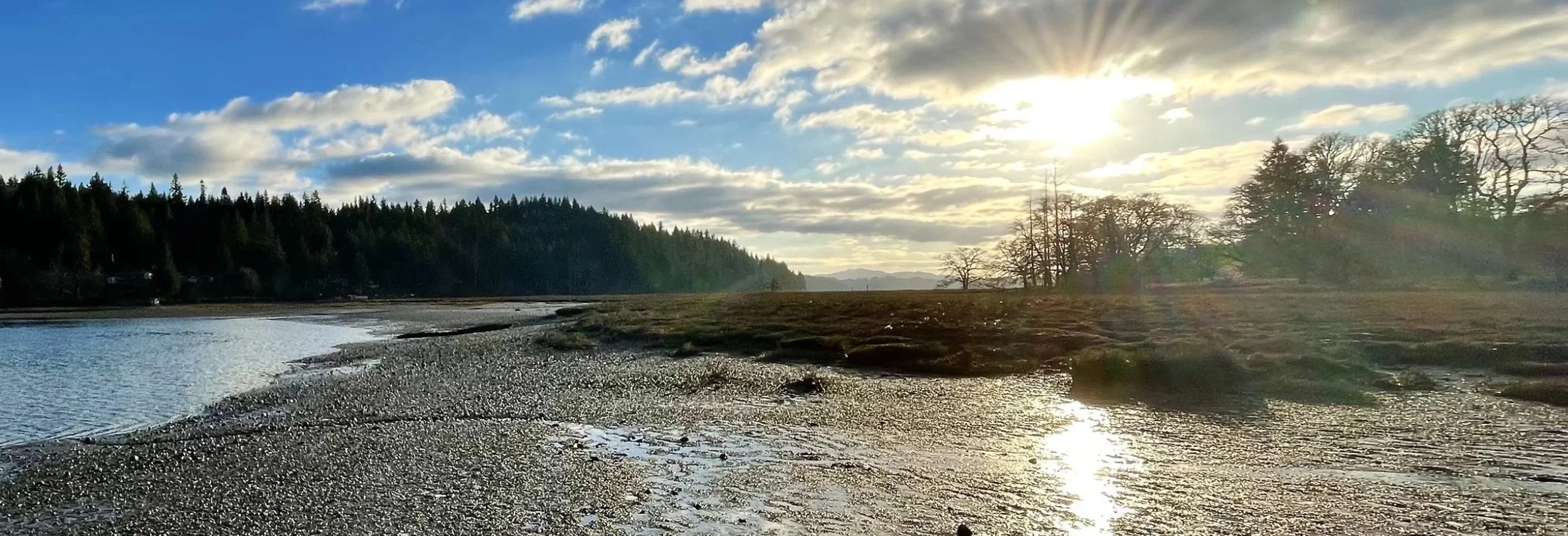

Back in the car I headed back to Hwy 101 and north to Potlatch State Park where you get a great vantage of the colors on the far banks of the Canal. This is a great spot to pause. Trees laden with apples and tons of wildlife. I spotted a heron patiently hunting for lunch, perched on a buoy.
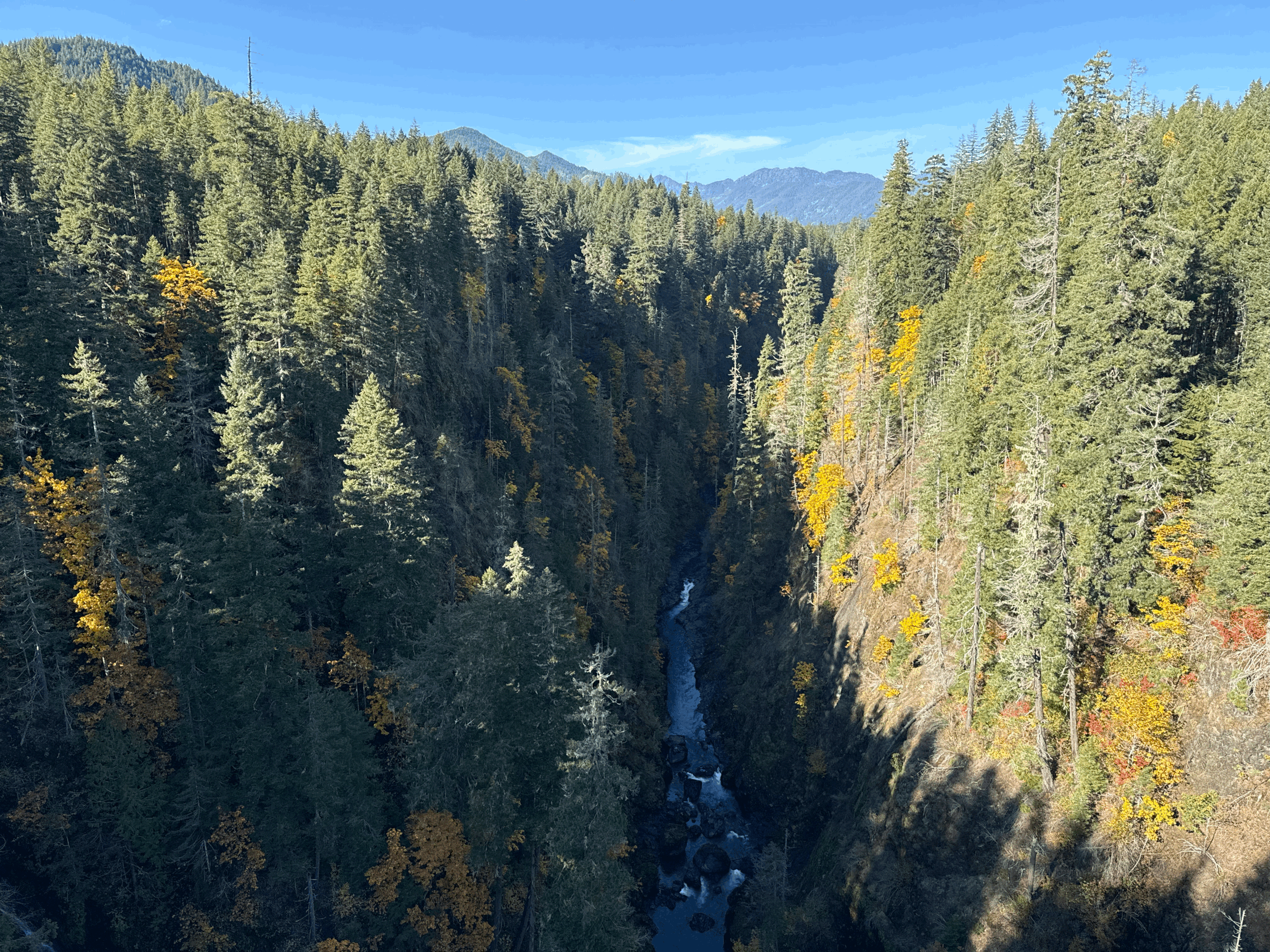
As the afternoon progressed and the sun started shining, I left Potlatch to see what the salmon were doing near the Hoodsport Hatchery. They were making their way up Finch Creek, dodging fishermen casting lines nearby. Before my camera batteries died, I was heading back south toward Shelton. I took the Skokomish Valley Road and headed up to the High Steel Bridge. By then, the fog had lifted, and the views of the canyon were as clear and bright as the fall leaves.

You don’t have to hit all those spots in one day like I did. In fact, when the weather’s nice (and there are still plenty of nice days left!), stop at just one or two to really soak in the beauty of Mason County this time of year. Or maybe keep following the curves of the Canal and make your destination Hama Hama Oysters at Lilliwaup. Every bend is worth whipping out the good lens.
Happy exploring.

October is for Oysters in Mason County
With OysterFest the first weekend of October, we know its a great time to harvest oysters! Many of Washington’s public beaches are open year-round, and all you need is to check the tides and open beaches — grab your bucket, gloves, shucking knife, shellfish license, and head out to the local beach! As Jeff heads over to Verle's LLC to pick up his license and get tips on the best beaches to visit, join local harvesters Michael and Charlotte as they head to Hood Canal’s Eagle Creek beach to fill their frying pan and demonstrate shucking techniques and a quick and easy recipe for a beachside cookout! Can’t get any fresher!
With OysterFest the first weekend of October, we know it’s a great time to harvest oysters! Many of Washington’s public beaches are open year-round, and all you need is to check the tides and open beaches — grab your bucket, gloves, shucking knife, shellfish license, and head out to the local beach! As Jeff heads over to Verle's LLC to pick up his license and get tips on the best beaches to visit, join local harvesters Michael and Charlotte as they head to Hood Canal’s Eagle Creek beach to fill their frying pan and demonstrate shucking techniques and a quick and easy recipe for a beachside cookout! Can’t get any fresher!
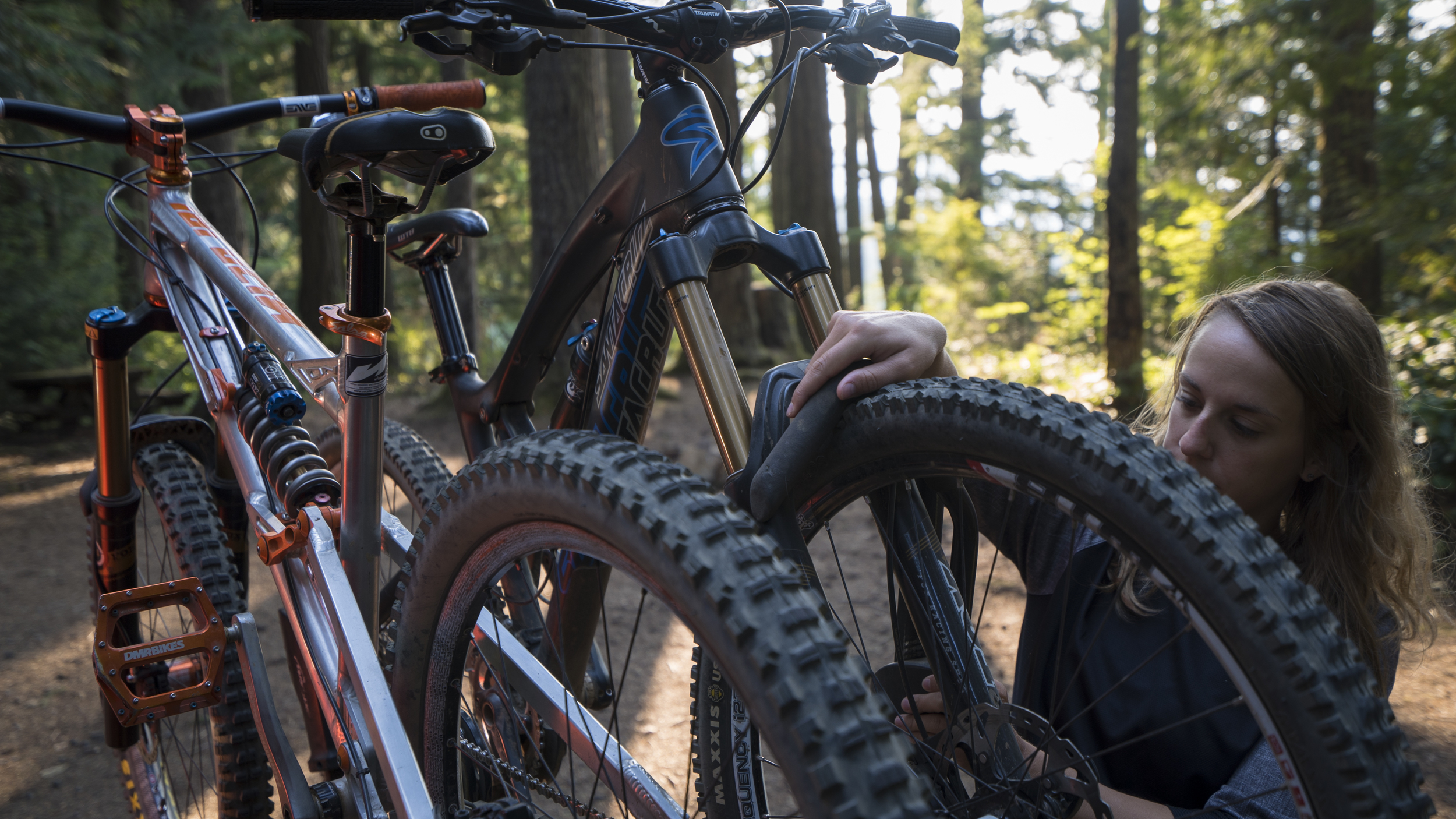
Mountain Biking Lower South Fork Skokomish
The fall colors on Hood Canal are heralding the close of summer. Time to head to the hills to embrace the much needed rains in the Olympic National Park as the hills and valleys go back to the Technicolor spectrum of green.
Whenever the impending rains approach Olympic National Park, they turn our hills and valleys back into the spectrum of green that makes home feel like home.

Photo Credit: Bike List
For some of us, that means misty morning walks up our favorite mountains (like Mt. Ellinor), for others, that means relaxing indoors with a good book, but for those of us that feel best while we are two-wheeling, that means tacky dirt and flowy mountain biking trails!
Grab your elbow pads and helmets, and tune up your metal steeds as we embark on our newest in the Hood Canal Travel guide.
Fuel Your Fire | 9AM
Serious riders (or pure-and-simple fun-seekers like us) need a belly full of goodness to fuel a full day of thrill-seeking. If you’re an early bird and a breakfast fiend, stop into Blondie’s for down home from-scratch diner food. The biscuits and gravy take the cake at this friendly local joint.
Hit the trail | 11AM
After meandering down some forest roads underneath the towering Olympics, come to the Lower South Fork Skokomish River Trail #873. Characterized by its intermediate single track riding through some of the finest ancient forests in the Northwest, this ride serves up a bit of everything. Doable as a 20.9 mile loop, if you care to climb the road and ride trail down although most prefer to ride single track up the trail and then back down.
Olympic elk still roam the hillsides, and as you are slashing short, quick ascents and sending sometimes rocky and rooted descents, take in the uncontested beauty of the river valley sliced by the surging Skokomish River.

"I love this fun, flowy cross-country trail that parallels the South Fork of the Skokomish River. It has a bit of everything!" - Jaime, local bike shredder
Before embarking, be sure to check trail conditions here, and prepare to be without cell service by having a good map and a USFS Rec Guide. Keep in mind that, like most USFS land, a Recreation Pass is required, which you can find here, or at a number of local businesses like Verle’s Sports Center and Marine in Shelton.
Treat yourself to a view | 2pm
Before that plastered grin that characterizes a good ride fades away, get yourself to one of the most recognized historical relics of Hood Canal. From the trailhead, a short 20 minute drive takes you to the High Steel Bridge. The highest railway arch ever built in the United States spans the South Fork of the Skokomish (a river that you are already quite familiar with) a dizzying 365 feet above the forest floor. Originally constructed in 1929 by the Simpson Logging Company, the bridge was converted to road use in 1950.

As you flip through the memories of a day well spent, remember that we love keeping up with you! Tag your photos and thoughts on social media with #explorehoodcanal #wildsideWA #hoodcanal. Be sure to check in with us on Facebook, Twitter, Instagram, and Pinterest for more ideas on how to get the most out of your road trip to Hood Canal. Happy trails.
Daily: 5am-9pm
360.432.2777
Lower South Fork Skokomish River Trail #873
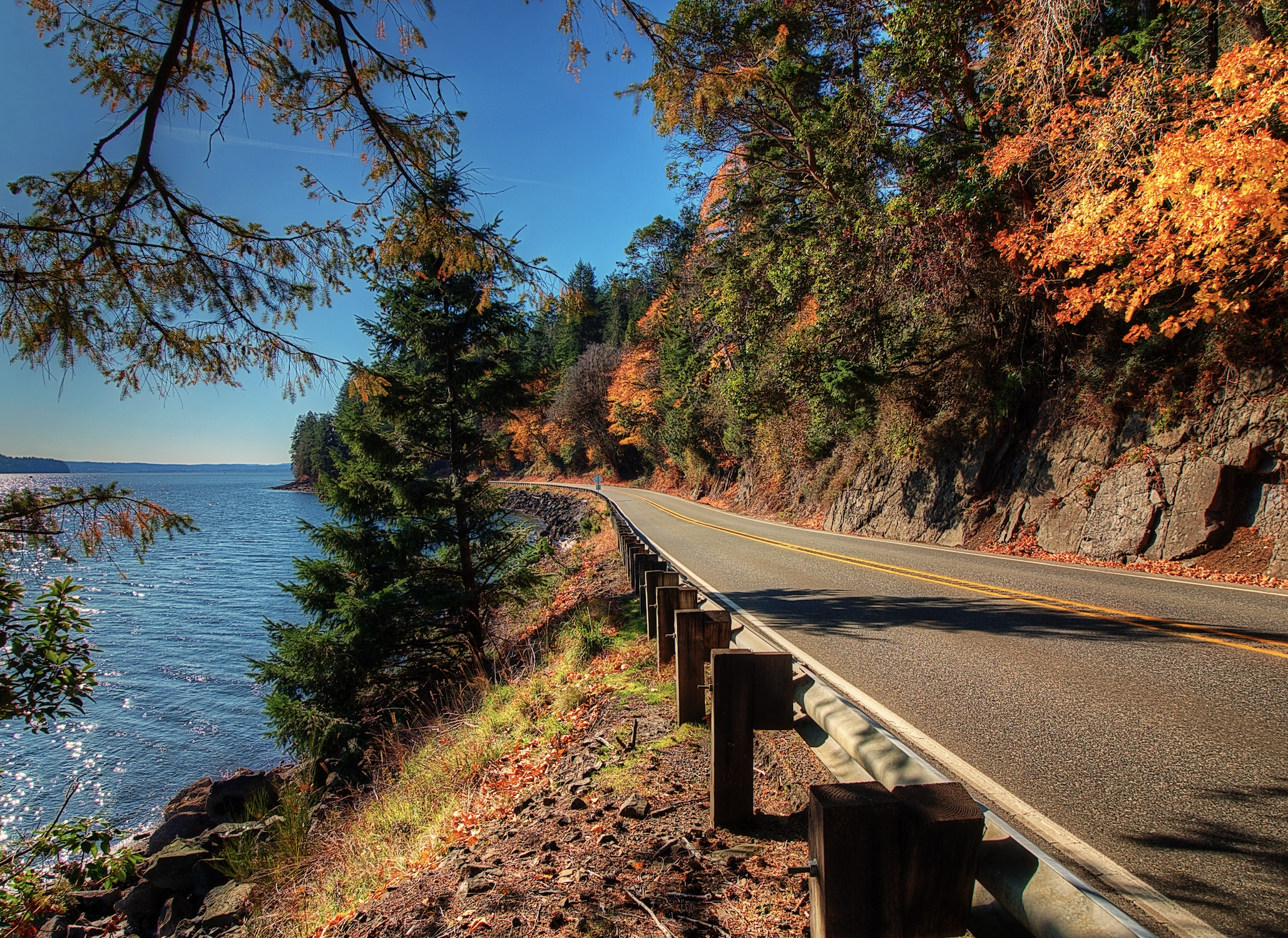
Fall for an adventure on Hood Canal
Want to create some positive vibes? Hop in your vehicle and head out to Hood Canal. The waterside loop makes for an unparalleled Northwest drive with just the right mix of water, mountains, and fall colors – not to mention some great spots to stop and stretch your legs.
Vibrant fall colors, sparkling waters, and a spectacular dusting of snow coating the Olympic range – it’s the perfect time to grab the loved ones and load the car for an inspiring road trip adventure exploring Hood Canal. Here’s a few ideas to get you inspired!


Sometimes it’s a little harder to plan off season but fall is a great time to get better rates on lodging and to have the trails and beaches to yourself.
Waterfalls, oysters, restaurants, scenic pull outs, fun hikes and a touch of shopping are all the hallmarks of a good day on the Hood for the whole family.

Shelton is small enough to be charming (especially at Christmas when it takes on an impressive mantel to befit its “Christmastown, USA” title); but big enough to have nearly everything you need.
Shelton To Potlatch
(20 minutes | 12 miles)
There’s plenty of reasons to exit 101 and take a detour through Shelton, an iconic snapshot of mill-town America. On Shelton’s waterfront—hidden by a hive of industry—stands an active mill. On a clear fall day you can drink in the scent of freshly cut boards as you walk through town. Be sure to visit the old Simpson logging “Shay” and caboose in front of the Post Office. The caboose hosts the Visitor Information Center where you can gather an assortment of maps, brochures, and insight.

Get your spook on at one of the many Halloween community events in Mason County this year
Looking for Halloween adventuring? Look no further than Shelton!

Mason Health is hosting a fun and safe drive-thru Trunk or Treat 2 to 5 PM on Oct. 29. RSVP at masongeneral.com/.../drive-thru-trunk-or-treat
There’s plethora of spooky events planned in this little hamlet! Check out the Shelton Chamber’s handy map showing all the local events including the Shelton merchant’s Sidewalk Spooktacular FRIDAY, OCTOBER 29, 4 PM – 6 PM.
Looking for a haunted house? How about a haunted trail? This scary evening walk in the woods, Haunted Huff N Puff Trail, FRIDAY/SATURDAY October 29/30 at the Huff N Puff is a fundraiser for the SHS graduating class. Over 50 volunteers are working together to design and create a ½ mile spine chilling walk through the forest. Early hours 5-7 PM are for younger (or more sensitive) spook-finders… 8-10 PM is for the strong at heart with volunteer spookers at each scare station through the woods.
During the day, don your best masks and head to the Shelton Cinemas (517 W Franklin Street) presents "HOTEL TRANSYLVANIA 3" (PG) on SUNDAY, October 31 at 12:30 pm. Doors open at 12:00 pm. The price of admission is a donation of nonperishable food items for our local food banks.


Through the Pumpkin Patch all October
North of Shelton
Be sure to make a fall visit to Hunter Farms. Along with an information kiosk they host wagon rides, a pumpkin patch, corn maze,photo ops and a general store that amongst other great treasures features locally made Olympic Mountain Ice Cream.

To reach Potlatch State Park (a 57-acre camping park with 9,570 feet of saltwater shoreline on Hood Canal) you will pass over the Skokomish River. The drive along the Skokomish delta is simply perfect. As the road weaves it's path around the shoreline, you are treated to glimpses of the Olympics filtered through patches of arbutus clinging to the beach edge.

Potlatch is a great spot to stretch your legs. The grounds are home to a variety of activities, from picnicking and ranger programs for kids to kayaking, scuba and shellfish harvesting.


Potlatch to Hoodsport
(5 minutes | 3 miles)
Hoodsport is a seaside town perched on the western shores of the Hood Canal beneath the shadow of the Olympic Range. Here you will find shops and dining as well as two wineries and a distillery: Hoodsport Winery, Stottle Winery; and The Hardware Distillery. Hoodsport also serves as the gateway to the Olympic National Park (Staircase Entrance). At the foot of the hill towards Lake Cushman, stop by the Hoodsport Information Center (N 150 Lake Cushman Rd) for great tips on road/trail conditions; permits and maps and friendly guidance.

Looking for a waterrfront getaway? Look no further than Glen Ayr Resort located just north of Hoodsport on Hood Canal’s shore. The image above shows the living room of their well appointed fully furnished cottage. This delightful treasure includes dining and living areas, 2 bedrooms, 1 1/2 baths and a kitchen with refrigerator/freezer, ice maker, range, dishwasher, microwave, coffee maker, and all the essentials of home. Amenities include cable TV with DVD player and a wood-stove. In the back is a small porch with a propane fireplace and sitting area. $179/night (sleeps 6).
Hoodsport to LILLIWAUP
(7 MINUTES | 4.5 MILES)
Situated on the west shore of Hood Canal, Lilliwaup is a small town with a BIG history and a love of shellfish. Peppered with serene beaches and surrounded by endless hiking trails, Lilliwaup is all about relaxation and nature. The Lilliwaup Store is a favorite stopping spot for a great value on Olympic Mountain Ice Cream cones. They have plenty of flavors to choose from and its just $3 piled high.
Family owned and operated, Hama Hama Company has been harvesting oysters and clams on Hood Canal for four generations. Their store and outdoor restaurant, the Oyster Saloon, are located a shell’s-throw from the tide flats and set up with sweet little COVID safe A-frames for outdoor private dining with a fantastic view. A visit to the farm is the best way to experience Hood Canal oysters in their native habitat.


LILLIWAUP to Brinnon
(25 MINUTES | 19 MILES)
Just outside the tiny town of Brinnon (some great restaurants here) is Dosewallips State Park. This 1,064-acre, year-round camping park hosts riverfront campgrounds, a boat ramp & 5,500 ft. of saltwater shoreline.The park's moss-carpeted forest and glacial river slope down to a shell-strewn delta on Hood Canal, a delight for clam-diggers, anglers, boaters, birders, and beach explorers. The park features hiking trails, riverside campsites, cabins and platform tents. The local herd of Roosevelt elk are known to frequent this area.

Grazing on campus are the Roosevelt elk. the third largest land mammal in North America. They are named after President Theodore Roosevelt, who created what is now the Olympic National Park.
Brinnon is also home to Hood Canal Adventures offering guided tours in the summer and early fall and kayaks for rent year round. Single and tandem kayaks and paddle board / kayak hybrids may be rented by the hour, full day, 24 hours, or for multiple days. If you are renting for a full day or longer you can have your kayaks delivered to you or pick them up yourself. The team will help you choose a route, provide you with a map, life vest, paddle, and an emergency water pump for your safety. For off season rentals call 360-301-6310 to make kayak rental arrangements. During crabbing season they also rent crab pots and crab cookers. Let it soak while your enjoying your paddle then cook them right on the beach or take them home for dinner!
Belfair to Union
(27 minutes | 16 miles)
Nestled between the North Bay of the Puget Sound and the southern hook of Hood Canal, Belfair is a great place for road trip supplies or to have lunch before heading off to explore the 130+ acre birder's dream wetlands, Theler Wetlands Nature Preserve. Visit the craft brewery, Bent Bine Brew Co, to try their locally made specialties. Hankering for wine? Stop in the tasting room at the award winning Mosquito Fleet Winery, they are open most weekends in the fall.
Halloween Belfair update: f you are in Belfair on SATURDAY, October 30, 6:30-9:30 PM head over to the HUB (111 NE Old Belfair Hwy Belfair,) for some spooky fun at the FREE All-Community Zombie Apocalypse Drive Thru.


TWANOH STATE PARK
(14 MINUTES; 9.2 MILES | VIA SR 106 W)
Twanoh State Park's 182 acres include 3,167 feet (965 m) of saltwater shoreline and 2.5 miles of inland hiking trails. Gather shellfish off the public beaches (when open) or simply take a walk on one of the many trails.


ALDERBROOK RESORT & SPA
(7 MINUTES, 5.2 MILES | VIA SR 106 W)
Since 1913, generations of visitors have enjoyed the rustic, albeit very luxurious, charm of this canal-side retreat on 88 acres, which include an 18-hole golf course. The 77 guest rooms are ideal for a rejuvenating escape, while the 16 cozy cottages are perfect for family fun. Complete with a waterfront restaurant, dock, and saltwater pool and spa, Alderbrook Resort and Spa Resort also offers access to boating from kayak rentals to multi-person cruises. During Halloween they are even offering onsite trick-or-treating for the kids!


UNION
(6 MINUTES, 2.4 MILES | VIA SR 106 W)

The spectacular views from Union are not to be taken lightly. Here is the best vantage point to view the Olympic range. On the journey to Union's center, take a moment to admire the historic Dalby Water Wheel and stop in at Cameo Boutique for some great shopping of local items. The restaurant at Robin Hood serves some of the best seafood dishes and hosts live music most weekends. Both Cameo and Robin Hood offer waterside lodging. Near Hood Canal Marina, 2 Margaritas Restaurant serves Mexican food; while the Union City Market stocks everything from gifts and collectables to homemade candy and fresh oysters! On weekends their pop up dining experience serves a la carte delicacies in an inspired dining space on the water.
Union is planning a Community Drive-Thru Trick-or-Treating Halloween night from 4-6 on Halloween night with special events at local business and the community church.

Whether you have a day or a week, Hood Canal and the surrounding communities are great places to reconnect and find new adventures. For a list of accommodations visit our lodging pages and check out the other great activities available while you visit our area.
The safety of our residents and guests is our highest priority. We are asking everyone to recreate responsibly to keep our beautiful forest, small towns and expansive waterways healthy—and fun—for everyone.
An Autumn Trek to Black and White Lakes
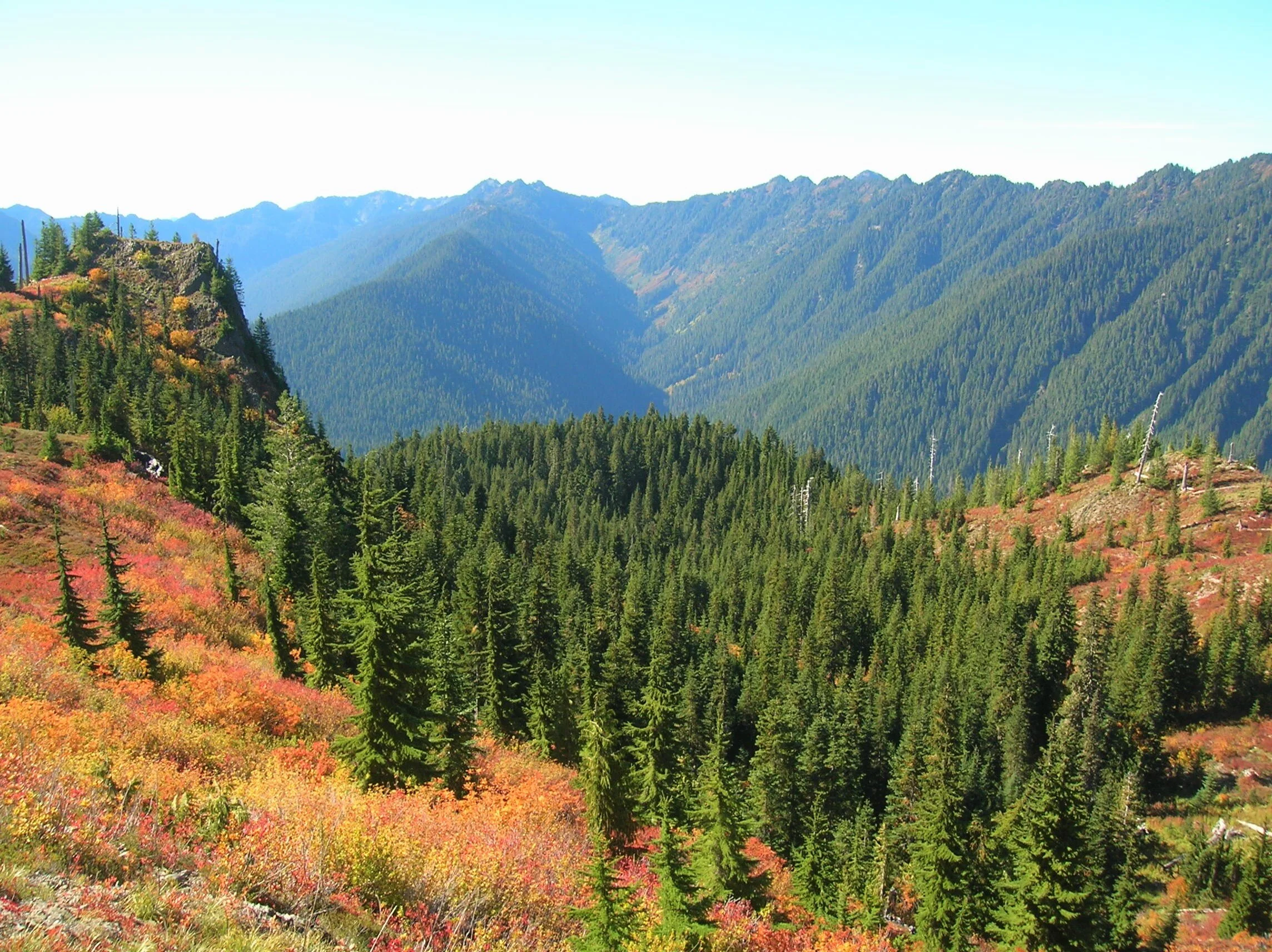
Visit the Black and White Lakes in late September and discover a surrounding landscape far from black and white. Revel instead in an alpine world of living color. The lakes sit in a basin long burned of its forest cover and since carpeted in berry bushes, mountain ashes and other shrubs that burst with brilliant hues of red, orange and yellow.
Craig Romano | Story & Pictures
Craig Romano has written more than 25 outdoor guide books including "Day Hiking Olympic Peninsula."
Visit the Black and White Lakes in late September and discover a surrounding landscape far from black and white. Revel instead in an alpine world of living color. The lakes sit in a basin long burned of its forest cover and since carpeted in berry bushes, mountain ashes and other shrubs that burst with brilliant hues of red, orange and yellow come the autumn equinox. It’s a grunt to reach them, but chance are good you won’t have too much company — unless you count gregarious ground squirrels, docile deer, and inquisitive bears.

Craig Romano Photo
Hit the Trail
While the Black and White Lakes lie on the trail less traveled, you must first hike some well-trodden paths. Start your journey on the North Fork Skokomish River Trail, which begins on an old road that was decommissioned in the 1970s. Hike through wild country, much like what U.S. Army Second Lieutenant Joseph P. O’Neil saw in the 1880s on his exploratory trips into the Olympic Mountains. But something O’Neil saw that you won’t were legendary fish runs. Before the North Fork Skokomish’s flow was dammed by Tacoma Power in the 1920s, this river was one of the largest salmon-rearing waterways on the peninsula.
Hike upstream on a wide path and gentle grade crossing several side creeks. Traverse a luxuriant bottomland of big cedars, Douglas-firs, and moss-cloaked big-leaf maples. Pass the Staircase Rapids Loop Trail and consider taking it on the return for a slight variation. After passing Slide Camp, hike across the Beaver Fire of 1985, caused by an illegal campfire during a drought and resulting in 1400 acres of old growth going up in flames.

Craig Romano Photo
The trail then pulls away from the river. At 3.6 miles, reach a junction just before Spike Camp. Now head right on the Flapjack Lakes Trail and slowly climb out of the valley along the old burn line. After a few switchbacks, the trail turns northward on a fairly gentle course. Admire a big cedar grove along the way, then cross Madeline Creek on a sturdy bridge.
The creek cascades below through a narrow ravine. Now start heading up steeper and rockier terrain and follow alongside cascading Donahue Creek. At 7.1 miles comes to a junction. The way to the right is where most folks head—to the Flapjack Lakes and Gladys Divide. You want to head left instead on the less-traveled trail.
Cross a pair of creeks, and then steeply climb, rounding a ridge to emerge at a 1936 burn site, now blanketed in berry bushes and mountain ash. After passing the log foundation of an old cabin, come to a junction with the Black and White Way Trail at 8.2 miles.
The old cabin was once part of a long mining operation here at the lakes. By the mid-1970s it had collapsed leaving only the rotting foundation behind. As you continue to hike into the lake basin, look around for evidence of old mining operations in the form of tailings, pits and cuts.

Craig Romano Photo
Now continue straight another 0.2 mile to an unmarked junction. The trail continues for one mile dropping into a forested basin housing Smith Lake. You want to go right and immediately reach the largest of the trio of Black and White Lakes. The lake is small but pretty with a couple of primitive campsites nearby. The other two lakes are not much more than pothole ponds tucked a little higher in the surrounding basin.
While the lakes aren’t stunning, the views from the open basin are—especially of the surrounding wilderness. Particularly striking is Wonder Mountain and the Three Sisters to the south, Six Ridge to the southwest, and Mount Steel to the northwest.

Craig Romano Photo
In autumn, this basin transforms into a mosaic of dazzling reds, oranges, and yellows.
So where did the name Black and White come from? There are a handful of name origin theories that include the lakes being named after a brand of whiskey, the last names of the original prospectors, and a way of describing manganese found at the site.
In any case the mining history here goes back to claims made in 1907. Copper was the original mineral mined. Getting the copper to market from this remote and rugged location however proved to be a challenge. A proposed flume was never built to help get the ore to the North Fork Skokomish Valley from where it was transported to Tacoma via roads. The mine’s claims were sold several times over the years. In the 1940s the mine’s owners dug a 200 foot tunnel. By the 1960s however mining activity had pretty much ceased at the lakes.

Craig Romano Photo
When you are ready to leave this beautiful and interesting place, retrace your steps 0.2 mile back to the junction near the old cabin remains. Then return the way you came or consider hiking out via the Black and White Way Trail. It’s a shorter route, but a knee knocker dropping more than 2600 feet in 2.2 incredibly steep miles. While the way is knee-jarring, the tread is smooth and not rocky.
The way trail ends at the North Fork Skokomish Trail at the junction with the spur to Big Log Camp. From here it’s 5.4 miles back to the trailhead via the North Fork Skokomish Trail.
Black and White Lakes hike:
Distance: 16.8 miles roundtrip
Elevation Gain: 3,800 feet
High Point: 4,515 feet
Difficulty: moderately difficult
Snow free: mid-June – Oct
Trailhead Pass Needed: National park entrance fee.
Olympic NP wilderness camping permit required if backpacking.
Notes: Dogs prohibited. No campfires above 3500 feet.
GPS waypoints: Trailhead: N47 30.968 W123 19.691
Black and White Lakes: N47 34.493 W123 20.556
Features: magnificent old-growth forest, wildlife rich backcountry lake, exceptional autumn foliage, excellent alpine views, historic mining area.
Land Agency Contact:
Olympic National Park, Wilderness Information Center, Port Angeles, (360) 565-3100, www.nps.gov/olym;
Recommended Guidebooks:
Backpacking Washington 2nd edition (Romano, Mountaineers Books)
Trailhead directions:
From Shelton, travel north on US 101 for 15 miles to Hoodsport. Turn left onto State Route 119 and drive 9.3 miles to a T intersection with Forest Road 24. Turn left, continuing on SR 119 which becomes FR 24 for 5.4 miles. Then bear right, coming to the Staircase Ranger Station in 1.2 miles and the trailhead.
Fall Recreation on the Fjord and Surrounding Area
Ron Adams | Verle's LLC
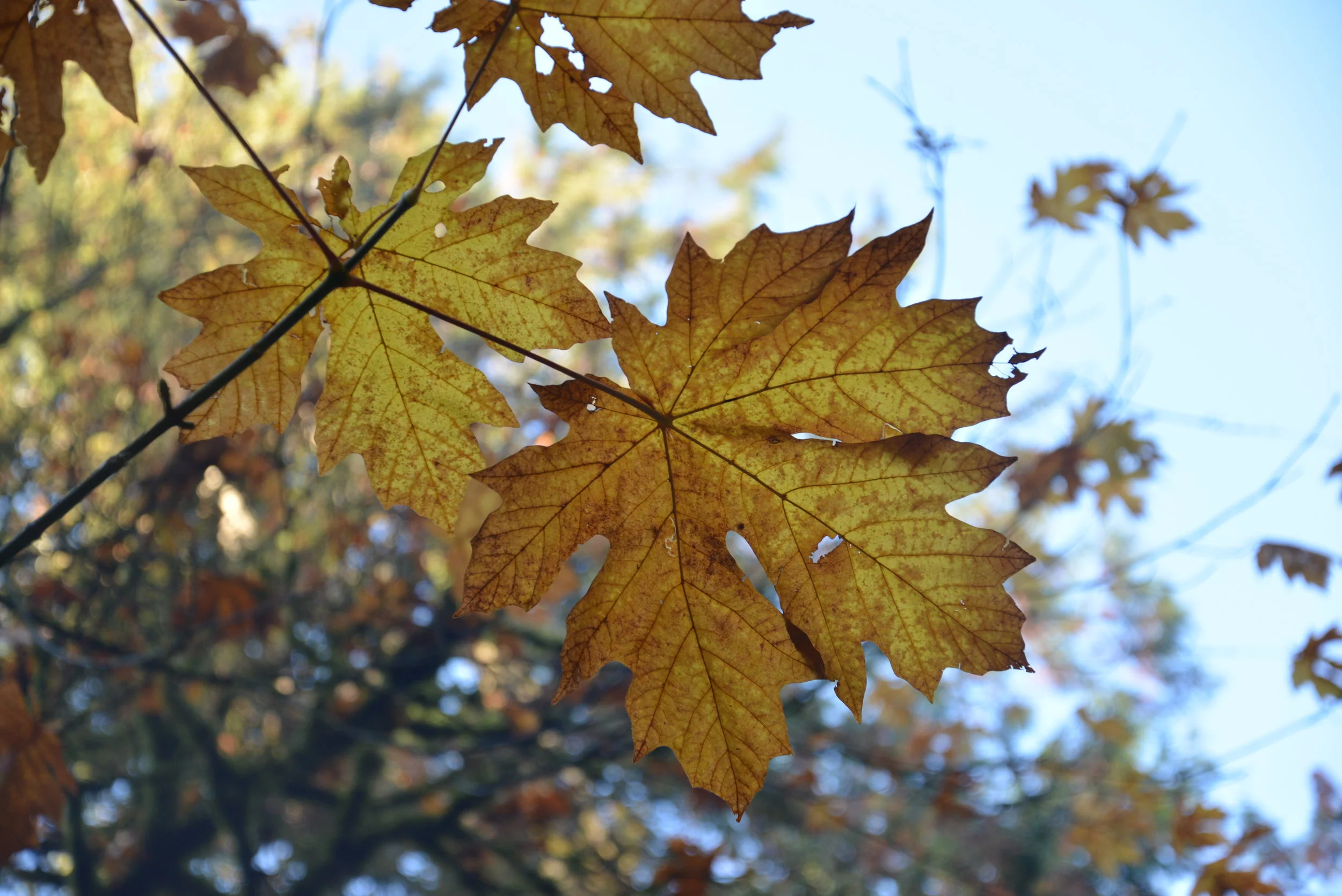
The long, warm and sunny days of summer on or near Hood Canal have nearly come to a close once again. The camping, biking, hiking and water sports we enjoyed will soon be recent yet unforgettable memories. Fall is about to surround us with a beautiful mosaic of rich yellows, greens, and reds as the leaves of hardwood trees give way to their wonderful ballet of fall colors.
However, the changing of the seasons does not bring an end to outdoor activities around Hood Canal. To many it is the beginning of a new and exciting chapter of outdoor opportunity and adventure.
Salmon and Steelhead can be found in most of the pristine rivers near Hood Canal where a true trophy and adventure of a life time await those who are willing to test their skills and moxy to harvest some of this plentiful bounty. Steelhead are different than their cousins the salmon in the fact they can return to their home rivers several times and spawn many times before they reach the end of their life cycles whereas pacific salmon only spawn once. Steelhead are a species of rainbow trout that is spawned in a river and then goes out to saltwater to mature. Their life in the nutrient rich waters of the Pacific Ocean allow them to grow rapidly and reach over 30 lbs in weight. Many lakes in the surrounding area are open year round for fishing and can provide healthy delicious protein.
Mushroom gathering it also very popular and several delicious varieties await those who know where to find them.
If any of this entices you, you are not alone. Thousands of outdoor enthusiasts will make the trek to this area to do everything I've mentioned and more.
Find out More
Established in 1948 Verles is celebrating 70 years of having a finger on the pulse of the Hood Canal and most things outdoors. With a skilled staff and a great selection of gear, Verles is there to help you get away and be successful in your outdoor adventure any time of the year. Verles is located at 741 West Golden Pheasant Road in Shelton.
In Search of Salmon in and Around the Fjord
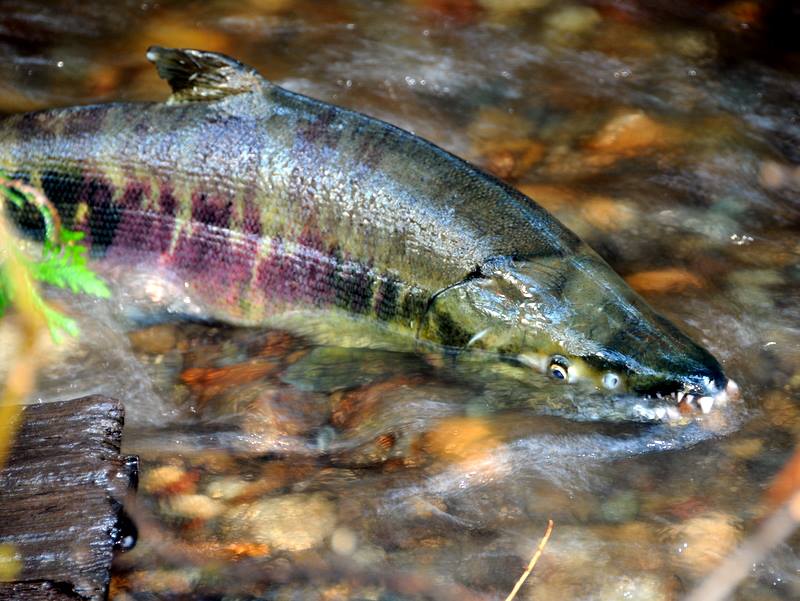
As the weather chills, the local streams and rivers are festooned with the lovely shades of orange and red of the turning leaves. This season also marks the last weeks in the life cycle of many salmon species as they travel up these rivers and streams to spawn and die.
Stella Wenstob
photo: South Puget Sound Salmon Enhancement Group
As the weather chills, the local streams and rivers are festooned with the lovely shades of orange and red of the turning leaves. This season also marks the last weeks in the life cycle of many salmon species as they travel up these rivers and streams to spawn and die.
Using a sense not completely understood by biologists, millions of migratory salmon return to their home streams to lay eggs.
After swimming up the stream to their spawning spot the female chooses a spot in the shallow, but swift flowing part of the river that is ensured to be highly oxygenated, called the riffle. In some of the inland streams that location can be many hundreds of miles up rapids and past many impediments. Here she digs a depression in the gravel that will serve as her nest or redd. The males will put on an impressive show biting and jumping to show their dominance and protect their chosen female from other males. After the eggs are laid in the redd, the male will deposit sperm over them, and the female will cover the eggs with gravel to protect them. A female may create as many as seven redds before she is finished spawning and each redd may hold as many as 5,000 eggs.
As soon as the salmon enter the fresh water of the stream their skins begin to change color, their sexual dimorphism enhances, they stop eating and they begin their decaying process. A migrating salmon typically lives for about two weeks after entering the freshwater.
The carcasses provide an important food source to other animals and small invertebrates who in turn provide food for the salmon fry (baby salmon) as they get older. Additionally, the nutrients given off by the rotting carcass are important fertilizers to the plants and trees growing on the banks, which in turn provide essential root systems that prevent erosion and protects the streams for further generations of salmon.
There are seven species of salmon in the Pacific Northwest: Pink (Oncorhynchus gorbuscha), Sockeye (Oncorhynchus nerka), Coho (Oncorhynchus kisutch), Chum (Oncorhynchus keta), Chinook (Oncorhynchus tshawytscha), Steelhead (Oncorhynchus mykiss), and Cutthroat (Oncorhynchus clarki clarki).
All of these species have very different life-cycles – some spend several years before they migrate up streams; some can run and spawn several times before dying; some only spawn at the mouth of streams, where others need to spawn in lakes at the head of rivers. This unique phenomenon of the salmon running can be viewed in streams and rivers all across the Hood Canal and South Puget Sound.
Kennedy Creek
The Kennedy Creek Salmon Trail located off of Hwy 101 opens up for full tours with docents answering questions from November 2 through to December 1 from 10 AM to 4 PM on weekends. This trail is maintained by the South Puget Sound Salmon Enhancement Group and their website is a great resource for learning about the trail and salmon ecology.
Beginning at the head of Oyster Bay, at the traditional site of the Sawamish/T’Peeksin village (ancestors of today’s Squaxin Island Tribe], this trail was once part of a greater network of Native American trails that connected South Puget Sound with the Pacific Coast. The Kennedy Creek was known as “Place of the Singing Fish” by the Squaxin Island Tribe due to the resonant singing of the frogs heard along the stream’s banks in the spring. Chum (or dog fish) are the dominant species that run this stream at numbers as high as 800,000 salmon a year. The tribe harvested these fish for oil and for food, drying them on racks. The salmon can be seen running right from the creek’s bank.
Salmon Center
The Salmon Center located in Belfair is open from 8 AM until 5 PM, Monday through Friday. Besides offering interesting exhibits about salmon ecology, they operate salmon traps on the Union River (off of Highway 300) that target adult summer Chums.
Twanoh Creek
As you continue along the South Shore of the Hood Canal, Twanoh Creek in Twanoh State Park offers good vantage points to view running salmon.
Purdy Creek
At the bend of the Hood Canal on a tributary of the Skokomish Watershed is George Adams Fish Hatchery run by the Washington Department of Fish and Wildlife. Each spring they release 500,000 juvenile Coho into the Purdy Creek. While the hatchery does not have scheduled tours, the friendly staff are eager to answer questions and the pens are visible from the Highway.
Hoodsport
The Hoodsport Fish Hatchery located in Hoodsport also does not offer scheduled tours, but in the fall the WDFW offers very popular Chum salmon fishing classes from the beach out front of the hatchery.
Quilcene
The Quilcene National Hatchery has been run continuously since 1911. Now focusing on Coho stock, the Quilcene National Hatchery has raised nearly every species of salmon. The hatchery successfully reintroduced Chum salmon back to the Big Quilcene River and increased winter Steelhead populations of the Puget Sound. They are open from 7:30 AM to 3 PM on weekdays and only on weekends and holidays in the spring and summer when the camp host volunteers are present. Visitors are encouraged to tour the facility and meet the hatchery staff.
More Salmon Viewing
Situated in the Belfair State Park are the Big Mission and Little Mission Creeks, which offer great salmon viewing. A little north of the North Shore Road following Elfendahl Pass Rd is Stimson Creek, a good place to view spawning salmon.
For a list of salmon spotting sites, WDFW have created an interactive multi-layer map called SalmonScape,
that shows the streams and tributaries used by migratory salmon in the state.