Troll hunting on Olympic's Staircase trail
Mary and Jill set out on a day adventure at Olympic National Park’s Staircase Entrance above Lake Cushman. Here’s a glimpse of their trek as they were inspired to search for a river troll.

Guest Post: Mary Thygeson
“The weather has been so beautiful that I decided to head out without my fearless leader, Jeff Slakey. My friend Jill and I headed to Staircase for a hike.“
The ride from Olympia to the Olympic National Park Staircase Entrance above Lake Cushman was easy and well-marked and we arrived in a little over an hour. Once there, there were several options, but we chose the shortest, the Rapids Bridge Loop.


An ear to the ground.
As we began our walk, we noticed right away that someone was listening and probably watching so the quest was on to find a River Troll.
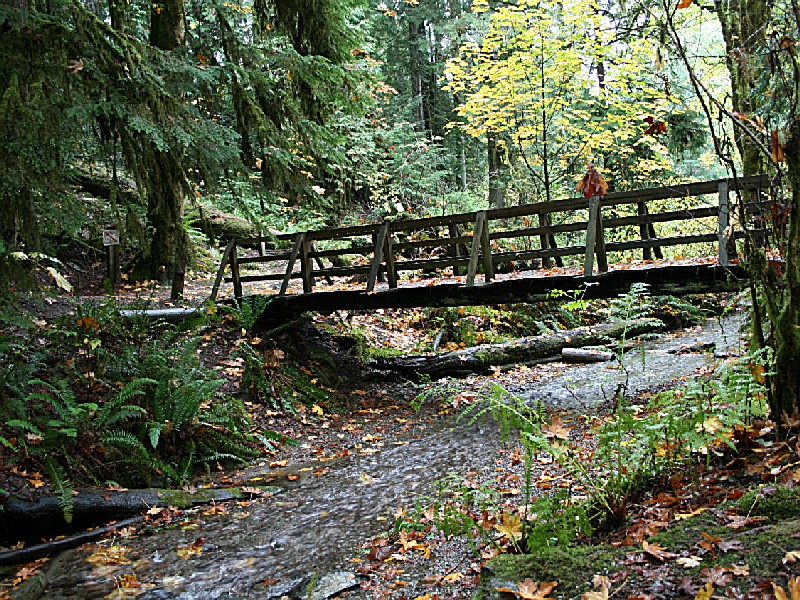
The trail itself was easy and followed along the river. Flat in most places with a few rock and man-made stairs.

As well as a few surprises here and there…
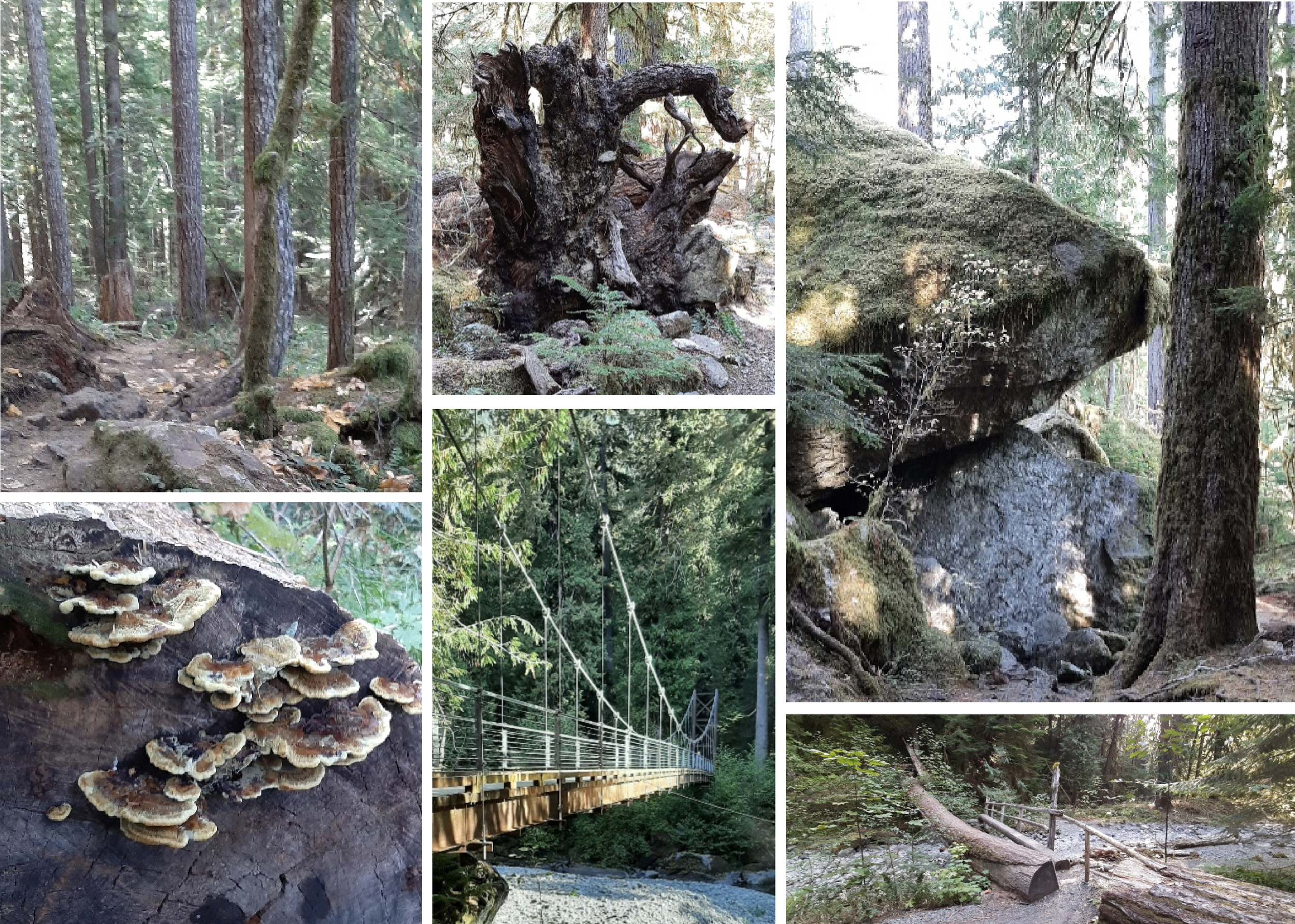
The river is low this time of year, but it revealed some beautiful rock formations.

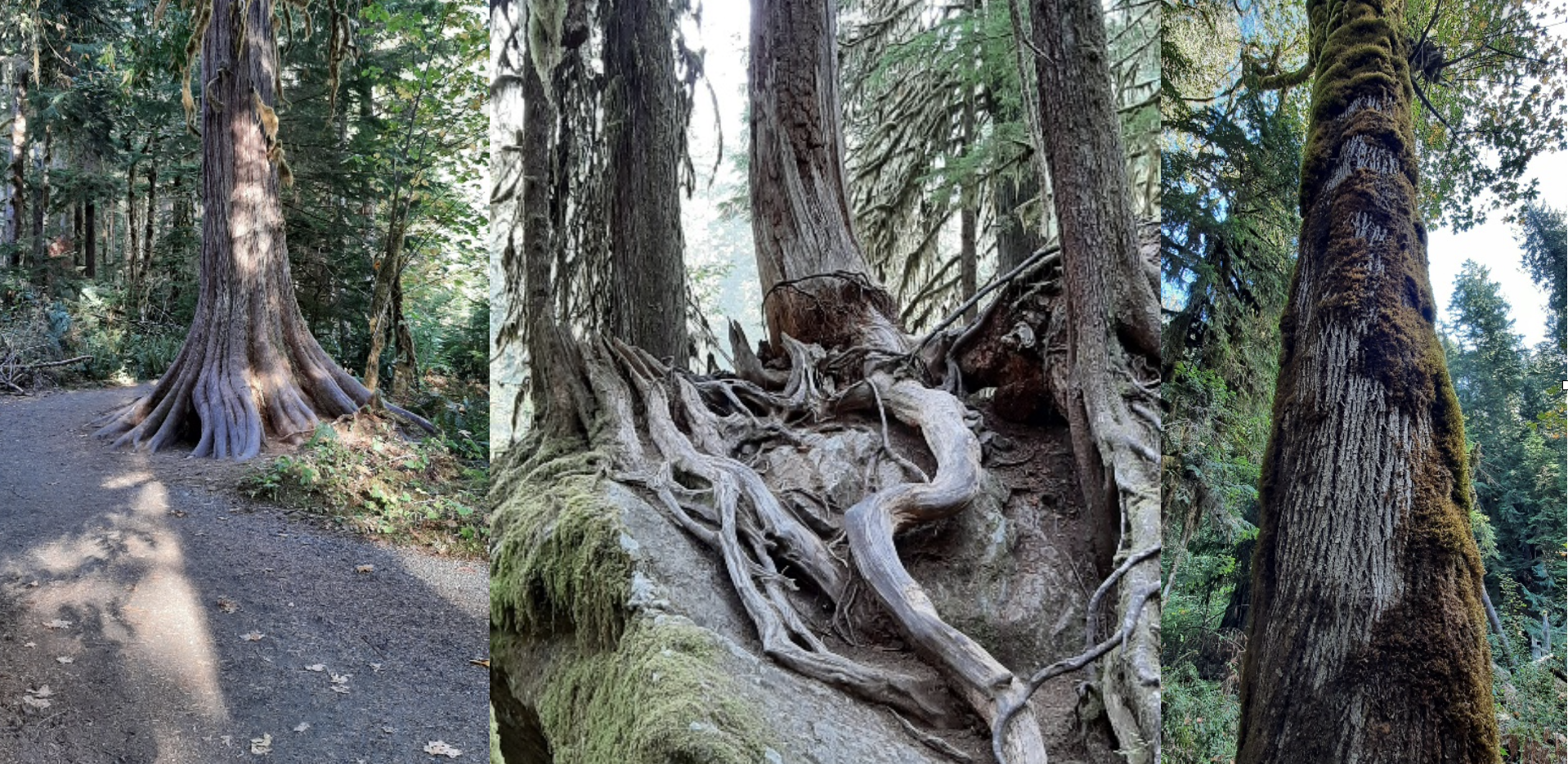
The trees were fascinating as well. Fun to find faces in the bark – but no troll yet!

The whole loop took us a little longer than advertised, but with stopping for pictures and troll hunting it took us about and hour and half. So much to see in such a short and easy hike and well worth it on a beautiful Fall day.
We will definitely be going back in the Spring to see the changes!
But wait… we finally found two shaggy-haired trolls. Can you see them too?

Nature Tour on a Duckabush Trail
If you live in the Pacific Northwest you've probably entertained the fleeting dream of "living off the land." Last August our team was invited to attend Hood Canal Adventures' "Wild Edible & Medicinal Plants, Lichen and Fungi of the PNW" tour. The experience reignites the desire to learn more about foraging in the Pacific Northwest.
If you live in the Pacific Northwest you've probably entertained the fleeting dream of "living off the land." Last August Tracing the Fjord was invited to attend Hood Canal Adventures' "Wild Edible & Medicinal Plants, Lichen and Fungi of the PNW" tour. The experience reignites the desire to learn more about foraging in the Pacific Northwest.
The group gathered at the Hood Canal Adventure's Base Camp office located in Brinnon. Here we were met by owner and resident biologist, Christina Maloney. Christina also operates a successful kayaking rental and tour operation at the nearby Yelvik beach. In the last few years she has expanded the company's profile to include education marine and forest tours. Christina works with local naturalists and guides to lead her tours. Today our guide was herpetologist and professional forager, Jerry Novak. Growing up in southern California, Jerry cemented his fascination with edible and medicinal plants and fungi working Washington Department of Fish & Wildlife as a steward at an amphibian sanctuary near the Columbia River. The days connecting with the land fueled his infectious curiosity which is clearly a mantra of his current foraging tours.
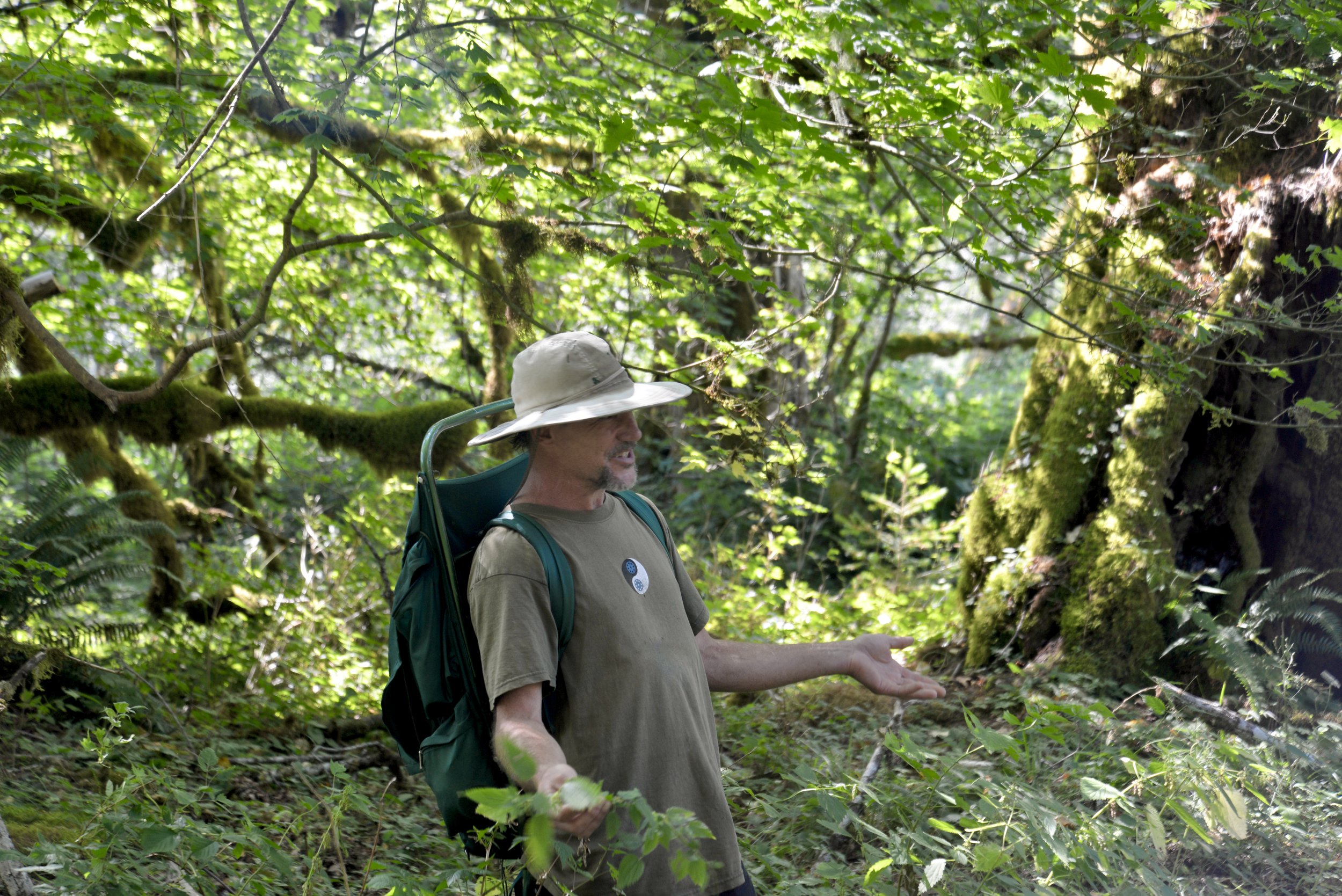
From the moment he pulled up in the dusty passenger van the tone was set with energy and anticipation.
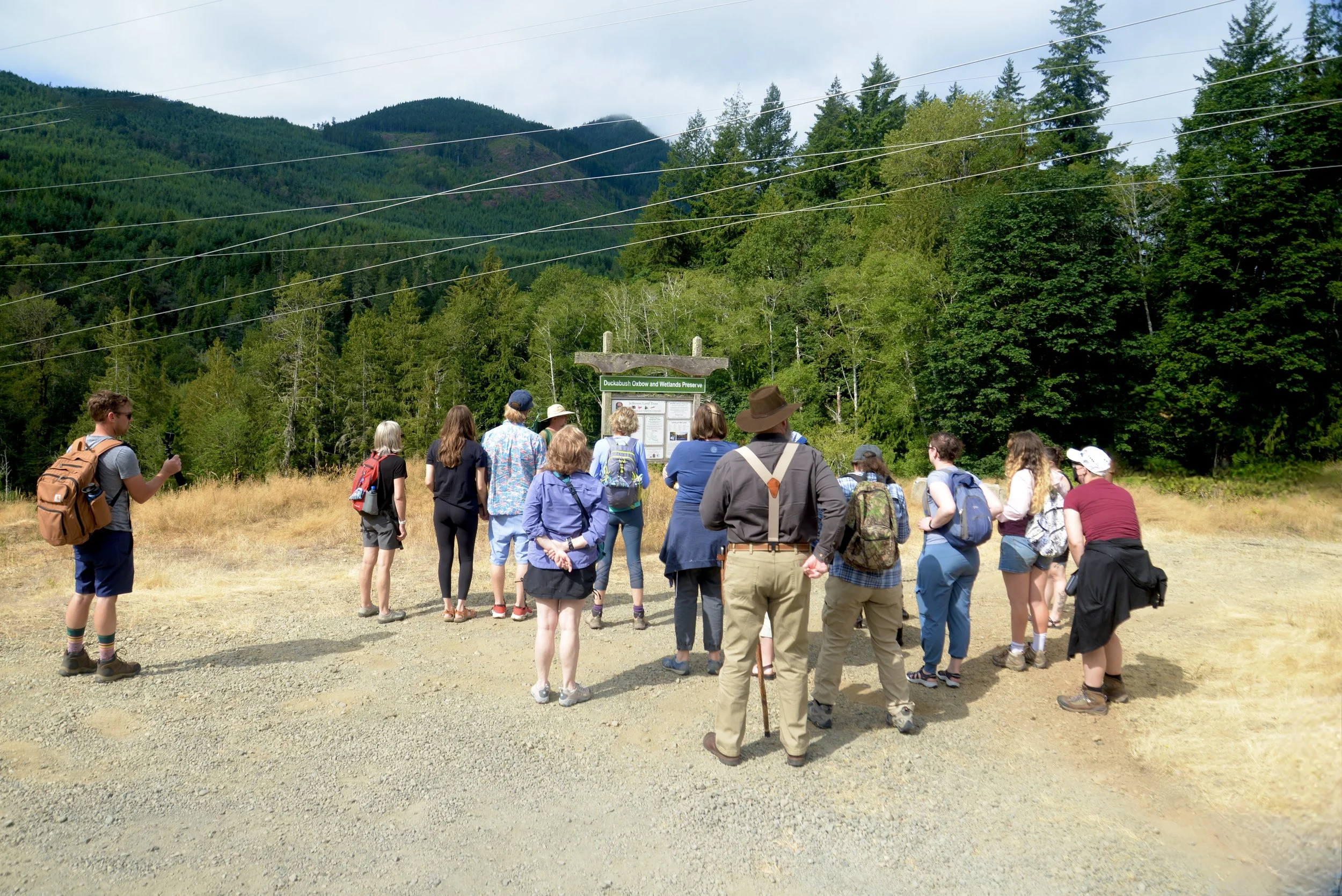
After loading up (some participants chose the option to drive their own vehicles to the trailhead) Jerry drove us the 15-20 minutes to a Jefferson Land Trust preserve located on the Duckabush River. Literally under the power lines, we piled out in the hot August sun and surveyed the seemingly uninteresting logging slash around us.
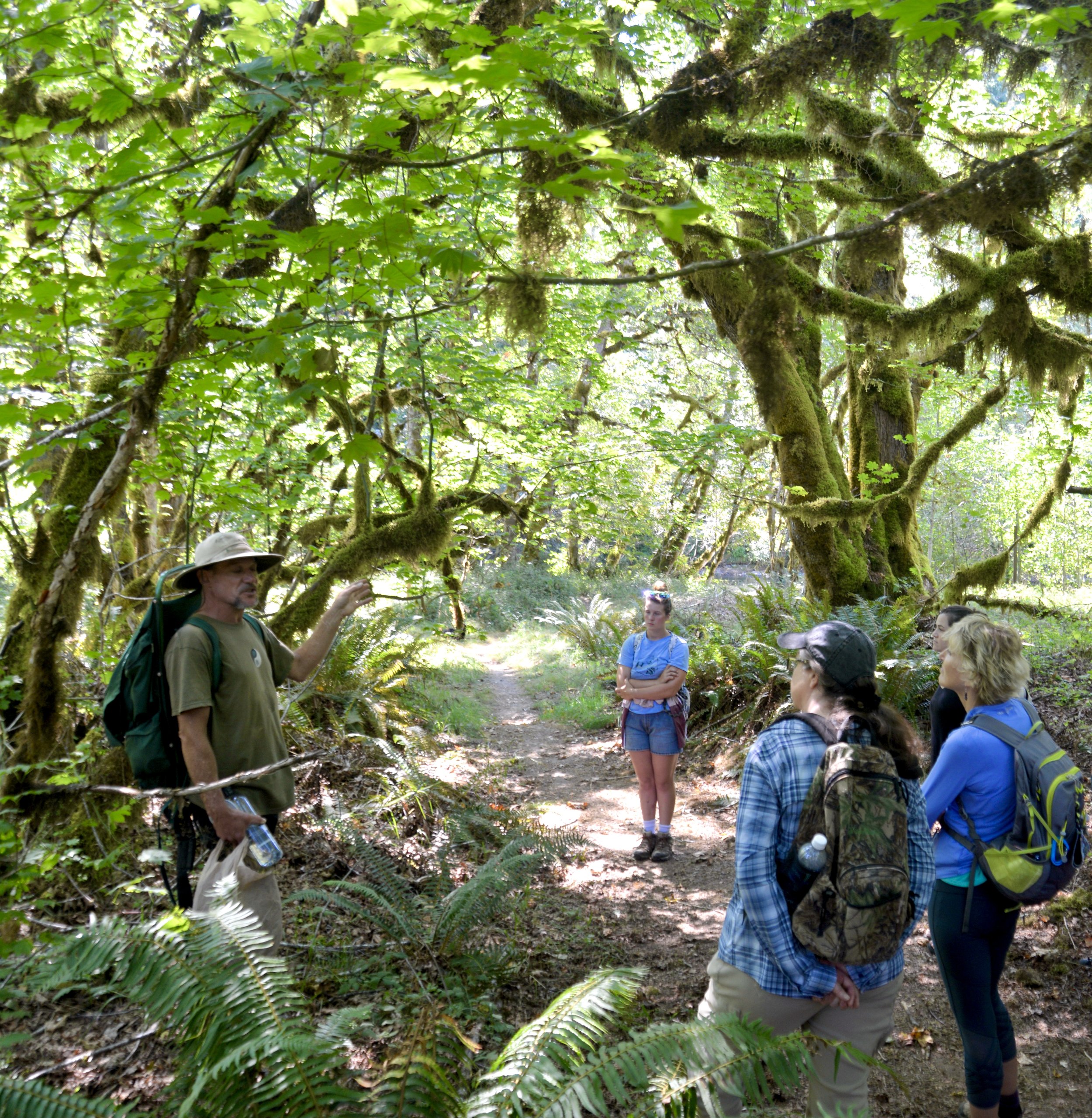
The unseen quickly became seen. Jerry reached down and grabbed a handful of dusty weeds with a head of purple flowers intertwined in the blackberry vines. His first plant was one that I had often overlooked as they are an ubiquitous on the forest floor. But never had I understood their varied healing properties. Some of which, Novak claimed, rivaled those bought over the counter.
Jerry shared the historical lore of each plant and his own personal experiences using the plants for their early medicinal uses.

He expressed a disregard for writers who reported on the benefits of flora without actually testing the methods themselves.
The tour descended into a sun dappled shady giant maple glen near the Skokomish River. Here we explored different fungi and trees and even sunk our teeth into a rhizome of licorice fern.
Despite it being mid-August and most of the plants past their prime and fungi still hidden beneath the soil, everywhere our guide stood, whether it be in an elk-trodden meadow or near the bank of the Duckabush River, there were countless opportunities to bring the "goodness" from the earth. You could do this walk anytime of the year and it would be an utterly different experience as the season changed.
As for poisonous plants and berries, he had some advice. "If they are too easy, don't eat them." Often times the plants that have no natural protection like thorns or "stings" are actually poisonous. I mulled over this later and could think of lots of plants that this rule doesn't apply to – like Huckle or Thimble berries for example, but unless you are sure, this is a good rule to adhere to. Nighshade and Snowberry (Ghostberry) definitely fit the definition.

The tour concluded with picnic lunch on the beach at the Duckabush River while Jerry prepared a hot wild foraged tea for the participants.
Hood Canal Adventures Fall Foraging & Fungi Tour Schedule:
Contact Christina directly, 360-301-6310, to reserve your spot or visit hoodcanaladventures.com to book online. Cost is $59/69 per person.
Mushrooms of the Olympic Peninsula - Walking Tour
September 24, 25 & 30; October 2, 7, 9, 14-16, 21- 23, 28- 30; November 4, 6, 11-13, 18-20, 26-27; December 2- 4
Edible & Medicinal Plant, Lichen & Fungi - Walking Tour
October 1; November 5
Mushrooms of the Olympic Peninsula - Walking Tour followed by Lecture with foraging author Langon Cook (sponsored by Jefferson County Libraries)
October 8:
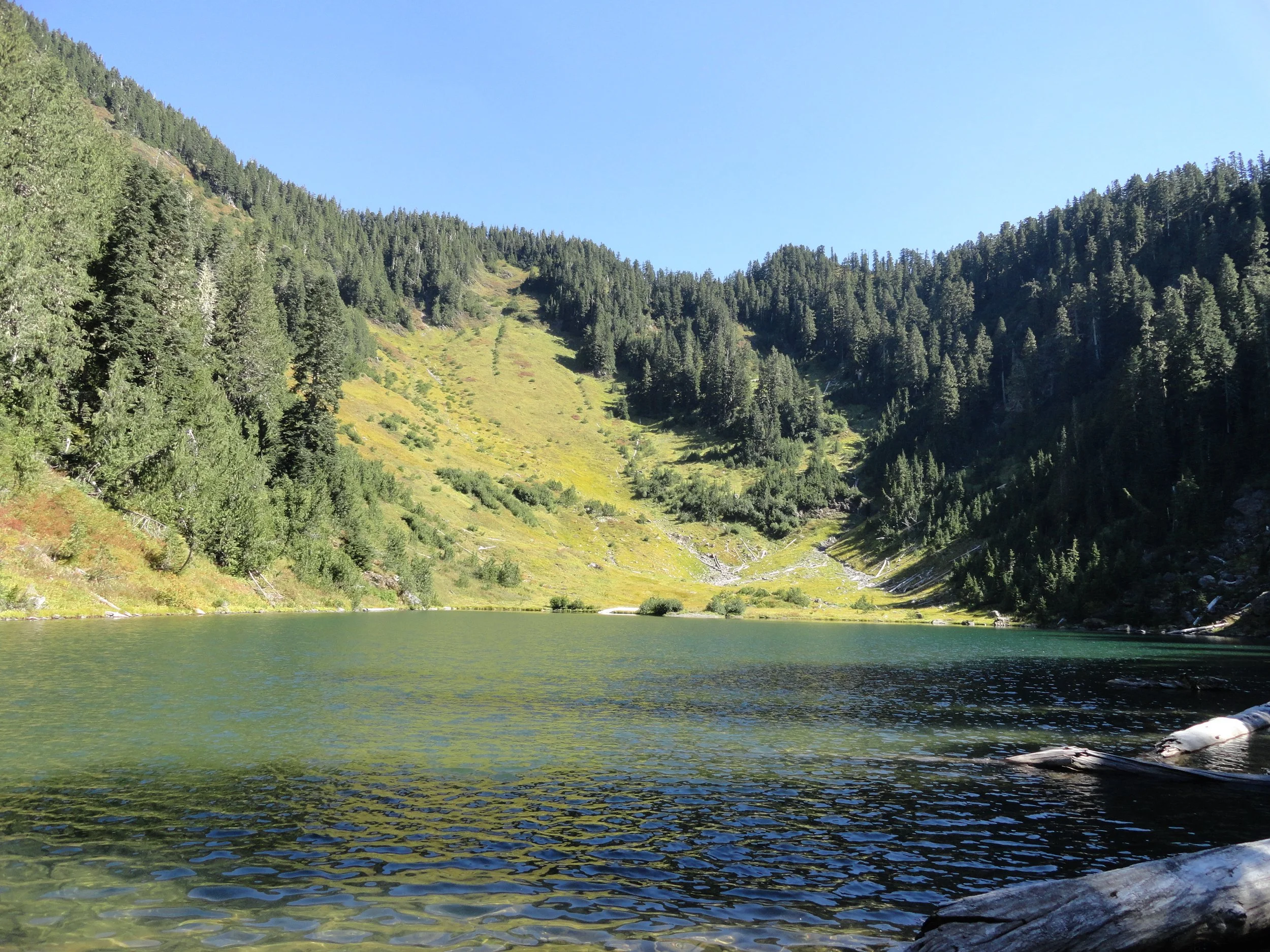
Lake Sundown
There are four ways to reach Lake Sundown, a pretty little body of water in the rugged and isolated southwestern corner of Olympic National Park. All of these routes are difficult and each contains their own charms and challenges. The route via the South Fork Skokomish River Valley includes miles of primeval cathedral forest along a wilderness waterway and an ascent of a 4,125-foot pass offering sweeping views of this wild landscape. If the trek to the lake is too daunting, a stroll just through the groves of ancient trees will provide a satisfying hike.
Pictures & Story by Craig Romano
There are four ways to reach Lake Sundown, a pretty little body of water in the rugged and isolated southwestern corner of Olympic National Park. All of these routes are difficult and each contains their own charms and challenges. The route via the South Fork Skokomish River Valley includes miles of primeval cathedral forest along a wilderness waterway and an ascent of a 4,125-foot pass offering sweeping views of this wild landscape. If the trek to the lake is too daunting, a stroll just through the groves of ancient trees will provide a satisfying hike.

Hit the Trail
Lake Sundown is one of the few backcountry lakes in the southern Olympic Mountains. Remote and difficult to get to, it’s also lightly visited. The shortest approach is via rugged Wynoochee Pass. The easiest (but not easy) approach is via Graves Creek requiring a long drive to the trailhead in the Quinault River Valley.
The approach via Six Ridge is the longest and most difficult, but also stunning when it comes to scenery and a wilderness experience.
The approach described here via the South Fork Skokomish River is challenging but includes varied terrain, excellent views, and an easier to access trailhead from Hood Canal.
While strong hikers can do this hike out and back in a day, it’s ideal for a one night backpack trip. Be sure to secure an Olympic National Park wilderness camping permit before heading out—unless you plan on camping in the national forest before reaching the park. There are two creek fords on this hike which can only safely be done in late summer and early fall. During this period the crossings are not much more than ankle deep. And finally, while the lake and its surrounding high country generally remain snow free through October, FR 2361 is gated on October 1st. So if you plan on doing this hike during October you’ll need to walk an additional 5.1 miles each way or mountain bike to the trailhead.

From the trailhead, head north on the Upper South Fork Skokomish River following an old roadbed. Soon reach the old trailhead and continue on single track coming to a narrow shelf. Carefully wander to the edge of the trail and stare straight down at the South Fork careening through a tight chasm.

At a little past a mile, cross Rule Creek on a big log bridge. Shortly after come to your first crossing of the South Fork Skokomish River. Fortunately a large fallen cedar can be used here to cross the river. Now climb above the wild waterway weaving through groves of primordial giants that’ll have you staring up to the lofty forest canopy. Conservationists were disheartened when this incredible tract of old-growth forest (one of the largest remaining expanses of old growth forest in the southern reaches of the Olympic National Park) was excluded from the 1984 Washington State Wilderness Act.

Continue hiking, crossing copious side creeks before coming to camps and the second crossing of the South Fork Skokomish River. By late summer the ford here is usually a mere rock hop. But if it looks tricky, this is a great turning around spot for a nice 5.2 mile hike. Otherwise carry on and upon reaching the far bank of the river, continue up the valley through mossy flats alongside the river bed—but not always along the river as sections of it often flow underground late in the season.
The trail eventually pulls away from the river and begins climbing. And what had so far been a fairly easy hike begins to get tougher.
At 4.4 miles reach Startup Creek which can be tricky to cross early in the summer. Now prepare to start climbing reaching the Olympic National Park boundary (dogs prohibited beyond) just past 5.0 miles. The trail soon afterward traverses a couple of wet meadows that showcase a myriad of flowers early in the season. Tread is absent here and navigating can be tricky. Angle to the northwest where good tread can be found again at forest edge. Don’t be led astray by elk trails. And do stay alert for these large members of the deer family. A large herd calls this valley home.
Continue deeper into the wilderness. After crossing a small creek, the trail steeply climbs reaching a small open basin graced with wildflowers in early summer and sparkling tarns providing the headwaters of the South Fork Skokomish River. Now reenter forest and steeply climb once more reaching forested 4,124-foot Sundown Pass. A short descent awaits you next through meadows providing good views of Wynoochee Pass and the Graves Creek drainage. Mount Olympus can be seen in the distance. At 7.8 miles, come to a junction. Left leads to Wynoochee Pass and the North Fork Quinault River.

You want to go right here through a pretty basin reaching Lake Sundown (elev. 3810 feet) in 0.4 mile.
Situated in a semi-open emerald basin on the western flank of Six Ridge, the lake is a pretty sight. A couple of campsites can be found at the old shelter site near the lake’s outlet. To catch the sunset, you’ll need to work your way to the eastern shore to look west across the lake to peaks and ridges beyond. On a warm day the lake’s refreshing waters make for a good dip. Savor the solitude and serenity of this remote backcountry lake. You worked hard to experience it!


More Details
Distance: 16.4 miles roundtrip
Elevation Gain: 3700 feet
High Point: 4125 feet
Difficulty: difficult
Snow free: July—October
Trailhead Pass Needed: None
Notes: FR 2361 closed Oct 1–Apr 30 to protect wildlife. Hike involves two fords safe only in low flow; dogs prohibited at national park boundary. Camping at Lake Sundown and in Olympic National Park requires an Olympic NP wilderness camping permit. No fires above 3500'.
GPS waypoints:
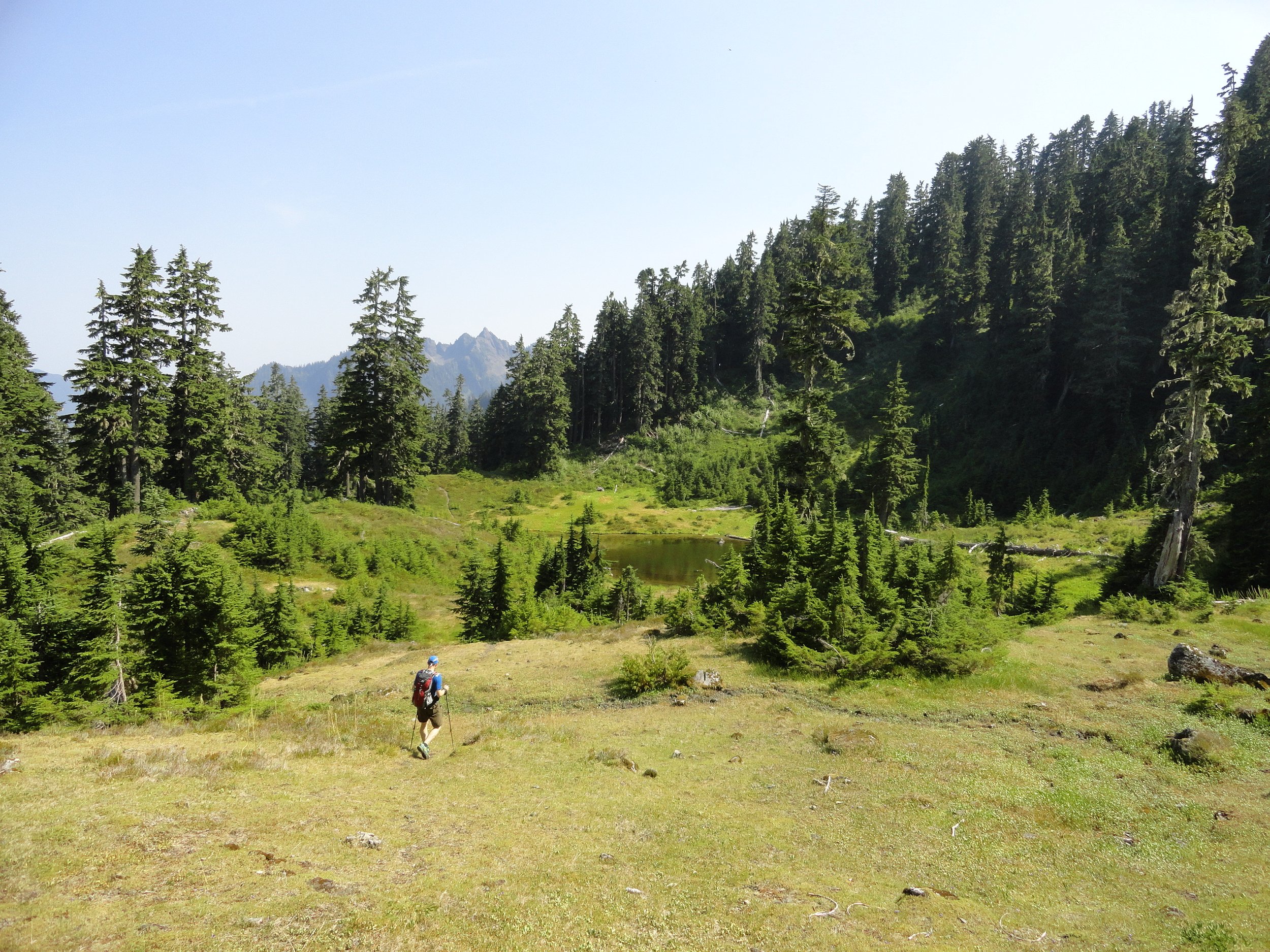
Trailhead: N 47 28.765, W 123 27.125
Lake Sundown: N47 32.170 W123 30.691
Land Agency Contact: Olympic National Forest, Hood Canal Ranger District, Quilcene, (360) 765-2200, http://www.fs.usda.gov/olympic; and Olympic National Park, Wilderness Information Center, (360) 565-3100, www.nps.gov/olym
Recommended Guidebook: Day Hiking Olympic Peninsula 2nd edition (Romano, Mountaineers Books)
Trailhead directions: From Shelton, travel north on US 101 for 7 miles, turning left at milepost 340 onto the Skokomish Valley Road (signed “Skokomish Recreation Area”). Follow for 5.6 miles, bearing right at a V intersection onto Forest Road 23. Continue for 9.3 miles bearing left at Y-junction with FR 2353. Then continue on FR 23, following this good gravel road for 4.3 miles and bearing right onto FR 2361. Then proceed 5.1 miles to trailhead at road’s end.

Five Northwest Books to Read While the Rain Falls
Okay, we’ll admit it: snuggling down against a winter storm under a mountain of blankets with a hot toddy and a snoring dog sounds like unabashed bliss for the bookworms among us.
The weather on Hood canal is ever changing and unpredictable. Sometimes it offers the perfect excuse to take a break from dodging rain soaked branches and curl up with a great book. Snuggling downunder a mountain of blankets with a hot drink and a snoring dog sounds like unabashed bliss for the bookworms among us.
While Netflix may dominate others’ rainy afternoons, we dare you to rebel with good old-fashioned literature. We pared our favorite Northwestern fiction, non-fiction, poetry, and kid’s books down to five of our favorites. There's lots of choices and chances for good book conversation and recommendation at the local branches of the Timberland Regional Library in Shelton, Hoodsport and Belfair.
1. The Mushroom Hunters: On the Trail of an Underground America by Langdon Cook

As with most of the delicious and sought-after delicacies the world has to offer, decadent morels, luxurious truffles, and other elusive mushroom treasures are hidden away in hard-to-access places. Seattle author Langdon Cook juxtaposes the high-class, refined people to whom these mushrooms are presented with the rugged denizens who forage for them in the Northwest’s most inaccessible woods. Seized by Gold Rush-like desires, this rough and territorial lot hauls hoards of edible fungi from the misty hills. As much a culinary history lesson as it is a compelling and character-driven narrative, The Mushroom Hunters is a must-read for someone as enchanted by adventure as by the world of fine dining.
This book is available for download and audio book Grab a library card and click here.
2. Sometimes a Great Notion by Ken Kesey

Although Kesey may be better known for his Jack Nicholson-endorsed One Flew Over the Cuckoo’s Nest, his epic Sometimes a Great Notion is arguably the quintessential Northwest novel. Many claim that it’s one of the greatest American literary works of all time, period. Its setting is a fictional costal city in Oregon at the confluence of the also-fictional Wakonda Auga River. The parallels between this old waterlogged logging town and historical Hood Canal are stark. The gravity with which Kesey is able to illustrate man vs. land in this masterpiece is powerful for a reader curled up with a Northwest winter gale at her window. It is an experience that sticks with the reader long after the book is returned to the shelf.
This book is available for download and audio book as well! Grab a library card and click here.
3. Long Journey: Contemporary Northwest Poets by David Biespiel

In his eloquent introduction, editor David Biespiel writes, “A Northwest poet’s impact on our sense of how we see the Northwest may be greater than the Northwest’s impact on the poet.” As such, poets included in this anthology were born in the Northwest…and elsewhere. Likewise, their poetry revolves around images of recognizable Northwestern iconography…or not.
This collection evades reduction to a single concrete theme, but the Northwest lives and breathes within these pages. They grasp at and, in a quirky way, get ahold of what we see and feel while we’re here. Let the 80 poets in this masterpiece impact how you see our Northwest.
This book is available through the Timberland Library System. Click here to order
4. The Far Corner: Northwestern Views on Land, Life, and Literature by John Daniel
John Daniel blurs the lines between natural, literary, spiritual, and human history—to the reader’s delight. As much of a personal memoir as it is a meditation on the relation between man and nature, these 18 wide-ranging essays attempts to capture the Northwest’s character as a whole.
Both lyrical and informational, this collection entices those who are eager to learn, and those who are eager to be entertained. A winner of the Oregon Book Award, this work belongs on the shelf of everyone who has stepped foot in Hood Canal.
5. Where Would I Be In An Evergreen Tree? By Jennifer Blomgren

A story to delight the little ones, this work by Northwesterner Jennifer Blomgren follows the lifecycle of an evergreen tree. Her smooth verse is gently informative, while Andrea Gabriel’s pastel images in soft greens, quiet blues, and warm browns illustrate the host of animals that inhabit these northwestern deciduous behemoths.
Blomgren’s other works, like Where Do I Sleep? and Why Do I Sing? are equally as educational and comforting for kids adventuring through Hood Canal. This is one to keep in the car on your next road trip.
For more suggestions and ideas to enhance your experience in Hood Canal, keep up with us on Facebook, and Instagram. Share photos of your bookworm selves with us—we love to feature photos! Tag your social media with #wildsideWA. Cheers to the page-turners!

Hamma Hamma's Living Legacy Trail
Take a leisurely hike back into time on this delightful trail along the Hamma Hamma River to the historic Hamma Hamma Cabin.
By Craig Romano, feature columnist
Craig Romano, is an author of more than twenty hiking guidebooks including the bestselling Day Hiking Olympic Peninsula 2nd Edition (Mountaineers Books), which includes detailed descriptions for 136 hikes throughout the Olympic Peninsula. Visit CraigRomano.com for more information.
Take a leisurely hike back into time on this delightful trail along the Hamma Hamma River to the historic Hamma Hamma Cabin. Constructed by the Depression-era Civilian Conservation Corp (CCC), the cabin was used as a guard station in Olympic National Forest. Today it stands as a testament to the craftsmanship and hard work of the CCC. Learn more about “Roosevelt’s Tree Army” and their legacy on this family friendly interpretive trail.

Photo: Craig Romano
In April of 1933 in the midst of the Great Depression, newly inaugurated president Franklin D Roosevelt established the CCC through an executive order. Roosevelt’s aim was more than just putting young men to work and allowing them to provide for their families.
"Roosevelt strongly believed in the spiritual and physical values of working in nature, and in the importance of conservation of our natural resources for the nation’s health and prosperity."
At its height in 1935, more than 500,000 young men were stationed in more than 2900 CCC camps in every state as well as Puerto Rico and the Virgin Islands. At the program’s close in 1942, more than 3 million men (nearly 5% of the country’s male population) had served in the CCC. This trail sheds some light on what life was like for these men during their time in the Corp—and highlight some of their achievements and legacy.

Photo: Craig Romano
Among their many projects, CCC recruits were responsible for building vast amounts of infrastructure within parks and forests throughout the country—including both the Olympic National Park and Forest.
They also fought fires, reforested large tracts of land and worked on flood control projects. There were camps established right within Olympic National Park and Olympic National Forest, including one in the nearby Staircase Region. Nearby Twanoh State Park on Hood Canal also was the site of a large CCC camp.
Hit the Trail
Start your hike east on a wide and level path through a riparian forest of large mossy maples and speckled barked alders. The first quarter mile of this recently refurbished trail is ADA compliant. While this trail emphasizes the historic role the CCC played in this corner of Olympic National Forest, there is plenty of natural beauty to be enjoyed long the way as well. It is the only trail (albeit just for a short stretch) that runs along the Hamma Hamma River.

Photo: Craig Romano
The river’s name come from the Twana (whose ancestral lands included much of the Hood Canal region) word Hab’hab, which refers to a reed along the river’s banks. The name means big stink, or literally stinky, stinky in reference to the aroma the reeds emitted. The trail hugs a bank above the river allowing for some excellent views of the pretty waterway.
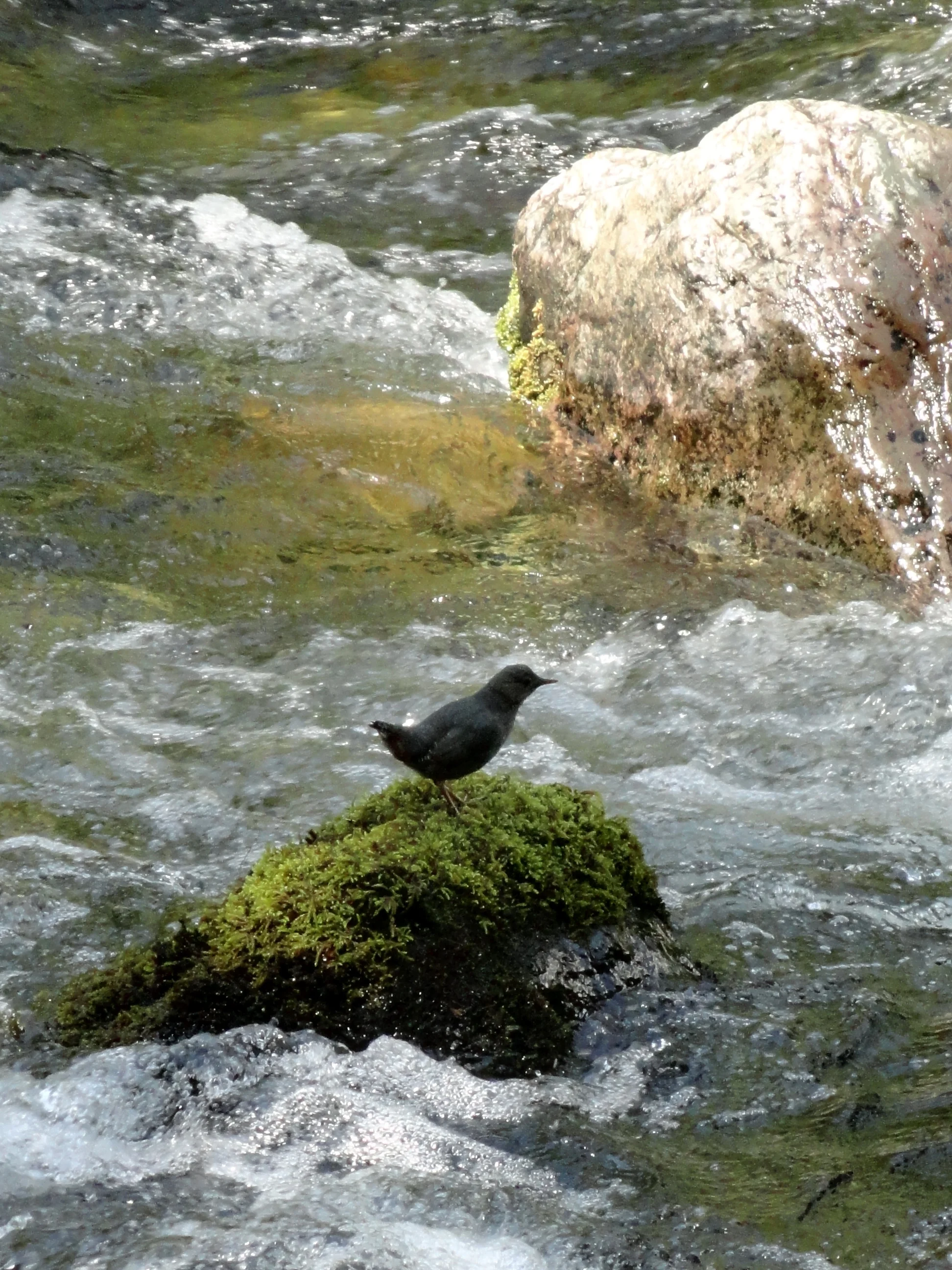
Photo: Craig Romano
Stop and look for dippers—robin sized birds that feed on aquatic insects and nest along the shorelines of rushing water. In spring look for Harlequin ducks returning from the Salish Sea. One of the prettiest sea ducks, they build hidden nests along rapid moving creeks and rivers.
The trail climbs a small bluff granting an excellent view of the pretty waterway, before leaving the river for forest. At 0.5 mile the trail turns north to cross Forest Road 25. Now walk along cascading Watson Creek climbing about 100 feet to a wooden bench on a perch overlooking the creek. It’s a great spot to sit and enjoy the sound of nature’s water music. By late spring nesting thrushes and other songbirds add a wide range of melodies.
The trail now turns west to soon reach the historic Hamma Hamma Guard Station. Built by the CCC from 1936 to 1937, it was used for administrative purposes for forest fire and trail crews. Today this eloquently rustic structure with its hexagonal bay window can be rented out for an overnight stay recreation.gov. Please respect the privacy of any guests staying at the cabin by not walking on the grounds. Otherwise wander around the structure. Note the landscaping too, especially the rhododendrons which will be in bloom come May.
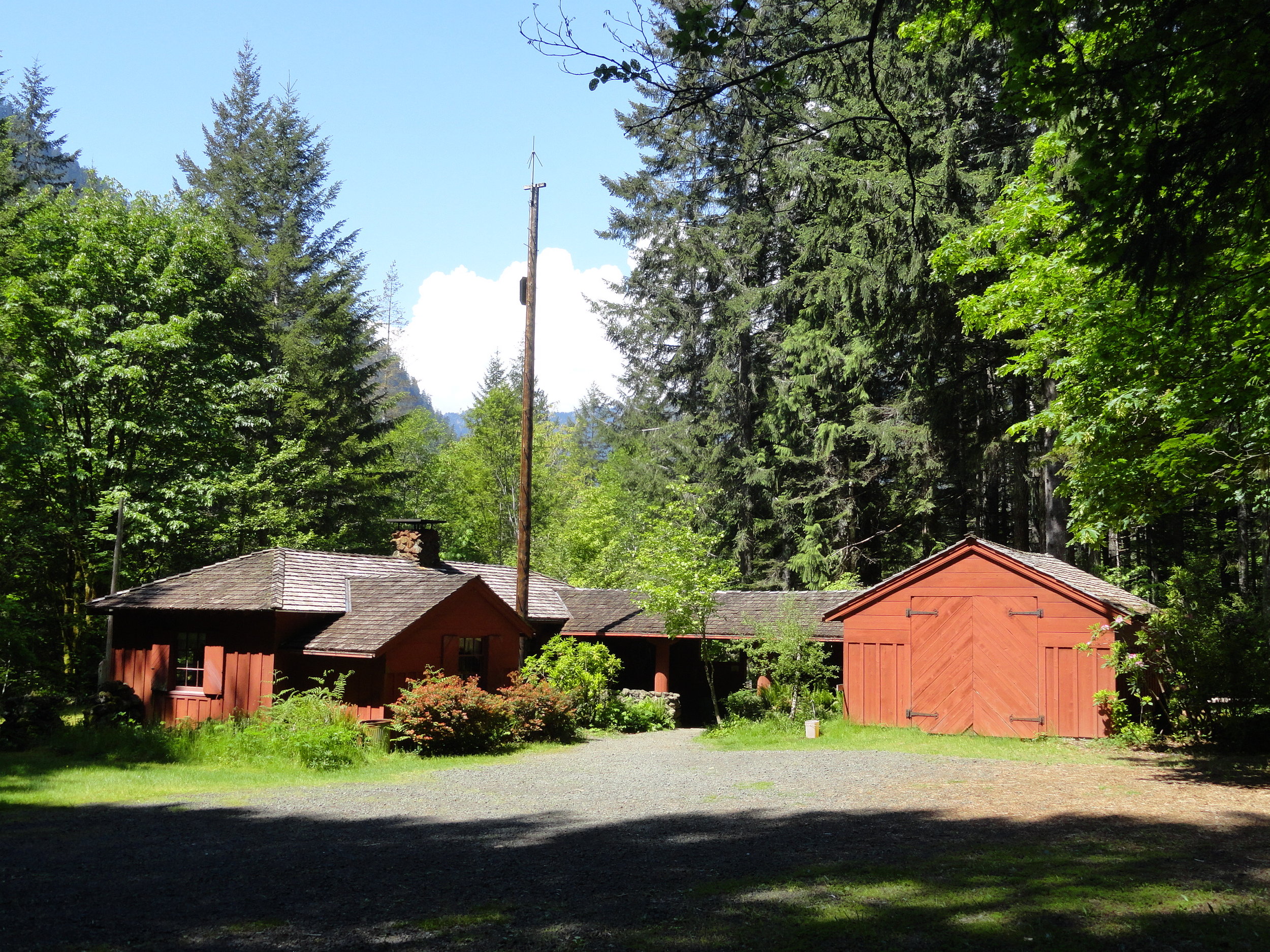
Photo: Craig Romano
After admiring the historic structure continue west on the loop crossing a small creek and traversing a grove of mature second growth firs. The way then descends into a ravine before re-crossing FR 25. Continue hiking passing some big beautiful old trees before reaching the campground loop road near campsite no. 6. Now turn right and walk the loop road a short distance back to your start closing your loop hike at 1.8 miles. Reflect on some of the achievements of the Corp including the thousands of miles of trails they built, more than 3400 fire towers constructed, nearly 3 billion trees planted, and the development of amenities and infrastructure in more than 800 parks across the nation. Many of their works are still standing and in use in Olympic National Park and Olympic National Forest as well as at several nearby state parks. The Corp’s legacy continues to live on for the next generation of outdoorsmen and women.

Getting Here
First .25 mile ADA; Leave No Trace Principles
Land Agency Contact: Olympic National Forest, Hood Canal Ranger District, www.fs.usda.gov/olympic
Recommended Map: Green Trails Olympic Mountains East 168S
Trailhead directions: From Hoodsport travel north on US 101 north for 13.7 miles turning left at milepost 318 turn onto FR 25 (Hamma Hamma River Road). Then continue west for 6.0 miles turning left into the Hamma Hamma Campground. Proceed for 0.1 mile to trailhead located near site no. 12.
Trailhead facilities: campsites (fee), privy
April Showers Bring Spring Flowers
Although the Pacific Northwest is known for its temperate rainforests accompanied by an abundant amount of green, with April warmth, we can start to look forward to the colorful relief offered by the return of the native flowers around the Canal and South Puget Sound area.
Although the Pacific Northwest is known for its temperate rainforests accompanied by an abundant amount of green, with spring’s warmth, we can start to look forward to the colorful relief offered by the return of the native flowers around the Canal and South Puget Sound area.
April to June is the best time of year for finding the delicate jewel tones out here on the wet coast. Whilst domesticated daffodils and tulips will always be celebrated markers of Spring, our native plants are often forgotten gems of the forests understory. As the days get longer and the weather gets warmer, take a ramble down one of Mason County’s forested walks, like Twanoh State Park Trail or for a more adventurous alpine hike, with spectacular views and unique flora, try Mount Ellinor Trail.
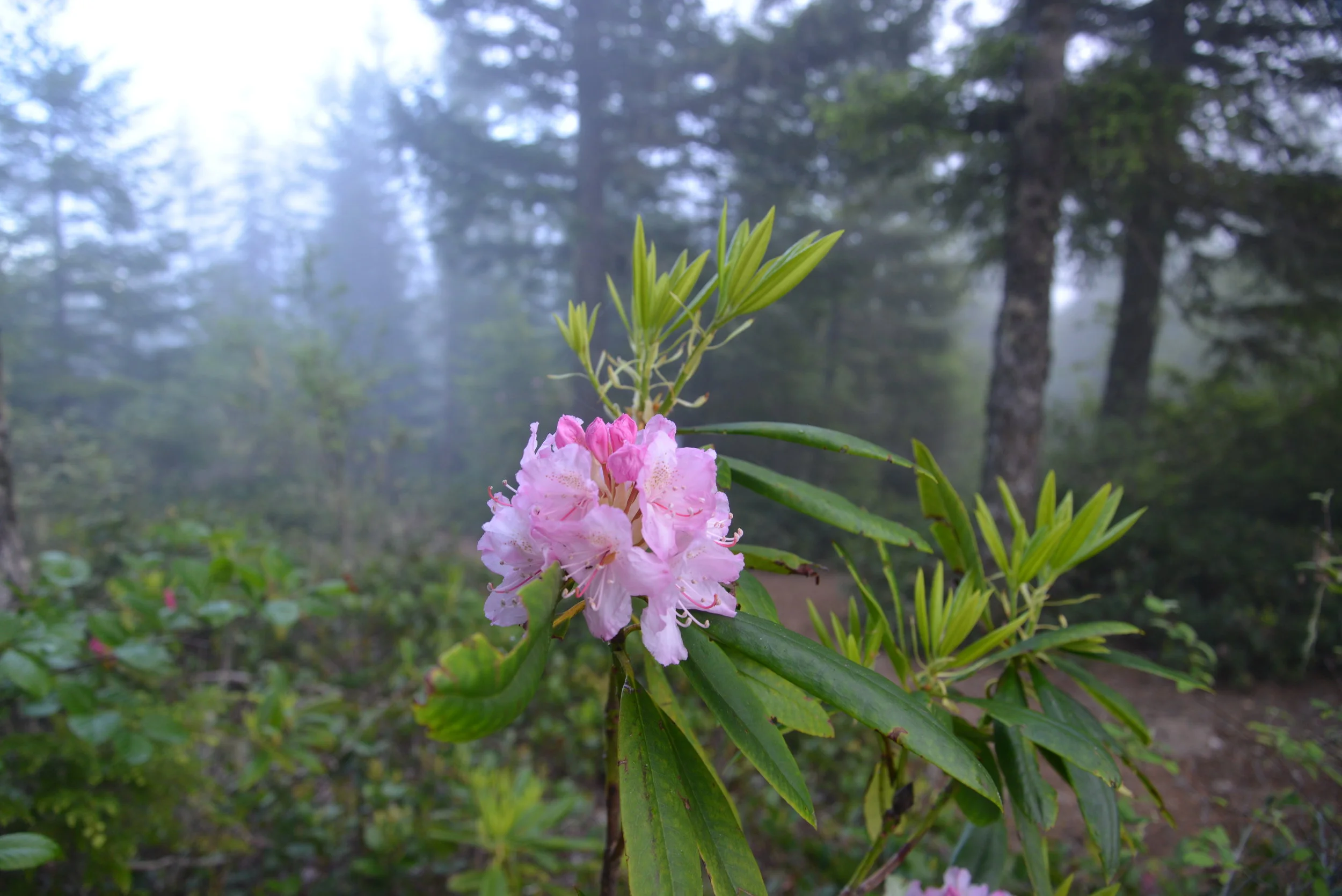
Keep your eyes peeled for the first nodding, purple blossoms of Henderson's Shooting Star (Dodecatheon hendersonii) and the showy, pinky-purple blooms of our local variety of Rhododendron (Rhododendron macrophyllum).

The Pacific Rhododendron is Washington’s State flower and is found in drier parts of the Hood Canal in the understory of coniferous forests.
There are nearly 30 varieties of Rhododendrons native to North America. The Pacific Rhododendron is Washington’s State flower and is found in drier parts of the Hood Canal in the understory of coniferous forests. Pacific Rhododendron can also be seen in partly sunny, open areas, such as along roads. The Pacific Rhododendrons and also Goat's Beard (Aruncus dioicus) can be found in proliference along the winding, scenic 101 Highway following Hood Canal. For an especially spectactular showing of the native rhodendrons, head up to the scenic outlook on Mount Walker.

Pink Fawn Lily
In sunnier, damper areas, near streams, look for the bright pink flowers of Pink Fawn Lily (Erythronium revolutum) or the iconic, if not slightly smelly, “West Coast Daffodil”— Skunk Cabbage (Fritillaria lanceolata). Also in sightly shady, waterside spots, look for carpets of pink Bleeding Heart (Dicentra formosa)— a more delicate version of our domestic variety. Try the Kamilche Kennedy Creek Trail for these humid loving flowers.
Orange Honeysuckle
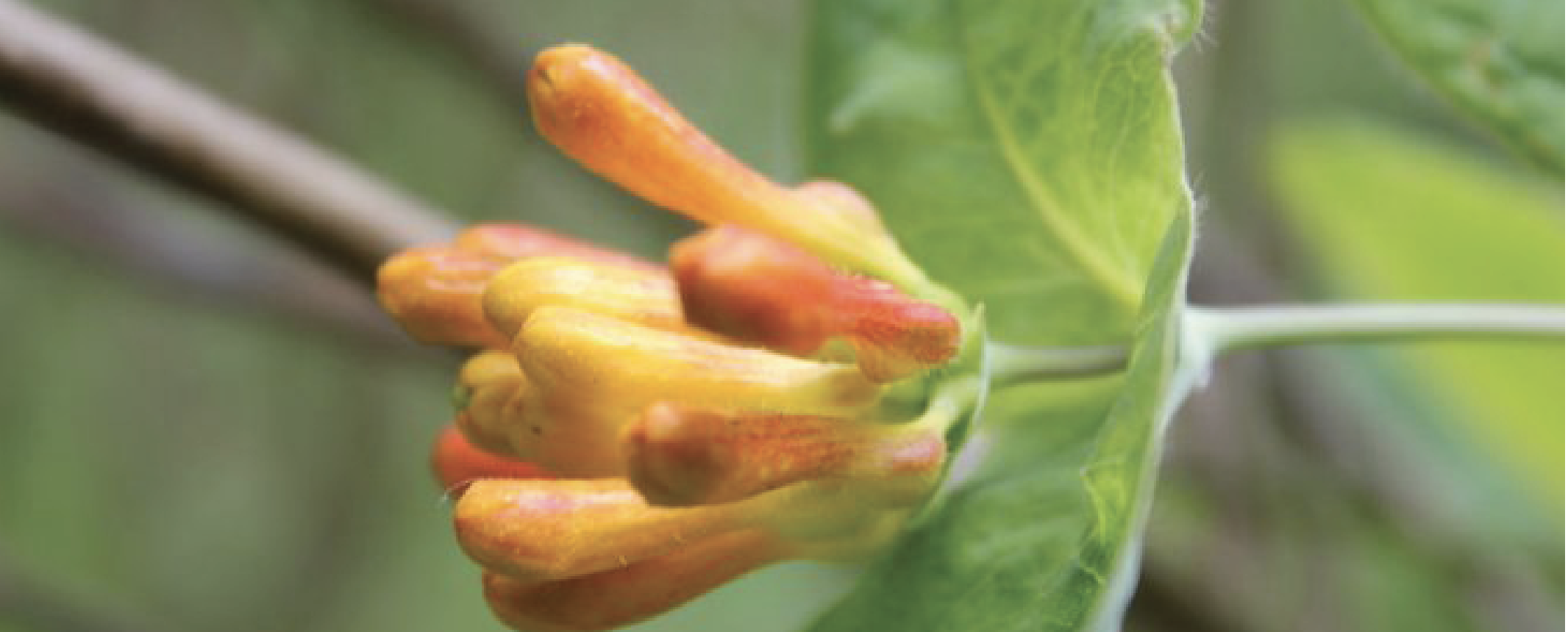
As the weather gets warmer (from May to June) search in the partly shady area of the woods for the trailing tender beauty of Orange Honeysuckle (Lonicera ciliosa), and the yellow blossoms of Tall Oregon Grape (Mahonia aquifolium). The delicate, orange-red blooms of Red Columbine (Aquilegia formosa) also emerge during this time.

Camas was actively cultivated and traded between first peoples throughout the Northwest who would harvest the bulbs in the early spring and roast them in pit cooks.
Other blossoms to look for in the late spring are the azure, crocus-like flowers of the Common Camas (Camassia quamash). Found in full sunlight in open places, such as fields, parklands, the bulbs from the Camas were an important part of the diet of Native Americans. Known as k’a’w˜up to the Skokomish and sxa’dzaêb by the Squaxin, this bulbous flower was actively cultivated and traded between Nations throughout the Pacific Northwest who would harvest the bulbs in the early spring and roast them in pit cooks.
On one of those calm days when you believe it might just be summer here early, pack a lunch and hop in the boat and travel to Hope Island Marine State Park. Here you will be greeted by lovely trails and beautiful naturalized gardens with a mix of introduced and native species.
Red Paintbrush
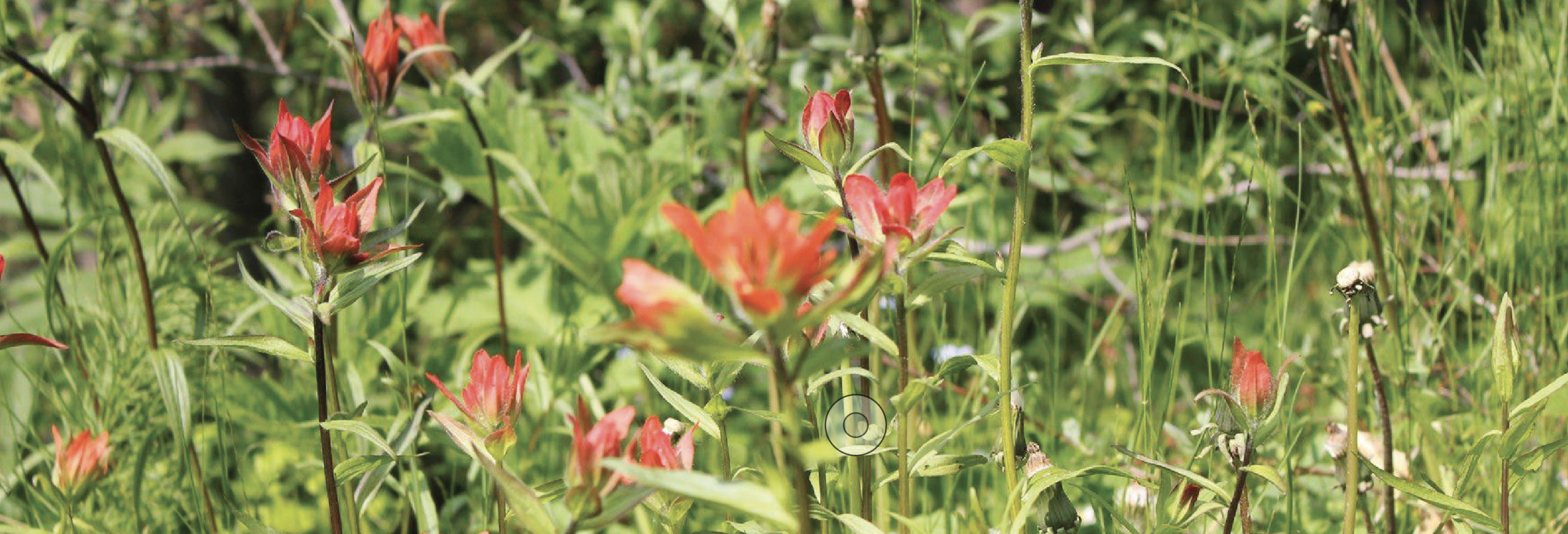
Once settled as a farm, Hope Island has historic fruit trees mixed in with native camas, honeysuckle and the elegant red, trunks of Madrone (Arbutus menziesii). An unusual looking plant found along sun-facing, beach banks is the Red Paintbrush (Castilleja miniata), whose tiny green flowers are hidden in bright red leaves that give the appearance of a brush dipped in red paint. Since most of these species are protected against picking or transplanting, remember to keep your enjoyment to viewing.
You can take as many photographs as you like, but refrain from taking bouquets and let the native flowers thrive.
If casual enjoyment of our native plants is what your after, the Washington Native Plant Society has plant identification resources online and there are plenty of guide books to help. Pojar and Mackinnon’s Plants of the Pacific Northwest Coast (2014) and Nancy J. Turner’s Food Plants of Coastal First Peoples (1995) offer excellent information, photographs and tidbits that add color to an already polychromatic subject. Happy hunting!
ShrimpFest is back!
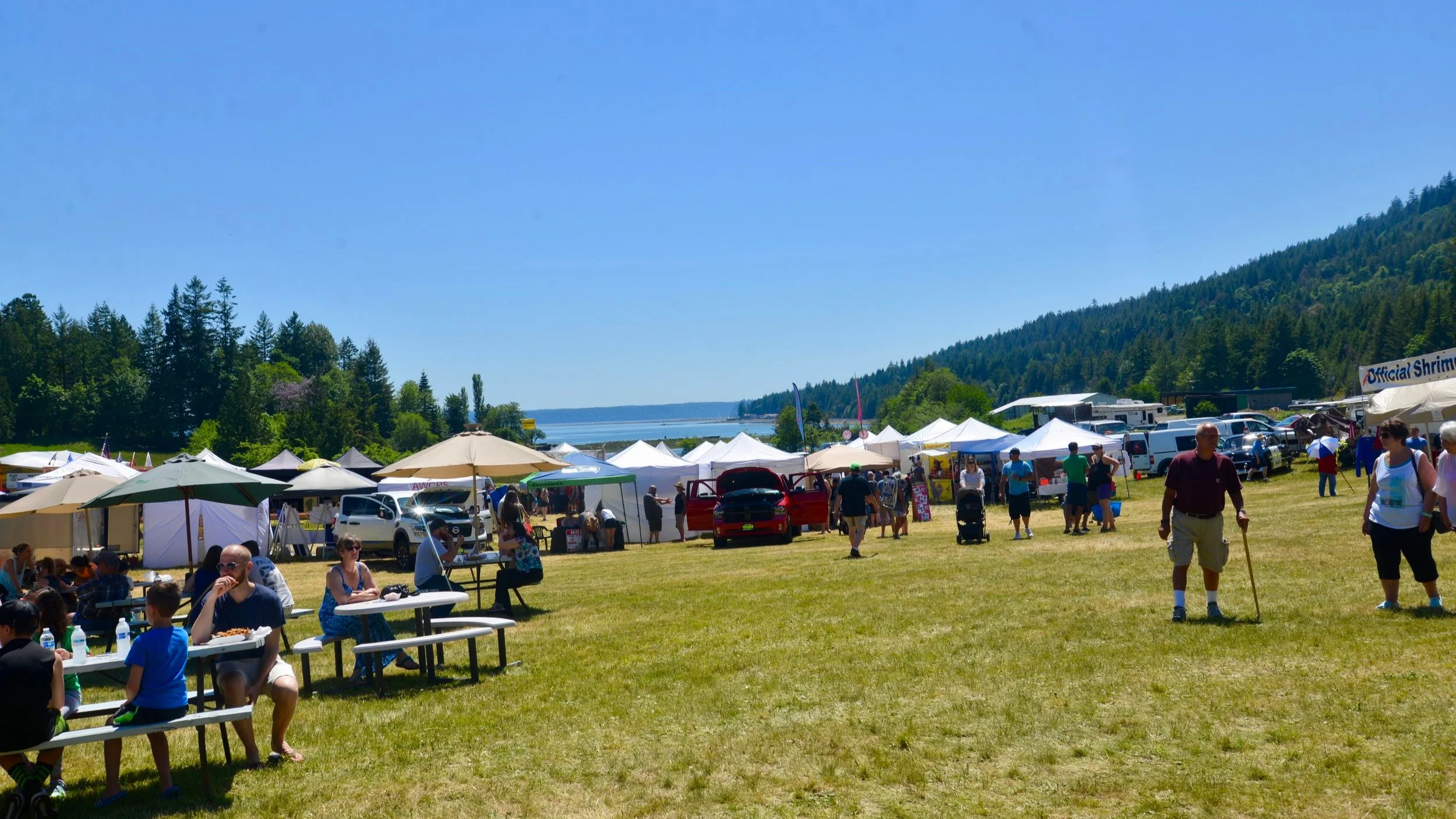
Hosted Memorial Day weekend from 10 AM - 6 PM, the festival offers a fun-filled weekend of Hood Canal shrimp, food, games, and entertainment.
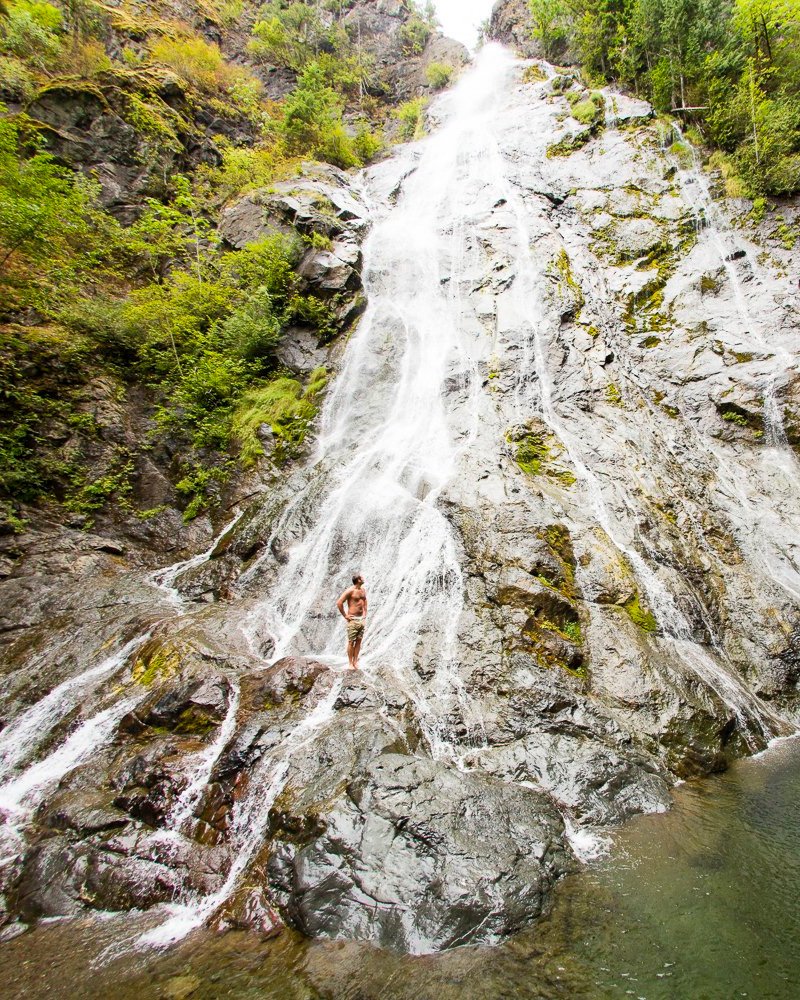
Rocky Brook Falls
Brinnon, WA
One of the tallest waterfalls on the Peninsula, Rocky Brook Falls is also among the prettiest. Just minutes from Brinnon (and ShimpFest) visitors follow a short the trail from the main road that leads directly to the base of the stunning towering falls fanning over ledges into a large splash pool surrounded by boulders.
This classic horsetail waterfall crashes more than 200 feet from a small hanging valley above.
Things are beginning to open again throughout the state and a community favorite, Hood Canal ‘s ShrimpFest festival in Brinnon , is back on the schedule, May 28-29.
Hosted Memorial Day weekend from 10 AM - 6 PM, the festival offers a fun-filled weekend of Hood Canal Spotted Shrimp, food, games, and entertainment.
Still just $5 admission, the value of this community fueled festival is undeniable. Set in a beautiful field overlooking Hood Canal, the event features live entertainment throughout the day – local and regional performers include The Shift (folk rock), Greased Lightning (classic rock), Me and The Boys (bluegrass) and Lowire with their funky rock grooves.
Food vendors will be offering seafood paella, shrimp kabobs, clam strips, calamari, tempura shrimp, shrimp egg rolls, shrimp gyro, garlic shrimp, crab and shrimp tugboats and other tasty treats. If you are not into seafood but still want to enjoy this festival, don’t worry, burgers, hot dogs, salads, and the usual fair fare will be available. Top it off with cotton candy, ice cream, root beer floats, strawberry shortcake, or the famous funnel cakes. Thirsty? Head to the beer and wine garden and enjoy beer and wine with a side of spectacular Canal views.

ShrimpFest offers something for everyone in the family. Local non-profits are hosting education booths and there are fun activities for the kids as well. Local and regional artists will be selling their crafts. Amongst the variety, you will find fudge, metal art, jewelry, leather, jerky, maps, oils, spices and photography.

Nearby, the tides are usually low enough during this weekend for exploration of the inter tidal or easy harvest of clams and oysters on the public beaches near the festival, (license required) Stop in at brinnon's Hood Canal Adventures for supplies as well as kayak rentals or, adjacent to the festival, pick up snacks and supplies and meet the new owners at Cove RV.
Mark your calendars, to join the fun in Brinnon this Memorial Day weekend! The event is located at 251 Hjelvicks Road. More information and directions available at brinnonshrimpfest.org.
Places to stay nearby Shrimpfest




Hood Canal Travel Guide: Waterfall Wonders
Waterfall Road Trip
Cascading waterfalls tucked into hidden nooks are simply and quintessentially Hood Canal. Sure, we love summer, but winter is truly a marvel in our corner of the world. We daresay we prefer it when it comes to admiring the majestic cascades tumbling from the woods.
Waterfall Wonders Near Shelton, Washington
It’s undeniable that cascading waterfalls tucked into hidden nooks are simply and quintessentially Hood Canal. Winter and early spring are optimal for peeping these rushing beauties.
As the rain falls, it keeps our hillsides the vibrant green that makes the Olympic Peninsula feel like home. This also means the waters rise, and the cascades fill in. So check the forecast, grab your best adventure buddies, and get to some of the most beautiful gems that Hood Canal has to offer.
Visit the Olympic waterfall trail and see our detailed notes on each destination below. This trip is ideal for Seattle weekend road trippers taking advantage of the Kingston Ferry, looping up through Port Gamble, then down Hwy 101.
Take the plunge | 10am
Situated just north of Brinnon, Rocky Brook Falls remains one of the best easy-to-reach waterfalls on the Olympic Peninsula. After a 1986 micro hydro project was installed at the top of the falls, locals feared that the falls would run dry. Thanks to operators of the facility, the beautiful 229’ tall falls run year-round.

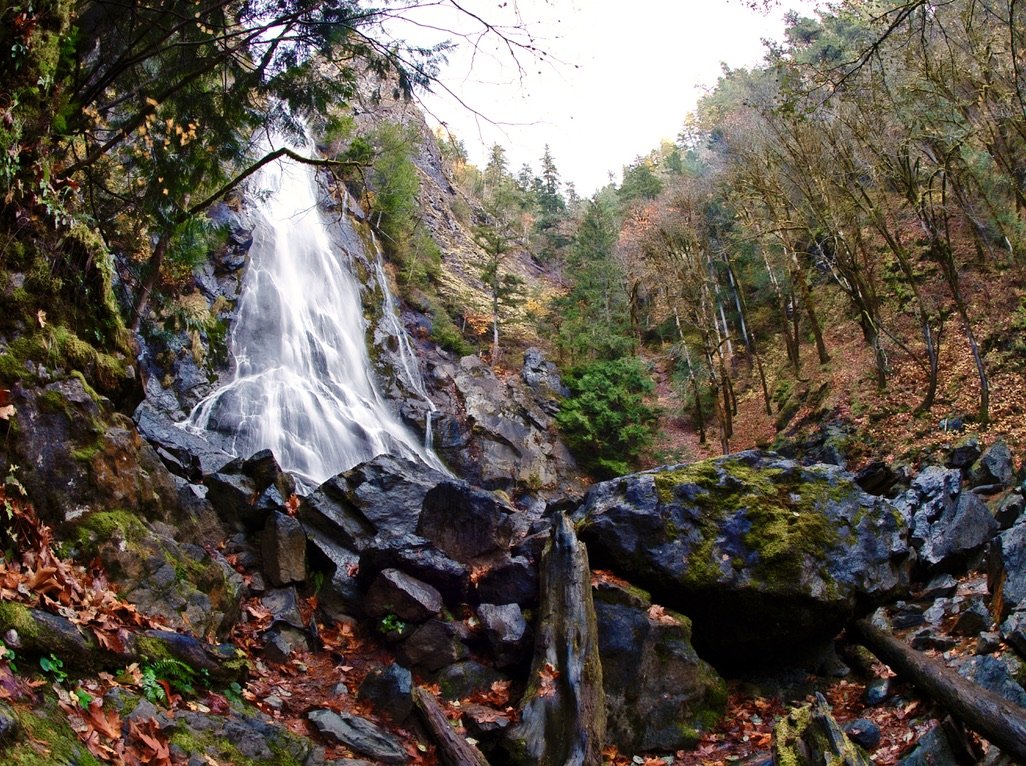

For the waterfall nerds out there, Rocky Brook’s primary form is in tiered horsetails, with three thundering drops until it reaches the small pool below.
Upon arriving at Rocky Creek, park just beyond the small bridge and follow the trail that leads past the hydro facility for about 500 feet. Note that the rocks around the pool can be slick, especially when wet, so it’s best to exercise caution.
Test your navigation skills | 1pm
Little is written about these falls, and visiting them requires a fair bit of exploring. Over the years, a number of the most intrepid kayakers have ventured to the Olympic Peninsula in order to run Hamma Hamma Falls. The boiling pool at the bottom of its pristine and highly technical 25’ first drop gives paddlers just enough time to set up for the 50’ drop immediately after.We would reccomend enjoying it from the top instead.
A concrete bridge spans the river over the falls at the fall line of the upper drop, but an adventure-seeker will need to navigate the lower banks to get a full-frontal view of this beauty.


Re-orientate your GPS | 2pm
Just three miles downstream, Lower Hamma Hamma Falls is the slightly-less-majestic sister to the beaut upstream. Dropping into a small gorge, the falls tumble over a large pile of boulders. As such, it’s difficult to see the whole falls from any one location and it is advised to exercise extreme caution when trying to gain a better downstream view.


The ultimate “selfie spot” framed by waterfalls at Vincent Creek falls — aka High Steel Bridge
Get a great view at High Steel Bridge | 4pm

No waterfall itinerary would be complete without a trip to the historic High Steel Bridge that spans the gorge and sits a staggering 300’ above the mighty South Fork of the Skokomish River.
The vertigo-inducing High Steel Bridge has an uncontested view of the last cascade on the itinerary, Vincent Creek Falls, and is easily accessed from Hwy 101. It’s also a quick pit stop after an awesome wintery afternoon of mountain biking if you happen to visit the area on a dry-ish day.

Wash it down in Union, Washington | 6pm
Here’s the ultimate challenge of your day: organize it so that the end of your satisfyingly adventurous day brings you straight to a good cocktail at the newly renovated Alderbrook Resort and Spa.
As you sort through the memories of a day well spent, remember that we love keeping up with you! Tag your photos and thoughts on social media with #explorehoodcanal, #wildsideWA, or #hoodcanal for a chance to be featured by us.
Be sure to check in with us on Facebook, Twitter, or Instagram for more ideas on how to get the most out of your road trip to Hood Canal. Happy adventuring!
For more fantastic waterfalls in the area, check out this waterfall trail throughout the Olympic Peninsula. This guide is curated by author, Craig Romano, and hosted by Explore Hood Canal.
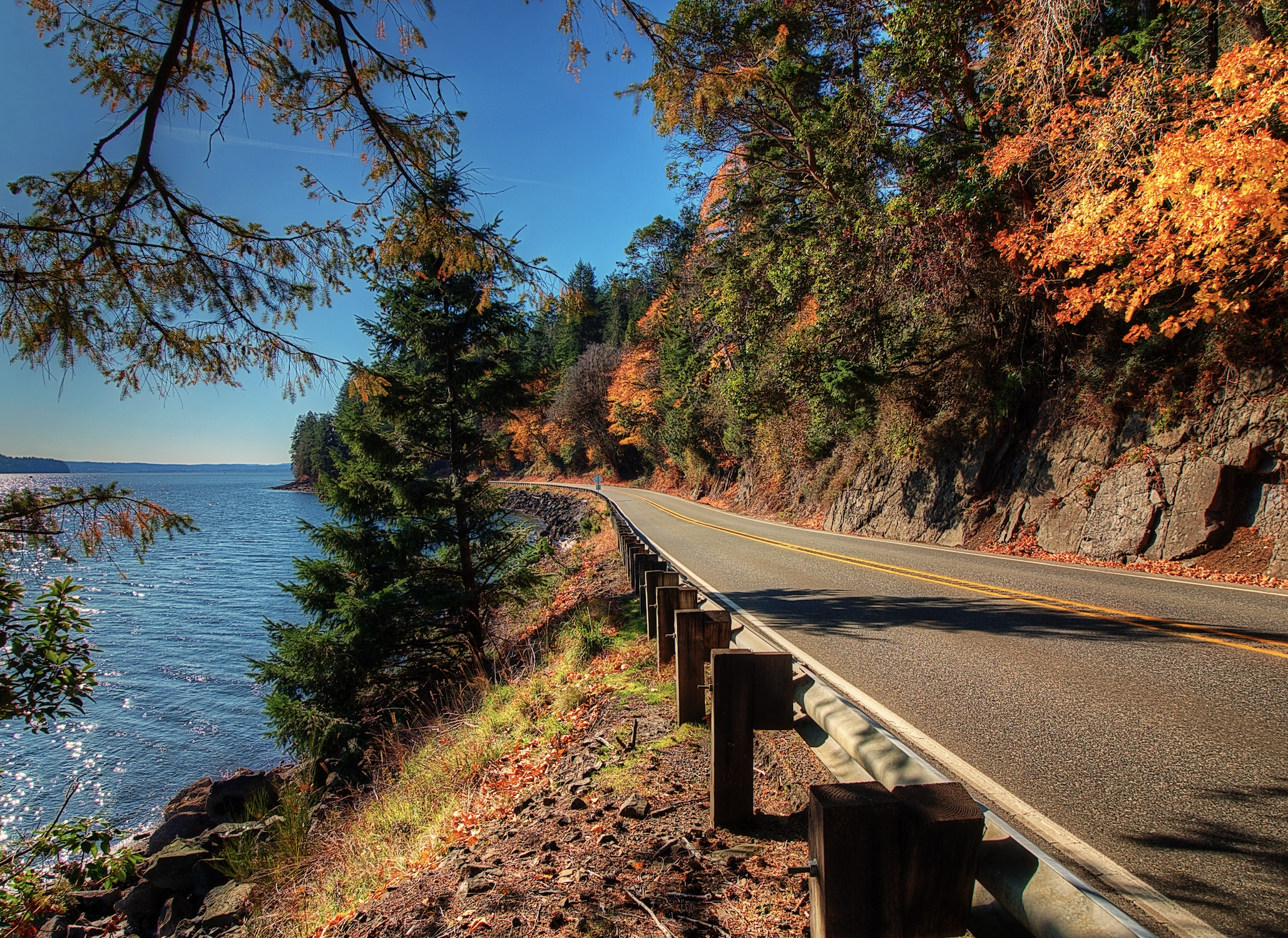
Fall for an adventure on Hood Canal
Want to create some positive vibes? Hop in your vehicle and head out to Hood Canal. The waterside loop makes for an unparalleled Northwest drive with just the right mix of water, mountains, and fall colors – not to mention some great spots to stop and stretch your legs.
Vibrant fall colors, sparkling waters, and a spectacular dusting of snow coating the Olympic range – it’s the perfect time to grab the loved ones and load the car for an inspiring road trip adventure exploring Hood Canal. Here’s a few ideas to get you inspired!


Sometimes it’s a little harder to plan off season but fall is a great time to get better rates on lodging and to have the trails and beaches to yourself.
Waterfalls, oysters, restaurants, scenic pull outs, fun hikes and a touch of shopping are all the hallmarks of a good day on the Hood for the whole family.

Shelton is small enough to be charming (especially at Christmas when it takes on an impressive mantel to befit its “Christmastown, USA” title); but big enough to have nearly everything you need.
Shelton To Potlatch
(20 minutes | 12 miles)
There’s plenty of reasons to exit 101 and take a detour through Shelton, an iconic snapshot of mill-town America. On Shelton’s waterfront—hidden by a hive of industry—stands an active mill. On a clear fall day you can drink in the scent of freshly cut boards as you walk through town. Be sure to visit the old Simpson logging “Shay” and caboose in front of the Post Office. The caboose hosts the Visitor Information Center where you can gather an assortment of maps, brochures, and insight.

Get your spook on at one of the many Halloween community events in Mason County this year
Looking for Halloween adventuring? Look no further than Shelton!

Mason Health is hosting a fun and safe drive-thru Trunk or Treat 2 to 5 PM on Oct. 29. RSVP at masongeneral.com/.../drive-thru-trunk-or-treat
There’s plethora of spooky events planned in this little hamlet! Check out the Shelton Chamber’s handy map showing all the local events including the Shelton merchant’s Sidewalk Spooktacular FRIDAY, OCTOBER 29, 4 PM – 6 PM.
Looking for a haunted house? How about a haunted trail? This scary evening walk in the woods, Haunted Huff N Puff Trail, FRIDAY/SATURDAY October 29/30 at the Huff N Puff is a fundraiser for the SHS graduating class. Over 50 volunteers are working together to design and create a ½ mile spine chilling walk through the forest. Early hours 5-7 PM are for younger (or more sensitive) spook-finders… 8-10 PM is for the strong at heart with volunteer spookers at each scare station through the woods.
During the day, don your best masks and head to the Shelton Cinemas (517 W Franklin Street) presents "HOTEL TRANSYLVANIA 3" (PG) on SUNDAY, October 31 at 12:30 pm. Doors open at 12:00 pm. The price of admission is a donation of nonperishable food items for our local food banks.


Through the Pumpkin Patch all October
North of Shelton
Be sure to make a fall visit to Hunter Farms. Along with an information kiosk they host wagon rides, a pumpkin patch, corn maze,photo ops and a general store that amongst other great treasures features locally made Olympic Mountain Ice Cream.

To reach Potlatch State Park (a 57-acre camping park with 9,570 feet of saltwater shoreline on Hood Canal) you will pass over the Skokomish River. The drive along the Skokomish delta is simply perfect. As the road weaves it's path around the shoreline, you are treated to glimpses of the Olympics filtered through patches of arbutus clinging to the beach edge.

Potlatch is a great spot to stretch your legs. The grounds are home to a variety of activities, from picnicking and ranger programs for kids to kayaking, scuba and shellfish harvesting.


Potlatch to Hoodsport
(5 minutes | 3 miles)
Hoodsport is a seaside town perched on the western shores of the Hood Canal beneath the shadow of the Olympic Range. Here you will find shops and dining as well as two wineries and a distillery: Hoodsport Winery, Stottle Winery; and The Hardware Distillery. Hoodsport also serves as the gateway to the Olympic National Park (Staircase Entrance). At the foot of the hill towards Lake Cushman, stop by the Hoodsport Information Center (N 150 Lake Cushman Rd) for great tips on road/trail conditions; permits and maps and friendly guidance.

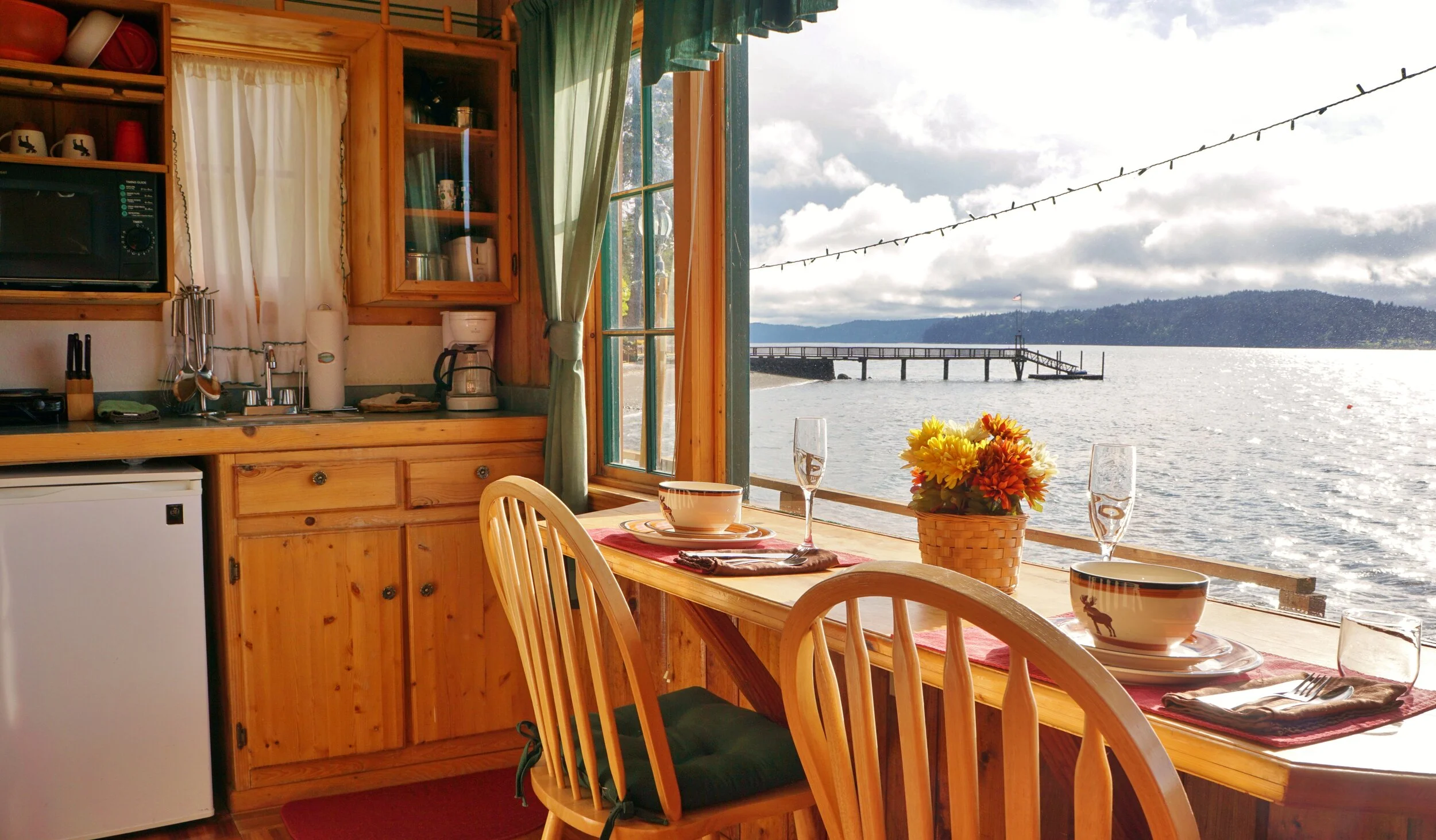
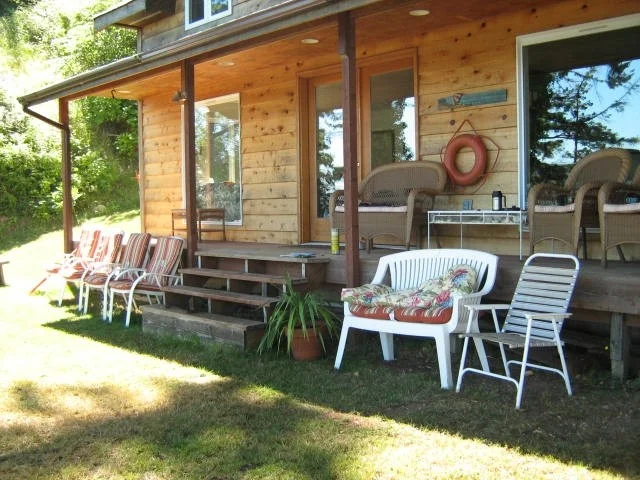
Looking for a waterrfront getaway? Look no further than Glen Ayr Resort located just north of Hoodsport on Hood Canal’s shore. The image above shows the living room of their well appointed fully furnished cottage. This delightful treasure includes dining and living areas, 2 bedrooms, 1 1/2 baths and a kitchen with refrigerator/freezer, ice maker, range, dishwasher, microwave, coffee maker, and all the essentials of home. Amenities include cable TV with DVD player and a wood-stove. In the back is a small porch with a propane fireplace and sitting area. $179/night (sleeps 6).
Hoodsport to LILLIWAUP
(7 MINUTES | 4.5 MILES)
Situated on the west shore of Hood Canal, Lilliwaup is a small town with a BIG history and a love of shellfish. Peppered with serene beaches and surrounded by endless hiking trails, Lilliwaup is all about relaxation and nature. The Lilliwaup Store is a favorite stopping spot for a great value on Olympic Mountain Ice Cream cones. They have plenty of flavors to choose from and its just $3 piled high.
Family owned and operated, Hama Hama Company has been harvesting oysters and clams on Hood Canal for four generations. Their store and outdoor restaurant, the Oyster Saloon, are located a shell’s-throw from the tide flats and set up with sweet little COVID safe A-frames for outdoor private dining with a fantastic view. A visit to the farm is the best way to experience Hood Canal oysters in their native habitat.


LILLIWAUP to Brinnon
(25 MINUTES | 19 MILES)
Just outside the tiny town of Brinnon (some great restaurants here) is Dosewallips State Park. This 1,064-acre, year-round camping park hosts riverfront campgrounds, a boat ramp & 5,500 ft. of saltwater shoreline.The park's moss-carpeted forest and glacial river slope down to a shell-strewn delta on Hood Canal, a delight for clam-diggers, anglers, boaters, birders, and beach explorers. The park features hiking trails, riverside campsites, cabins and platform tents. The local herd of Roosevelt elk are known to frequent this area.

Grazing on campus are the Roosevelt elk. the third largest land mammal in North America. They are named after President Theodore Roosevelt, who created what is now the Olympic National Park.
Brinnon is also home to Hood Canal Adventures offering guided tours in the summer and early fall and kayaks for rent year round. Single and tandem kayaks and paddle board / kayak hybrids may be rented by the hour, full day, 24 hours, or for multiple days. If you are renting for a full day or longer you can have your kayaks delivered to you or pick them up yourself. The team will help you choose a route, provide you with a map, life vest, paddle, and an emergency water pump for your safety. For off season rentals call 360-301-6310 to make kayak rental arrangements. During crabbing season they also rent crab pots and crab cookers. Let it soak while your enjoying your paddle then cook them right on the beach or take them home for dinner!
Belfair to Union
(27 minutes | 16 miles)
Nestled between the North Bay of the Puget Sound and the southern hook of Hood Canal, Belfair is a great place for road trip supplies or to have lunch before heading off to explore the 130+ acre birder's dream wetlands, Theler Wetlands Nature Preserve. Visit the craft brewery, Bent Bine Brew Co, to try their locally made specialties. Hankering for wine? Stop in the tasting room at the award winning Mosquito Fleet Winery, they are open most weekends in the fall.
Halloween Belfair update: f you are in Belfair on SATURDAY, October 30, 6:30-9:30 PM head over to the HUB (111 NE Old Belfair Hwy Belfair,) for some spooky fun at the FREE All-Community Zombie Apocalypse Drive Thru.


TWANOH STATE PARK
(14 MINUTES; 9.2 MILES | VIA SR 106 W)
Twanoh State Park's 182 acres include 3,167 feet (965 m) of saltwater shoreline and 2.5 miles of inland hiking trails. Gather shellfish off the public beaches (when open) or simply take a walk on one of the many trails.


ALDERBROOK RESORT & SPA
(7 MINUTES, 5.2 MILES | VIA SR 106 W)
Since 1913, generations of visitors have enjoyed the rustic, albeit very luxurious, charm of this canal-side retreat on 88 acres, which include an 18-hole golf course. The 77 guest rooms are ideal for a rejuvenating escape, while the 16 cozy cottages are perfect for family fun. Complete with a waterfront restaurant, dock, and saltwater pool and spa, Alderbrook Resort and Spa Resort also offers access to boating from kayak rentals to multi-person cruises. During Halloween they are even offering onsite trick-or-treating for the kids!


UNION
(6 MINUTES, 2.4 MILES | VIA SR 106 W)

The spectacular views from Union are not to be taken lightly. Here is the best vantage point to view the Olympic range. On the journey to Union's center, take a moment to admire the historic Dalby Water Wheel and stop in at Cameo Boutique for some great shopping of local items. The restaurant at Robin Hood serves some of the best seafood dishes and hosts live music most weekends. Both Cameo and Robin Hood offer waterside lodging. Near Hood Canal Marina, 2 Margaritas Restaurant serves Mexican food; while the Union City Market stocks everything from gifts and collectables to homemade candy and fresh oysters! On weekends their pop up dining experience serves a la carte delicacies in an inspired dining space on the water.
Union is planning a Community Drive-Thru Trick-or-Treating Halloween night from 4-6 on Halloween night with special events at local business and the community church.

Whether you have a day or a week, Hood Canal and the surrounding communities are great places to reconnect and find new adventures. For a list of accommodations visit our lodging pages and check out the other great activities available while you visit our area.
The safety of our residents and guests is our highest priority. We are asking everyone to recreate responsibly to keep our beautiful forest, small towns and expansive waterways healthy—and fun—for everyone.
An Autumn Trek to Black and White Lakes
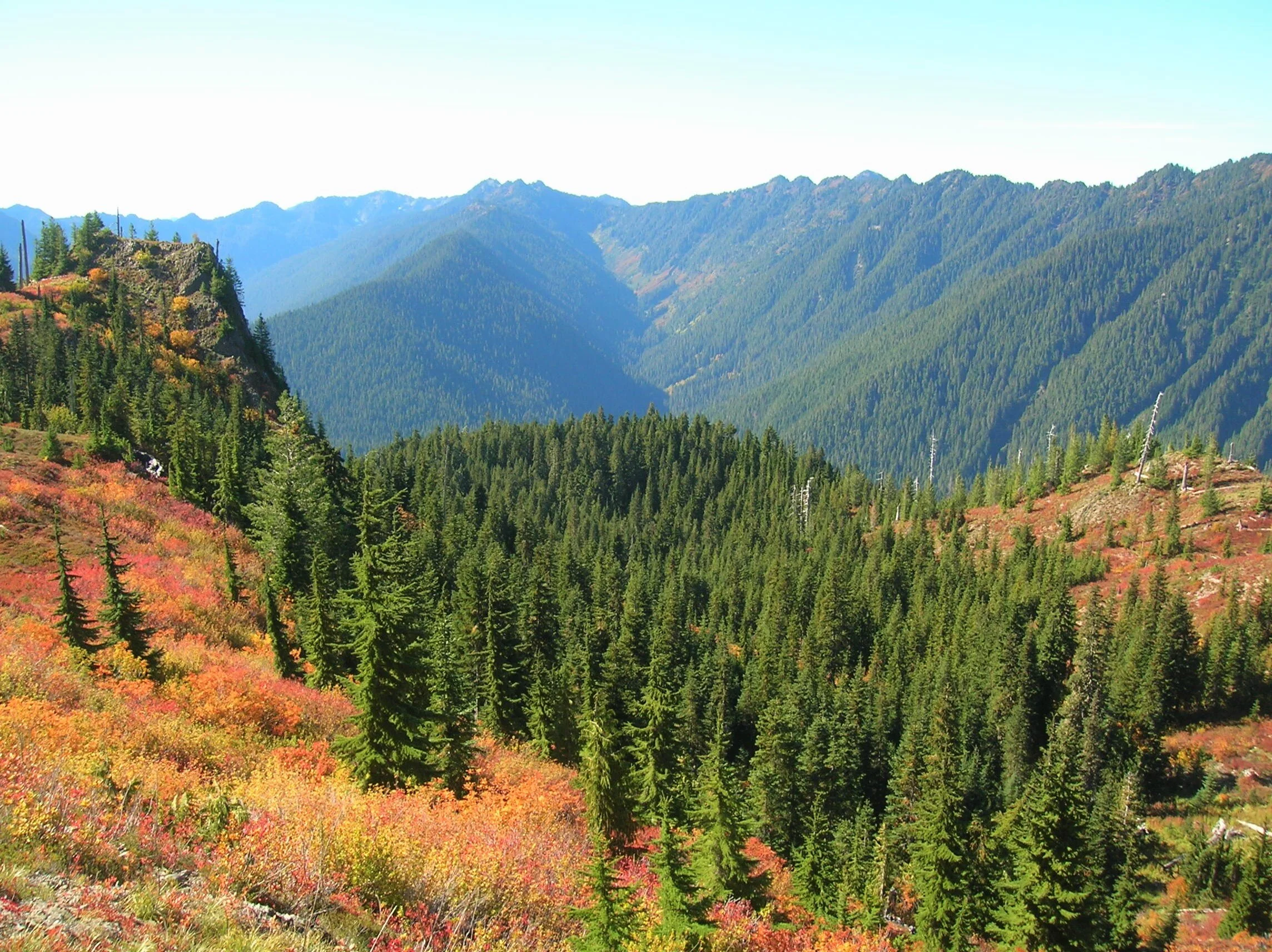
Visit the Black and White Lakes in late September and discover a surrounding landscape far from black and white. Revel instead in an alpine world of living color. The lakes sit in a basin long burned of its forest cover and since carpeted in berry bushes, mountain ashes and other shrubs that burst with brilliant hues of red, orange and yellow.
Craig Romano | Story & Pictures
Craig Romano has written more than 25 outdoor guide books including "Day Hiking Olympic Peninsula."
Visit the Black and White Lakes in late September and discover a surrounding landscape far from black and white. Revel instead in an alpine world of living color. The lakes sit in a basin long burned of its forest cover and since carpeted in berry bushes, mountain ashes and other shrubs that burst with brilliant hues of red, orange and yellow come the autumn equinox. It’s a grunt to reach them, but chance are good you won’t have too much company — unless you count gregarious ground squirrels, docile deer, and inquisitive bears.

Craig Romano Photo
Hit the Trail
While the Black and White Lakes lie on the trail less traveled, you must first hike some well-trodden paths. Start your journey on the North Fork Skokomish River Trail, which begins on an old road that was decommissioned in the 1970s. Hike through wild country, much like what U.S. Army Second Lieutenant Joseph P. O’Neil saw in the 1880s on his exploratory trips into the Olympic Mountains. But something O’Neil saw that you won’t were legendary fish runs. Before the North Fork Skokomish’s flow was dammed by Tacoma Power in the 1920s, this river was one of the largest salmon-rearing waterways on the peninsula.
Hike upstream on a wide path and gentle grade crossing several side creeks. Traverse a luxuriant bottomland of big cedars, Douglas-firs, and moss-cloaked big-leaf maples. Pass the Staircase Rapids Loop Trail and consider taking it on the return for a slight variation. After passing Slide Camp, hike across the Beaver Fire of 1985, caused by an illegal campfire during a drought and resulting in 1400 acres of old growth going up in flames.

Craig Romano Photo
The trail then pulls away from the river. At 3.6 miles, reach a junction just before Spike Camp. Now head right on the Flapjack Lakes Trail and slowly climb out of the valley along the old burn line. After a few switchbacks, the trail turns northward on a fairly gentle course. Admire a big cedar grove along the way, then cross Madeline Creek on a sturdy bridge.
The creek cascades below through a narrow ravine. Now start heading up steeper and rockier terrain and follow alongside cascading Donahue Creek. At 7.1 miles comes to a junction. The way to the right is where most folks head—to the Flapjack Lakes and Gladys Divide. You want to head left instead on the less-traveled trail.
Cross a pair of creeks, and then steeply climb, rounding a ridge to emerge at a 1936 burn site, now blanketed in berry bushes and mountain ash. After passing the log foundation of an old cabin, come to a junction with the Black and White Way Trail at 8.2 miles.
The old cabin was once part of a long mining operation here at the lakes. By the mid-1970s it had collapsed leaving only the rotting foundation behind. As you continue to hike into the lake basin, look around for evidence of old mining operations in the form of tailings, pits and cuts.

Craig Romano Photo
Now continue straight another 0.2 mile to an unmarked junction. The trail continues for one mile dropping into a forested basin housing Smith Lake. You want to go right and immediately reach the largest of the trio of Black and White Lakes. The lake is small but pretty with a couple of primitive campsites nearby. The other two lakes are not much more than pothole ponds tucked a little higher in the surrounding basin.
While the lakes aren’t stunning, the views from the open basin are—especially of the surrounding wilderness. Particularly striking is Wonder Mountain and the Three Sisters to the south, Six Ridge to the southwest, and Mount Steel to the northwest.

Craig Romano Photo
In autumn, this basin transforms into a mosaic of dazzling reds, oranges, and yellows.
So where did the name Black and White come from? There are a handful of name origin theories that include the lakes being named after a brand of whiskey, the last names of the original prospectors, and a way of describing manganese found at the site.
In any case the mining history here goes back to claims made in 1907. Copper was the original mineral mined. Getting the copper to market from this remote and rugged location however proved to be a challenge. A proposed flume was never built to help get the ore to the North Fork Skokomish Valley from where it was transported to Tacoma via roads. The mine’s claims were sold several times over the years. In the 1940s the mine’s owners dug a 200 foot tunnel. By the 1960s however mining activity had pretty much ceased at the lakes.

Craig Romano Photo
When you are ready to leave this beautiful and interesting place, retrace your steps 0.2 mile back to the junction near the old cabin remains. Then return the way you came or consider hiking out via the Black and White Way Trail. It’s a shorter route, but a knee knocker dropping more than 2600 feet in 2.2 incredibly steep miles. While the way is knee-jarring, the tread is smooth and not rocky.
The way trail ends at the North Fork Skokomish Trail at the junction with the spur to Big Log Camp. From here it’s 5.4 miles back to the trailhead via the North Fork Skokomish Trail.
Black and White Lakes hike:
Distance: 16.8 miles roundtrip
Elevation Gain: 3,800 feet
High Point: 4,515 feet
Difficulty: moderately difficult
Snow free: mid-June – Oct
Trailhead Pass Needed: National park entrance fee.
Olympic NP wilderness camping permit required if backpacking.
Notes: Dogs prohibited. No campfires above 3500 feet.
GPS waypoints: Trailhead: N47 30.968 W123 19.691
Black and White Lakes: N47 34.493 W123 20.556
Features: magnificent old-growth forest, wildlife rich backcountry lake, exceptional autumn foliage, excellent alpine views, historic mining area.
Land Agency Contact:
Olympic National Park, Wilderness Information Center, Port Angeles, (360) 565-3100, www.nps.gov/olym;
Recommended Guidebooks:
Backpacking Washington 2nd edition (Romano, Mountaineers Books)
Trailhead directions:
From Shelton, travel north on US 101 for 15 miles to Hoodsport. Turn left onto State Route 119 and drive 9.3 miles to a T intersection with Forest Road 24. Turn left, continuing on SR 119 which becomes FR 24 for 5.4 miles. Then bear right, coming to the Staircase Ranger Station in 1.2 miles and the trailhead.
Need some Color? This weekend is the Dahlia Days Event!
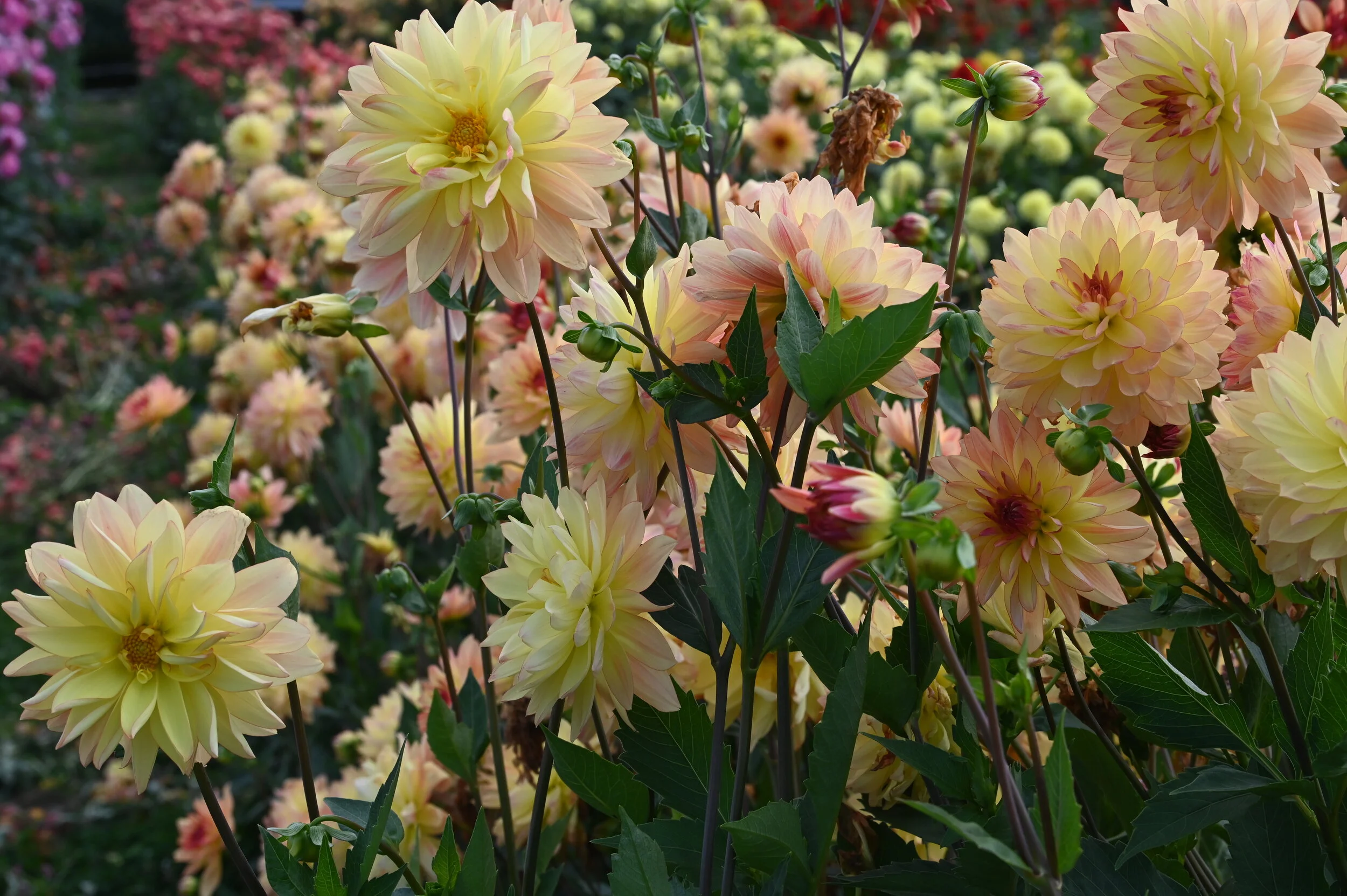
Need some color in your life? Then head over to Lynch Creek's Dahlia Farm where the blooms are bursting with a rainbow of shades and shapes!
Need some color in your life? Then head over to Lynch Creek's Dahlia Farm where the blooms are bursting with a rainbow of shades and shapes!
Lynch Creek Farm has been growing dahlias for well over 20 years. In 2018 owner, Andy Hunter, decided to open the dahlia fields to the public as a u-pick – and ever since it has been a much anticpated annual attraction.
Many locals photographers and families have been bringing the kids, cameras, and even dogs for some spectacular photos in a beautiful setting.

With three acres of dahlias to plant and prepare, it's a family affair with three generations of the Hunter family making sure their are plenty of blooms to go around. Arranged in giant rows, it's a rainbow so large that small planes overhead do a fly over.
The flowers are at their peak in the fall - like right now! – so make a day out of it with your friends and family. This makes a great annual tradition with the bonus of beautiful hand-picked bouquets, special pictures, and a fun adventure.

LCF Dahlia Days
On Saturday, August 28th, head over to the Bouquet Making Masterclass with renowned Mason County florist Colleen Hunter. They’ll also have games, concessions, and a local food truck out at the field! There will be something for every member of the family to enjoy! If you are interested in the Bouquet Making Masterclass, click the link below. They have limited space and are expecting the spots for this section of our Dahlias Day event to go fast! https://lynchcreekdahlias.com/lcf-dahlia-days/

The farm is open dawn until dusk every day until the first frost (late October) and the stand is often manned with helpful staff. Certain days during the summer a local non-profit groups take over the farm and all proceeds for that day are donated to their cause. When it’s not staffed there are signs, buckets, clippers, pre-made bouquets, and a drop box to help offset weeding expense.
More information is available at lynchcreekdahlias.com. See you in the flowers!

8 berries to be ATE on the trail
The Pacific Northwest with its lush temperate climate is home to some of the most mouth-watering berry bushes. The Native Americans have a long tradition of picking and preserving and promoting the growth of these “nature’s candy” and with long summer days ahead of us, why not try your hand at picking wild berries?
The Pacific Northwest with its lush temperate climate is home to some of the most mouth-watering berry bushes. The Native Americans have a long tradition of picking and preserving and promoting the growth of these “nature’s candy” and with long summer days ahead of us, why not try your hand at picking wild berries? Prepare yourself for a productive and palatable adventure.
1. Salmonberry
Hummingbirds happily proclaim the first opening of the salmonberries’ (Rubus spectablilis) early bright pink blossoms in late February. Salmonberries typically ripen in late April to mid-June making it the first berry of the season. The fresh shoots cleaned of its prickly outer layer are harvested by many Native American groups (as well as by foodie foragers) and are reported to taste similar to asparagus when steamed.

Salmonberry (Rubus Spectablilis)
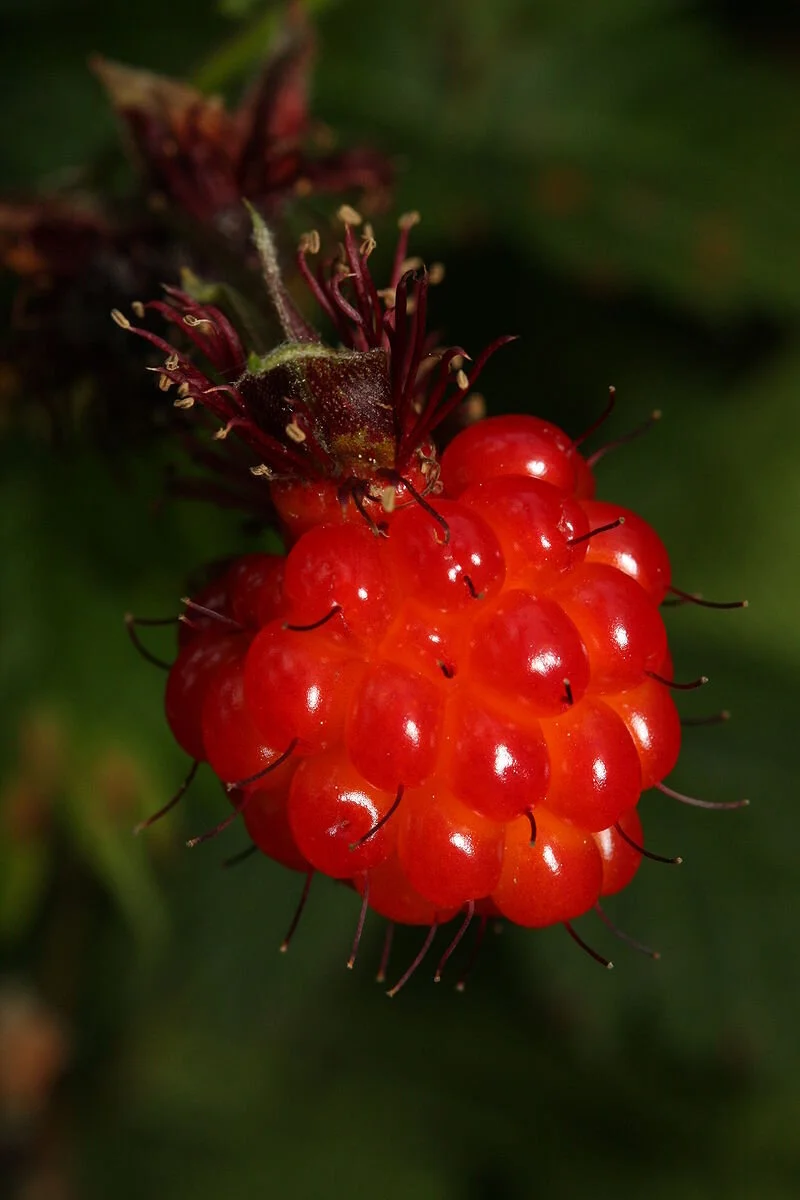
The berries are loved by bears, birds, and children. They vary in color from orange to a deep red reminiscent of salmon eggs, which is where some believe the name came from. The flavors can also vary depending on the bush but are generally sweet with a slightly acidic aftertaste that can make the uninitiated wince. The berries are a drupelet shape, similar to raspberries and blackberries, which is a composite berry made of lots of seeds. They make great jams, jellies, and sauces for the more savory taste buds looking to dress up pork roasts and duck.
Somewhere near the mouth of the Duckabush River, there is rumored to be a hybrid variety to this rose cousin with showy double blossoms.
Look for this tall, bushy berry in shady areas near streams. Berries are often located higher on branches so if you are vertically challenged be sure to bring a stick with a crooked end, something to stand on, or an obligingly tall friend. Gloves and long sleeves are recommended because salmonberry thorns don’t give up their berry bounty without a fight.
2. Thimbleberry

Thimbleberry flowers
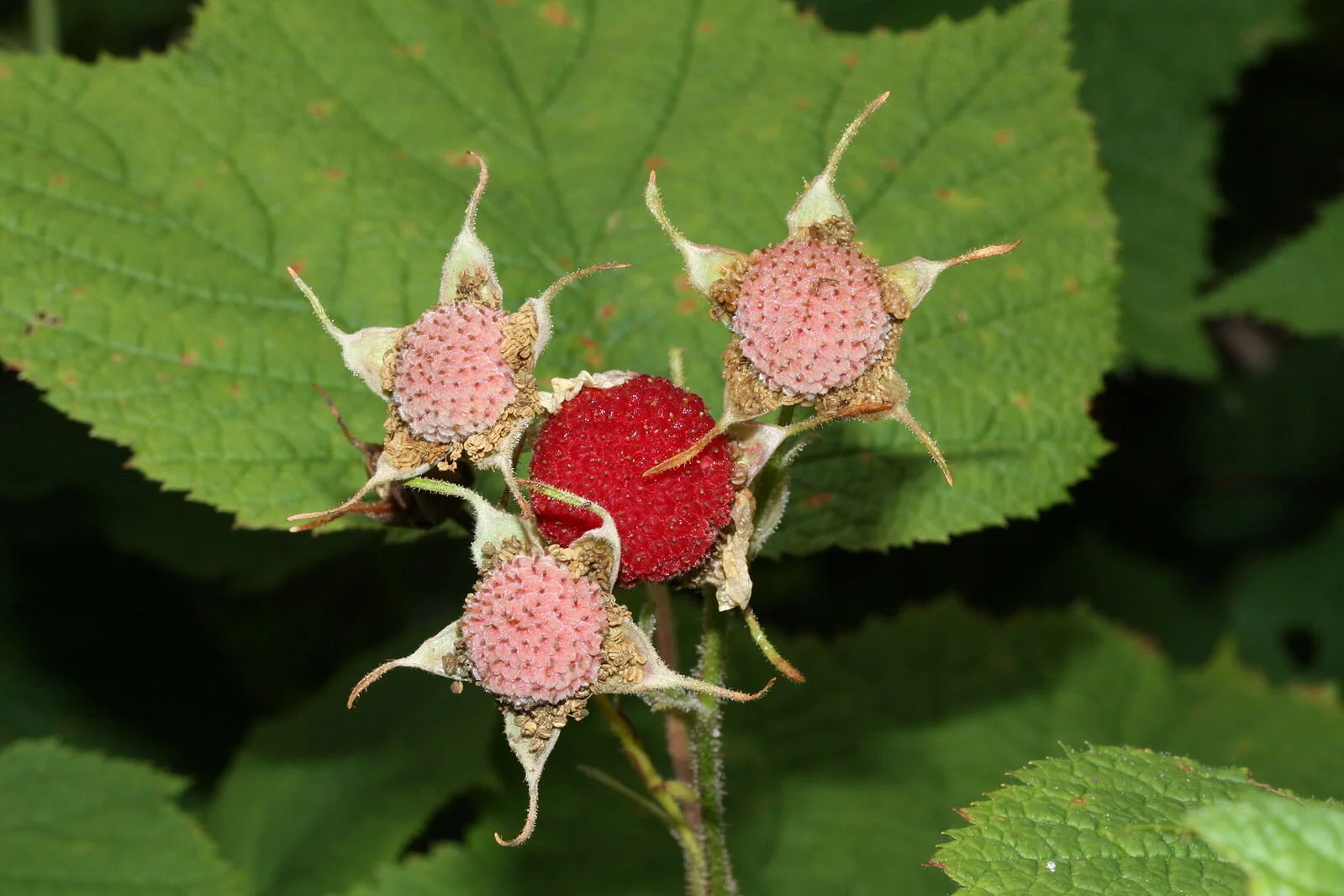
The next ripe berry on the west coast is the sweetly tangy Thimbleberry (Rubus parviflorus) which comes into fruit late June to early July. Thankfully thorn-less, this tall bush also has edible shoots in the early spring, adorned with delicate white flowers. The tender spring shoots are delicious peeled and dipped in sugar. Theses berries are also drupelet in shape, but the fleshy part is much thinner and the berry is hollow inside allowing the whole picked product to easily fit over the fingertip, just as a thimble would. The large soft maple-shaped leaves are covered in a fine hair and are known to be one of the best natural substitutes for toilet paper if you are ever stuck in the woods. Besides harvesting the stems, Native Americans would press and dry the berries into cakes for later use. These delicate berries are a little tricky to harvest since they have a tendency to fall off the branch when bumped, so be ready with your basket, bowl or baseball cap to catch the fruit.
3. Red Huckleberry

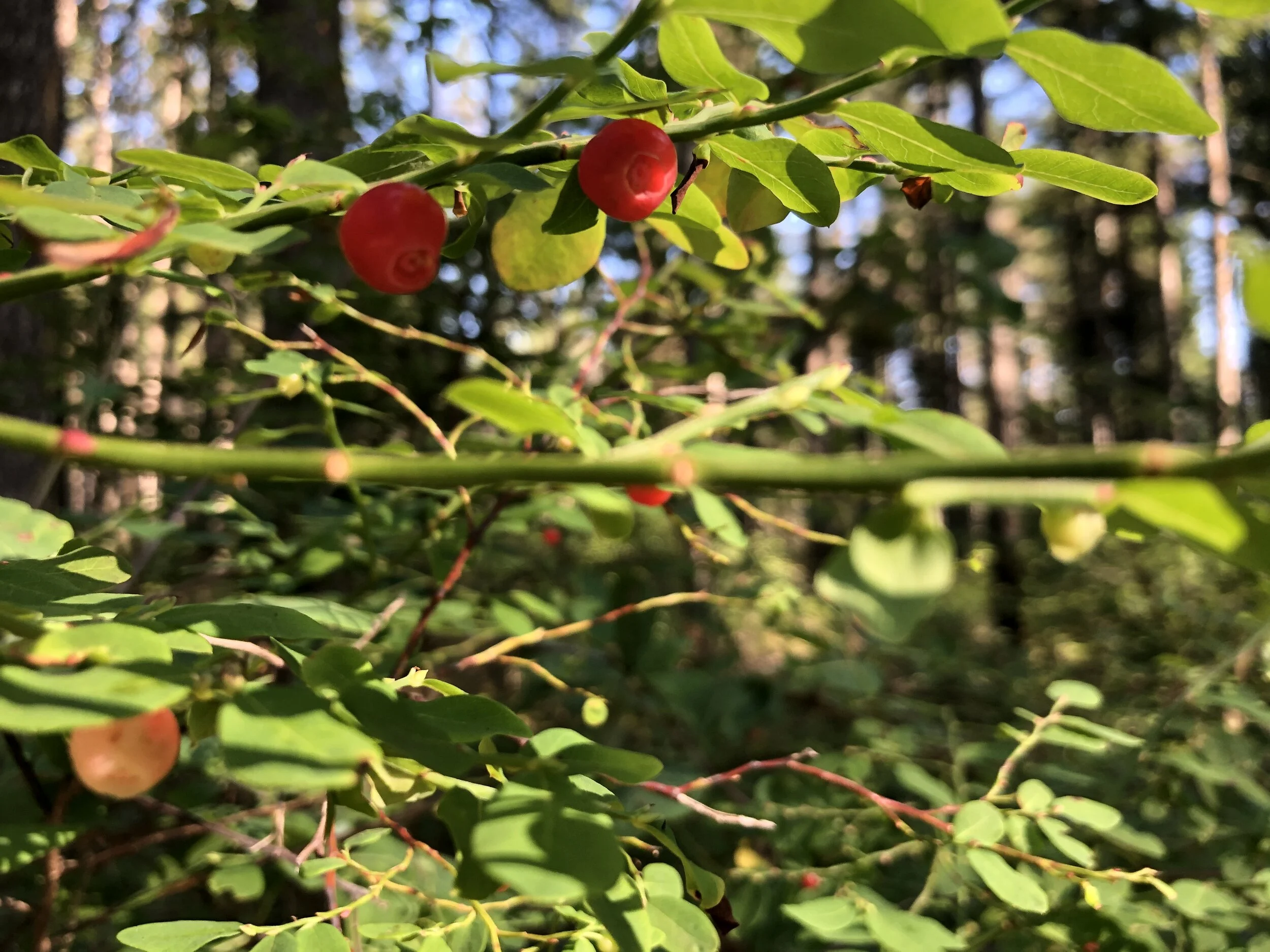
Although Red Huckleberries (Vaccinium parvifolium) start forming on the bush in early June, they don’t reach ambrosial ripeness until July, when the berry’s light blush changes to a tasty red. The bush and berry of the huckleberry are very similar to the domesticated blueberry. The Native American Salishan word for Red Huckleberry, t’əәxw (Twana dialect known amongst the Skokomish) or t’íxw(i) (Lushootseed dialect known amongst the Squaxin) both describe how it was traditionally picked with combs ‘to brush, sweep, [or] shake out’ the berries. Slightly sour to taste, these berries do well in jams and pies.
4. Salal

Facing warm sunny locations, along shorelines, roadsides and trails is the prolific Salal (Gaultheria Shallon). Popular amongst florists as a filler since the 1940s, this cut green is a huge industry and is actively gathered by permitted commercial harvesters in the Olympic National Forest. The dark-purpley/black berries ripen in August, once the sticky white bell-shaped flowers have been pollinated. The berries form on the branch in a way similar to grapes. Children find the berries fun to play with as their round shape can be squeezed to form a star. Packed with antioxidants, flavonoids, and up to five times more tannins than blueberries, these sweet, slightly mealy berries are a newly re-discovered superfood. A little goes a long way with these black beauties, as these berries are a natural hunger suppressant. Salal’s health benefits have long been reported by Native Americans up and down the coast who would traditionally press and dry these berries into cakes or fruit leathers. Jams and jellies are the most popular way to process salal berries now and it really does taste like a good medicine when you spread it on your toast. Salal berries aren’t guarded by nasty thorns, but they do release a dark pigment, that can be used as a natural dye, but also can irreparably stain clothes, so dress accordingly before harvesting. Another difficulty with salal is the way in which the berries firmly attach to their branch. I usually pick the whole branch and clean them when I get to a table or flat area.
Jelly and jam makers often combine the sweet flavour of the Salal with the tangy, sour of the Oregon Grape (Mahonia aquifolium) another August (to September) fruit.
5. Oregon Grape

Oregon Grape (Mahonia aquifolium)
You probably won’t be eating these on the trail because they are pretty unpalatable raw… but if you have the opportunity to gather and reduce over a stove, Oregon grape is a great addition to your jelly repertoire. Oregon Grape (Mahonia aquifolium), the state flower of Oregon, grows on a three-five-foot tall bush that has large sharply, serrated green to red leaves reminiscent of holly. The berry matures from a bright yellow flower, changing in color from green, yellow, red, purple before ripening to a pale chalky blue.
Oregon grape is a quintessential bitter plant that has the capacity to cleanse, clarify, and enliven body and spirit. The berries themselves, though perfectly edible are bitterly sour and don’t release their deliciousness until a sweetener is added and the berries are cooked into a syrup or jelly. Oregon Grape syrup makes a lovely addition to ice cream and vodka or gin cocktails.
6. Evergreen Huckleberry
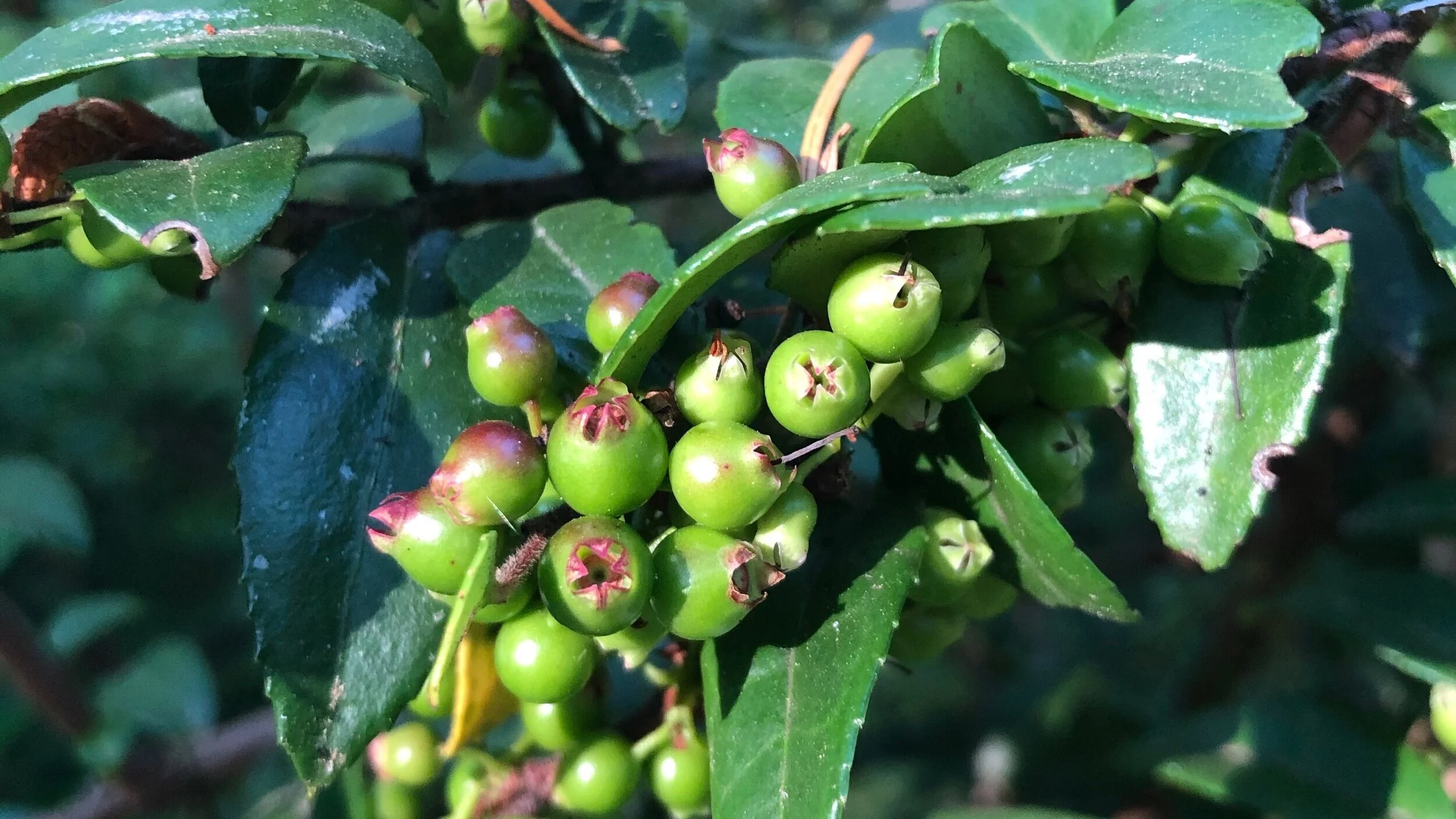
Evergreen Huckleberry ( Vaccinium ovatum)
This thick and bushy shrub can be found in gravelly sandy soils, nestled in coniferous forests.
The Evergreen Huckleberry (Vaccinium ovatum) begins to ripen in early autumn but they can still be seen on the bushes until December. You can spot the tight clusters of small flowers which are white to pink in color. As the small berry ripens it is a black and shiny or occasionally a dusty blue. Once you harvest your evergreen huckleberries expect a sweet and slightly dry taste. The berries are slightly seedy but have a unique refreshing flavor.
7. Oval-leaved Blueberry

Oval-leaved Blueberry (Vaccinium ovalifolium)
These berries can be found in moist coniferous forests and along shaded stream banks. Oval-leaved blueberries (Vaccinium ovalifolium) are around 4 feet tall shrubs with thin leaves which are oval in shape and are rounded at the ends. The pinkish flowers appear before the leaves mature and are solitary. The flavorful blueberries ripen in July and are of good size and very flavorful. Ova-leaved blueberries are dark blue and are covered in a waxy coating causing them to look gray and moldy in appearance.
8. Himalayan Blackberry
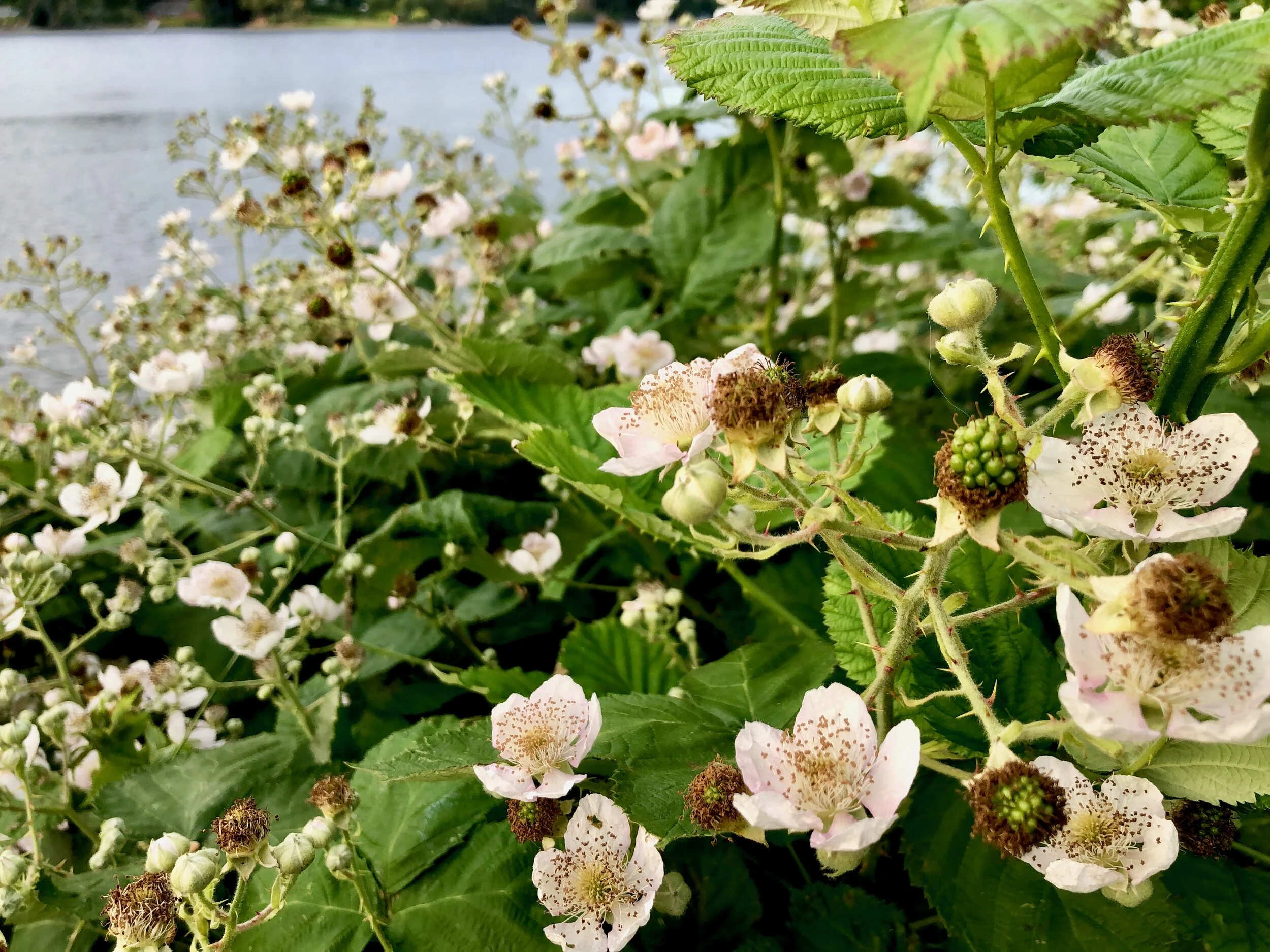
Himalayan Blackberry (Rubus armeniacus)
Himalayan blackberry is a semi-evergreen shrub that can grow nearly 10 feet high. The plump purple/blue berries ripen in late summer. Although Rubus armeniacus is an invasive species and is an aggressive contender against the natural species, it is a great berry to enjoy on the trail.

Himalayan blackberry plants can produce up to 13,000 seeds per square meter, and seeds can remain viable in the soil for several years. The plant creates dense thickets that are impassable and sprawls over surrounding vegetation.
Check out Pojar and Mackinnon’s definitive classic Plants of the Pacific Northwest (2004) to find out more. The internet also has many great sources, such as the Burke Herbarium Image Collection and Dana Kelley Bressette’s Pacific Northwest plant encyclopedia.
Its time to paddle
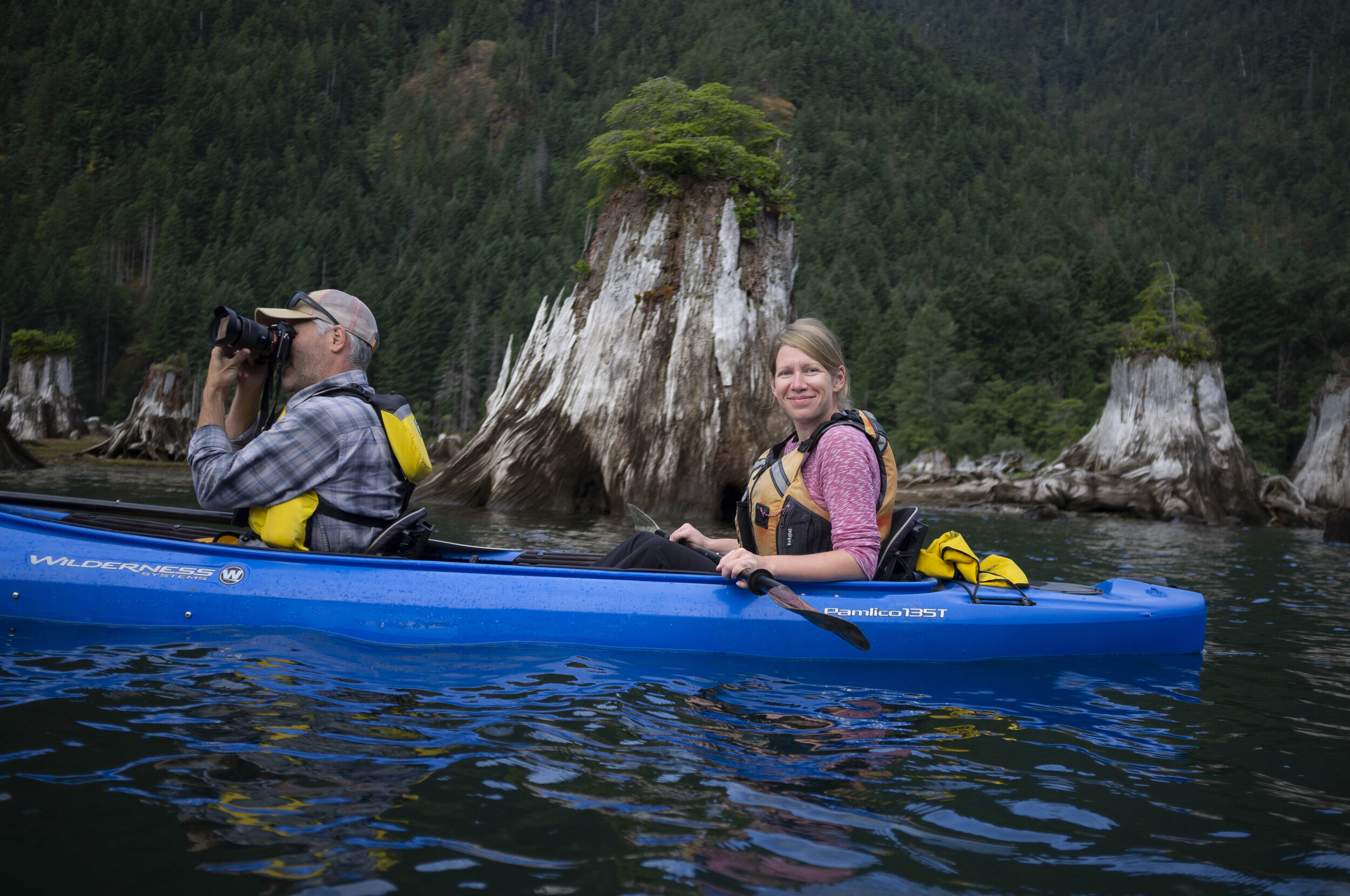
With balmier weather and longer days, it is time to get outside and explore the shores and waterways of Hood Canal and the inlets of Mason County. Kayaks, canoes and stand up paddleboards are a great way to be on the water without the expense or headache of a powerboat.
With balmier weather and longer days, it is time to get outside and explore the shores and waterways of Hood Canal and the inlets of Mason County. Kayaks, canoes and stand up paddleboards are a great way to be on the water without the expense or headache of a powerboat.
Get on the water
Whether you seek tide-ripped saltwater passages, challenging whitewater, or lakes big and small, Hood Canal is a kayaker, canoer, or paddleboarder’s ideal destination. Few places in the world can match the stunning scenery and easy access of the Hood Canal region. Sea kayakers can explore seemingly endless miles of pristine saltwater shoreline, cruise the reaches of lakes Cushman and Kokanee in the foothills of the Olympic Mountains, or ride the gentle currents of the Skokomish and Tahuya Rivers.
Wet your paddle with these adventure ideas:
Explore Skokomish River, using public put-in on Sunnyside Rd, just north of the Skokomish Valley Rd.
Launch at Shelton Marina or Walker Park and paddle (with the tide) out Hammersley Inlet to Hope Island. Ride the tide back for a little help with the paddling. There is a strong current in this passage that is difficult to paddle against but great to use to your advantage. It is necessary to be aware of the tides. If you miss the tide, head to the inlet shores to escape the prevailing currents. Hope Island can also be reached with an easy paddle from Arcadia Point boat launch. At the launch you will find plenty of parking and easy access to the water. Hope Island has sandy beaches all around the island for easy landing and plenty of trails to explore.

Hood Canal can be unpredictable with weather “outbursts” but generally putting it at Potlatch State park in early morning or in the evening after the afternoon breeze has settled can be rewarding.
Paddle the lower reaches of the Skokomish near Union, explore the shores of Hood Canal or explore any of the lakes.
A great Mason County destination is Lake Kokanee, or Lower Lake Cushman; this scenic lake channel wind, so watch the weather.

Rob Casey image | Salmon Bay Paddle Hammersley race.
An interesting two-hour paddle starts at the boat launch at Lake Isabella. At the far end of the lake, enter Mill Creek through a patch of water lily pads. Glide through the willows for half a mile before the stream drops and becomes too shallow to navigate.
The rivers of Olympic Peninsula are renown for their great beauty as well as their technically difficult white water rafting and kayaking routes. Placed high in the wilderness of the Olympics, the rivers that drain into Hood Canal are wild, steep and undeveloped. However, do you research before you go! Many are Class IV - V rapids and are not to be attempted by the novice paddler. For information on white water sites in the area, americanwhitewater.org provides excellent river classifications and descriptions. Gary Korb’s, A Paddlers Guide to the Olympic Peninsula (1997), is also an invaluable resource before attempting these rivers.

Case Inlet’s calm waters and sandy beaches are renown for paddling popularity
Kayak rentals
If you are just getting your paddles wet, or are a seasoned paddler, there are some great opportunities in Mason County for kayak or SUP rentals. Hood Canal Events offers organized excursions with catered meals. Hoodsport Kayak Rentals, offers hourly rentals and excursions with kayak or pedal boat drop off at nearby Kokanee Lake. Hood Canal Adventures, located in Brinnon, has a fleet of single and tandem vessels and offers biologist guided eco-tours by kayak or SUP.
Additional resources for rentals and guided tours available here.
Watch for paddling events
Hood Canal and South Puget Sound is often host to kayak and SUP races and events. SUPs, canoes, and kayaks lend themselves well to COVID sensitive planning with cute mottos like “keep a paddle distance apart.”
Salmon Bay Paddle recently included Hammersley Inlet in their paddling competition series this May complete with a sea kayak paddling clinic in their event held at Shelton, Hammer the Inlet.
Based out of Seattle, Salmon Bay Paddle is the leading provider of personalized one-on-one and small group stand up paddle board (SUP), kayak and surf ski lessons in the Pacific Northwest. Owner, Rob Casey, is the author of two paddling books and is considered a pioneer of stand up paddling by Stand Up Journal Magazine. Rob and his certified coaches travel the Northwest offering paddling skills and safety classes from beginner to advanced paddler. Salmon Bay Paddle’s event on Hammersley included guest speaker, ICF World Champion Fiona Wylde, hosting a SUP racing clinic at the Shelton Yacht Club; the Hammer the Inlet Race and on-site kayaking clinics.
Thirty-one paddlers participated including eighteen SUPs, eight kayaks, two rowers, an outrigger canoe, and one rowboat (romantically called Starlight). Beginning at Shelton’s Yacht Club, paddlers took the 1.9 knot ebb out from Shelton and the 1.4 knot flood current back up the winding picturesque inlet to where it empties into lesser Puget Sound.

Rob Casey Image | Hammer the Inlet Race 2021
Paddlers call this run the ‘Hammersley Shuttle’ for the tidal push allowing for a nice glide with the current. Back eddies and eddy-lines add a little spice or challenge around the various bends and curves at Skookum and Libby Points and Cape Horn. The fastest vessel to complete the grueling 15.3 mile Hammer the Inlet Race was a SUP that clocked in at 2:18:32.7. Participants faced a challenging race with strong 15 knot winds, cross current conditions, and a muddy, low tide finish line – resulting in some comical watercraft exits.
After the race, fourteen dozen local oysters were enjoyed from South Sound Mariculture. Part of the race proceeds were donated to the South Sound Restoration Project.
Be water smart:
Paddling events are a great way to share ideas on skills as well as water safety. Like the trails and parks filling to bursting, COVID restrictions have led to a rise in purchase of personal watercraft but perhaps not an increase in water safety awareness. Kayaks and SUPs, mass produced for the desperate consumers in dizzying shades of enticing colors, are available at every big box store promising a cheap and easy way to get freedom on Washington’s waterways. Although one can be delighted that sales surged and people got outdoors, the risk associated with little instruction on proper use offered by stores online or giants like Walmart or Dick’s has led to a much more disturbing fallout than litter and over-crowding in our parks.
Accidents and drownings statistics in 2020 were so alarming that a Bill was proposed to require safety certification for all people on the water — not just for those in powered boats over 15 HP.
The current rules are simple and common sense should prevail.
Wear a life jacket, understand your surroundings, educate yourself about winds, currents, tides, travel in groups and develop a safety plan. Take advantage of public events to educate yourself.
There are also plenty of useful online resources and books. Book yourself lessons with Salmon Bay Paddle and become a paddling pro –they even offer online courses, so you could learn some basics before you head out. Even if you aren’t using a watercraft with a 15 HP engine, the Washington State Boater safety course is only a short online course with an exam and costs $29.95 plus tax.
Additionally, the friendly staff at outdoor stores such as Verle’s, Hood Canal Adventures, and Hoodsport Kayak Rental can answer questions and make recommendations about water conditions, good local spots to check out and other queries you may have.
Getting Events Back On Track
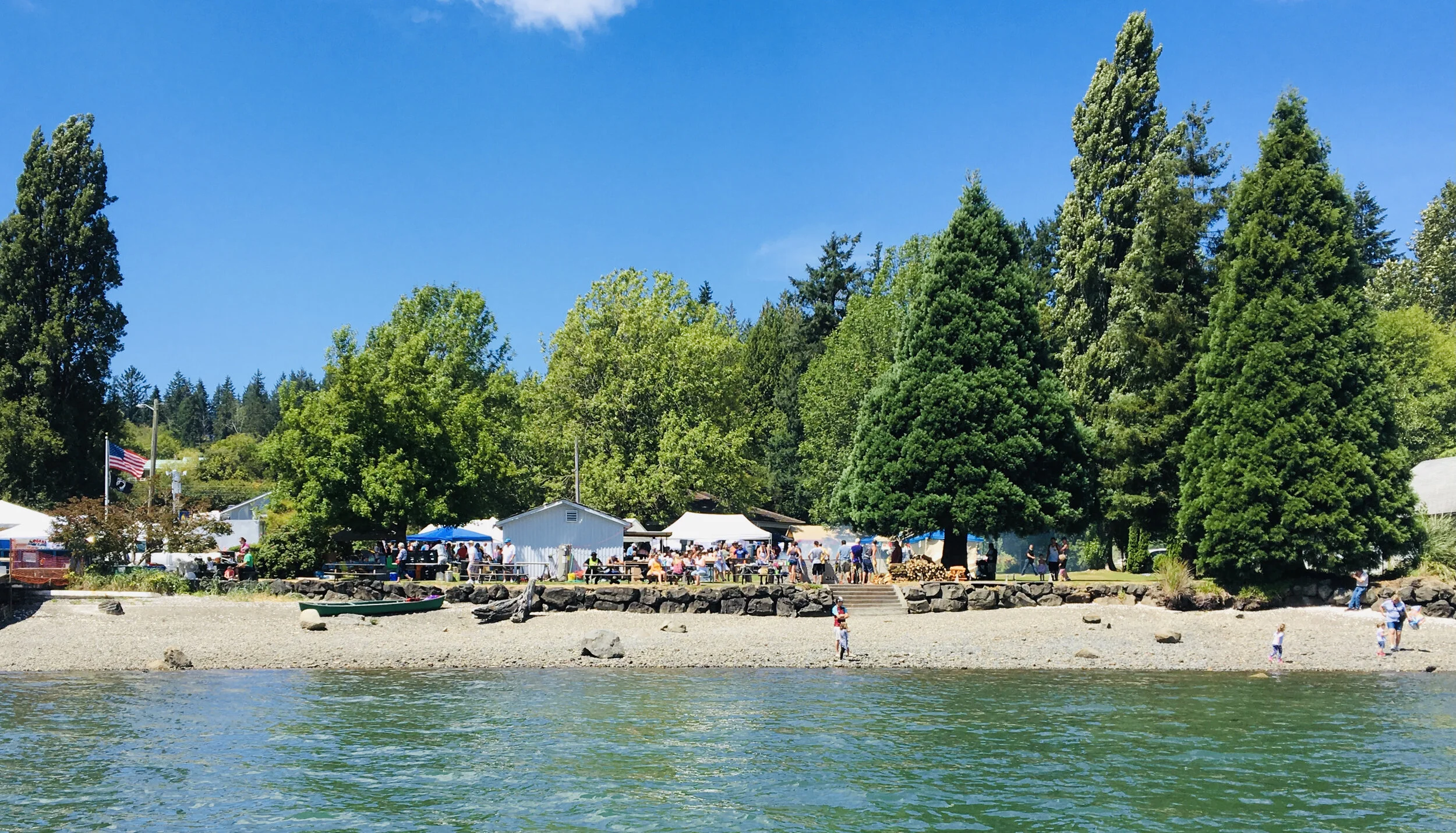
As summer heats up and pandemic restrictions relax, communities around Hood Canal and South Puget Sound are gently phasing back some of their much loved traditions that formed a framework to bring local families together. And they need your help to make them a success.
As summer heats up and pandemic restrictions relax, communities around Hood Canal and South Puget Sound are gently phasing back some of their much loved traditions that formed a framework to bring local families together. And they need your help to make them a success.

Skookum Rotary’s Music in the Park event (2019) Skookum Rotary photo
Skookum Rotary’s Music in the Park
Kneeland Park, Shelton, July 8 - August 12
Kicking off summer in Shelton, Skookum Rotary is invited families to head over to Kneeland Park for free family live concerts in their annual Music in the Park. The series starts with Hilary Scott, July 8; July 15 the Tammy Frost Band takes the stage; July 22, OysterFest favorite, Hurts Like Hell will rock the park; and July 29 welcome Bluestone. In August local bluegrass band, Runaway Train will charm the crowd and August 12 The Varmints finish up the 2021 series with their classic covers. Concerts are on Thursday evenings from 7:00 PM to 8:30. Bring your own chairs and blankets, pets welcome. Food will be available on site.

Celebrating the Expo’s 20th anniversary, admission and parking are free to the public.
Expo & Bite of Mason County
Street Fair | Shelton, JuLy 16
The Shelton Mason County Chamber of Commerce transforms Railroad Avenue with over 60 vendors featuring display, activities and great food “bites” from local restaurants and caterers. Activities continue through the afternoon and evening so you can bring the family down after work. Each year, the public votes for the Best Booth and the Golden Fork awards. Top honors last time went to Hood Canal Communications and Tempting Eats & Treats. Who will it be this year?

Allyn Day(s)
Allyn, WA | July 17
A much loved summer event in this tiny Case Inlet town encompasses seafood, community, live music and craft vendors is reshaping in 2021 for a one day event. There’s always plenty to do including a Fun Run around Lake Anderson (pets welcome) followed by a salmon bake in the Allyn Waterfront Park. The event this year is not including its unique geoduck festival, but they have scheduled a full music line up as well as 50 vendors. Activities for kids include a paintball park activity, petting zoo, bounce house, and a kiddie train ride on the Allyn Pier. A variety of festival and fair food items will accompany their salmon bake. The event runs from 12:00 to 7:00 PM with live bands: “Undecided” from 12-2:30 PM, “Tammy Frost Band” from 3-4:30 PM and “The Wednesdays” from 5-6:30 PM. The shady beer garden features local breweries – Bent Bine and East2West – coupled with wines and ciders.

Although the festival is a one day event this year, the Allyn Community Association’s vision is to return to the traditional three day festival in 2022.
“The funds we raise through our admission sales,” said Jason Ilarraza, ACA President, “will better position us to provide the full event in 2022 along with other community events. We may be doing things little different this year but it is great to be able to bring the community back together again.”
Admission can be purchased ($5) online or at the gate. Details and updates available on Explore Hood Canal.

The first Timber Days in June hosted two stages to spread out attendees and featured a themed lantern parade down Railroad Avenue.
Forest Festival Timber Days & Parade
Shelton | July 29-31, August 20/21, and September 18
Traditionally held the weekend after Memorial Day, Mason County Forest Festival volunteers realized early in the 2021 planning that hosting an event of that size in late spring was doubtful given the WA State restrictions on gathering. Proactively they opted to move the parade and fireworks show to September 18, a date that worked with most of the reigning court, take their car show online, and host a series of smaller evening street fair events throughout the summer to celebrate the area’s timber heritage – Timber Days. The first Timber Days in June was a cautious affair given existing gathering requirements with two stages to spread out attendees and a themed lantern parade down Railroad Avenue. Later, family classic, The Princess Bride, was shown outdoors in Post Office Park.

Forest Festival’s 2021 court is accompanied by the 2020 court for a ride on the float – something that was not possible during the pandemic year. Cooper Studios photo.
July 29-31 Timber Days is continuing with live music (Paul Barber FRI 6-9 PM and RAVA and Co SAT 6-9 PM), movies, cornhole championship, food, beer garden, A Royalty Tea at the Colonial House (SAT 3 PM) and a Pet and Family Parade (FRI 7 PM).
In August the event raises awareness for fire safety and celebrates Smokey the Bear’s 77th birthday with more live music and possibly the return of the carnival.
On September 18 all eyes will be on the 77th Annual Paul Bunyan Grand Parade as it courses downtown Shelton, but don’t miss out on the Firefighters Pancake Breakfast and the Kiwanis Duck Race followed by fireworks in the evening. Details and updates on Timber Days and the cumulating Forest Festival events is available online.

Union’s Hood Canal Marina will offer a spectacular “backdrop” to Hoodstock’s floating spectator event.
Hoodstock Music Festival
Union, WA, August 21
Social distancing won’t be difficult this year with the unique format this festival is adopting for 2021. Attendees are invited to purchase a flag and “float” with them in your own personal boat as they enjoy a series of bands from 11:00 AM - 9:30 PM. The concert location is near the Hood Canal Marina, creatively labeled with GPS coordinates: 47.3547° N, 123.1016° W. A portion of the proceeds from this event will benefit the South Sound YMCA. Updates available at hoodstock.org.

Bluegrass from the Forest is transitioning to an outdoor festival in 2021 with two stages and workshop tents for kids. Photo Shawna Whelen
Bluegrass From the Forest
Shelton, September 10-12
Northwest Bluegrass fans have reason to celebrate and tighten their banjo strings! After a year of no musical gathers and COVID cancellations last year, Kristmas Town Kiwanis’ Bluegrass from the Forest is planning to make a come back September at the South Mason Youth Soccer Park on John's Prairie about two miles from downtown Shelton. Although pandemic restrictions have made it impossible for the festival to be held at the Performing Arts Center, event organizer, Duane Wilson, is excited by the potential for the Festival’s 16th year.
“We will miss the comfort and all of the amenities that school theater had to offer but feel there are a lot of positives in having the Festival outdoors. The biggest one is space. We have fifteen acres to spread people out. Social distancing should not be a problem.”
And spread out they will, with plans to host two stages areas, a beer and wine garden, and food and vendor spaces near the stages. The festival also will accommodate two RV parking areas and lots of grassy tent sites for out of town festival-goers or for locals who want to be part of the whole experience. For more on the band line-up and to purchase tickets visit bluegrassfromtheforest.com.

All the community events represent dedicated volunteers eager to get back to business – safely! As restrictions loosen, Mason County looks forward to welcoming more traditional events back. The list is changing daily so visit explorehoodcanal.com/events for updates and additions.

Get Your Carve On: George Kenny’s Chainsaw Carving School
That funky wooden bear was a staple to your grandparent’s front yard, and there’s always the one quirky neighbor on the block that has one—but did you know there are entire competitions centered on chainsaw carvings? Did you know there exists a chainsaw carving school in Allyn that will teach you how to make one of your own? Truth and truth.
That funky wooden bear was a staple to your grandparent’s front yard, and there’s always the one quirky neighbor on the block that has one—but did you know there are entire competitions centered on chainsaw carvings? Did you know there exists a chainsaw carving school in Allyn that will teach you how to make one of your own? And almost always has a live demonstration going on? Truth, truth, and truth.

George Kenny and his wife Diane own a combination wine shop and chainsaw carving school in Hood Canal, and people flock from all over for a chance to have at an old log with a chainsaw. As Brian Ruth, professional chainsaw artist was noted as saying, “If Michelangelo had had a chainsaw, he probably would have used it.”
There’s a whole culture centered on chainsaw carving, and George is equipped with over 20 years of experience creating and teaching. His introduction class teaches a myriad of skills and equips students with the know-how to keep at this quirky art form.

At the time of its first settlement, the Olympic Peninsula depended, and came to thrive on one of its most prolific natural resources—wood. Founded in 1890, Simpson Lumber Company, operating out of Shelton (just a short jump from Allyn) is one of the oldest, continuously operating lumber companies in the Pacific Northwest.
A history rooted in woodcraft breeds artistic culture centered on it. The primitive craft of woodcarving has evolved over time coinciding with the invention of technology like the chainsaw. Contemporarily, chainsaw carving encompasses a sweeping variety of styles, skill levels and themes—some artists prefer to be strictly performance artists.
George Kenny is a wealth of historical, artistic, and technical information when it comes to chainsaw carving. It’s surely reflected in the varied and intricate carvings that fill the yard surrounding his school, and studied by the staggering number of people that have taken his class over the years.

If perusing mind-blowingly intricate, carved wooden oddities is up your alley, the Kennys care to host, boasting an extensive sculpture garden chock full of quirky creations ranging from NW native creatures, to native inspired works of art, to classic bears and more. To peek at this spectacle, stop by any day of the week between 9am and 5pm.
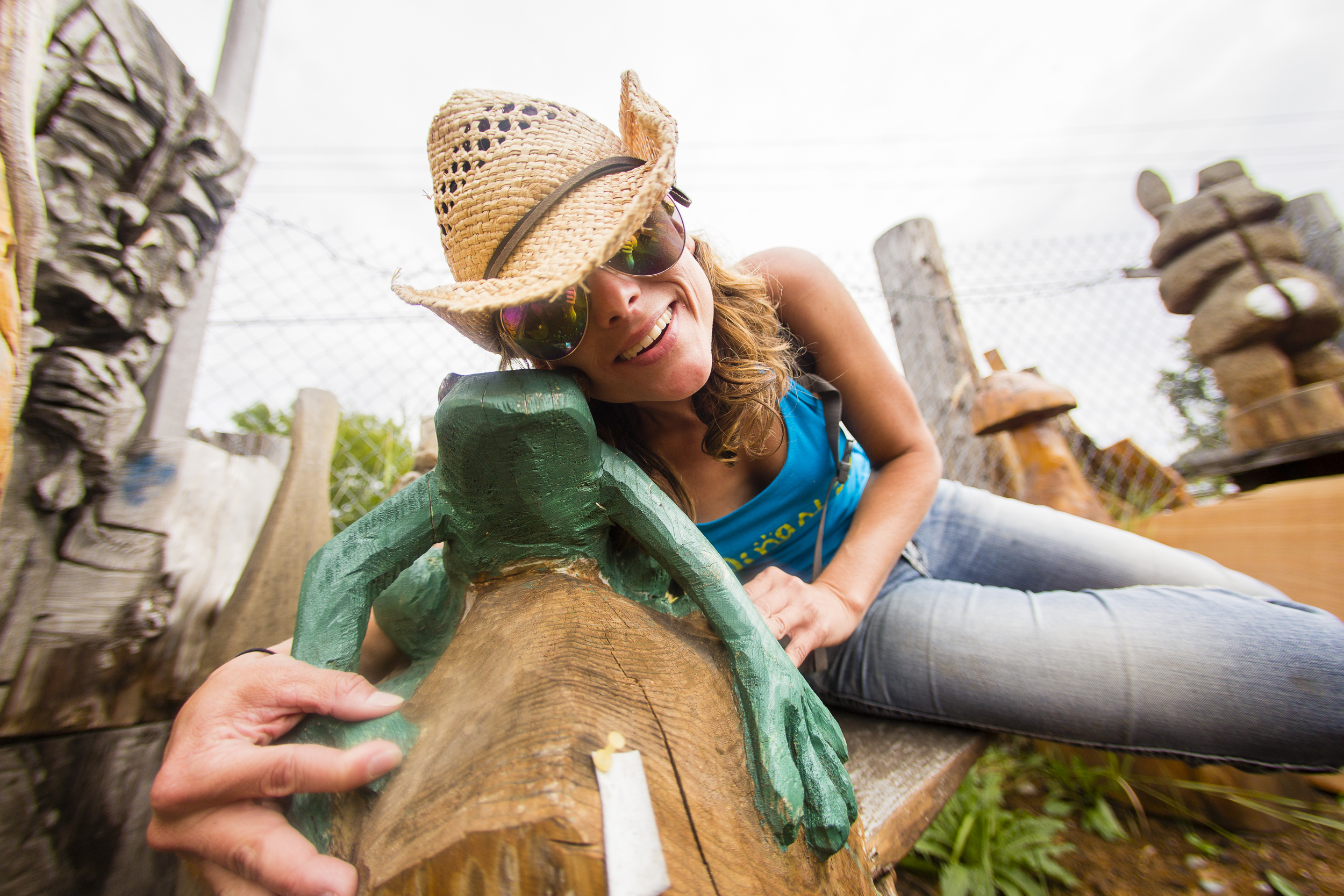
And, at the end of an afternoon poking around all corners filled with over 600 carvings, bounce next door to Top of the Cork for a tasty sampling of locally sourced wines.
There’s never a lack of fun, new, sometimes out-there things to do in Hood Canal. Keep up with us on Instagram, Facebook, Twitter, and Pinterest.
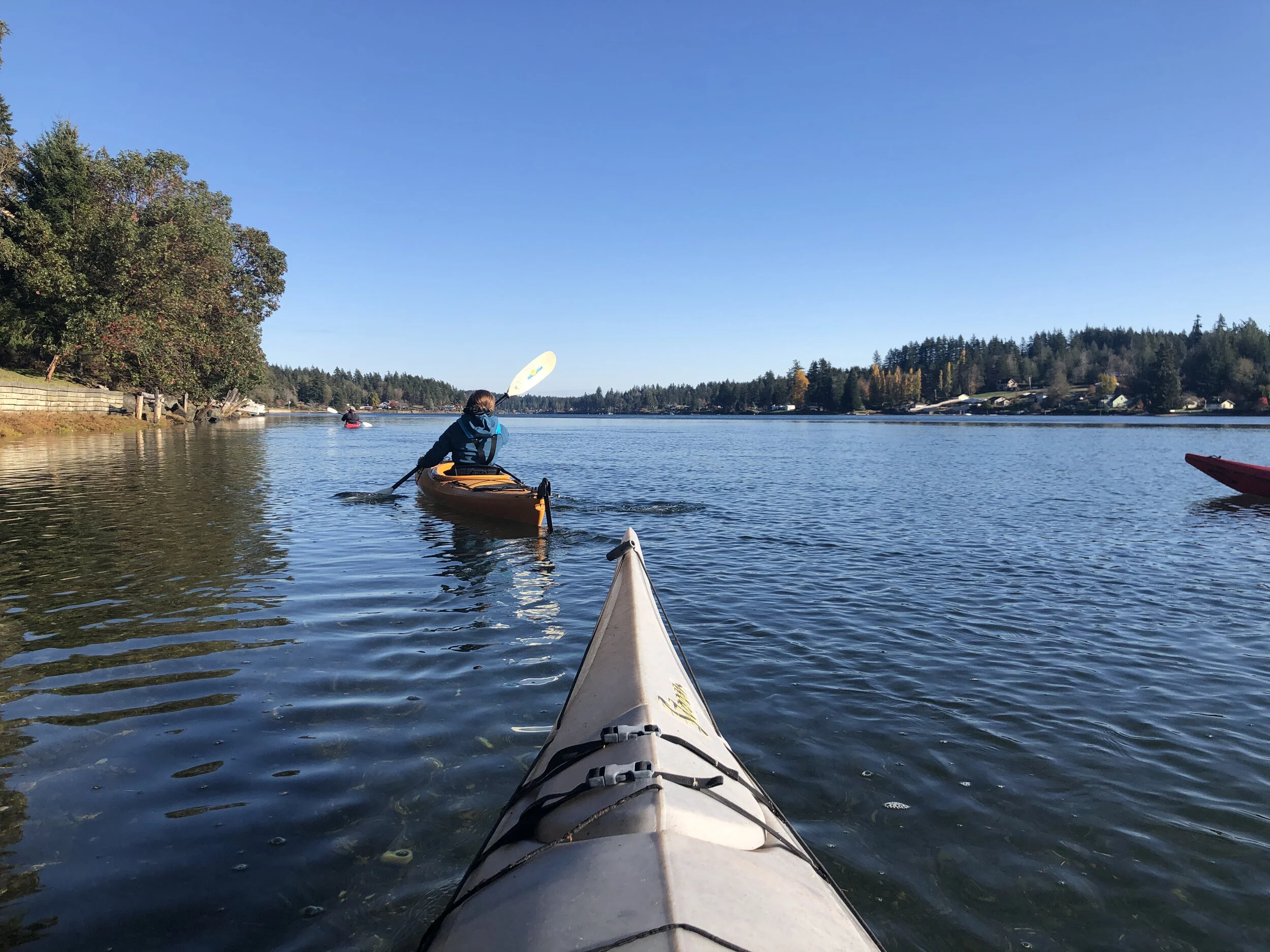
Hammersley paddling race, kayak workshop & SUP clinic
Hammer the Inlet is a new endurance paddling race that follows the curves and bends of Hammersley Inlet on South Puget Sound as the tidal push allowing for a nice glide with current.
This spring, with an event barren landscape looming in our area, the Explore Hood Canal team began brainstorming how we could support local communities and local non-profits bring back some of the energy with Covid-conscience tailored safe events. Paddling events kept rising to the top of the list with their inherit social distancing properties.
Apart the “paddle length distancing” outdoors, Hood Canal and South Puget Sound waterways are pristine, beautiful, and the perfect match for all water skill levels.
Paddling Safety Awareness
Like the trails and parks filling to bursting, Covid restrictions have led to a rise in purchase of personal watercraft but perhaps not an increase in water safety awareness.
Kayaks and SUPs, mass produced for the desperate consumers in dizzying shades of enticing colors, are available at every big box store promising a cheap and easy way to get freedom on Washington’s waterways. Although one can be delighted that sales surged and people got outdoors, the risk associated with little instruction on proper use offered by stores online or giants like Walmart or Dick’s has led to a much more disturbing fallout than litter and over-crowding in our parks. Accidents and drownings statistics in 2020 were so alarming that a Bill was proposed to require safety certification for all people on the water — not just for those in powered boats over 15 HP.
The current rules are simple and common sense should prevail. Life jackets, understand your surroundings, educate yourself about winds, currents, tides, travel in groups and develop a safety plan. But then, who thought we had to tell people to respect the trails?

Opportunities to Educate (and have fun)
Paddling events are a great way to share ideas on skills as well as safety. When the tourism team began researching possible anchor events in the local area, imagine our delight when we found that Salmon Bay Paddle had included Hammersley Inlet in their paddling competition series and has included a sea kayak paddling clinic in their events in Shelton.

Fiona Wylde SUP Racing Clinic | May 7
Cost: $40 per person / Max 20 participants / Open to: All skill levels welcome from novice to experienced racer. Participants use own gear.
To register email in advance.(Payment methods accepted: Cash, Venmo, Paypal)
Salmon Bay Paddle is the leading provider of personalized private one on one and small group stand up paddle board (SUP), kayak and surf ski lessons in the Pacific Northwest. Owner, Rob Casey, is the author of two paddling books and is considered a pioneer of stand up paddling by Stand Up Journal Magazine. Rob and his certified coaches travel all over the Northwest offering paddling skills and safety classes to everyone from beginner to advanced paddler.
Salmon Bay Paddle’s event in Shelton (May 7-8) includes guest speaker, ICF World Champion Fiona Wylde, hosting a SUP Racing Clinic Friday May 7 (5-7pm) at the Shelton Yacht Club; the Hammer the Inlet Race beginning at 10:15 am, May 8; and on-site Kayaking Clinics beginning at 9 AM.
Hammer the Inlet
Saturday – May 8, 2021
Heat Start Times: 10:15 AM to catch end of the ebb current.
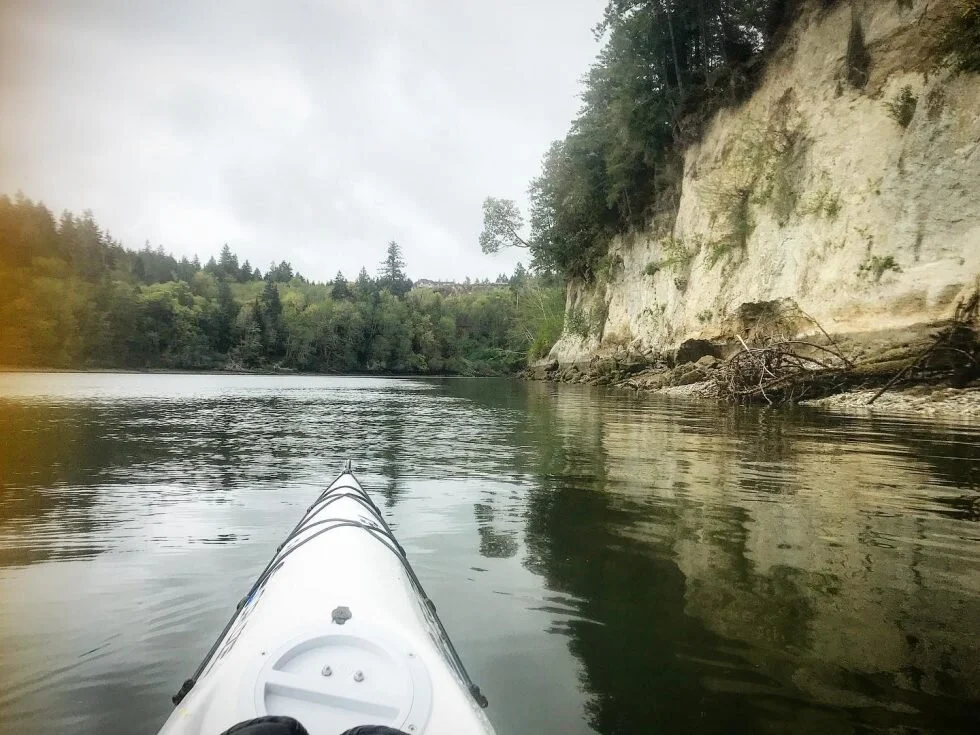
Hammersley Inlet hosts some notoriously swift tidal currents that can work with - or against - the paddler. | photo Rob Casey, Salmon Bay Paddle
Hammer the Inlet is roughly a 15.3 mile race in swift tidal current on Hammersley Inlet in South Puget Sound. Beginning at Shelton’s yacht club, paddlers will take the 1.9 knot ebb out from Shelton and the 1.4 knot flood current back up the winding picturesque inlet to where it empties into lesser Puget Sound.
Paddlers call this run the ‘Hammersley Shuttle’ for the tidal push allowing for a nice glide with current. Back eddies and eddy-lines add a little spice or challenge around the various bends and curves at Skookum and Libby Points and Cape Horn.
All human powered paddling and rowing craft that can self rescue ae welcome to participate in this race. The cost is $45/ single person craft, $55 /double person craft. The fee increase on May 7th ($55 1p, $65 2p) with registration ending Friday at 7 PM.
Salmon Bay Paddle has arranged a motel discount for racers (10% off) a the Shelton Inn but there is plenty of lodging locally at waterfront Short Term rentals as well as lodging on nearby Hood Canal. Visit Explore Hood Canal’s lodging pages for an overview.
Shelton Pop UP Kayak Clinic

An adventure seeker, Robert has paddled much of the Puget Sound, kayaking and camping year-round, navigating tidal currents, wind, rough water, and large, open-water crossings. He is an ACA certified instructor, member of Washington Kayak Club, and instructor with the North Sound Sea Kayaking Association. He is a member of Qajaq USA. When not on the water, he’s looking out to it, writing from his home off Poverty Bay in Des Moines, WA.
Salmon Bay Paddle instructor, Robert Nissenbaum, will provide kayak lessons during the race limiting each clinic size for safety. All kayak instructors are ACA certified. Must book 48 hours before start of clinic to hold your spot. Call (206) 465-7167 for questions.
Clinic Schedule
9-11 - Kayak Basic Stroke Clinic
11-12 - Kayak gear and outfitting session
12-1 - Lunch / Break
2-4 - Kayak rescues and recoveries
A portion of proceeds from this event are donated to the South Puget Sound Salmon Enhancement Group.
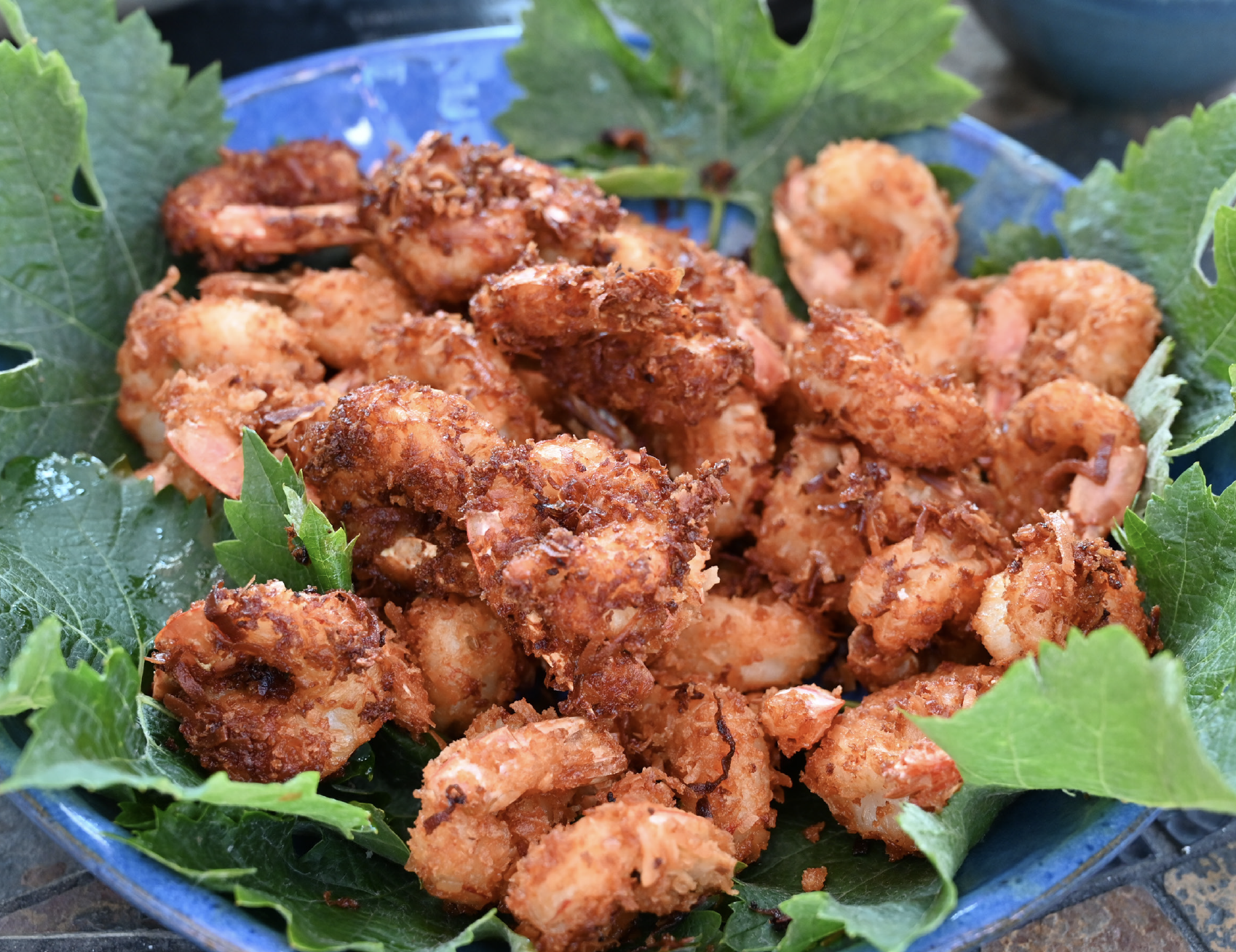
Shrimp Season on Hood Canal
WDFW recently announced that Hood Canal will open next month for recreational spot shrimp fishing. We’re celebrating the news by sharing some great recipes from local celebrity chef, Xinh Dwelley.
WDFW recently announced that Puget Sound will open for recreational spot shrimp fishing beginning May 19.
Marine Area 12 (Hood Canal Shrimp District): Open from 9 a.m. to 1 p.m. on May 19, May 22, June 2, June 5, and June 16.
In all areas of Puget Sound, fishers are limited to 80 shrimp per day on open days in May. Fishers may keep dock, coonstripe, and pink shrimp caught incidentally while fishing for spot shrimp, but they count toward the 80-shrimp limit. Beginning June 1, the daily limit is 10 pounds of all shrimp with a maximum of 80 spot shrimp.
A valid 2021-22 combination license, shellfish license, or Fish Washington license is required to participate in all shrimp fisheries. More information on recreational shrimp seasons, and a description of the marine areas, is available on WDFW's recreational shrimp fishing website.
Shrimp & prawn recipes
Thanks to local celebrity chef, Xinh Dwelley, here are a few delicious ways you can prepare and serve your Hood Canal bounty!

Crunchy Sweet Coconut Shrimp
Of all the recipes tasted for Xinh’s recently published cookbook, this was definitely a favorite. Easy, attractive, and a crowd pleaser – this simple but delicious creation would be good as a starter or for dinner!
2 lbs shrimp
2 cups panko
2 cups shredded coconut
3 Tbsp flour
2 eggs
1 cup coconut milk
3 Tbsp cornstarch
1 tsp garlic, minced
1 tsp lemongrass, finely chopped
1 Tbsp soy sauce
1 tsp salt and pepper, or to taste
Peel, devein prawns, leave tails on, and set aside. Make egg wash by combining eggs, coconut milk, cornstarch, garlic, lemongrass, soy sauce, salt, and pepper. Mix pan-ko, flour and shredded coconut together in another bowl to create breading mixture. Dip shrimp in egg wash. Then dip in the breading mixture. Arrange on cooking sheet and refrigerate for at least 15 minutes to help breading stick to shrimp. You could prepare in advance and cook when serving. Heat a few inches of canola oil to 375°F. Place shrimp into oil and cook until golden brown.

Prawns in Tamarind Sauce

2 lb prawns
⅓ cup white onions, chopped
1 Tbsp garlic, minced
1 Tbsp lemongrass, minced
1 Tbsp canola oil
1 tsp dry Italian seasoning
1 tsp cumin
1 pinch crushed dried cayenne pepper
1 cup crushed pineapple in its own juice
2 Tbsp tamarind concentrate
1 Tbsp fish sauce
1 Tbsp brown sugar
1 cup mushrooms, sliced
1 cup celery, sliced
1 cup carrot, sliced
1 cup coconut milk
1 whole medium tomato, sliced into wedges
2 Tbsp fresh Thai basil, chopped (garnish)
2 sprigs scallions, thinly sliced (garnish)2 Tbsp cilantro, chopped (garnish)
Peel and devein prawns and set aside. Sauté garlic, lemongrass, and white onion in oil until golden brown. Add Italian seasoning, cumin, cayenne pepper, pineapple, coco-nut milk, tamarind concentrate, fish sauce, and brown sugar. Simmer for 5 to 10 minutes. Add prawns and sauté for 2-3 minutes. Add remaining vegetables and mix gently until prawns and vegetables are cooked. Garnish with Thai basil, cilantro, and scallions. Serve with Jasmine rice.
Easy and Delicious Pad Thai
Xinh’s Pad Thai stir-fry dish made with rice noodles, fresh vegetables, peanuts, and prawns/shrimp all mixed together with a spicy and sweet sauce is surprisingly easy to make and can be customized with any vegetables or protein you wish – prawns, shrimp, chicken, tofu – and spice level you prefer.
1 lb prawns
1 Tbsp soy sauce
1 Tbsp fish sauce
1 Tbsp oyster sauce
1 Tsp garlic, minced
1/4 cup Tamarind concentrate Pinch red pepper flakes Juice of 1/2 lime
3 Tbsp canola oil
16 oz package of pad Thai noodles
2 cups Napa Cabbage, shredded
1 cup bean sprouts
1 cup pea pods
1/2 cup onion, sliced
1/2 cup carrots, cut in matchsticks
3 green onions, chopped
1/2 cup garlic chives, chopped (optional)
Peel and devein prawns and set aside. Place noodles in hot boiling water for 3-5 minutes, or until they “relax,” and then drain. Set aside. In a bowl mix soy sauce, fish sauce, oyster sauce, tamarind, red pepper flakes, and lime juice. Using a large wok or large frying pan on high heat, saute garlic, carrots, cabbage and onions in oil until vegetables reduce (about 5 -7 minutes). Add noodles. Turn mixture with tongs and wooden spoon, Add beans sprouts, pea pods, green onions, and chives. Cook, turning often until incorporated (about 5 minutes). Remove from heat. Saute prawns in oil until cooked. Add prawns to mixture and toss well. Serves 4.


About Xinh
Chef Xinh Dwelley was born in South Vietnam, in a village near Siagon, where she discovered her natural talent of making people happy with her food as she cooked for an entire U.S. battalion. When she moved to Washington in 1970, she sold her spring rolls at the Olympia Farmers Market, and became an ace oyster shucker, winning the West Coast Oyster Shucking Championship at OysterFest five times in a row.
She finally found her home at Xinh's Clam & Oyster House in Shelton, WA. This book celebrates 25 years of favorite recipes and memories.
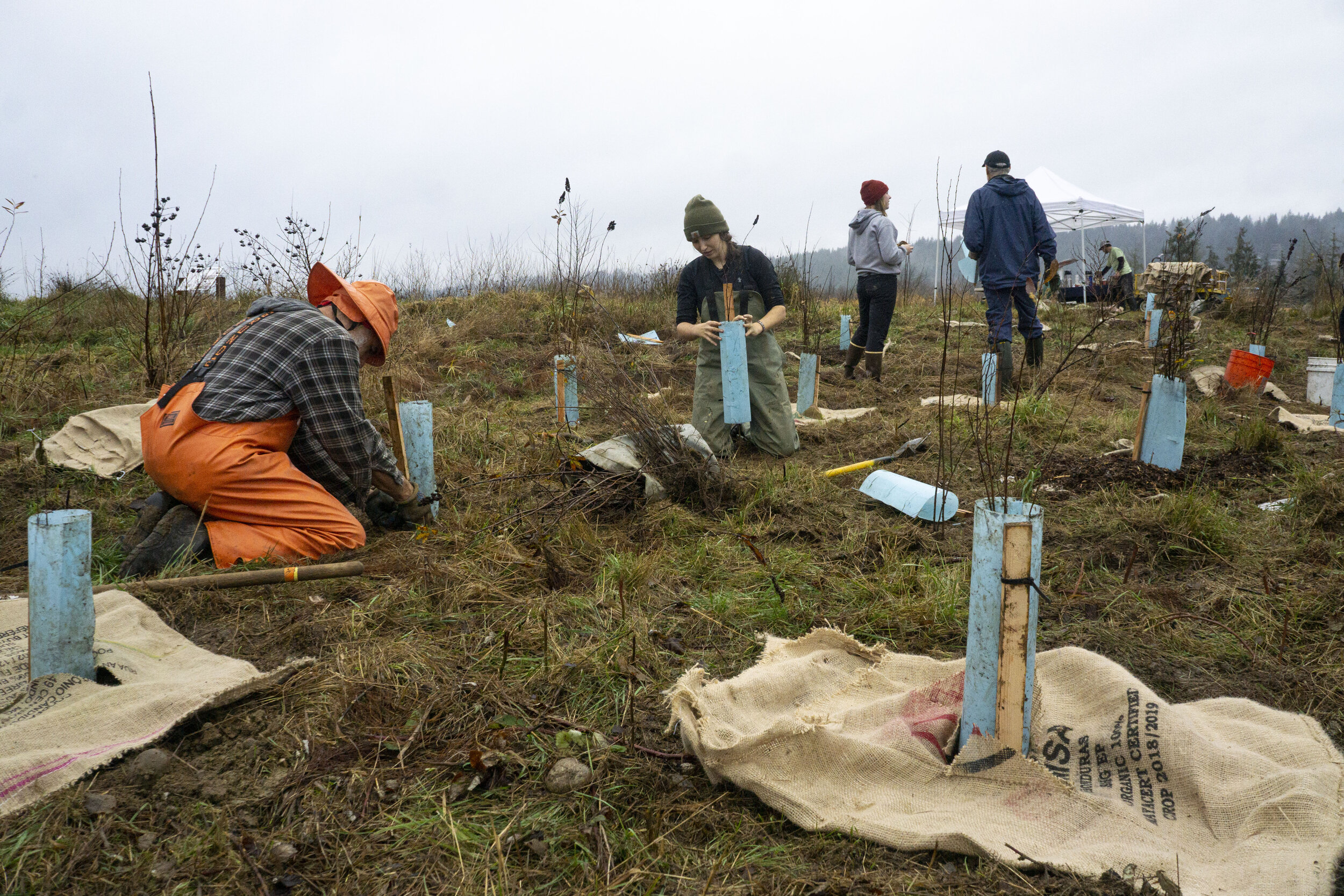
Do the dirty work to protect and preserve
Hood Canal Salmon Enhancement Group has volunteer opportunities available to enhance salmon habitats on the Union River on Hood Canal. Consider vacationing in the area and doing some good for the fjord.
Salmon are a keystone species and the foundation of Pacific Northwest culture, and the Hood Canal Enhancement Group has been working hard to change the projection of their uncertain fate through riparian enhancement and weed control. Interested in helping out? The Salmon Center has plenty of opportunities for families and individuals to sign up - for a day, or week - to volunteer and help these precious resources.

Saving our Salmon Habitats
In addition to Chinook, Coho, Pink and the occasional Sockeye, Hood Canal is home to Endangered Species Act listed Puget Sound steelhead and listed Summer Chum, the latter of which is a completely unique species to this watershed. Structurally mature and diverse streamside plant communities not only increase the likelihood that salmon will continue to survive for future generations, but that the entire ecosystem will remain resilient against the effects of a changing climate.
Riparian habitat is the transitional area between land and aquatic ecosystems; therefore, the work in this program mainly takes place along rivers, streams, wetlands and estuaries. These are critical habitats for salmon and steelhead where they are born and die, and where they grow strong for their journey out into the ocean. Riparian habitat provides essential services and functions for fish, such as food; clean, cold water; large woody debris recruitment; and habitat complexity.
Without these, our salmon and steelhead populations would cease to exist, along with hundreds of species, the culture, and economy that depends on their survival.

Enhancement Group’s riparian enhancement program
HCSEG’s riparian enhancement program serves to protect and restore these services and functions, which can be understood by 4 broad categories: provisioning - the production of food and water; regulating - the control of climate and disease; supporting - nutrient cycles and oxygen production; and cultural - spiritual and recreational benefits.
“Salmon are a keystone species and the foundation of our sacred Pacific Northwest culture, and we have been working hard to change the projection of their dismal fate through riparian enhancement and knotweed control. “
The World Conservation Union lists invasive knotweed as one of the world’s worst 100 invasive alien species. Knotweed spreads aggressively along rivers establishing dense monocultures that reduce native riparian plant diversity, structure and function. Invasive plant species are the second greatest threat to global biological diversity, only second to habitat destruction. In 2020, HCSEG installed 11,000 native plants, restored 0.5 river miles and 9 acres of riparian habitat through new riparian plantings, and the survey and control of knotweed on over 40 stream miles.
In 2021, HCSEG plans to install 17,500 native plants, and restore 1 river mile and 15 acres of habitat through new riparian plantings. All of this work would not be possible without the outstanding help from our volunteer community and our Washington Conservations Corps crew.

“If we plan to install 17,500 native plants this year, we are going to need lots of environmental stewards helping us fight for the future of Pacific Northwest salmon and steelhead.” Salmon Center volunteer
Visit the Salmon Worksites and be inspired to help
If you would like to see this work for yourself, we have several public riparian enhancement worksites that you can visit: Big Beef Creek and Estuary (feel free to park at the gate and walk-in), Seabeck Creek (by the new bridge) and the Union River Estuary Preserve (at the Salmon Center). And while you’re there, consider signing up to join our community of volunteers!
Volunteers make our work possible
From data collection at fish traps, habitat restoration, support at fundraising events, and education programs, so much of what we do is made possible by the dedicated and passionate involvement of our community.
If you have questions about visiting these sites or would like more information about these projects, visit pnwsalmoncenter.org for a full list of staff contacts as well as project descriptions and opportunities to volunteer.
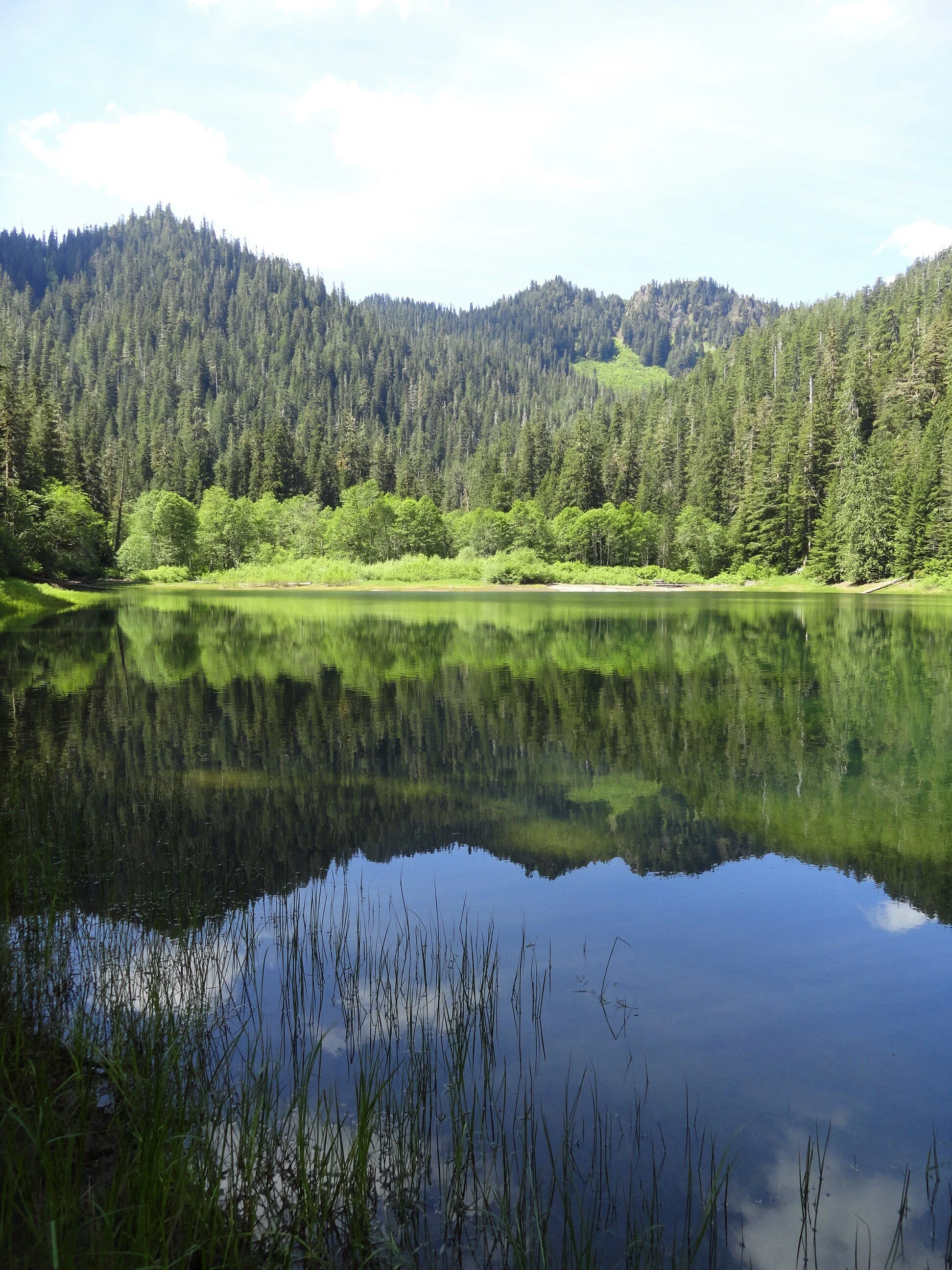
A Quiet trek to Pine Lake
The South Fork Skokomish River Valley offers quite a contrast from the North Fork Skokomish River Valley. Located within Olympic National Forest and not Olympic National Park, the South Fork sees a fraction of the number of folks that visit the North Fork.
Craig Romano | Story and Pictures
The South Fork Skokomish River Valley offers quite a contrast from the North Fork Skokomish River Valley. Located within Olympic National Forest and not Olympic National Park, the South Fork sees a fraction of the number of folks that visit the North Fork. Once a heavily logged area, the South Fork is slowly reverting back to a more natural state. Miles of former Forest Service logging roads in this wildlife rich valley have been decommissioned; some converted into trails. The converted trail to pretty little Pine Lake is a pure pleasure to walk. And surprisingly, the lake is surrounded by beautiful ancient forest. Majestic hemlocks, Douglas firs, and red cedars—just no pines.
Hit the Trail
Much of the South Fork Skokomish Valley in the Olympic National Forest was intensely logged from the 1940s to the 1980s. By the 1990s however timber harvesting on the Olympic and other Western Washington national forests was heavily curtailed due to market place changes and new management objectives favoring habitat protection and recreation. This resulted in the Forest Service decommissioning hundreds of miles of old logging roads. Some of these old roads however presented new opportunities to expand the trail system.

Olympic National Forest once contained hundreds of miles of trails in the South Fork Skokomish and Wynoochee River watersheds. Intensive logging destroyed most of those trails. Forest Service officials and citizen groups now see new opportunities to regain many miles of these lost trails through road conversions. The trail to Pine Lake is one of these new trails. And unlike so many road-trail conversion that simply involves gating the road and removing culverts—the Pine Lake Trail was designed with aesthetes in mind.
The road to trail conversion to this little lake involved constructing bends and curves in the original road bed to better mimic a real trail. And the road bed was restored to original contours in places further obscuring old road cuts.
The Forest Service planted native vegetation along the road bed so that in time it will be very difficult to see that this route was once a wide logging road. And while logging did occur within the Pine Creek watershed, it wasn’t as intense as in some of the smaller watersheds farther south and east. Large patches and tracts of old-growth forest were left uncut. And as the second growth patches adjacent to the primeval tracts continue to mature, evidence of past logging in the basin containing Pine Lake becomes less obvious.
"Surprisingly this trail is not on many hiker’s radar. Come on a weekday and you may have the lake to yourself."
From the small parking area, follow the trail through second growth forest traversing slopes high above Pine Creek. About half way up the trail you’ll encounter a patch of invasive Scotch broom, a plant that crowds out native vegetation in disturbed areas. The Forest Service along with Washington Conservation Corp crews have done a good job at Pine Lake restoring native vegetation. Unfortunately this pervasive and hardy invasive plant has gotten a foothold in this valley. Hopefully they can soon attack the broom before it sweeps across the valley.
At about two miles the trail enters an attractive grove of old-growth forest. The way then steepens a little breaking stride from its relatively gentle grade to this point. In another .75 mile the trail leaves the old road bed to traverse a grove of big trees and descend to Pine Lake. The lake is pretty shallow and surrounded by grasses, sedges and other small plants—many planted by the Forest Service to help rehabilitate the shoreline from past abuses.
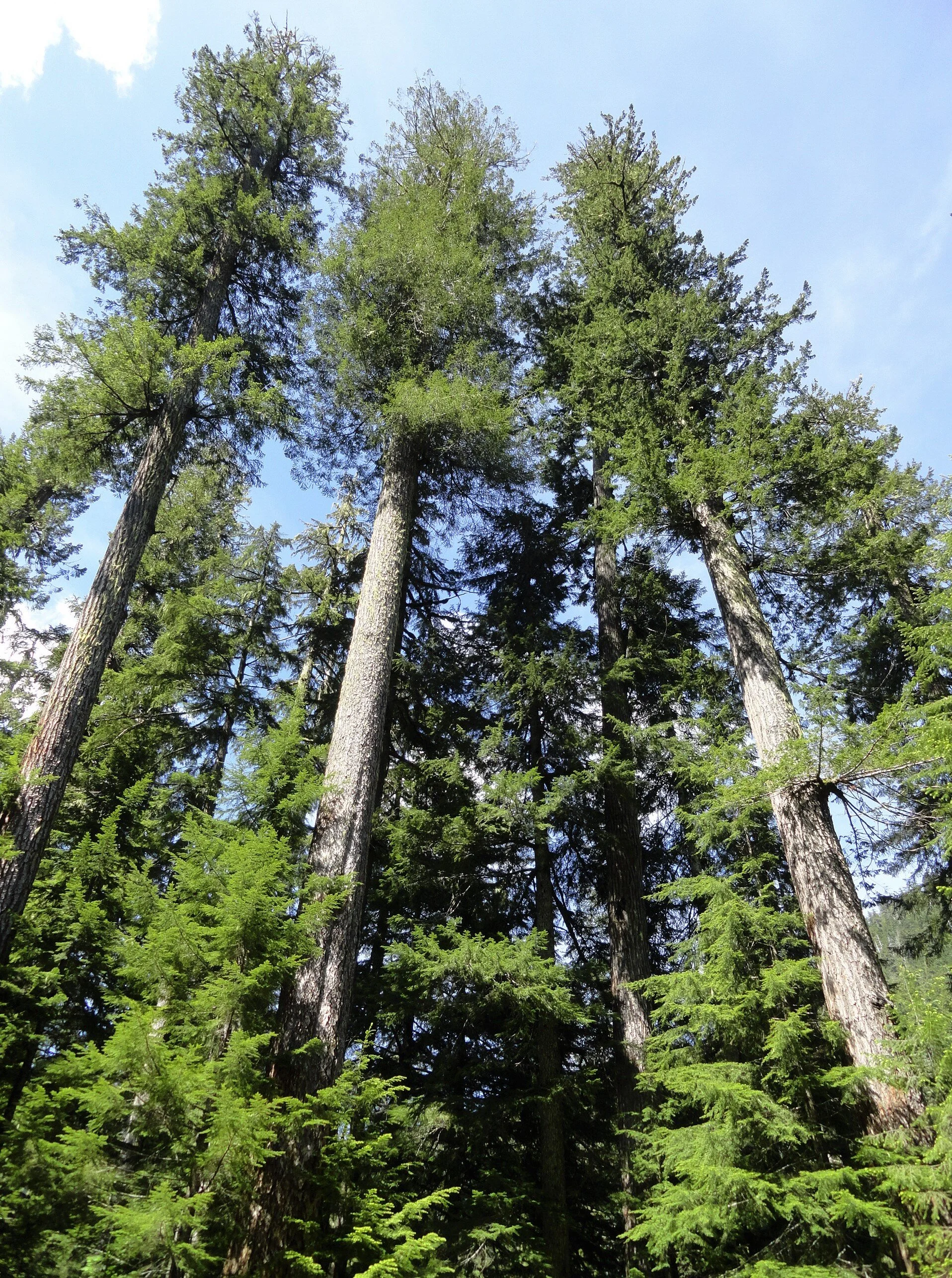
Treat the area with respect by sticking to established paths and not trampling vegetation.
Savor the serenity of the scene. Look for resident waterfowl on the lake’s open waters and in its vegetated coves.
Admire the forested hillsides too and Chapel Peak which often reflects upon the lake’s placid waters. Notice too that among the stately conifers surrounding the lake, there does not appear to be any pines. Western white pines valued for their fine wood, were once abundant in the Olympics and Cascades. But it wasn’t logging that erased them from much of these landscapes—but a Eurasian disease, white pine blister rust that decimated stands of this majestic tree.

It’s possible that is what occurred here at Pine Lake. Then again, early pioneers and explorers were also known for misnaming features. There are no badgers in Olympic National Park’s Badger Valley for example nor black oaks growing anywhere near Black Oak Creek in the North Cascades. Perhaps someone named the lake Pine referring to the area’s evergreens as pines. I have seen this mistake numerous times in travel journals and tourism brochures! Anyhow, Pine Lake’s name origins may remain a mystery. But pine or no pines, the lake is a pretty hiking destination. And if you are intent on seeing some beautiful western white pines, nearby Six Ridge in Olympic National Park harbors some healthy stands of them—but it is no easy hike reaching them.

Pine Lake Hike Resources
Land Agency Contact: Olympic National Forest, Hood Canal Ranger District, Quilcene, http://www.fs.usda.gov/olympic
Recommended Guidebooks: Day Hiking Olympic Peninsula
2nd edition (Romano, Mountaineers Books)
Trailhead directions: From Shelton, travel north on US 101 for 7 miles, turning left at milepost 340 onto the Skokomish Valley Road (signed “Skokomish Recreation Area”). Follow for 5.6 miles, bearing right at a V intersection onto Forest Road 23. Continue for 9.3 miles bearing left at Y-junction with FR 2353. Continuing on FR 23 (pavement ends) follow this good gravel road for 4.3 miles bearing right onto FR 2361. Continue for 1.2 miles and turn left onto unsigned Spur 200. Follow .7 mile to trailhead.
Distance: 5.8 miles roundtrip
Elevation Gain: 700 feet
High Point: 1830 feet
Difficulty: moderate
Snow free: Mar—Dec
Trailhead Pass Needed: None
Notes: Forest Road 2361 is gated and closed from October 1 to April 30th to protect wildlife. You can walk or bike the road (adding 3.8 miles roundtrip) during this time to reach the trailhead.
GPS waypoints: Trailhead: N47 26.270 W123 25.678 | Pine Lake: N47 25.839 W123 28.618
Features: kid and dog friendly, backcountry lake in old-growth forest, chances for solitude and wildlife watching
Safe & healthy hiking during the Covid-19
Avoid crowded hiking destinations. If you arrive and the parking lot is already full, head to another location
Opt for weekdays over weekends and/or early morning to hit the trail
Avoid hiking in large groups outside of your family
Practice Social Distancing while on the trail, giving other hikers lots of room to pass and keeping your distance from them at lakes, summits, etc.
Wear a mask when encountering others on the trail. A buff or bandanna works well, and remember to pack hand sanitizer
Pack it in pack it out (including pet waste) and don’t be a surface pooper. Always using privies first if available-or head at least 200' away from all trails, campsites and water sources and digging a cat hole for your business. Bury your waste and toilet paper.
Our Guide
Craig Romano is an author of more than 20 hiking guidebooks including the bestselling Day Hiking Olympic Peninsula 2nd Edition (Mountaineers Books), which includes descriptions for 136 hikes throughout the Olympic Peninsula.

Hood Canal Travel Guide: Birdwatching
With its wealth of shoreline, fresh and saltwater marshes, mudflats, and bountiful forests, the Olympic Peninsula is a birders’ paradise.
A canalside Birding Itinerary
With its wealth of shoreline, fresh- and saltwater marshes, mudflats, and of course the bountiful forest, the Olympic Peninsula is a birders’ paradise. And whereas winter and spring aren’t the most popular seasons for human tourists (meaning less competition for lodging and dining), they happen to be the best for catching the avian crowds.
From soaring birds of prey to elusive divers, birdwatching is one more reason to get to Hood Canal when there aren't hordes of RVs cruising down HWY 101.

If you are looking for all the gritty details on Olympic Peninsula birding locations, check out Craig Romano’s list of the Top 25.
Whether it satisfies your ornithological cravings for the season or simply whets your appetite for much more, gear up (our suggestions are below) and follow along!
Theler Wetlands | 7am
If you only make one dedicated birding stop in the Hood Canal, Theler Wetlands, with its easily navigated trails, interpretive kiosks, and educational exhibits, should be it. More than two miles of interpretive walking trails through 39 acres of protected wetlands provide an excellent introduction to birdlife in the Hood Canal. Newbies and experienced birders alike will delight in views of bald eagles, green-winged teals, horned grebes, and more. You may even be able to spot otters in the freshwater marsh!

Photo courtesy of Clint Ferarra
Sunset Beach Deli | 10am
Whether you worked up an appetite for lunch or just need a quick coffee to fuel the next birding venture, the Sunset Beach Deli is a local favorite for gyros and Philly-style cheesesteaks. In the mornings, it’s also the go-to location for filling breakfast burritos. If you’re not quite ready to eat, have them wrap up a sandwich and take it to go.
Twanoh State Park | 1pm
Twanoh State Park is a favorite in the summer for swimming and watersports, but the quieter winter and spring months make it a great place for viewing wildlife and birds. Bring your binoculars to the shoreline for an eyeful of diving birds such as loons, mergansers, murrelets, and ruddy ducks with their distinctive upright tails. In the towering cedars and maples inland, listen for brown creepers and red crossbills.
Bonus: Between Twanoh and Potlatch, Highway 106 takes you right by the Skokomish River Delta. The overlook pull-off is a good spot to scope gulls, grebes, and goldeneyes.

Photo courtesy of Clint Ferarra
Potlatch State Park | 4pm
Like Twanoh, Potlatch bustles with humans in the summer and birds in the winter and spring. With 5,700 feet of saltwater shoreline, it’s a great place for viewing waterfowl, particularly during high tide. In the water, look for heron, scoters and scaups, and check the trees for fox sparrows and Steller’s jays.

Photo courtesy of Clint Ferarra
Dinner at 2 Margaritas | 6pm
Nothing works up an appetite quite like a day spent in the bracing sea air. Whether you’re celebrating new additions to your Life List or toasting to better luck next time, we recommend a margarita (or two) at the warm, colorful 2 Margaritas restaurant in Union. Generous portions in a cozy atmosphere make it the perfect cap to another beautiful day in the Hood Canal.
Need More inspiration?
Renowned guidebook writer and trail advocate, Craig Romano, shared 25 of his favorite bird viewing destinations with us. Start planning your trip now!