
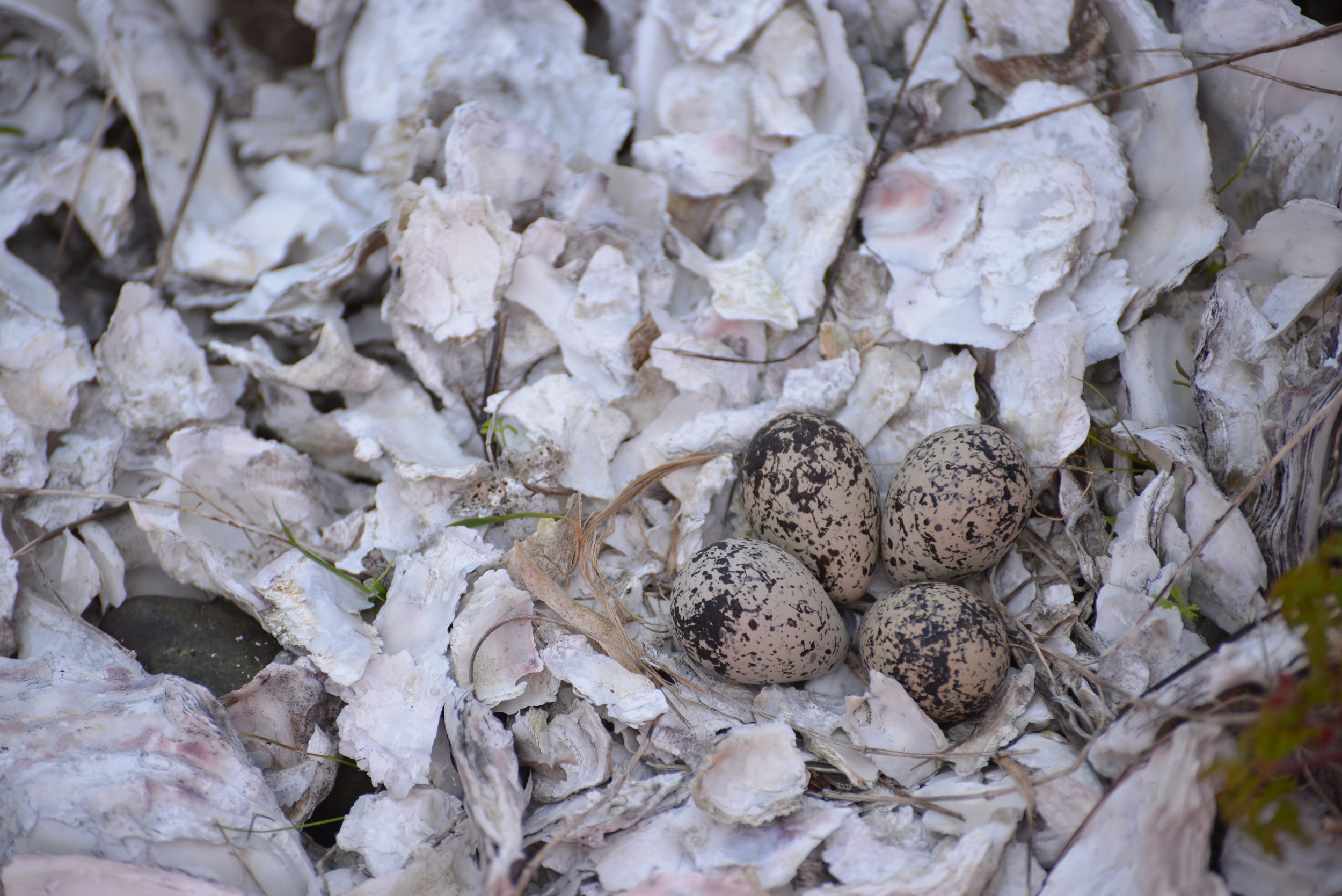

The Elusive Geoduck : Reviled and Reveled
This large saltwater clam derives its common name, geoduck, from a Nisqually word which is said to loosely translate as “dig deep.” Don’t let their awkward looks deter you. Prepared right, this misunderstood bivalve is versatile and utterly delicious.
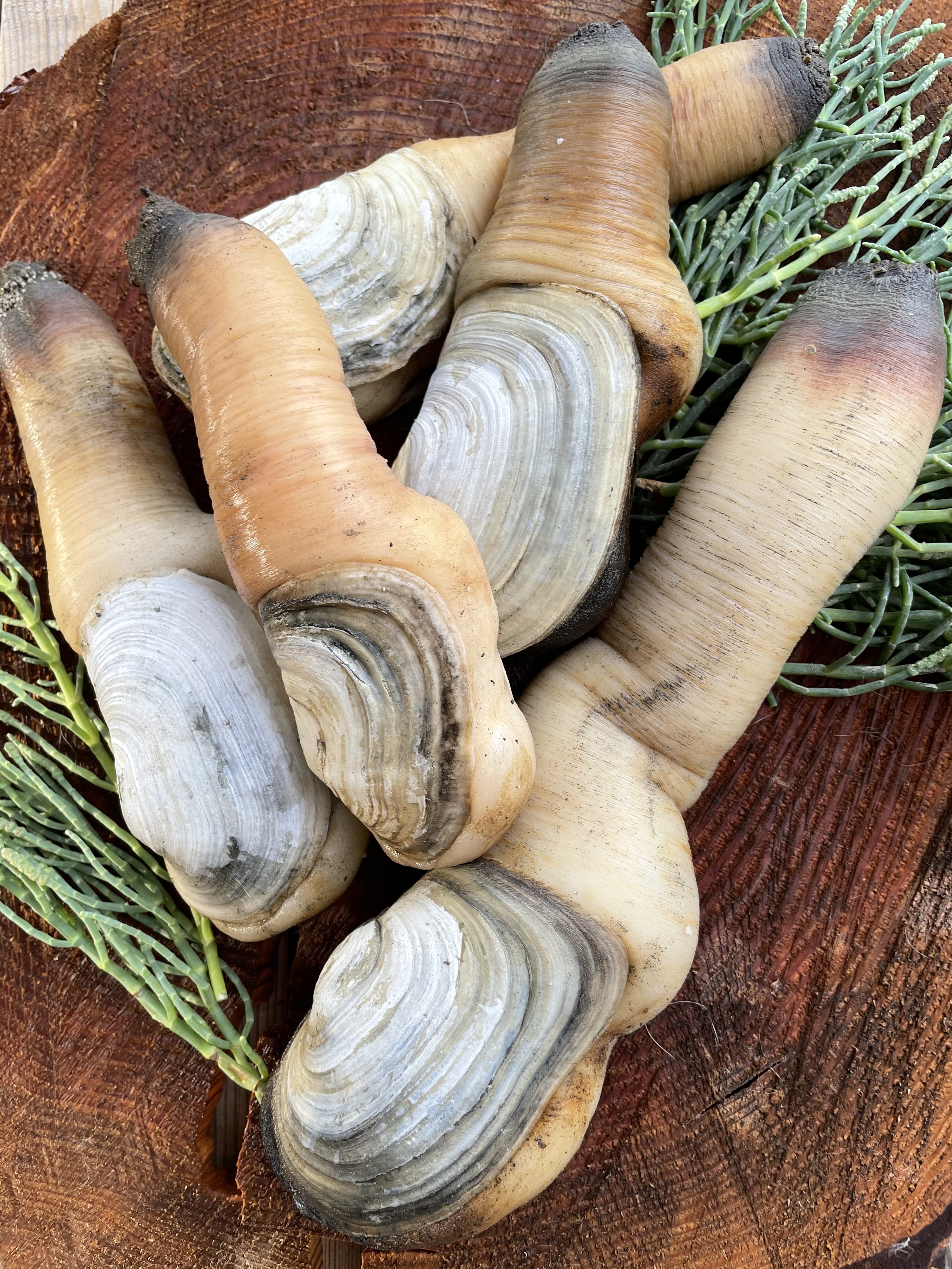
This large saltwater clam derives its common name, geoduck, from a Nisqually word which is said to loosely translate as “dig deep.” Don’t let their awkward looks deter you. Prepared right, this misunderstood bivalve is versatile and utterly delicious.

The geoduck is native to intertidal and sub-tidal waters from Alaska to California. With a shell that ranges from just 6 – 8 inches, the long siphon, or neck, makes it the largest burrowing clam in the world. In fact, a geoduck’s neck can be as long as three and a half feet in length. So large that even from when it is small as an inch, it cannot be withdrawn into the shell.
Geoduck attain maximum size at age fifteen, but are one of the longest living animals in the world. The typical lifespan of a wild geoduck can range to 140 years. The oldest being recorded at 168 years. Buried three feet deep in mud or sand, once they make it through their fragile adolescence, these giant clams do a fantastic job of keeping safe with their thick unpalatable skin.

Farmed geoduck
It takes about six years to raise a farmed geoduck to market. Beginning life in a hatchery tank, the small seed (about one inch long), are “planted” in the soft sand in the intertidal and protected with PVC tubes. The covered tube keeps them safe from predators until they are large enough to dig deeper.
Natural beds of geoducks grow on many of Washington’s public beaches with Puget Sound and Hood Canal containing the most abundant populations available for public digging. The best places to see experienced diggers capturing these big clams are at the Duckabush and Dosewallips State Park on Hood Canal. If you can’t harvest your own, head over to one of the restaurants and markets listed below or order fresh online.

Preparing Geoduck
Preparing a geoduck can seem overwhelming but it is surprisingly simple:
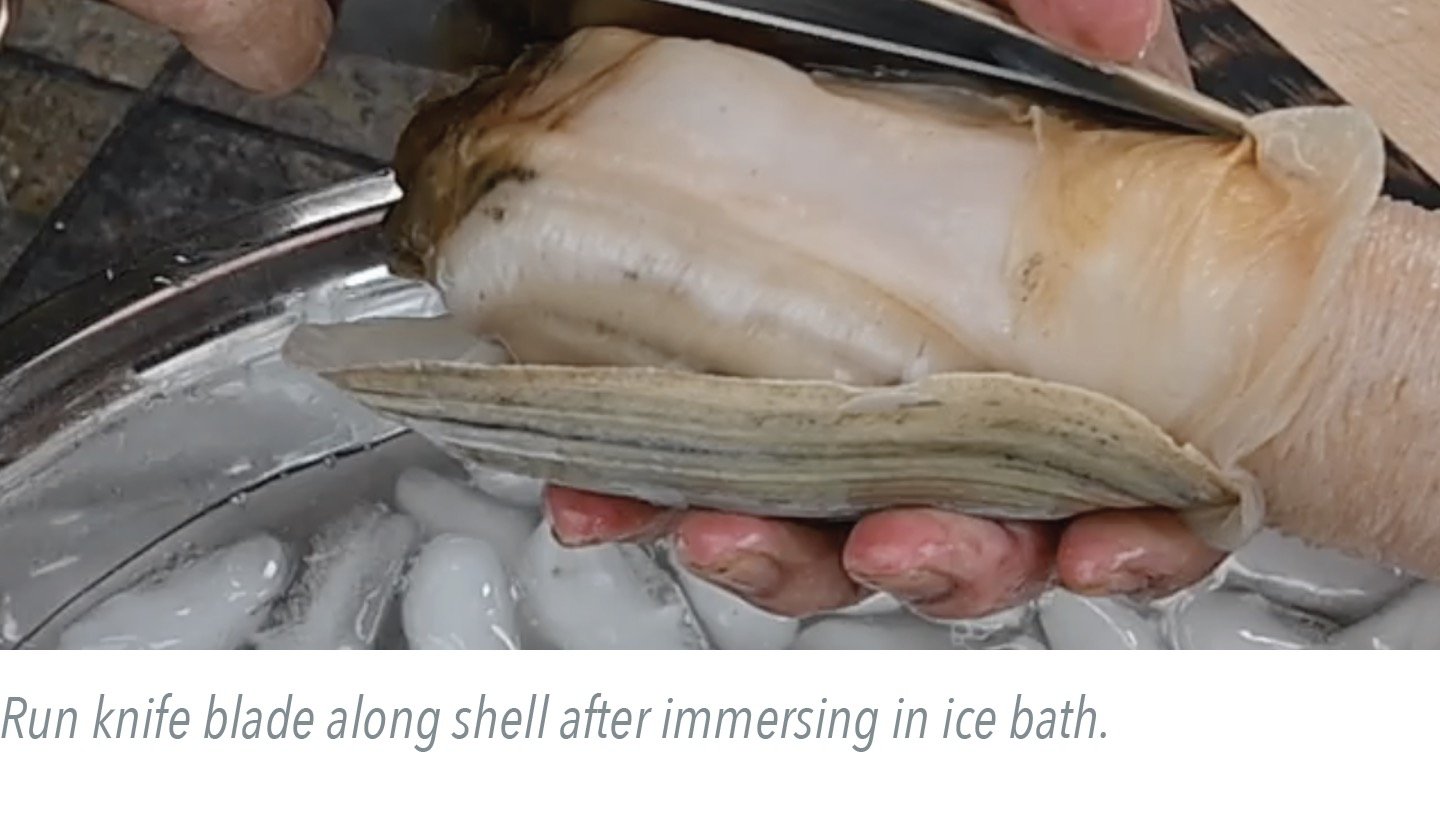
Boil a pot of water and prepare a bowl of ice water large enough to fit your geoduck. Using tongs, immerse the whole clam in the hot water for about six seconds.
Immerse it in the ice bath for about the same amount of time. Holding the shell with one hand, run the blade of your knife along the inside of the shell and extract the body from the shell.
Grasp the tough outer tube that surrounds the siphon meat and pull. The hot water and ice bath will have effectively separated the thick skin from the tender neck meat.
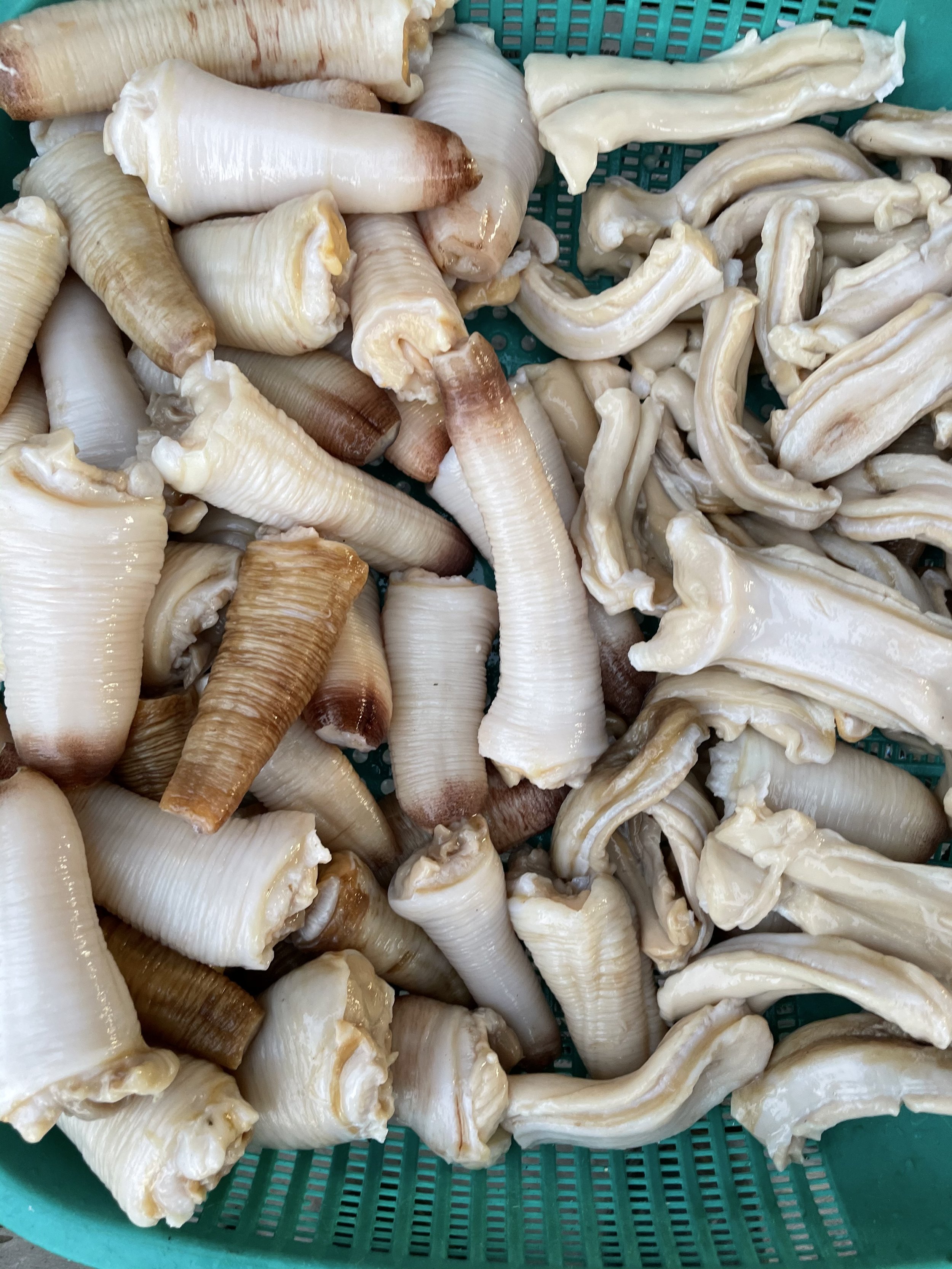
Discard the bulbous stomach and your efforts will be rewarded with tender meat from the body and the tougher but just as tasty meat from the siphon. The siphon meat is often ground to make chowder or patties.
Prepared Geoduck: tide to table
Just like being elusive to catch, geoduck can be difficult to find at restaurants. Fortunately in Washington some of the biggest producers of geoduck also have their own restaurants that they can supply this year round delicacy.
Here are a few South Puget Sound farmers that really know their Ducks:
Chelsea Farms and Oyster Bar
222 Capitol Way N
Olympia, WA 98501
Phone: (360) 915-7784
Chelsea Farms first made their mark on Olympia’s map in 1987 when Linda and John Lentz started their adventures in sustainable shellfish farming. Their legacy continues with the next generation, Shina and Kyle.
Taylor Shellfish Retail Store and Oyster Bars throughout WA
130 SE Lynch RD Shelton WA, 98584
PHONE: (360) 432-3300
Hours: Open for curbside pick up Monday - Sunday: 10am - 6:00pm; Closed all major holidays
Taylor Shellfish Farms harvests their own farmed geoduck from the Puget Sound. At their oyster bars across the state, diners can sample fresh geoduck sashimi with sesame ginger lime dressing. The giant clam is also used in Taylor Sheellfish Farms’ Northwest Chowder. Product also available online and shipped directly to your home.
Fjord Oyster Bank Restaurant
24341 N Hwy 101, Hoodsport
Phone: (360) 877-2102
Hours: THUR-FRI 5PM-8PM, SAT & SUN 1PM - 7PM | Closed MON-WED
The Fjord celebrates the recipes of Xinh Dwelley who was known for her acumen with geoduck. Available at the restaurant are sashimi, geoduck wontons, fritters, geoduck chowder, and ceviche. The Fjord sources their geoduck from commercial farmer on Harstine Island.


Pedaling the historic tracks
Here’s what to expect when you pedal the rails on the historic Simpson Logging tracks near Shelton.
Vance Creek Railriders, located near Matlock, is a popular activity near Shelton, WA. Have you made your reservations yet?

The rails are part of an old track built by the Simpson Logging Company, so along with clacking past beautiful wooded scenery, passing meadows of foxgloves and crossing over creeks lined with ferns, Vance Creek’s rail journey follows a snapshot of the Northwest’s rich logging history. Until not that long ago, timber trains moved logs along these very rails to the mills in nearby Shelton, in fact this system was the last operating privately-owned logging railroad in the continental US.
When you arrive, don't be alarmed when you leave the main road for a short hop on a gravel logging road to Camp 1. The gravel road is well maintained (even the school bus follows it in rural Mason County), you will soon find yourself at the Vance Creek Railriders office. Arrive 30 minutes early as there is a safety briefing before heading out to get adjusted in your seats.
What to Expect

As you pedal the multi-seat "railrider" along the track you will have the opportunity to see old growth and new forests as well as diverse meadows teeming with wild flowers, moss, and maybe even catch a glimpse of some wildlife – although cheering, laughter and distinctive trail clacking seems to put them on the alert! You will pedal down across the winding Goldsborough Creek and return back up the gradual grade.
Yes, despite its leisurely pace, this is a physical adventure. Most guests are able to pedal the average .75% grade back up to Camp 1 with a portion of the rail at a 2% grade (it’s all downhill on the way there) . But don’t worry – if you struggle, the little “engine” will give you a push back up the slight grade if needed.
This gentle, but vigorous ride is suitable for (and enjoyed by) all ages. Chidren under 12 years old need to be accompanied by an adult on their railrider (four seats). The typical age to be able to help pedal is 6-8 years old depending on leg length. Smaller children who can’t touch the pedals or who are known to be a wiggle worms can use a car seat. Visit the Vance Creek’s FAQ page for answers to common questions.
Be sure to dress in layers as you will be traveling in wooded area where it can go from shade to sun. Also bring snacks and water bottle as the location of the start of the railride is fairly distant from Shelton.

Reserve in Advance
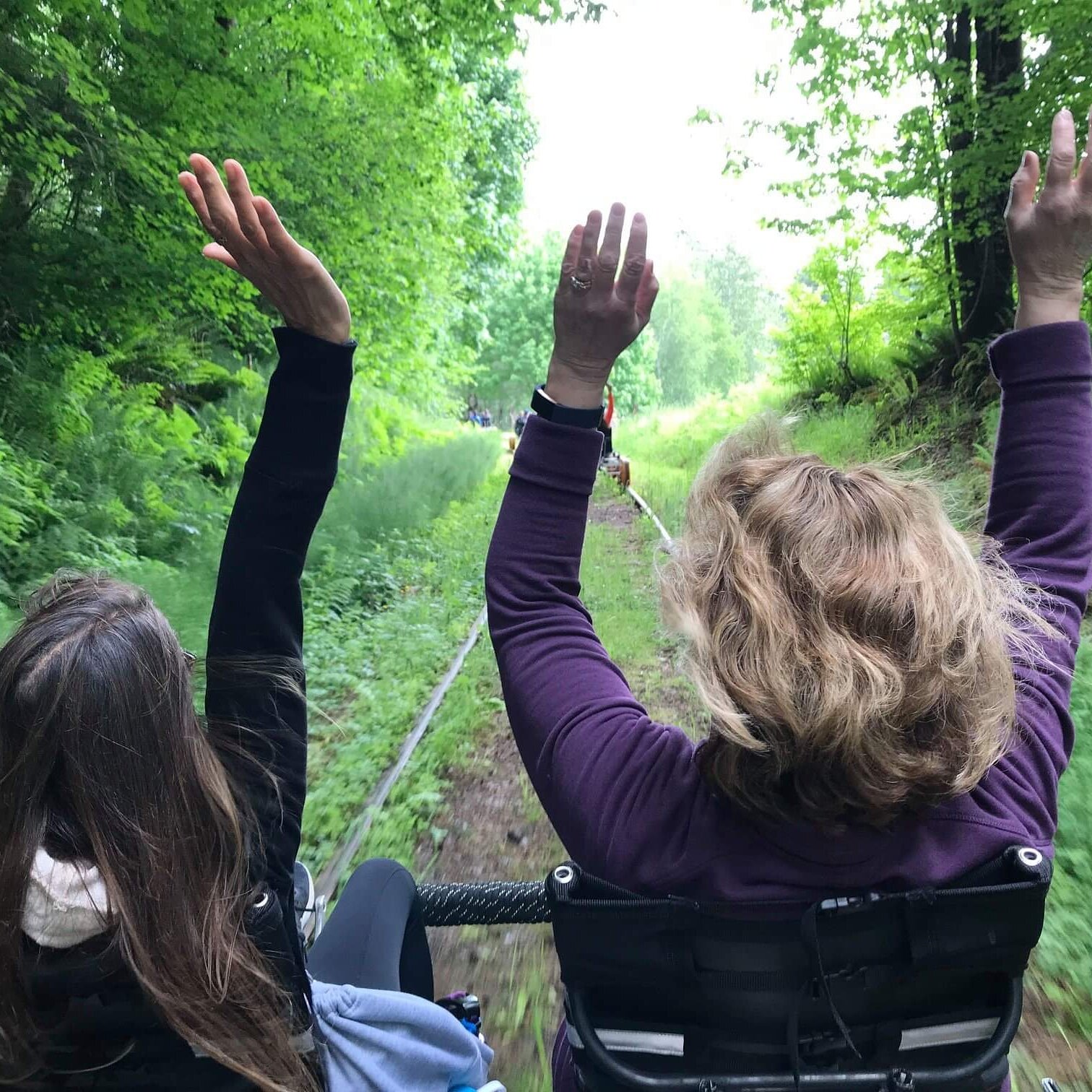
Opening Day is May 17, 202
The popular pedal-powered rail rides with Vance Creek Railriders opens for their 2025 season on May 17 with daily departures of the 2-hour excursion at 9 AM, 12 PM, and 3 PM, Thursday through Monday. Arrive 30 minutes early to check in and hear a safety briefing.
The rail head is at 421 West Hanks Lake Road, nine miles west of Hwy 101 on the Shelton/Matlock Rd.












Rowboats and Recitals: The Story of Mason County’s Early Schools
In this feature, Explore Hood Canal visits the Mason County Historical Society Museum in downtown Shelton to explore “More Than a Building,” a powerful exhibit on the early schools of Mason County. Featuring insights from curator Liz Arbaugh, this video reveals how schools were the heart of tiny communities—from tribal lands to logging camps.
What if I told you the quiet forests and mossy clearings of Mason County once echoed with the sound of children learning—and even rowing boats just to get to class? In this feature, Explore Hood Canal visits the Mason County Historical Society Museum in downtown Shelton to explore “More Than a Building,” a powerful exhibit on the early schools of Mason County. Featuring insights from curator Liz Arbaugh, this video reveals how schools were the heart of tiny communities—from tribal lands to logging camps.
📍 Visit the museum: 427 W Railroad Ave, Shelton, WA 98584
👨💻 Online: www.masoncountyhistoricalsociety.org
🗂️ View the exhibit and the Dayton archives
🎄 Learn about schoolhouse dances, Christmas parties, and how education shaped this region
💬 Leave a comment if you remember your Mason County school days!
#MasonCountyHistory #SheltonWA #HistoricalSchools #PacificNorthwestHistory #ExploreHoodCanal

Lower South Fork Skokomish River trail
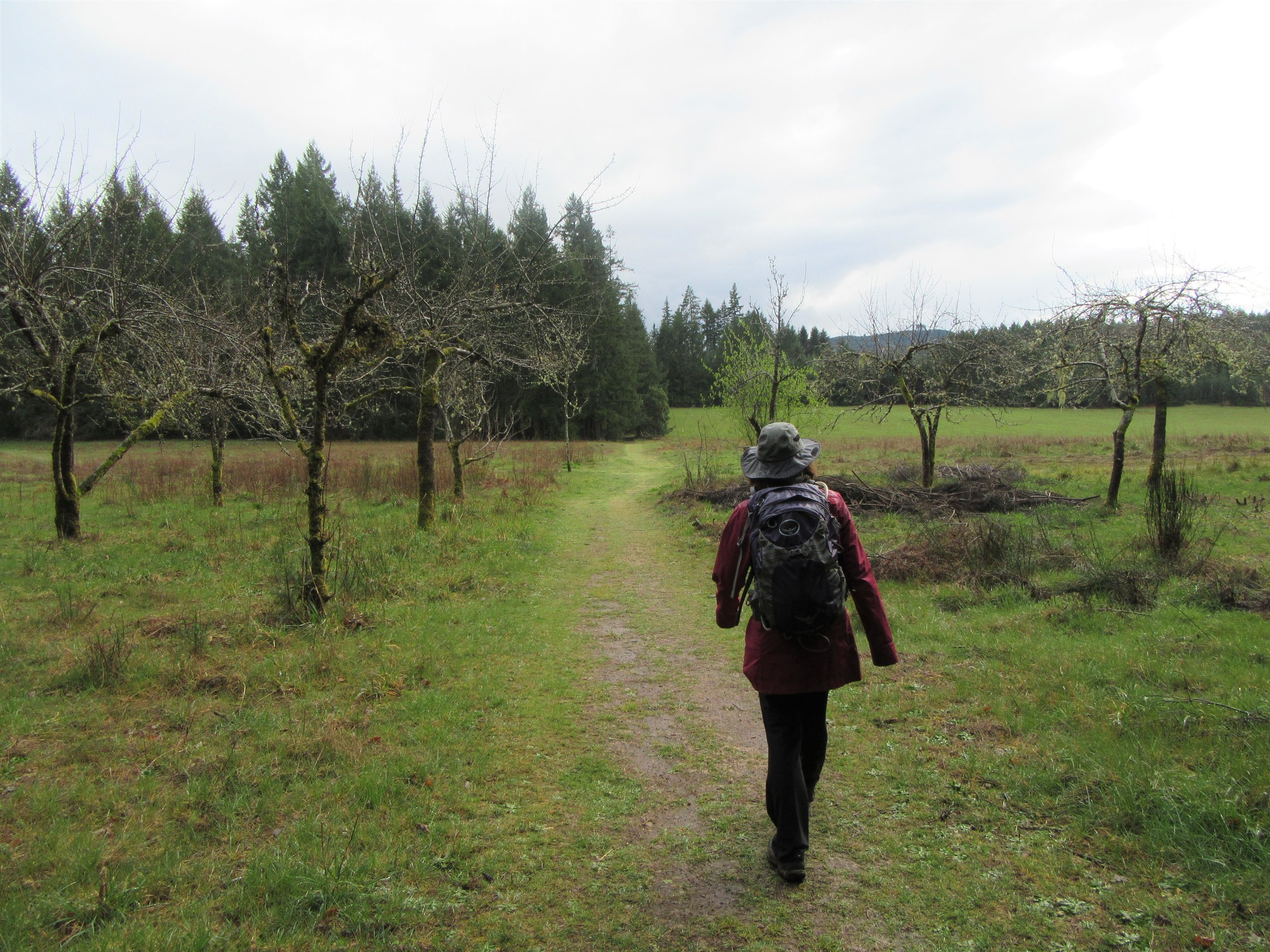
Take a hike, run, horseback ride or bike ride on an inviting trail along a wonderful stretch of the river. Admire surviving groves of towering old-growth, recovering old harvest areas, and a watershed coming back to life.
Craig Romano | Story & Pictures

One of the most heavily logged watersheds in the Olympics—clear cutting and increased sedimentation has taken its toll on this vital river. But in the last two decades a diverse consortium of agencies, non-profis, Skokomish Tribal members, business interests and local folks have begun the process of restoring the South Fork Skokomish back to being a healthy and productive river.
Take a hike, run, horseback ride or bike ride on an inviting trail along a wonderful stretch of the river. Admire surviving groves of towering old-growth, recovering old harvest areas, and a watershed coming back to life.
Hit the Trail
The South Fork Skokomish River along with the North Fork form the Skokomish River in a broad valley in the Olympic Mountains foothills. Here the river flows a short distance east to a large delta at Hood Canal’s Great Bend. It’s the largest river system emptying into Hood Canal. The North Fork is dammed at two locations, while the South Fork flows freely. However much of the South Fork faced major degradation due to extensive logging. Where it flows through national forest and private timberland once contained one of the densest concentrations of logging roads in the state.

Before logging began at a rapid pace after World War II, the Skokomish River, especially its North Fork supported healthy runs of Chinook salmon, steelhead and bull trout. The river is within the traditional lands of the Twana People which comprise of the Skokomish Tribe. Skokomish means “big river people.” The Skokomish People had four winter camps along the North Fork and several summer camps used for elk hunting along the South Fork. Since watershed restoration has begun fish runs have improved. Elk herds in the watershed remain healthy although numbers have recently decreased causing some concern among biologists and wildlife managers.
A trail once ran for more than 40 miles from the settlement of Mohrweis near the river’s South and North Forks’ confluence all the way to the South Fork’s headwaters near Sundown Pass in Olympic National Park. Logging on private and national forest land has obliterated more than half of the historic trail. What remains of the trail was truncated by a Forest Service Road creating a Lower and Upper South Fork Skokomish River Trail.
The upper trail is wilder leading into the national park and is often inaccessible for more than half of the year. Much of the lower trail is open year round making it a wonderful choice for a spring hike.
The lower trail is more than 10 miles long making it a great choice for a long run or bike ride or a one night backpacking trip. But to do the whole trail involves fording the river at 8.6 miles which is dangerous and difficult much of the year. By mid-Summer the river’s usually just shin deep and safe to ford.

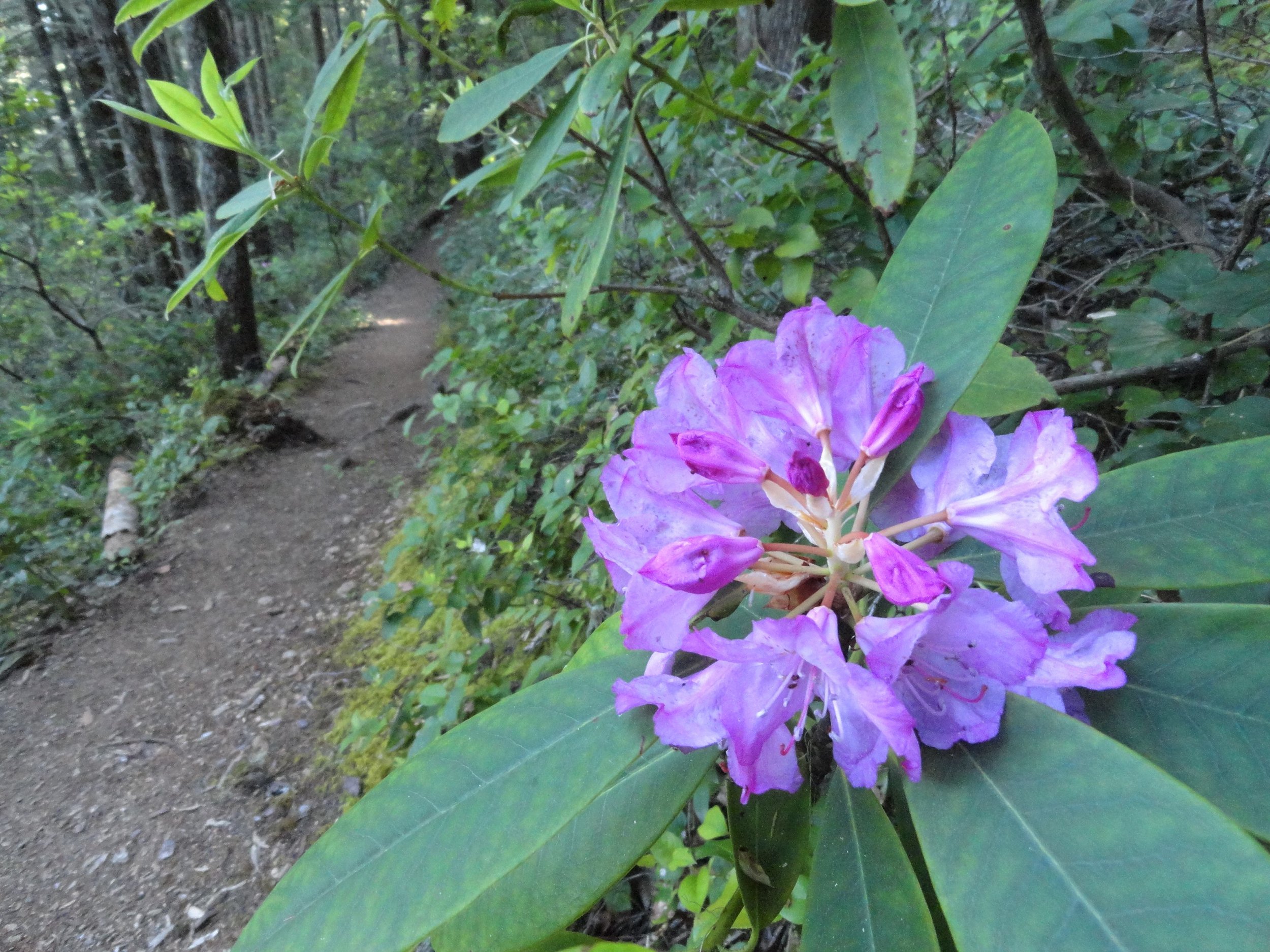
From the main trail head on Forest Road 2353 the trail immediately starts climbing and steeply. After ascending about 350 feet up a high bluff above the roaring river, the trail enters a magnificent old-growth grove of Douglas-firs, some over five hundred years old.
As the trail nears the crest of the bluff, a half mile spur trail heads right through beautiful primeval forest to the LeBar Creek Horse Camp. Equestrians usually use this trail head as their starting point on this trail. Just beyond, another path leads right reaching a Forest Service Spur road in a quarter mile.
It offers an approach to avoid the initial climb. The trail now via short, steep switchbacks, drops back to the valley floor. Expect to get your boots wet crossing a cascading creek at the base of the bluff. Then traverse a beautiful glade of mossy maples and alders.
The trail now on a gentle grade passes by more old Douglas-fir giants, as well as a few stumps of cedar giants that were sent to the mills many years ago. At about 1.5 miles the trail reaches a low bluff with a great river view—a good destination for a short hike. From here it continues upriver crossing a side creek in a big-timbered ravine. After a stretch of boardwalk the trail reaches a junction with a trail leading to Forest Road Spur 140. Almost immediately afterward the trail reaches Homestead Camp about 2.2 miles from the main trail head. Here an old ranger guardhouse once stood.
Continue through luxurious river bottom lands crossing more creeks that may wet your boots. The way then pulls away from the river, before dropping back again toward the roaring waterway. The way then traverses more old growth and crosses more side creek, these thankfully are bridged. Admire a nice little cascade before climbing a small bluff. The trail then once again switchbacks down to river level coming to a couple of junctions.
The trail right leads to Forest Road Spur 2355-100. The short spur left leads to Camp Comfort along a wide gravel channel on a river bend. Here at about 5.0 miles from the main trail head is a good turn around spot for a day hike.
If you decide to go farther along the trail;, the way soon reaches an incredible overlook of the river on a bluff high above a big bend, where the river has eaten away at the bluff and trail in the past. Beyond the bluff, the trail is lightly traveled and a little brushy in spots.
It continues on an up-and-down course, before reaching the ford of the South Fork Skokomish (safe only in low flows) at 8.6 miles. It then comes to the historic Church Creek shelter. From here, the tread improves and the trail continues upriver, passing inviting Laney Camp and the spur to the old Camp Harps Shelter site.
At 10.3 miles from the Main Trailhead the trail reaches its upper trailhead on FR 2361 (accessible when FR 2361 is open from May 1 to Sept 30). Beyond, the trail continues as the Upper South Fork Skokomish River Trail traversing old-growth forest and a wilderness valley spared from logging.


Whale watching from the Shores in Hood Canal
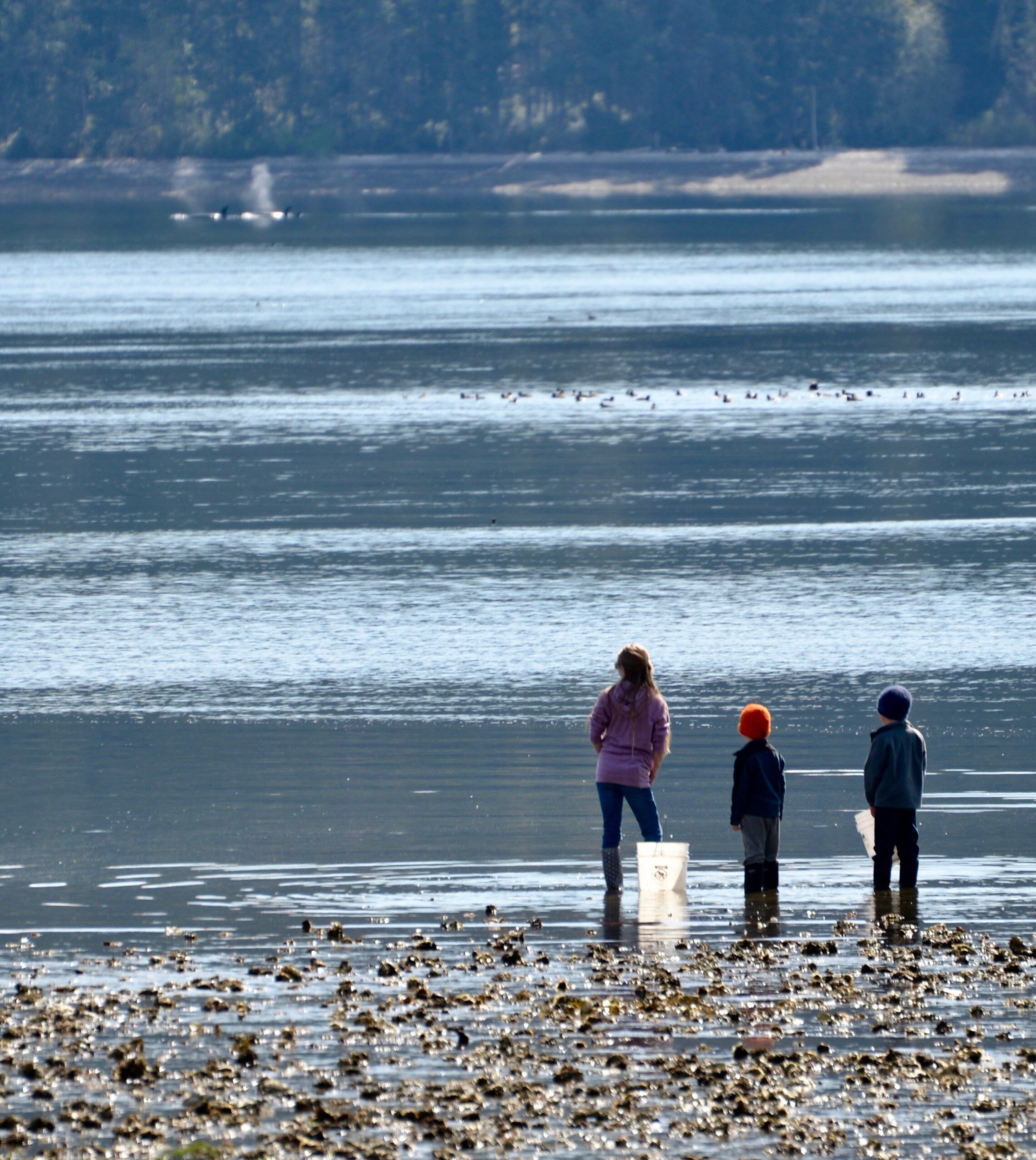
The whales are in Hood Canal! These last few weeks Hood Canal and South Puget Sound have produced a lot of exciting sightings of whales in the area.

Walking along the shores of Hood Canal and the waters of Hammersley Inlet you can spot many interesting marine creatures from the lowly (yet delicious) Olympic oyster to the lumbering California sealion. Although not as dependable as catching a glimpse of a harbor seal, or a great blue heron, the sight of an orca (Orcinus orca) is perhaps the most rewarding.
With newborn calves weighing as much as 400 lbs, orcas are the largest species within the oceanic dolphin family. Full grown female orcas may reach lengths of 18-21 feet and weigh as much as 9,000 lbs and males can get to be 21-24 feet and weigh as much as 12,000 lbs. Because of their size these giants need to eat 150-250 pounds of food a day to survive.
Usually traveling in multi-generational pods of two or more family groups, lead by older matriarchs (grandmas) these whales are strongly devoted to family.
The matriarchs have been observed to aid in the raising of their grandchildren (in a way similar to human grandmothers) and, like human females, they live many years past their reproductive age.
The eldest sons and daughters of matriarchs tend to stay with the family unit (or matriline). Researchers using specially adapted microphones hung underwater, have documented that each matriline has distinctive calls special to it and apparently understood within the pod.
This has led some scientists to argue that orcas have dialects and languages, something that no other animals are documented as having (beyond humans).
Orcas are found across the globe, usually favoring cold waters, but they swim to tropical waters to moult their skins. In the Pacific Northwest, researchers have documented three populations of orcas which have distinct feeding and social behaviors: the Transients who prey on other marine mammals, such as dolphins and seals;
The Residents who find sustenance primarily in chinook salmon; and the little understood offshore orca that are found from California to Alaska and are purported to eat fish and varieties of sharks. According to researchers there are no obvious biological reasons why these whales eat such specific food.
In fact, this preference may be starving the chinook dependent Southern Resident whale population seen in the inland waters of the Salish Sea (Puget Sound, the San Juan Islands, and Georgia Strait), which are in such small numbers they are listed as endangered in both Canada and the United States.
Researchers have been struggling to save these whales and understand why they do not diversify their feeding habits. The most interesting argument researchers have made is that the Southern Residents, although physically able to eat sea mammals or other fish, have established taboos within their groups that prohibit them – in an essence they have cultural constraints, such as seen amongst humans refusing pork or beef on cultural grounds.
Additionally, Residents and Transients have been observed to actively avoid one another, which is reflected in the fact that the Transients tend to visit the waters of Southern Puget Sound between the months of March and September, when the Southern Residents make their migration out of the Southern Puget Sound area. Genetic research has further revealed that there is no interbreeding between these two groups– almost as if they were a different species.

The Southern Residents may be seen chasing the chinook on their upriver run during the fall from several easily accessibly points on shore: on Hammersley Inlet from Walker Park (near Shelton), on Totten Inlet from the Arcadia Point Boat Launch, on Case Inlet at Latimers Landing, and at the Allyn Waterfront Park.
Along the Hood Canal orcas are more rare, but this Spring, a pod of Transients was spotted several times from the Hood Canal Bridge all the way down to Belfair. This group stayed in the area for quite a while much to the delight of the shore residents.
Before you head out to look for whales, check out the many online resources provided by the Orca Network. They offer a constantly updated list of orca and whale sightings. In May the reports on the Orca Network Sightings orcanetwork.org logged orca sightings along Hood Canal from vantage points at Dabob Bay, Brinnon, Seabeck, Lilliwaup, Potlatch, Union, and Tahuya.
If you plan to search from the shoreline a good pair of binoculars and a zoom lens are recommended. Look for sudden sprays of water and the tell-tale black dorsal fin. If you are searching by boat, exercise caution and remember you are a guest in their waters.
If you see a blow go slow, it is the law in the US to travel less than 7 knots and stay at least ½ mile away when traveling by boat near orcas. If the orcas come closer than 300 yards to your boat, you must turn off the engine, as the noise from the engine can confuse the whales and there are many accidents resulting from props and whale collisions. Also fish finders and depth sounders should be turned off when not in use.
http://www.orcanetwork.org

A convocation of eagles
A convocation of eagles is not a feted occasion requiring black gowns and tasseled caps. Like a murder of crows or a gaggle of geese, a convocation is the unexpected collective noun for a group of eagles.
A convocation of eagles is not a feted occasion requiring black gowns and tasseled caps. Like a murder of crows or a gaggle of geese, a convocation is the unexpected collective noun for a group of eagles.
Eagles have inspired humans throughout history – and the world. The Ancient Romans used them as a symbol of Empire. Here in the United States, the Bald Eagle (Haliaeetus leucocephalus) is our national bird.
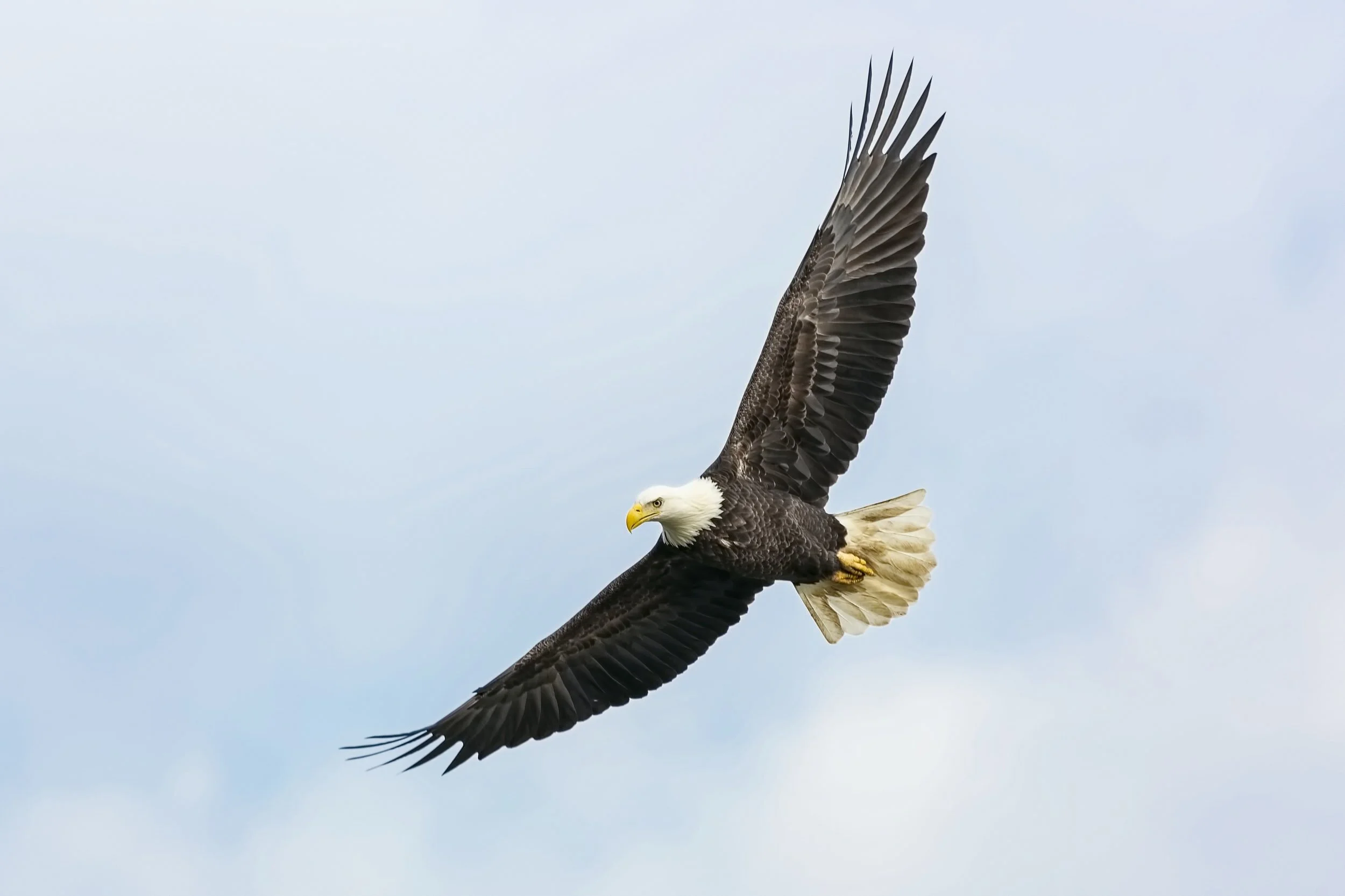
Native American tribes, including Hood Canal’s Skokomish, venerate the Bald Eagle. Many tribes associate the eagle with the creator. Since this bird is the strongest flyer, it is believed to carry prayers to the heavens. Feathers and other parts of the bird (such as the talons) are important to many Native American ceremonies, such as smudging, powwows, and talking circles.
At the turn of the 18th century, the Bald Eagle population was estimated to be between 300,000–500,000. In the early 20th century however, the eagle was targeted for sport and because of their perceived predation upon livestock. Between 1918 and 1930 one ornithologist estimated that approximately 70,000 bald eagles had been shot in the state of Alaska. Additionally, nesting sites were disturbed by logging and other forms of development.
The Bald Eagle Protection Act was introduced in 1940 to protect nests, eggs, feathers, and to stop the slaughter of Bald Eagles. By the 1950s, however, there were reported to be only 412 nesting pairs left in the 48 conterminous United States.
Pushed to near extinction
Further, pressure was placed upon Bald Eagles populations (and many birds of prey species) by the pesticide Dichlorodiphenyltrichloroethane (DDT). Since Bald Eagles are predators at the top of the food-chain, this chemical was concentrated in their prey and even the prey of their prey. This bioaccumulation disrupted the Bald Eagle’s metabolism of calcium, severely effecting fertility rates and inhibiting healthy egg production.
Bald Eagles were declared endangered in 1962.

Shari Sommerfeld Images
Revival of a species
However, this is actually a happy story. In 2007, the Bald Eagle was federally delisted from the endangered species list. With the banning of DDT in the United States in 1972 (1989 in Canada), extensive breeding programs, and the enforcement of the Bald and Golden Eagle Protection Act– the population soared. By 2005, in Washington State alone, it was estimated that there were over 840 breeding pairs. In 2009, the Bald Eagle population of the United States was estimated to be nearly 143,000 birds, this number is expected to stabilize at 228,000 birds in the next 5 to 15 years.
Speaking of resurgent populations, January to February is the mating season for Bald Eagles. Usually mating for life, male and females perform stunning aerobatic courtship displays with airborne talon clasping and free falls.

Along the Hood Canal, nests are in trees near water or open fields. Old cedar snags, giant spruces, or the larger coniferous trees are favorites. Both the male and female gather branches and twigs to weave into these monstrous nurseries.
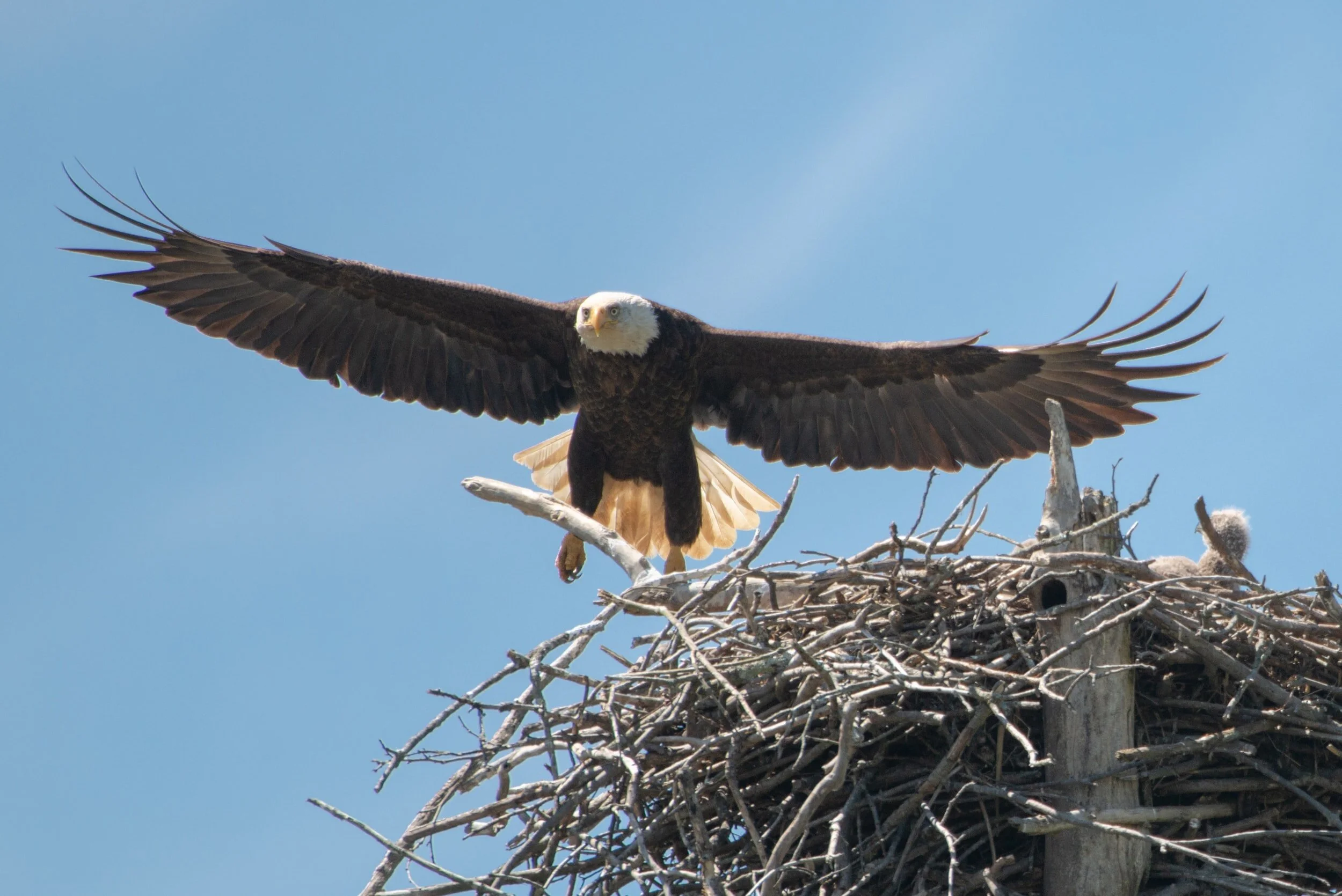
Eagle nests, known as aeries or eyries, are one of the largest nests at nearly 5-6 feet in diameter and 2-4 feet in height.
The female will typically lay 1-3 eggs and both the male and female will take turns incubating the eggs for 34-36 days. After 10-12 weeks (approximately late summer), when the fledglings have left the nest, the mating pair and fledglings may travel to Northern British Columbia and Alaska to take advantage of the early salmon runs.

Shari Sommerfeld Images
To learn more about birding locations on Hood Canal, visit olympicbirdtrail.org for a list of 25 top locations around the peninsula.
A Few Eagle Facts
Bald Eagles are not actually bald, their name comes from an older term for “white- headed.”
At 80.3 inches, the Bald Eagle’s wingspan is slightly greater than a Great Blue Heron. Mature Bald Eagles can weigh between 105.8 to 222.2 oz, with the females usually weighing in on the larger end of the spectrum.
The Bald Eagle is the only eagle native to North America. There are other eagle species in North America, but they are found more globally too, whereas the Bald Eagle is specifically found in North America.
Bald Eagles have a long-life span. The oldest recorded bird in the wild was killed by a car in 2005 in New York, 38 years after being banded in the same state in 1977.
Bald Eagles have a soft, chirpy call, which runs counter to the image of a strong, powerful bird, so its call is often dubbed over in TV and movies with the call of a Red-Tailed Hawk.
Bald Eagles are capable swimmers, if their free-fall salmon dive results in a catch that is just a little too large for lift-off, they can swim ashore with their catch, using their massive wings as “oars.”
Don’t keep an illegal eagle! Possession of an eagle feather without a federally approved permit may be punishable by a $100,000 fine and/ or a year in jail. Permits are only granted to federally recognized Native American Tribal members.
10 Myths & Facts about Great Blue Herons
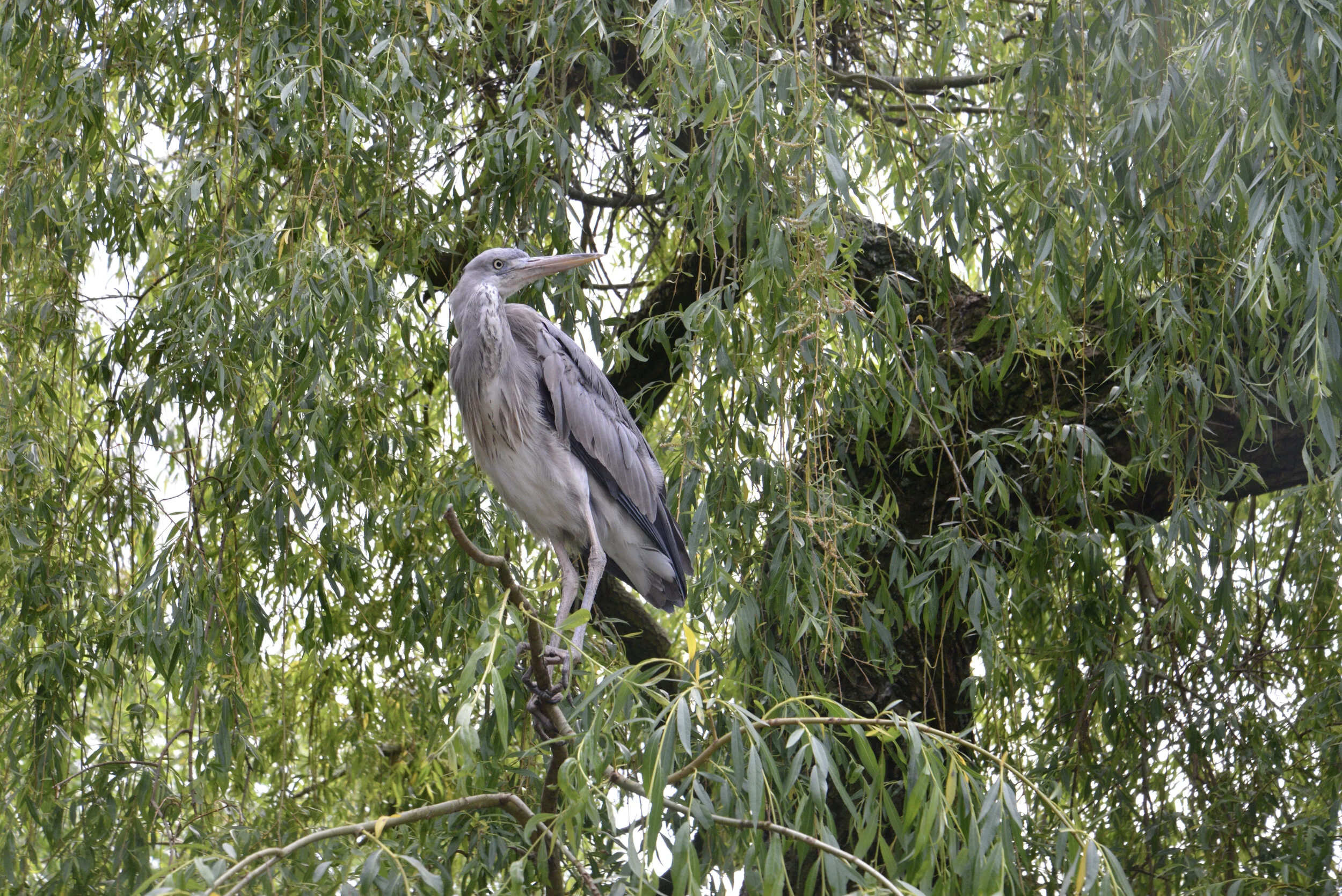
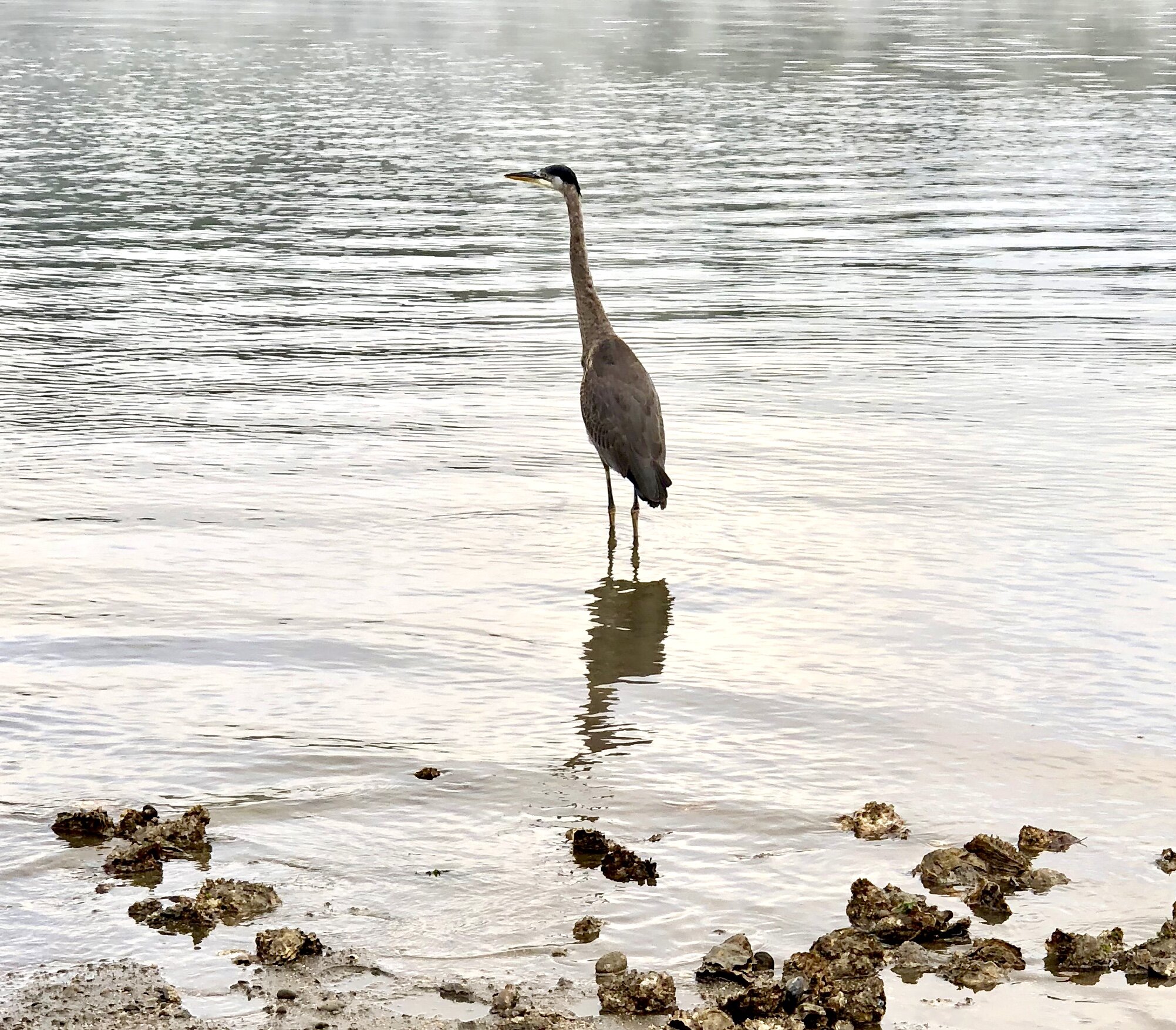
It’s a common sight to see the “lucky” great blue heron patiently hunting on the shores of Hood Canal and South Puget Sound. Largest of the heron species, up to 4’ in height, they actually only weigh between 5-6 pounds. Here are a few things you may not have known about these iconic Northwest birds.
It’s a common sight to see the “lucky” great blue heron patiently hunting on the shores of Hood Canal and South Puget Sound. Largest of the heron species, up to 4’ in height, they actually only weigh between 5-6 pounds. Here are a few things you may not have known about these iconic Northwest birds.
MYTH
Great blue herons only eat fish.
Great blue herons dine mostly on fish but they will also stalk everything from insects to small mammals and even other birds. In Washington, mice and voles making up a major portion of their winter diet when they choose to hunt on land.
2. FACT
Herons spend about 90 percent of waking time stalking prey.
Great blue herons grab prey in their strong beaks or use their dagger-like bills to impale. This action is known simply as a ‘bill stab’. They shake the prey to break spines before gulping them down. Great blue herons can swallow fish that are much wider than their narrow neck and have even been know to catch small birds in flight. Patience and speed are the keys to their hunting success.
3. MYTH
Great Blue Herons are cranes.
A crane is totally different type of bird. You can tell them apart by looking at the beaks and the way they fly. Cranes have shorter beaks and hold their necks straight when in flight, whereas herons curve necks into an S-shape. Herons are able to do this because of specially shaped vertebra. Great blues also fly with their legs ‘hanging” which is unique from most birds.
4. FACT
Herons are often called “Dinosaur Birds.”
Fossil records date them back 1.8 million years ago, but they are thought to have existed about 25 million years ago during the Cenozoic age. Maybe it’s also because of the prehistoric sounds they make as they take off with the giant 6’ wingspan flapping!

5. MYTH
Great Blue Herons can’t swim.
The great blue does many things that other herons choose not to do, including swimming in deep water with apparent grace and comfort. A quick search on the internet will show multiple accredited images of herons happily swimming in deep water. It’s not a common occurrence though, so consider yourself lucky if you catch sight of this phenomena. Swimming is a testament to the great blue heron’s incredible adaptability.
6. FACT
Great blue herons have adapted “bib” feathers to keep them clean.
Specialized feathers on their chest grow continuously and fray into a fine cleaning powder. This powder is used to help groom their entire body and clean off fish slime.

7. MYTH
Great Blue Herons are monogamous.❤️
Not technically. Great blues are known to be ‘serial monogamous’ — they have one partner for a year but choose a different one each mating season. Despite being territorial with other herons, they typically breed in nesting colonies at the tops of trees containing up to 500 breeding pairs. These colonies are called “heronries.” They obviously do not have any social distancing issues. Great blue herons generally return to the same breeding grounds each year although with different partner choices.
8. FACT
Mates work to build the nest, as well as incubate and feed their young –together.
When the mating pair is chosen, the male gathers sticks while the female weaves them into a platform nest lined with moss, grass, and small branches. She lays 2-6 blue eggs, and both parents take turns incubating them for 4 weeks until the young hatch. They also take turns feeding regurgitated prey to the young chicks.
9. Myth
Heron chicks have yellow eyes when they are born.
Heron chicks have gray eyes when born that become bright yellow when they are adults. The parents continue feeding the nestlings for a few weeks after fledging (leaving) the nest. Young herons will fledge at around two months.
10. FACT
Great blue herons’ colors can demonstrate age, sex, and mating season.
Adult males are larger and generally have brighter orange legs than a female. During breeding season, the lore (the lore is the region between the eye and bill) will turn a bright blue, the iris will turn reddish, and the yellow bill will take on an orange hue.

A couple other things you didn’t need to know about great blue herons:
To keep cool they flutter their throat muscles to increase evaporation.
It can take up to two weeks to build a nest.
Life expectancy of a great blue heron is 15-23 years
Despite their size they can fly as fast as 30 MPH.
An adult heron consumes up to one pound of fish per day.
Learn more
The Cornell Lab - all about birds
Audubon - Great Blue Heron guide
Olympic Bird Trail - Top birding locations on Hood Canal, South Puget Sound, Pacific Coast, and Olympic Peninsula







Tips for taking your dog to The park
For dog families, it’s not a hike, camp out or road trip unless your four-legged trail buddy comes with you. While embarking on the adventure is optional, getting back healthy and whole is mandatory! Washington State Parks has some tips to leave you with only good memories when you visit.

For dog families, it’s not a hike, camp out or road trip unless your four-legged trail buddy comes with you. While embarking on the adventure is optional, getting back healthy and whole is mandatory! Washington State Parks has some tips to leave you with only good memories when you visit.
Trail tips
We know your dog wants to run free, but leash rules are not a punishment – they’re there for everyone’s safety. Your pup may be a big softie, but even saying, “It’s okay, they're friendly,” won’t assuage some peoples’ fear. Keep your dog from approaching people unless someone asks to pet him or her. Conversely, if your dog is not dog or people-friendly, please warn folks – especially children, before they get close.
Predator or prey?

In the natural pecking order, a dog can be seen as prey to some wildlife (raptors, big cats, coyotes, black bears) and a predator to others (deer, rabbits, marmot, turkey, horses). Leashing your pet can be the thing that keeps them from dinner – both eating and becoming.
Keep in mind that most prey will fight back, and getting gored by a deer is not how you want your pup to end their vacation. Also, when dogs chase wildlife – or something they see or smell – they can get lost or into deep water. Even if your dog is behaved at home, parks are abnormal environments that might be tempting for an off-leash dog to ignore. Tricky whales, seals and waterfowl have been known to lure dogs out into the water and exhaust them.
Trail hazard?

On mixed-use trails, heel or pick up your pooch if a horse or a mountain bike comes by. A horse can easily spook and injure itself, its rider or your party. Mountain bikes zip downhill at high speeds, and you don’t want your dog to chase and get in an accident.
Be my neighbor?
Camping with dogs is just fun. Pups provide warm cuddles and a feeling of safety for solo campers. And dogs + kids + snuggles in the tent go together like chocolate, graham crackers and marshmallows around the campfire.
But dogs hear and smell things we don’t, and they often feel the need to alert us. Your neighbors, however, may not appreciate Fido howling a warning at 2 a.m.
Consider booking a campsite on the end and/or outside part of the campground loop. One Parks staffer says she parks her car between her site and her neighbors’ to minimize stimuli.
Most parks welcome dogs, but we do have a few culturally or environmentally sensitive areas where they’re not allowed. Look up your destination on parks.wa.gov to make sure bud can accompany you on all parts of your state park getaway.
6 Tips for Hike Savvy Canines
Like house-bound humans, dogs need a little prep time to get ready for the trail. Here are six tips to help you and Fido have a safe and fun adventure.
#1 Take it Easy : Start with easy trails and slowly build up stamina & strength.
#2 Care for Tender Paws: Make sure your dog's pads are toughened or purchase hiking booties and let him get used to them before heading into the wild.
#3 Yield to oncoming traffic: No matter how sweet Fido appears, its good practice to verbalize how friendly he is. Step off the trail when hikers pass and heel your dog.
#4 Leash Control: If the trail requires leashes or if if your dog might run into other hikers, keep him on a short leash (-6') since a long leash is more likely to get tangled on brush. Your dog should not be allowed to roam freely.
#5 Leave no trace: Bring bags to collect and carry out your dog’s poop. If you’ll be backpacking overnight, bury it at least 6” deep and at least 200 ' from walkways, camps, and water sources.
#6 Command Ready: Hazards in the woods differ than the cul de sac. Don’t let your dog stray. Some plants are poisonous, and some creatures bite and may host diseases. Irressistable smells will lure pooch away in a flash. Make sure your obedience training is on track.
Visit backpacker.com for more ideas on a safe and rewarding journey!
A Hood Canal Road Trip
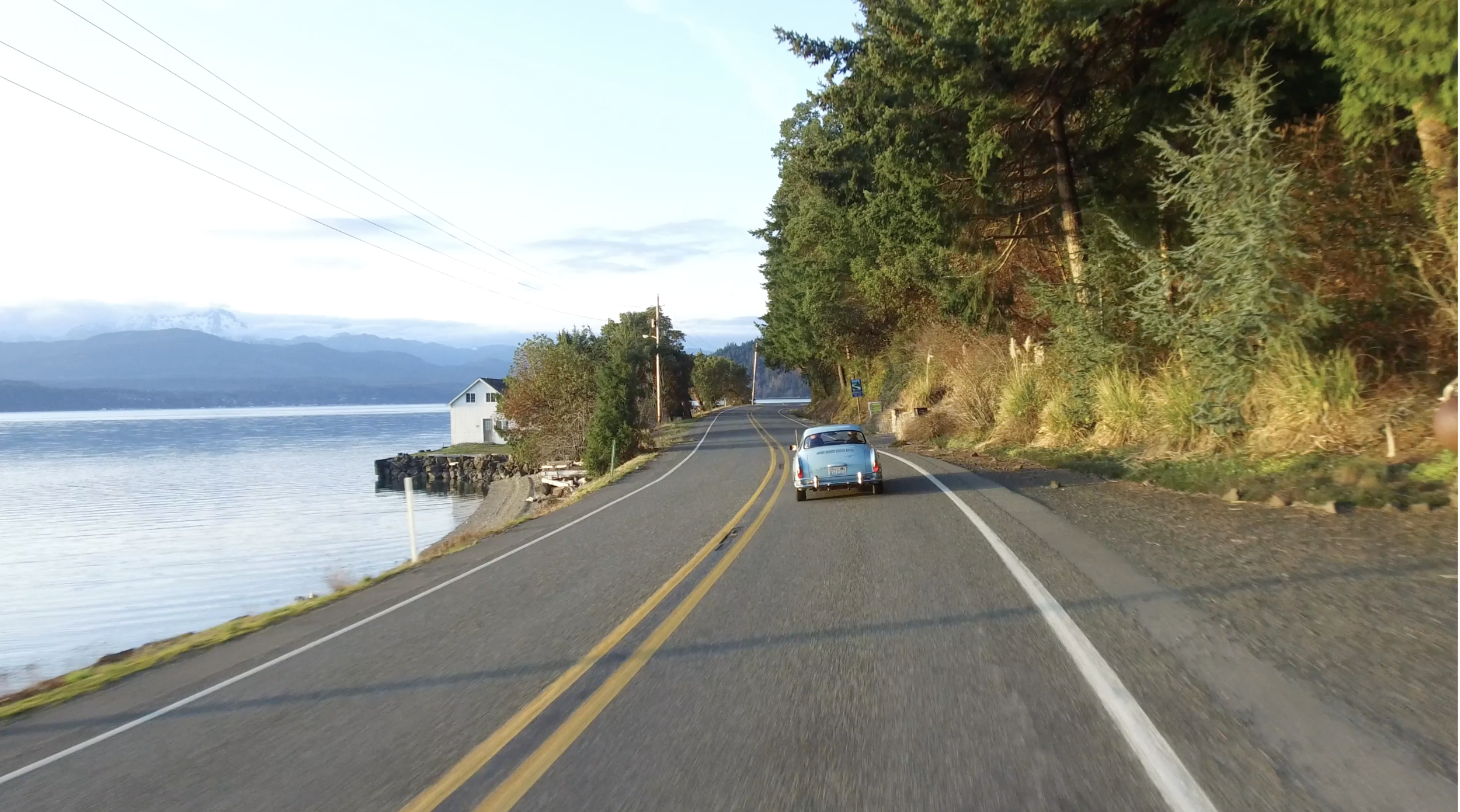
Ahh... road trips –there’s nothing that holds more appeal than the classic road trip – discovering new places, trying new things. Getting away from it all is as easy as heading to the South Sound via the Tacoma Narrows Bridge or by catching the Bremerton ferry for the 22 minute drive to Belfair, WA at the head of Hood Canal.
Ahh... road trips –there’s nothing that holds more appeal than the classic road trip – discovering new places, trying new things – Here's a sample itinerary to get you dreaming about discovering your adventures on Hood Canal.
Getting away from it all is as easy as heading to the South Sound via the Tacoma Narrows Bridge or by catching the Bremerton ferry for the drive to Belfair, at the head of Hood Canal.
Belfair, WA ( 22 minutes, 14 miles | Via SR 3 S)
Nestled between the North Bay of the Puget Sound and the southern hook of Hood Canal, Belfair is a great place for road trip supplies or to have lunch before heading off to explore the 130+ acre birder's dream wetlands, Theler Wetlands Nature Preserve. visit local craft brewery, Bent Bine Brew Co, to try their new brews. Hankering for wine? Check out the award winning Mosquito Fleet Winery, also calling Belfair home.

Twanoh State Park includes 3,167' of saltwater shoreline.
Twanoh State Park (14 minutes; 9.2 miles | via SR 106 W)
Twanoh State Park's 182 acres include 3,167 feet (965 m) of saltwater shoreline and 2.5 miles of inland hiking trails. Gather shellfish off the public beaches (when open) or simply take a walk on one of the many trails.

Alderbrook Resort & Spa (7 minutes, 5.2 miles | Via SR 106 W)
Since 1913, generations of visitors have enjoyed the rustic, albeit very luxurious, charm of this canal-side retreat on 88 acres, which include an 18-hole golf course. The 77 guest rooms are ideal for a rejuvenating escape, while the 16 cozy cottages are perfect for family fun. Complete with a waterfront restaurant, dock, and saltwater pool and spa, the Resort also offers access to boating from kayak rentals to multi-person cruises. Alderbrook Resort & Spa (Union, 10 E Alderbrook Dr, (360) 898-2200).

Union, WA (6 minutes, 2.4 miles | Via SR 106 W)
The spectacular views from Union are not to be taken lightly. Here is definitely the best vantage point to view the Olympic range. On the journey to Union's center, take a moment to admire the historic Dalby Water Wheel and stop in at Cameo Boutique for some great shopping of local items as well as the newly minted Hood Canale with a wood fire pizza and a spectaculr selection of wines. In Union check out the Union Country Store (5130 SR 106) for fresh bakery goods and all you need to continue on your adventure. Across the road, on the waterside, 2 Margaritas Restaurant serves Mexican food; while the Union City Market stocks everything from gifts and collectables to homemade candy and fresh oysters!

Hunter Farms (5 minutes, 3.4 miles | Via SR 106 W)
The drive along the Skokomish delta is simply perfect. As the road weaves it's path around the shoreline, you are treated to glimpses of the Olympics filtered through patches of arbutus clinging to the beach edge. Before the road forks west, you are greeted by an immense red barn. This is Hunter Farms. Stop and stretch your legs, check out the many animals and fresh produce as well as a selection of locally made products. Visit the onsite information kiosk –but most of all, get a generous cone filled with locally sourced (as in the Skokomish Valley less than 5 miles away!), Olympic Mountain Ice Cream. Amazing.

High Steel Bridge (26 minutes, 13 miles | Via W Skokomish Valley Rd
If you are up for a short diversion from the Hood Canal Loop, consider a trip to the historic High Steel Bridge that spans the gorge and sits a staggering 427’ above the mighty South Fork of the Skokomish River. Built in 1929, the vertigo-inducing Bridge (NF-2340) has an uncontested view of Vincent Creek Falls, and is easily accessed from Hwy 101. Use caution as the guardrails are decidedly short and the fall is a long way.
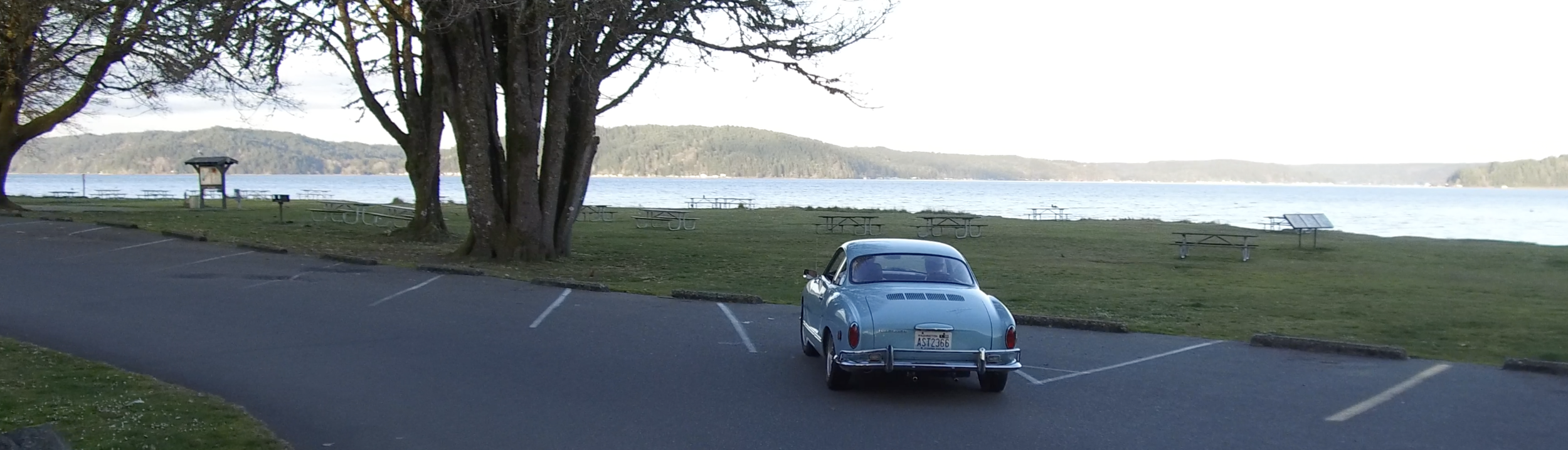
Potlatch, WA ( 5 minutes, 3.7 miles | Via WA-106 W and US-101 N)
Potlatch State Park is a 57-acre camping park with 9,570 feet of saltwater shoreline on Hood Canal. The park's grounds are home to a variety of activities, from interpretive programs for kids to boating and shellfish harvesting. Featuring clear, often calm waters, Potlach is a favorite with divers and kayakers, too.

Hoodsport, WA (5 minutes, 3.3 miles | Via US-101 N)
Hoodsport is a seaside town perched on the western shores of the Hood Canal beneath the shadow of the Olympic Range. Here you will find plenty of shops and dining as well as two wineries: Hoodsport Winery and Stottle Winery; as well as a distillery, The Hardware Distillery. Using water from the Olympic National Forest, The Hardware Distillery offers a variety of delectable hand crafted spirits and gorgeous view to enjoy while sipping away in their ambient tasting room. Hoodsport also serves as the gateway tp the Olympic National Park Staircase Entrance. At the foot of the hill, heading up to Lake Cushman, stop by the Hoodsport Information Center (N 150 Lake Cushman Rd) for great tips on road/trail conditions; permits and maps and friendly guidance.

Lilliwaup, WA ( 7 minutes, 4.5 miles | Via US-101 N)
Situated on the west shore of Hood Canal, Lilliwaup is a small town with a BIG history and a love of shellfish. Peppered with serene beaches and surrounded by endless hiking trails, Lilliwaup is all about relaxation and rejuvenation. Located in the area is Mike's Beach Resort. One of the oldest and most picturesque resorts in Hood Canal with a unique blend of the rustic look of the Northwest and the relaxed, cozy, and charming chalet style. A dock and mooring buoys as well as rowboats, paddleboat, and a ocean kayak are available for rent. Pet friendly. This is also the home to the Olympic Oyster Co. so you can be sure to enjoy some of the finest oysters on your stay! The Lilliwaup Store is also a great place to get your fill on Olympic Mountain Ice Cream.

Hama Hama Store and Oyster Saloon ( 8 minutes, 7 miles | Via US-101 N)
Family owned and operated, the Hama Hama Company has been harvesting oysters and clams on Hood Canal for four generations. Their store and outdoor restaurant, the Oyster Saloon, are located a shell’s-throw from the tide flats. A visit to the farm is the best way to experience Hood Canal oysters in their native habitat. Come during the week to see the shucking crew in action, and ask for one of their self guided tour maps to better explore the farm.

October is for Oysters in Mason County
With OysterFest the first weekend of October, we know its a great time to harvest oysters! Many of Washington’s public beaches are open year-round, and all you need is to check the tides and open beaches — grab your bucket, gloves, shucking knife, shellfish license, and head out to the local beach! As Jeff heads over to Verle's LLC to pick up his license and get tips on the best beaches to visit, join local harvesters Michael and Charlotte as they head to Hood Canal’s Eagle Creek beach to fill their frying pan and demonstrate shucking techniques and a quick and easy recipe for a beachside cookout! Can’t get any fresher!
With OysterFest the first weekend of October, we know it’s a great time to harvest oysters! Many of Washington’s public beaches are open year-round, and all you need is to check the tides and open beaches — grab your bucket, gloves, shucking knife, shellfish license, and head out to the local beach! As Jeff heads over to Verle's LLC to pick up his license and get tips on the best beaches to visit, join local harvesters Michael and Charlotte as they head to Hood Canal’s Eagle Creek beach to fill their frying pan and demonstrate shucking techniques and a quick and easy recipe for a beachside cookout! Can’t get any fresher!
The Top 5 | Camping on and around Hood Canal
Whether you prefer the simplicity of tent camping or the comfort of RVs there are plenty of campgrounds on and around the Hood Canal to choose from. From your campsite you can take day trips to explore surrounding forests, rivers, and beaches or just relax under the trees and listen to the birds.

Whether you prefer the simplicity of tent camping or the comfort of RVs there are plenty of campgrounds on and around the Hood Canal to choose from. From your campsite you can take day trips to explore surrounding forests, rivers, and beaches or just relax under the trees and listen to the birds. For some inspiration to plan your Summer trip to the Hood Canal the staff at Hood Canal Adventures have made up their list of top 5 favorite drive-in campgrounds.
The Top 5
#1 Collins Campground
Collins Campground is located within the U.S. National Forest in the Brinnon area. Nestled under giant Bigleaf Maple trees and directly on the Duckabush River, it contains only 16 sites with no-hook ups: and this is why we love it! From here you are within only a few miles from some of the areas most popular hiking trails including Murhut Falls, Ranger Hole and Duckabush Trail. Shellfish can be gathered nearby at the Duckabush or Dosewallips tidelands when the season is open for clam and oyster recreational harvests. The campground is first come / first served and is open mid-May through September. Visit fs.usda.gov or call the USFS Hood Canal Ranger District (360) 765-2200 for details.
#2 Seal Rock Campground

Seal Rock is another U.S. Forest Service campground in the Brinnon area, however this one is located directly on the Hood Canal with beach access. Forty-one tent and RV campsites are shaded beneath the evergreen trees, some with water views. There are no RV hook-ups but the campground does have fresh water, flush toilets and electricity in the restrooms. Oysters litter the beach at low tide for you to harvest and cook up over your campfire. The campground has an area to walk-in your small boat or kayak for exploring the Hood Canal or harvesting Dungeness and Red Rock crab. Hood Canal Adventures of Brinnon will deliver your kayaks, paddle boards, and crab pots if you choose to rent. Seal Rock Campground is first come / first served and open April through late September. Visit fs.usda.gov for details.
#3 Twanoh State Park
Twanoh State Park really has it all! Located on the southern end of the Hood Canal just outside Belfair, you’ll enjoy 22 full hook-up campsites and 25 tent sites, a pump-out station, boat launches and a dock, showers, covered picnic areas, group sites, a staffed park office and store, and even kayak rentals. Over 3,000 ft. of marine shoreline offers shell fishing opportunities and warm summer waters are perfect for swimming and water play. A few campsites are open all year but the beachfront area is open April through mid-October only. Twanoh State Park is first come / first served. Visit parks.state.wa.us or call 360-275-2222 for details.
#4 Potlatch State Park
Potlatch State Park is a 57-acre camping park with 9,570 feet of saltwater shoreline on Hood Canal. The park's beautiful grounds are home to a variety of activities, from interpretive programs for kids to boating and shellfish harvesting. The park has 19 tent spaces, 18 utility spaces, one dump station, one restroom and two showers. Sites have no hook-ups. Maximum site length is 60 feet (may have limited availability). Two of the tent sites are for primitive use (hikers and bicyclers) only. The Park is divided by Hwy 101 so choose sites that are further away from the road if possible.
#5 Lake Cushman
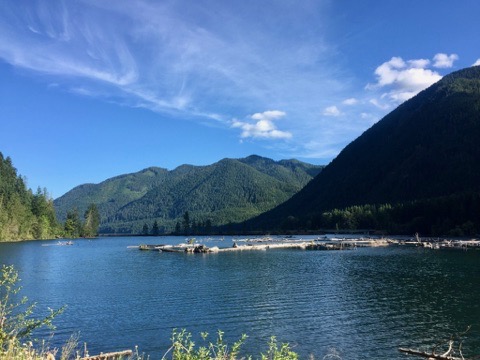
OK, this isn’t actually a campground but the Lake Cushman area is stunning and well worth exploring. Lake Cushman is located near Hoodsport between the Hood Canal and the Olympic Mountains. Its clear blue waters are framed by beautiful forests and snowy mountain peaks. Popular activities include fishing, hiking, climbing, boating, kayaking, and swimming. There are several campgrounds at the lake but we couldn’t agree as to which is our favorite. Therefore, here's a short list to start you off: Skokomish Park Lake Cushman with 80 RV, tent sites, boat launch, and lake access; Staircase Campground with 49 tent and RV sites on the Skokomish River at the Olympic National Park’s most southern access point; and Big Creek Campground, a 64 site U.S.F.S. Campground which also serves as the trail head to several hiking trails.
The Hood Canal area offers opportunities for camping whether they be county, state, federal, or private campgrounds. There are many back-country and boat-in only camping areas to explore. Come find your favorite! To discover more campgrounds in the area click here.
Christina Maloney is owner of Hood Canal Adventures in Brinnon, a Fisheries and Marine Biologist, and a local outdoor enthusiast.

Hundreds of varieties yet only five species | Oysters explained
There are over 150 varieties of oysters harvested and sold in North America, yet they comprise a total of only 5 species of oysters.
How does your Oyster Grow?
Have you ever wondered how the same species of oyster can have such varied flavors or textures? How does an oyster grown on Hood Canal taste brinier than one from South Puget Sound? The word to remember for your next oyster social occasion is “merrior.”
Like different wines with a “terrior,” oysters have a merrior, illustrating the fact that growing area and method make all the difference when it comes to flavor profile for your next Pacific oyster.
Not all beaches are created equal; some are muddy, some sandy, and some rocky. Each type of growing ground has opportunities and limitations for success. Muddy ground can inhibit the oysters’ ability to circulate water and food into their bodies. This had led to the adoption of culture techniques that suspend the oysters above the mud in long lines, stakes, nets or racks, and bags, while firm, sandy, or rocky bays allow for oysters to be grown right on the beach.
In addition to substrate type, location of the oysters on the beach will determine how long the oyster will take to achieve a marketable size. Oysters grown in the intertidal area are exposed to daily tidal inundation will have well developed adductor muscles and thicker shells thus being heartier for shipment. Oysters suspended in the water column for growing will have the benefit of a constant food source and thus grow quickly but will have delicate shells and be susceptible to the elements. Often times, suspended oysters are placed in the high energy intertidal environment for a few weeks prior to market to harden the shells for shipment and condition the oysters to hold their shells shut.
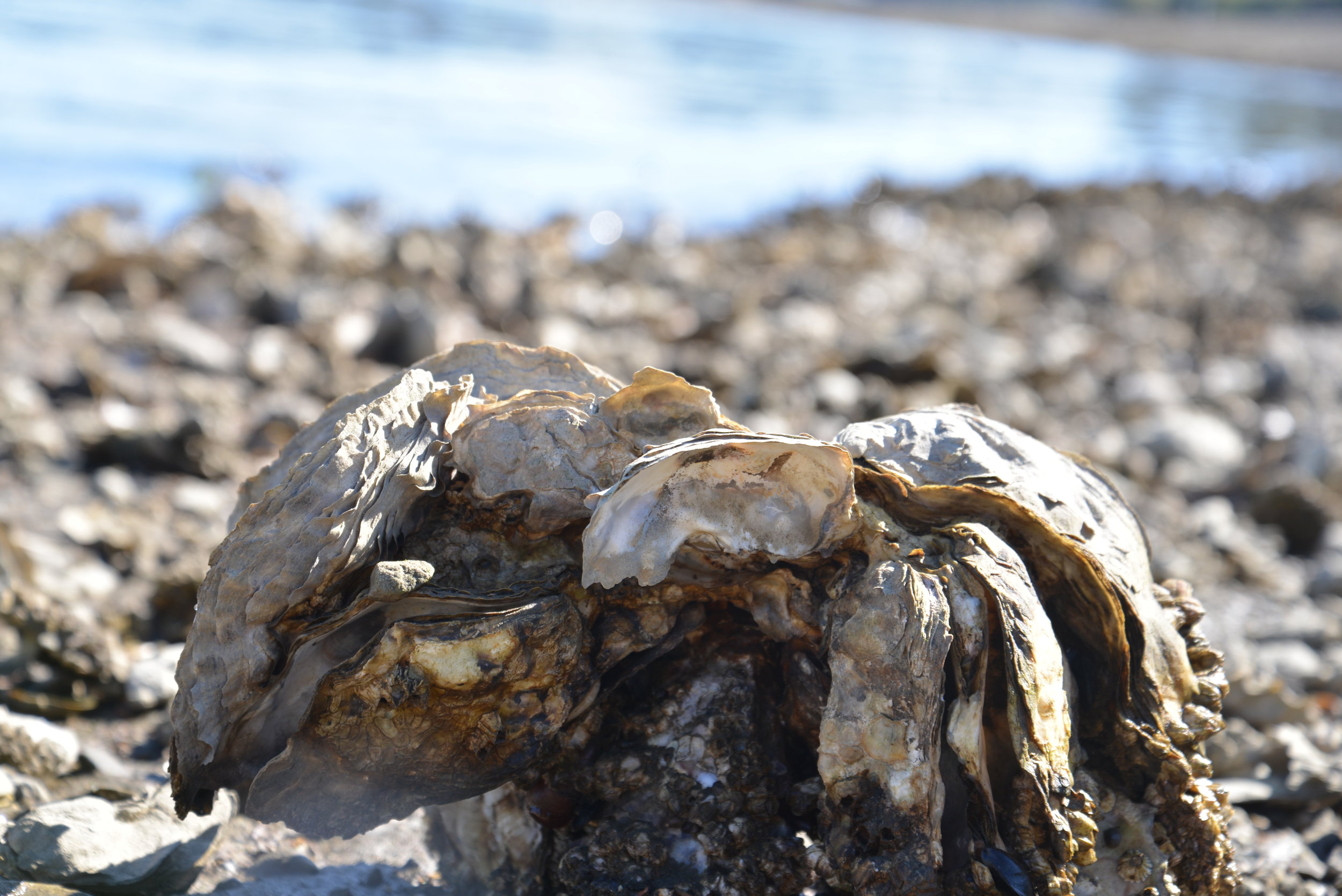
The method of growth can greatly change the shape of the oyster. A Pacific allowed to grow naturally on the beach will have a sturdy irregular shell with a great deal of frills. The regular exposure at low tide strengthens the shell protects the meat from heat and predators like sea stars and crabs. In Europe, where there is very limited tidal change, some farmers manually pull the oysters from the water for periods of time to mimic the tidal action.
The tumble bag creates an altered but very marketable shape for cultured oysters. Oysters are placed in the bag as small seed and the tide does the rest. The tidal flip and roll chip off the fragile lips and force the oyster to curve. The result is a deep cup in its lower shell.
“Eat shellfish to provide a healthy diet. Shellfish are low in saturated fats, containing the essential omega-3 fatty acids; are excellent protein sources; and are good sources of iron, zinc, copper and vitamin B-12.”
wsg.washington.edu
Each bay has its own selection of phytoplankton yielding oysters with different meat colors and flavors. Pacific oysters grown in Willapa Bay have a different merrior from those grown in Samish Bay. Hood Canal oysters are claimed to be more briny than the sweeter cucumber flavored bivalves grown in Hammersley Inlet or South Puget Sound waterways. Just like the well attuned vintners of the Rhone Valley, oyster connoisseurs are able to detect the subtleties of each bay by tasting the meat and observing the shell.

Know your oysters
There are over 150 varieties of oysters harvested and sold in North America, yet they comprise a total of only 5 species of oysters.
1. Olympia
OSTREA LURIDA /OSTREA CONCHAPHILA
The native oyster to Washington State, the Olympia oyster is a half dollar size with a metallic finish. The Olympia oyster fishery ran from the mid-1800s until about 1915 supplying California’s demand for oysters. The oysters were harvested from shallow bays of southern Puget Sound and Willapa Bay until pollution and over harvesting caused a collapse of the wild fishery.
2. Pacific
CRASSOSTREA GIGAS
Native to Japan, farmers began experimenting with the Pacific in 1904. Washington began importing commercial seed in the 1930’s and now it is now the most important commercial species on the West Coast. Beginning in the 1950’s researchers began to study Pacific reproduction to reduce the dependence on seed imports. Since the 1970’s local shellfish growers have relied on hatcheries for the production to meet the demand for Northwest oysters.
3. Virginica
CRASSOSTREA VIRGINICA
The decline of the Olympia oyster opened the door for the import of the Virginica from the east coast in the early 1900’s. The eastern oysters did not adapt well to local waters and experienced large die off when transplanted. There are still beds of Virginicas raised by WA shellfish farmers.
4. European Flats
OSTREA EDULIS
European Flats have smooth, round, saucer-like, flat shells with a shallow cup and seaweed-green color. They have a bold flavor with a meaty, almost crunchy texture, and intense mineral bite with a long-lasting seaweed flavor and gamey finish. There are not many farmers cultivating Flats.
5. Kumamoto
CRASSOSTREA SIKAMEA
The Kumamoto has a small deep cup and a sweet meat. Brought from Japan’s Kumamoto Prefecture, they are unable to reproduce in our cold waters so growers rely on hatchery stock. The prized cup of the Kumamoto and its limited supply has growers working with Pacifics to meet half shell demands. Growers use tumble bags to force the Pacific into a deeper cup. Oysters with names such as Kusshi, Shigoku, Sea Cow, Blue Pools, Chelsea Gems, and Baywater Sweets, are the result.

Why is it required to shuck oysters on the beach at public tidelands?
Oysters taken on public tidelands must be shucked on the beach and the shells left behind for the following conservation-based reasons according to the Washington Dept of Fish & Wildlife website, wdfw.wa.gov:
Oyster shells provide the best growing substrate for juvenile oysters. Removing the shells from a beach reduces the overall amount of setting surface. In addition, Pacific oyster shell provides an excellent setting surface for the native Olympia oyster. This is especially true in places like southern Puget Sound where the natural setting surface - Olympia oyster shells - was eliminated years ago by overharvest.
Another concern is that removing large Pacific oyster shells removes tiny oysters which are attached to the larger shells. Thus, removing a legal limit of 18 oysters may actually remove three to five times that number of oysters - young oysters which would otherwise remain on the beach and grow to edible size.
Removing oyster shells from beaches containing Japanese oyster drills (an oyster predator) may result in the inadvertent spread of these predators. Sport harvesters are unlikely to recognize these tiny predatory snails - or their egg cases - which attach to oyster shells and can survive long periods away from water. Once shucked, these shells often end up being returned to a nearby beach by well-meaning harvesters, potentially increasing the spread of the Japanese oyster drill in Washington by depositing the “hitchhikers” on a new beach.
Many public beaches already have these tiny predators, but the goal is to minimize the spread to other uninfected beaches. The surest way to prevent oyster drills or their eggs leaving an infected beach is to require oyster shells to remain on the beach.
So head to the beach and get shucking! You will need a shellfish license, an oyster knife and gloves. Adults may shuck a child's daily limit so long as the child participates in some way in the gathering. For illustrated details on two popular shucking methods, visit wdfw.wa.gov/fishing/shellfish.

Big Returns This Year On The Union River
Each year, volunteers at the Union River Chum Trap count thousands of migrating chum salmon to help monitor fish returns and assess the impact of estuary restoration. The trap uses a weir system that directs the fish into a pen, where volunteers identify and count them based on their unique markings. The majority of the fish are chum salmon, with distinct green backs and tiger stripes, especially on males. Volunteers contribute nearly 10,000 hours annually, and the Salmon Enhancement Group credits improved estuary conditions for increased fish returns. The project fosters community involvement, with families and kids encouraged to participate.
Each year, volunteers at the Union River Chum Trap count thousands of migrating chum salmon to help monitor fish returns and assess the impact of estuary restoration. The trap uses a weir system that directs the fish into a pen, where volunteers identify and count them based on their unique markings. The majority of the fish are chum salmon, with distinct green backs and tiger stripes, especially on males. Volunteers contribute nearly 10,000 hours annually, and the Salmon Enhancement Group credits improved estuary conditions for increased fish returns. The project fosters community involvement, with families and kids encouraged to participate.

Who Rescued Who?!? Answers from Shelton's Adopt-A-Pet
Adopt-A-Pet in Shelton has been rescuing animals for over 45 years, operating as a volunteer-based organization dedicated to finding homes for dogs. Currently open for adoptions by appointment, they are looking to reconnect with the community through tours and events to showcase their improved facilities. Adopt-A-Pet emphasizes the importance of finding the right match between pets and owners, often involving home visits and dog introductions. They continue to advocate for spaying and neutering to control the pet population and prevent health issues. An open house event is planned for the 28th to invite the public to learn more.
Adopt-A-Pet in Shelton has been rescuing animals for over 45 years, operating as a volunteer-based organization dedicated to finding homes for dogs. Currently open for adoptions by appointment, they are looking to reconnect with the community through tours and events to showcase their improved facilities. Adopt-A-Pet emphasizes the importance of finding the right match between pets and owners, often involving home visits and dog introductions. They continue to advocate for spaying and neutering to control the pet population and prevent health issues. An open house event is planned for the 28th to invite the public to learn more.

Reflecting On Allyn's Waterfront Park
Learn the history of the Allyn Waterfront Park, through the eyes of Dan Griffey, who grew up right next to where the park is. Dan shares memories of his father attending port meetings to secure the land for the park, a process that took time to complete. When the park started, it was a great place where Dan played ball with his friends, and eventually the community raised money for a gazebo. Despite his initial disappointment about losing the baseball field, Dan expresses pride in the park's development and its significance to his family and the community. The park now hosts various events, including Allyn Days and Memorial Day services, a testament to the community's hard work and pride.
Learn the history of the Allyn Waterfront Park, through the eyes of Dan Griffey, who grew up right next to where the park is. Dan shares memories of his father attending port meetings to secure the land for the park, a process that took time to complete. When the park started, it was a great place where Dan played ball with his friends, and eventually the community raised money for a gazebo. Despite his initial disappointment about losing the baseball field, Dan expresses pride in the park's development and its significance to his family and the community. The park now hosts various events, including Allyn Days and Memorial Day services, a testament to the community's hard work and pride.

Mason County PUD 3 Continues To Expand Drive-Up WiFi Services
During COVID, Mason PUD3 installed free public Wi-Fi hotspots to help keep kids connected, a service that continues today across Mason County. These hotspots, designed for easy access in areas with challenging terrain like Mason County, allowed residents to download school materials and other data. The Wi-Fi locations, placed in community centers and high-density areas, have seen significant usage, with daily bandwidth reaching 185 gigabytes. The service is community-focused, ensuring that even non-customers can benefit from the connectivity, emphasizing the community-owned nature of public power.
During COVID, Mason PUD3 installed free public Wi-Fi hotspots to help keep kids connected, a service that continues today across Mason County. These hotspots, designed for easy access in areas with challenging terrain like Mason County, allowed residents to download school materials and other data. The Wi-Fi locations, placed in community centers and high-density areas, have seen significant usage, with daily bandwidth reaching 185 gigabytes. The service is community-focused, ensuring that even non-customers can benefit from the connectivity, emphasizing the community-owned nature of public power.

Mixed-Use Art Space, Graffiti, Opening Soon In Shelton.
The art scene in Shelton is expanding, with new galleries, murals, and the upcoming opening of Graffiti, a mixed-use art space run by Nicole Frazier. Graffiti aims to be fully accessible, offering art classes and opportunities for both children and adults. The space will host a variety of art forms, from glasswork to woodworking, and will feature resident artists teaching and selling their work. Some of the plans include offering Native American culture classes and having a Lending Library to make art accessible for all who wish to teach or create.
The art scene in Shelton is expanding, with new galleries, murals, and the upcoming opening of Graffiti, a mixed-use art space run by Nicole Frazier. Graffiti aims to be fully accessible, offering art classes and opportunities for both children and adults. The space will host a variety of art forms, from glasswork to woodworking, and will feature resident artists teaching and selling their work. Some of the plans include offering Native American culture classes and having a Lending Library to make art accessible for all who wish to teach or create.
Tradition and Flavor Combine At Hood Canale' in Union
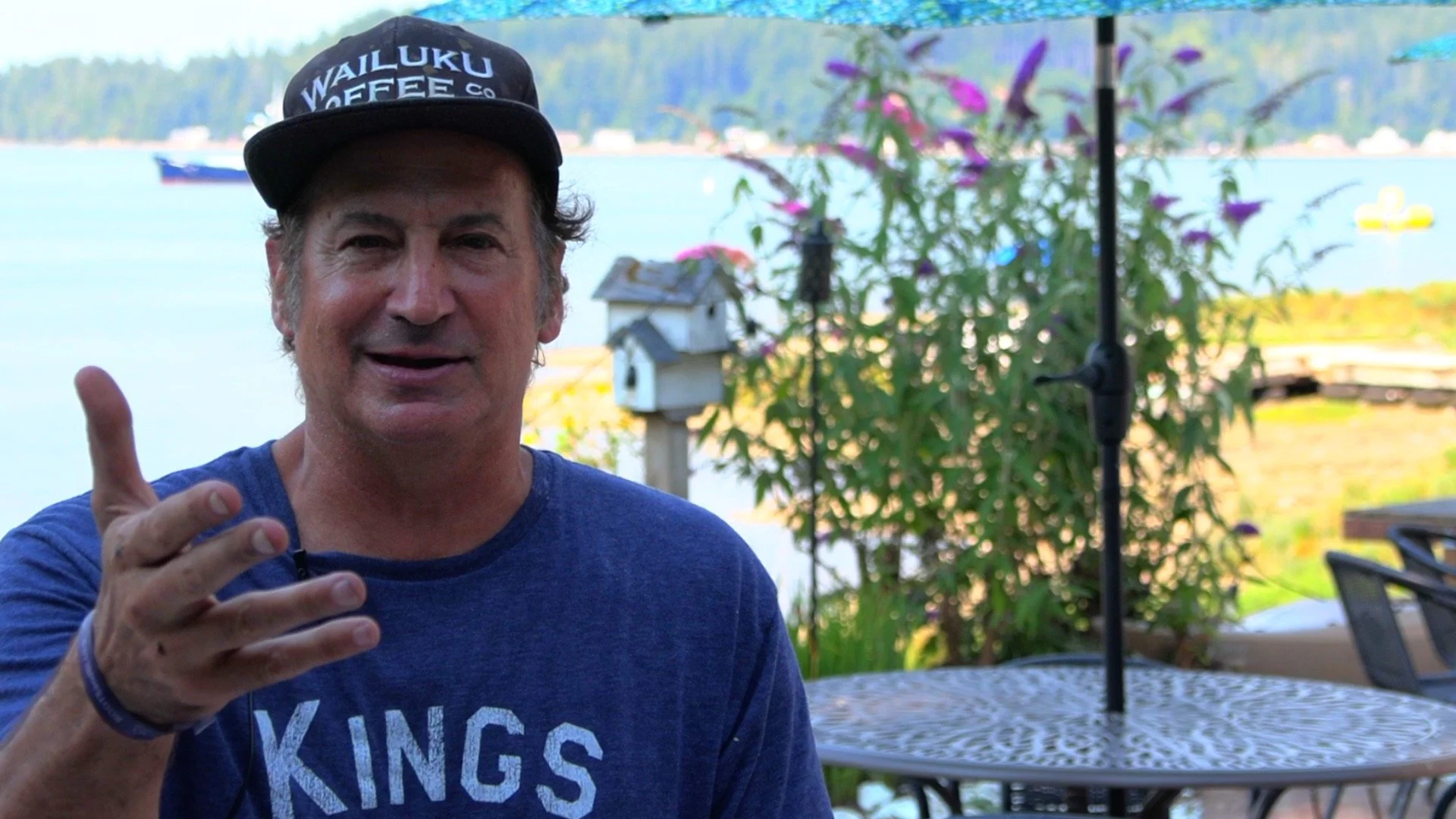
Hood Canale' in Union, Washington, offers a dining experience with water views, wood-fired pizza, and great wine. Owners John and Jolica DeLeva created the space with Italian tradition and Hawaiian influence, reflecting their family roots. The restaurant, known for its homemade dough and carefully selected toppings, has become a local favorite, attracting visitors worldwide. With its welcoming atmosphere and scenic location, Hood Canale' is the perfect spot to relax and enjoy a slice of pizza with a glass of wine.
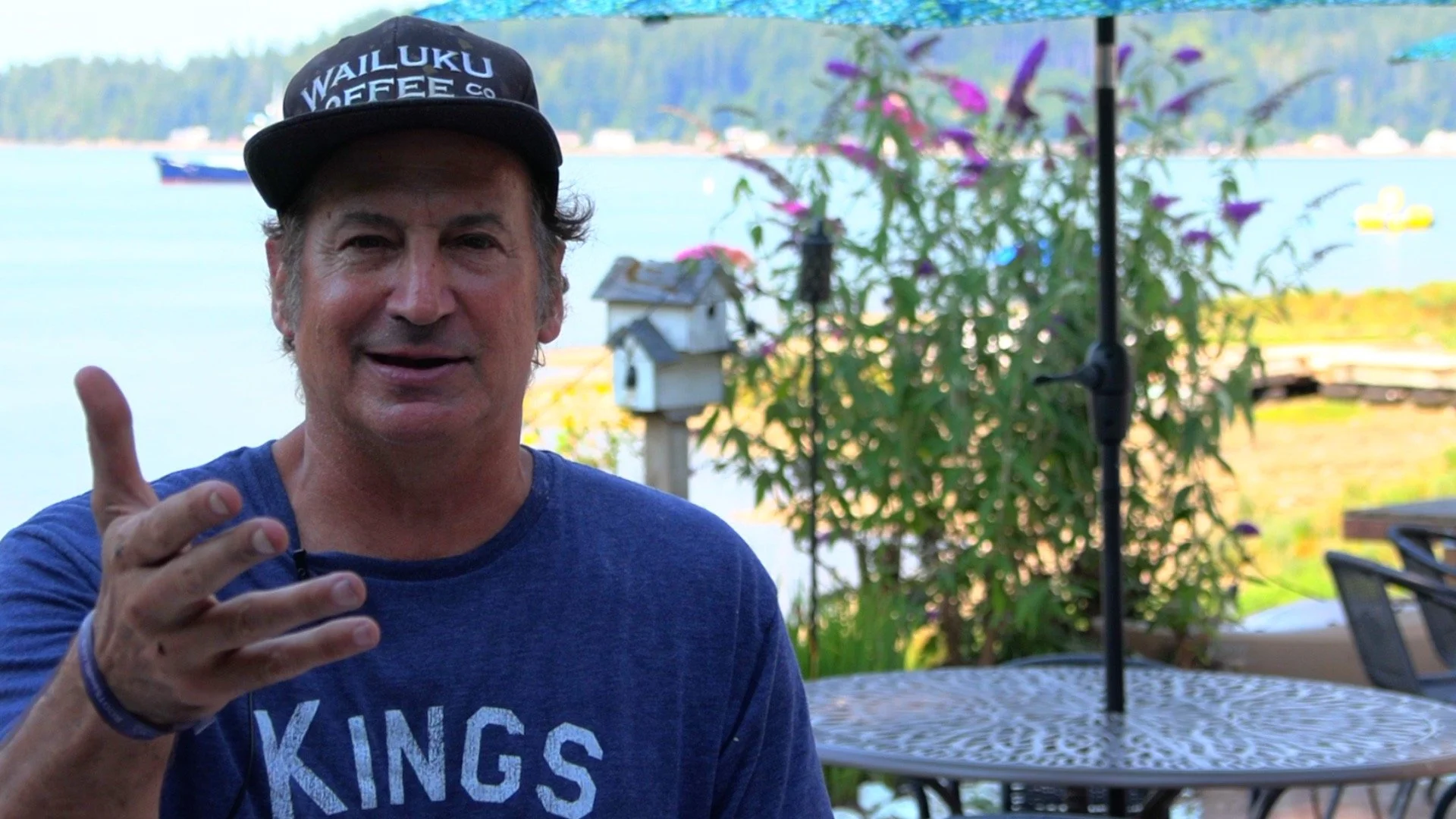
Hood Canale' in Union, Washington, offers a dining experience with water views, wood-fired pizza, and great wine. Owners John and Jolica DeLeva created the space with Italian tradition and Hawaiian influence, reflecting their family roots. The restaurant, known for its homemade dough and carefully selected toppings, has become a local favorite, attracting visitors worldwide. With its welcoming atmosphere and scenic location, Hood Canale' is the perfect spot to relax and enjoy a slice of pizza with a glass of wine.
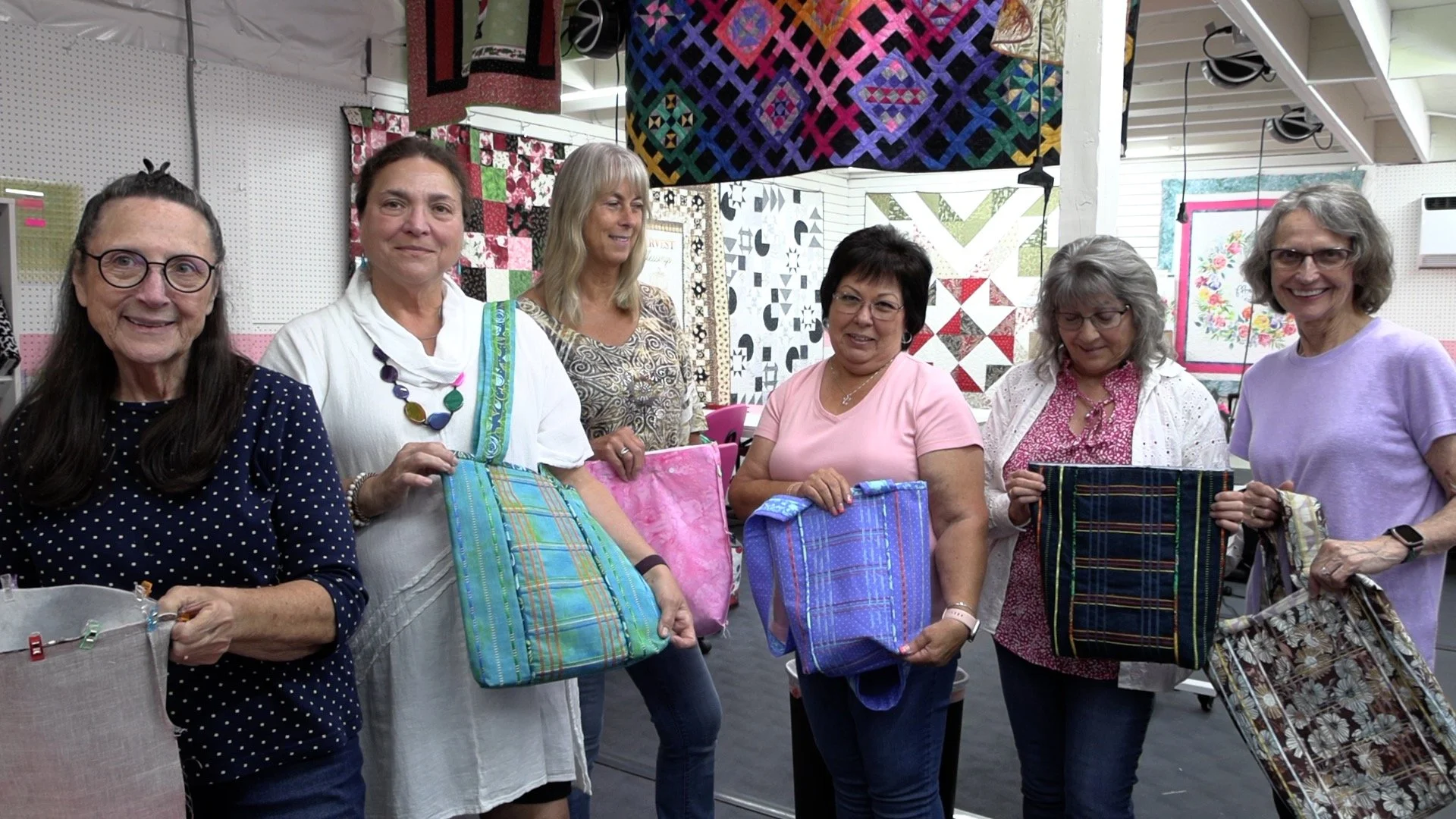
Annie's Quilt Shoppe, a tourist activity? It sure is!
Annie's Quilt Shop on Olympic Highway North In Shelton, WA is a destination for quilting enthusiasts, attracting thousands of visitors annually. Quilting is a growing industry, projected to reach $5 billion in the next few years. Customers travel to Annie's from across and outside the state for the new patterns and fabrics while locals enjoy personalized lessons and group classes to get the most out of their hobby.
Annie's Quilt Shop on Olympic Highway North In Shelton, WA is a destination for quilting enthusiasts, attracting thousands of visitors annually. Quilting is a growing industry, projected to reach $5 billion in the next few years. Customers travel to Annie's from across and outside the state for the new patterns and fabrics while locals enjoy personalized lessons and group classes to get the most out of their hobby.
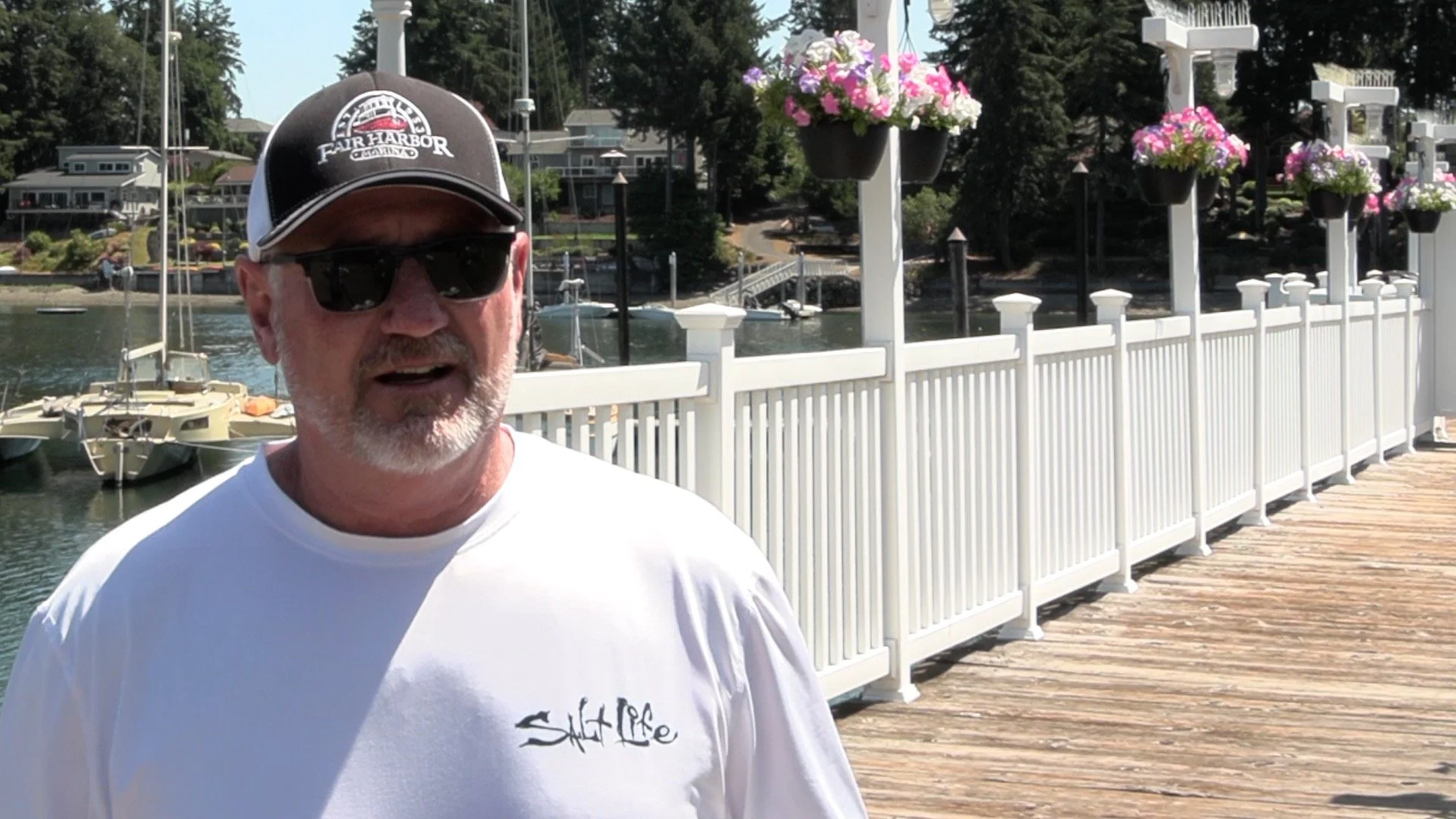
Fair Harbor Marina - A Boaters Destination
The Fair Harbor Marina, located at the Port of Grapeview, continues to grow in popularity. Managed by Kelly Granger and his team, the marina offers 82 slips with power, water, showers, and laundry facilities; making it a convenient stop for boaters. The marina's beauty has drawn comparisons to Cape Cod and Roache Harbor on San Juan Island, and it has become a venue for weddings, corporate events, and more. An additional 8-minute dingy ride gets you to the Port of Allyn, where you can find dining and drinks.
The Fair Harbor Marina, located at the Port of Grapeview, continues to grow in popularity. Managed by Kelly Granger and his team, the marina offers 82 slips with power, water, showers, and laundry facilities; making it a convenient stop for boaters. The marina's beauty has drawn comparisons to Cape Cod and Roache Harbor on San Juan Island, and it has become a venue for weddings, corporate events, and more. An additional 8-minute dingy ride gets you to the Port of Allyn, where you can find dining and drinks.
Shelton Inn is located in downtown Shelton, Washington. With easy access to Highway 101 and Highway 3 this comfortable hotel is a central location to begin your adventures. Rooms are air conditioned and include small refrigerators, coffee maker and microwaves. Free WIFI, dog rooms available, please call hotel directly.