
Mildred Lakes
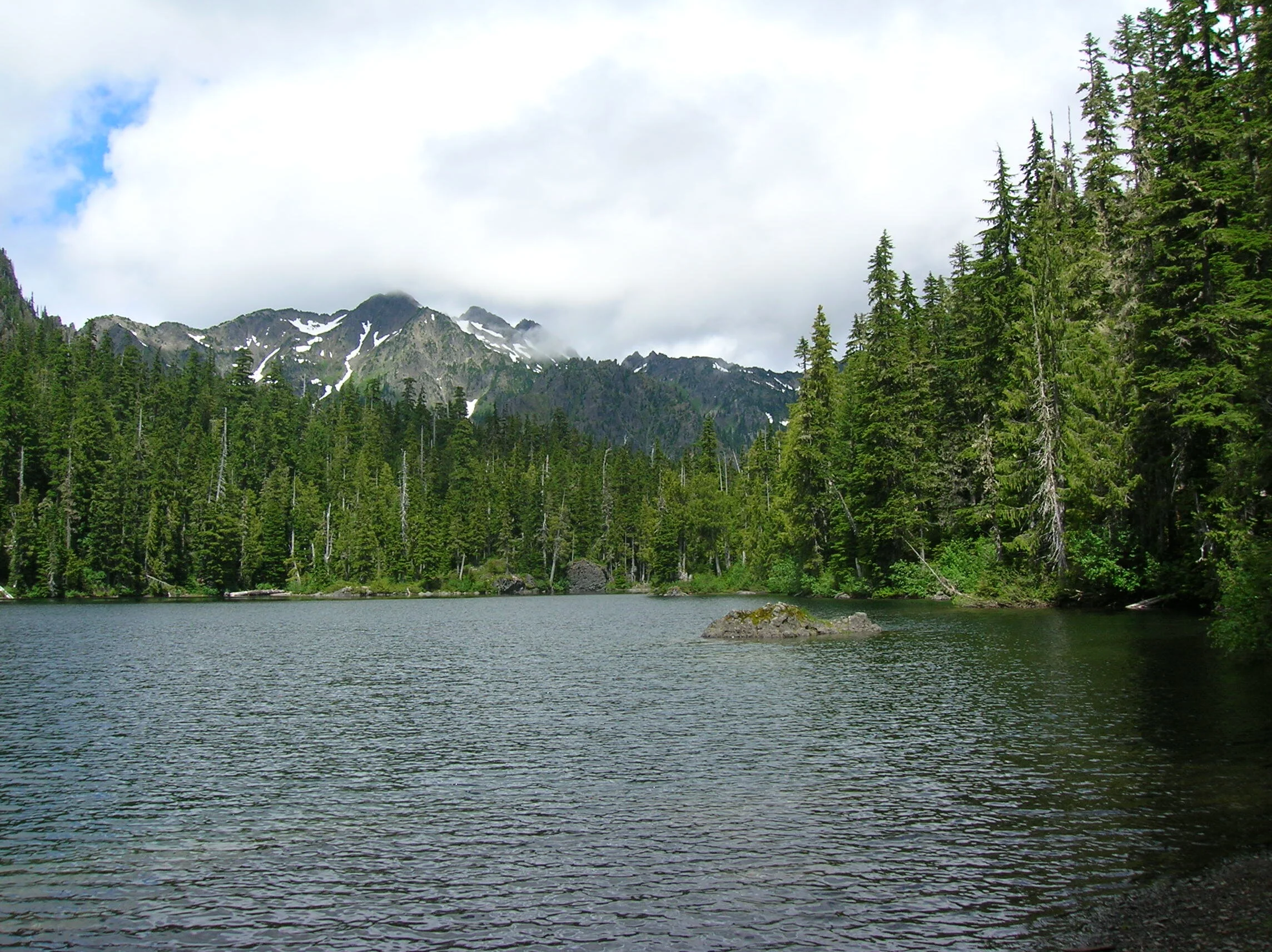
This grueling hike to a trio of backcountry lakes in a rugged wilderness setting is not for the weak of heart. Mildred Mildred Lakes, among the largest backcountry lakes the Olympics with excellent views of Sawtooth Ridge and Mount Pershing, is a challenging trail requiring use of hands and determination.
Craig Romano is an author of more than twenty hiking guidebooks including the bestselling Day Hiking Olympic Peninsula 2nd Edition (Mountaineers Books), which includes detailed descriptions for 136 hikes throughout the Olympic Peninsula. He is a featured columnist for the Fjord and Explore Hood Canal.
t’s the hardest, nastiest, meanest trail in the Olympics! And that declaration should not be taken lightly, as I have hiked thousands of miles (and written about hundreds of hikes) throughout the Olympic Peninsula. With perhaps only the trail to Lake Constance ranking as just as nasty—you won’t find a more curse-inducing trail than this one. The first time I ever hiked to the Mildred Lakes, I swore to myself that I would never ever do this trail again. I hated it. But alas, I was back on that wretched trail again a few years afterward. And my conclusion was that it’s still the hardest, nastiest, you-have-to-be-crazy-for hiking-this trail in the Olympics! So are you interested in hiking it?
Distance: 9.0 miles roundtrip | Elevation Gain: 2900 feet | High Point: 4100 feet Difficulty Loop: difficult | Snow free: July to October
Trailhead Pass Needed: Northwest Forest Pass or Interagency Pass
GPS waypoints: Trailhead: N47 34.517, W123 15.672 | Upper Lake: N47 33.461 W123 18.021
Hit the Trail
Okay, before hitting this trail, let’s have a chat.
No cheery coating—this is what you’re in for. This trail was never officially built. The trailhead was however. It’s fancy with a picnic table, privy and a view of a stunning waterfall. But don’t let those amenities fool you into thinking the trail is anything special. The trail is only 4.5 miles to the lakes, yet it will take you nearly that many hours to reach them. Why? The actual evaluation difference between the trailhead and the lakes is a mere 1,900 feet. But the real elevation gain is more than 3200 feet with copious ups and downs.
®Craig Romano Photo
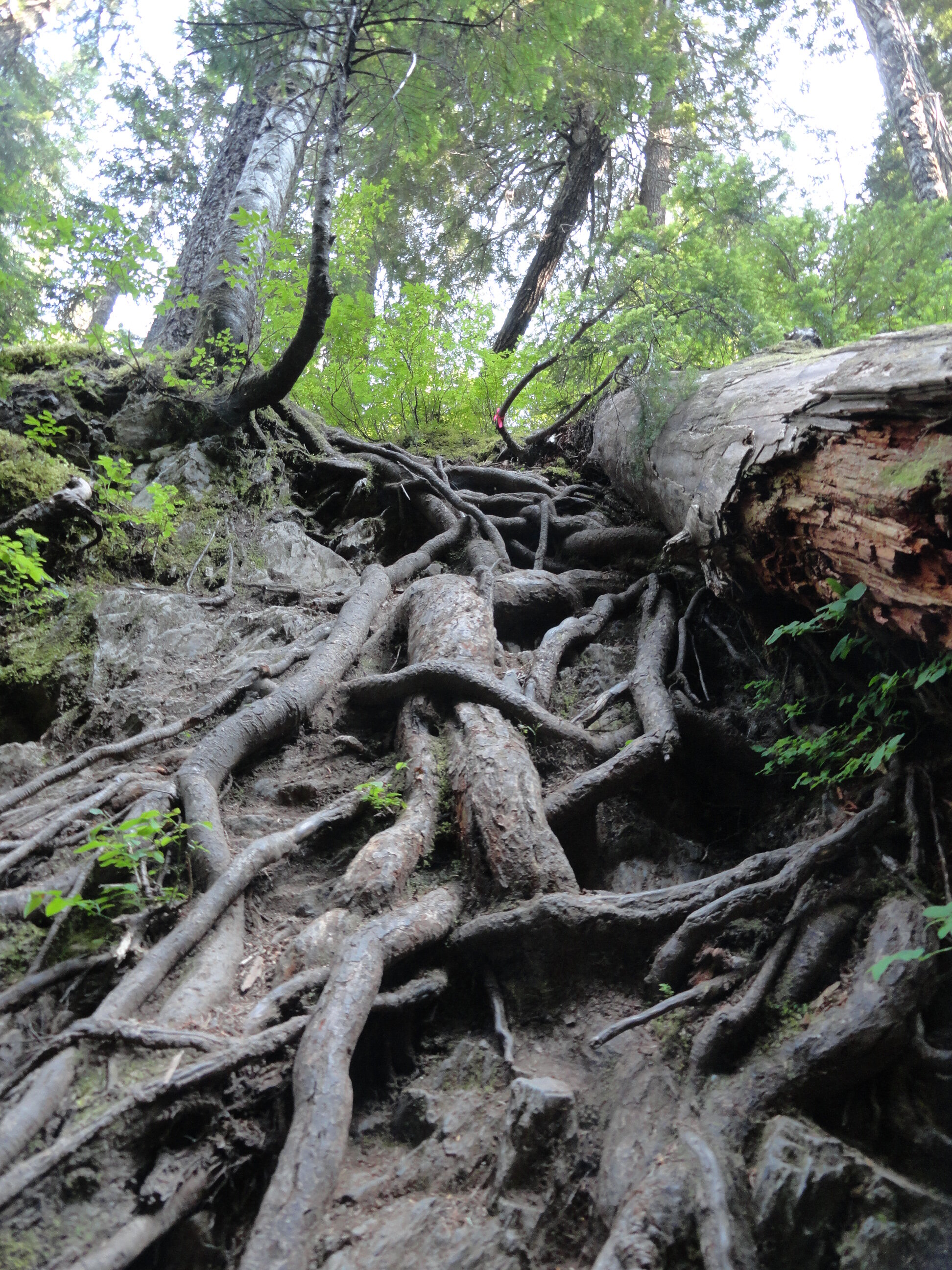
There’s one section of trail that climbs more than 1,000 feet in about a half mile. It is a nasty clamber up roots, rocks and loose gravel. But don’t curse the root—for they’ll be your handholds. There’s another trail section where you have to vertically drop about 25 feet into a tight ravine. And you’ll be using a veggie belay to climb out of it. You will skirt mud, go through mud, and probably be covered in mud upon reaching the lakes.
And if you don’t let out a scream, your knees and toes most certainly will! So why then unless you’re a sheer masochist would anyone want to hike this trail? For one thing, the Mildred Lakes are among the largest backcountry lakes the Olympics. Their setting is quite sublime in a rugged basin surrounded by serrated peaks. You will definitely earn these lakes; as many hikers just aren’t cut out for this grueling journey. That means you’ll see a fraction of the amount of people you’d see at nearby Lena Lake.
And in this age of social distancing, the Mildred Lakes’ brutal approach helps make that directive easier to comply. So if you’re ready to bust your rump, read on!

Hamma Hamma Falls | ®George Stenberg
The Mildred Lakes Trail leaves the roar of the cascading Hamma Hamma River behind and enters the 13,000-acre Mount Skokomish Wilderness. Starting out fairly easy, the path winds through an old cut that has been growing back in pretty nicely. The way then passes a large avalanche chute and enters gorgeous old growth forest. Here what once a decent path now deteriorates into an obstacle course. Around fallen logs, over fallen logs, and straight-up rocky and rooty slopes the trail steeply climbs a 3200-foot ridge. Catch your breath, wipe the sweat from your brow and enjoy a good view of nearby Mount Pershing looming above.

®Craig Romano Photo
The trail then descends from the ridge into a cool forested glen graced by rushing Huckleberry Creek. And yes, there are huckleberries here—lots of ‘em to sweeten this hike a tad come late summer. At the creek come to a questionable log crossing. You can teeter on it to cross the creek. But it’s probably far safer to wade across. Don’t bother drying your feet, because another creek crossing awaits shortly afterward.
The trail now get tougher and a tad bit tricky. It ascends a steep ridge and comes to a tight ravine. Using roots as handholds, drop 25 steep feet into the dank draw before resuming a taxing climb. After clambering over rock, root, and ledge—and gaining 1000 feet in elevation in a little more than a half mile—the insanity ends on a 4100-foot ridge. Now wander along open ledges, enjoying excellent views of Mount Cruiser and the Sawtooth Range. You might be a little dismayed however as there are no lakes in sight. Your punishment isn’t over yet.

®Craig Romano Photo
The trail continues. Drop 250 feet and trudge through marshy mosquito breeding grounds. Make haste through it and finally reach the first of the Mildred Lakes. It’s set in deep old timber with a backdrop of rugged summits. The scene is serene. Scramble over more roots and rocks to the far side of the lake for good fishing spots, resting spots and campsites. Watch resident osprey dive bomb the placid lake.
The other lakes are prettier, so carry on by crossing lower Mildred’s inlet stream and following a rough path through heather meadows for about 0.3 mile to a junction. Here a rudimentary path leads right to middle Mildred Lake. Admire its rocky islands. Upper Mildred, one of the largest backcountry lakes in the Olympics can be reached by continuing on the more defined path for just a couple hundred yards forward. Located in a bowl between Mount Lincoln and Mount Cruiser, the setting is as rugged as the terrain you just hiked across. Quite beautiful too, and hopefully justification for all of the bruises, scratches, and aches and pains you’ll bring back with you to the trailhead.

®Craig Romano Photo
Mildred Lakes Notes

Wilderness rules apply
Land Agency Contact: Olympic National Forest, Hood Canal Ranger District, Quilcene, (360) 765-2200; http://www.fs.usda.gov/olympic
Recommended Map: Green Trails Olympic Mountains East 168S
Recommended Guidebooks: Day Hiking Olympic Peninsula 2nd edition (Romano, Mountaineers Books)
Trailhead directions: From Hoodsport travel north on US 101 north for 13.7 miles turning left at milepost 318 onto FR 25 (Hamma Hamma River Road). Continue for 13.3 miles (the last five miles are gravel and can be rough) to the trailhead.
Trailhead facilities: privy, picnic area
Tips for safe and healthy hiking during the Covid-19 Pandemic
It’s imperative that we do all we can to prohibit a second devastating outbreak of this disease. We can do that by adhering to the following while we enjoy our trails:
Avoid crowded hiking destinations. If you arrive and the parking lot is already full, head to another location
Avoid hiking in large groups outside of your family
Practice Social Distancing while on the trail, giving other hikers lots of room to pass and keeping your distance from them at lakes, summits, etc.
Wear a mask when encountering others on the trail. A buff or bandanna works well.
Pack hand sanitizer
Pack it in pack it out
Don’t be a surface pooper. Learn how to properly poop in the woods by always using privies first if available-or by heading at least 200 feet away from all trails, campsites and water sources and digging a cat hole for your business. Bury your waste and toilet paper
Pack out all pet waste.
Weather or Not | Predicting your day on Hood Canal
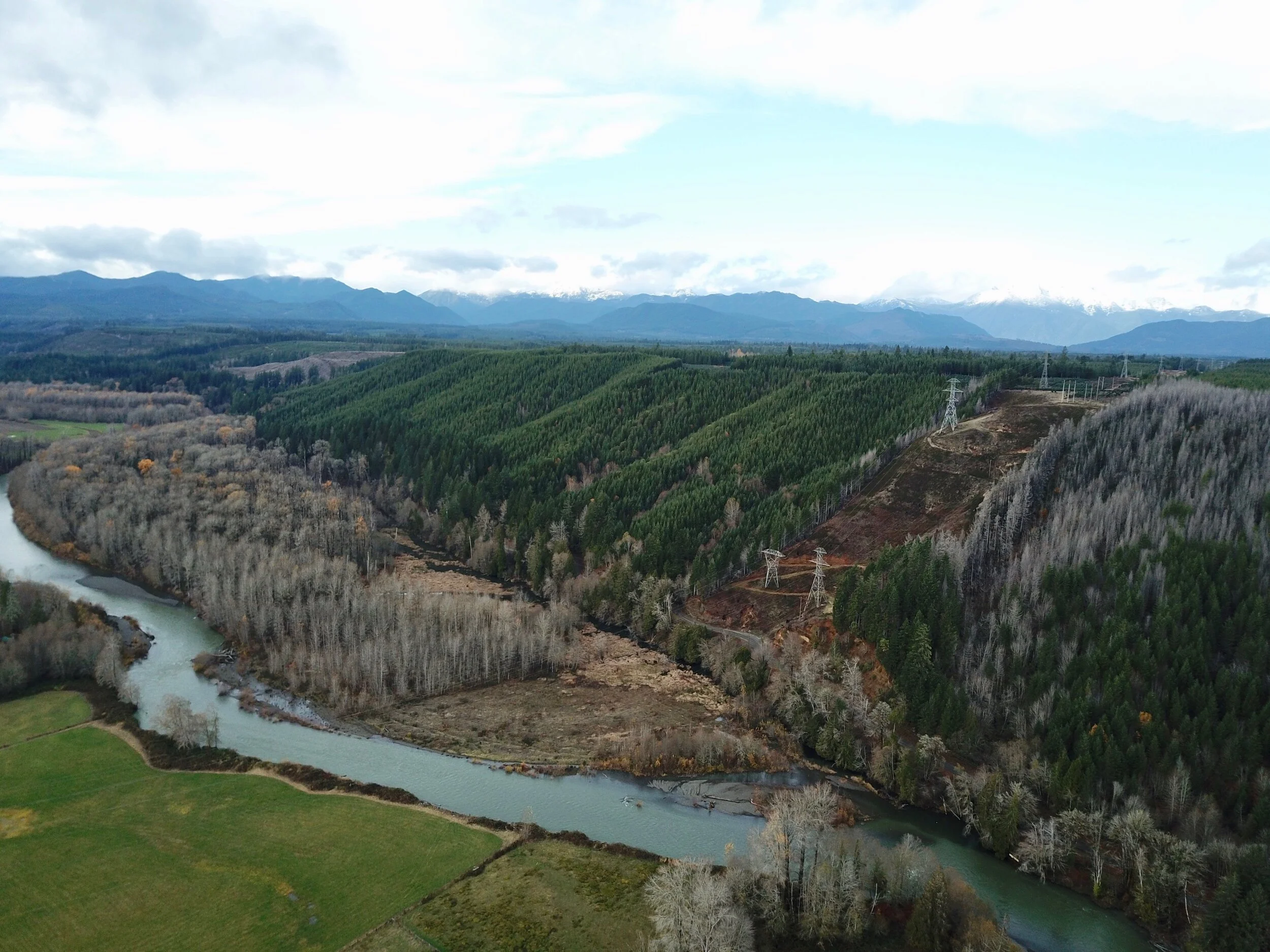
The fjord we call Hood Canal, flanked by the lofty Olympic Mountains to the west, creates a unique geography that is not only picturesque, but also results in weather systems that are very tricky to predict.
While talking about the weather is traditionally deemed the safest subject in polite company, predicting it definitely lands you in a volatile position, as weather forecasters who try to explain the many unique weather patterns we get along the Hood Canal can attest. From beautiful dry summers, to drizzly falls, stolen snow days and unexpected hurricane force winds– the weather of the Hood Canal never fails to surprise. Although it’s fun, it’s not fair to blame our mercurial weather on forecasters based in Seattle.
The fjord we call Hood Canal, flanked by the lofty Olympic Mountains to the west, creates a unique geography that is not only picturesque, but also results in weather systems that are very tricky to predict.
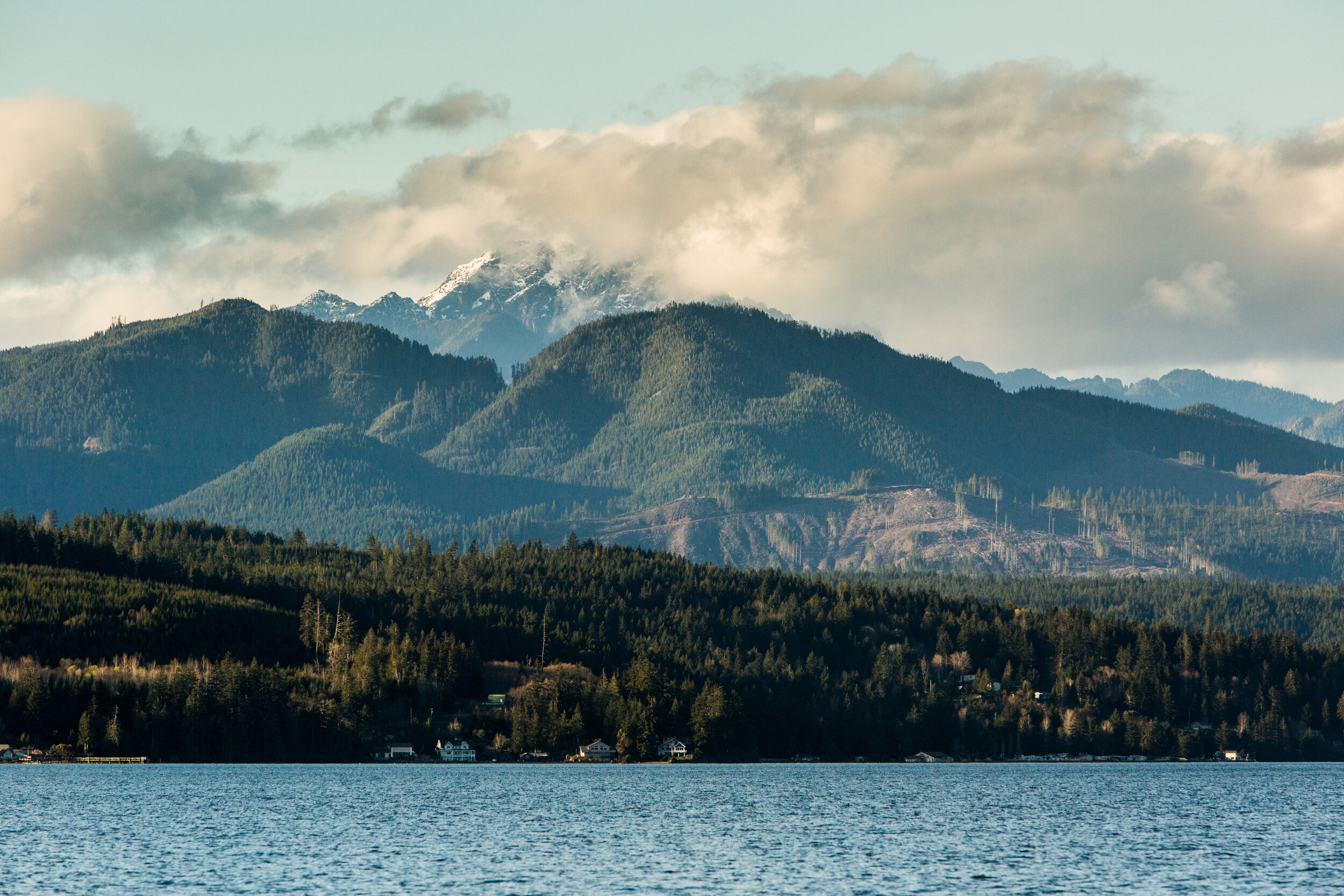
Although likewise coastal, Hood Canal experiences far more instances of snow than Tacoma or Seattle. Unlike other Washington coastal communities, the saltwater corridor of the tidal Hood Canal is too narrow to sufficiently warm the air.
Another factor influencing snow fall is the location of the Olympic Mountains. Traditionally, weather is known to travel from the west off the Pacific Ocean to the East. Following this we would expect that because of its location lying in the eastern lee of the Olympic Mountains the Hood Canal would be protected from these weather systems, but that is not how the weather always behaves. Low pressure systems off the Pacific often results in high pressure weather in Washington’s Northeast, which reverses this lee and draws weather in an East to West direction. Also cold air from the mountain tops often falls down into the fjord rapidly dropping the air temperature.
This cooler, snow ready weather makes winter sports an unexpected pleasure of the Hood Canal. Many locals take advantage of this 4x4’ing in the mountains on the weekend for snowy tailgate parties.
Sometimes the community joins in on the festivities. Last year, Quilcene hosted a community snowball fight after a particularly white week. However, recent snow falls have been fairly tame in comparison to the four feet of flakes Hoodsport received in 1916 or twenty-seven inches in 1943!

Since the Hood Canal is fed by the estuaries of the Skokomish, Union and Hamma Hamma Rivers along with a number of smaller tributaries, it has a layer of freshwater atop the salt. In very cold weather, this brackish water has been known to freeze over. In the winter of 1924-25 the Hood Canal froze from Lilliwaup to Belfair. In typical pioneering spirit, there are many historical accounts of exploiting this new surface. There were reports of the Twana elder Henry Allen driving his wagon across the canal from Hoodsport.
Frank Pixley who founded the artist colony of Olympus Manor at Union reportedly walked across to Tahuya. Fritz Dalby (of the Dalby Waterwheel fame in Union) went ice-skating in front of the current site of the Robin Hood Restaurant. The Hood Canal is reported to have frozen over in 1950, 2009 and most recently in 2015.
A similar low-pressure vacuum that makes Hood Canal prone to snowstorms also can result in heavy winds. In the summer-time this weather calms down to gentle breezes, which makes the straight stretch of Hood Canal a favorite with sailing clubs.
However, during the winter these winds can get fierce. One windstorm that hit in February of 1979 was particularly infamous. A low pressure moved in the Juan de Fuca Strait drawing all the air of Western Washington into tremendous winds. Unfortunately, Hood Canal with its deep fjord shape and its South-North orientation lined up perfectly with the direction of this wind and created a powerful wind tunnel.

The floating Hood Canal Bridge connecting the Kitsap and Olympic Peninsula located at the mouth of the Hood Canal could not stand the winds that reached 80 m.p.h with estimated gusts of 120 m.p.h. Although the bridge crew opened the bridge to help relieve the stress of the buffeting wind, the bridge’s pontoon storm hatches blew open and the bridge took on water. No one was hurt, but on February 13th 1979 the world’s longest saltwater floating bridge sank. What was usually a 1.5 mile bridge crossing became a 115 mile detour around the Hood Canal inconveniencing thousands of commuters. WSDOT scrambled to re-establish ferry routes between Lofall and South Point across the canal just south of the bridge and extra ferries were added to the route between Edmonds and Port Townsend. The bridge was repaired and reopened on October 24th 1982 with heavier anchors and more stringent bridge closure procedures. Many called for the bridge to be replaced with a spanned bridge that wouldn’t be at the mercy of the 16.5 foot tides, the corrosive quality of salt water, and the strong currents, but the fjords 300 + depth and sandy bottom is too difficult and cost prohibitive to span. Today, approximately 20,000 vehicles cross the bridge daily and in the last forty years the bridge has not suffered such a failure again.
While the wind, snow, rain, and sudden brilliant sunny days make it hard to pack for a visit on the Hood Canal, don’t let the weather deter you. Pick a book and snuggle beside by the fire and enjoy the hygge you keep hearing about while the misty damp engulfs the trees outside. Or pull on your gumboots and favorite slicker and meet the storm full on – storm-watching and puddle jumping can be pretty fun too! But if it snows, dust off your favorite hot toddy recipe and challenge your friends to an igloo building contest. Embrace the unexpected, it’s the Northwest way.
Contributor: Stella Wenstob, MA
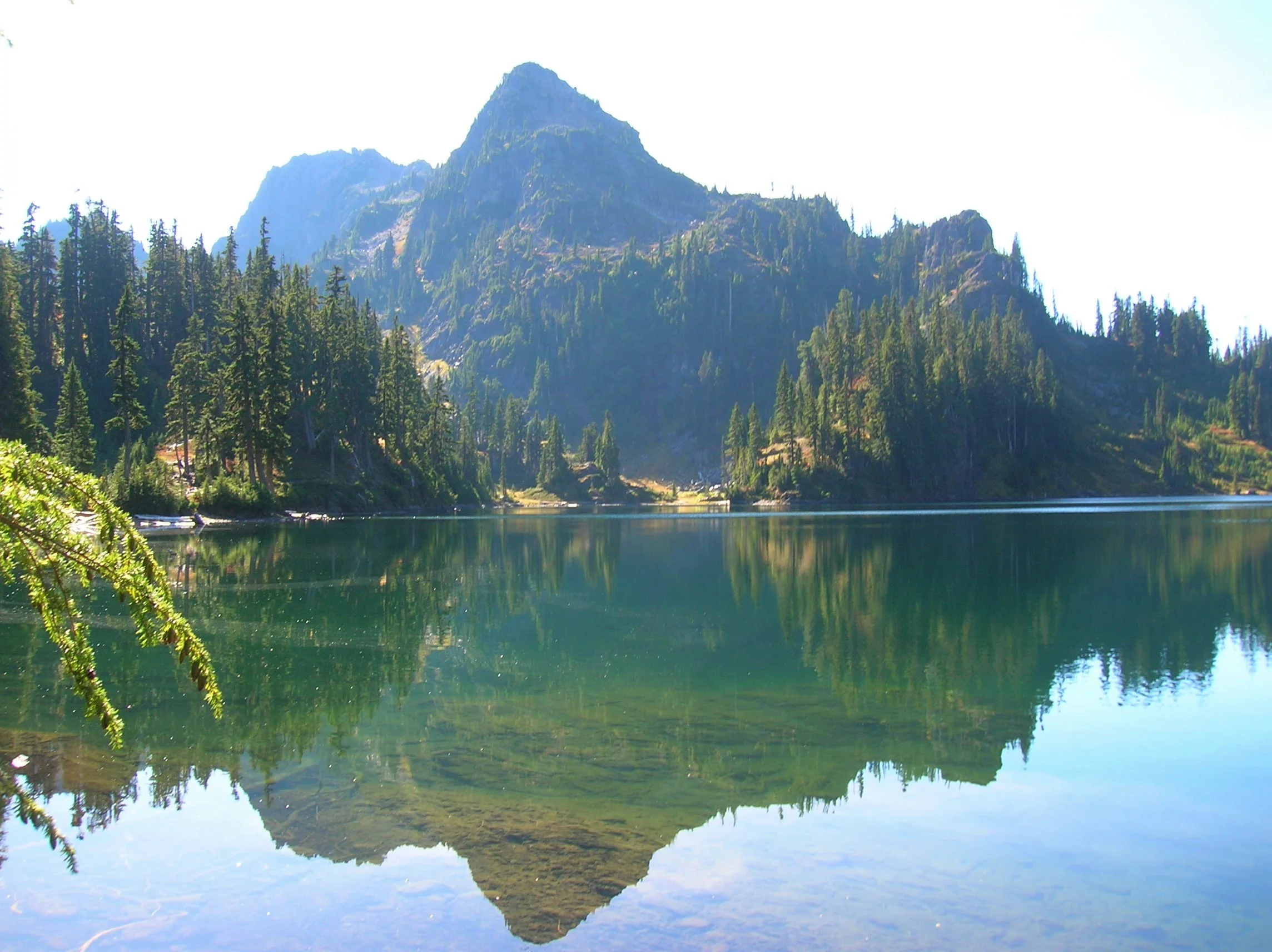
Lena Lakes Hiking Destinations
Gracing the Hamma Hamma Valley are two lakes sharing the name, “Lena.” But aside from the name, they are strikingly different from each other. Renown guidebook writer, Craig Romano, takes us on a trip to visit both these lakes.
Craig Romano | Craigromano.com
Gracing the Hamma Hamma Valley are two lakes sharing the name Lena. But aside from the name, they are strikingly different from each other.
The hike to Lower Lena is an easy kid and dog friendly jaunt through old growth forest. The hike to Upper Lena is a grueling and demanding grunt to a stunning high basin within Olympic National Park. Seasoned backpackers take to the upper lake and often set out afterward to scramble surrounding craggy peaks or head out on a rugged high country route. Lower Lena entertains first time hikers and newbie backpackers often testing their gear and skills for the first time. Expect plenty of company at the lower lake and a good chance for solitude at the Upper Lena.
Hit the Trail
Both lakes use the same approach. On a very well-trodden path head off in second-growth forest. The way immediately climbs, but the grade is gentle. Lena Creek can be heard crashing in the distance.
Lena Lake
Continue up the trail and eventually enter groves of beautiful old growth forest. The trail nears Lena Creek and then crosses it on a solid bridge. You might be dismayed however to be standing on a bridge spanning a dry rocky draw. What happened to the creek? It often makes a subterranean passage beneath all of those mossy rocks.
Now continue hiking working your way around and below a ledge. The trail then continues to climb coming to a junction at 3.0 miles. If you’re lower lake bound, bear right and within no time come to an inviting ledge granting a wonderful view of Lena Lake 100 feet below.
To reach the shoreline continue and descend passing busy campsites. You’ll eventually come to a junction with a trail leading back to the trail heading for the upper lake. Head right and reach the shoreline. The trail crosses Lena Creek and continues towards The Brothers—but that’s more of interest to climbers. You’ll figure out in no time that Lena Lake is one of the most popular hikes in the Olympics. Be sure to treat this heavily visited place with care and to practice Leave No Trace ethics.

Upper Lena Lake
If you’re more interested in a wilder setting, skip the trip to Lower Lena and from that first junction, head left. Immediately notice how much lighter the tread is now. Bear left at the next junction and begin following Lena Creek through spectacular primeval forest. At just over 4.0 miles the trail enters Olympic National Park. Dogs are prohibited from this point on—and if you plan to camp at Upper Lena you must have a backcountry permit (issued at Hoodsport Visitor Center and other Olympic National Park ranger stations). Until this point the climbing has been fairly moderate, but that is all about to radically change.
The trail continues alongside Lena Creek heading up an increasingly tighter valley. After crossing a tributary creek on a log bridge the trail gets downright nasty! Prepare yourself for an insanely steep climb up a rocky, rooty, and at times brushy course. It’s arduous and physically taxing, and when soaked by rainfall it can be treacherous. A good set of trekking poles will come in handy. The climbing eases after you carefully negotiate a ledge and clamber up a steep rocky bed of big rocks,
Once again come to and cross Lena Creek, which may be following a subterranean passage here as well.
Continue through open attractive old-growth forest groves. Make one more steep climb before cresting a ridge cradling Upper Lena Lake. Before bolting for the lake, turn around and look back at Mount Rainier in the distance. Now charge for the lake. Enjoy a breathtakingly beautiful backdrop view of 5960-foot Mount Bretherton rising above and reflecting in the lake. Camps (permits required) are along the lake’s eastern shore, and by a short path, on the lake’s western shore.

If you’re up for the day, stay awhile and soak up the beauty. In autumn the surrounding hills colorfully reflect in the lake’s placid waters. Look for critters big and small frolicking in those hills looking for berries. Feel free to help yourself to a handful as well. If you have any energy left consider following a half mile side trail to beautiful Milk Lake set beneath a small glacier on Mount Bretherton. Then rest up and prepare your knees for the brutal and jarring descent back to your vehicle. The beauty and solitude are definitely worth the grind.
Craig Romano
Award winning author and outdoors writer who has authored and co-authored of more than 20 books including Day Hiking Olympic Peninsula 2nd Edition (Mountaineers Books), which features 136 hikes on the Olympic Peninsula. craigromano.com
Lena Lakes Details
Distance:
Lower Lake: 6.0 miles roundtrip; Upper Lake: 14.0 miles roundtrip
Elevation Gain: Lower Lake: 1225 feet; Upper Lake: 4100 feet
High Point: Lower Lake: 1900 feet; Upper Lake: 4600 feet
Difficulty: Lower Lake: moderate; Upper Lake: strenuous
Snow free: Lower Lake: March—Dec; Upper Lake: July—November
Trailhead Pass Needed: Northwest Forest Pass or Interagency
GPS waypoints:
Trailhead: N47 35.984 W123 09.055
Lower Lake: N47 36.994 W123 09.789
Upper Lake: N47 38.068 W123 12.329
Dogs are ok at Lower Lena but prohibited at Upper Lena Lake.
Camping (no fires) at Upper Lake requires National Park Wilderness Camping Permit (contact Olympic National Park, Wilderness Information Center (360) 565-3100)
Land Agency Contact: Olympic National Forest, Hood Canal Ranger District, Quilcene, fs.usda.gov/olympic and Olympic National Park, nps.gov/olym
Recommended Map: Green Trails Olympic Mountains East 168S
Recommended Guidebooks: Day Hiking Olympic Peninsula 2nd edition and Backpacking Washington (Romano, Mountaineers Books)
Trailhead directions: From Hoodsport travel north on US 101 north for 13.7 miles turning left at milepost 318 onto FR 25 (Hamma Hamma River Road). Continue for 7.5 paved miles to the trailhead.
Trailhead facilities: privy
Fall Recreation on the Fjord and Surrounding Area
Ron Adams | Verle's LLC
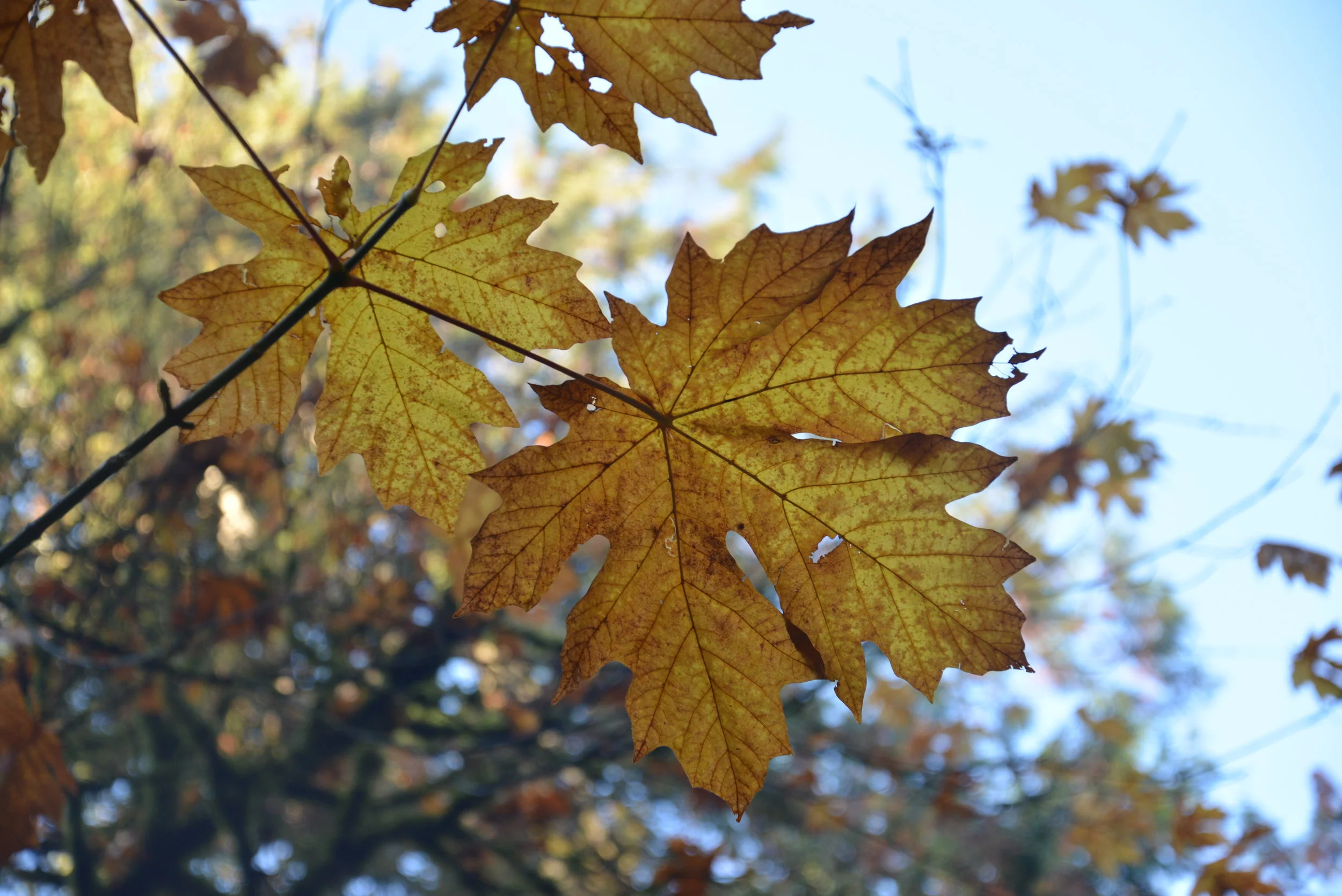
The long, warm and sunny days of summer on or near Hood Canal have nearly come to a close once again. The camping, biking, hiking and water sports we enjoyed will soon be recent yet unforgettable memories. Fall is about to surround us with a beautiful mosaic of rich yellows, greens, and reds as the leaves of hardwood trees give way to their wonderful ballet of fall colors.
However, the changing of the seasons does not bring an end to outdoor activities around Hood Canal. To many it is the beginning of a new and exciting chapter of outdoor opportunity and adventure.
Salmon and Steelhead can be found in most of the pristine rivers near Hood Canal where a true trophy and adventure of a life time await those who are willing to test their skills and moxy to harvest some of this plentiful bounty. Steelhead are different than their cousins the salmon in the fact they can return to their home rivers several times and spawn many times before they reach the end of their life cycles whereas pacific salmon only spawn once. Steelhead are a species of rainbow trout that is spawned in a river and then goes out to saltwater to mature. Their life in the nutrient rich waters of the Pacific Ocean allow them to grow rapidly and reach over 30 lbs in weight. Many lakes in the surrounding area are open year round for fishing and can provide healthy delicious protein.
Mushroom gathering it also very popular and several delicious varieties await those who know where to find them.
If any of this entices you, you are not alone. Thousands of outdoor enthusiasts will make the trek to this area to do everything I've mentioned and more.
Find out More
Established in 1948 Verles is celebrating 70 years of having a finger on the pulse of the Hood Canal and most things outdoors. With a skilled staff and a great selection of gear, Verles is there to help you get away and be successful in your outdoor adventure any time of the year. Verles is located at 741 West Golden Pheasant Road in Shelton.
Celebrating Our Winter Olympics
Yes, it's a shameless play on words –While the athletes compete in the XXIII Winter Olympics in PyeongChang – we can celebrate with our own neighborhood Olympics. Now is the time to search for the "Traveler," and marvel at how Mount Washington looks just like the coin profile!
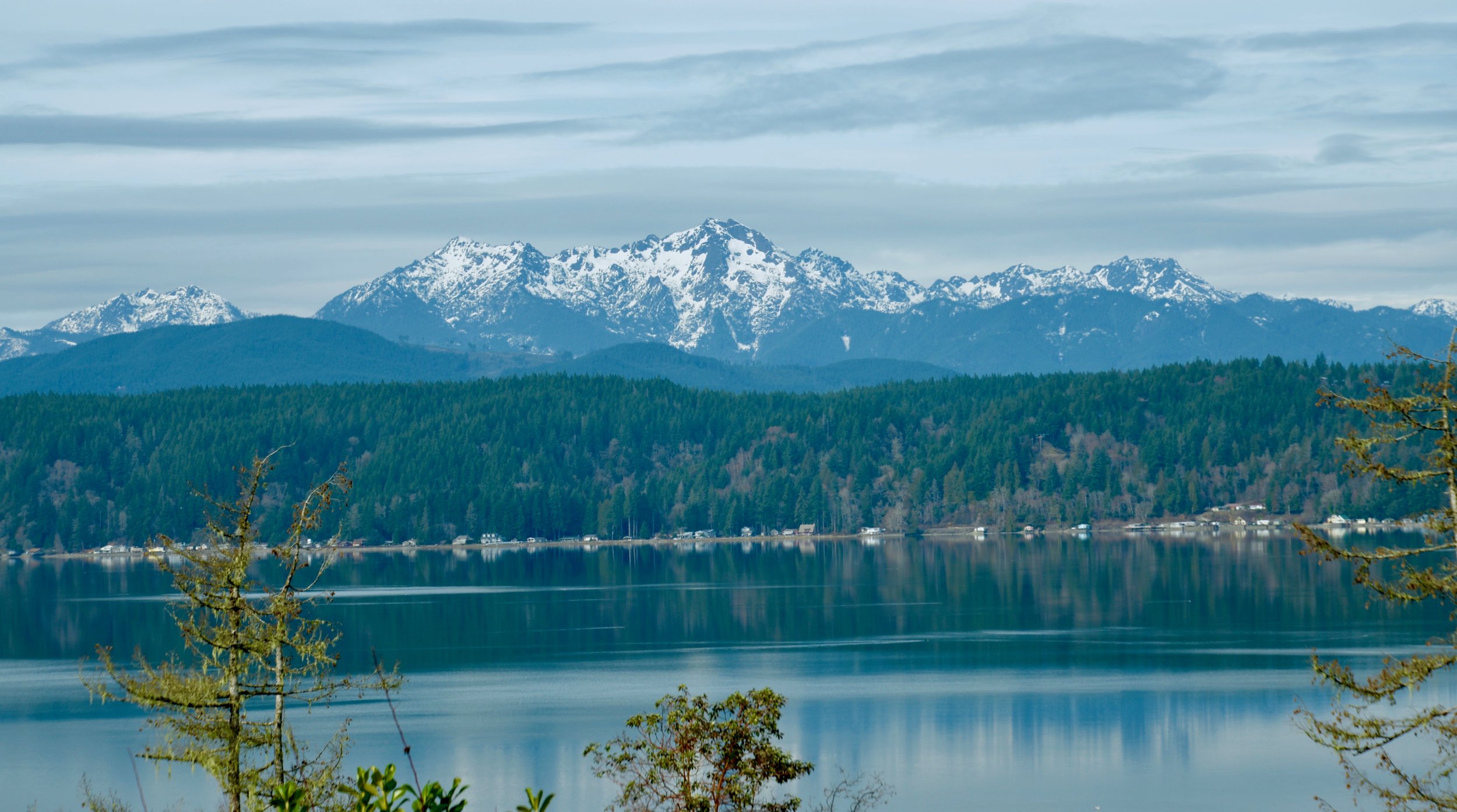
Towering over the Juan de Fuca Strait, the Olympic Mountains are an impressive sight. Although the tallest peak, Mount Olympus, reaches only 7,965 feet, the steep manner they rise from the ocean gives the mountains the illusion of great height. While the athletes compete in the XXIII Annual Winter Olympics in PyeongChang, we can celebrate with our own neighborhood Olympics.

UNION, WA
The Traveler is visible in spring on the face of Mount Washington.
In 1788, the explorer Captain John Meares named the tallest peak Mount Olympus in honor of the Greek explorer Juan de Fuca who had first passed by the mountain and named it Santa Rosalia in 1774. Since then the range has become associated with the ancient home of the Greek gods in name.

The Olympic view from the Harmony Hill cottage overlooking the Canal in Union, WA
In spite of their jutting appearance, the Olympic Mount Range are not volcanic. This is surprising given the proliferation of volcanic ranges in the Pacific Northwest, for example Mount Baker and Mount Rainer. As evidenced by the marine fossils found in the summits of the range, the Olympic Range once was part of the ocean floor. Approximately 120 million years ago, the Pacific Tectonic Plate crashed into the North American Plate and created the Olympic Range.
The actions of glaciers melting and freezing again created the “glacial horn” appearance of some of the more craggy mountains, a process that is also seen in heights such as Mount Everest and the Matterhorn.
Remnants of ancient Ice Age glaciers (from 26,000 to 13,300 years ago) are thought to make up portions of the larger existing glaciers in the park — specifically, those glaciers found on Mount Olympus and Mount Anderson. The smaller glaciers in the park were formed during the last “Little Ice Age” of only three to five thousand years ago.
The melting of these glaciers is a constant source of water for local watersheds. As well, the height and proximity to the ocean of Mount Olympus favors this mountain with an incredibly moist climate, making the Hoh Rainforest the wettest location in the United States. Contrastingly, parts of the rest of this horseshoe shaped range are in a rain shadow, creating a fairly dry climate.
Most of this range is protected within the Olympic National Park. This massive park system offers plenty of opportunities for excursions and many of these services are open in the winter. Why not plan a day trip to the mountains to sample the snow? Take the kids or friends and plan a mountain adventure. Build an igloo, go snowshoeing, or just have a snow ball battle. Although the lower reaches may be drowning in rain, if you head to the hills you might just find a drier, fluffier version. Pack a high protein lunch (such as cheeses, sliced meat and fruit) to keep you going and a thermos of your favourite hot drink to warm you up.
For the kiddies bring hot chocolate and for the more mature members try our hot toddy recipe. If you have a propane stove, or some sort of portable stove system, why not have a high altitude hotdog roast?
If you are searching for more organized activities, Hurricane Ridge offers ranger-guided snowshoe walks (snowshoes provided!) and economical ski day passes, as well sledding and tubing is free for children . The more adventurous seasoned camper may want to try their hand at “winter camping.”
Check the ONP website for road conditions before you answer the mountain’s call, as winter conditions can close areas. Be mindful that weather can be unpredictable and it is always better to be safe than sorry, as the Olympic National Park website warns - Always carry the 10 Essentials: map, compass, flashlight, knife, matches, nylon cord, extra food and water, and raingear with warm clothes. Let someone know where and when you are taking your hike. Make emergency plans for them to follow if you do not return. Be safe and have fun!

Easy and Delicious Wintertime Campfire Recipes
There’s hardly anything better than friends gathered around a campfire. Throw some tasty, warm drinks in the mix and a meal prepared over an open flame, and you have the formula for a winning winter dinner.
There’s hardly anything better than friends gathered around a campfire. Throw some tasty, warm drinks in the mix and a meal prepared over an open flame, and we contest that there’s a formula for winning winter.

Break out your cast iron, throw some dry wood into the back of your car, gather your friends, and try one of our favorite campfire treats! Oh, you may notice that there’s a distinct bourbon theme that runs through our favorite campfire recipes. That’s no coincidence. And we know you’ll probably already have a bottle in tow anyways.

1. Chipotle Bourbon & Garlic Oysters
This drool-worthy decadence is surprisingly easy, amazingly Instagram worthy, and the perfect warm-up for the rest of your campfire meal. This recipe is courtesy of Hog Island Oysters out of California, but comes recommended by Lilliwaup’s own Hama Hama Oysters. We trust those guys. If you’re a newbie, check out Hama Hama’s general tips for grilling oysters.
Ingredients:
2 dozen Hama Hama oysters
½ lb (two sticks) unsalted butter
½ cup brown sugar
½ cup bourbon
¾ cup finely chopped garlic
Half a can of 10 oz. chopped chipotle chilis in adobo sauce
How to make chipotle butter:
We love this recipe because you can prep the butter at home and bust it out when you’re ready to throw the oysters on the grill. The butter requires at least an hour to chill so be sure to plan ahead.
Dissolve the brown sugar into the bourbon. Combine all ingredients in a medium bowl and mix well until a lumpy texture is achieved and all ingredients are thoroughly combined. Lay out a piece of parchment paper, pile butter into the center and wrap into a ‘log’. When finished, it should be just shorter than a foot and about two inches in diameter. Refrigerate.
How to cook oysters on the grill:
This one requires a pit fire with a grill. The good news is that there are a number of quaint and quiet campsites with fire pits. Build your fire so that the flames don’t quite reach all the way up to the grate. Shuck your oysters, and place them on the grill with a ¼ inch pat of your chipotle butter. Once the oysters and butter are bubbling, remove them from the grill, let them cool for a hot second, cheers and enjoy.
2. Bourbon Glazed Chicken
This recipe is from one of our favorite road trip read-throughs: “Campfire Cuisine: Gourmet Recipes for the Great Outdoors” by Robin Donovan. If you’re looking for a tasty side to go with your bourbon-infused campfire feast, we recommend the White Beans with Chanterelles, or the Maple-Glazed Yams from her book. Mmm.
Ingredients:
4 boneless, skinless chicken breast halves
1/3 cup bourbon
3 tbs. brown sugar
2 tbs soy sauce
1 tbs sesame oil
1 clove garlic, chopped
juice of ½ lemon
salt & pepper
How to:
This recipe is easy to prepare from home as well, but for theatrics’ sake, it’s pretty fun to pound the chicken breast with your bottle of bourbon at the campsite. All that’s required on the front end is to mix all the ingredients well, pound the chicken breasts in a separate bag, and marinade all together for at least an hour.
When you’re ready to grill (this requires a campfire with a grate as well), remove the chicken from the marinade and place on the grill, cooking for 5 to 7 minutes on each side. While the chicken is cooking, put the rest of the marinade into a cast iron skillet and boil for at least 5 minutes. Allow for it to thicken. Spoon bourbon glaze over the top, and serve immediately.
Shorter days and colder weather are no excuses for not taking advantage of the year-round glory that is the Olympic National Park. We’ll see you out there. And until then, see you on Facebook, Twitter, Pinterest and Instagram.
In Search of Salmon in and Around the Fjord
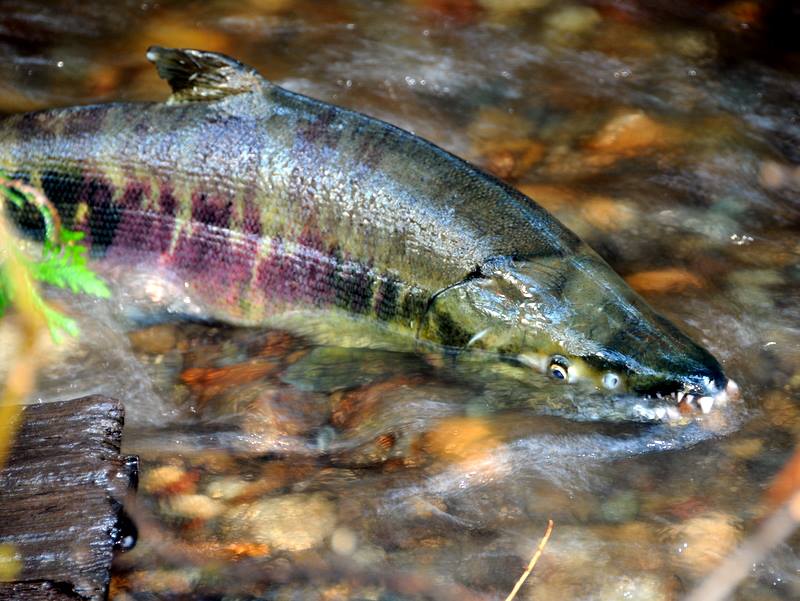
As the weather chills, the local streams and rivers are festooned with the lovely shades of orange and red of the turning leaves. This season also marks the last weeks in the life cycle of many salmon species as they travel up these rivers and streams to spawn and die.
Stella Wenstob
photo: South Puget Sound Salmon Enhancement Group
As the weather chills, the local streams and rivers are festooned with the lovely shades of orange and red of the turning leaves. This season also marks the last weeks in the life cycle of many salmon species as they travel up these rivers and streams to spawn and die.
Using a sense not completely understood by biologists, millions of migratory salmon return to their home streams to lay eggs.
After swimming up the stream to their spawning spot the female chooses a spot in the shallow, but swift flowing part of the river that is ensured to be highly oxygenated, called the riffle. In some of the inland streams that location can be many hundreds of miles up rapids and past many impediments. Here she digs a depression in the gravel that will serve as her nest or redd. The males will put on an impressive show biting and jumping to show their dominance and protect their chosen female from other males. After the eggs are laid in the redd, the male will deposit sperm over them, and the female will cover the eggs with gravel to protect them. A female may create as many as seven redds before she is finished spawning and each redd may hold as many as 5,000 eggs.
As soon as the salmon enter the fresh water of the stream their skins begin to change color, their sexual dimorphism enhances, they stop eating and they begin their decaying process. A migrating salmon typically lives for about two weeks after entering the freshwater.
The carcasses provide an important food source to other animals and small invertebrates who in turn provide food for the salmon fry (baby salmon) as they get older. Additionally, the nutrients given off by the rotting carcass are important fertilizers to the plants and trees growing on the banks, which in turn provide essential root systems that prevent erosion and protects the streams for further generations of salmon.
There are seven species of salmon in the Pacific Northwest: Pink (Oncorhynchus gorbuscha), Sockeye (Oncorhynchus nerka), Coho (Oncorhynchus kisutch), Chum (Oncorhynchus keta), Chinook (Oncorhynchus tshawytscha), Steelhead (Oncorhynchus mykiss), and Cutthroat (Oncorhynchus clarki clarki).
All of these species have very different life-cycles – some spend several years before they migrate up streams; some can run and spawn several times before dying; some only spawn at the mouth of streams, where others need to spawn in lakes at the head of rivers. This unique phenomenon of the salmon running can be viewed in streams and rivers all across the Hood Canal and South Puget Sound.
Kennedy Creek
The Kennedy Creek Salmon Trail located off of Hwy 101 opens up for full tours with docents answering questions from November 2 through to December 1 from 10 AM to 4 PM on weekends. This trail is maintained by the South Puget Sound Salmon Enhancement Group and their website is a great resource for learning about the trail and salmon ecology.
Beginning at the head of Oyster Bay, at the traditional site of the Sawamish/T’Peeksin village (ancestors of today’s Squaxin Island Tribe], this trail was once part of a greater network of Native American trails that connected South Puget Sound with the Pacific Coast. The Kennedy Creek was known as “Place of the Singing Fish” by the Squaxin Island Tribe due to the resonant singing of the frogs heard along the stream’s banks in the spring. Chum (or dog fish) are the dominant species that run this stream at numbers as high as 800,000 salmon a year. The tribe harvested these fish for oil and for food, drying them on racks. The salmon can be seen running right from the creek’s bank.
Salmon Center
The Salmon Center located in Belfair is open from 8 AM until 5 PM, Monday through Friday. Besides offering interesting exhibits about salmon ecology, they operate salmon traps on the Union River (off of Highway 300) that target adult summer Chums.
Twanoh Creek
As you continue along the South Shore of the Hood Canal, Twanoh Creek in Twanoh State Park offers good vantage points to view running salmon.
Purdy Creek
At the bend of the Hood Canal on a tributary of the Skokomish Watershed is George Adams Fish Hatchery run by the Washington Department of Fish and Wildlife. Each spring they release 500,000 juvenile Coho into the Purdy Creek. While the hatchery does not have scheduled tours, the friendly staff are eager to answer questions and the pens are visible from the Highway.
Hoodsport
The Hoodsport Fish Hatchery located in Hoodsport also does not offer scheduled tours, but in the fall the WDFW offers very popular Chum salmon fishing classes from the beach out front of the hatchery.
Quilcene
The Quilcene National Hatchery has been run continuously since 1911. Now focusing on Coho stock, the Quilcene National Hatchery has raised nearly every species of salmon. The hatchery successfully reintroduced Chum salmon back to the Big Quilcene River and increased winter Steelhead populations of the Puget Sound. They are open from 7:30 AM to 3 PM on weekdays and only on weekends and holidays in the spring and summer when the camp host volunteers are present. Visitors are encouraged to tour the facility and meet the hatchery staff.
More Salmon Viewing
Situated in the Belfair State Park are the Big Mission and Little Mission Creeks, which offer great salmon viewing. A little north of the North Shore Road following Elfendahl Pass Rd is Stimson Creek, a good place to view spawning salmon.
For a list of salmon spotting sites, WDFW have created an interactive multi-layer map called SalmonScape,
that shows the streams and tributaries used by migratory salmon in the state.
Hood Canal Hike: Duckabush River Trail
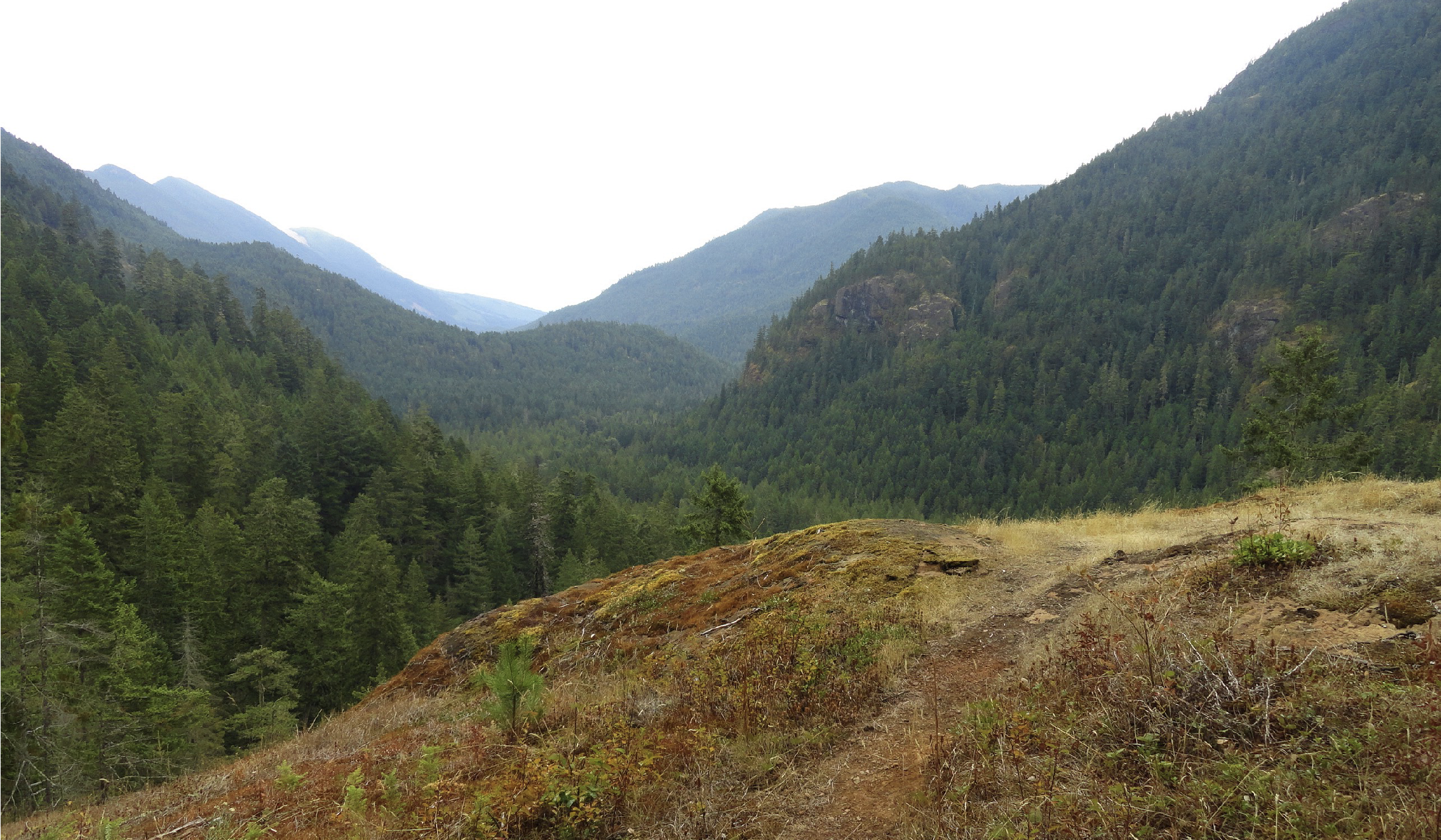
The Duckabush River starts in the heart of the Olympic Mountains. Fed by glaciers, snowfields, and a myriad of springs and alpine lakes; this major Olympic Peninsula river provides excellent wildlife habitat and makes for some stunning scenery. Explore this valley in the winter for the added bonus of solitude, a chance to observe elk, and to witness a rain-swollen river careening through clefts and over boulders.
Craig Romano | author Day Hiking Olympic Peninsula 2nd Edition

The Duckabush River starts in the heart of the Olympic Mountains. Fed by glaciers, snowfields, and a myriad of springs and alpine lakes; this major Olympic Peninsula river provides excellent wildlife habitat and makes for some stunning scenery. Explore this valley in the winter for the added bonus of solitude, a chance to observe elk, and to witness a rain-swollen river careening through clefts and over boulders.
Hit the Trail
The Duckabush River Trail is a portal into the wild interior of the Olympic Peninsula. A well-maintained trail travels along a good portion of the waterway allowing you to experience its grandeur. The trail travels a verdant valley for more than 20 miles terminating at Marmot Lake in the heart of Olympic National Park.
That’s a long journey primarily reserved for multi-day backpackers who often continue farther from there to cross historic O’Neil Pass. Day hikers however will be content to head up this trail for just a few miles.
An objective for many hikers and one that includes a good day’s worth of mileage and a little climbing too is to an imposing riverside knoll known as the Big Hump.
If the 7.8 mile distance and more than 1400 feet of elevation gain to reach this destination is too much, a satisfying turnaround spot is a nice stretch of river just prior to the climb.
The Duckabush River Trail like many of the trails leading along rivers into the Olympic interior begins as an old roadbed. Park officials, foresters and others once sought to punch roads deeper into the Olympics. However, over time, changing attitudes that emphasized preservation of areas free of roads and dwindling budgets that couldn’t maintain many miles of backcountry byways led to miles of roadway being converted to trails. In almost all of these cases this has meant miles of gentle hiking as the old roadways were often well graded. That is the case for the beginning of this trail.
Head off down the trail gently climbing through a uniform forest of second-growth fir. This part of the Duckabush River valley was logged—but it was many decades ago. The real old and impressive trees are yet to come. At 1.2 miles the trail enters The Brothers Wilderness, a 16,000-plus acre federally protected section of the Olympic National Forest. Wilderness designation means that this rugged and ecologically important tract of land bordering the national park will never be logged, developed or have a road traverse it. Bicycles and machinery are not permitted either, allowing folks who come to explore this area by foot or horseback a true wilderness experience.
The trail continues through a low gap near Little Hump and then begins a descent of 250 feet, following an old logging railroad grade on an almost perfectly level trajectory. Loggers here didn’t take all of the big timber as a few standing giants attest.
While this part of the Olympics is in a rainshadow, receiving around 70-80 inches of rain a year compared to two to three times that on the other sides of the mountains, mossy limbs and a thick understory makes it feel somewhat like a rainforest.
After passing a campsite the trail finally comes upon the Duckabush River. At 2.6 miles, you’ll reach a spectacular spot where giant cedars and firs hang over the churning, crashing river. This is a great spot to turn around and perfect for a good half day hike or one with young adventurers.
Go Farther
If you’re intent on tackling the Big Hump, continue up the trail preparing yourself for a stiff 1,000 foot climb. The way steadily and steeply at times climbs. Old-growth greenery is soon replaced with fire-scarred trees and burnt and downed timber. Here in 2011 a careless camper started a wildfire that scorched a large patch of old-growth on the Big Hump. Hardy fire-scarred trees stand among stands of fire-ravaged timber. While trail crews have since rehabilitated the tread here, avoid this section of trail during periods of high wind, as burnt snags are prone to toppling.

At a little over 3 miles come to a ledge with a spectacular view east down the river valley.
On a clear day you can see all the way to the Cascades. To the south, impressive St. Peters Dome hovers—often catching swirling low clouds. Return to this spot later in the spring and you’ll have an array of wildflowers enhancing the views. Keep hiking and come to another outcropping before finally cresting 1700-foot Big Hump at 3.9 miles.
For most day hikers, this is far enough. But if you still feel like hiking, continue through a mosaic of old growth and fire scorched trees and descend 600 feet back to the river. Here at 5.3 miles from the trailhead is a camping area near a series of impressive rapids. During periods of heavy rain the river can be deafening here. Watch for darting dippers in the rapids as you rest up for your return to your start.

And if you are a strong hiker or are out on a several day backpacking adventure, the trail generally remains snow-free through the winter for many more miles. Note that at 6.7 miles from the trailhead it enters the national park—meaning dogs are not allowed to continue—and if you are planning on camping, you’ll need to secure a backcountry permit beforehand.
Hood Canal's Spectacular Birding Sights: Theler, Twanoh, & Potlatch
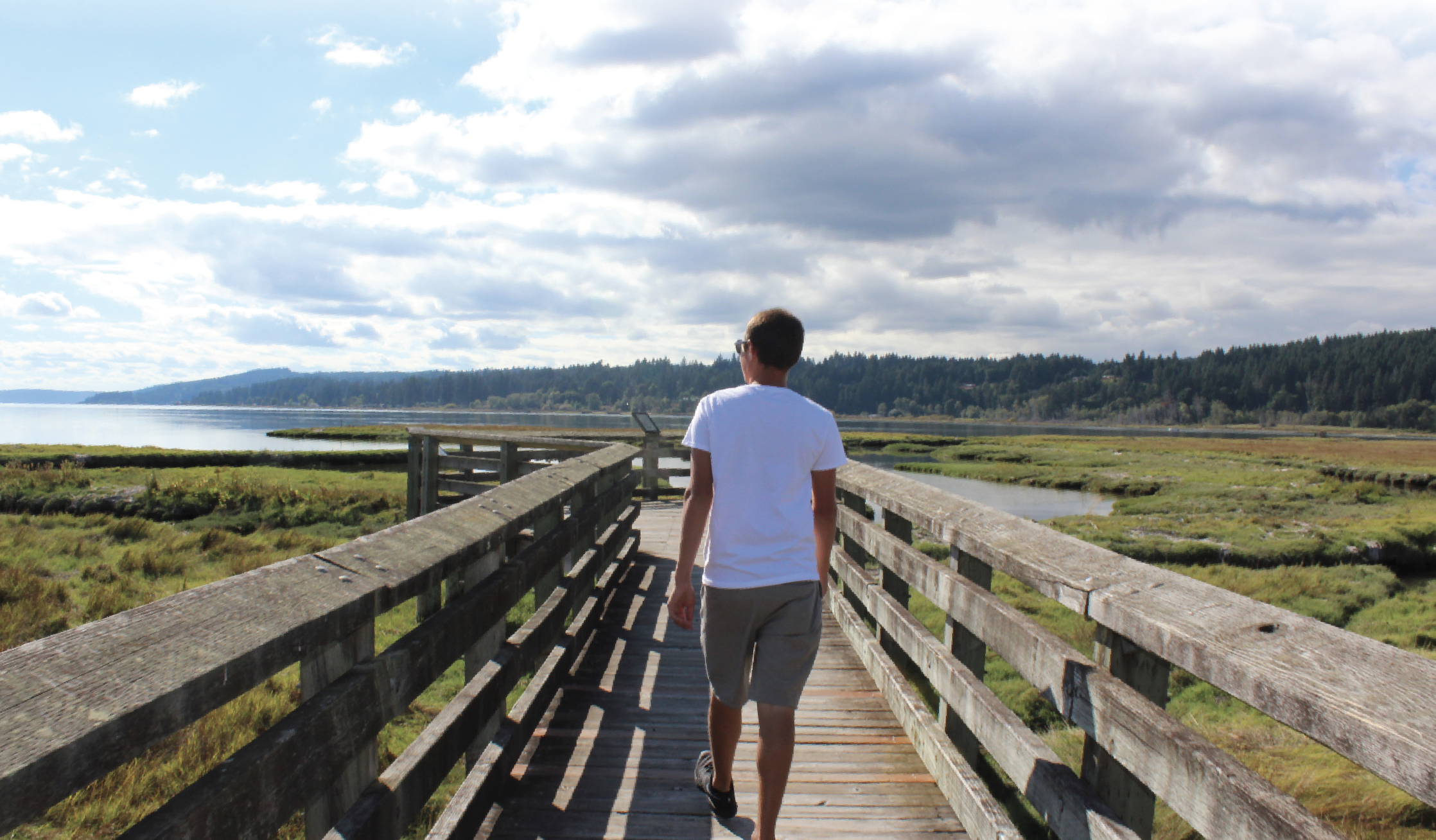
Looking for a refreshing easy local walk with plenty of birds and wildlife? Consider visiting the accessible Theler Wetlands near the south entrance to Belfair, WA. Interpretative signs, native plants, and even a reconstructed whale skeleton – makes this an inspiring walk.

With its wealth of shoreline, fresh and saltwater marshes, mudflats, and of course the bountiful forest, the fjord is a birders’ paradise.
And whereas winter and spring aren’t the most popular seasons for human tourists (meaning less competition for lodging and dining), they happen to be the best for catching the avian crowds. From soaring birds of prey to elusive divers, birdwatching is one more reason to head to the Canal.
The Audubon Society’s Great Washington State Birding Trail is a great resource.
Below we've included three birding areas to get you started!
Theler Wetlands
Located at the head of Hood Canal the Theler Wetlands offers several accessible walking trails within a protected salt marsh and estuary wetlands. The Theler Wetlands of Belfair include a gorgeous salt water estuary. The wetlands are accessible through many miles of level trails and boardwalks, surrounded by roses, shrubs, and blackberries in bloom in the summer months. The trails amount to 3.5 miles round-trip, with the option of three different routes.
The Union River Estuary Trail is the longest trail offered. To the left of the trail is an old dike that travels through some of the tidal wetlands, and to the right is fresh water marshes filled with cattails and tall grasses.
The viewing point from this perspective is spectacular! There are 360-degree views of the Union River, Hood Canal, and the Olympic Mountains.
Sam Theler, a real estate developer, deeded the wetlands to the North Mason School district in 1968 in honor of his wife.

Rebuilt whale skeleton on display in the interpretation classroom
Families can give these trails a visit, and if they are open, displays and hands-on exhibits are available to examine. They help to teach more about the wetlands ecosystem. There are mounted animals with plaques of information on each, along with a gray whale skeleton for display. There is a picnic area and a restroom as well. Keep an eye out for the many birdhouses along each trail—they are hard to miss! Often spotted are red-winged blackbirds, kingfishers, herons, eagles, otters, and geese. These trails are perfect for people of all ages.
Twanoh State Park
Twanoh State Park is a favorite in the summer for swimming and watersports, but the quieter winter and spring months make it a great place for viewing wildlife and birds. Bring your binoculars to the shoreline for an eyeful of diving birds such as loons, mergansers, murrelets, and ruddy ducks with their distinctive upright tails. In the towering cedars and maples inland, listen for brown creepers and red crossbills.
Potlatch State Park
Like Twanoh, Potlatch bustles with humans in the summer and birds in the winter and spring. With 5,700 feet of saltwater shoreline, it’s a great place for viewing waterfowl, particularly during high tide. In the water, look for heron, scoters and scaups, and check the trees for fox sparrows and Steller’s jays.
For a complete list of bird sites check out this great PDF Audubon Guide.

Hood Canal Travel Guide: Hike + Campfire
Itinerary #8: Spring Adventuring
There is a host of romantic notions about staying inside all winter, putting on fuzzy socks against the cold, and hibernating beneath a blanket. Instead of letting a little rain stop us from getting after it, we choose adventures that are even better with a little atmosphere!
There is a host of romantic notions about staying inside all winter, putting on fuzzy socks against the cold, and hibernating beneath a blanket. For some, rain grants permission for hours-long Netflix binges. But that’s not what we’re known for in the Pacific Northwest. Instead of letting a little rain stop us from getting after it, we choose adventures that are even better with a little atmosphere!
Now that the fear of forest fire has lessened, taking a break midway for a festive campfire makes any hike extra memorable. Enjoy having a popular trail all to yourself, and treat yourself for a job well done with dinner in town and a cozy cabin stay.

Lena Lake | 12pm
Lena Lake is a large gem nestled in the hills of the Olympic National Forest. This area was closed for much of the August because of an area forest fire. A wide and relatively accessible trail makes the journey to the lakeshore a family-friendly, but satisfyingly challenging day trip. From Highway 101, turn onto North Hamma Hamma Road/Forest Service Road 25 at milepost #318. Follow it for 7.5 miles to the trailhead, which offers plenty of parking alongside the road.
The 3.5 mile trail to the lake parallels and then crosses Lena Creek. Especially during the rainy season, the trail can be wet and slippery, so be sure you’re packing waterproof boots and other winter hiking essentials.
At the fork in the trail approximately three miles in, the trail to the right will take you directly to the lakeshore. If you’d prefer a brief scenic detour, a quarter-mile jaunt along the left path will provide you with an overlook that’s perfect for photo-ops or simply soaking in the view.

Campfire | 3pm
Nothing makes a hiking outing extra special like a crackling campfire to warm the hands and maybe even roast up a snack. With a set of homemade fire-starters, even damp wood won’t ruin your fun. Making them couldn’t be easier, either. Before you leave home, throw a dozen 100% cotton balls into a sealable plastic bag with a blob of Vaseline pure petroleum jelly. With the bag sealed, knead the Vaseline into the balls. When you’re ready to start your fire, pull one of the balls apart a bit to expose the dry fibers, apply a flame or spark, and you’re on your way.
The code of the wilderness is to Leave No Trace, so keep your fire small and practice good fire safety in addition to packing out all of your trash. Fire danger is generally very low in the Olympic Peninsula during winter and spring, but double-check that no burn bans are in effect.
Once you’re sufficiently warmed and pleasantly smoke-scented, pack up and retrace your steps to the trailhead.
Wash it down | 5pm
Even if you enjoyed a snack with your campfire, the hike back to your car and drive into civilization will have you craving a hearty meal. Hoodsport is the closest town, and offers a range of tempting options. Whether you choose fried chicken at Model T Pub & Eatery, fish and chips at Eagle Creek Saloon, or fajitas at El Puerto de Angeles, you won’t be disappointed.
If you’re heading farther south, Union offers a few more options. We’ve said it before, but it’s hard to beat Robin Hood Village Resort for a satisfying dinner in a cozy, intimate setting. It’s the perfect transition from wooded wonderland to creature comforts. And speaking of creature comforts…

Soak the day away | 8pm
A campfire is a great way to warm the hands, but to really warm up after a wintery hiking adventure, nothing tops a hot tub. Ten of the cottages at Robin Hood Village Resort have their own private hot tubs. Whether you hiked all six miles of the Lena Lake loop, did an even more extensive adventure, or simply strolled around downtown, you deserve to treat yourself. Reserve your cottage now—or explore other great local lodging options.
What’s your most memorable hiking or campfire experience? We’d love to hear about it—and see pictures! Reach us on Facebook, Twitter, Instagram, and Pinterest.
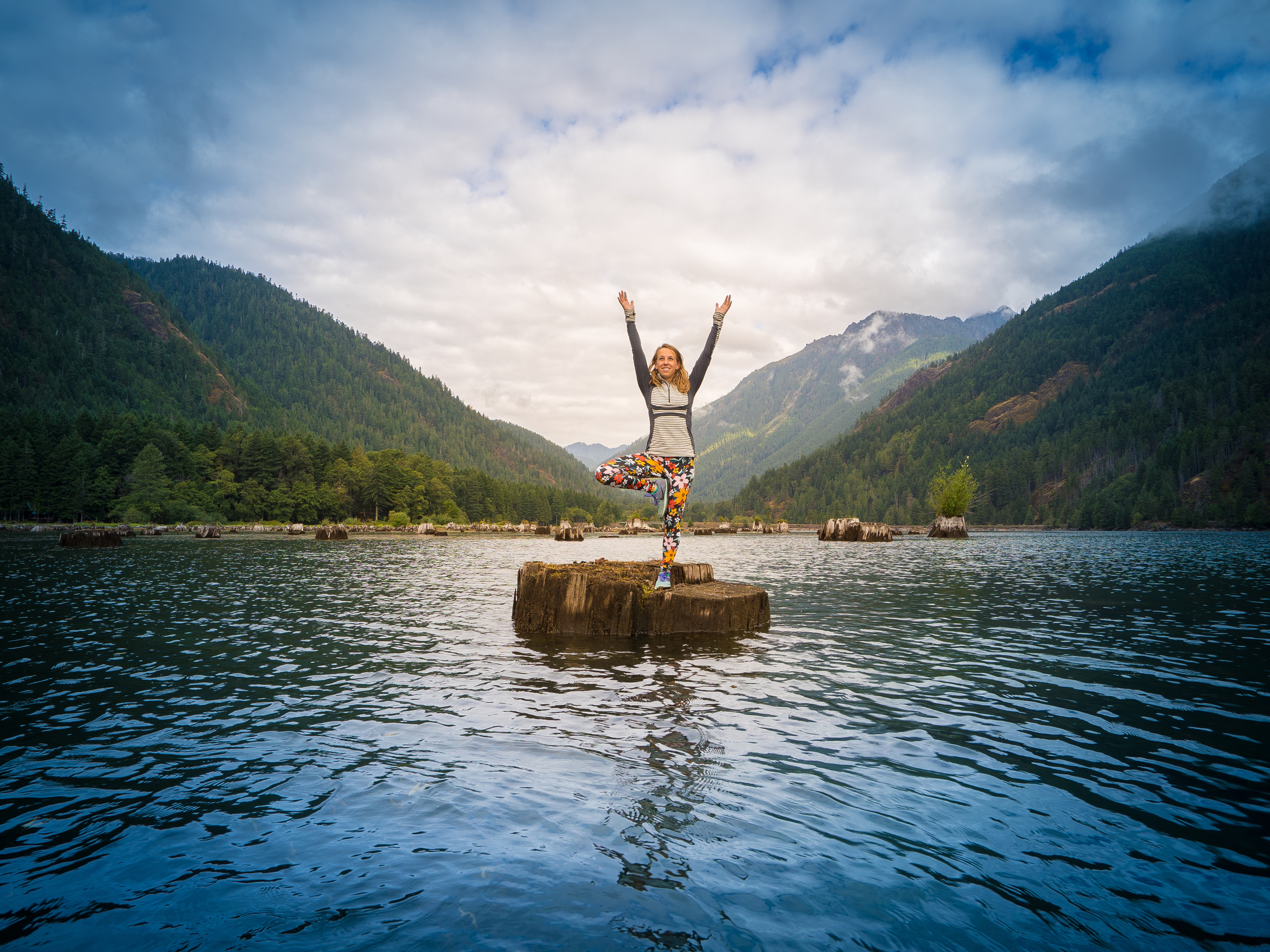
Hood Canal Travel Guide: Outdoor Yoga
Picture this: the full moon slowly rises over the placid Hood Canal, illuminating the rugged Olympic Mountains as you slowly exhale and relax into your tree pose.
Outdoor Yoga Near Lake Cushman
Picture this: the full moon slowly rises over the placid Hood Canal, illuminating the rugged Olympic Mountains as you slowly exhale and relax into your dancer's pose.
Outdoor yoga is something we can get excited about. Leaving all the electronics in the dust and taking our poses into new terrain is a welcome challenge and highly recommended for anyone who owns a mat (or doesn’t yet!).

Although there are a number of yoga classes offered in Hood Canal, we find that it’s just as exciting to find a serene spot in the woods or on the shore. The rich, misty woods smell amazing when you slow down enough to appreciate them, as does the salty, bracing shoreline. Read on for tips and tricks for taking your practice to the next level.
Have a Game Plan
At the risk of sounding counterintuitive to the free-flowing nature of outdoor yoga, it’s important to hone a few of your favorite poses under the guidance of a certified instructor. This can help reduce the risk of injury when you’re on your own.
There are several yoga classes offered in Hood Canal, and our favorites are at Joonbug Yoga in Shelton and Alderbrook Resort & Spa in Union. Joonbug Yoga offers a number of weekly classes, which Alderbrook supplements with weekly and monthly classes. We recommend planning a trip to coincide with both!
Every Tuesday in November and December, a certified yoga instructor from Joonbug Yoga guides a stretching and exercise-focused practice in the heated indoor saltwater pool at Alderbrook. It’s free for resort guests, but there is a fee for non-resort guests. As if you needed another reason to swing by Alderbrook!

Image courtesy of Alderbrook Resort & Spa
Take Om Into Your Own Hands in Union, Washington
There’s an amazingly satisfying and curiously primal aspect to practicing yoga on your own, outside a studio. Break loose from the structure of a guided practice, step onto uneven ground, grab a beach towel and enjoy!
Just as a traditional mat doesn’t translate too well outside of the studio, neither does music. Unplug: leave the noisemakers in the car and embrace the nature-sounds. Though it might be a bit harder to concentrate with the unpredictable bustle of the woods or the shore, welcome the challenge and adapt accordingly.

Focus on balancing poses rather than down dog holds or vinyasa flows. The uneven ground can be hard on wrists, but an engaging challenge for the fast-twitch muscles in your legs.
Above all, be open-minded and allow yourself to explore your yoga practice in a new environment. Be sure to prepare well for a session outside with plenty of warm clothing if you choose to practice in colder temperatures, and sunscreen during the sunnier months.

We can’t wait to see what awesome poses you get into in our glorious backyard! Please share with us using #wildsideWA for a chance to be featured on our social media pages, and sign up for our newsletter to receive email exclusives and special lodging discounts.
Until then, catch you on Facebook, Twitter, Instagram, and Pinterest. Namaste!

Fresh Shellfish from the Source
Want to visit the farmers that wake up on the night tides to bring you the perfect oyster, clam or geoduck? Check out these farms on and around Hood Canal!
In Search of Perfection
Want to meet the farmers that wake up on the night tides to bring you the perfect oyster, clam or geoduck? Check out these farms on and around Hood Canal!

Chelsea Farms & Olympia Oyster Bar
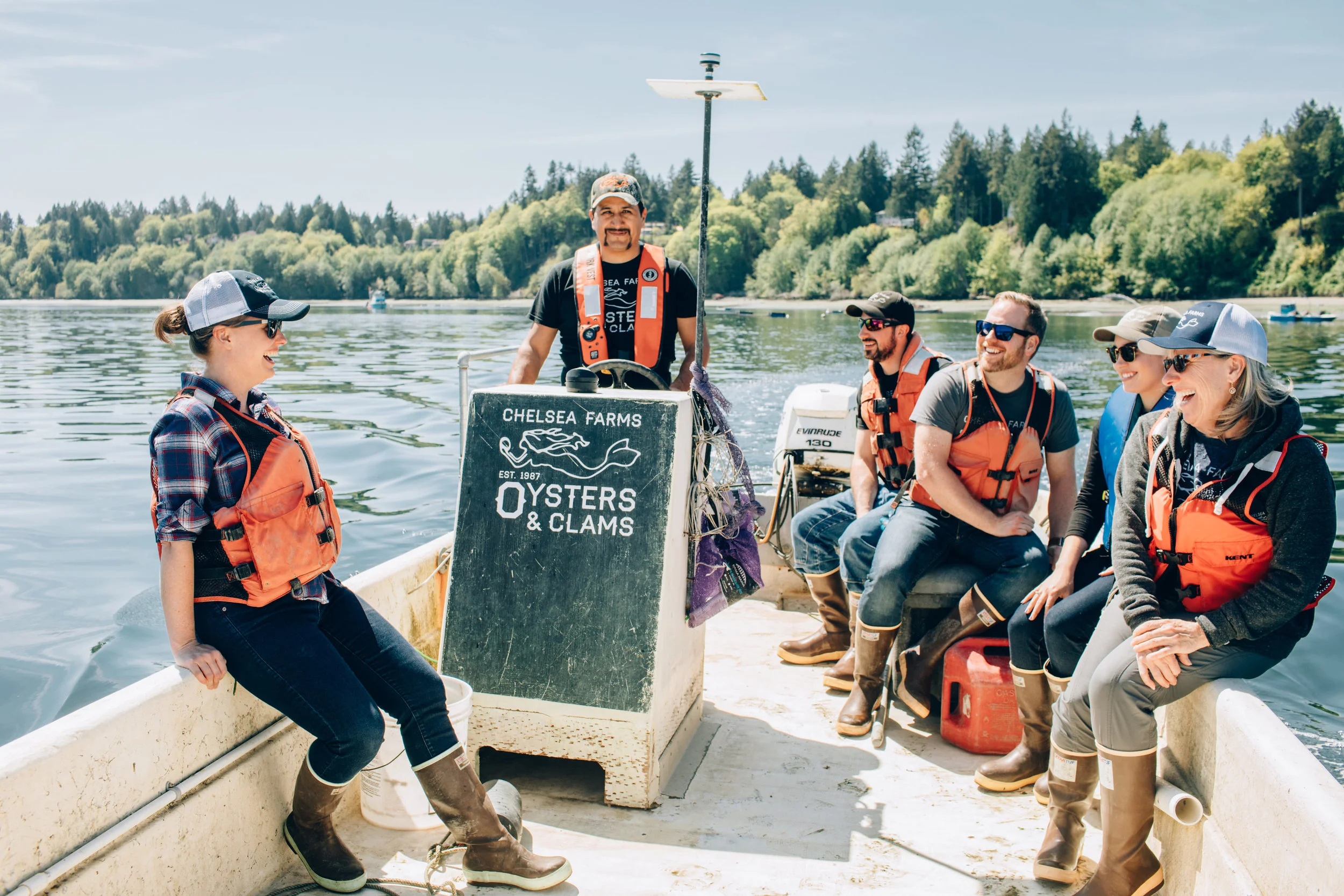
Chelsea Farms | photo:poppi photography
Eld & Totten Inlet
Chelsea Farms is a current working model of environmental sustainability. They have made a priority of farming the Olympia Oyster, a native oyster to Olympia, that was on it’s way to extinction. Specialties include their Chelsea Gem, Bonita, and Olympia Oysters, along with fresh clams and geoduck. Visit their Oyster bar in downtown Olympia to get the ultimate local seafood experience!
Let’s Go:
CHELSEA FARMS OYSTER BAR
222 CAPITOL WAY N, OLYMPIA, WA 98501
Phone: (360) 915-7784
Hours: TUES-FRI 11AM-9PM, SAT 10AM - 10PM | SUN 10AM - 9PM
menu
Hama Hama Oyster Farm

Lilliwaup, Hood Canal
A few years ago the Hama Hama Oyster Co opened their Oyster Saloon in Liliwaup. This high energy destination serves oysters pulled from the last tide and prepared to order with an ever changing menu of seasonal local ingredients. In their retail shop you can purchase a variety of their Hood Canal product including salmon and oysters smoked on site. Hama Hama is a 5th generation family run farm with a reputation for quality and environmental mindfulness.
Let’s Go:
HAMA HAMA OYSTER CO
35846 US-101, Lilliwaup, WA 98555
PHONE: (360) 877-5811
FALL Hours: Farm Store Daily 9:30 to 5:30
Oyster Saloon Thurs - Mon 12:00 - 5:30 (Closed Tuesday & Wednesday Starting 9/5)
Shellfish is available in their retail store, Saloon and at parent restaurants throughout the Northwest.. Product also available online and shipped directly to your home.
Olympic Oyster Co. & Mike’s Beach Resort

Eldon, Hood Canal
Third-generation farmers, Matthew and Sara are serious about producing some award winning oysters on site for market and available at restaurants as far away as New York. Guests staying on the active farm aka Mike’s Beach Resort have first dibs on some of the freshest oysters on the fjord!
Let’s Go:
Mike’s Beach Resort
38470 N US Highway 101, Lilliwaup, WA 98555
Phone (360) 877-5324
Waterfront cabins and rooms, with view of the canal.
Taylor Shellfish
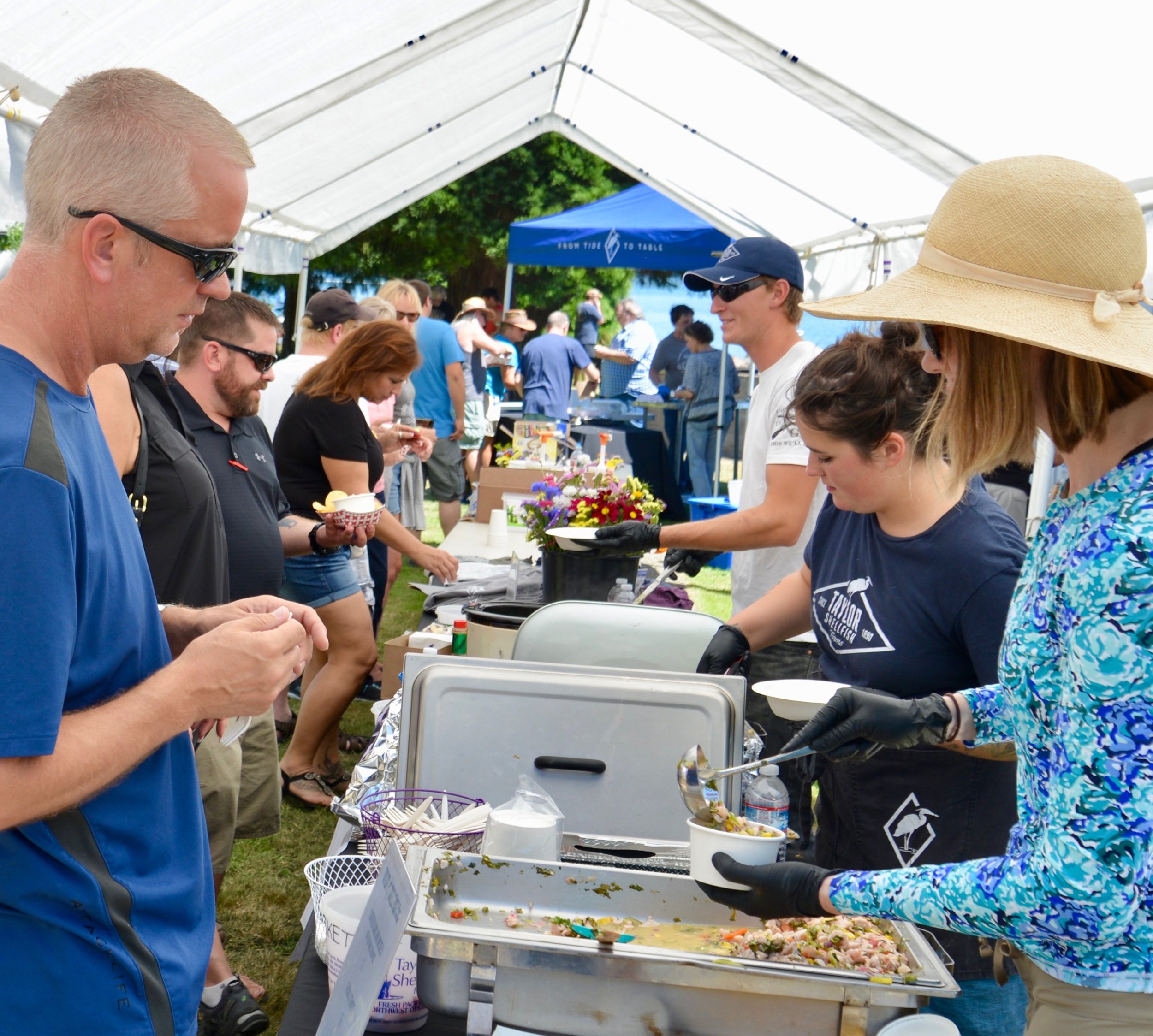
South Puget Sound and British Columbia
Stop in at Taylor Shellfish’s headquarters and visit their market near Shelton. Taylor’s specialties include the famed Kumamoto (sweet fruity flavor) and the Virginica (Crisp, briny, and buttery). The company has been farming oysters on Puget Sound since the 1890’s when great-grandfather Justin Taylor began farming Olympias. Five generations later, the company’s product line includes worldwide export of geoduck, clams, and mussels along with oysters.
Let’s Go:
TAYLOR SHELLFISH RETAIL STORE
130 SE Lynch RD Shelton WA, 98584
PHONE: (360) 432-3300
Hours: Monday - Sunday: 10am - 6:00pm; Closed all major holidays
Shellfish is also available at one of their many locations throughout NW Washington. Product also available online and shipped directly to your home.
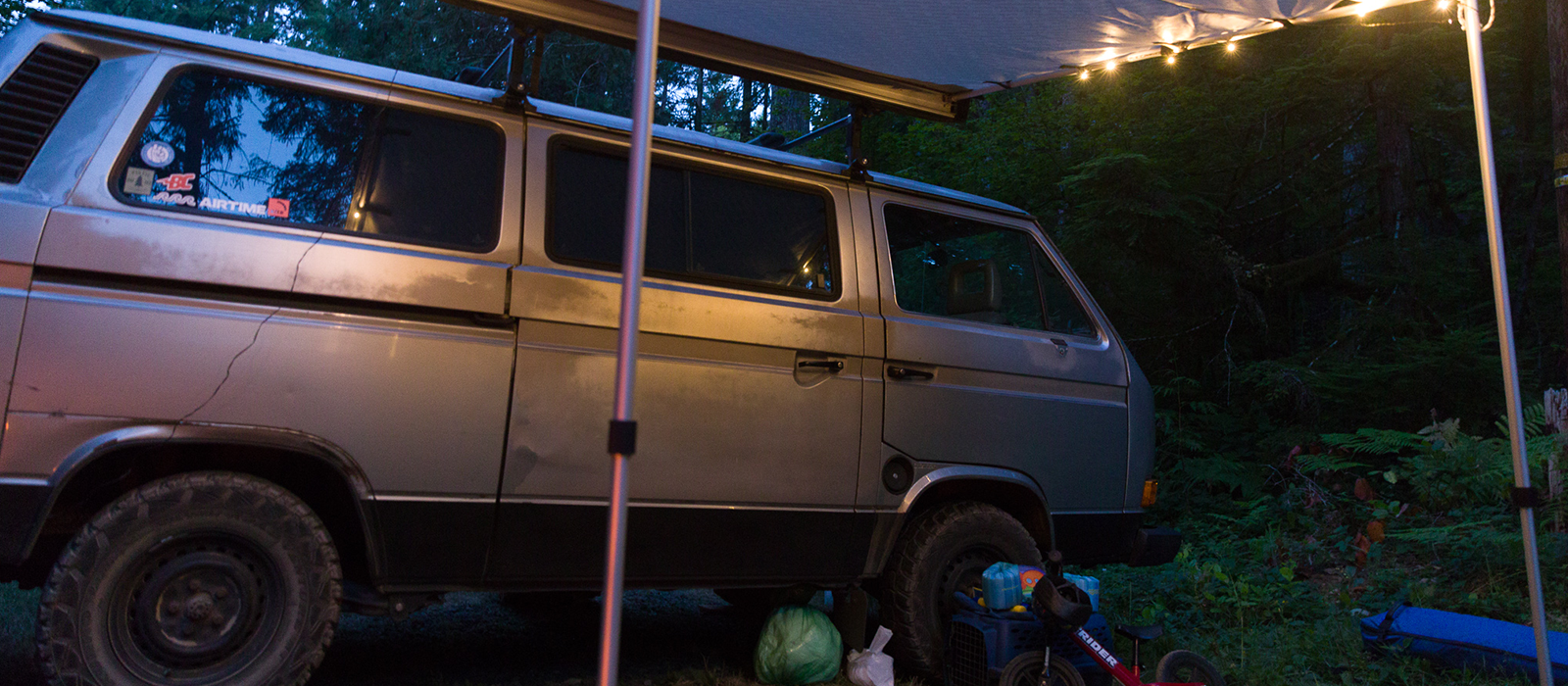
Wild Side Explorer Series: VanLife
When the plans are set, the coolers are full, and the phones lose cell phone service, that’s where the good, quality livin’ happens. Watch as two families take on VanLife at Lake Cushman.
Raising wild ones: it’s an art form, really. Keeping kids’ curiosity satiated, making sure each day brings something new and exciting, and, of course, maintaining your own sanity all the while is a massive undertaking. And there’s no perfect formula. But after the plans are set, coolers are full, and the phones lose cell phone service, that’s where the good, quality livin’ happens.
When most Seattle families pack up the van and zip out of town for a long weekend in the woods, hightailing it westward to Olympic National Park’s misty beaches is a no-brainer. Just outside the eastern entrance to the national park, you’ll discover a world of hidden gems, quiet nooks, and kid-friendly, no-holds-barred adventure in the fjord of the Puget Sound that is Hood Canal.
Watch two families discover VanLife magic at Lake Cushman:
When the plans are set, the coolers are full, and the phones lose cell phone service, that's where the good, quality livin' happens.
Day 1: Bremerton Ferry > Bent Bine Brew Co. > Skokomish Park
1:30 PM | Ferry Departure at Pier 52
Sure, I-5 to WA-16 W saves a bit of time (though you’ll have to weather the always-ungodly traffic in Tacoma), but there are not many things that enchant little ones like a ferry ride. Sweeping views of downtown Seattle and the iconic Space Needle slowly fall away as the Olympic Mountains rise in the foreground. Hello, sensory overload.

3 PM | Beers & Games at Bent Bine
“Hop for the better, hope for the bitter!” this freshly minted brewery proclaims as you stride through the door. But if you’re like us, you’ll hope for light and drinkable which is just what their pale ales and their Bavarian-style Weissbier serves up. Taste your way through them all as the kids stay effectively entertained with corn hole.

6 PM | Set up Camp at Skokomish Park
Bring your mountain bikes, swimsuits, and lounge chairs—Skokomish Park offers a bit of just about everything. Each tent site (or in our case, VanLife site) has a fire pit, picnic table, tent space, and parking for two vehicles. Plus, each loop has restrooms and showers. If you forget anything or feel like renting a kayak, extra SUP, or the like, the welcome center at the day use area has you covered.
Day 2: Lake Cushman
We operate on the conviction that the best days are lake days (second only, perhaps, to days spent on Hood Canal). With the sandy shoreline of Lake Cushman, a fly rod, kayaks ir SUPs, and super fresh crab over the fire for dinner, and cheers to a day well spent.

Day 3: Lake Cushman > Twanoh State Park > Home
11 AM | Hightail it to Twanoh State Park
Situated on the eastern shores of Hood Canal, Twanoh State Park is the perfect place for beachcombing and breathing in the ocean air before you board the ferry for home. As an added bonus: it’s one of the warmest saltwater beaches in the state! If you fancy yourself a seafood connoisseur, harvest a handful of oysters and shuck then eat them right on the beach! (State law mandates that you harvest no more than 18 oysters measuring over 2 ½ inches and shuck and eat them on the beach, leaving behind the shells). For complete up-to-date oyster information, click here.
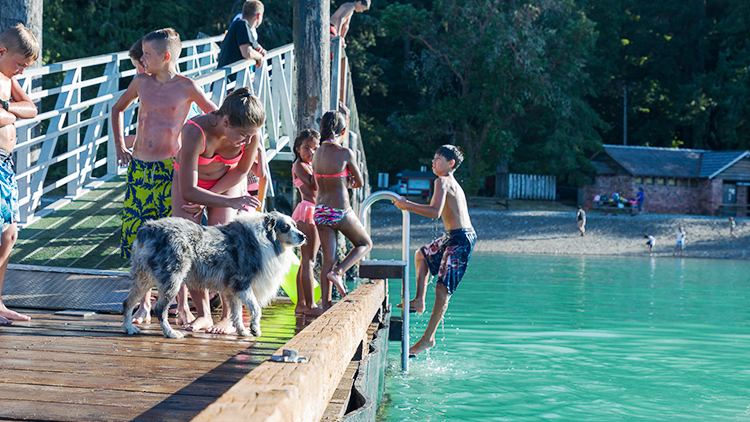


Hood Canal "Glamping"
If your idea of a camping excursion is freeze dried food and dry shampoo – and luxury to you is a bed of moss under your sleep sack or a solar-powered lamp – "glamping" may not hold much interest for you. Glamping or "glamor-camping" as the name suggest, goes WAY beyond the coleman stove and solar shower upgrade. If you crave a star-studded forest canopy while enjoying gourmet camp cuisine and all the comforts of home – bed, pillows, duvet, light switches– glamping may be a great compromise to get outdoors!
If your idea of a camping excursion is freeze dried food and dry shampoo – and luxury to you is a bed of moss under your sleep sack or a solar-powered lamp – "glamping" may not hold much interest for you. Glamping or "glamor-camping" as the name suggest, goes WAY beyond the coleman stove and solar shower upgrade. If you crave a star-studded forest canopy while enjoying gourmet camp cuisine and all the comforts of home – bed, pillows, duvet, light switches– glamping may be a great compromise to get outdoors!
Header Image credit: Poppi Photo
One of the best thing about "camping" is relaxing with a final roasted marshmallow and a steaming mug of hot chocolate. Wrapped in a cozy blanket, the tall trees keep you close in the inky darkness beyond the glow of the fire. Far from the glow and clatter of the city, the sky displays a covering of unrealistically bright stars. Good conversation and the people you love surrounding you. Who wants to consider the uncomfortable night ahead? Rocks in your lumbar. Slick "high performance" sleeping cocoons that tangle and suffocate. Never mind the 3:00 AM Call of Nature. Stumbling through the dark stubbing toes and tripping over roots.

Trailer camping is technically considered in the "glamping" category, above the waterfront view and tall trees at Twanoh State Park, Hood Canal definitely set the standards high.
Enter glamping. A purist would say if you want the experience of camping you need to embrace the whole experience, not cherry-pick the best parts. Galen Patterson, a journalist with Arcadia Weekly, remarks in a recent article, "in its luxury, comfortable camping (glamping) loses what makes the experience worth the discomfort in the first place." He goes on to say that, "instead of connecting with nature and all of its uncomfortable facets, people are bringing the comforts of home with them, and, in doing so, are sapping the spirit of what it means to connect to the outdoors." Patterson advocates that through discomfort and deprivation, he "finds appreciation and, with it, follows a new zest for life."
Hmmmm. So unless you are suffering you will not appreciate the wilderness? Good riddance. Rough camping has its place – when space is limited in your kayak or you are pack/wilderness camping and every extra ounce needs to be "weighed" in necessity. However, if you can enhance the joy of spending time outdoors by increasing the comfort level – there is no shame in that!
There are plenty of definitions of glamping. Some feel that cooking on anything beyond an open campfire is glamping. Others consider having cell service a mark of glamor camping. Perhaps it's sleeping in a bed off the ground, in a cabin or RV. Whatever the case, glamping is a more glamorous spin on camping and it is bringing a whole new level of interest to the camping scene. Love it or hate it, glamping is a thriving trend that continues to grow.
Give it A Try....
Belfair State Park is a 65 acre, year-round camping park on 3,720 feet of saltwater at the southern end of Hood Canal. It is noted for its saltwater tide flats, wetlands with wind-blown grasses and pleasant beach walking and swimming. Cabins sleep five and are furnished with tables and chairs. Outside is a picnic table and fire pit. Bathrooms and showers are nearby. All cabins are heated, but visitors should take along blankets and warm clothing as evenings can be cool. Belfair cabin rates range from $40 (off-season) to $69(peak). Reserve
Dosewallips State Park offers canvas platform tents for rent. Situated in a maple forest near the Dosewallips River, the tent sleeps up to five people. Made of white canvas on wooden platforms, they are light inside, even on cloudy days. Each tent has three bunks, a futon, lights, table and heater. Outside is a deck, picnic table, fire grill and utility hookup. Bathrooms nearby. All platform tents are heated but campers must bring their own bed linens. Cabins at Dosewallips are situated among evergreen trees looking towards the Olympic Mountains. Each cabin features a covered porch, electric heat, lights and locking doors. Bathrooms are nearby. Tent and cabin rates range from $40 (off-season) to $69 (peak). Reserve

Hamma Hamma cabin is available through the Olympic National Forest
The Hamma Hamma Cabin in the Olympic National Forest is a historic cabin that offers guests a tranquil setting. Formerly a guard station, the cabin was built in 1937 by the Civilian Conservation Corps. The site is nominated to the National Register of Historic Places for the skill and craftsmanship that went into its construction and architecture. The cabin is open year-round. Accommodating up to six guests, the single-story cabin features a living room with a hexagonal bay window overlooking the Hamma Hamma River drainage. There are two bedrooms, one with a double bed and one with bunk beds. The bathroom has a flush toilet. The cabin is equipped with a propane heater and propane lights. An outdoor picnic table, fire ring and pedestal barbecue grill are available for cooking and campfires. Guests provide their own bedding, linens, towels, dish soap, matches, first aid kit, toilet paper and garbage bags. Reserve
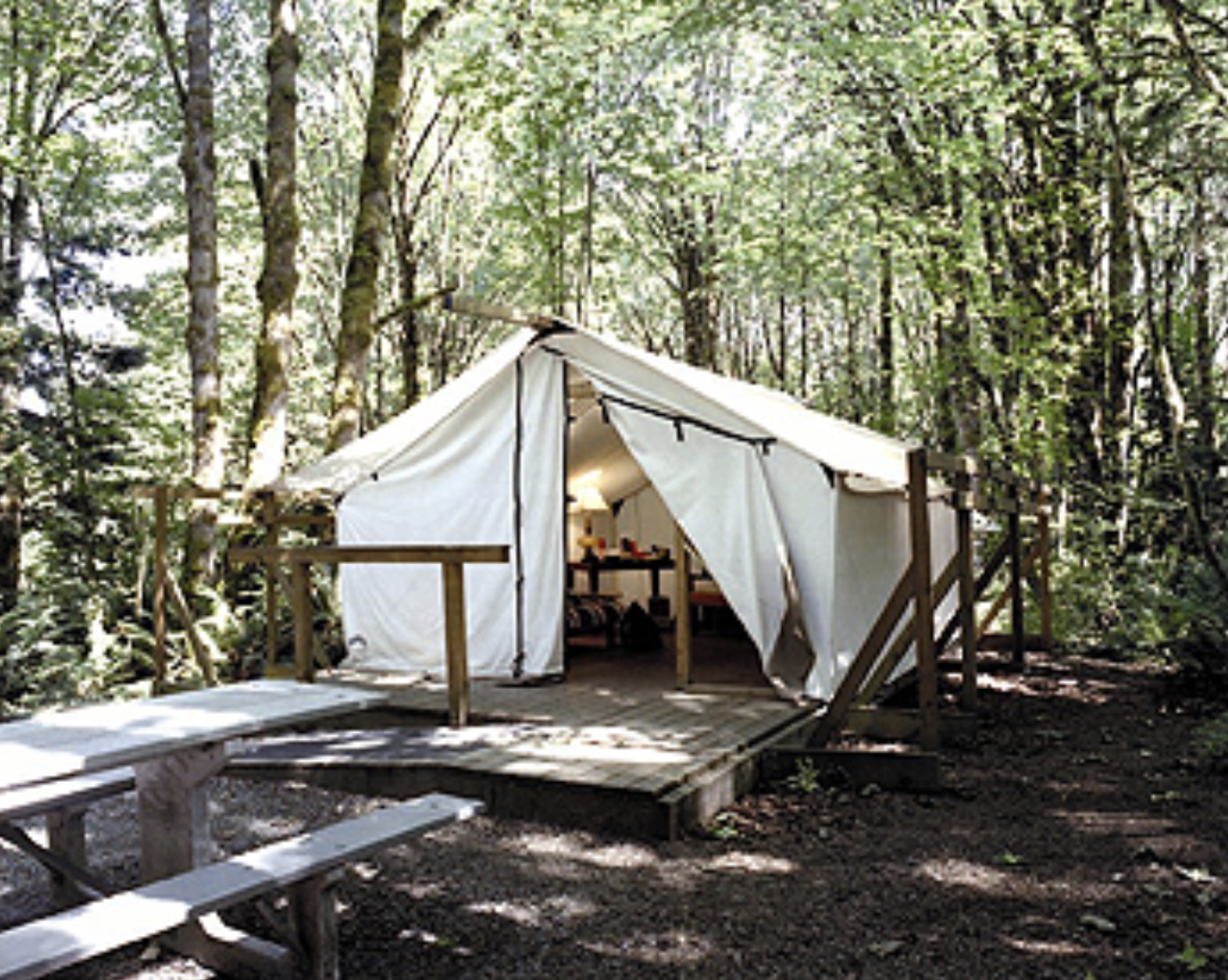
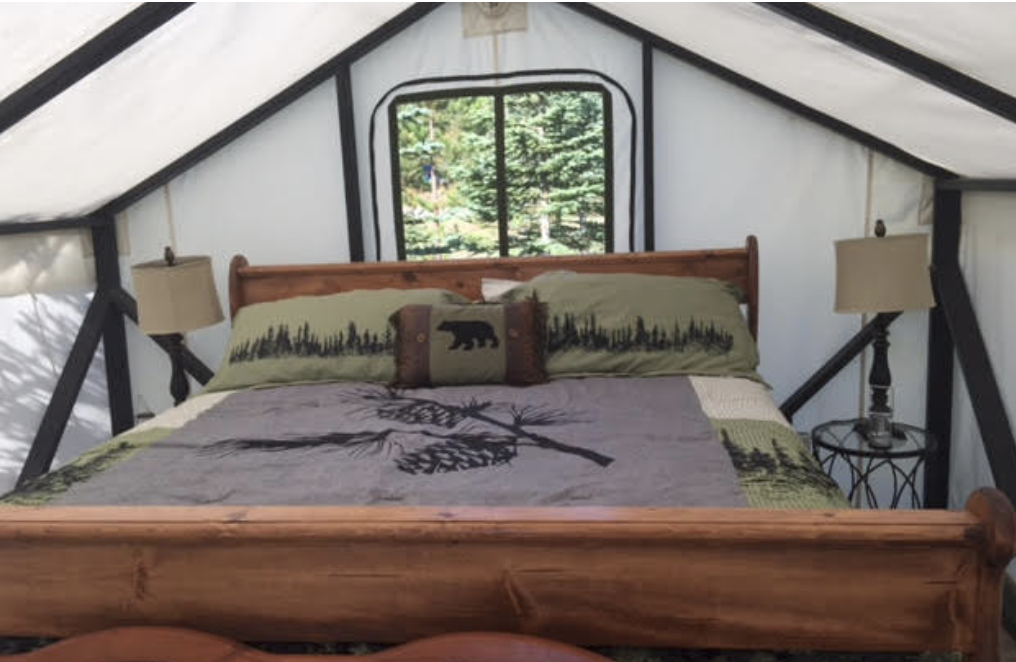
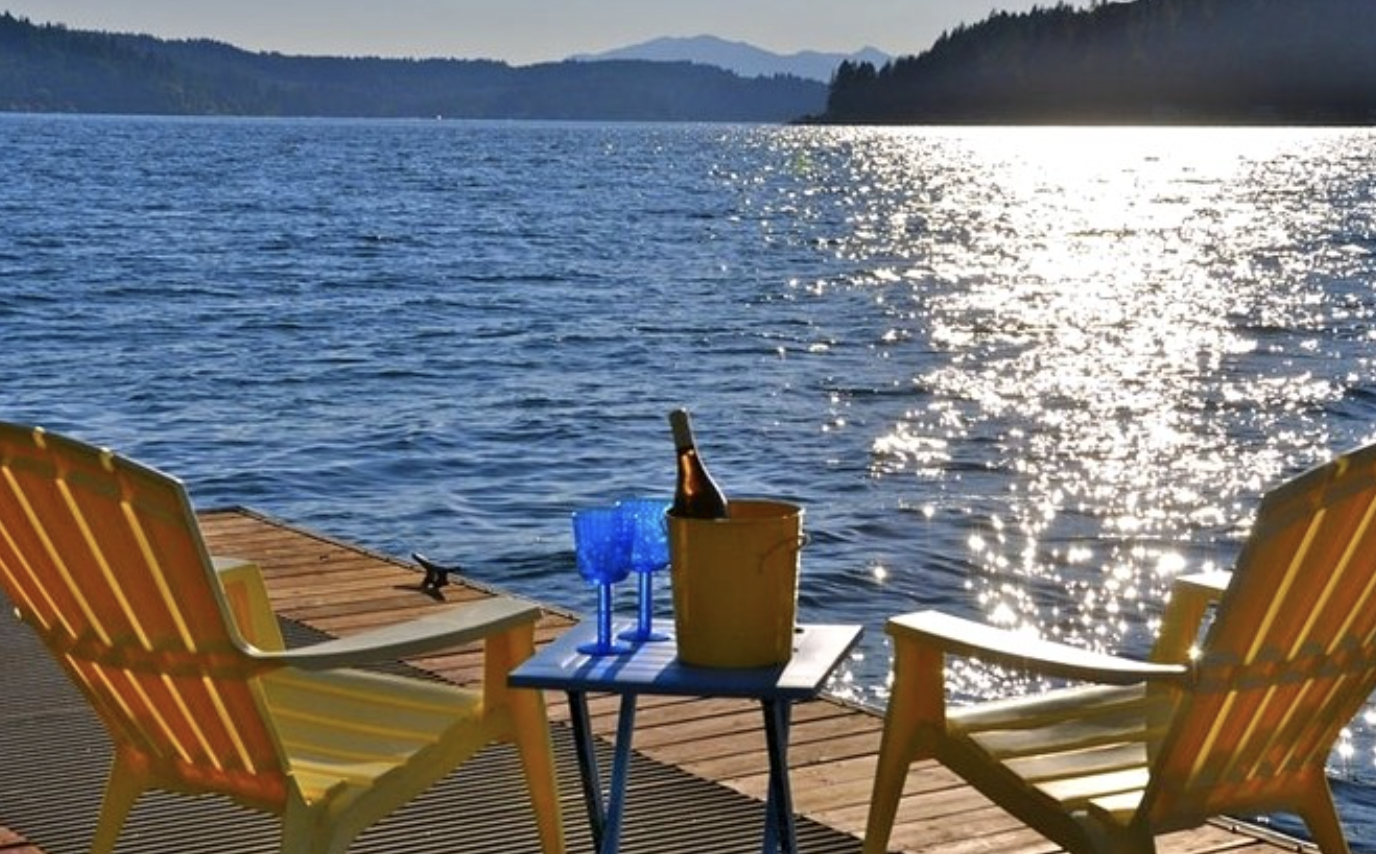
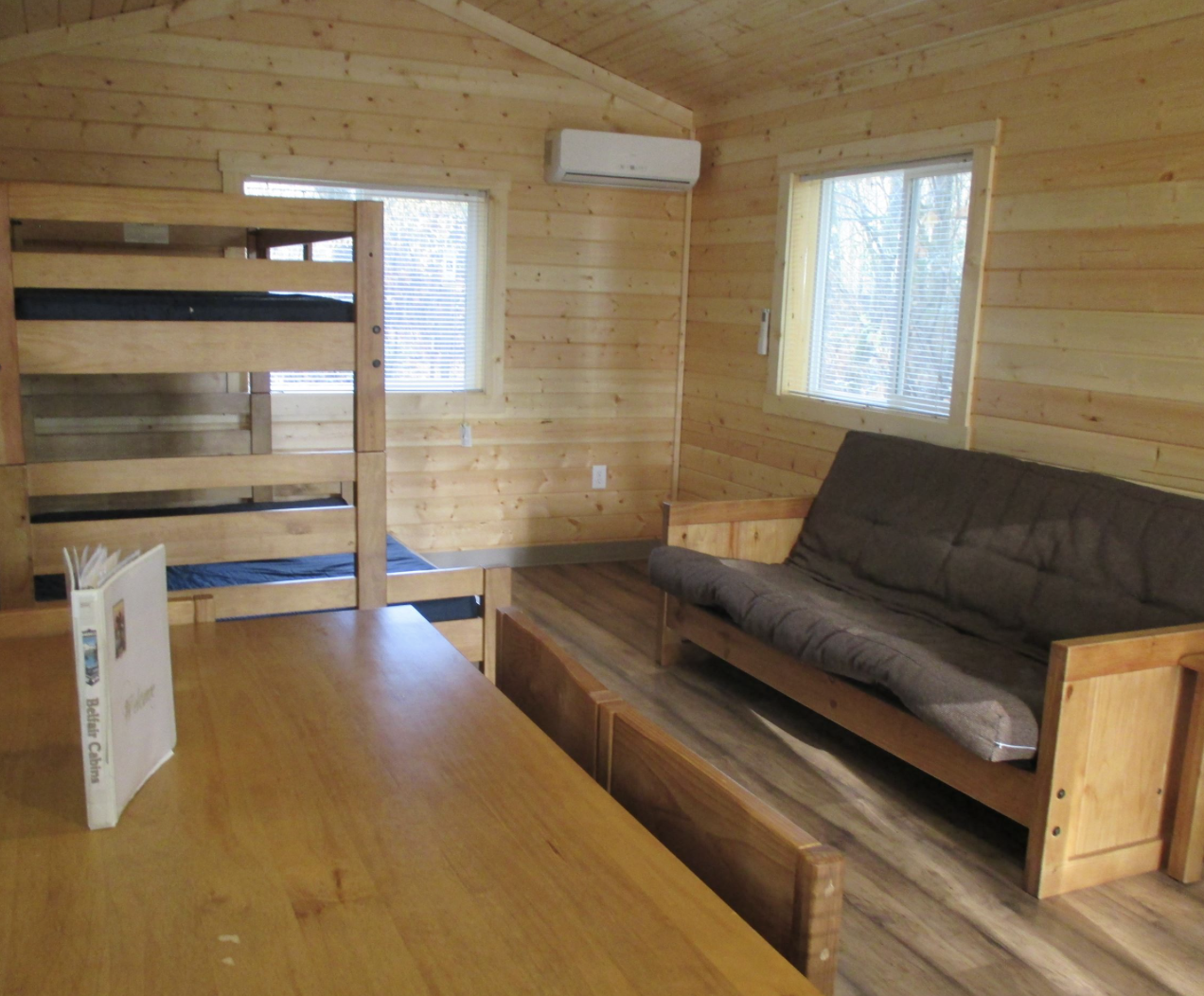
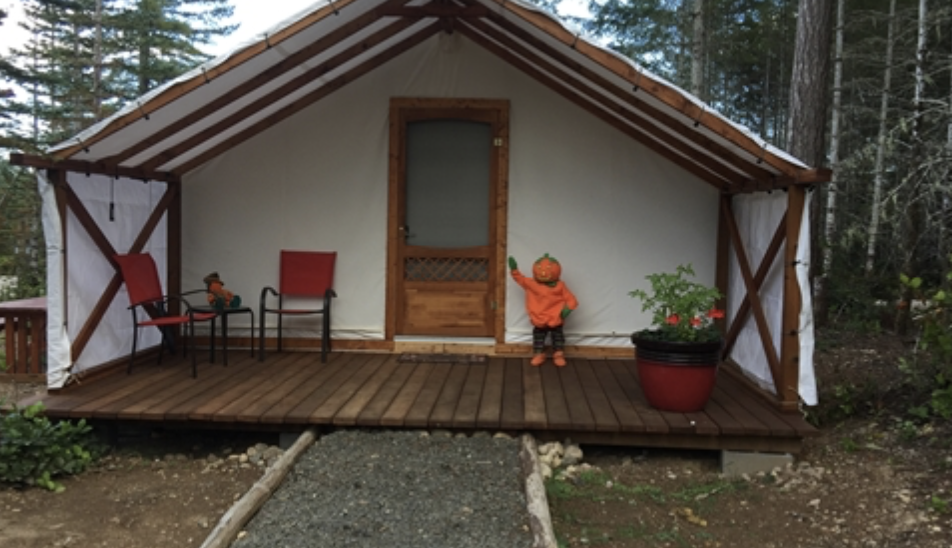
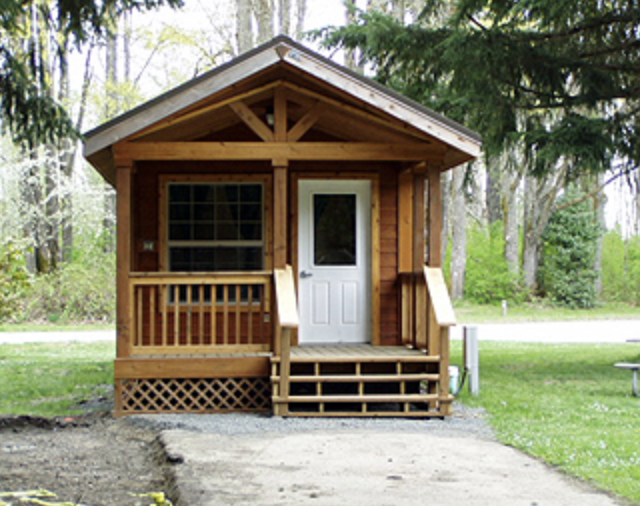
Located in Union, the Pebble Beach Cottage has two beds, one bathroom and can sleep up to 5-6 guests. Sitting approx. 75 feet from the water it has a beautiful view of the canal, and surrounded by a cedar forest. This carriage house is a bed and breakfast style stay with a part-time caretaker on sight. Guests enjoy privacy of a vacation home, (as this property is completely separate from the main house), yet access to concierge services. (Rate $195) Reserve at glampinghub.com.
The Tahuya Adventure Resort is located in the heart of the Tahuya Forest past Belfair. Featuring campsites with hook-ups and luxury platform tents, this is glamping heaven! The Log Cabin tent features a king size log bed, bunk-beds, oversized chairs and tables, pellet stove, carpet, refrigerator, microwave, and a coffee pot. Each site has an outdoor picnic table and fire ring or you are welcome to use their covered kitchen. (Rate $500/2 nights) Reserve at tahuyaresort.com.

The ultimate "glamping" experience can be provided by Hood Canal Events located in Union, WA. For a fee they can arrange the perfect getaway for you and your signifigant other – or the whole family. From setting up the camp & tent (pictured above) in a spectacular location, arranging tours, hikes or kayaking expeditions, to chef prepared gourmet meals in your camp – Jeff and Kerry can take care of it all for you. Call them directly at (360) 710-7452 or visit hoodcanalevents.org. Photo Poppi Photography
Hood Canal Events, based in Union, can provide unique glamping experiences. Offering everything from a Hood Canal beach glamor picnic (great for intimate gatherings, family picnicking, lounging, or celebrations) to a fully catered overnight trip, they can arrange special requests your group may have. Hood Canal Event's packages include furnishings, amenities, activities (kayaking to mushroom foraging or live music) and a chef for locally prepared food and beverages. Overnight glamping packages are available. For information on rates or customizing an experience, call (360) 710-7452, or visit hoodcanalevents.org.
Above are just a few ways you can elevate your "glamping" experience on Hood Canal. There is no wrong way to do it. If you prefer backcountry camping, with your home on your back and no connection to civilization, the Olympic National Park has that too. Camp for days and never see another soul in the backcountry areas. Talk about "finding appreciation."
If camping or glamping is not your thing thats cool too. Hood Canal and South Puget Sound have wonderful guest lodging and rentals right on the beach – with power and flush toilets. Visit explorehoodcanal.com/lodging for a complete list that is updated weekly.
Whatever you choose, just get out there and create some great memories – stubbed toes or not!
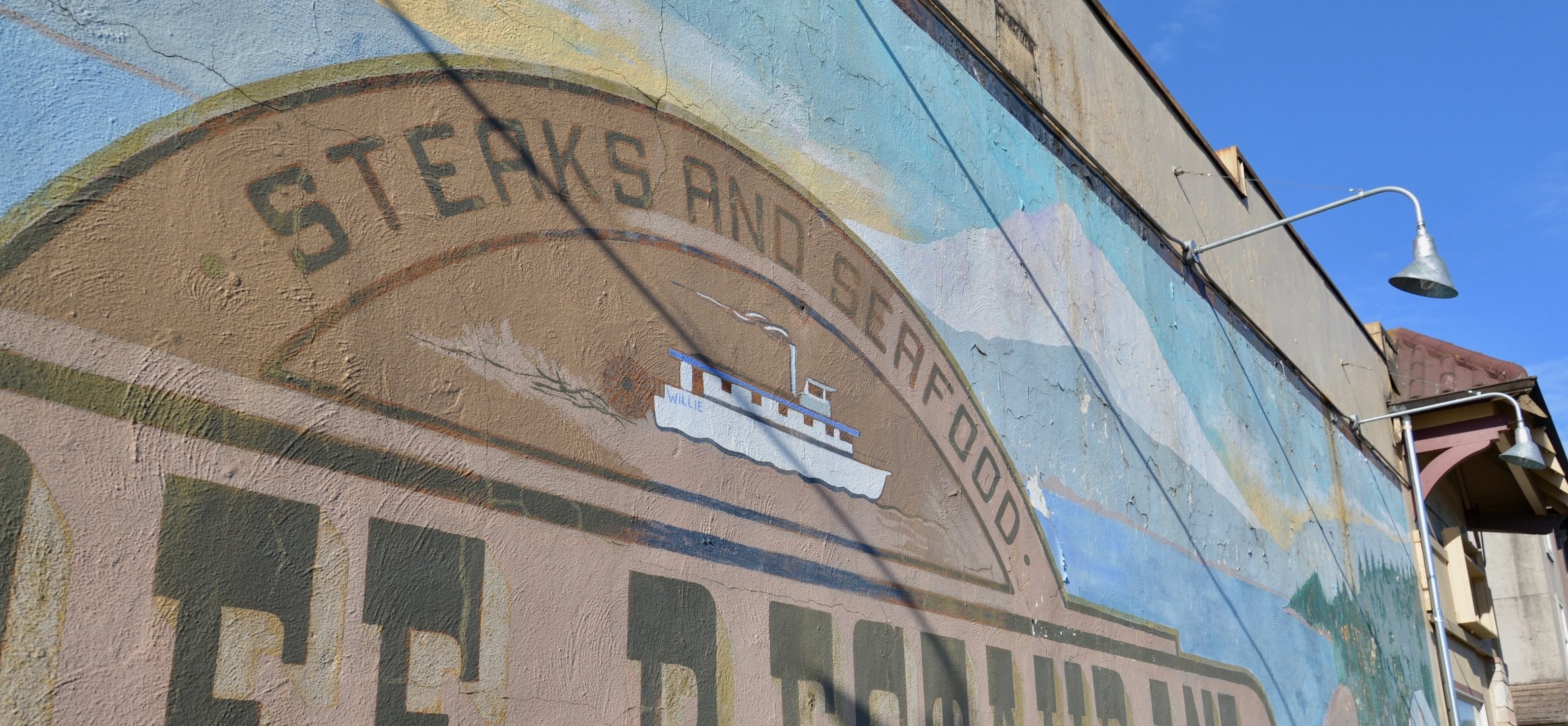
When Waterways were Highways | Mosquito Fleet
Before automobiles and highways paved the way to land transport, the waterways of Puget Sound were essential for transporting goods and people. During the early 1900’s Hood Canal and the inlets of South Puget Sound were alive with a network of ships affectionately dubbed the “mosquito fleet.”
Before automobiles and highways paved the way to land transport, the waterways of Puget Sound were essential. When settlers first came to these inlets to homestead, Native American canoes and small watercrafts were the best method of transport. But this method of passage often required Native American guides, traveling in an open canoe for several hours and the man-powered craft was at the mercy of the strong tides, currents and weather of the Puget Sound waterways.
Towards the turn of the 19th century, the canoes were replaced as steam powered sternwheelers, side-wheelers and propeller crafts became available—which were capable of comfortably taking many passengers and freight.
These crafts became so ubiquitous and plentiful that they have been dubbed the Mosquito Fleet of Puget Sound. Later, as ships became tailored for these routes, more luxurious on-board amenities were provided, such as white table cloth dining and unusually, aboard the Eliza Anderson, the steam engine was put to further use as it powered a calliope – a keyboard instrument similar to an organ with music produced through a series of steam whistles. In many areas, such as the route between Seattle and Tacoma, the Mosquito Fleets established the routes later followed by the Washington State Ferries.

117' sternwheeler, S.G. Simpson in Oakland Bay, Shelton, circa 1911, making the trip from Shelton to Olympia in just 90 minutes on a outgoing tide. photo: Mason County Historical Society.
Perched on the Hood Canal, Case Inlet and Hammersley Inlet, Mason County, in particular, relied on the ships of the Mosquito Fleet to connect it with the hubbub of the rest of the State. Mail, supplies and later tourists were brought in by ship and local products such as oysters, salal, timber and canned fish were shipped out. Shelton and its early lumber industry was serviced by several ships, connecting it to Olympia. The Willie, Clara Brown, The Doctor, The Josephine, City of Shelton, Irene, Agnes, S.G. Simpson, Marie and the Emrose were just a few of these ships serving Shelton, Oakland Bay and Hammersley Inlet from the 1880s to the mid-1920s.

City of Shelton at Shelton Harbor on Oakland Bay
The 110-foot sternwheeler City of Shelton was built in 1895 in Shelton for the Shelton Transportation Company to replace the Willie on the Shelton-Olympia Route. According to historical gossip, the nick-name for the City of Shelton, propagated by the competing crew of the Marie was “Old Wet-Butt,” as she was built without a guard for her paddles causing water to splash up her stern. Captain and crew of these boats had to travel without the modern aids of GPS and sonar, using landmarks, compasses and problematic techniques such as rudimentary echolocation. As such, there were many marine accidents – some resulted in tragic loss of life and others were harmless such as the grounding of the City of Shelton on the tidal flats of Arcadia Point. Coming too close to shore on a low tide, in a thick fog, the City of Shelton was grounded for some time as the passengers and crew had to wait for the tide to rise to free her. Seizing upon the opportunity, the cook had himself lowered ashore on a bosun’s chair where he harvested three geoducks. Before the tide had risen he had made chowder to the delight of the passengers and the slight annoyance of the Captain who is recorded to have remarked: “Yah, you t’ink a steamer iss to dig clams.”
In 1907, the City of Shelton was replaced by the 117-foot sternwheeler, S.G. Simpson named after the logging pioneer Sol G. Simpson. The S.G. Simpson was much more efficient, she could make the trip from Shelton to Olympia in 90 minutes on a good tide. She served for many years, and she was the last of the Mosquito Fleet to run the route between Shelton and Olympia.
The communities of the Hood Canal provided many “whistle stops”—or quick stopovers—for the Mosquito Fleet. Boat day was an important occasion as freight, mail and news came in from the outside world. The story of the propeller steamer, the Dode and her stalwart skipper offers a snapshot into the enterprising services each of these ships struggled to provide. Originally called the William Bryant, she had previously been used as a “coffin-ship” transporting desperate gold-miners to Alaska in the 1890s. She was purchased in 1898 and renamed the Dode by Capt. Dan Troutman after his wife Dora Wells Troutman (1860-1937). This was the second ship of their flotilla and it was to be run by Dora who was also a licensed captain. She was highly respected and could do everything from setting the boilers to manning the tiller, to unloading freight. The Dode had an extensive overnight route, traveling from Pier 3 (now Pier 54) in Seattle to Union City, with stops along the way in Kingston, Port Gamble, Seabeck, Brinnon, Holly, Dewatto, Lilliwaup Falls and Hoodsport.
As well, the Troutmans were instrumental in delivering the mail and installing the postal system along the Hood Canal. The Troutmans picked out potential post offices and postmasters and gained direct approval for these choices from US Mail representatives whom they transported out to the Hood Canal to inspect their selections.
In 1899, Dora was met with crushing debt when her husband suddenly disappeared. Although she hired detectives, he could not be found—but it was discovered that before he left, Dan had sold their first boat the Delta and these funds were missing with him. It was rumored that he took the money and made for England.

Dode, wrecked in Puget Sound, 1910
The Dode was seized for arrears. Dora managed to have the Dode released back to her, and she operated her for another year attempting to get ahead of the debt, but in-the-end Dora was left with no option but to file for bankruptcy. Dora was forced to sell the Dode and a large part of their farm in Lilliwaup. However, on her remaining property in Lilliwaup she turned her hand to hospitality, and built a hotel in 1910, which she ran successfully until 1927.
Other ships of the Mosquito Fleet filled the gaps lefts by the Dode and Dora in the Hood Canal, and in 1914 early roadworks began to connect these places by car. In fact, Dora was the first woman to drive by automobile from Lilliwaup to Port Townsend along the newly completed Olympic Highway – an accomplishment of which she was very proud.

Mosquito Fleet Winery tasting room is located in Belfair WA, and is open every Saturday 12-5 PM and Sunday 12-4 PM.
Although the practicality has passed away, the romance and legend of the Mosquito Fleet still lives on in Belfair. Mosquito Fleet Winery takes inspiration from the stories of ingenuity and endurance that made these little ships connect small communities with the major metropolises of Olympia and Seattle. Each of the winery’s award-winning vintages has a specially illustrated ship of the Mosquito Fleet adorning its label that share the stories of these little ships-that-could with a wider audience.

Tracing the Fjord
The Hood Canal fjord formed during the Late Pleistocene era approximately 13,000 years ago when the Cordilleran Ice Sheet retreated. The ice sheet excavated the channels of Puget Sound, Lake Washington, Hood Canal, and other long, straight valleys in the Puget Sound area.
Like a giant fish hook snaking around glacier capped peaks, lush rain soaked forests and spanned by a web of waterways and inlets, the Hood Canal is poised to catch your imagination and reel in memories for years to come.
The Hood Canal fjord formed during the Late Pleistocene era approximately 13,000 years ago when the Cordilleran Ice Sheet retreated. The ice sheet excavated the channels of Puget Sound, Lake Washington, Hood Canal, and other long, straight valleys in the Puget Sound area.
“Christened “Hood’s Channel” by Captain Vancouver when he traced the shores of the sixty mile fjord in May 1792, the Twana people have called this hook of saltwater “home” for countless generations before European arrival.”
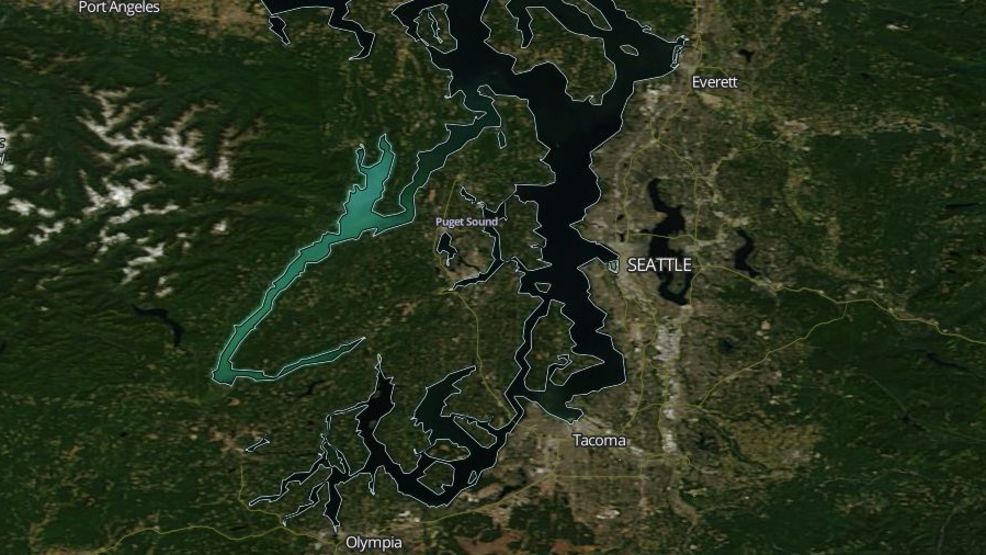
A NASA MODIS satellite image showing the teal-colored Hood Canal as a 2017 plankton bloom covers the Canal a harmless but tropic aquamarine. (Photo: NASA/MODIS)
The curious question as to how did the massive glacier turn in it’s course to create the “hook” may be answered by examining a combination of forces including the formation of great glacial lakes and erosion. The broad valley of the Skokomish River joins the southern tip of the Canal from the west in much the same way as the arm “hook” joins from the East.
As the Skokomish valley cut down through the valley it joined the glacier lake with the major fjord thereby creating the “L- shaped” channel. This troughing of the glacial till and erosion may account for the massive sills of glacial sediment that make up the sea floor in many areas of the Canal.
Christened “Hood’s Channel” by Captain Vancouver when he traced the shores of the sixty mile fjord in May 1792, the Twana people have called this hook of saltwater “home” for countless generations before European arrival.
Spending winters in villages near the mouths of the major rivers, the Twana people lived in cedar plank homes and enjoyed a rich culture and livelihood on the fjord. Salmon, clams, plants, and game provided year round generous bounty for their families.
The warmer months were marked with visits to neighboring settlements as well as further journeys to trade with people from as far away as what is now Alaska’s outer coast.
In 1792, Vancouver ventured into Hood Canal in longboats. He left his ships, the Discovery and Chatham, in nearby Port Townsend. Vancouver and his crew journeyed as far as the mouth of the Skokomish River, where Menzies, his botanist, was amazed by the rich vegetation as well as the natural beauty of the area. He wrote in his journal, “here the arm was hemmed in by lofty Mountains on one side and low flat country of considerable extent on the other.”
After a few days of exploration and trade with the Twana people, Vancouver and his men retraced their path out of the Canal leaving behind a legacy of European names in their wake.
Over two centuries later the Canal remains much the same. The settlements are replaced with small towns and knots of houses. Harvested hillsides have regrown new forests. The water route is replaced with a two lane highway that follows the shoreline.
“As Highway 101 meanders along the canal edge, we pass pockets of civilization and catch glimpses of the beauty through the trees.”
Hood Canal is renown as a diving mecca as its glacial fjord formation caused underwater biomes that appear no where else. Adventurers travel worldwide for the area’s spectacular hiking, boating, fishing, camping and relaxing opportunities. Heralded for its rich timber history and aquaculture resources it is the place where many of us choose to raise our kids and build our livelihoods.
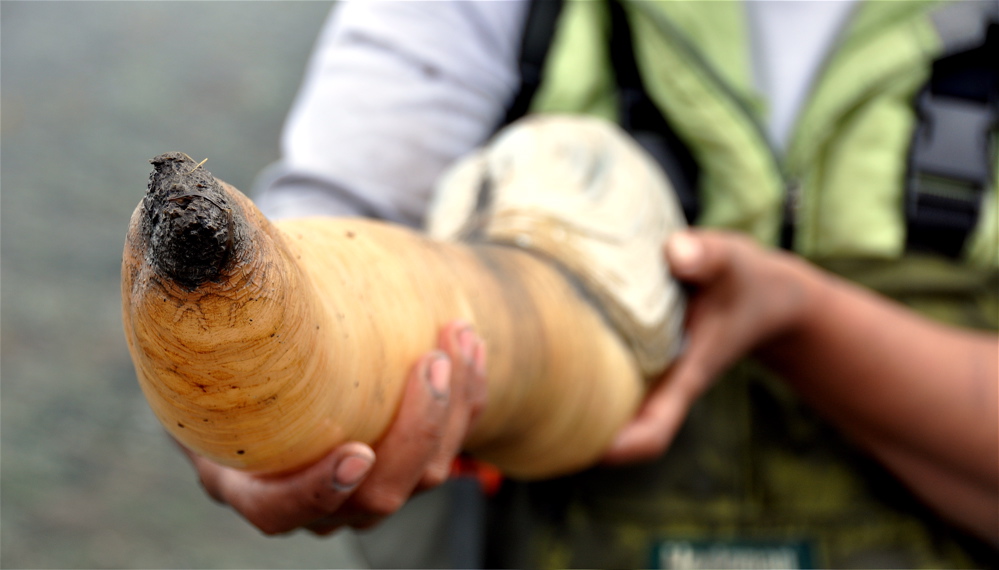
10 Mispronounced words around Olympic National Park
Tromping through the park and the surrounding areas is admittedly our favorite thing to do, but sometimes asking for directions can be tricky. Especially when we slip up and ask for a “geo-duck” (geoduck). Reduce your noob status and read on to ensure that when you have to flag a local down, you don’t get a suppressed giggle along with directions.
This untamed tangle of rivers and trails, bursting at the seams with a prolific abundance of flora is (in our humble opinion) one of the most beautiful places on earth.
When Joseph O’Neil and his Olympic Exploring Expedition embarked in the late 1800’s, they were determined to slice a path through this unconquerable wilderness. The team was turned back time and again by the behemoth mountains and unconquerable terrain. Instead of finding the route he had hoped for, O’Neil emerged with an inextinguishable intent to turn it into the protected national park that we enjoy on the daily.
Channeling the intrepidness of the Olympic Exploring Expedition by tromping through the park and the surrounding areas ourselves is admittedly our favorite thing to do, but sometimes asking for directions can be tricky. Especially when we slip up and ask for “see-kwim” (Sequim) or for a “gooey-duck” (geoduck). Reduce your noob status and read on to ensure that when you have to flag a local down, you don’t get a suppressed giggle along with directions.
Get Your Tongue Oriented

1. Lilliwaup
The base camp of O’Neil’s Olympic Exploring Expedition and close to one of our favorite waterfalls (Rocky Brook Falls), Lilliwaup is both a mouth-full to pronounce and an eye-full for everyone that gets a peek of this lesser-trodden town.

2. Sequim
One of the sunniest places in Western Washington, Sequim is privy to excellent outdoor opportunities and one of the best lavender harvests in the world with a pretty incredible festival to go along with it.

3. Twanoh
This difficult-to-pronounce state park’s name is derived from the Native American Twana tribes who thrived on the canal’s seafood bounty and the surrounding area’s seemingly endless resources.

4. Tahuya
Tahuya is our favorite place to get dirty. And once it rains, muddy! It would be a shame to mispronounce Tahuya if it made you at all late to catch the shuttle vehicle (pictured above).

5. Dosewallips
The bouncy name purportedly comes from a Twana Native American myth about a man named Dos-wail-opsh who was turned into a mountain at the river’s source. In other news, we’ve found that it’s one of the best places to do handstands.

6. Dabob
One of Hood Canal’s favorite oyster spots, Taylor Shellfish Farms, utilizes the clean, clear waters of Dabob Bay for their hatchery. If you haven’t heard about Xinh and her clam and oyster restaurant that prepares the decadent shellfish to salty perfection then you should surely check it out. Mmm.

7. Hamma Hamma
The name is derived from the Twana Native American village called Hab’hab, which used to perch on the banks of the twice-named river. Apparently its namesake is a type of reed that grows in the region that roughly translates to “stinky stinky.”

8. hama hama (rhymes with mama)
Not to be confused with Hamma Hamma, Hood Canal’s other favorite oyster spot is named after the same river. However, it was founded in the early 1920s, before Washington State standardized the current spelling.

9. Skokomish
The Skokomish are one of the nine tribes of the larger Twana Nation. The name comes from two separate words, together meaning “big river people.” Contemporarily, if you ask for Skokomish, you’ll likely get directed to either the majestic cascading river pictured above or one of our favorite places to mountain bike.

Photo by Outdoors/Wild Food Blogger Langdon Cook
10. geoduck
Capping our list is the alien-looking, squirm-worthy clam. We kind of have a thing for them in Hood Canal. Don’t miss geoduck ice cream on your way through. Yeah, you heard us right.
Now that your tongue is all oriented, you’re ready to navigate your way through some of the most awe-inspiring wilderness and the surrounding towns that are steeped in western history. Until then, hang out with us on Facebook, Twitter, Pinterest and Instagram for more Olympic National Park adventure inspiration.

Don’t let the chilly water discourage you…dive in!
Just below the surface of the waters of the Hood Canal, a whole new world exists waiting to be explored. It is carpeted with sponges and seaweed, populated by wolf eels and octopus and visited by the occasional seal and even (rarely) a six-gilled shark. Although the cold water of the Pacific is daunting, the variety of marine life it holds is well worth the chilly SCUBA dive.
Just below the surface of the waters of the Hood Canal, a whole new world exists waiting to be explored. It is carpeted with sponges and seaweed, populated by wolf eels and octopus and visited by the occasional seal and even (rarely) a six-gilled shark. Although the cold water of the Pacific is daunting, the variety of marine life it holds is well worth the chilly SCUBA dive.

With its comparably slower currents (to the rest of Puget Sound), the Hood Canal offers many opportunities for rewarding shore dives and live boat dives of various experience levels. Diving is not just for the summer time, the winter and early spring offer excellent opportunities because the cooler weather means clearer visibility (rain run off notwithstanding).
We have coalesced a list of some of the top dive sites of the Hood Canal as recorded by excellent books such as Betty Pratt-Johnson’s 141 Dives in the Protected Waters of Washington and British Columbia (1977) and Stephen Fischnaller’s Northwest Shore Dives (2000), as well as diver’s blog reviews, such as Scott Boyd at Emerald Sea Scuba and Nicolle Prat at Pacific Northwest Scuba.

Mikes Beach is one of the oldest and most picturesque resorts in hood canal with a unique blend of the rustic look of the Northwest and the relaxed, charming and cozy German Chalet style
#1. Flag Pole Point
East and West
Outside of Lilliwaup, just to the South of Mike’s Beach Resort is a dive site more comfortably accessed by boat (but you can free swim to it also). Called “the knuckle” this dive site consists of a series of rock formations, rising like a mini range of mountains from the ocean floor. Because this formation is farther out and more exposed to currents, this site usually has excellent visibility and there are lots to see. Lingcod lay their eggs at this protected site, and there are resident wolf eel and octopus populations. Since the rise of “the knuckles” is so rapid, the site can be difficult to locate— check the dive blogs for more information and ask your local dive shop.
#2. Potlatch Park -
While the diving at Potlatch is less dramatic than the site above , if you are just getting your flippers wet, this is a great place to start out. This shore diving spot is easy to get to, has showers to wash off gear, and it provides opportunities to get comfortable with your equipment and practice techniques.
#3. Scenic Beach State Park –
Like Potlatch, this site is accessible from the beach and it is rewarding for all experience levels. There are plenty of marine life to observe on this sandy-cobble beach, which shifts after 15 ft into a large eelgrass bed, likewise teaming with all the sea creatures that are heir to this environment.
#4. Octopus Hole –
Although parking for this site is limited, this wall site is easy to access from shore and gratifying for all experience levels, but it is a popular spot! It is recommended you brings a flashlight to see the friendly octopuses and wolf eels. Remember this is a protected site, so no harvesting or disturbing the site (and no taking of the glass bottles that octopuses like to hide in).
#5. Sund Rock Marine Preserve
Easy beach access to this site is available through Hoodsport ’N Dive for $20 per diver. This is an iconic dive spot of the area —Hoodsport ’N Dive even offers diving classes at this site. From the beach you swim out through eelgrass environs filled with perch, crabs and other types of sea life. When you reach the Rock you are greeted by wolf eels, octopuses, sea stars, lingcod and other bottom fish. As it is a marine preserve it is closed to harvesting and fishing — so no spear guns!
Twanoh State Park offers easy access to the water.
#6. Twanoh State Park –
This full service park, has a gentle current, which gives divers the freedom to dive whenever— independent of slack tides. You will find a large eelgrass bed filled with interesting fish, such as tube-snouts, black eye gobies and sticklebacks. After about 40 foot depth you can find tube-dwelling anemones. These anemones are entertaining to watch as they feed with their long graceful tentacles. Use a dive flag and submerge when you pass the roped swimming area (and stay submerged and deep to avoid any boat traffic).
#7. The east side of Hood Canal Bridge
This is a more intermediate dive. Leaving from the park at Salsbury Point heading toward the Hood Canal Bridge, this shore dive requires you time your swim out to the dive area right before the beginning of slack tide, so that the current pulls you out to the bridge, then you can save your energy for the swim back. On your swim out to the bridge you pass through eelgrass beds, which are teeming with perch, soles, shiners and other sea creatures. When you reach the concrete bridge supports you are greeted by a fantastic display of plumose anemones and many different types of nudibranchs. Be careful of boat traffic and pace yourself for the long swim to and from the bridge.
For more information on scuba opportunities in the Hood Canal area, visit our scuba things to do page!

5 Reasons Why Olympic National Park Should Top Your To-Do List
Even someone as determined as John Muir couldn’t have poked around every nook in the 876,447 acres of this boundless wilderness haven. Here are our 5 reasons why you can’t afford to miss it—especially if you’re a Seattleite.
This mystical winter wonderland, full of a wildly varied flora and fauna, occupies a behemoth slice of our favorite state. The Olympic National Park, with its 3,000 miles of twisting, cascading rivers and streams (some even frozen in the heart of winter), its 611 miles of switchbacking, lesser-trodden trails, and only 168 miles of road, may be more enchanting and alluring than any other place we know. Even someone as determined as John Muir couldn’t have poked around every nook in the 876,447 acres of this boundless wilderness haven. Here are our 5 reasons why you can’t afford to miss it—especially if you’re a Seattleite.
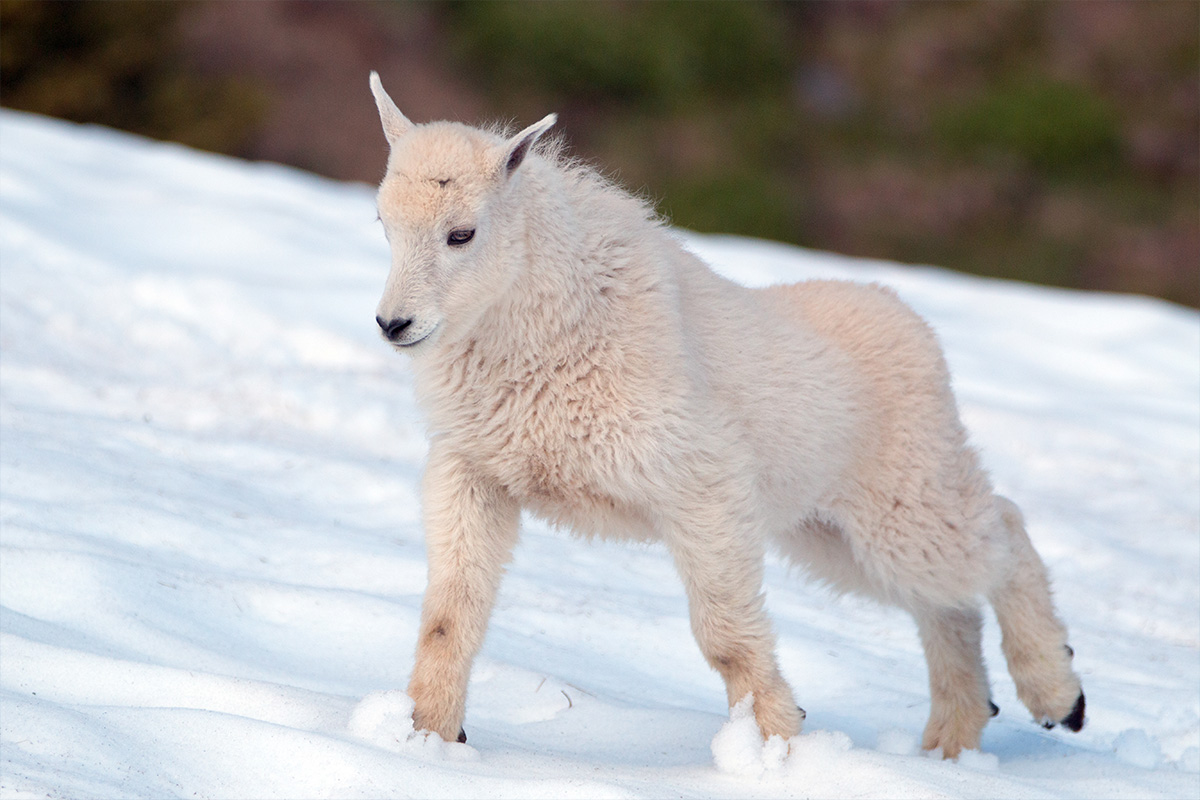
1. Meet the locals (The furry ones!)
Massive bugling elk roam the dense and snowy woods while mountain goats own the craggy peaks. Over 300 species of birds soar through the skies (Washington Audubon has sketched out the perfect birder’s road trip map), and the ancient salmon runs are completing their runs as the first snow falls. That’s not to mention the infamous and somewhat legendary giant Pacific octopi that inhabit the Hood Canal–yes you heard us right.
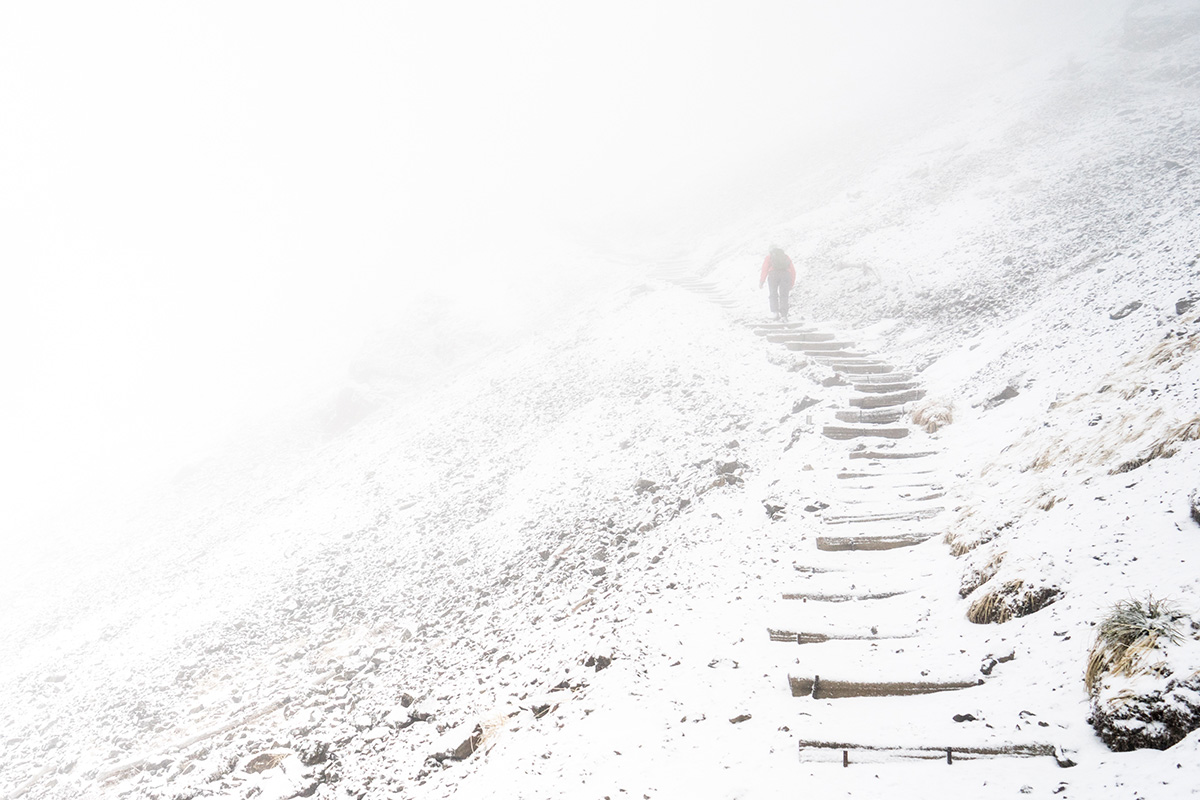
2. Climb Mt. Ellinor in the snow
Going for the summit of Mt. Ellinor in the snow is a staggeringly beautiful experience. Meandering through quiet old growth forests and alongside craggy peaks, this hike serves up some serious views. A strenuous 6.2 miles round trip earns access to some seriously picturesque views of Hood Canal and beyond (assuming you're lucky enough to catch it on a clear day). Doable for all those with proper gear and plenty of time, it’s a must-not-miss. And that’s only one tiny slice of the 3,000 miles of beautiful trail contained within the park.
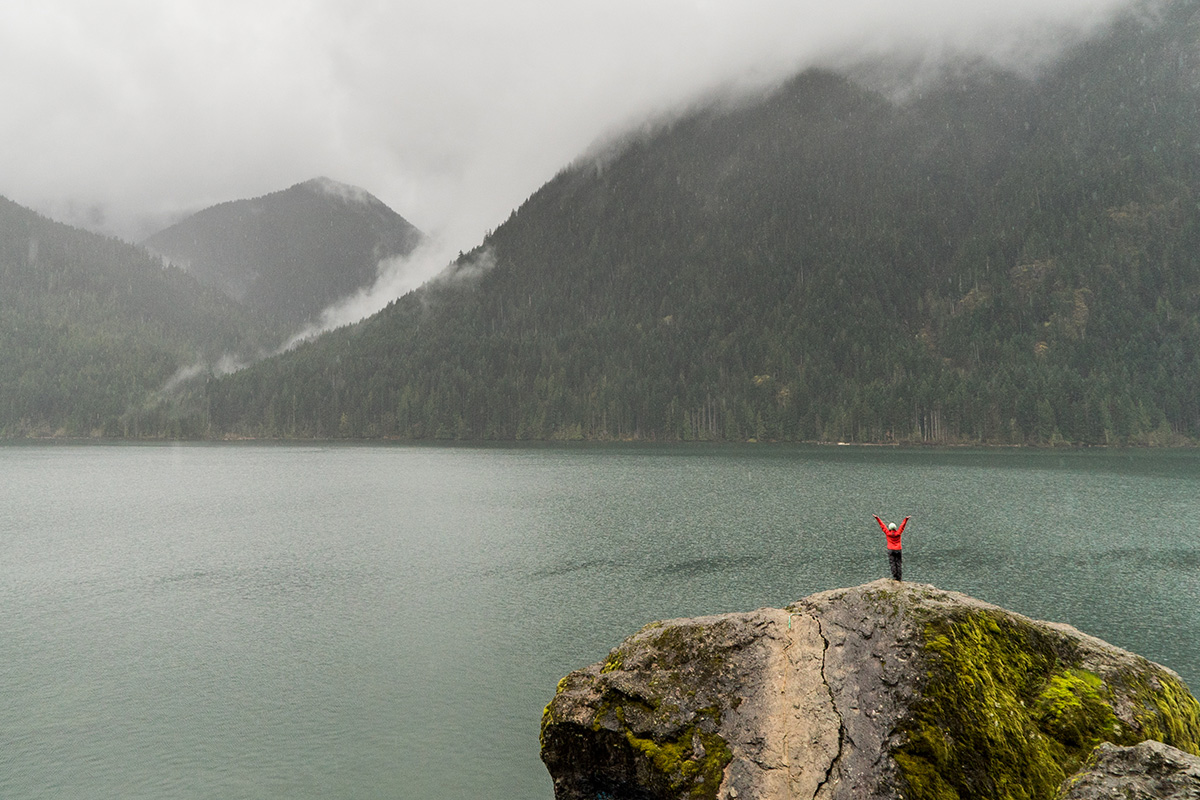
3. Climb The Big Rock at Lake Cushman
Lake Cushman, just outside the Staircase entrance to the park is host to kokanee salmon and cutthroat trout fishing in the summertime, and stunning views in the wintertime. A slew of other cold-weather activities like kayaking (with ALL of the proper gear) with Blue Horizons Paddlesports or climbing up the famed Big Rock and swearing to yourself that you'll be back during the summertime to jump off.
4. Stop for a warm up at Alderbrook Resort in Union, Washington
With all of the boundless opportunities for adventure in the Olympic National Park, face it: you’re going to be pooped (and probably cold). Lucky for you, there are a myriad places to rest your weary explorer’s head. If you’re hankering for a sojourn in a relaxing spa and a hot beverage afterwards, then Alderbrook Resort & Spa is for you! Though, if you’re feeling a quaint VRBO-style rent-a-home on a back road in the woods is up your alley then we have just the place. Click here for an extensive list of options.

5. Geting to Hoodsport is so easy
Staircase, one of the grandest entrances to the southeastern corner of the park is situated just outside of Shelton, a 45 minute drive from Olympia and two hours from Seattle. Hood Canal’s Hoodsport is an ideal launching point for an adventure in the park by way of Staircase, and the intrepid adventurers can hit the Staircase Rapids or snowshoe along the river after the snow starts to fall. With Hoodsport Coffee to properly fuel a morning’s adventure and Hardware Distillery’s handcrafted libations to cheers after a successful day tromping around the forested nooks, it’s worth checking out.
We’re convinced: life is about creating yourself. We choose to do it in one of the most beautiful places on earth. Adventure is spilling out of every nook. Plan your trip to come visit Hood Canal and the Olympic National Park.
For more adventuresome inspiration and ideas, keep up with us on Facebook, Twitter, Pinterest and Instagram.

Landscape Photography with George Stenberg
Though there are many factors that come together to make a good photographer—gear, dedication, understanding of theory, etc.—the one elusive quality that boosts George Stenberg’s craft into the upper echelon is timing.
Though there are many factors that come together to make a good photographer—gear, dedication, understanding of theory, etc.—the one elusive quality that boosts George Stenberg’s craft into the upper echelon is timing. This is often translated to photographers terms as patience.
Although many assume that being in the right place at the right time is happenstance, one look at Stenberg’s extensive collection suggests there’s something more sophisticated at play. Time and time again, he publishes jaw-dropping creations that not only make us fall even more in love with our own DSLRs, but with Hood Canal that continually provides these glorious moments.

Note: all photos featured in this post belong to George Stenberg.
Meet George Stenberg
He’s the man behind the image that makes you say, “whoa.” And rightfully so—his mission is simply in the right place. “The world is a wonderful, amazingly beautiful place,” he says, “look around and see for yourself. Let’s cherish it and take good care of it for those who come after us."
We caught up with him for a little Q + A.
What makes shooting around Hood Canal and on the Olympic Peninsula special?
The simplest answer is because I love the Hood Canal and the Olympic Peninsula. I grew up in a small community along the Puget Sound called Dash Point. I always love to being by the water.
As a youngster, my folks would take us on weekend trips to my Grandparents' cabin at Maggie Lake, near Tahuya. We would also spend a lot time with friends who had a cabin nearby on Hood Canal. My earliest memories of the fjord are the warm waters, oysters, and a rocky beach. This was way different from our cold water and sandy beach in Dash Point.
Swimming in warm water was much nicer. Also, just about every summer we would take a trip around the Olympic Peninsula on beautiful Hwy 101. We called it a trip "around the loop." So I developed this love for Hood Canal and the Olympic Peninsula in my early years and as they say, "shoot what you love," applies to me.

What camera gear do you use to keep focused on what you do best as a photographer?
My equipment is very modest. I use an Olympus E-3 DSLR with two Zuiko lenses, 12-60 f2.8 and 40-150 f3.5. I shoot in RAW files and develop the images in Photomatix and/or Smart Photo Editor.
The Photomatix works well when I use HDR (High Dynamic Range) photography to help me capture the scene as I remember it. The Editor software is for basic editing and enhancing to suit the image and my taste.

Which photographers influence your work?
Port Angeles landscape photographer Pat O'Hara has been a big influence. I purchased his book Washington—Images of the Landscape almost thirty years ago, and I still refer to it and am inspired.
The late great Galen Rowell has been another huge influence. Mountain Light is a must read for any inspiring photographer. If only I could emulate his technical understanding of light and his passion for photography.
Also, Jim Brandenburg is an environmentalist and nature photographer and filmmaker based near Ely, Minnesota. Jim's work is nothing but spectacular in many ways. One of his books, White Wolf, is also a must read everyone who enjoys nature and particularly wolves.
Lastly, my Mom, Bonnie Stenberg, is another huge influence. I remember growing up with her taking pictures of us at all of our family events. Her photographs have accumulated in tons of scrapbooks and in frames filling the walls. She bought me my first camera when I went off to college. If only I had had the money for film and processing during those days.

Where is your favorite place to shoot around Hood Canal?
Every place on the Hood Canal is a favorite. It all depends the on time of year, the time of day, and many other factors. The view of the Olympics and the Big Bend is beautiful from the Union.
Lake Cushman, Skokomish Valley, and all the estuaries of the Skokomish, Hamma Hamma, Duckabush and Dosewallips Rivers are wonderful places to visit, explore, and take photos. I love to shoot from a special 3000' ridge top with a sweeping 360 degree view of the Cascades and Olympics. And there are many places that I have yet to find. But if I were to narrow my answer to one favorite place, it would be paddling in a kayak anywhere on Hood Canal on a warm summer evening.
Do you know someone who delights in shooting the under-trodden nooks of Hood Canal? Someone who sleeps with a tripod and welcomes the sunrise DSLR-in-hand? Is this person you? We’re on the hunt for those who love to shoot the Hood Canal. Get in touch with us, and you might be featured as next month’s Spotlight Photographer.
Until then, keep an eye out for photographic inspiration on Facebook, Twitter, Instagram, and Pinterest, and be sure to tag your creations with #wildsideWA so we can keep tabs on your travels about the Olympic Peninsula.