
Do the dirty work to protect and preserve
Hood Canal Salmon Enhancement Group has volunteer opportunities available to enhance salmon habitats on the Union River on Hood Canal. Consider vacationing in the area and doing some good for the fjord.
Salmon are a keystone species and the foundation of Pacific Northwest culture, and the Hood Canal Enhancement Group has been working hard to change the projection of their uncertain fate through riparian enhancement and weed control. Interested in helping out? The Salmon Center has plenty of opportunities for families and individuals to sign up - for a day, or week - to volunteer and help these precious resources.

Saving our Salmon Habitats
In addition to Chinook, Coho, Pink and the occasional Sockeye, Hood Canal is home to Endangered Species Act listed Puget Sound steelhead and listed Summer Chum, the latter of which is a completely unique species to this watershed. Structurally mature and diverse streamside plant communities not only increase the likelihood that salmon will continue to survive for future generations, but that the entire ecosystem will remain resilient against the effects of a changing climate.
Riparian habitat is the transitional area between land and aquatic ecosystems; therefore, the work in this program mainly takes place along rivers, streams, wetlands and estuaries. These are critical habitats for salmon and steelhead where they are born and die, and where they grow strong for their journey out into the ocean. Riparian habitat provides essential services and functions for fish, such as food; clean, cold water; large woody debris recruitment; and habitat complexity.
Without these, our salmon and steelhead populations would cease to exist, along with hundreds of species, the culture, and economy that depends on their survival.

Enhancement Group’s riparian enhancement program
HCSEG’s riparian enhancement program serves to protect and restore these services and functions, which can be understood by 4 broad categories: provisioning - the production of food and water; regulating - the control of climate and disease; supporting - nutrient cycles and oxygen production; and cultural - spiritual and recreational benefits.
“Salmon are a keystone species and the foundation of our sacred Pacific Northwest culture, and we have been working hard to change the projection of their dismal fate through riparian enhancement and knotweed control. “
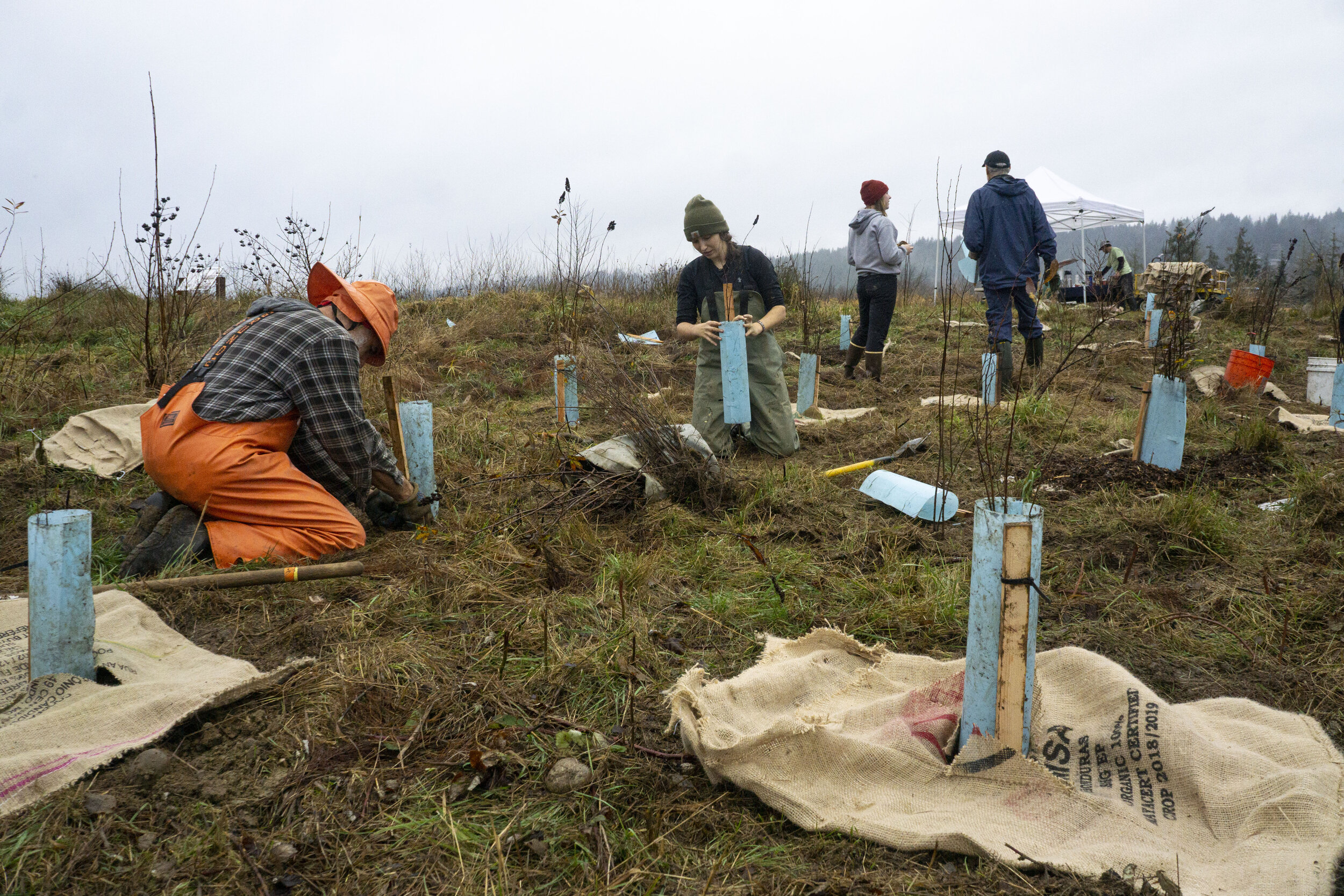
The World Conservation Union lists invasive knotweed as one of the world’s worst 100 invasive alien species. Knotweed spreads aggressively along rivers establishing dense monocultures that reduce native riparian plant diversity, structure and function. Invasive plant species are the second greatest threat to global biological diversity, only second to habitat destruction. In 2020, HCSEG installed 11,000 native plants, restored 0.5 river miles and 9 acres of riparian habitat through new riparian plantings, and the survey and control of knotweed on over 40 stream miles.
In 2021, HCSEG plans to install 17,500 native plants, and restore 1 river mile and 15 acres of habitat through new riparian plantings. All of this work would not be possible without the outstanding help from our volunteer community and our Washington Conservations Corps crew.

“If we plan to install 17,500 native plants this year, we are going to need lots of environmental stewards helping us fight for the future of Pacific Northwest salmon and steelhead.” Salmon Center volunteer
Visit the Salmon Worksites and be inspired to help
If you would like to see this work for yourself, we have several public riparian enhancement worksites that you can visit: Big Beef Creek and Estuary (feel free to park at the gate and walk-in), Seabeck Creek (by the new bridge) and the Union River Estuary Preserve (at the Salmon Center). And while you’re there, consider signing up to join our community of volunteers!
Volunteers make our work possible
From data collection at fish traps, habitat restoration, support at fundraising events, and education programs, so much of what we do is made possible by the dedicated and passionate involvement of our community.
If you have questions about visiting these sites or would like more information about these projects, visit pnwsalmoncenter.org for a full list of staff contacts as well as project descriptions and opportunities to volunteer.
Hood Canal's Spectacular Birding Sights: Theler, Twanoh, & Potlatch
Looking for a refreshing easy local walk with plenty of birds and wildlife? Consider visiting the accessible Theler Wetlands near the south entrance to Belfair, WA. Interpretative signs, native plants, and even a reconstructed whale skeleton – makes this an inspiring walk.

With its wealth of shoreline, fresh and saltwater marshes, mudflats, and of course the bountiful forest, the fjord is a birders’ paradise.
And whereas winter and spring aren’t the most popular seasons for human tourists (meaning less competition for lodging and dining), they happen to be the best for catching the avian crowds. From soaring birds of prey to elusive divers, birdwatching is one more reason to head to the Canal.
The Audubon Society’s Great Washington State Birding Trail is a great resource.
Below we've included three birding areas to get you started!
Theler Wetlands
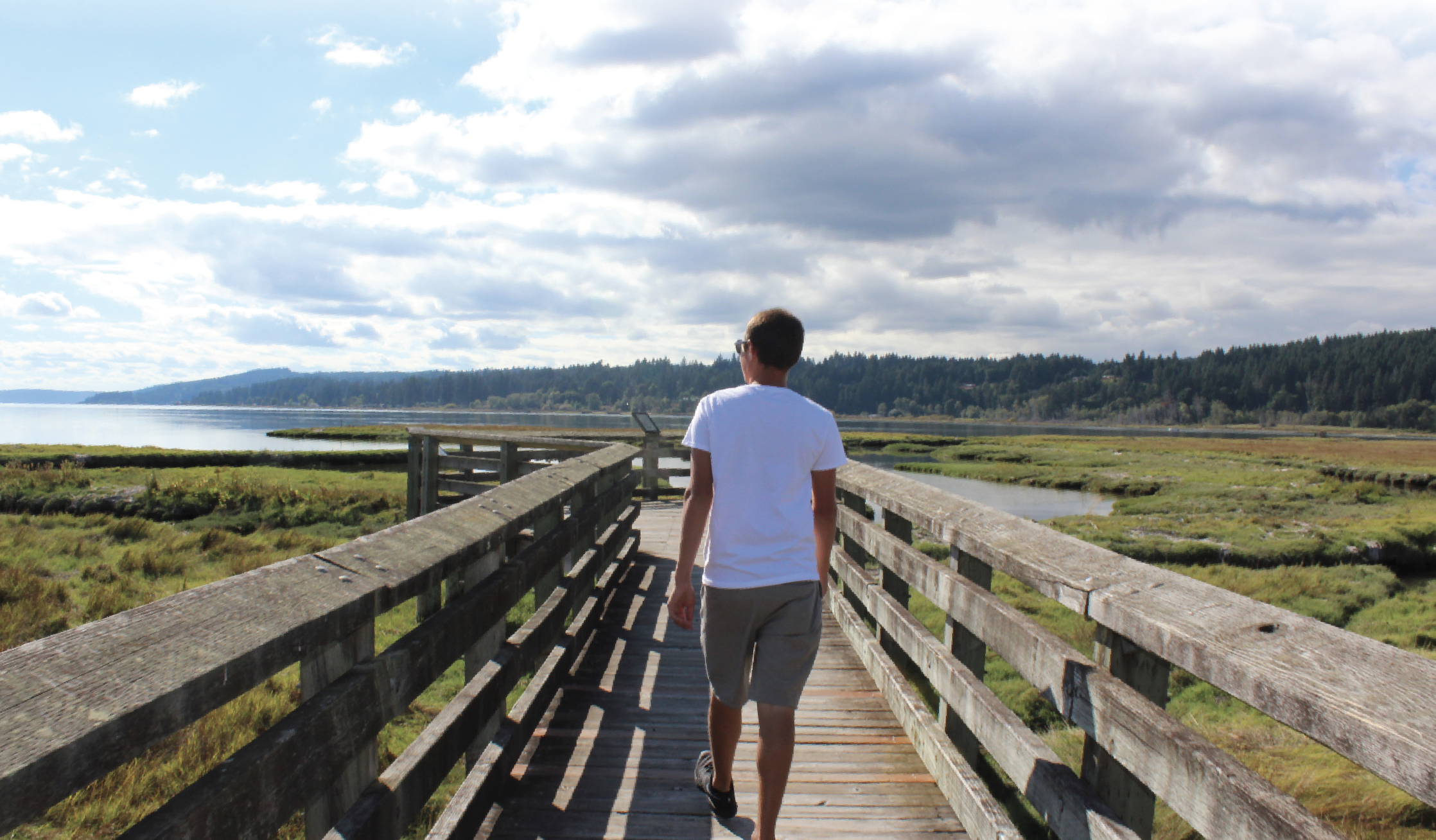
Located at the head of Hood Canal the Theler Wetlands offers several accessible walking trails within a protected salt marsh and estuary wetlands. The Theler Wetlands of Belfair include a gorgeous salt water estuary. The wetlands are accessible through many miles of level trails and boardwalks, surrounded by roses, shrubs, and blackberries in bloom in the summer months. The trails amount to 3.5 miles round-trip, with the option of three different routes.
The Union River Estuary Trail is the longest trail offered. To the left of the trail is an old dike that travels through some of the tidal wetlands, and to the right is fresh water marshes filled with cattails and tall grasses.
The viewing point from this perspective is spectacular! There are 360-degree views of the Union River, Hood Canal, and the Olympic Mountains.
Sam Theler, a real estate developer, deeded the wetlands to the North Mason School district in 1968 in honor of his wife.

Rebuilt whale skeleton on display in the interpretation classroom
Families can give these trails a visit, and if they are open, displays and hands-on exhibits are available to examine. They help to teach more about the wetlands ecosystem. There are mounted animals with plaques of information on each, along with a gray whale skeleton for display. There is a picnic area and a restroom as well. Keep an eye out for the many birdhouses along each trail—they are hard to miss! Often spotted are red-winged blackbirds, kingfishers, herons, eagles, otters, and geese. These trails are perfect for people of all ages.
Twanoh State Park
Twanoh State Park is a favorite in the summer for swimming and watersports, but the quieter winter and spring months make it a great place for viewing wildlife and birds. Bring your binoculars to the shoreline for an eyeful of diving birds such as loons, mergansers, murrelets, and ruddy ducks with their distinctive upright tails. In the towering cedars and maples inland, listen for brown creepers and red crossbills.
Potlatch State Park
Like Twanoh, Potlatch bustles with humans in the summer and birds in the winter and spring. With 5,700 feet of saltwater shoreline, it’s a great place for viewing waterfowl, particularly during high tide. In the water, look for heron, scoters and scaups, and check the trees for fox sparrows and Steller’s jays.
For a complete list of bird sites check out this great PDF Audubon Guide.