
Spring day at Staircase
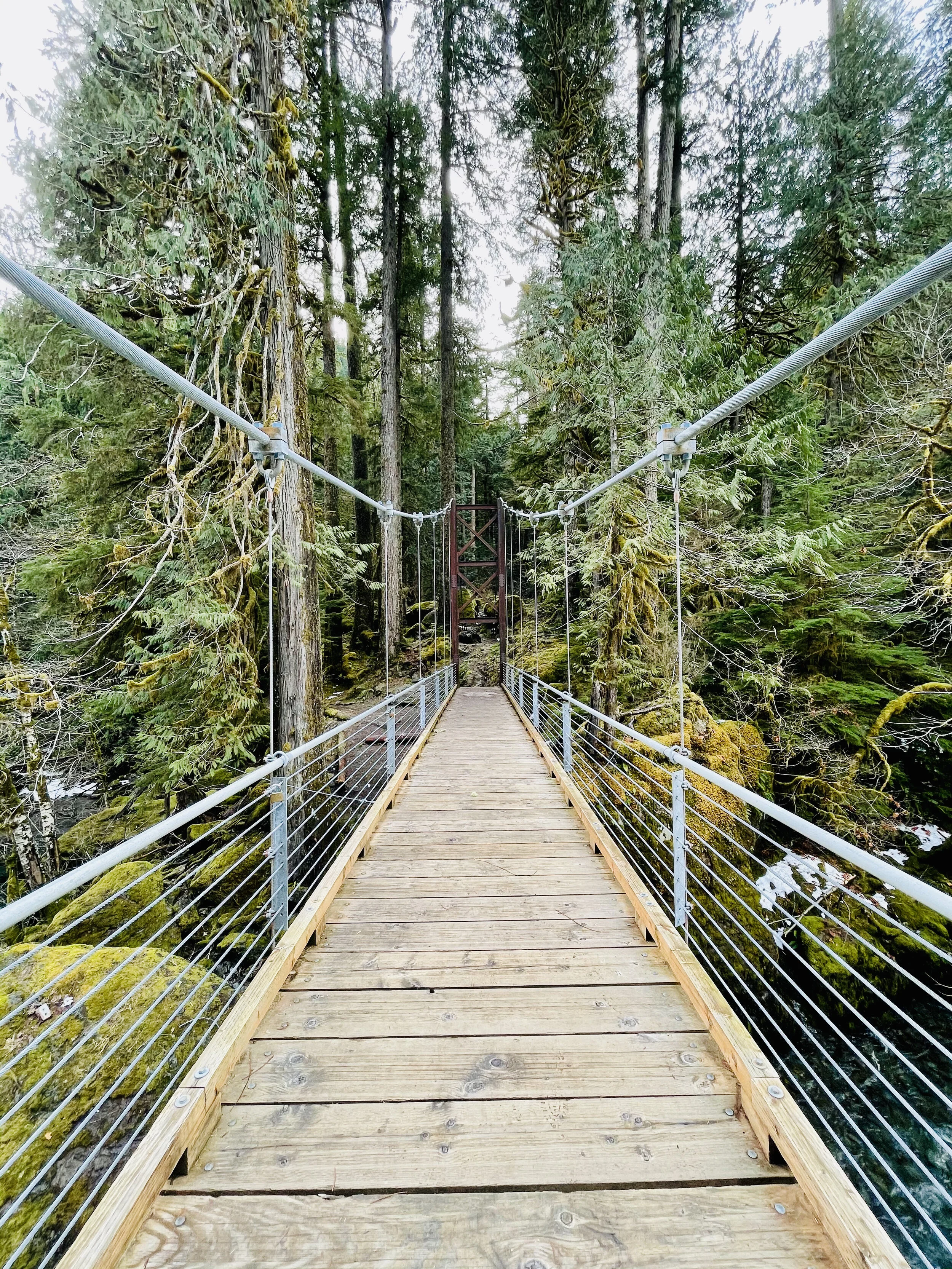
This easy 2-mile trail winds through old growth forest to a bridge over the North Fork Skokomish River with only a 200-foot elevation gain.
During spring the Staircase Entrance of the National Park offers some opportunity for great hikes with virtually no one else on them that early in the season! Take the kids or friends and plan a mountain adventure. Build an igloo, go snowshoeing, or just have a snow ball battle. Although the lower reaches may be drowning in rain, if you head to the hills you might just find a drier, fluffier version.

Last spring we packed up a picnic and headed for the park. On a Sunday, first week of March, we saw about seven cars in the Staircase parking lot and passed about a dozen people on the Loop Trail. With the horror stories from overcrowding last summer during the peak of the lockdown – we were thrilled to have the trail practically to ourselves.
Getting There
The road from Hoodsport to Lake Cushman is narrow and windy. Be prepared to go slow as then you will find it charming and scenic with glimpses of the lake between the trees and driveways. Lake Cushman was originally a straight broadening of the North Fork of the Skokomish River that was naturally dammed by gravel and debris deposited by glacial movement during the last ice age. This small lake was artificially dammed in the 1920s to meet the increased power needs after World War I.
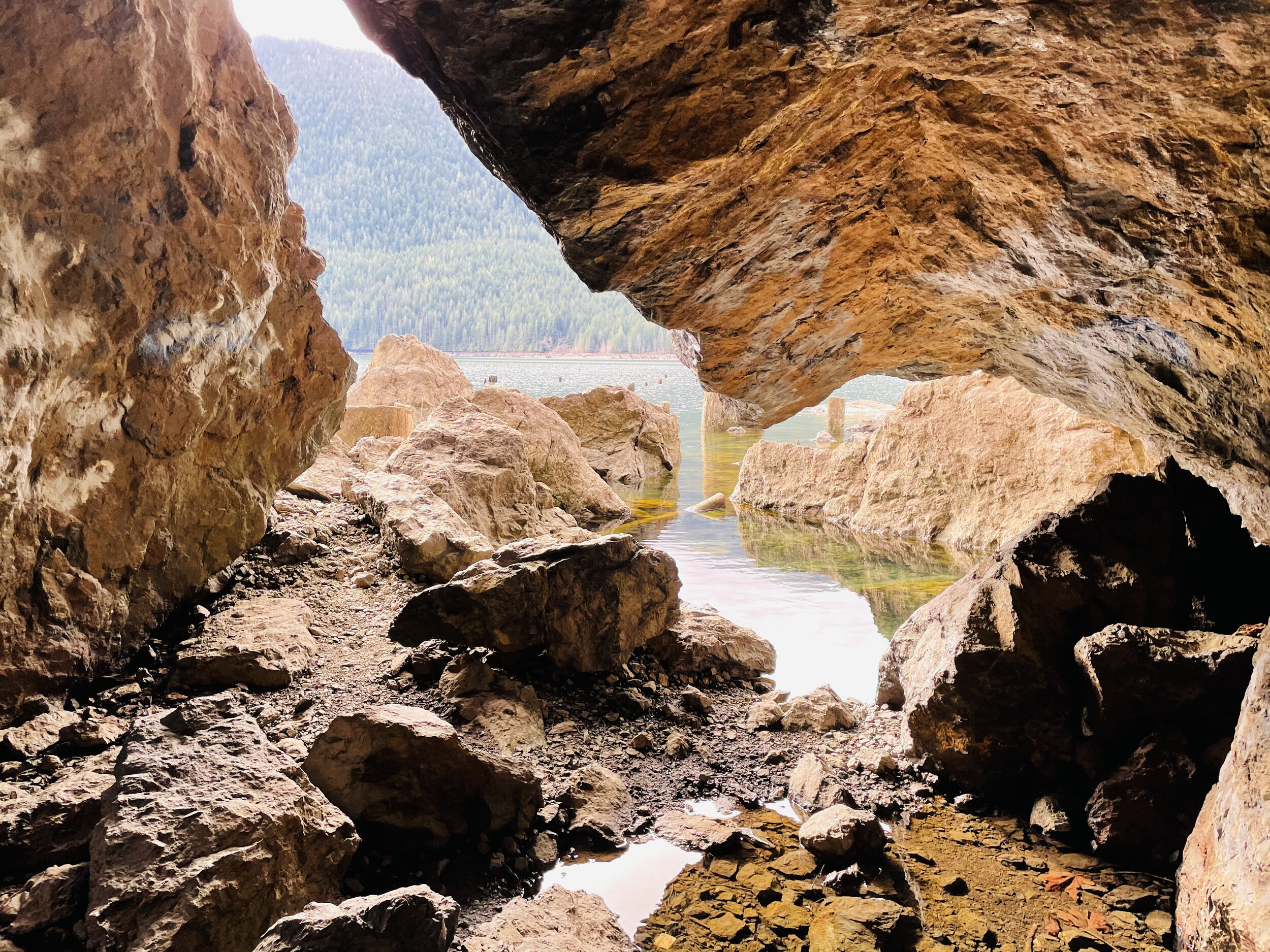
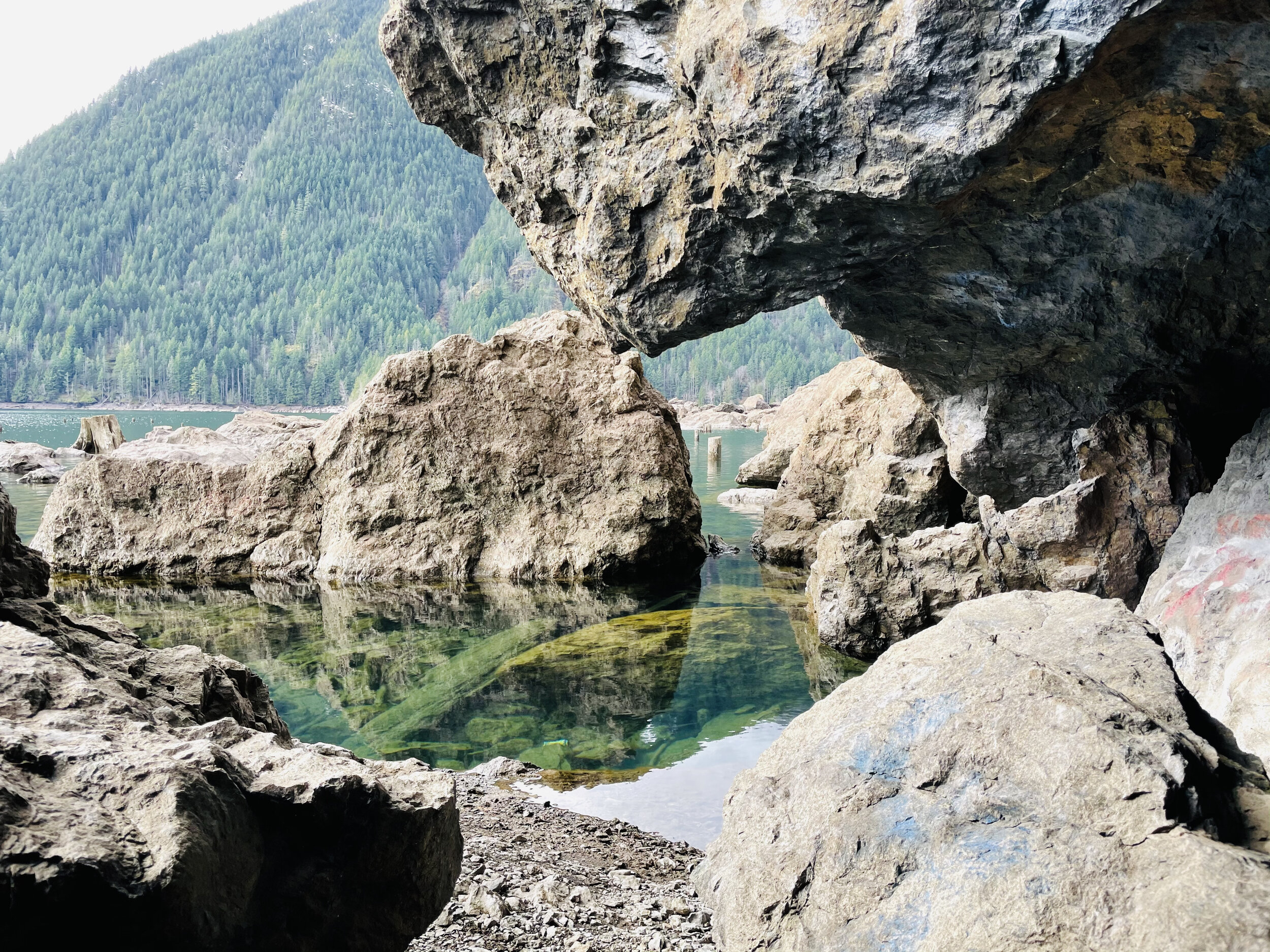
The evidence of the forest that once was is prominent in the incredibly low water of the lake.. This is a natural occurrence in early spring – late winter, but the effect was astonishing. Surrounded by a sea of first growth stumps and rock "islands," the giant boulder renown as ‘The Big Rock’ was perched on smaller rocks creating a magical grotto with reflecting pools magnifying the beauty of the snow dusted treed hillsides plunging sharply into Lake Cushman. We scrambled around the rocks and enjoyed a whole new experience.
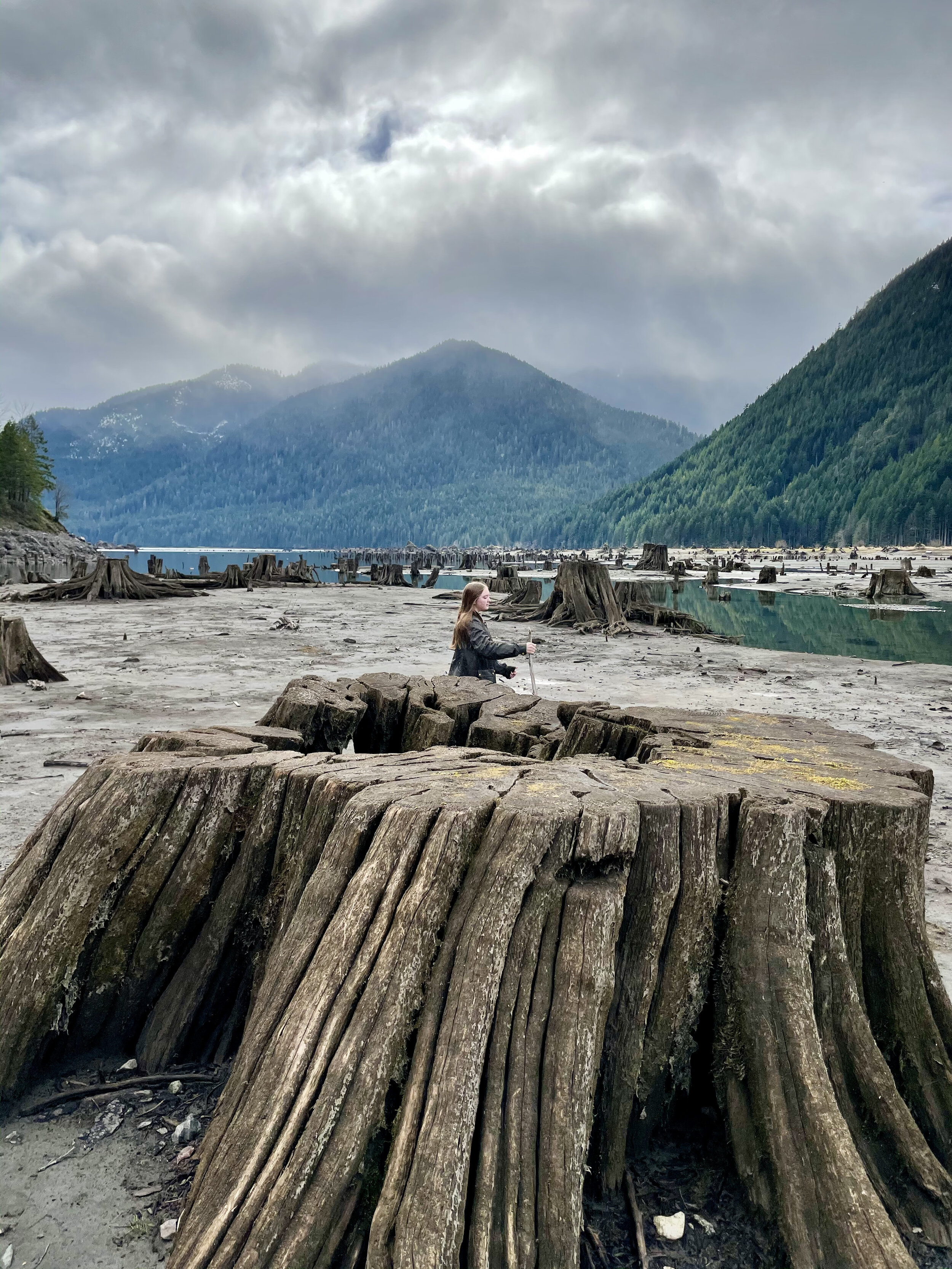
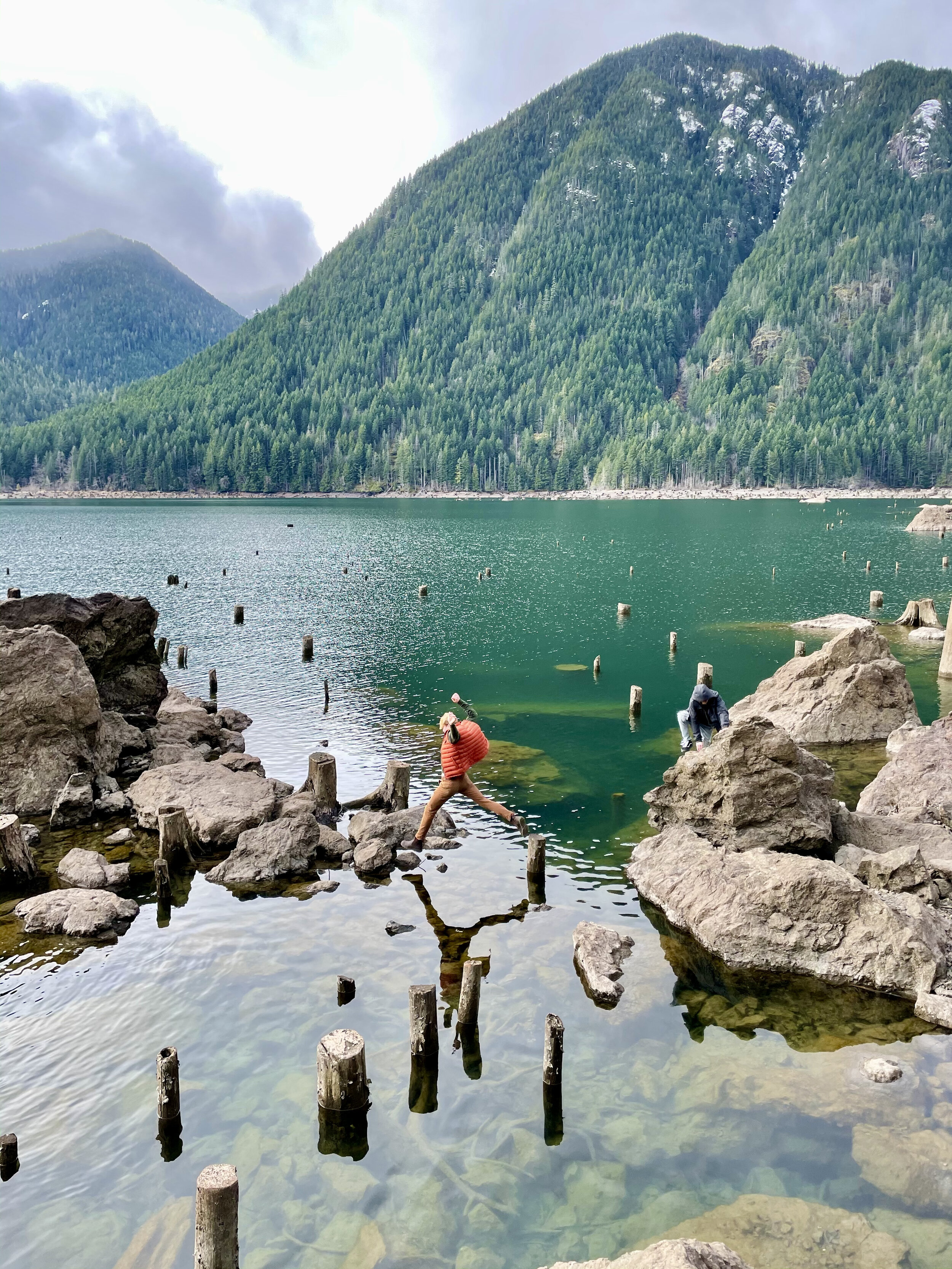
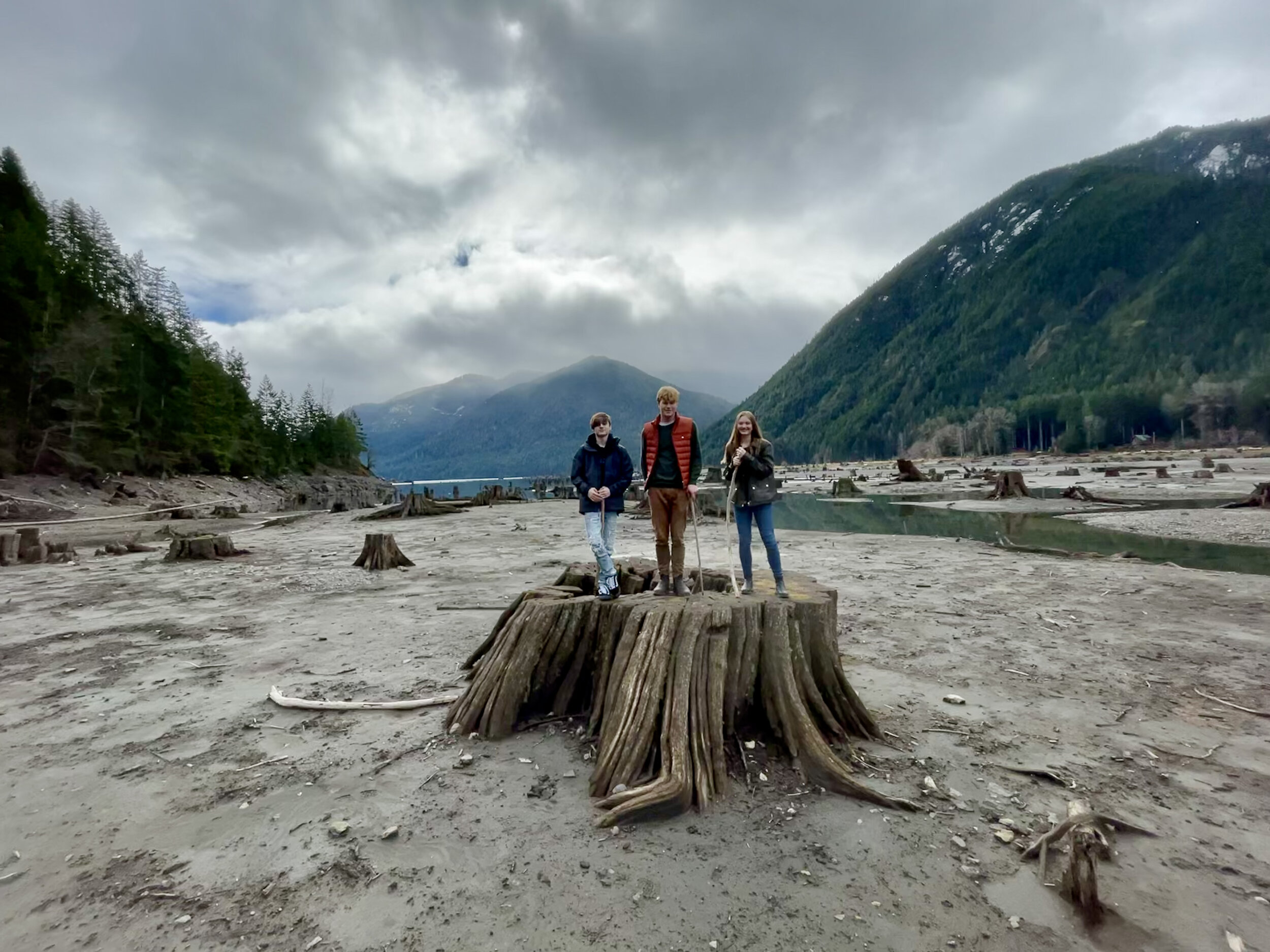
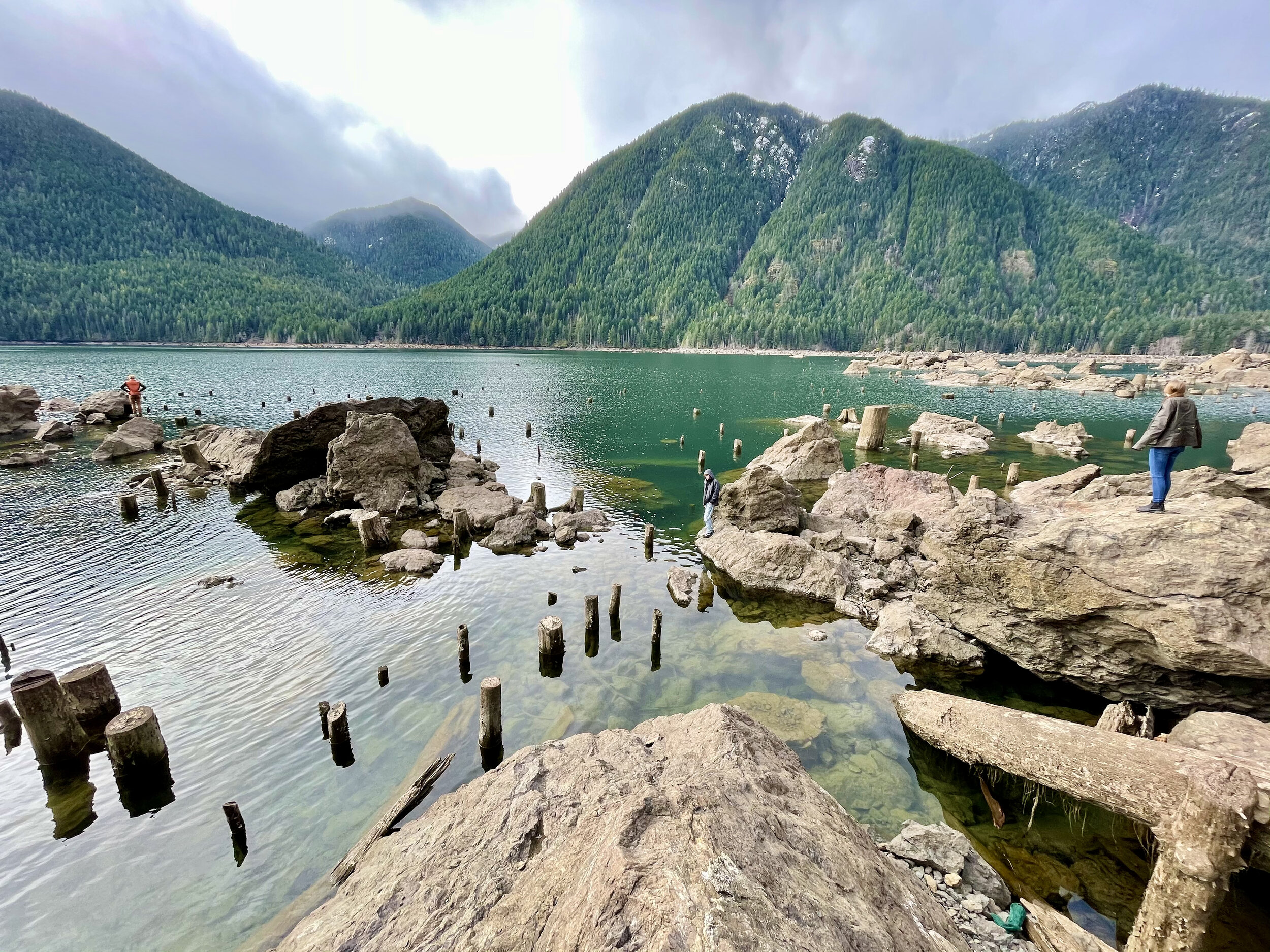
A little further down the road is a pull out at the end of the lake. Here the “sea” of stumps is even more fantastic. The landscape is great for exploring and dramatic photos. The springboard holes used by the early foresters as they cleared the valley are perfectly archived.
Staircase Loop Trail
The entrance to Staircase was un-manned when we arrived. There were just a few cars parked in the lot. You will need to have a pass to park. We recently purchased the America The Beautiful Annual Pass. This pass covers federally managed recreation lands such as National Parks, National Forests, National Wildlife Refuges, and Bureau of Land Management Recreation Areas throughout the country.If you purchase this pass you may use it for both the Olympic National Park and for trailheads requiring a NW Forest Pass. The pass covers all people in your vehicle and covers two pass signers at walk-in locations, so at $80 per year, it’s a pretty good value and takes a lot of guesswork out of what passes needed when exploring the Olympic National Forest and Park.

Near the parking lot there are vault toilets and information boards. The trails go in a multitude of directions but we took the standard Staircase Loop. It’s less than two miles and follows the curves of the North Fork of Skokomish River. We love loops. Something different around every bend and when you drop back in the parking lot you are still wanting more.
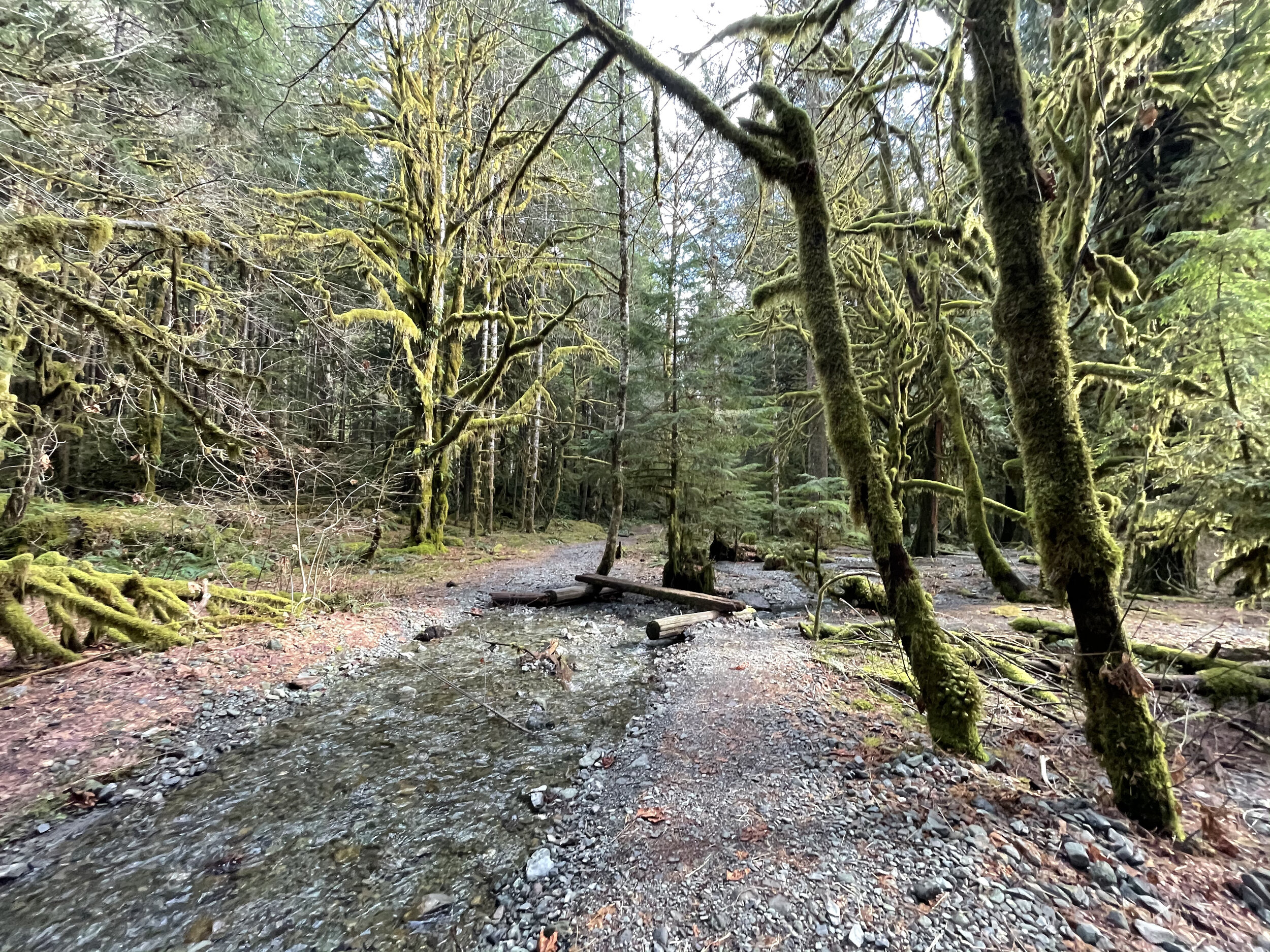
There was enough snow on the trail, peeping through the breaks in the dense canopy, to make it perfect contrast for photos against the mossy green – and the odd snowball to break the reflection.
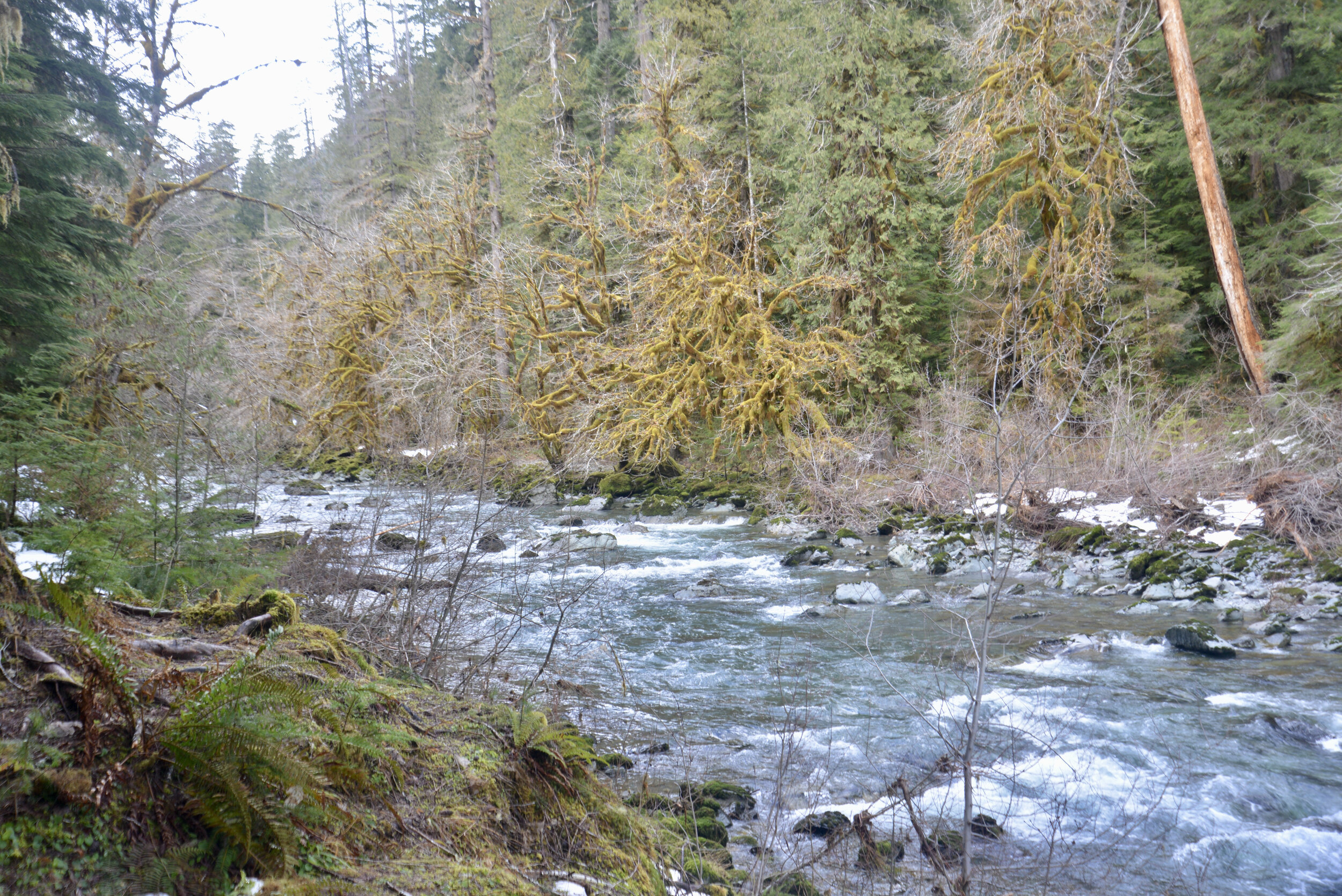
Heads up…you will see no staircase at Staircase today. In 1890, when Lt. O’Neil and his crew blazed their trail through the Skokomish wilderness, the rock bluff across the river from the campground was a major obstacle. To get over it they built a cedar staircase. Until the nearby Shady Lane Trail was built in 1911, the ‘Devil’s Staircase’ was the only path over the bluff. The name, and O’Neil’s legacy, remains. However, as you follow the river with its tumbling force of river over huge basalt boulders – you can kind of imagine the rapids are staircase of sorts.

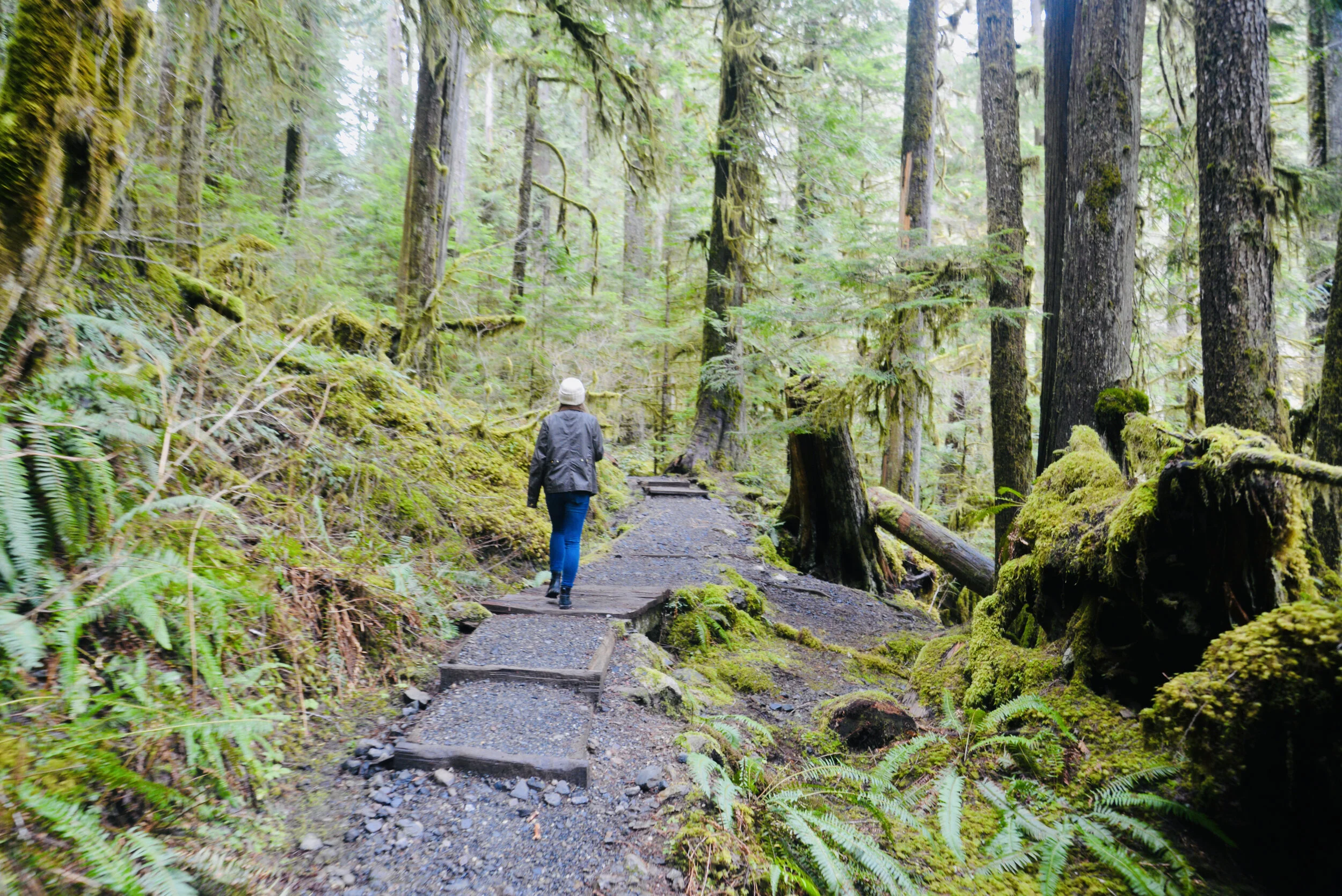
We stopped off by the river at the “swimming hole” to make lunch on the beach. With a Jetboil and some hot freeze dried meals, it was sublime. They’ve come a long way from what I remember as an instant meal. Having hot tea after in the chill of the forest was magical too.

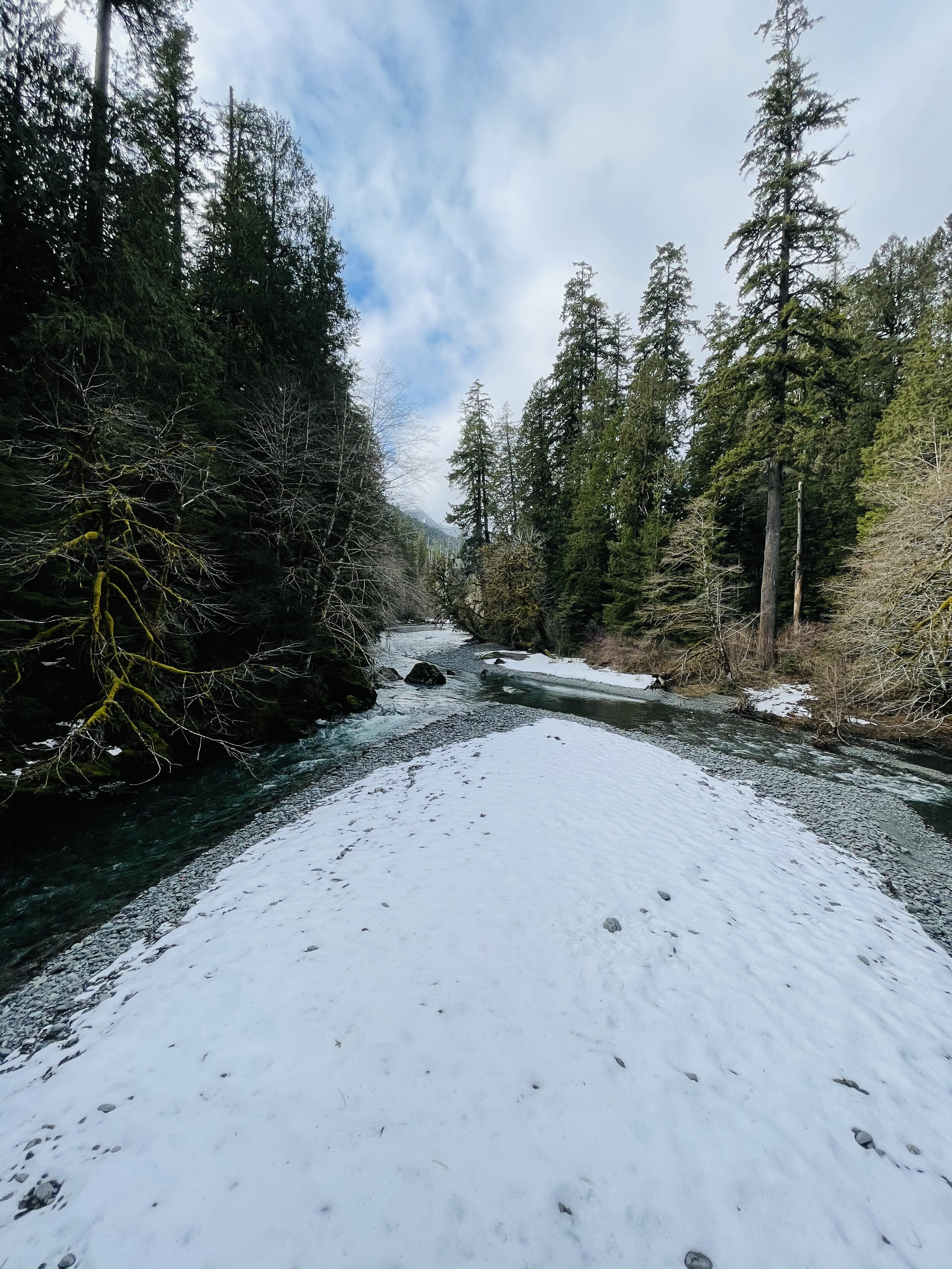
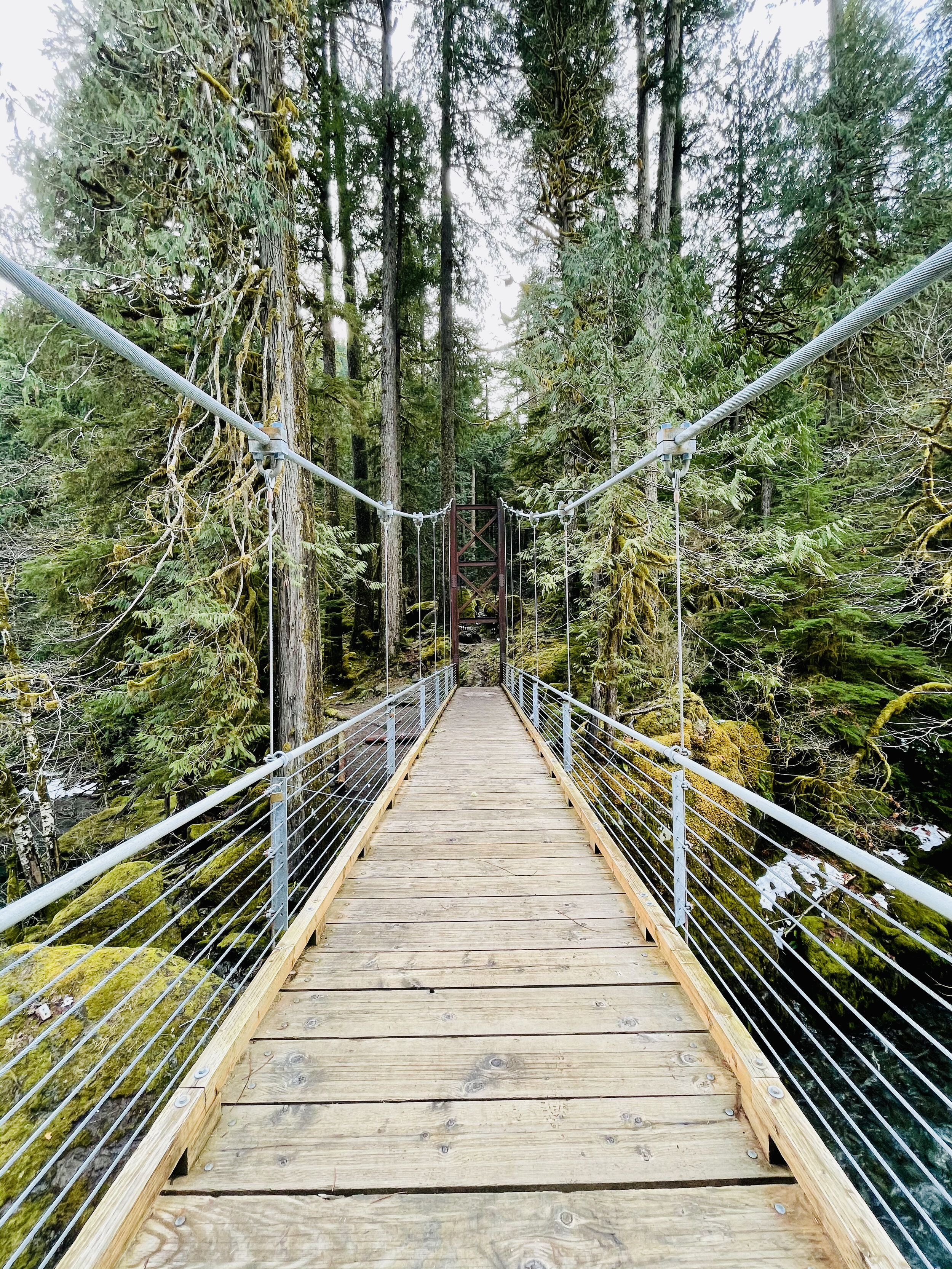
The trail crosses over the river at a dramatic suspension bridge. Here the view opens up and you can see a few snow covered glacial peaks of the Olympics. Despite their jutting appearance, the Olympic Mount Range are not volcanic. This is surprising given the proliferation of volcanic ranges in the Pacific Northwest, for example Mount Baker and Mount Rainer. As evidenced by the marine fossils found in the summits of the range, the Olympic Range once was part of the ocean floor. Approximately 120 million years ago, the Pacific Tectonic Plate crashed into the North American Plate and created the Olympic Range.
Journey Back
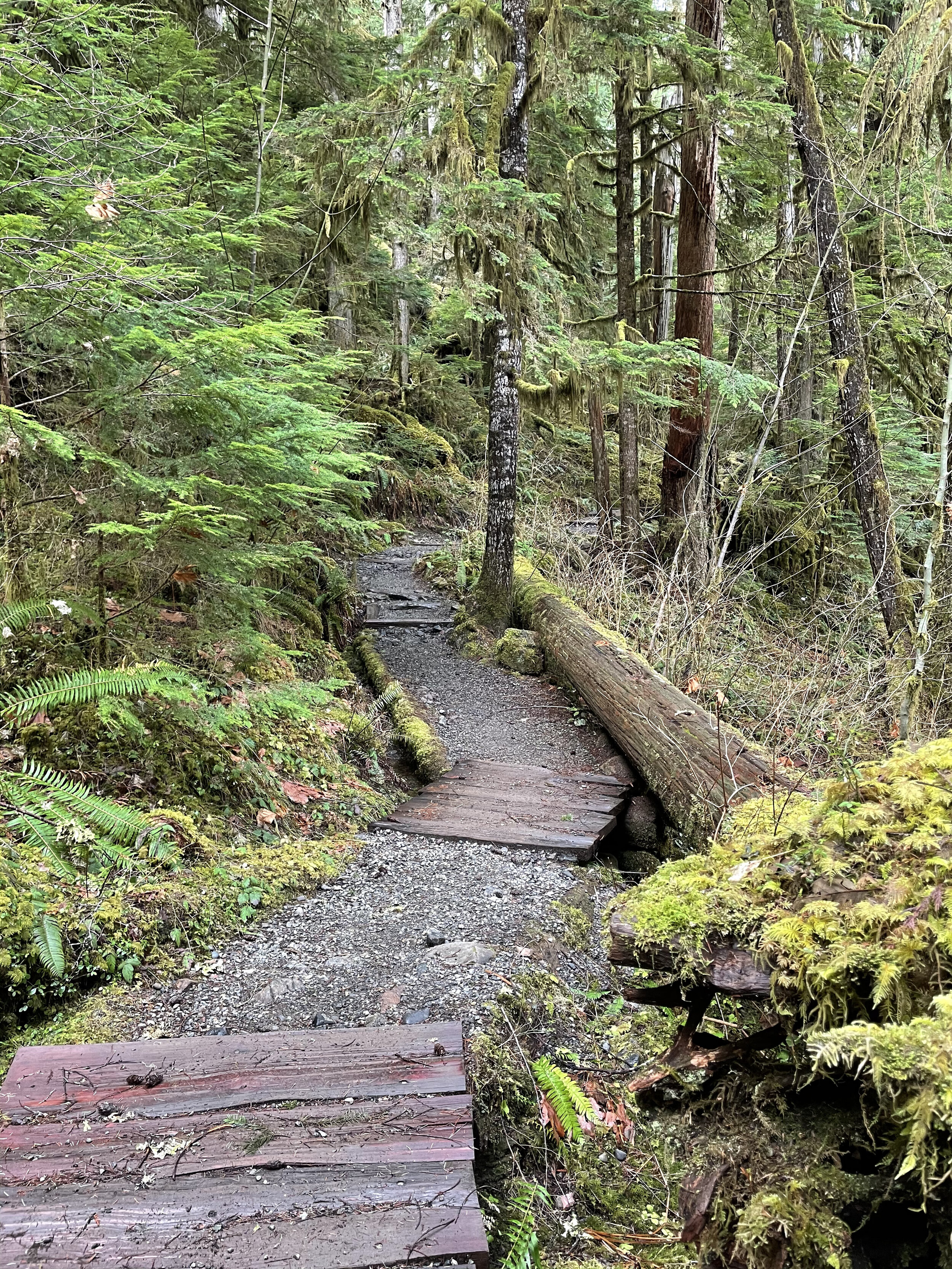
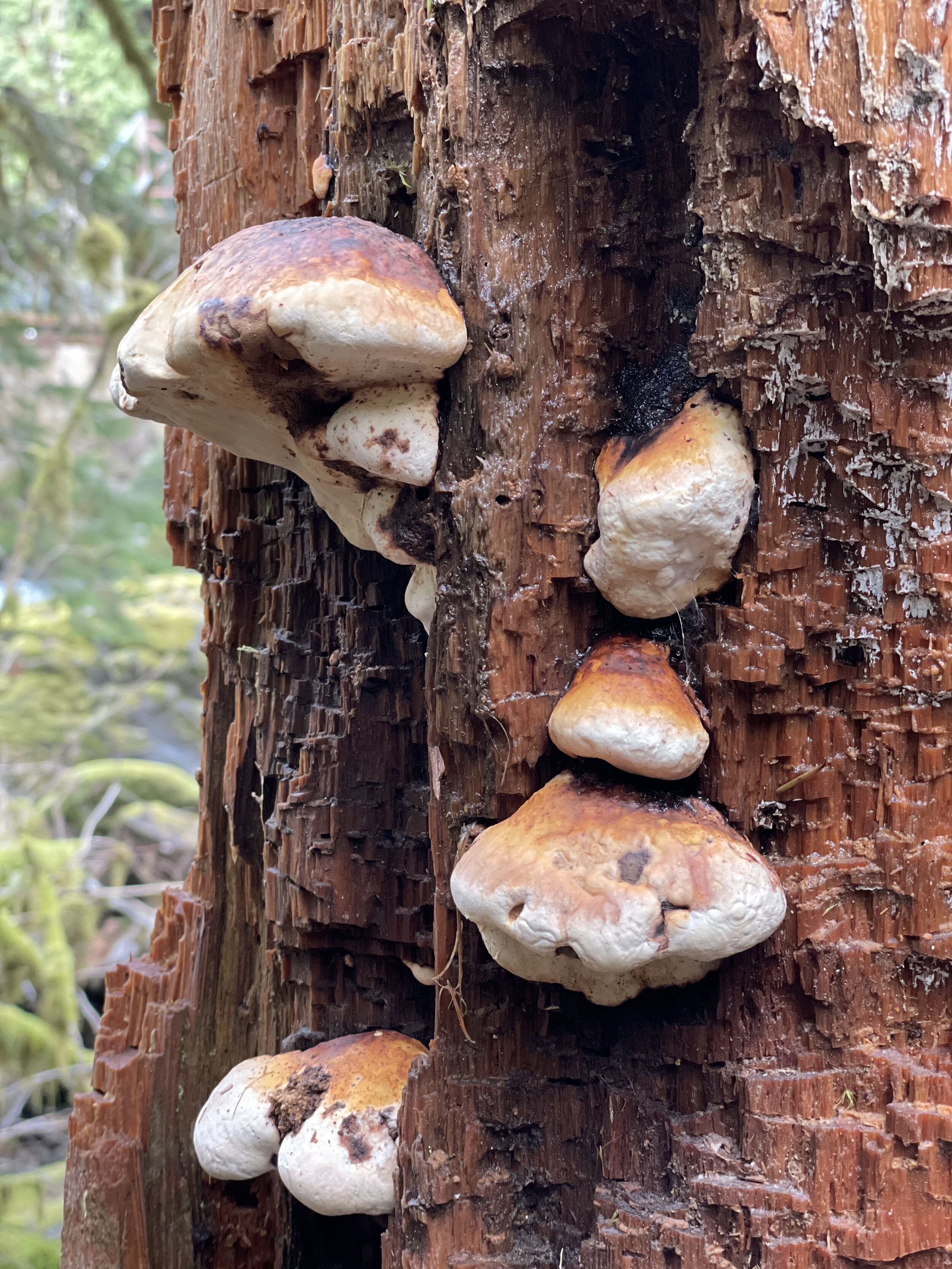
The trail back on the opposite shore is a vast contrast to winding hummocks covered in moss and ferns. The path now follows an old road bed peppered by giant cedars, firs and fallen nurse logs. At two points you cross log bridges to ford the gentle streams coming down from the hills above. The trail ascends up a makeshift timber “staircase” and then drops back into the parking lot near the ranger station.

April Showers Bring Spring Flowers
Although the Pacific Northwest is known for its temperate rainforests accompanied by an abundant amount of green, with April warmth, we can start to look forward to the colorful relief offered by the return of the native flowers around the Canal and South Puget Sound area.
Although the Pacific Northwest is known for its temperate rainforests accompanied by an abundant amount of green, with spring’s warmth, we can start to look forward to the colorful relief offered by the return of the native flowers around the Canal and South Puget Sound area.
April to June is the best time of year for finding the delicate jewel tones out here on the wet coast. Whilst domesticated daffodils and tulips will always be celebrated markers of Spring, our native plants are often forgotten gems of the forests understory. As the days get longer and the weather gets warmer, take a ramble down one of Mason County’s forested walks, like Twanoh State Park Trail or for a more adventurous alpine hike, with spectacular views and unique flora, try Mount Ellinor Trail.
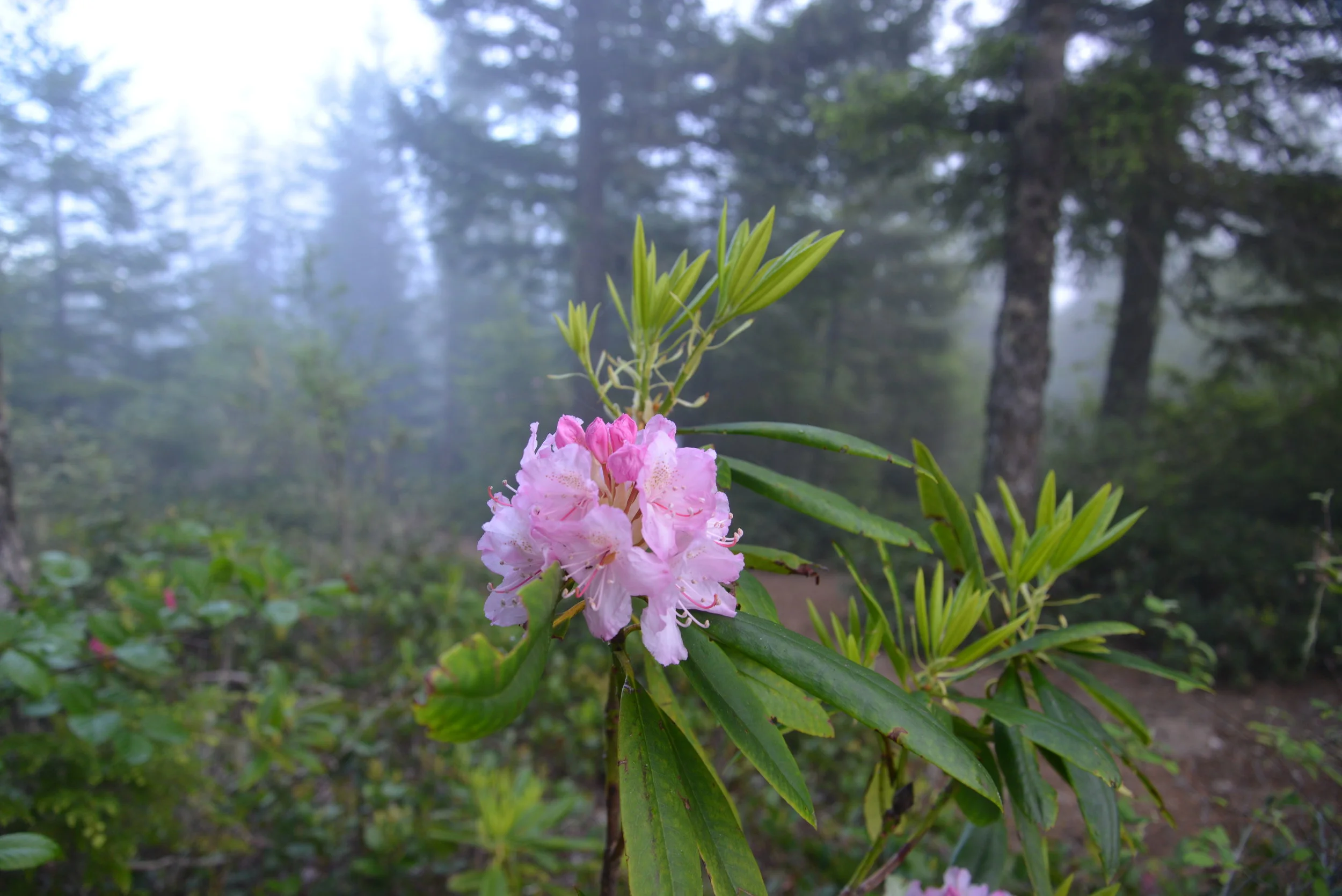
Keep your eyes peeled for the first nodding, purple blossoms of Henderson's Shooting Star (Dodecatheon hendersonii) and the showy, pinky-purple blooms of our local variety of Rhododendron (Rhododendron macrophyllum).

The Pacific Rhododendron is Washington’s State flower and is found in drier parts of the Hood Canal in the understory of coniferous forests.
There are nearly 30 varieties of Rhododendrons native to North America. The Pacific Rhododendron is Washington’s State flower and is found in drier parts of the Hood Canal in the understory of coniferous forests. Pacific Rhododendron can also be seen in partly sunny, open areas, such as along roads. The Pacific Rhododendrons and also Goat's Beard (Aruncus dioicus) can be found in proliference along the winding, scenic 101 Highway following Hood Canal. For an especially spectactular showing of the native rhodendrons, head up to the scenic outlook on Mount Walker.

Pink Fawn Lily
In sunnier, damper areas, near streams, look for the bright pink flowers of Pink Fawn Lily (Erythronium revolutum) or the iconic, if not slightly smelly, “West Coast Daffodil”— Skunk Cabbage (Fritillaria lanceolata). Also in sightly shady, waterside spots, look for carpets of pink Bleeding Heart (Dicentra formosa)— a more delicate version of our domestic variety. Try the Kamilche Kennedy Creek Trail for these humid loving flowers.
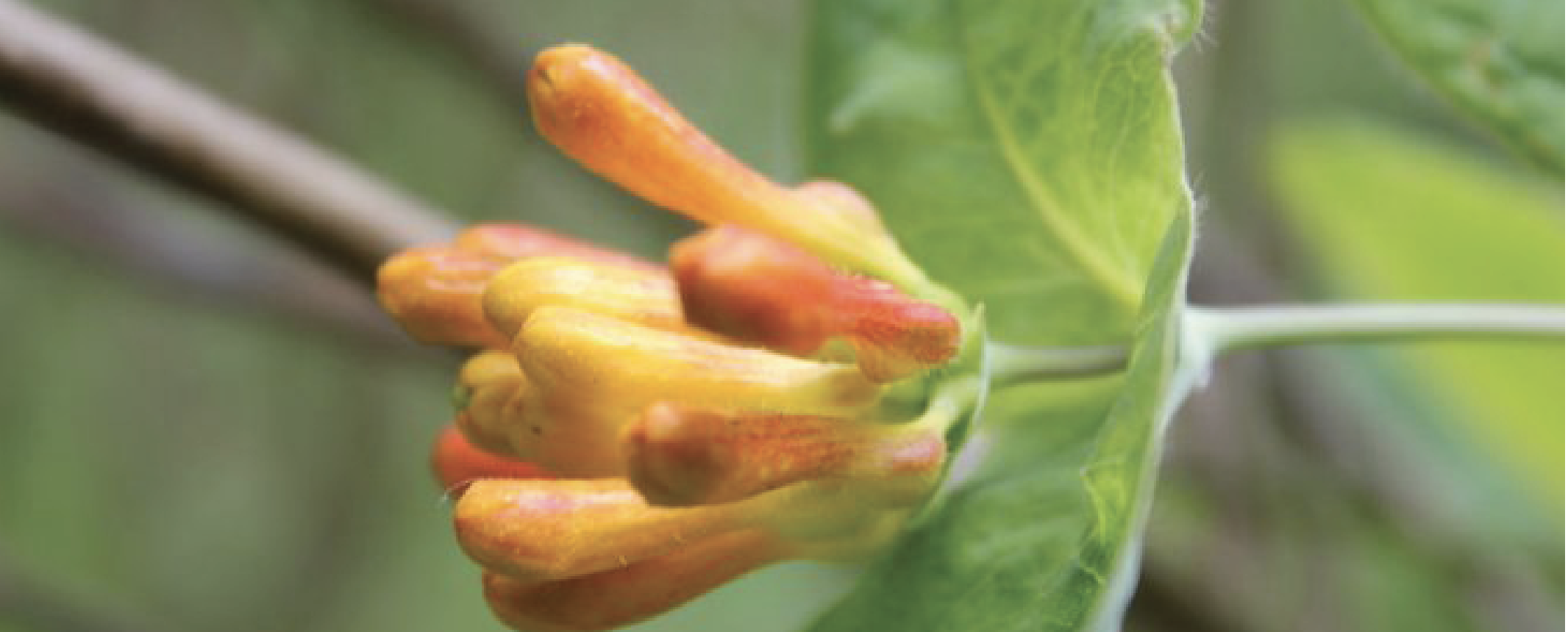
Orange Honeysuckle
As the weather gets warmer (from May to June) search in the partly shady area of the woods for the trailing tender beauty of Orange Honeysuckle (Lonicera ciliosa), and the yellow blossoms of Tall Oregon Grape (Mahonia aquifolium). The delicate, orange-red blooms of Red Columbine (Aquilegia formosa) also emerge during this time.

Camas was actively cultivated and traded between first peoples throughout the Northwest who would harvest the bulbs in the early spring and roast them in pit cooks.
Other blossoms to look for in the late spring are the azure, crocus-like flowers of the Common Camas (Camassia quamash). Found in full sunlight in open places, such as fields, parklands, the bulbs from the Camas were an important part of the diet of Native Americans. Known as k’a’w˜up to the Skokomish and sxa’dzaêb by the Squaxin, this bulbous flower was actively cultivated and traded between Nations throughout the Pacific Northwest who would harvest the bulbs in the early spring and roast them in pit cooks.
On one of those calm days when you believe it might just be summer here early, pack a lunch and hop in the boat and travel to Hope Island Marine State Park. Here you will be greeted by lovely trails and beautiful naturalized gardens with a mix of introduced and native species.
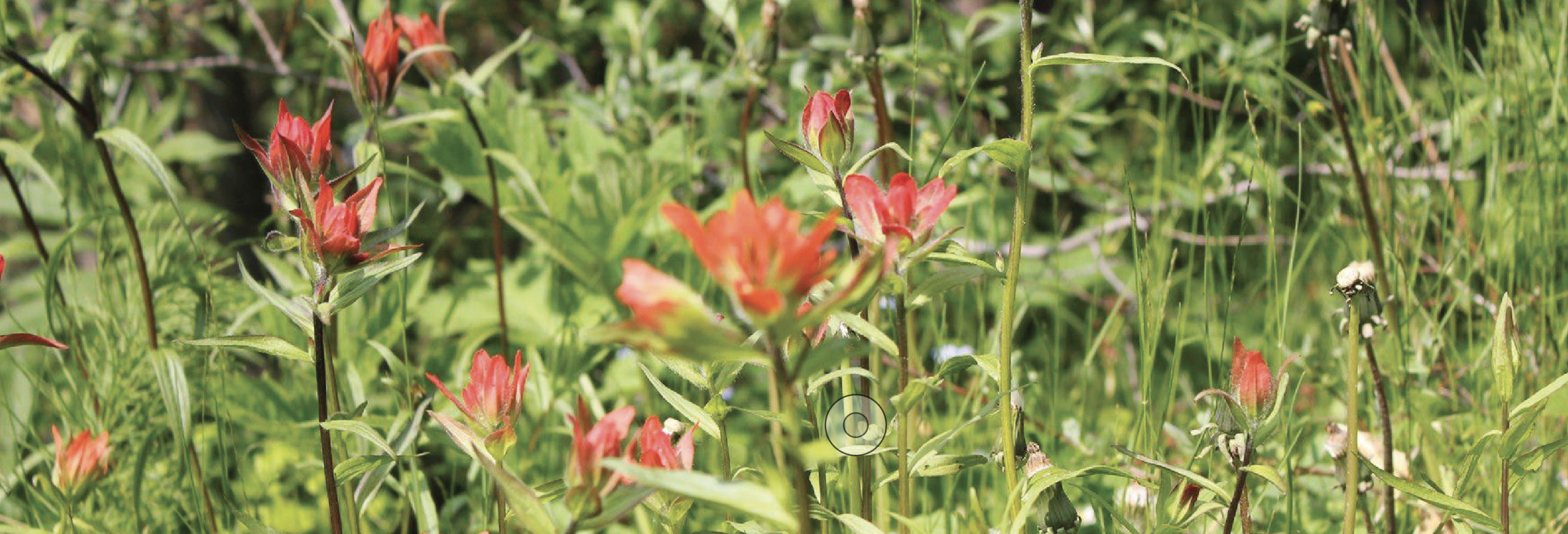
Red Paintbrush
Once settled as a farm, Hope Island has historic fruit trees mixed in with native camas, honeysuckle and the elegant red, trunks of Madrone (Arbutus menziesii). An unusual looking plant found along sun-facing, beach banks is the Red Paintbrush (Castilleja miniata), whose tiny green flowers are hidden in bright red leaves that give the appearance of a brush dipped in red paint. Since most of these species are protected against picking or transplanting, remember to keep your enjoyment to viewing.
You can take as many photographs as you like, but refrain from taking bouquets and let the native flowers thrive.
If casual enjoyment of our native plants is what your after, the Washington Native Plant Society has plant identification resources online and there are plenty of guide books to help. Pojar and Mackinnon’s Plants of the Pacific Northwest Coast (2014) and Nancy J. Turner’s Food Plants of Coastal First Peoples (1995) offer excellent information, photographs and tidbits that add color to an already polychromatic subject. Happy hunting!
Shrimp Season on Hood Canal
WDFW recently announced that Hood Canal will open next month for recreational spot shrimp fishing. We’re celebrating the news by sharing some great recipes from local celebrity chef, Xinh Dwelley.
WDFW recently announced that Puget Sound will open for recreational spot shrimp fishing beginning May 19.
Marine Area 12 (Hood Canal Shrimp District): Open from 9 a.m. to 1 p.m. on May 19, May 22, June 2, June 5, and June 16.
In all areas of Puget Sound, fishers are limited to 80 shrimp per day on open days in May. Fishers may keep dock, coonstripe, and pink shrimp caught incidentally while fishing for spot shrimp, but they count toward the 80-shrimp limit. Beginning June 1, the daily limit is 10 pounds of all shrimp with a maximum of 80 spot shrimp.
A valid 2021-22 combination license, shellfish license, or Fish Washington license is required to participate in all shrimp fisheries. More information on recreational shrimp seasons, and a description of the marine areas, is available on WDFW's recreational shrimp fishing website.
Shrimp & prawn recipes
Thanks to local celebrity chef, Xinh Dwelley, here are a few delicious ways you can prepare and serve your Hood Canal bounty!

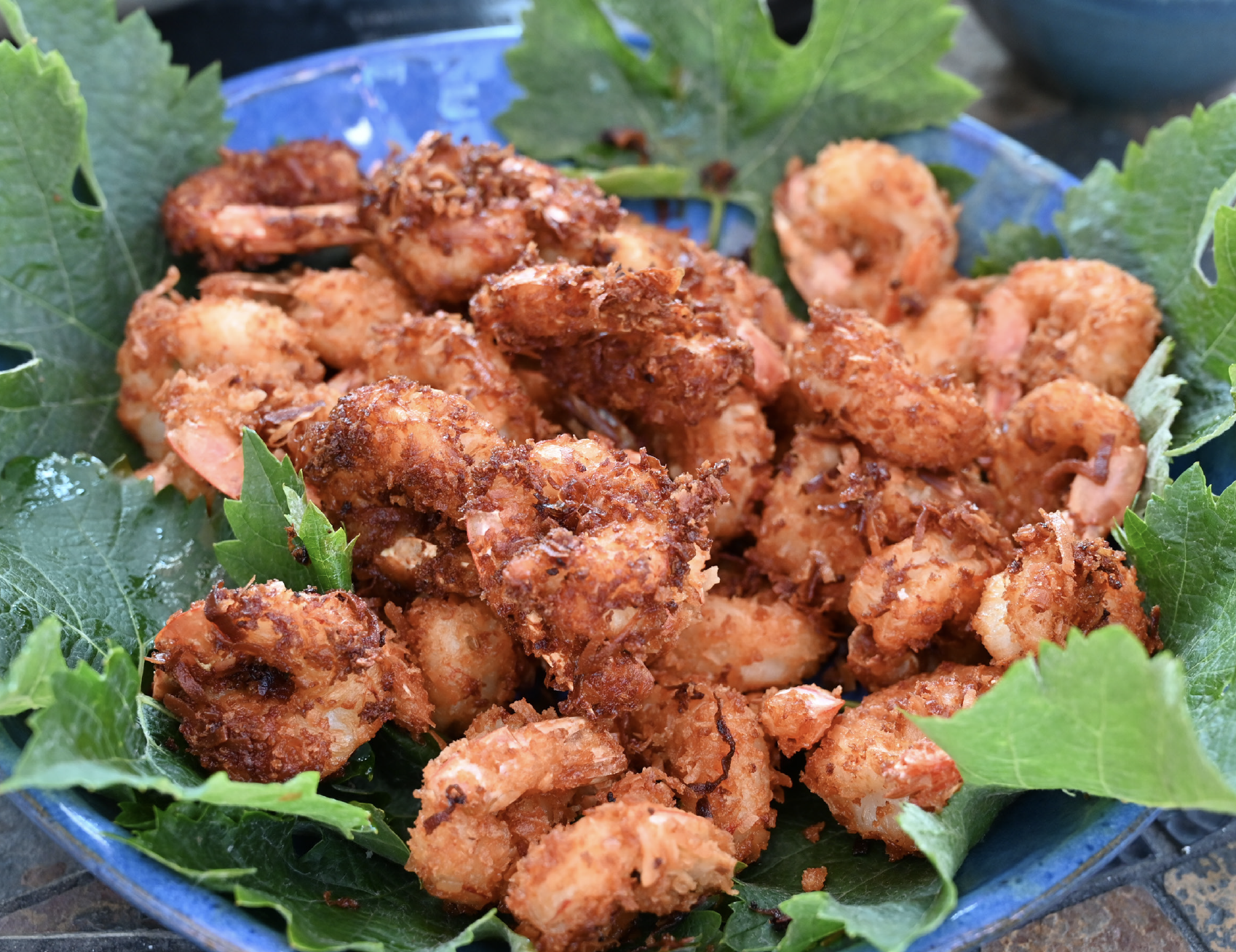
Crunchy Sweet Coconut Shrimp
Of all the recipes tasted for Xinh’s recently published cookbook, this was definitely a favorite. Easy, attractive, and a crowd pleaser – this simple but delicious creation would be good as a starter or for dinner!
2 lbs shrimp
2 cups panko
2 cups shredded coconut
3 Tbsp flour
2 eggs
1 cup coconut milk
3 Tbsp cornstarch
1 tsp garlic, minced
1 tsp lemongrass, finely chopped
1 Tbsp soy sauce
1 tsp salt and pepper, or to taste
Peel, devein prawns, leave tails on, and set aside. Make egg wash by combining eggs, coconut milk, cornstarch, garlic, lemongrass, soy sauce, salt, and pepper. Mix pan-ko, flour and shredded coconut together in another bowl to create breading mixture. Dip shrimp in egg wash. Then dip in the breading mixture. Arrange on cooking sheet and refrigerate for at least 15 minutes to help breading stick to shrimp. You could prepare in advance and cook when serving. Heat a few inches of canola oil to 375°F. Place shrimp into oil and cook until golden brown.

Prawns in Tamarind Sauce

2 lb prawns
⅓ cup white onions, chopped
1 Tbsp garlic, minced
1 Tbsp lemongrass, minced
1 Tbsp canola oil
1 tsp dry Italian seasoning
1 tsp cumin
1 pinch crushed dried cayenne pepper
1 cup crushed pineapple in its own juice
2 Tbsp tamarind concentrate
1 Tbsp fish sauce
1 Tbsp brown sugar
1 cup mushrooms, sliced
1 cup celery, sliced
1 cup carrot, sliced
1 cup coconut milk
1 whole medium tomato, sliced into wedges
2 Tbsp fresh Thai basil, chopped (garnish)
2 sprigs scallions, thinly sliced (garnish)2 Tbsp cilantro, chopped (garnish)
Peel and devein prawns and set aside. Sauté garlic, lemongrass, and white onion in oil until golden brown. Add Italian seasoning, cumin, cayenne pepper, pineapple, coco-nut milk, tamarind concentrate, fish sauce, and brown sugar. Simmer for 5 to 10 minutes. Add prawns and sauté for 2-3 minutes. Add remaining vegetables and mix gently until prawns and vegetables are cooked. Garnish with Thai basil, cilantro, and scallions. Serve with Jasmine rice.
Easy and Delicious Pad Thai
Xinh’s Pad Thai stir-fry dish made with rice noodles, fresh vegetables, peanuts, and prawns/shrimp all mixed together with a spicy and sweet sauce is surprisingly easy to make and can be customized with any vegetables or protein you wish – prawns, shrimp, chicken, tofu – and spice level you prefer.
1 lb prawns
1 Tbsp soy sauce
1 Tbsp fish sauce
1 Tbsp oyster sauce
1 Tsp garlic, minced
1/4 cup Tamarind concentrate Pinch red pepper flakes Juice of 1/2 lime
3 Tbsp canola oil
16 oz package of pad Thai noodles
2 cups Napa Cabbage, shredded
1 cup bean sprouts
1 cup pea pods
1/2 cup onion, sliced
1/2 cup carrots, cut in matchsticks
3 green onions, chopped
1/2 cup garlic chives, chopped (optional)
Peel and devein prawns and set aside. Place noodles in hot boiling water for 3-5 minutes, or until they “relax,” and then drain. Set aside. In a bowl mix soy sauce, fish sauce, oyster sauce, tamarind, red pepper flakes, and lime juice. Using a large wok or large frying pan on high heat, saute garlic, carrots, cabbage and onions in oil until vegetables reduce (about 5 -7 minutes). Add noodles. Turn mixture with tongs and wooden spoon, Add beans sprouts, pea pods, green onions, and chives. Cook, turning often until incorporated (about 5 minutes). Remove from heat. Saute prawns in oil until cooked. Add prawns to mixture and toss well. Serves 4.


About Xinh
Chef Xinh Dwelley was born in South Vietnam, in a village near Siagon, where she discovered her natural talent of making people happy with her food as she cooked for an entire U.S. battalion. When she moved to Washington in 1970, she sold her spring rolls at the Olympia Farmers Market, and became an ace oyster shucker, winning the West Coast Oyster Shucking Championship at OysterFest five times in a row.
She finally found her home at Xinh's Clam & Oyster House in Shelton, WA. This book celebrates 25 years of favorite recipes and memories.