

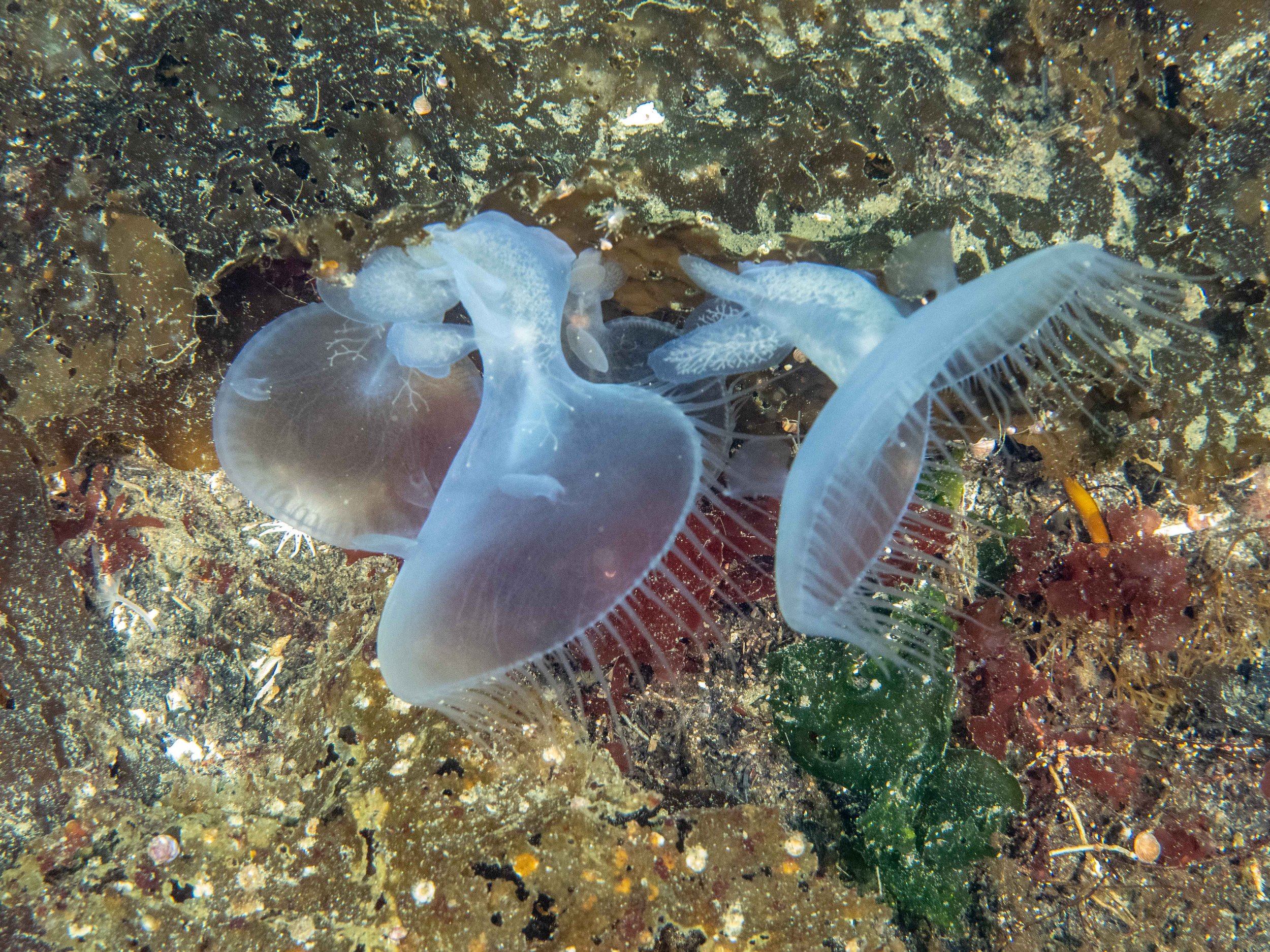
Jellyfish : grace in the current
Gliding through the green summer currents, jellyfish seem to exist somewhere between matter and myth—elegant, translucent, and suspended in a world shaped by light and movement. Though often dismissed as pests or feared for their sting, these gelatinous invertebrates are a vital and beautiful part of the ocean’s marine ecology, especially during the warmer months
Thom Robbins | Story & pictures
Gliding through the green summer currents of the Salish Sea, jellyfish seem to exist somewhere between matter and myth—elegant, translucent, and suspended in a world shaped by light and movement. Though often dismissed as pests or feared for their sting, these gelatinous invertebrates are a vital and beautiful part of the Salish Sea’s marine ecology, especially during the warmer months.
At least 10 known species of jellyfish (Class Scyphozoa and Hydrozoa) are commonly found in the Salish Sea. However, the exact number varies depending on seasonal conditions and depth. The region also hosts a variety of hydromedusae, small jellyfish-like organisms from the class Hydrozoa and ctenophores (comb jellies), which are not true jellyfish but are often seen alongside them.
In the summer, diving in the Salish Sea isn’t about crystal-clear views but seeing what moves through the murk. As the surface waters warm, sunlight and nutrients combine to spark massive phytoplankton and algae blooms. These microscopic organisms flourish in the long daylight hours, turning the water cloudy green and dramatically reducing visibility.
At the same time, nutrient-rich upwelling from deeper waters feeds this explosion of life, creating a cascading effect through the food web. These blooms nourish jellyfish and other filter feeders, yet they can also trigger oxygen depletion in deeper layers—a process known as eutrophication. As algae and plankton die off and decompose, they consume oxygen, sometimes creating low-oxygen zones that drive fish and invertebrates like wolf eels into shallower waters, or out of the area entirely.
Despite the haze, the midwater teems with motion. Jellyfish pulse silently past in the filtered light, their delicate forms catching the sun like drifting ornaments. I’ve hovered motionless on some dives as dozens of moon jellies passed—some brushed softly against my mask. In those moments, the murk becomes a cathedral, lit not by clarity but movement. Among the most commonly seen is the Moon Jelly (Aurelia labiate). Recognizable by its delicate, bell-shaped body and the four horseshoe-shaped gonads visible through its dome, the moon jelly is both harmless and hypnotic. Although capable of stinging, its venom is so weak that divers typically feel nothing more than a light brush, if anything at all.


Another summer highlight is the Fried Egg jelly (Phacellophora camtschatica), which drifts through the current like a golden sun. Its yolk-colored center and frilled white tentacles make it one of the most photogenic creatures in the water column. Despite its size, it poses little threat to swimmers or divers. Less frequent but unforgettable is the Lion’s Mane jellyfish (Cyanea capillata)—the world's largest known jellyfish species. Its tentacles can grow over 30 meters long in Arctic populations, though those found in the Salish Sea are often smaller. Its sting is more noticeable, though rarely dangerous, and it tends to favor colder, deeper waters where few divers tread.
Jellyfish have been drifting through Earth’s oceans for over 500 million years, long before dinosaurs roamed the land or fish evolved bones. Fossil evidence shows that their basic body plan has remained remarkably unchanged, a testament to just how well-adapted they are to life in the water column. These ancient invertebrates are one of the oldest animal groups on Earth. Unlike many marine organisms, jellyfish never developed hard skeletons or complex organs. Instead, they relied on simplicity and flexibility: a hydrostatic body, a decentralized nerve net, and the ability to reproduce both sexually and asexually.
“Their survival lies in elegant simplicity. Jellyfish drift with currents, respond to light and nutrients, and reproduce quickly when conditions align—strategies that have carried them through five mass extinctions. Most jellyfish species live only a few months in their adult medusa form.”
In the Salish Sea, each summer bloom connects us to this deep evolutionary past. To hover among these creatures is to glimpse a lineage nearly as old as the ocean itself. Their movements may be fleeting, but their presence speaks to a legacy stretching back over 500 million years.
Built to Drift
Though they seem simple, jellyfish are highly specialized. With no bones, brains, or hearts, they are built to drift. The jellyfish found in the Salish Sea all share the same basic anatomy, but with fascinating variations.
At the center of a jellyfish’s structure is its bell, the umbrella-like dome that pulsates to move it through the water. This bell is made of a gelatinous material composed chiefly of water, up to 95% in most species. Radial canals branch from the stomach, distributing nutrients throughout the bell.
Larger predators also take an interest. Occasionally, ocean sunfish (Mola mola)—the world’s largest bony fish—wander into the Salish Sea, and jellyfish are a favorite food. Their thick skin protects them from stings as they chomp through even the largest medusae. Historically, leatherback sea turtles, specializing in eating jellyfish, may have traveled this far north, though sightings today are extremely rare.
Even other jellyfish can be predators. With its long, trailing tentacles, the fried egg jelly often feeds on smaller jellyfish that become ensnared in its stinging threads. It’s a quiet cannibalism, part of the natural food web.
Jellyfish can be an unexpected snack for juvenile salmon, especially pink and chum. These young fish sometimes feed on tiny jellies and jelly-like plankton as they migrate through the sea, supplementing their diets during their early life stages. When a jellyfish’s life ends and it sinks to the seafloor, crabs, sea stars, and other scavengers move in. They scavenge the soft tissue, recycling the jelly’s nutrients into the ecosystem.
For all their fragile, ghost-like appearance, jellyfish play a key role in the Salish Sea’s complex food web, both predator and prey. Their presence supports a range of species, many of which rely on these gelatinous drifters more than most people realize.
Unlike animals with hearts and blood vessels, jellyfish lack a true circulatory system. Instead, they rely on the simple structure of their bodies to move nutrients. Through a combination of internal canals and diffusion, the passive movement of molecules from areas of high concentration to low, nutrients are spread throughout the jellyfish's tissues. This efficient, low-energy system works because jellyfish are composed mainly of water and have thin, soft bodies, allowing nutrients and gases to move freely without blood or vessels.
Jellyfish lack a brain but rely on a decentralized nerve net to detect touch, orientation, and light. Around the bell’s rim are specialized sensory structures called rhopalia, which contain balance organs (statocysts) and light-sensitive spots (ocelli). These help jellyfish maintain their position in the water column and respond to environmental changes. In many species, like the Moon Jelly, you can see the four gonads (reproductive organs) through the bell. These are typically arranged symmetrically and give the jelly its iconic pattern. Jellyfish are usually gonochoric, meaning individuals are either male or female, though some species can change sex depending on environmental conditions.
Though they may appear delicate, jellyfish anatomy is an evolutionary success story, fine-tuned over half a billion years. Every structure, from the trailing tentacle to the light-detecting rhopalium, keeps these animals alive in a constantly shifting marine world.

Born of Water
Jellyfish have one of the most complex and fascinating life cycles in the animal kingdom, cycling between two distinct forms: the polyp and the medusa. Most of the jellyfish we see while diving are medusae—the free-swimming, bell-shaped adults. But before reaching this stage, each jellyfish begins life as a microscopic larva called a planula, which settles onto a hard surface and develops into a polyp. These polyps can remain dormant for years, cloning themselves and waiting for the right environmental cues—usually a change in temperature or light—to begin a process called strobilation.
During strobilation, the polyp stacks tiny disc-like ephyrae that break off and develop into juvenile jellies. This ability to clone and reproduce asexually means jellyfish can quickly take advantage of favorable conditions, leading to the massive blooms divers witness during Salish Sea summers. Some polyps may produce genetically identical clones, while others undergo sexual reproduction to introduce new genetic material.
In particular, Moon Jellies are known for their resilience and adaptability. They can tolerate low-oxygen conditions better than many other marine organisms, allowing them to thrive in increasingly stressed ecosystems. Crystal Jellies exhibit a unique form of reproduction in which males and females release gametes into the water column, a method known as broadcast spawning—one of the most ancient reproductive strategies in the ocean.
Hanging beneath the bell, a jellyfish’s tentacles and oral arms serve as its defense system and means of feeding. Along the tentacles are thousands of specialized stinging cells called cnidocytes, each containing a microscopic harpoon-like structure known as a nematocyst. When triggered by touch or the presence of prey, these structures fire, delivering venom that can stun or immobilize small organisms. Moon jellies don’t chase their meals—they drift with open arms through clouds of plankton, letting the current deliver each bite. Their tentacles sweep plankton, tiny crustaceans, and larval fish toward their fringe of short, frilly oral arms, transporting the food to the central mouth.
The fried egg jelly takes a slightly different approach. Its long tentacles snare zooplankton and smaller jellyfish, which are slowly drawn to its oral arms for digestion. Large and dramatic, it feeds with quiet efficiency, drifting through the current, letting the ocean deliver each meal. But while they drift and feed with effortless grace, jellyfish are also food for a surprising array of marine life. Sea anemones, rooted to rocks and pilings, often snatch passing jellies with their sticky tentacles. If a moon jelly drifts too close or becomes weakened, an anemone will pull it in, undeterred by the jelly’s stinging cells. Whenever I run across this it always looks like a child sucking in a plate of spaghetti.
Conservation
Although jellyfish are often seen as survivors—creatures that thrive where others struggle—they are also indicators of broader changes in marine ecosystems. In the Salish Sea, shifts in jellyfish populations can reflect changes in water temperature, nutrient levels, and even human impacts such as coastal development and pollution.

For instance, increased runoff from agriculture and urban development introduces nutrients that can intensify plankton blooms, indirectly supporting larger jellyfish populations. While this may seem like a success story for jellies, it often signals ecosystem imbalance. In extreme cases, jellyfish blooms can disrupt fisheries by clogging nets, consuming fish larvae, and competing with commercial species for food. Plastic pollution also poses a risk. Jellyfish sometimes ingest microplastics, mistaking them for prey, and may in turn be eaten by larger animals like salmon or sea turtles, passing toxins up the food chain. Interestingly, the translucent structure of jellyfish makes them particularly difficult to spot when entangled in discarded fishing gear, meaning they can suffer unnoticed in ghost nets.
Despite these concerns, jellyfish have become unlikely ambassadors for science, conservation, and discovery. One of the most important breakthroughs in modern biology came from the Crystal Jelly, found off the coast of Friday Harbor. Scientists discovered green fluorescent protein (GFP) in this species—a molecule that glows green under ultraviolet light. GFP acts like a molecular flashlight when inserted into other organisms, allowing researchers to track genes and observe biological processes in real time. This discovery revolutionized genetic and medical research, earning a Nobel Prize and highlighting the hidden value of marine life.
Conclusion
Encountering jellyfish while diving in the Salish Sea is never ordinary. Whether it’s a Moon's hypnotic pulse or a Crystal's rare glow, these animals embody a unique blend of grace, resilience, and ecological importance. They are living filters, slow-motion drifters, and seasonal storytellers, revealing much about the world beneath the waves. While some may still associate jellyfish with stings or beach closures, divers know better. To hover beside a jelly in its element is to witness nature in its purest form—unhurried, mysterious, and vital. In a time when ocean health is at risk, jellyfish remind us that beauty and science are not separate but intertwined. Their presence is more than a summer spectacle—it’s a quiet signal that even the oldest life forms still move among us, pulsing with stories the sea has never stopped telling. To witness one is to glimpse time suspended—fragile, pulsing, and older than memory
Underwater Wonders:The Vibrant World of Nudibranchs
With their brilliant colors and unique patterns, these vibrant sea slugs captivate divers and underwater photographers alike. Despite their small size, nudibranchs' diversity, intriguing behaviors, and ecological significance make every encounter unique
Story and Pictures by Thom Robbins
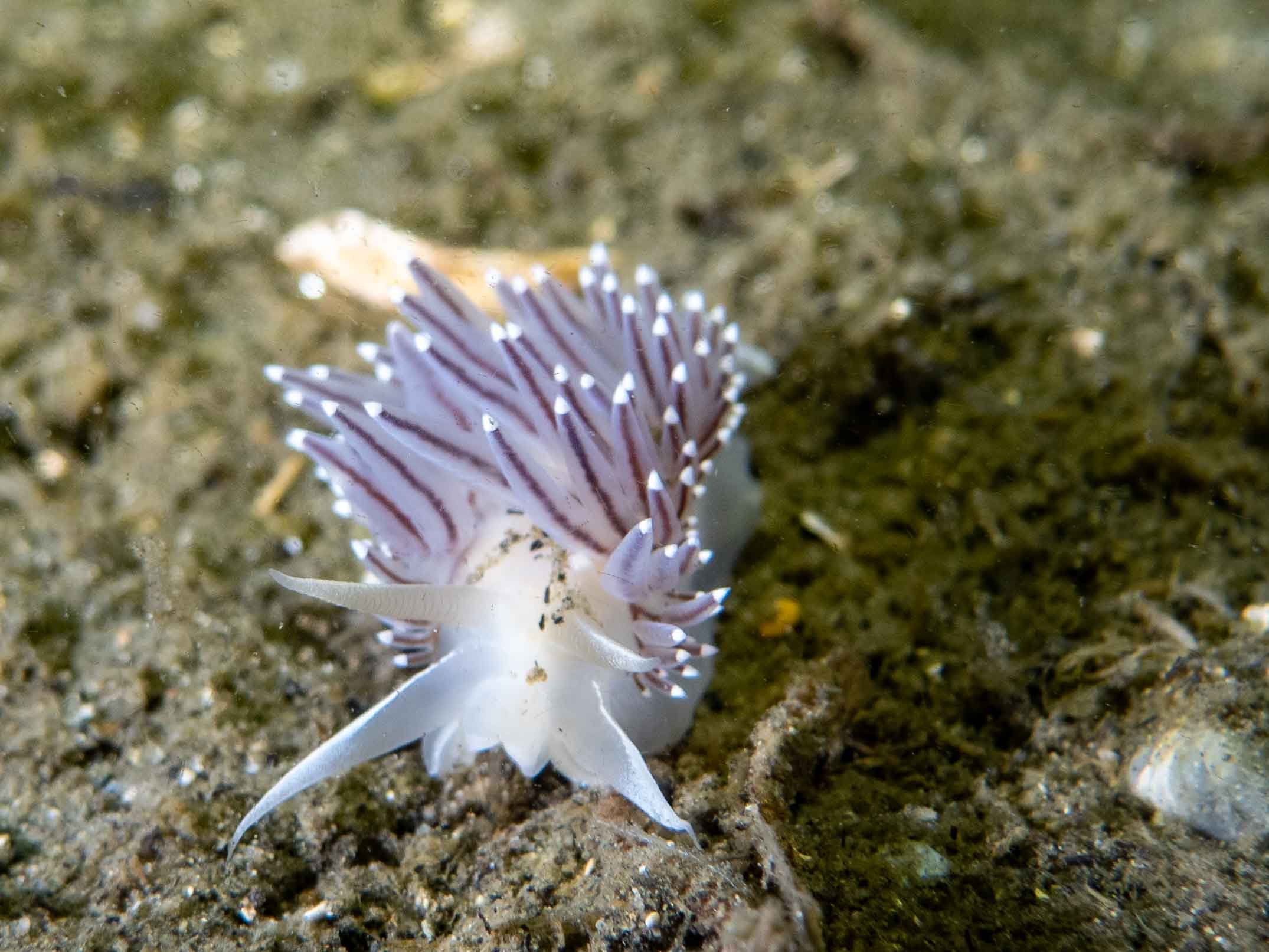
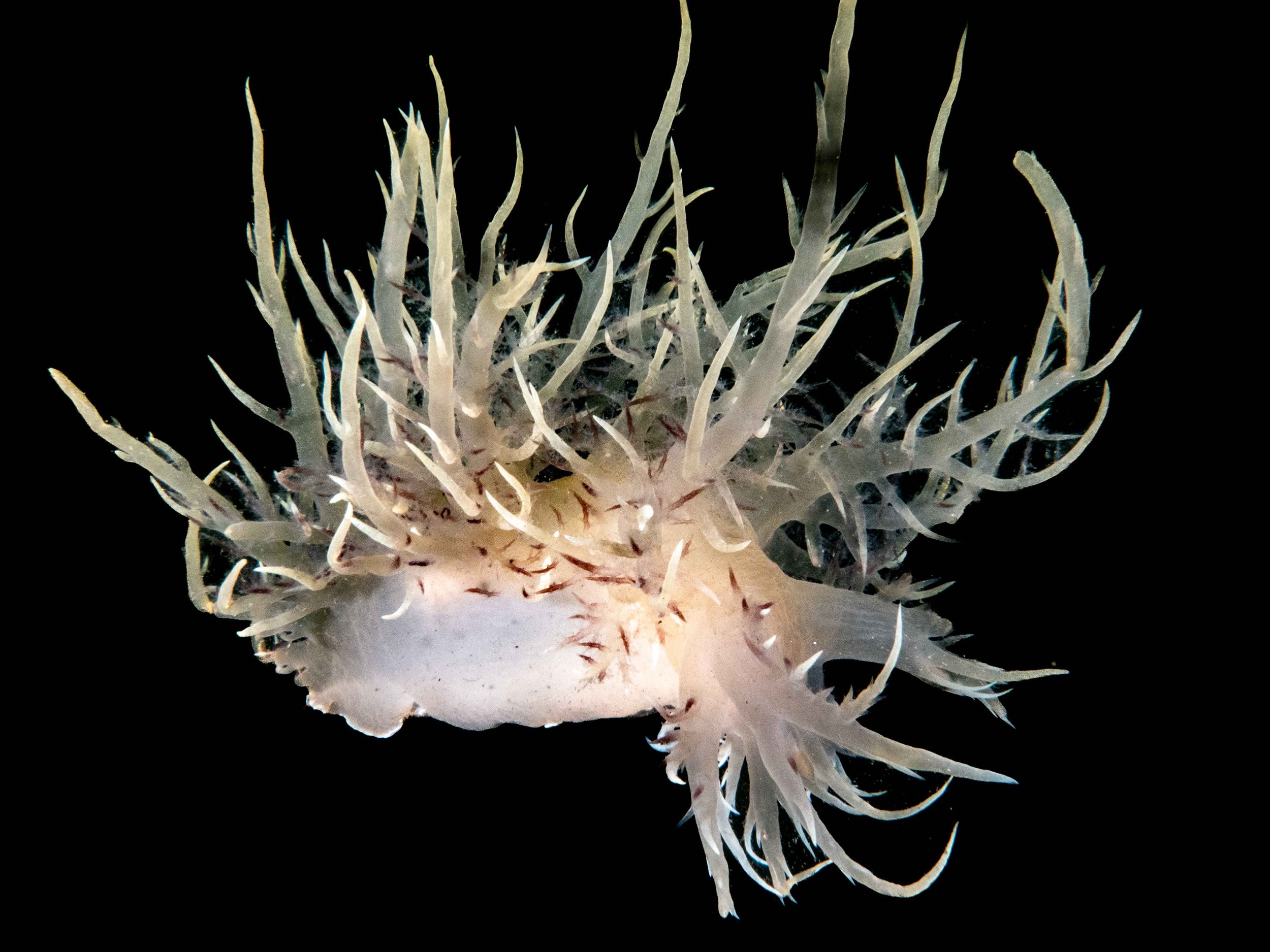
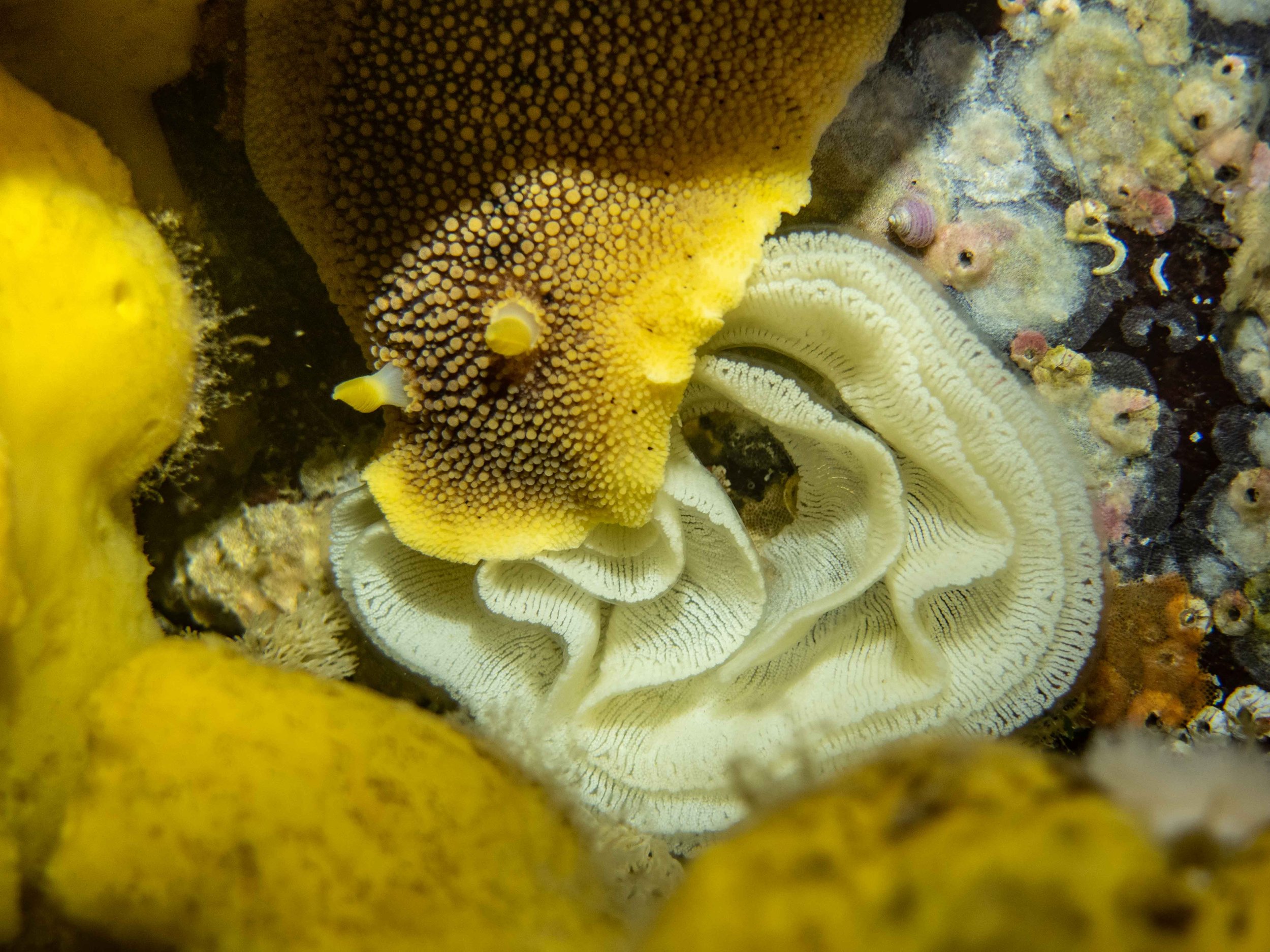
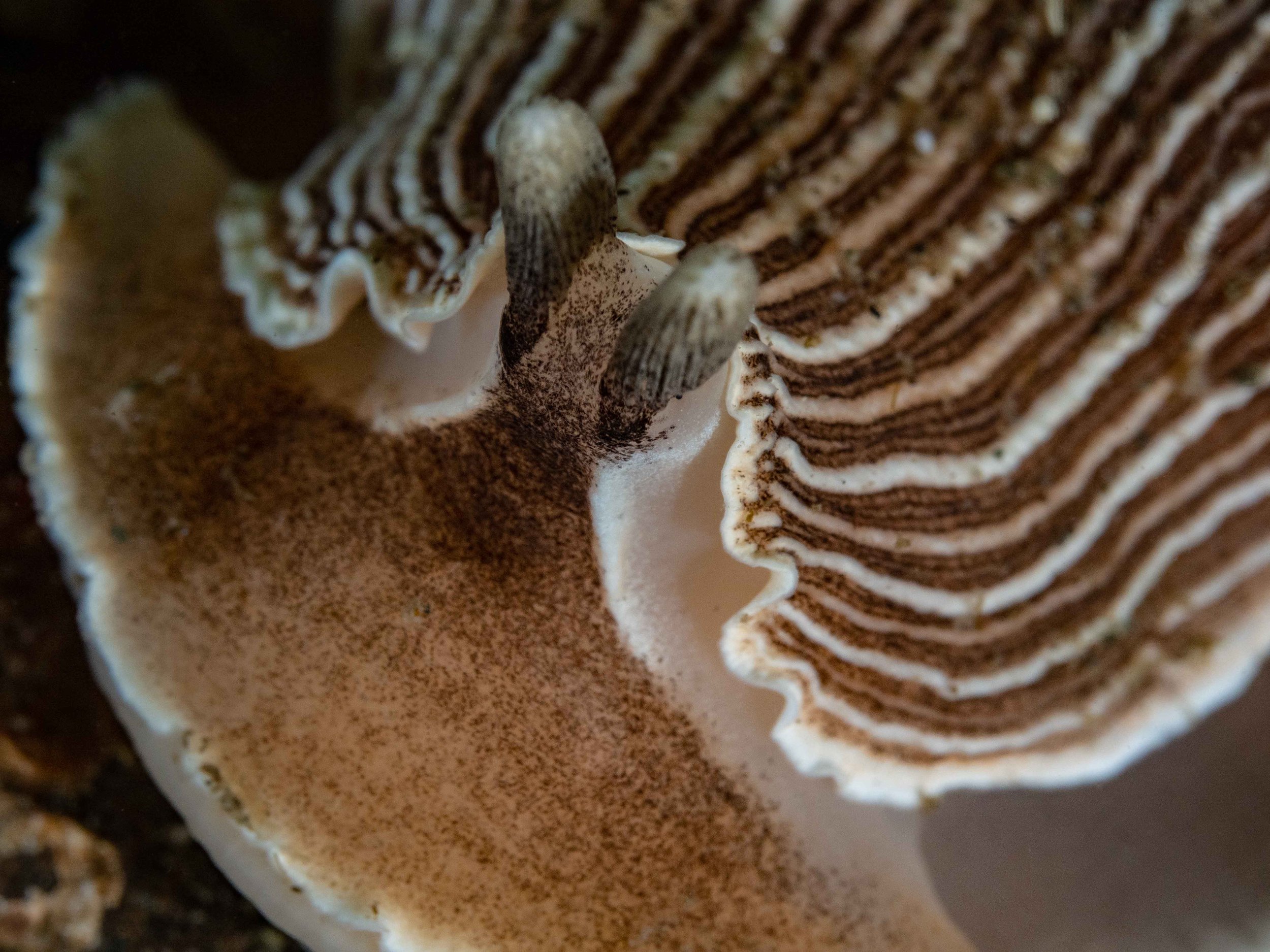
In the Pacific Northwest, divers can't help but talk about nudibranchs. With their brilliant colors and unique patterns, these vibrant sea slugs captivate divers and underwater photographers alike. Despite their small size, nudibranchs' diversity, intriguing behaviors, and ecological significance make every encounter unique. Observing their feeding habits or marveling at their colors and patterns turns an ordinary dive into an extraordinary experience. It's no wonder dive enthusiasts travel from around the world to places like the Salish Sea to see these mesmerizing creatures.

How to pronounce “Nudibranch”
The word nudibranch is pronounced “Noo-de-brank”, with the ‘ch’ making a ‘k’ sound. The name nudibranch comes from Latin and Greek. “Nudi” means naked in Latin, and “Brankia” means gills in Greek. This name suits them well since their gills are exposed on their backs.

Nudibranchs, or sea slugs, are marine gastropod mollusks with unique sensory systems. They belong to the Mollusk family, which includes snails, slugs, and octopuses, and are closely related to land-based slugs and snails. With their dazzling colors and intricate patterns, nudibranchs are some of the ocean's most visually striking creatures. They have long captured the imagination of both scientists and divers. With about 3,000 known species of nudibranchs worldwide, scientists believe many more remain undiscovered. Approximately 300 species have been documented in the Salish Sea. With their extraordinary colors and behaviors, nudibranchs are a fantastic example of evolution and still hold many mysteries.
Nudibranchs have been known to humans for thousands of years, but scientific classification began in the late 18th and early 19th centuries. The first recorded description was in 1691 by English naturalist John Ray, who described a species of "sea mouse." Recent advances in technology and imaging have made studying nudibranchs easier, revealing new insights into their biology and behavior. High-resolution microscopes and genetic analysis techniques help scientists examine their anatomy and evolutionary history in greater detail.
Nudibranchs are primarily found on the ocean floor, where they gracefully navigate using a broad, flat muscle on their underside called a foot. This muscular foot allows them to glide slowly over the substrate, often at a pace of just a few centimeters per minute. However, some species can swim short distances in the water column by undulating their foot muscle in rhythmic waves. This unique movement, though still relatively slow compared to other marine creatures, adds elegance and adaptability to these fascinating sea slugs as they explore the diverse habitats of the Salish Sea.
Nudibranchs are omnivorous and have oral tentacles near their mouths that act like hands to help them search for food. They also possess a set of curved teeth called a radula, similar to a toothed tongue. The radula allows them to scrape food off surfaces, munching on various organisms, including hydroids, seaweed, corals, algae, barnacles, fish eggs, sponges, anemones, and even other nudibranchs. While some species enjoy a diverse diet, others are picky eaters, consuming only one type of prey. Interestingly, some nudibranchs can even feed on other sea slugs, including those of their species. In this way, nudibranchs play a crucial role in the Salish Sea's food web, helping regulate other organisms' populations.
Nudibranchs have poor vision and can only discern light and dark, so they sense the world through two highly sensitive tentacles called rhinophores on their heads. Unfortunately, these rhinophores tend to stick out and serve as a lure for hungry fish. However, most nudibranchs can withdraw their rhinophores into a receptacle in their skin when they sense danger.
Nudibranchs also have symbiotic relationships with certain organisms in the Salish Sea—for example, some nudibranchs partner with zooxanthellae, a type of algae that lives inside their bodies. The nudibranch provides a safe and protected environment for the algae, and in return, the algae give the nudibranch energy through photosynthesis.
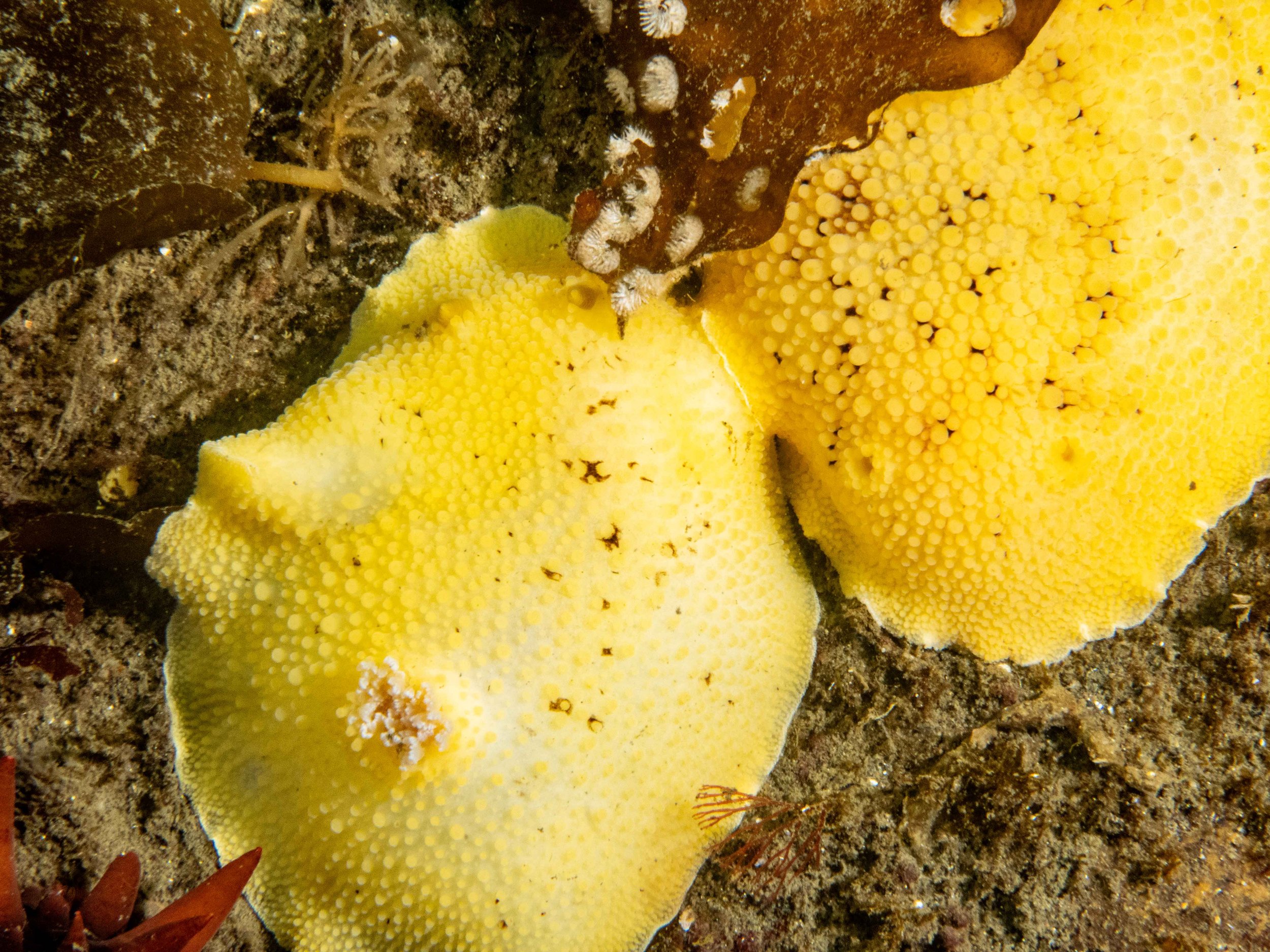
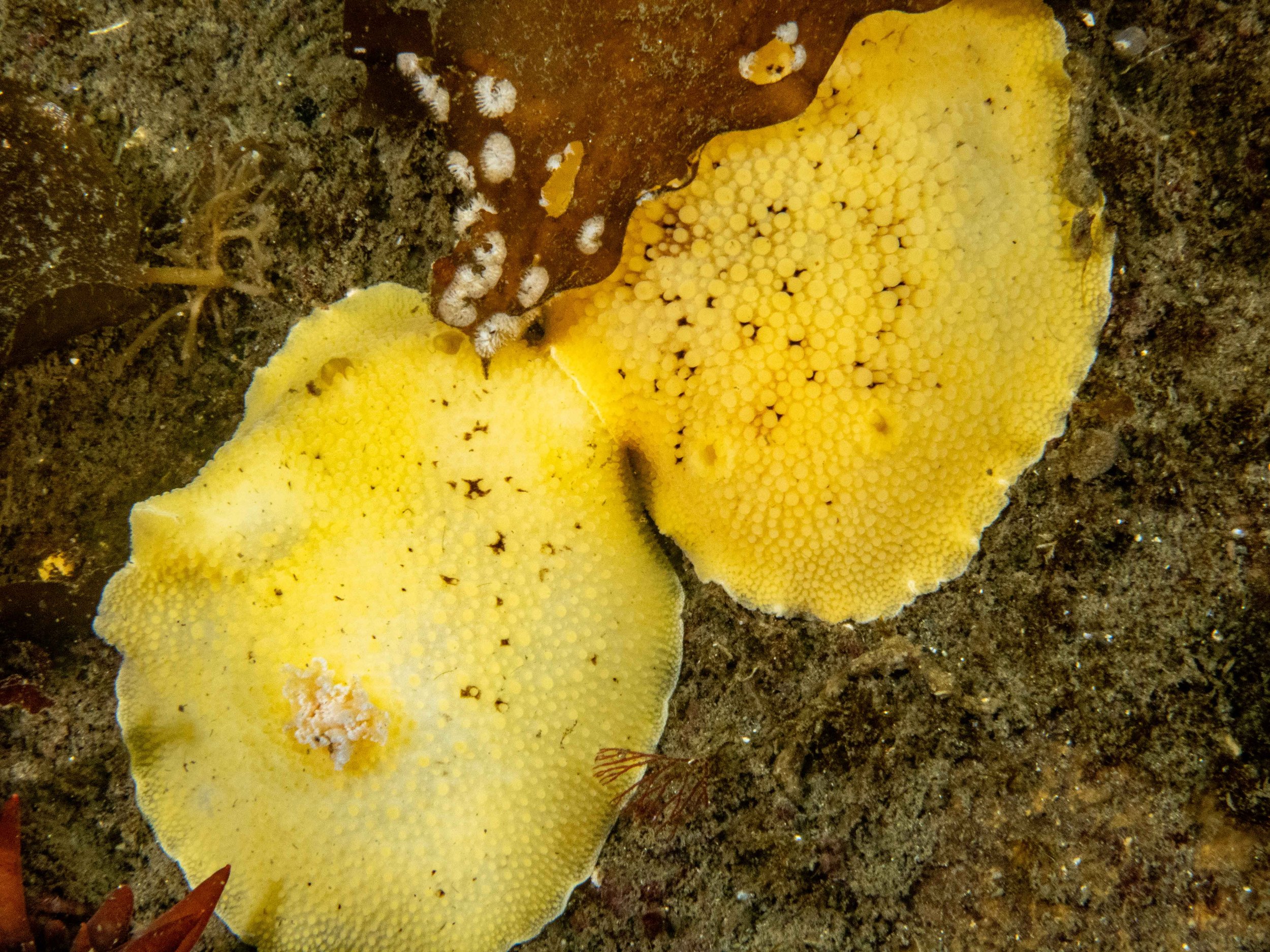
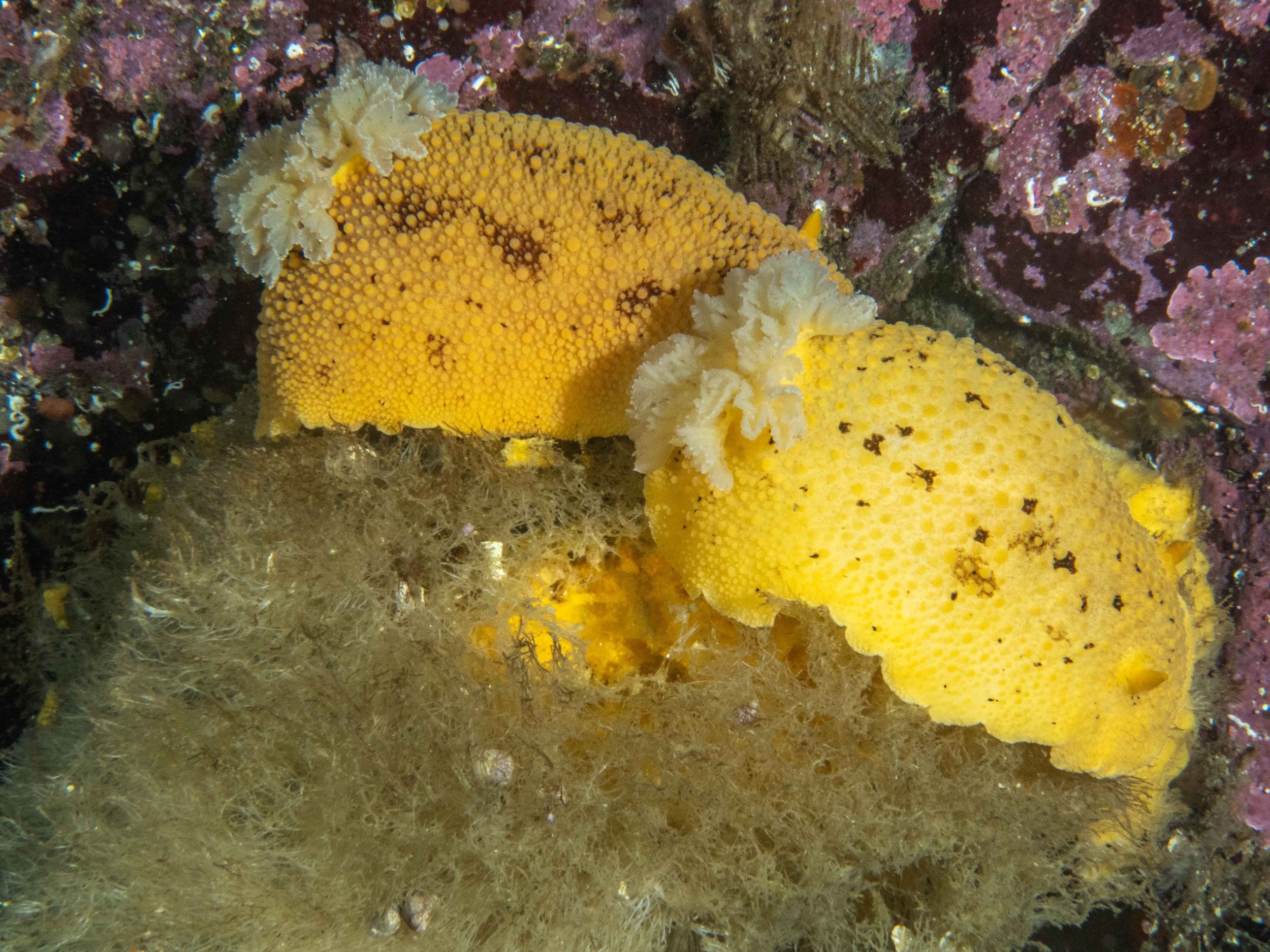
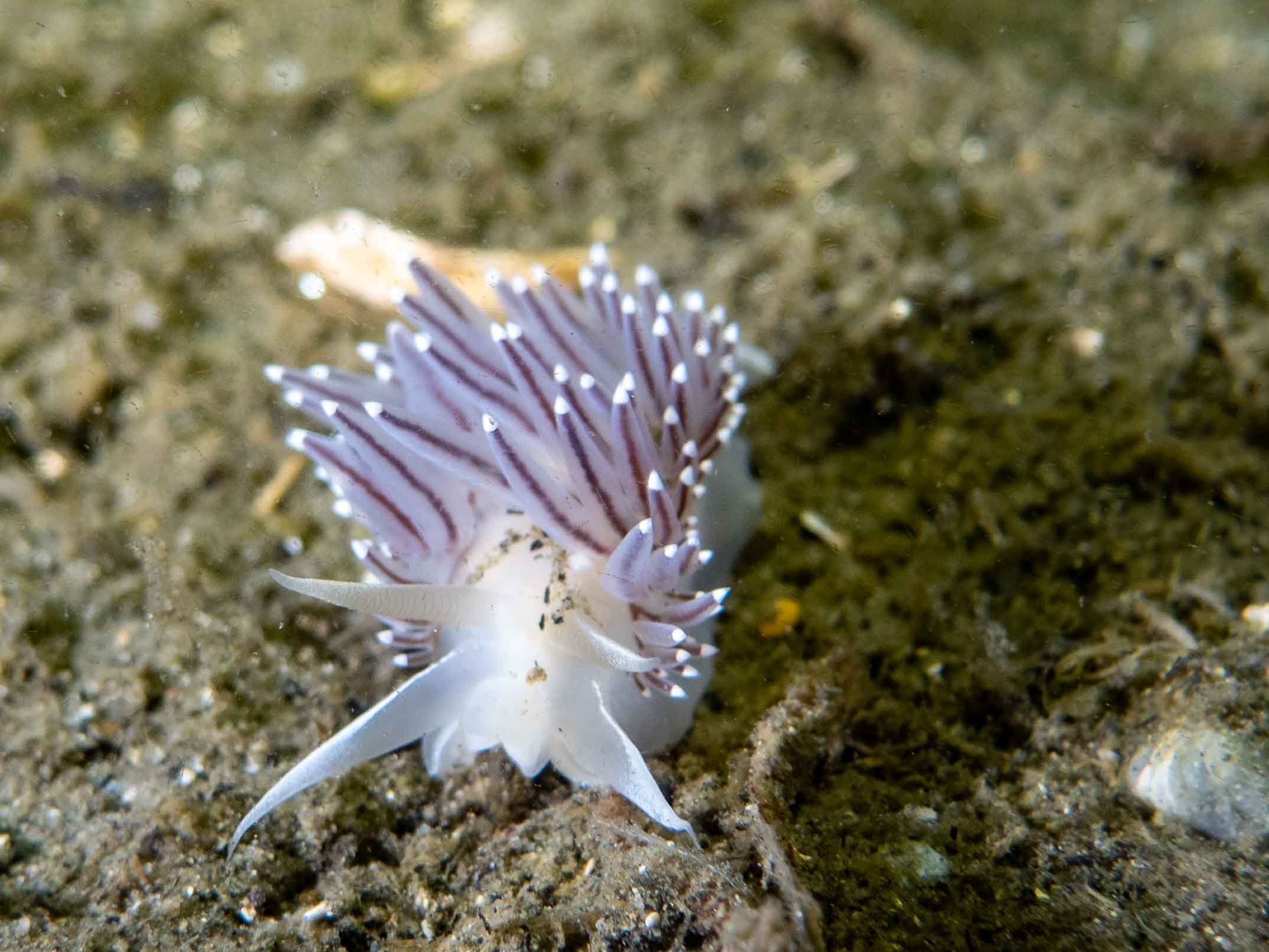
Gallery of nudis
Photos by Thom Robbins



The Lifecycle of a Nudibranch
Nudibranchs are hermaphrodites, possessing both male and female reproductive organs, allowing them to mate with any mature species member. Finding a suitable mate can be challenging as they must locate a partner of appropriate size, age, and species. Although mating is crucial for survival, nudibranch mating behavior is not fully understood.
Since nudibranchs do not roam far and have a short lifespan, ranging from one week to one year, their survival depends on mating whenever the opportunity arises. After a brief courtship, the mating ritual takes only a few minutes. Nudibranchs lay ribbon-like egg masses that hatch into free-swimming larvae, eventually settling on the seafloor as adults.
When two nudibranchs meet, they engage in a mating dance involving various physical interactions, which differ depending on the species.
Several nudibranch species have interesting mating practices and reproductive strategies. For instance, the sea lemon nudibranch is known for its elaborate courtship dances, while the opalescent nudibranch has more solitary and secretive mating habits. The mating process finishes with one nudibranch inserting its penis into the other's genital opening to transfer sperm and fertilize the eggs.
The dance of the sea lemon nudibranch is a captivating display of intricate behaviors. It begins with the nudibranchs detecting chemical signals through their rhinophores and sensory organs. Once a potential mate is identified, they initiate a series of movements and interactions. Sea lemons may swim in circles around each other, using rhythmic body contractions to create water currents.
They align their bodies and exchange tactile touches using oral tentacles and rhinophores, including stroking or tapping each other. These interactions allow them to assess their potential mate's size, texture, and readiness and to exchange chemical cues through skin contact to determine compatibility and reproductive readiness. The sea lemon courtship can last several minutes or even hours. If they find a compatible mate, they align their bodies side by side and mate.
The opalescent nudibranch engages in a mesmerizing courtship behavior known as "chaining" or "following." It begins with one nudibranch following the slime trail left by another. The follower extends its oral tentacles to touch the rear end of the leading nudibranch, triggering a reciprocal response. This back-and-forth interaction can continue for quite some time.
During courtship, they may touch each other with their oral tentacles, antennae, and rhinophores, intertwining their bodies or forming a chain-like structure with multiple individuals. This behavior helps them assess each other's compatibility for mating by exchanging chemical cues through their slime trails, which convey information about reproductive state and readiness. This courtship dance allows them to determine species compatibility, identify potential mates, and ensure successful reproduction.
Nudibranchs also engage in chemical warfare during mating. They can produce and store toxic compounds from their food, such as sponges and algae, in specialized glands in their bodies. These toxins are a defense mechanism against predators and can also repel unwanted mating advances. If a nudibranch is not interested in mating, it can release a cloud of noxious chemicals to discourage further advances.
After mating, nudibranchs lay their eggs in long ribbons or strings sheathed in protective mucus. Although adults don’t care for the eggs, some species cover them with defensive chemicals to deter predators. Family size varies by species, with some laying just a few eggs and others depositing several hundred or even millions. The egg ribbon protects the developing eggs, and nudibranchs often lay them in locations that provide optimal conditions for growth and survival. The eggs hatch into tiny larvae that drift in ocean currents for several weeks before settling on a suitable substrate and developing into adult nudibranchs.
In our area, nudibranch eggs hatch in two ways: as tiny larvae with shells that swim and feed in the plankton or as miniature adults. The swimming larvae, known as veligers, must find the right food before they settle down and grow into small adults. The juvenile nudibranch feeds on tiny organisms like algae and small invertebrates for several weeks. As it grows, it will feed on larger prey such as sponges and hydroids. Nudibranchs have feeding mechanisms that set them apart from other mollusks. They have an oral hood that extends over their mouth, which they use to capture prey. This oral hood contains several rows of sharp teeth that can pierce the prey's outer layer and inject it with digestive enzymes.The time it takes for a nudibranch to grow to maturity can vary depending on the species, but it typically takes several months to a year. When the nudibranch reaches maturity, it begins to search for a mate.
Conclusion
Diving into the waters of tour area transforms the ordinary into extraordinary. As you descend, a serene quietness envelops you, like an explorer charting new frontiers. Camera in hand, navigate this alien landscape, like an astronaut on an oceanic planet. The vastness of the reef invites you to uncover its secrets. Glide along its surface, examine each nook and cranny with curiosity. Vivid marine life enchants, with each nudibranch a brilliant stroke from nature’s palette. In this underwater maze, the adventure takes an exciting turn. A nudibranch appears, its vibrant colors catching your attention. The incredible beauty of these creatures sharpens focus. Point, click, forever preserving your encounter with the dazzling nudibranch.
To learn more about diving locally to see nudibranchs, visit the Sund Rock Marine Preserve, or contact YSS Dive Charters . Both are located near Hoodsport on Hood Canal. You can also often view nudibranchs at very low tides around the docks and piers.
Author: Thom Robbins
Thom has been a diver for over thirty years and is never happier than underwater with his camera. He writes shoots, and teaches diving and photography. Thom lives in Shelton with his wife and mentor, Barb, son and two English Bulldogs. Learn more at thomrobbins.com.
The Port Of Hoodsport Welcomes Divers, Disc Golfers and Visitors to the area
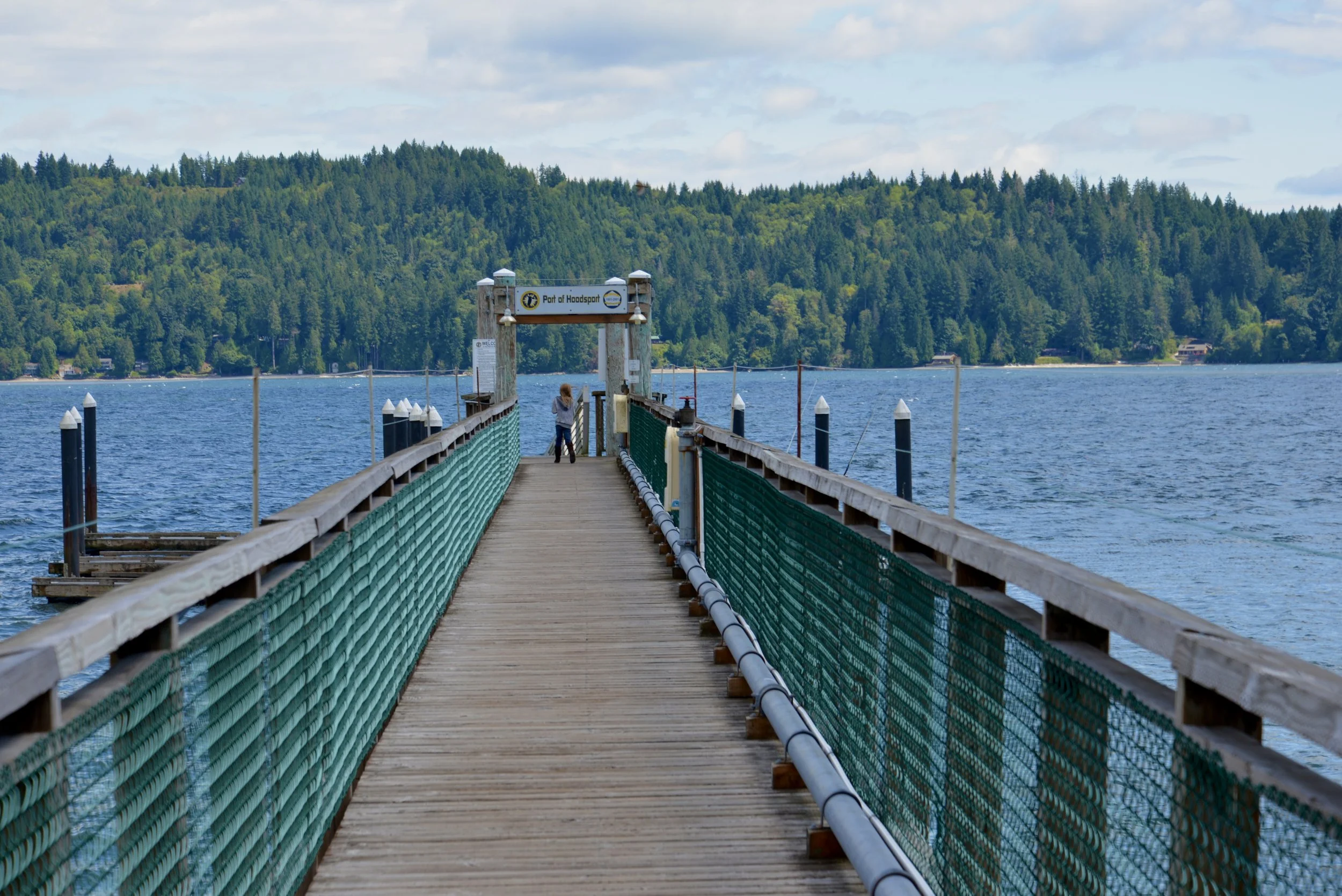
Port Of Hoodsport Commissioner Cody Morris talks about the Port of Hoodsport public dock, its recent updates, and future plans. After structural failures last winter, they secured emergency funding for repairs just in time for shrimp season. The dock is a popular spot for divers, fishermen, and visitors to downtown Hoodsport's shops and restaurants.
Port Of Hoodsport Commissioner Cody Morris talks about the Port of Hoodsport public dock, its recent updates, and future plans. They've been working on modernizing the dock to meet safety and environmental standards, replacing old materials, and making it more resilient to weather. After structural failures last winter, they secured emergency funding for repairs just in time for shrimp season. The dock is a popular spot for divers, fishermen, and visitors to downtown Hoodsport's shops and restaurants. Additionally, The Port of Hoodsport manages a disc golf course and a trail system up the Cushman Road.
If you had attended Fjordin Crossin in June, you may know that the Port has been working on modernizing the dock to meet safety and environmental standards, replacing old materials, and making it more resilient to weather. After structural failures last winter, they secured emergency funding for repairs just in time for shrimp season. The dock is a popular spot for divers, fishermen, and visitors to downtown Hoodsport's shops and restaurants.
"We are in negotiations with DNR to renew our lease," Cody Morris explained to Jeff, "and part of that stipulates that we need to modernize the material being used here. Our dock is quite old, and so it is very out of code, both for safety and environmental standards. So two of the main things we’re looking at is the materials."
Morris spoke regarding the winter dock closures, "we had some extreme structural failures, and for the safety, the port had to close it down and seek emergency funding from the state to hire a contractor to do the repairs. We were lucky that we were able to get repairs done just in the time of shrimp season. That’s definitely when this dock gets the most use. The second most use is during the salmon season."
Although the Port was able to make temporary repairs, Morris realizes there is still a lot of work to be done.
"As the dock is currently configured," he continued, "it kind of more or less has a self-destruct button. And that’s mostly from the fact that the dock itself doesn’t flex. It creates an insane amount of tension during the tidal changes, and those much gnarlier waters in the winter."
Regardless of the pending long term upgrades to the docks that will take some time and funds, Morris attests that the docks are an important asset to the Port of Hoodsport not just for the basic needs of accessibility but also for tourism. The local retail and restaurants in the area benefit greatly from the summer day traffic arriving by water.

Feast your eyes on a face with personality to spare!
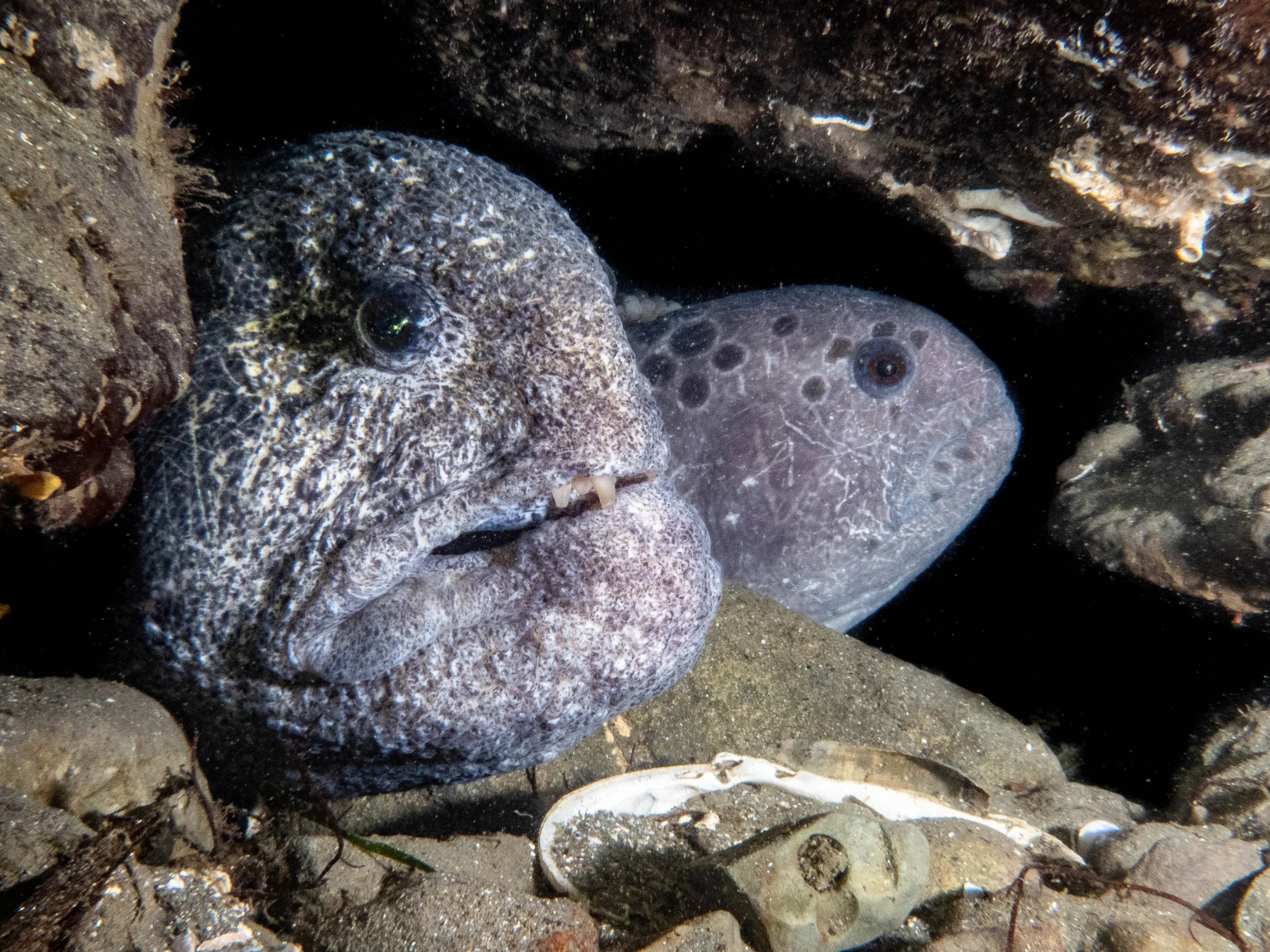
Get any group of divers together in the Pacific Northwest and ask them what makes for a great dive. Everyone will agree that a wolf eel was somehow involved. There is something unique about the supremely ugly faces of an adult wolf eel staring at you from its den.
Story & Pictures, Thom Robbins
Get any group of divers together in the Pacific Northwest and ask them what makes for a great dive. Everyone will agree that a wolf eel was somehow involved. There is something unique about the supremely ugly faces of an adult wolf eel staring at you from its den.

Hood Canal Wolf Eel | Photo credit: Thom Robbins
This can turn an ordinary dive into a great one. The conditions don’t matter – cold, terrible visibility or strong currents are forgotten once a wolfie (as we call them locally) appears publicly. It’s not surprising why divers worldwide travel to places like the Hood Canal to catch a glimpse of these fantastic creatures.
Meet wolfie

Hood Canal Wolf Eel | Photo credit: Thom Robbins
Throughout history, the peoples of the northern Pacific have held wolf eels in deep respect. Many of the native tribes in the area viewed the wolf eel as a creature of strength and resilience, symbolizing protection due to its robust and intimidating appearance. This belief often extended to the spiritual realm, where the wolf eel was thought to embody protective spirits. In Washington, the wolf eel is now a protected species in the Puget Sound and Hood Canal.
This is not because they are endangered but because their value as a living resource to divers and photographers far exceeds whatever commercial value the species could provide as a food source. Some dive sites, like Sund Rock in the Hood Canal, are well-known locations where wolf eels interact with divers and provide unique photo opportunities.
Wolfies are not related to eels. Instead, they are part of a family known as the wolf fishes.

Hood Canal Wolf Eel | Photo credit: Thom Robbins
They belong to an even larger group of fish known as Perciform, generally considered perch-like fish. But their long-bodied, eel-like appearance is unique in this group of fishes. The wolf eel can be found as far south as San Diego in southern California, then northward up the Pacific coast to the Aleutian Islands in Alaska. The popular term “wolf eel” comes from the large frontal canine-like teeth used to seize their favorite meals, mainly hard-shelled crustaceans and invertebrates. The typical menu includes crabs like Dungeness, Red Rock, and Green Urchins.
Most wolf eels can grow to about six feet long and weigh almost thirty pounds, although they can grow to eight feet. These massive fish are speculated to live up to 10 years in the wild, though no research is available on their longevity. Scientists have found that they can begin reproducing between four to seven years, suggesting they may be long-living fish. One fact that I find fascinating is that they lack a swim bladder, a feature commonly found in most fish species. The swim bladder is an internal gas-filled organ that helps fish regulate their buoyancy and control their vertical position in the water column. However, the wolf eel has evolved without this organ, relying on its muscular body and strong pectoral fins to maneuver and maintain its position in the water. The lack of a swim bladder allows wolf eels to lounge around on the bottom or lay in their home lairs. Like snakes, they swim by making S shapes with their bodies and use their pectoral fins to steer. This unique adaptation allows the wolf eel to thrive in rocky coastal habitats, where it can navigate through crevices and caves with exceptional agility. By forgoing the swim bladder, the wolf eel has developed a specialized set of skills, making it an expert hunter and a master of its underwater domain.
Additionally, wolf eels have a slimy coating on their bodies, which serves several important purposes for their survival and protection in their marine environment. First, it acts as a natural defense against infections. The slime contains antibacterial and antimicrobial properties that help prevent the growth of harmful bacteria and parasites on their skin, reducing risk of infection.
The slimy coating makes it difficult for predators to grip or hold onto a wolf eel.
When threatened or attacked, a wolf eel can release more slime from its skin, making it slippery and challenging for predators to maintain a firm grip. This slippery defense mechanism allows the wolf eel to escape from potential threats. The slimy layer reduces friction when the wolf eel moves through the water, allowing them to easily pass through tight spaces and narrow cracks without getting stuck.
Lifecycle of a Wolf Eel
Approximately 24 hours before mating, the female wolf eel’s abdomen becomes noticeably distended. When this happens, the male will butt his head against the back of her abdominal region. This action appears to stimulate physiological activity. A series of waves move through the female's body from her head to her tail, particularly pronounced in her abdominal area. The male will then wrap himself around the female so that their heads will be side by side and their genital regions adjacent. In this position, the female releases the eggs, usually between 5,000 and 10,000, and the male fertilizes them as they appear. After fertilization, the female will coil about the eggs, molding them into a ball-like cluster. The eggs are adhesive to each other but not to the rocky walls of the den. Both parents will then coil themselves about the egg mass, sometimes together and at other times individually, tending the eggs and ensuring they are rotated so that a good flow of water passes through them.
After about 16 weeks, the eggs hatch, and the larvae float towards the upper part of the ocean or the sea, where they spend nearly two years of their lives. The tiny fish are born brownish pink, about 1 1/2 inches long. They turn dark gray within a day and start snacking on small shrimp after a few days. The larvae that emerge are left on their own to swim with the plankton in the ocean. From birth, they are voracious predators and will strike at their planktonic prey, much like a coiled snake will strike at a mouse. Constantly searching for prey, the larval wolf eels will lead a pelagic existence. Eventually, the maturing youngsters settle on the ground and enter a den. Denning will typically occur in the Puget Sound area from February through April.

Juveniles wolf eels exhibit a more vibrant and striking appearance. | Photo credit: Thom Robbins
The change from a pelagic to a bottom-dwelling existence spawns physical changes in the juvenile wolf eel. Juveniles exhibit a more vibrant and striking appearance. A vivid orange or reddish-orange color with darker markings often characterizes their appearance. This vibrant coloration helps juveniles blend in with their surroundings, such as rocky reefs or kelp forests. As they mature into adults, their coloration becomes more subdued brown or reddish-brown. The skin often has spots of a darker color, which may be outlined in a lighter color. The males will also develop a puffy face, enlarged jaws, huge bulbous lips, and a powerful sagittal crest at the top of their heads to support the increased muscle mass required for the jaws.
Friends & enemies
There is no fairness in the realm of a Salish Sea rocky reef. A fierce battle for ownership unfolds around the most desirable den sites. The key contenders are the Giant Pacific Octopus (GPO), and the formidable wolf eel.
Both species vie for control over these coveted shelters, which serve as their sanctuary in a harsh underwater world. This struggle is fueled by their shared habitat, prey, and an unyielding desire for the same type of den sites.
With its unmatched dexterity and cunning, the octopus poses a formidable challenge to the wolf eel. I have watched the battle when a GPO ruthlessly evicts a wolf eel, sometimes even targeting mated pairs, and claims the den as its own. Despite the wolf eel's valiant efforts, there is little it can do once an octopus of even modest size has set its sights on a particular den.
Ask any diver, and they can attest to the futility of trying to dislodge an entrenched octopus from its chosen abode.
Submerging into the chilly embrace of the Salish Sea transforms the ordinary into the sublime. A serene quietness wraps around you as you descend below the waves, echoing the solitude of an explorer charting new frontiers. Gripping your camera firmly, you traverse this alien landscape, feeling every inch an astronaut on an oceanic planet.
Hood Canal Wolf Eel | Photo credit: Thom Robbins
Before long, you approach a wall, its vastness urging you to uncover. You glide along its face, examining each nook, cranny, and boulder with a mix of awe and curiosity. The vividly colored marine life enchants you, each organism a stroke of brilliance from nature’s palette. In this marine maze, your adventure takes a thrilling turn.
From the periphery, a wolf eel appears, locking eyes with you. There’s a mutual recognition, a shared wonder between you and the creature, silently communicating in this mesmerizing undersea world. The thrill of the encounter sharpens your focus, and with camera in hand, you ready yourself to document this surreal moment. You aim and capture the scene, forever preserving your encounter with the wolf eel.
Hood Canal Diving:
Sund Rock Marine Preserve
26472 US-101, Hoodsport
sundrock.com
YSS Dive Charters
24080 N US-101, Hoodsport
yssdive.com/charters
About the Author: Thom Robbins

"Fascinated with the underwater world in the Pacific Northwest,I have been a diver for over thirty years and have never been happier than underwater with a camera. I spend as much time underwater as possible, shooting pictures or teaching diving and photography. You can see and purchase my photo collections at robbinsunderwater.com. If you want to learn about diving or photography, reach me at thomrobbins@gmail.com.
When not diving, I spend time with my wonderful, patient wife, Barb. We have just relocated to Shelton to enjoy a more relaxed life. Without Barb, I wouldn’t have continued my passion for diving. She is my best and often harshest critic, pushing me to explore better photos. I also have a 21-year-old son who makes me want to be a better person daily. Last but certainly not least are my two English Bulldogs, essential to my family's life."
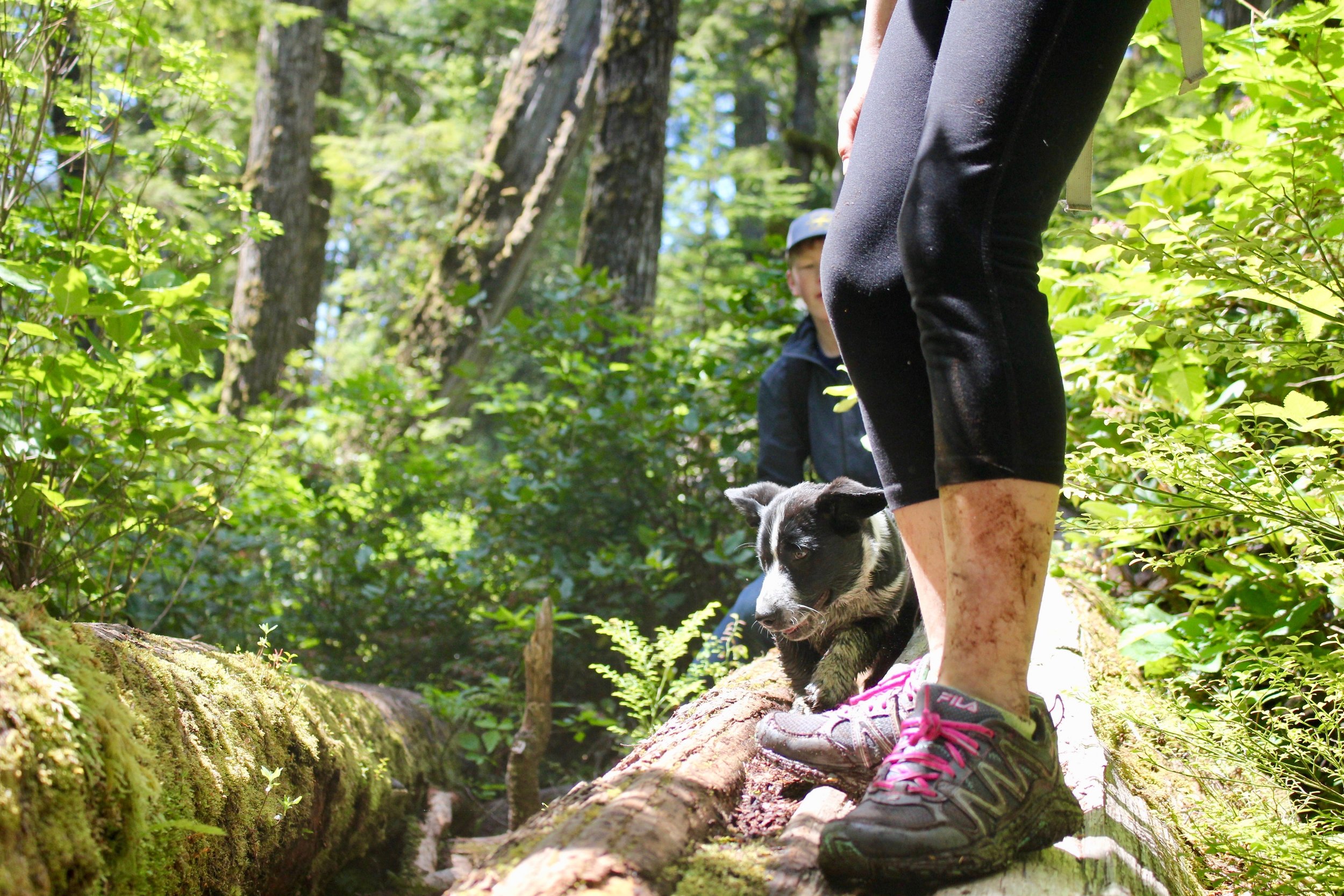
Dog Friendly Fjord
The dog days of summer are here, and our four legged friends around the region can’t help but wag their tails enthusiastically. After months of rain, wind, and snow, we need little excuse to take our dogs out into the wilds of the Hood Canal.
By Douglas Scott, The Outdoor Society
The dog days of summer are nearly here, and our four legged friends around the region can’t help but wag their tails enthusiastically. After months of rain, wind, and snow, we need little excuse to take our dogs out into the wilds of the Hood Canal.
While we are just as excited as our pets to hit the trails, sometimes it can be difficult to locate a dog-friendly destination. Luckily, the Hood Canal is full of incredible locations for us and our dogs– from an easy day out to a tongue hanging trek!
Location is the easiest way to know if a trail is dog-friendly or not. In Olympic National Park, dogs are not allowed on trails. If the trail is located in Olympic National Forest, DNR Land, or at a State Park, the majority of trails will be dog friendly. Remember that even if a trail is dog friendly, you are still responsible for keeping them on a leash and picking up after them. Not everyone on a trail is used to dogs, so please be conscientious of others. Also, never leave a bag of waste on the side of the trail, carry it with you, even if you are hiking back past it later. Finally, always remember to bring extra water for you and your dog, as water sources are not always readily available.
Easy Access Spots
Dosewallips State Park
Found right off of Highway 101 and along Hood Canal, Dosewallips has a few hiking options, with a favorite being the fantastic Steam Donkey Trail. At just 3.5 miles in length and an elevation gain of 400 ', this trail reveals water cascades, bridge crossings, ferns and river views.Your dog will love visiting with other dogs and the endless sticks to pick up. Yes, this gentle dog-friendly hike will have the whole pack begging for more adventures.

Twanoh State Park and Trail
On the eastern side of Hood Canal, Twanoh State Park is yet another incredible dog-friendly destination. Situated right along the water, between Union and Belfair, Twanoh has a few miles of trails in the woods and along the shore, helping to making this one of the most dog-friendly locations on this stretch of Hood Canal. Your dog will love this for the beach and the water.
Ranger Hole
Twenty-two miles north of Hoodsport, the Duckabush River makes for a fun stop for you and your dog. The Ranger Hole Trail is just two miles in length but feels very remote. Passing through second growth timber, the trail leads to the Duckabush River, where you can watch the raging waters churn in white rapids. Dogs, kids, and families will love this short day hike. Your dog will love this trail for the walk, the trees and the many smells from the local wildlife.
Next Level Destinations
Upper South Fork Skokomish
Here, you and your dog can wander in pristine old-growth forests and enjoy this corner of Olympic National Forest. The trail crosses over bridges and through towering trees for nearly four miles before reaching the Olympic National Park boundary. The road here is closed to motor vehicles between the months of October and April, making it an ideal summer destination. Your dog will love this for the remoteness and the many chances to dip in the water.
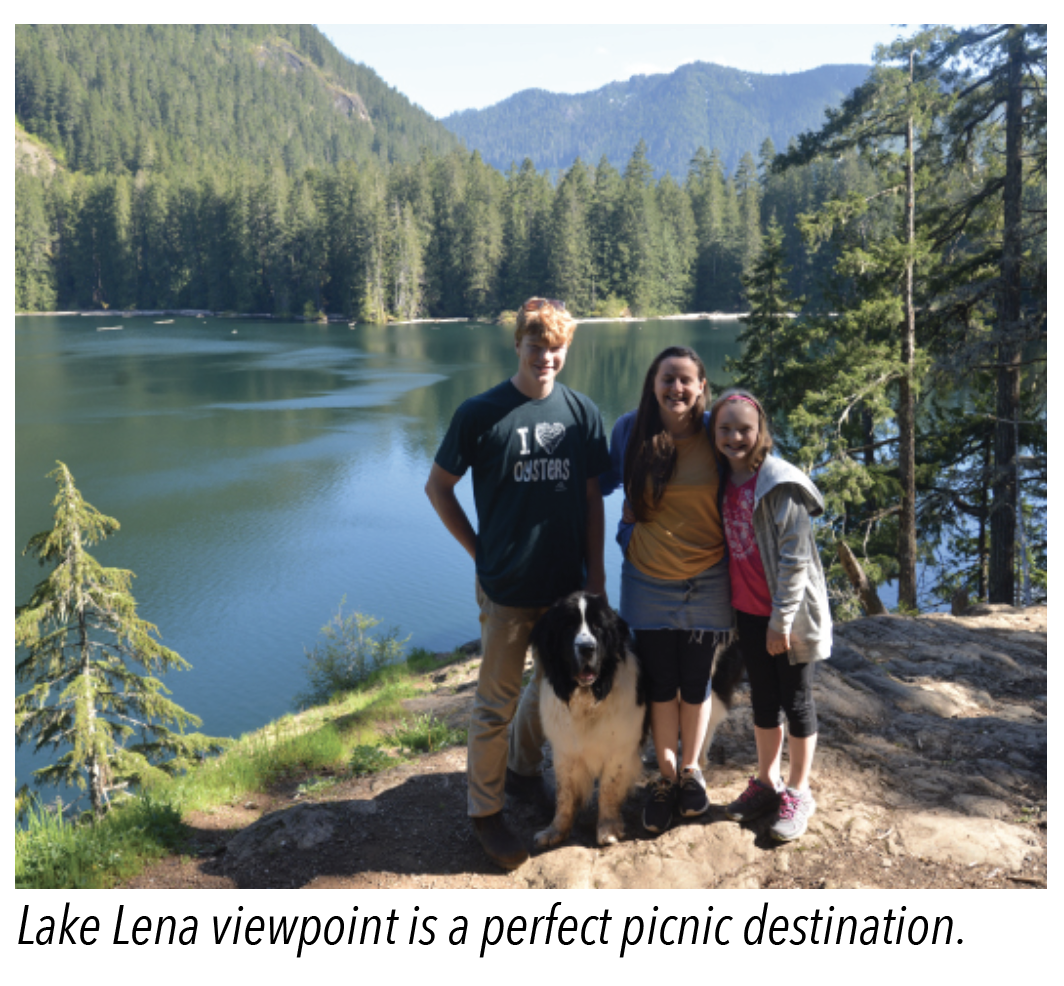
Lena Lake
Found along the Hamma Hamma River in the Olympic National Forest, this trail is for hikers and dogs hoping for a long day of hiking and exploring. At around seven miles round trip and gaining 1,300 ft in elevation, this hike can be hard for many people and pooches. Bring water and treats for all. Take your time while hiking through a mossy forest, over cool bridges and enjoy the stunning lake.
Memorable Canine Adventures
The Valley of Silent Men
Past Lena Lake, those hoping for an even more amazing adventure should hike into the Valley of the Silent Men. You’ll be hiking for 10 miles or so round trip, but this valley is a wonderland. Full of old growth, moss-covered boulders, and cascading creeks, you and your dog will be intoxicated with the beauty of this overlooked section of Olympic National Forest. Your dog will love this for the remoteness and the creeks to wade in.
Marmot Pass
Marmot Pass is a classic hike, and doing it with your dog makes it even better. At 11 miles round trip and gaining 3,500 feet in elevation, this is a trail for dogs and humans able to hike steep trails for miles on end. Starting in a forest, you’ll eventually climb to majestic views of the Olympic interior and even Hood Canal and Puget Sound. Your dog will love this for the varying terrain and seeing you happy!
Olympic Peninsula’s Dog Friendly Map

Check out this fantastic pet friendly map provided by our partners at Olympicpeninsula.org!
Download and pack a copy along with your leash and collapsible water dish!
6 Tips for Hike Savvy Canines
Like house-bound humans, dogs need a little prep time to get ready for the trail. Here are six tips to help you and Fido have a safe and fun adventure.
#1 Take it Easy : Start with easy trails and slowly build up stamina & strength.
#2 Care for Tender Paws: Make sure your dog's pads are toughened or purchase hiking booties and let him get used to them before heading into the wild.
#3 Yield to oncoming traffic: No matter how sweet Fido appears, its good practice to verbalize how friendly he is. Step off the trail when hikers pass and heel your dog.
#4 Leash Control: If the trail requires leashes or if if your dog might run into other hikers, keep him on a short leash (-6') since a long leash is more likely to get tangled on brush. Your dog should not be allowed to roam freely.
#5 Leave no trace: Bring bags to collect and carry out your dog’s poop. If you’ll be backpacking overnight, bury it at least 6” deep and at least 200 ' from walkways, camps, and water sources.
#6 Command Ready: Hazards in the woods differ than the cul de sac. Don’t let your dog stray. Some plants are poisonous, and some creatures bite and may host diseases. Irressistable smells will lure pooch away in a flash. Make sure your obedience training is on track.
Visit backpacker.com for more ideas on a safe and rewarding journey!

Don’t let the chilly water discourage you…dive in!
Just below the surface of the waters of the Hood Canal, a whole new world exists waiting to be explored. It is carpeted with sponges and seaweed, populated by wolf eels and octopus and visited by the occasional seal and even (rarely) a six-gilled shark. Although the cold water of the Pacific is daunting, the variety of marine life it holds is well worth the chilly SCUBA dive.
Just below the surface of the waters of the Hood Canal, a whole new world exists waiting to be explored. It is carpeted with sponges and seaweed, populated by wolf eels and octopus and visited by the occasional seal and even (rarely) a six-gilled shark. Although the cold water of the Pacific is daunting, the variety of marine life it holds is well worth the chilly SCUBA dive.

With its comparably slower currents (to the rest of Puget Sound), the Hood Canal offers many opportunities for rewarding shore dives and live boat dives of various experience levels. Diving is not just for the summer time, the winter and early spring offer excellent opportunities because the cooler weather means clearer visibility (rain run off notwithstanding).
We have coalesced a list of some of the top dive sites of the Hood Canal as recorded by excellent books such as Betty Pratt-Johnson’s 141 Dives in the Protected Waters of Washington and British Columbia (1977) and Stephen Fischnaller’s Northwest Shore Dives (2000), as well as diver’s blog reviews, such as Scott Boyd at Emerald Sea Scuba and Nicolle Prat at Pacific Northwest Scuba.

Mikes Beach is one of the oldest and most picturesque resorts in hood canal with a unique blend of the rustic look of the Northwest and the relaxed, charming and cozy German Chalet style
#1. Flag Pole Point
East and West
Outside of Lilliwaup, just to the South of Mike’s Beach Resort is a dive site more comfortably accessed by boat (but you can free swim to it also). Called “the knuckle” this dive site consists of a series of rock formations, rising like a mini range of mountains from the ocean floor. Because this formation is farther out and more exposed to currents, this site usually has excellent visibility and there are lots to see. Lingcod lay their eggs at this protected site, and there are resident wolf eel and octopus populations. Since the rise of “the knuckles” is so rapid, the site can be difficult to locate— check the dive blogs for more information and ask your local dive shop.
#2. Potlatch Park -
While the diving at Potlatch is less dramatic than the site above , if you are just getting your flippers wet, this is a great place to start out. This shore diving spot is easy to get to, has showers to wash off gear, and it provides opportunities to get comfortable with your equipment and practice techniques.
#3. Scenic Beach State Park –
Like Potlatch, this site is accessible from the beach and it is rewarding for all experience levels. There are plenty of marine life to observe on this sandy-cobble beach, which shifts after 15 ft into a large eelgrass bed, likewise teaming with all the sea creatures that are heir to this environment.
#4. Octopus Hole –
Although parking for this site is limited, this wall site is easy to access from shore and gratifying for all experience levels, but it is a popular spot! It is recommended you brings a flashlight to see the friendly octopuses and wolf eels. Remember this is a protected site, so no harvesting or disturbing the site (and no taking of the glass bottles that octopuses like to hide in).
#5. Sund Rock Marine Preserve
Easy beach access to this site is available through Hoodsport ’N Dive for $20 per diver. This is an iconic dive spot of the area —Hoodsport ’N Dive even offers diving classes at this site. From the beach you swim out through eelgrass environs filled with perch, crabs and other types of sea life. When you reach the Rock you are greeted by wolf eels, octopuses, sea stars, lingcod and other bottom fish. As it is a marine preserve it is closed to harvesting and fishing — so no spear guns!
Twanoh State Park offers easy access to the water.
#6. Twanoh State Park –
This full service park, has a gentle current, which gives divers the freedom to dive whenever— independent of slack tides. You will find a large eelgrass bed filled with interesting fish, such as tube-snouts, black eye gobies and sticklebacks. After about 40 foot depth you can find tube-dwelling anemones. These anemones are entertaining to watch as they feed with their long graceful tentacles. Use a dive flag and submerge when you pass the roped swimming area (and stay submerged and deep to avoid any boat traffic).
#7. The east side of Hood Canal Bridge
This is a more intermediate dive. Leaving from the park at Salsbury Point heading toward the Hood Canal Bridge, this shore dive requires you time your swim out to the dive area right before the beginning of slack tide, so that the current pulls you out to the bridge, then you can save your energy for the swim back. On your swim out to the bridge you pass through eelgrass beds, which are teeming with perch, soles, shiners and other sea creatures. When you reach the concrete bridge supports you are greeted by a fantastic display of plumose anemones and many different types of nudibranchs. Be careful of boat traffic and pace yourself for the long swim to and from the bridge.
For more information on scuba opportunities in the Hood Canal area, visit our scuba things to do page!