
Wild Coastal Cuisine from the Edge of the Pacific Northwest
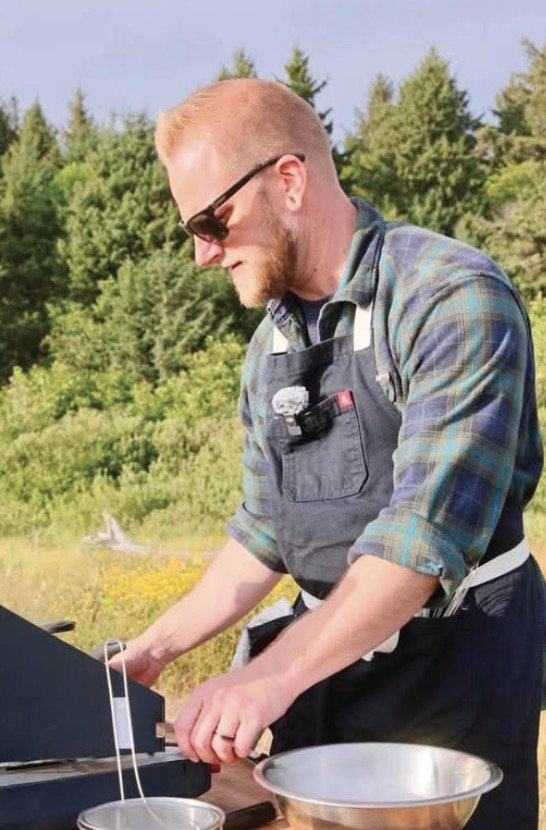
Cooking Around the Sound is a visceral celebration of the Pacific Northwest, bringing elevated, regionally-inspired cuisine to the rugged fringes of the Washington coast. Led by creator/chef Daniel, each dish is a tribute to the landscape, crafted on driftwood-strewn beaches and islands accessible only by kayak.
Artist feature: Daniel Ferreira, Cooking Around the Sound
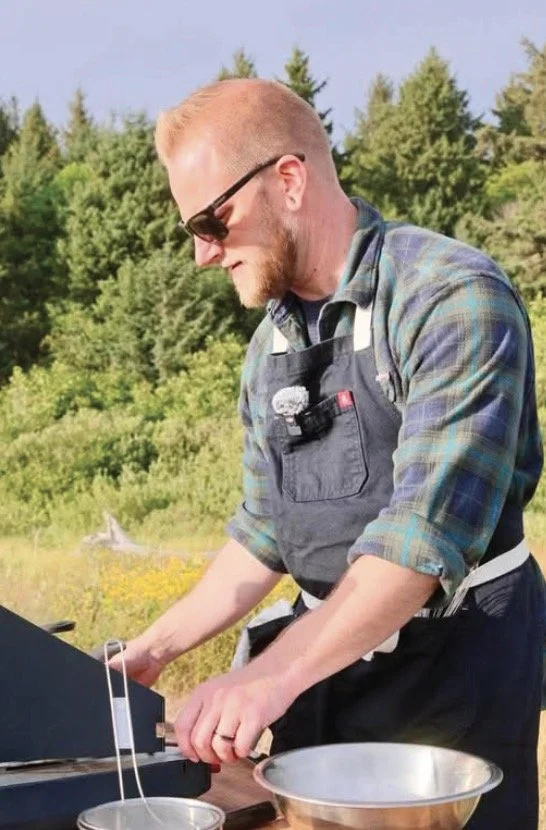
Cooking Around the Sound is a visceral celebration of the Pacific Northwest, bringing elevated, regionally-inspired cuisine to the rugged fringes of the Washington coast. Led by creator/chef Daniel, each dish is a tribute to the landscape, crafted on driftwood-strewn beaches and islands accessible only by kayak. From the mist-covered shores of the Hood Canal to the hidden inlets of the Puget Sound, the channel highlights the raw connection between the elements and the plate, featuring local treasures like Dungeness crab, Pacific oysters, and Beecher’s Handmade Cheese.
The experience is defined by a high energy, fast-paced aesthetic that trades dialogue for the rhythmic, mechanical sounds of the craft—the heavy clink of a skillet, the hiss of a searing pan, and the steady pull of the tide. Every shoot captures the grit of the Pacific Northwest, showcasing technical skill and the authentic beauty of preparing meals in the wild.
With the channel’s iconic mascots, Captain Pepper and Old Salty, standing watch over every meal, Cooking Around the Sound offers a gritty, authentic, and visually stunning look at the spirit of Pacific Northwest coastal cooking.
Smoked Wild Sockeye Salmon Dip
This recipe brings the bold, smoky flavors of the Pacific Northwest directly to your bowl. Perfectly balanced with a hint of citrus and the bite of fresh herbs, it’s a rugged yet refined dip designed to be prepared—and enjoyed—wherever your kayak takes you.
• 1 package (4oz) Smoked Wild Sockeye Salmon
• 1 block (8oz) Tillamook Cream Cheese
• 1/2 cup Tillamook Cultured Sour Cream
• 1/4 Red Onion, finely diced
• 2 tbsp Capers, drained
• 1 tbsp Fresh Dill, chopped
• 1 tbsp Fresh Chives, finely minced
• 1/2 Lemon, freshly squeezed
• To taste: Black Pepper (from Captain Pepper)
• For serving: Saltine or buttery crackers
Build the Base: In a mixing bowl, combine the cream cheese and sour cream. Fold them together until smooth and velvety. Prepare the Salmon: Gently break the smoked sockeye salmon into bite-sized flakes and add them to the base.
The Aromatics: Add the finely diced red onion, capers, fresh dill, and minced chives. These provide the color and sharp, herbal brightness that cut through the richness of the salmon. Season & Brighten: Squeeze in the fresh lemon juice and add a generous crack of black pepper. The Fold: Gently fold all ingredients together until well-incorporated, ensuring the salmon stays in distinct, flavorful pieces.
Serve: Transfer the dip to a bowl, garnish with extra chives and dill, and serve with plenty of crisp crackers.
Chef’s Note: This dip is best enjoyed on a driftwood strewn beach with the sound of the tide in the background.
Follow the journey: Instagram & TikTok @cookingaroundthesound.
Ranger Hole
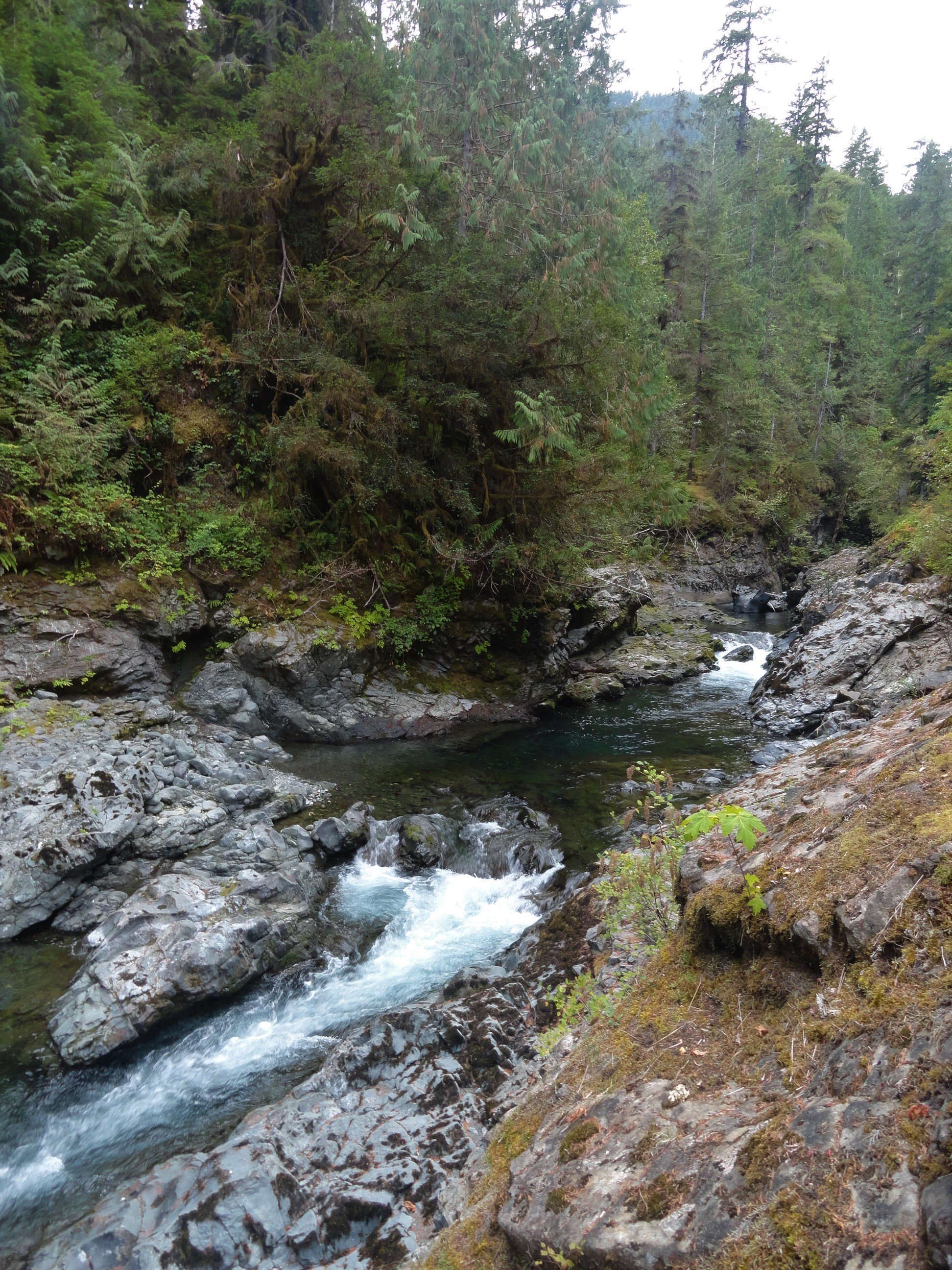
The deep forests, wild rivers, and forbidding mountains of the Olympic Peninsula harbor many secrets. And outdoors people of all ages and abilities are often drawn to trying to unlock their mysteries. But when it comes to legendary fishing holes, don’t even think about asking fishermen and fisherwomen to reveal their coveted spots. One luring spot of lore however, the Ranger Hole, is no secret at all. It can reached by a short and delightful trail. And best of all, while it’s no secret, it’s often overlooked by many hikers. So a little peace and solitude is possible on this trail.
Craig Romano | author
The deep forests, wild rivers, and forbidding mountains of the Olympic Peninsula harbor many secrets. And outdoorspeople of all ages and abilities are often drawn to trying to unlock their mysteries. But when it comes to legendary fishing holes, don’t even think about asking fishermen and fisherwomen to reveal their coveted spots. One luring spot of lore however, the Ranger Hole, is no secret at all. It can reached by a short and delightful trail. And best of all, while it’s no secret, it’s often overlooked by many hikers. So a little peace and solitude is possible on this trail.
Hit the Trail
Upon arriving at the trailhead located near at the Interrorem Cabin, you’ll immediately be taken back to the early days of the Olympic National Forest. Before heading out for the famed Ranger Hole, take a little stroll back in time on the Interrorem Nature Trail to get a better appreciation for this area. The trail makes a 0.3 mile loop behind the cabin and it’s wheelchair accessible.


The simple, rustic, but elegant Interrorem Cabin was built in 1907 by Hoodsport pioneer Emery J. Finch as the first administrative site of the newly established Olympic National Forest (which at the time included what would become the Olympic National Park in 1938). Finch an assistant forest ranger with the Olympic National Reserve (which would be reorganized as a national forest) was chosen to build the cabin and administer the new national forest from it. Upon building the structure he moved his newlywed wife Mabel in with him in the spring of 1908. The building was knowns as “No. 27 Interrorem Administrative Site,” as it was intended to be a temporary structure.
What proved to be temporary however, was Finch, as he resigned in 1910. The Interrorem Ranger Station however continued to serve as the main administrative building for the Olympic National Forest and the newly created Mount Olympus National Monument (which later became Olympic National Park) until 1933. Look at that little and snug structure which consists of three rooms: an office, bedroom and kitchen. Now try to imagine that it served as the main administrative office for a public land area of more than 1.5 million acres!
Eventually new and larger ranger stations were built. The Interrorem Ranger Station became known as the Interrorem Guard Station and served as a basecamp for the Depression era Works Progress Administration (WPA) and the Civilian Conservation Corp (CCC). A CCC camp was also established on the grounds near the cabin. After Congress closed the CCC in 1942, the cabin continued to be in use, serving as a fireguard station all the way until 1986. After that time it began to fall in disrepair, but thankfully it was restored. In 1994 the cabin became available to the public for overnight rentals. In 2013 it was rightfully added to the National Register of Historic Places as the oldest Forest Service building in Olympic National Forest and among the oldest in the Pacific Northwest.

As you walk the Interrorem Nature Trail try to envision the area more than a century ago. Next to the cabin once stood a barn, corral, and woodshed. Big moss-draped second growth firs, cedars, and hemlocks have replaced the pasture that Finch’s horse grazed upon. Upon completing this loop, set out on the adjoining Ranger Hole Trail.
Ranger Finch was an avid fisherman. He was responsible for building the Ranger Hole Trail, a path to his favorite fishing hole on the Duckabush River. Head down the trail through mature second growth. The way climbs a little hump before making a gradual descent toward the river. While the surrounding forest can be dark at times, come spring hundreds of trilliums line the way adding whites, pinks, and purples to the emerald landscape.

Soon the Duckabush River’s roar becomes more audible. During the wetter months it is quite loud. You are almost there. The trail makes a short steep drop and emerges along the banks of the Duckabush. A short distance beyond reach the famed fishing spot. Here the river crashes and thunders through a narrow rocky chasm to a deep pool. Frothy gurgling waters crash up against the narrow cleft. Be sure to keep children and dogs nearby while admiring this landmark. When the sun is shining, its ray reach this spot, providing a little warmth and light and providing a nice contrast to the dark and damp surrounding forest.
Chinook salmon, chum salmon, pink salmon, coho salmon, and steelhead trout still ply the Duckabush’s waters. And while their numbers are a fraction of what they were back in Finch’s time, fishing (be sure to check regulations and seasons) is still allowed and can be good on the Duckabush. And perhaps you have a favorite fishing hole on this river or another in the national forest. A secret spot you don’t have to reveal to anyone!

Ranger Hole
Features: Historic Ranger Station, Kid-friendly, dog-friendly, Duckabush River Access, spring woodland wildflowers
Distance: 1.9 miles roundtrip
Elevation Gain: 250 feet
High Point: 320 feet
Difficulty: easy
Snow free: year round
Trailhead Pass Needed: Northwest Forest Pass or Interagency Pass required
Notes: Please respect the privacy of any guests staying at the Interrorem Cabin
GPS waypoints: Trailhead: N47 40.882 W122 59.670; Ranger Hole: N47 40.499 W122 59.830
Land Agency Contact: Olympic National Forest, Hood Canal Ranger District, Quilcene, (360) 765-2200, http://www.fs.usda.gov/olympic; and Olympic National Park, Wilderness Information Center, (360) 565-3100, www.nps.gov/olym
Recommended Guidebook: Day Hiking Olympic Peninsula 2nd edition (Romano, Mountaineers Books)
Trailhead directions: From Shelton, drive north on US 101 for 37 miles turning left at Milepost 310 onto the Duckabush Road (From Quilcene, drive south on US 101 for 15.5 miles turning right onto the Duckabush Road). Then drive 3.6 miles to the trailhead at the Interrorem Cabin.
Trailhead facilities: privy, water (seasonal)
Do the dirty work to protect and preserve
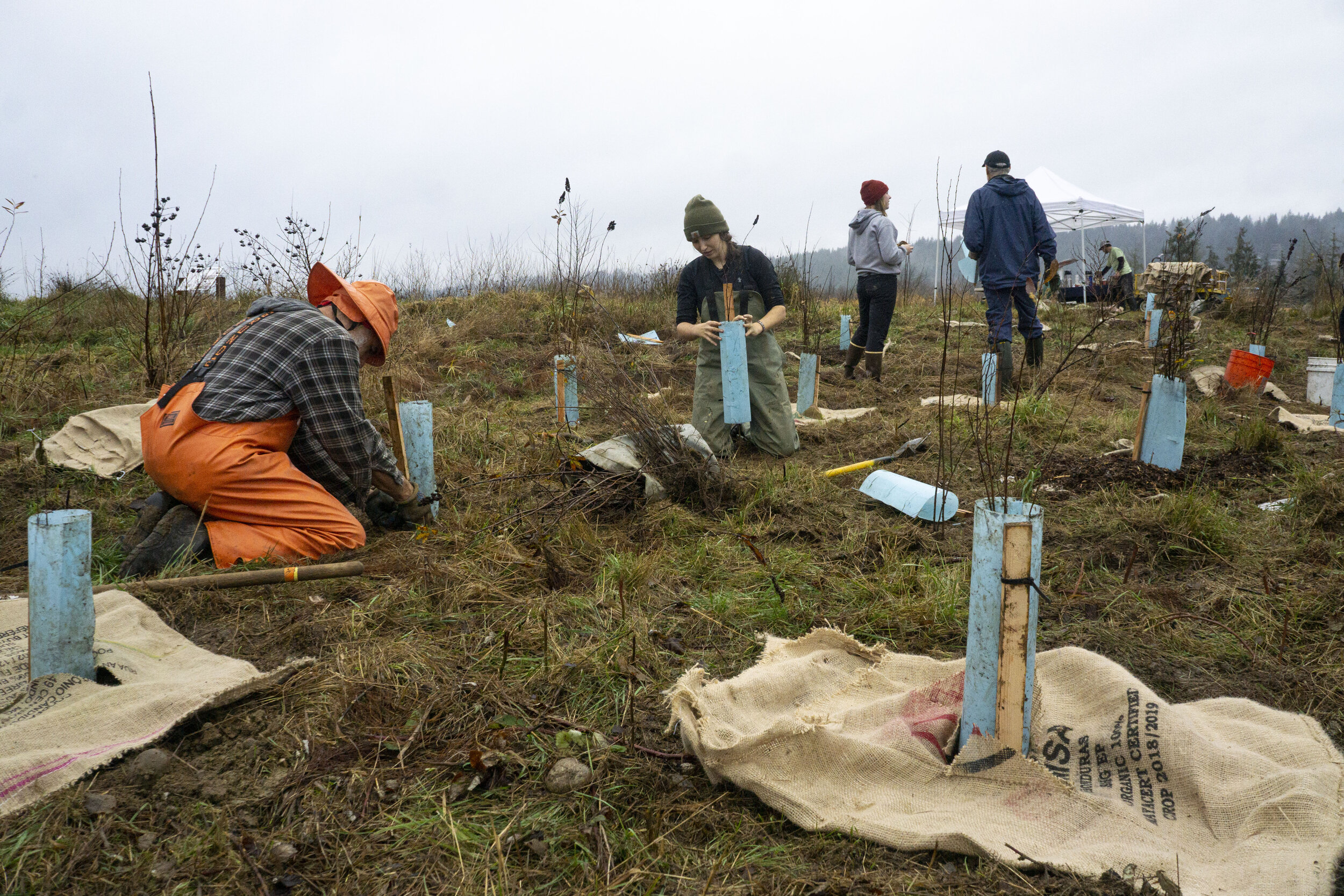
Hood Canal Salmon Enhancement Group has volunteer opportunities available to enhance salmon habitats on the Union River on Hood Canal. Consider vacationing in the area and doing some good for the fjord.
Salmon are a keystone species and the foundation of Pacific Northwest culture, and the Hood Canal Enhancement Group has been working hard to change the projection of their uncertain fate through riparian enhancement and weed control. Interested in helping out? The Salmon Center has plenty of opportunities for families and individuals to sign up - for a day, or week - to volunteer and help these precious resources.

Saving our Salmon Habitats
In addition to Chinook, Coho, Pink and the occasional Sockeye, Hood Canal is home to Endangered Species Act listed Puget Sound steelhead and listed Summer Chum, the latter of which is a completely unique species to this watershed. Structurally mature and diverse streamside plant communities not only increase the likelihood that salmon will continue to survive for future generations, but that the entire ecosystem will remain resilient against the effects of a changing climate.
Riparian habitat is the transitional area between land and aquatic ecosystems; therefore, the work in this program mainly takes place along rivers, streams, wetlands and estuaries. These are critical habitats for salmon and steelhead where they are born and die, and where they grow strong for their journey out into the ocean. Riparian habitat provides essential services and functions for fish, such as food; clean, cold water; large woody debris recruitment; and habitat complexity.
Without these, our salmon and steelhead populations would cease to exist, along with hundreds of species, the culture, and economy that depends on their survival.

Enhancement Group’s riparian enhancement program
HCSEG’s riparian enhancement program serves to protect and restore these services and functions, which can be understood by 4 broad categories: provisioning - the production of food and water; regulating - the control of climate and disease; supporting - nutrient cycles and oxygen production; and cultural - spiritual and recreational benefits.
“Salmon are a keystone species and the foundation of our sacred Pacific Northwest culture, and we have been working hard to change the projection of their dismal fate through riparian enhancement and knotweed control. “
The World Conservation Union lists invasive knotweed as one of the world’s worst 100 invasive alien species. Knotweed spreads aggressively along rivers establishing dense monocultures that reduce native riparian plant diversity, structure and function. Invasive plant species are the second greatest threat to global biological diversity, only second to habitat destruction. In 2020, HCSEG installed 11,000 native plants, restored 0.5 river miles and 9 acres of riparian habitat through new riparian plantings, and the survey and control of knotweed on over 40 stream miles.
In 2021, HCSEG plans to install 17,500 native plants, and restore 1 river mile and 15 acres of habitat through new riparian plantings. All of this work would not be possible without the outstanding help from our volunteer community and our Washington Conservations Corps crew.

“If we plan to install 17,500 native plants this year, we are going to need lots of environmental stewards helping us fight for the future of Pacific Northwest salmon and steelhead.” Salmon Center volunteer
Visit the Salmon Worksites and be inspired to help
If you would like to see this work for yourself, we have several public riparian enhancement worksites that you can visit: Big Beef Creek and Estuary (feel free to park at the gate and walk-in), Seabeck Creek (by the new bridge) and the Union River Estuary Preserve (at the Salmon Center). And while you’re there, consider signing up to join our community of volunteers!
Volunteers make our work possible
From data collection at fish traps, habitat restoration, support at fundraising events, and education programs, so much of what we do is made possible by the dedicated and passionate involvement of our community.
If you have questions about visiting these sites or would like more information about these projects, visit pnwsalmoncenter.org for a full list of staff contacts as well as project descriptions and opportunities to volunteer.
Fall Recreation on the Fjord and Surrounding Area
Ron Adams | Verle's LLC
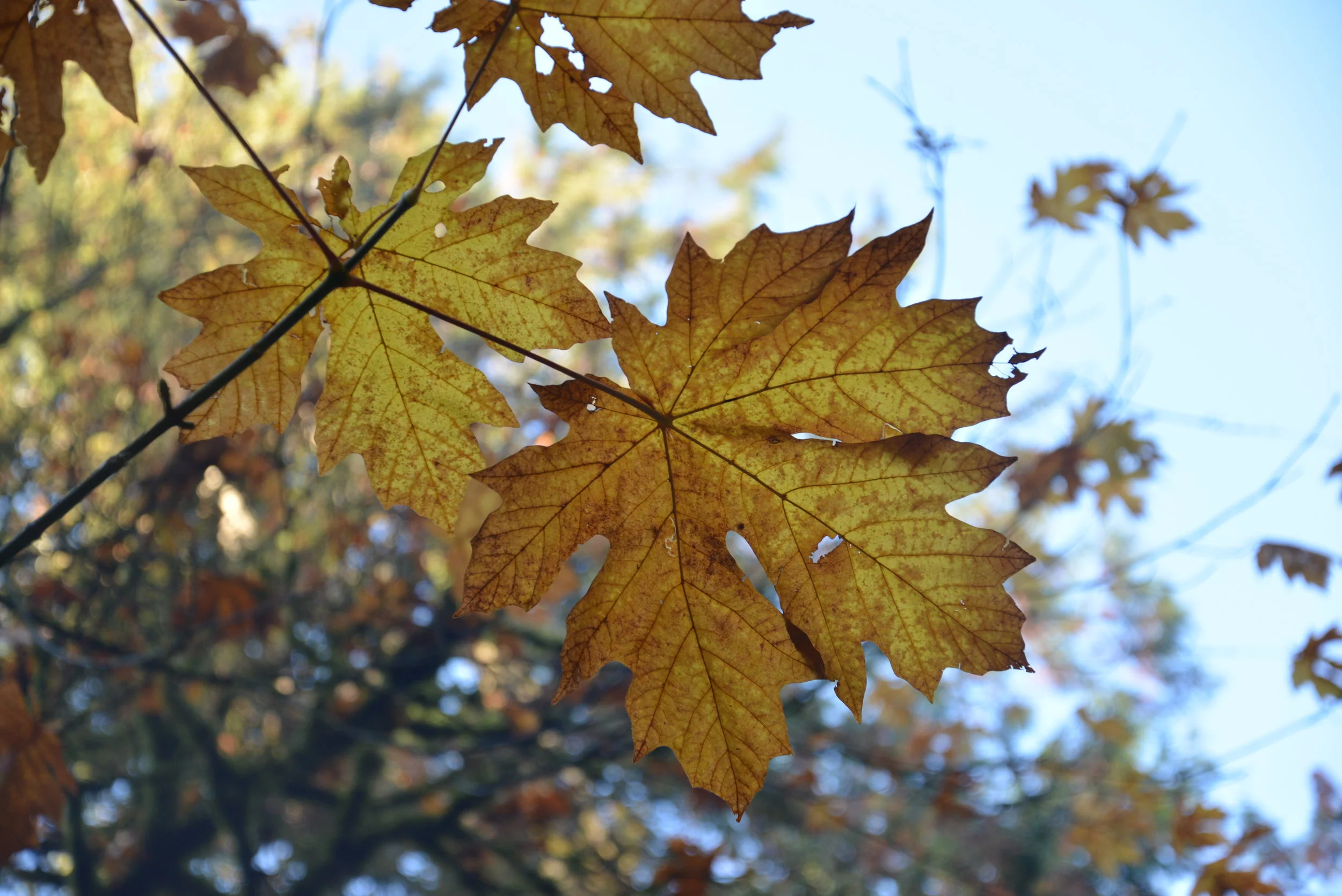
The long, warm and sunny days of summer on or near Hood Canal have nearly come to a close once again. The camping, biking, hiking and water sports we enjoyed will soon be recent yet unforgettable memories. Fall is about to surround us with a beautiful mosaic of rich yellows, greens, and reds as the leaves of hardwood trees give way to their wonderful ballet of fall colors.
However, the changing of the seasons does not bring an end to outdoor activities around Hood Canal. To many it is the beginning of a new and exciting chapter of outdoor opportunity and adventure.
Salmon and Steelhead can be found in most of the pristine rivers near Hood Canal where a true trophy and adventure of a life time await those who are willing to test their skills and moxy to harvest some of this plentiful bounty. Steelhead are different than their cousins the salmon in the fact they can return to their home rivers several times and spawn many times before they reach the end of their life cycles whereas pacific salmon only spawn once. Steelhead are a species of rainbow trout that is spawned in a river and then goes out to saltwater to mature. Their life in the nutrient rich waters of the Pacific Ocean allow them to grow rapidly and reach over 30 lbs in weight. Many lakes in the surrounding area are open year round for fishing and can provide healthy delicious protein.
Mushroom gathering it also very popular and several delicious varieties await those who know where to find them.
If any of this entices you, you are not alone. Thousands of outdoor enthusiasts will make the trek to this area to do everything I've mentioned and more.
Find out More
Established in 1948 Verles is celebrating 70 years of having a finger on the pulse of the Hood Canal and most things outdoors. With a skilled staff and a great selection of gear, Verles is there to help you get away and be successful in your outdoor adventure any time of the year. Verles is located at 741 West Golden Pheasant Road in Shelton.
In Search of Salmon in and Around the Fjord
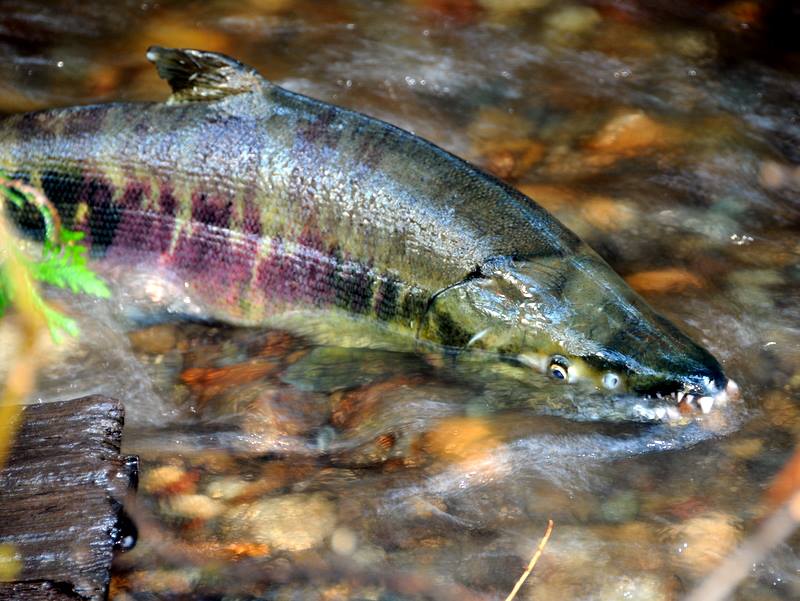
As the weather chills, the local streams and rivers are festooned with the lovely shades of orange and red of the turning leaves. This season also marks the last weeks in the life cycle of many salmon species as they travel up these rivers and streams to spawn and die.
Stella Wenstob
photo: South Puget Sound Salmon Enhancement Group
As the weather chills, the local streams and rivers are festooned with the lovely shades of orange and red of the turning leaves. This season also marks the last weeks in the life cycle of many salmon species as they travel up these rivers and streams to spawn and die.
Using a sense not completely understood by biologists, millions of migratory salmon return to their home streams to lay eggs.
After swimming up the stream to their spawning spot the female chooses a spot in the shallow, but swift flowing part of the river that is ensured to be highly oxygenated, called the riffle. In some of the inland streams that location can be many hundreds of miles up rapids and past many impediments. Here she digs a depression in the gravel that will serve as her nest or redd. The males will put on an impressive show biting and jumping to show their dominance and protect their chosen female from other males. After the eggs are laid in the redd, the male will deposit sperm over them, and the female will cover the eggs with gravel to protect them. A female may create as many as seven redds before she is finished spawning and each redd may hold as many as 5,000 eggs.
As soon as the salmon enter the fresh water of the stream their skins begin to change color, their sexual dimorphism enhances, they stop eating and they begin their decaying process. A migrating salmon typically lives for about two weeks after entering the freshwater.
The carcasses provide an important food source to other animals and small invertebrates who in turn provide food for the salmon fry (baby salmon) as they get older. Additionally, the nutrients given off by the rotting carcass are important fertilizers to the plants and trees growing on the banks, which in turn provide essential root systems that prevent erosion and protects the streams for further generations of salmon.
There are seven species of salmon in the Pacific Northwest: Pink (Oncorhynchus gorbuscha), Sockeye (Oncorhynchus nerka), Coho (Oncorhynchus kisutch), Chum (Oncorhynchus keta), Chinook (Oncorhynchus tshawytscha), Steelhead (Oncorhynchus mykiss), and Cutthroat (Oncorhynchus clarki clarki).
All of these species have very different life-cycles – some spend several years before they migrate up streams; some can run and spawn several times before dying; some only spawn at the mouth of streams, where others need to spawn in lakes at the head of rivers. This unique phenomenon of the salmon running can be viewed in streams and rivers all across the Hood Canal and South Puget Sound.
Kennedy Creek
The Kennedy Creek Salmon Trail located off of Hwy 101 opens up for full tours with docents answering questions from November 2 through to December 1 from 10 AM to 4 PM on weekends. This trail is maintained by the South Puget Sound Salmon Enhancement Group and their website is a great resource for learning about the trail and salmon ecology.
Beginning at the head of Oyster Bay, at the traditional site of the Sawamish/T’Peeksin village (ancestors of today’s Squaxin Island Tribe], this trail was once part of a greater network of Native American trails that connected South Puget Sound with the Pacific Coast. The Kennedy Creek was known as “Place of the Singing Fish” by the Squaxin Island Tribe due to the resonant singing of the frogs heard along the stream’s banks in the spring. Chum (or dog fish) are the dominant species that run this stream at numbers as high as 800,000 salmon a year. The tribe harvested these fish for oil and for food, drying them on racks. The salmon can be seen running right from the creek’s bank.
Salmon Center
The Salmon Center located in Belfair is open from 8 AM until 5 PM, Monday through Friday. Besides offering interesting exhibits about salmon ecology, they operate salmon traps on the Union River (off of Highway 300) that target adult summer Chums.
Twanoh Creek
As you continue along the South Shore of the Hood Canal, Twanoh Creek in Twanoh State Park offers good vantage points to view running salmon.
Purdy Creek
At the bend of the Hood Canal on a tributary of the Skokomish Watershed is George Adams Fish Hatchery run by the Washington Department of Fish and Wildlife. Each spring they release 500,000 juvenile Coho into the Purdy Creek. While the hatchery does not have scheduled tours, the friendly staff are eager to answer questions and the pens are visible from the Highway.
Hoodsport
The Hoodsport Fish Hatchery located in Hoodsport also does not offer scheduled tours, but in the fall the WDFW offers very popular Chum salmon fishing classes from the beach out front of the hatchery.
Quilcene
The Quilcene National Hatchery has been run continuously since 1911. Now focusing on Coho stock, the Quilcene National Hatchery has raised nearly every species of salmon. The hatchery successfully reintroduced Chum salmon back to the Big Quilcene River and increased winter Steelhead populations of the Puget Sound. They are open from 7:30 AM to 3 PM on weekdays and only on weekends and holidays in the spring and summer when the camp host volunteers are present. Visitors are encouraged to tour the facility and meet the hatchery staff.
More Salmon Viewing
Situated in the Belfair State Park are the Big Mission and Little Mission Creeks, which offer great salmon viewing. A little north of the North Shore Road following Elfendahl Pass Rd is Stimson Creek, a good place to view spawning salmon.
For a list of salmon spotting sites, WDFW have created an interactive multi-layer map called SalmonScape,
that shows the streams and tributaries used by migratory salmon in the state.