

Elk Lakes Trail
Named for one of the Olympic Peninsula’s most majestic animals, the two small Elk Lakes located within the Hamma Hamma River Valley offer quiet wanderings and a chance to see their namesake. The Elk Lakes offer a great alternative to the nearby oft-crowded Lena Lakes. While this hike is short, the lake’s tranquil shoreline and surrounding old-growth forest invite lingering. Bird watching is good as well as fishing for rainbow trout. Rhododendrons add colorful bouquets to the forest in spring, while maples and cottonwoods brighten the forest with golden touches come autumn.
By Craig Romano, Guide book author and guest columnist
Named for one of the Olympic Peninsula’s most majestic animals, the two small Elk Lakes located within the Hamma Hamma River Valley offer quiet wanderings and a chance to see their namesake. The Elk Lakes offer a great alternative to the nearby oft-crowded Lena Lakes. While this hike is short, the lake’s tranquil shoreline and surrounding old-growth forest invite lingering. Bird watching is good as well as fishing for rainbow trout. Rhododendrons add colorful bouquets to the forest in spring, while maples and cottonwoods brighten the forest with golden touches come autumn.
Hit the Trail
You can easily reach the lakes from a short spur off of Forest Road 2480. But I prefer hiking to the lakes following along a remnant of an old trail along Jefferson Creek. This gives you a longer and varied hike and a better appreciation for the area’s rugged landscape and how human activity has greatly impacted it. Reaching the trailhead for this approach however is via a rough road that only high clearance vehicles can negotiate. If that is not an option, you can always park at the beginning of the road and walk FR 2421 for 1.6 miles to the trailhead. The road traverses a recent cut offering excellent views of the Hamma Hamma Valley, making the extra mileage interesting.

The trail begins at a bend in the road and heads into a forest that was recently burned. In the early part of the last century the entire Jefferson Creek Valley was draped in old-growth forest. After World War II and up to the 1990s the area was intensively logged leaving only remnant stands of old-growth forest and just a small stretch of was once a long trail in the Eastern Olympics. But what survived made a delightful short hike in an area often overlooked by many hikers opting instead for the nearby Lena Lakes.
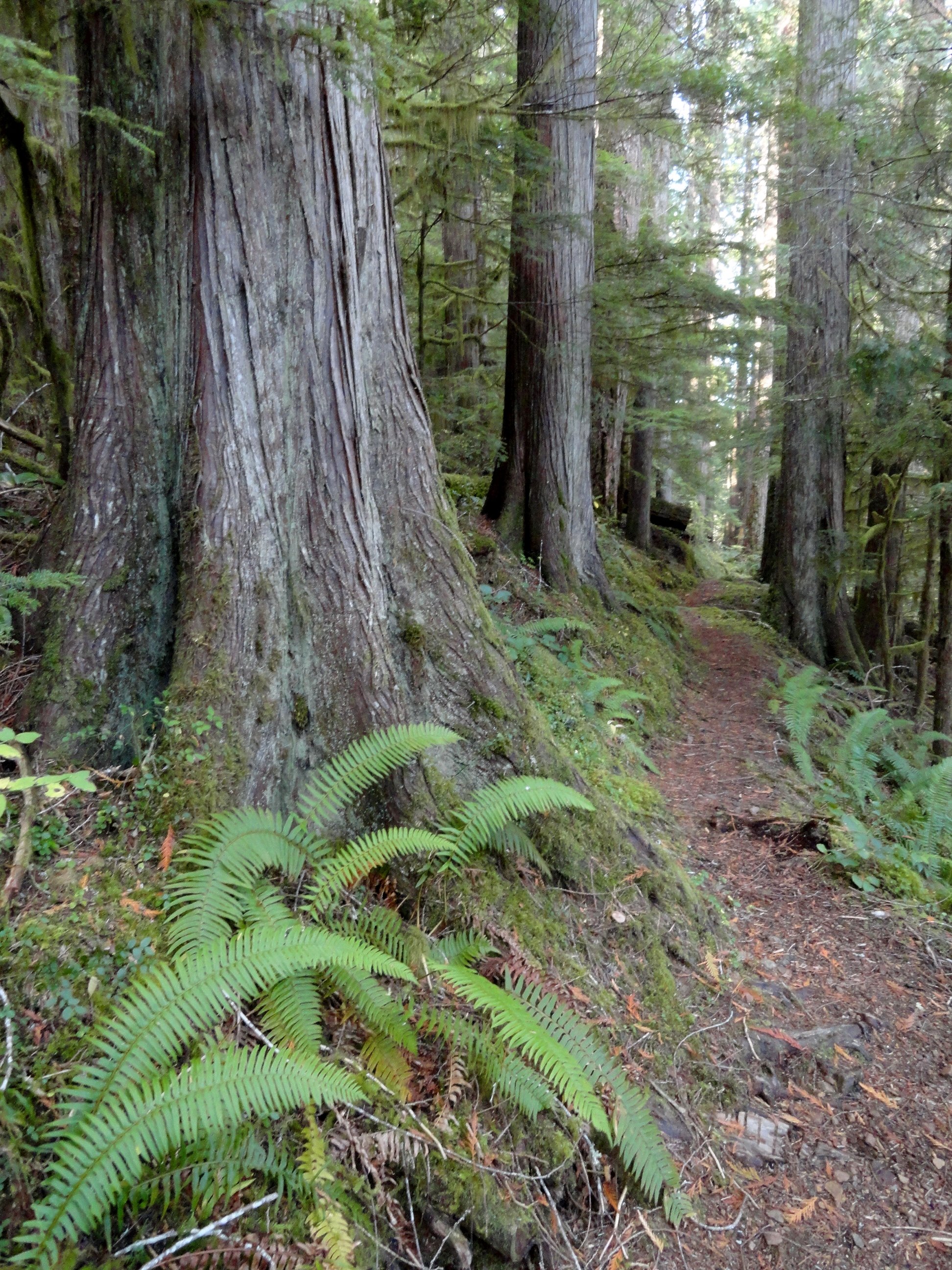
The beautiful old-growth forest remaining around the Elk Lakes almost entirely went up in flames in the Maple Fire of 2018. A group of timber poachers harvesting mature big-leaf maples in the area set the area ablaze when they set fire to a wasp nest in the base of a tree. The fire quickly spread torching 3300 acres and costing $4.5 million to combat. Two of the poachers were ultimately caught, brought to trial and given prison terms. Timber poaching remains a serious problem on the Olympic Peninsula. The Forest Service lacks the staff and resources to address it.
While the fire did some damage to the Elk Lake area, thankfully many of the older trees survived. Unfortunately the fire took a major toll on nearby Jefferson Ridge rendering the trail to its old lookout site nearly impassable now. Such a shame as that trail too offered a quiet alternative to many of the area’s nearby crowded trails.

Head up the trail traversing a dry hillside, several hundred feet above roaring Jefferson Creek. Born in the snowfields of Mount Ellinor and her rugged neighbors; the creek crashes through a steep and narrow canyon here before reaching the Hamma Hamma River. Pass through a mosaic burn on an up and down course before reaching cool old-growth forest.
The way then soon reaches a junction. Heading left will bring you to the upper trailhead. But for this suggested hike, you’ll be returning from that direction, so continue hiking straight through a grove of monster cedars coming to Elk Lake. Depending on the season the lake may be a wet grassy swale or a pretty reflecting pool. Regardless of water level, plenty of birdlife will be present.
Continue along the western shore before wandering along Jefferson Creek through more impressive old growth. The trail then terminates on FR 2401. You can retrace your steps, but I prefer making a loop by following the road left for 0.8 mile to another trail just after crossing Cedar Creek. But before heading down that trail back to Elk Lake, head right 0.2 mile on an oft overlooked and slightly brushy trail to pretty little Upper Elk Lake. This placid body of water offers beautiful reflections of nearby ridges and the surrounding forest.
Once you visit the Upper Lake pick up the trail near Cedar Creek and slightly descend to Elk Lake now hiking along its eastern shoreline. Pass some more big trees and come to a great shoreline area for casting a line or just admiring the area’s beauty. Then reach another junction.
The way right climbs and soon reaches the main trailhead on FR 2401. Continue left, soon crossing Jefferson Creek on large rocks. In spring and other periods of high water this may be difficult forcing you to retreat the way you came for a longer than anticipated hike. Just beyond the crossing reach a familiar junction. Here head right above the crashing creek retuning to your start.
The details
Distance: 4.5 miles roundtrip
Elevation Gain: 700 feet
High Point: 1200 feet
Difficulty: moderate
Snow free: year round Trailhead Pass Needed: None
Notes: Road to Lower Trailhead (Elk Branch) is extremely rough requiring a high clearance vehicle.
GPS waypoints: Lower Trailhead: N47 34.759 W123 07.222
Main Trailhead: N47 34.267 W123 08.008
Features: kid-friendly, dog friendly, old-growth, rhododendrons, bird-watching, fishingLand Agency Contact: Olympic National Forest, Hood Canal Ranger District, Quilcene, (360) 765-2200, fs.usda.gov/olympic
Recommended Guidebook: Day Hiking Olympic Peninsula 2nd edition (Craig Romano, Mountaineers Books)
Trailhead directions: From Hoodsport travel north on US 101 north for 13.7 miles turning left at milepost 318 onto FR 25 (Hamma Hamma River Road). Then continue west for 6.4 miles and turn left onto FR 2480. Cross the Hamma Hamma River and in 0.2 mile turn right onto unsigned FR 2421 for the Lower Trailhead (high clearance only). Follow this rough road 1.6 miles to a pullout on your left where the road makes a sharp turn right. This is the trailhead. For the Main Trailhead, pass the FR 2421 junction and continue on FR 2480 for 3 more miles. Then turn right onto FR 2401, and proceed 2.5 miles to a spur on your right leading 0.1 to the Main Trailhead. The spur is steep and can be rough. You can park alongside FR 2401 and walk the spur to the trailhead.

Do the Dosewallips
Well-known for its year-round family-friendly campground (complete with yurts) and excellent fishing and shell fishing opportunities, the park also contains a wonderful network of year round accessible hiking trails.
Craig Romano, author
Dosewallips State Park consists of more than 1000 acres of prime wildlife habitat along the Dosewallips River at its delta on Hood Canal. Well-known for its year-round family-friendly campground (complete with yurts) and excellent fishing and shell fishing opportunities, the park also contains a wonderful network of hiking trails. Saunter out to wildlife rich tidal wetlands on Hood Canal or explore quiet groves of mature forest graced with thickets of rhododendrons and cascading creeks. Hike along the glacier-fed Dosewallips River too. And retrace the route of an old railroad grade while sleuthing for relics of the area’s bygone logging days.
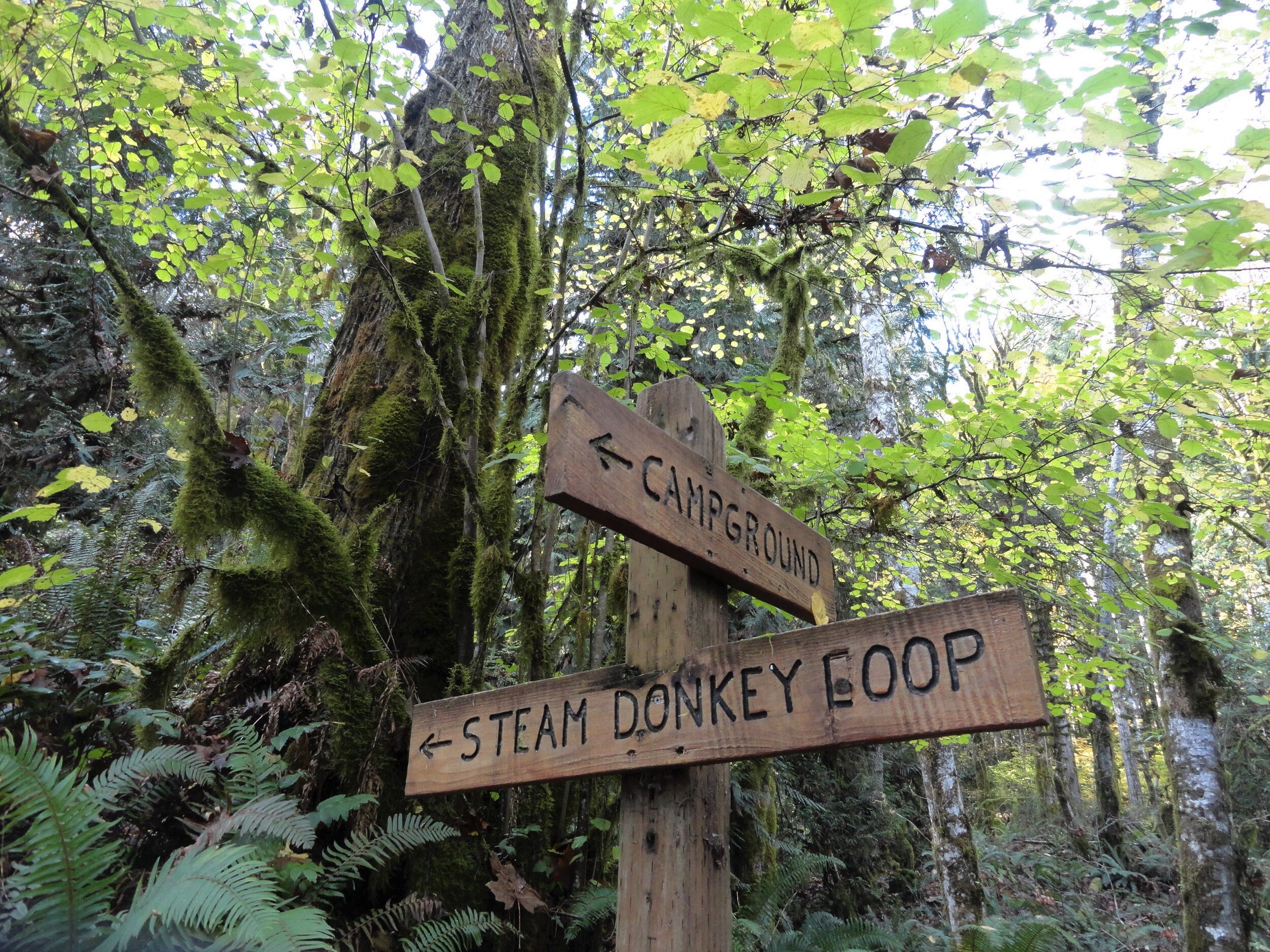
Photo credit: Craig Romano
Hit the Trail
There are nearly five miles of trails in Dosewallips Park to explore with your family. Most of them are interconnected allowing for some loop options. An excellent 3.6 mile loop around a good portion of the park’s periphery can be made by following the Maple Valley and Steam Donkey Trails.

Start this loop hike from the ranger station by walking a short distance northwest up the dirt road signed for the Maple Valley Trail. After passing through the Meadow Group Camp, reach the Maple Valley Trailhead. Now head up the trail and soon come along the Dosewallips River.
Legend has it that Dos-wail-opsh was a Twana Indian who was turned into a mountain, forming the source of the Dosewallips River. From his lofty position in the Olympic Mountain wilderness, this transformed Native American did well by creating one of the peninsula’s most wild and scenic rivers.
The Twana once had a village at the mouth of the river on Hood Canal. In 1855 the Treaty of Point No Point resulted in many of the Twana people being relocated to the small Skokomish Reservation located at the mouth of the South Fork of the Skokomish River.
Hike along the river through a forest of cedars, cottonwoods and of course—maples, both bigleaf and vine. In fall the maples add touches of gold to the forest. Scan the forest for elk. They are prolific in this area and are frequently sighted in the state park. If you don’t see any of this hike, you’ll probably see plenty of signs of their presence.
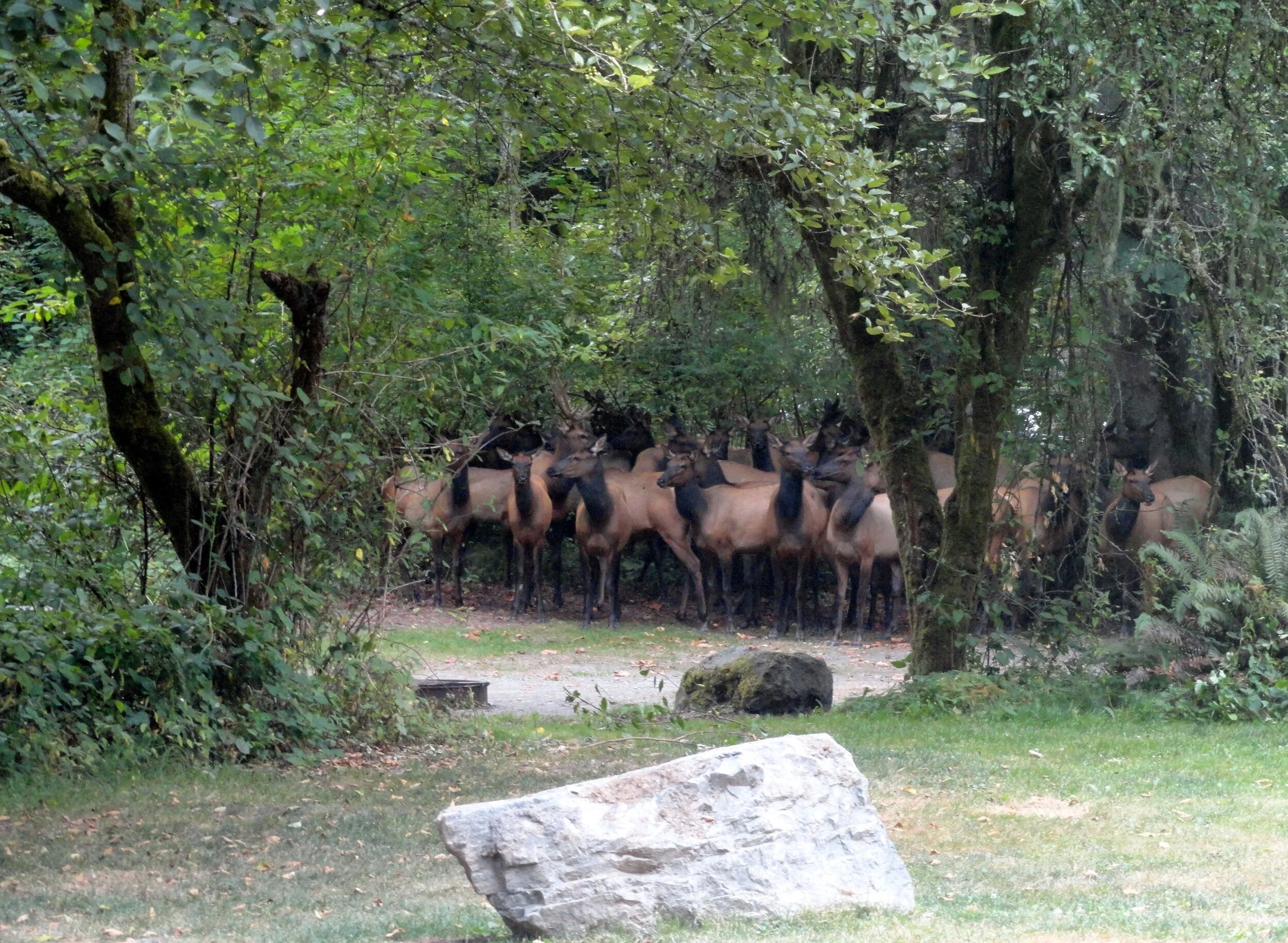
Photo Credit: Craig Romano
Continue along the trail hugging a steep slope above a river channel. The way then reaches a junction with the Rhody Cut-off Trail. You’ll be returning on that trail for this loop—so continue right. The way now gently descends to a bridged crossing of cascading Phantom Creek.
Then it’s time to climb again as the trail ascends a steep bluff and moves away from the river. Washington State Parks has been working with several agencies to greatly increase the size of this park to protect more riverfront. Once public access can be secured, there are plans to construct a trail along the river from the state park to national forest land about five miles upriver. Much of the new protected river corridor will be included in the state park.
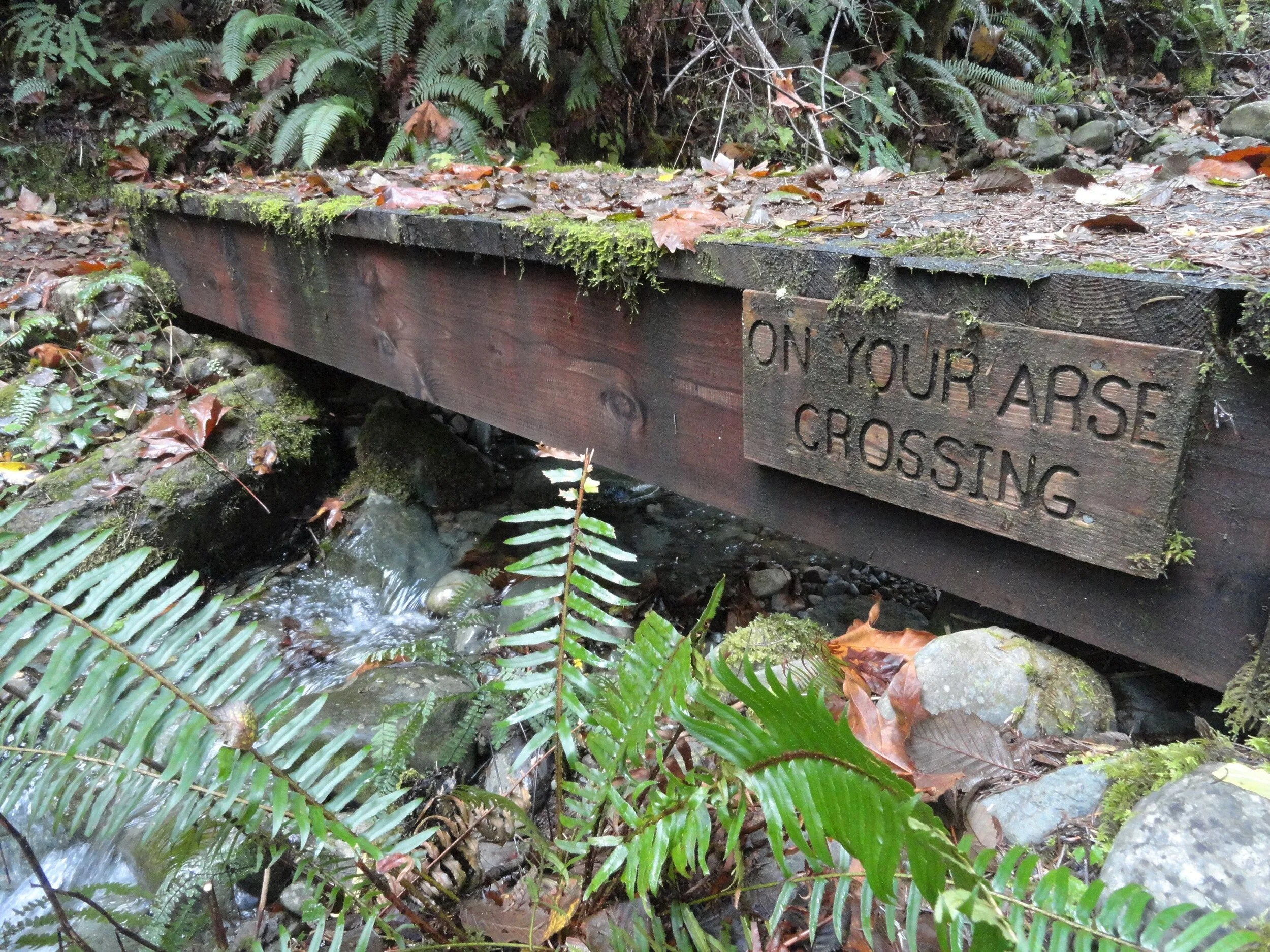
Photo Credit: Craig Romano
The Maple Valley Trail now bends southward skirting an old cut along the park’s current boundary. At about one mile from your start it reaches a fire road. The road can be used as a short-cut back to the campground.
To continue the loop proceed straight on the Steam Donkey Trail. Steam donkeys were steam powered winches used by loggers in the early twentieth century for yarding and loading downed timber.
Here as well as throughout much of the region timber was transported by rail to sawmills or to docks where it was floated to mills
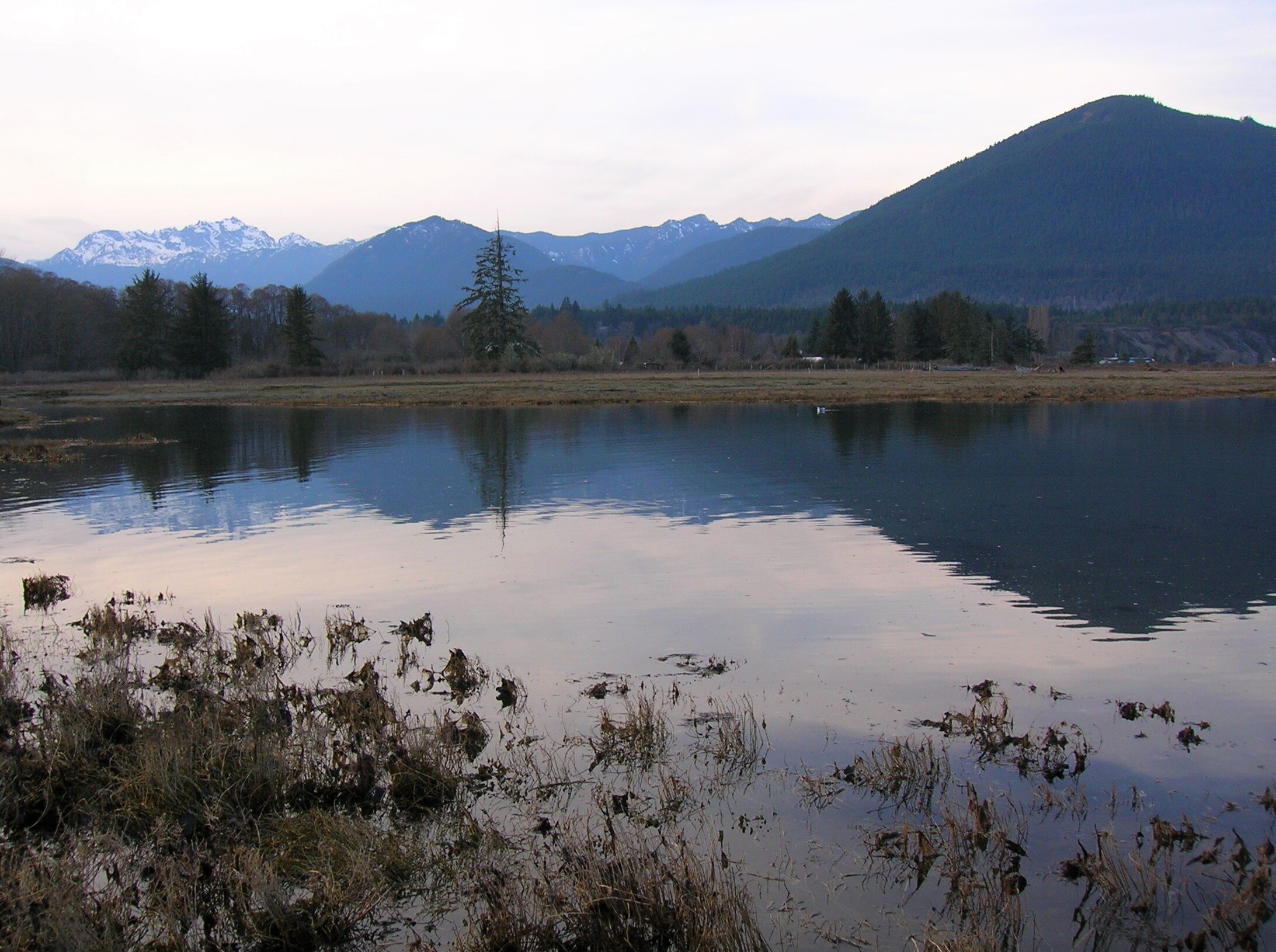
Photo Credit: Craig Romano
Running parallel to the Steam Donkey Trail and reached by walking just a short distance east on the Fire Road is the Izett Grade Trail. This trail follows a half mile stretch of an old railroad grade. The Izett Logging Company had constructed five miles of railroad in this area in the late 1890s. Logs were then transported to Hood Canal and floated to a mill in Seabeck. The Izett Grade Trail eventually reconnects with the Steam Donkey Trail and shortens the loop by only 0.1 mile.
The Steam Donkey trail continues south along the state park boundary gently climbing through maturing second growth. The trail passes a large fir struck by lightning in 2001 before crossing Phantom Creek. It then comes to a small bridge whimsically named the On Your Arse Crossing. The way then spans another cascading creek before cresting a ridge. It then begins a long gentle descent following an old road grade through maturing timber. After passing the southern end of the Izett Grade Trail the loop reaches a small dammed pool that once provided water to power the Izett Logging Company’s steam donkeys.

Photo Credit: Craig Romano
The trail then once again comes to the Fire Road. Cross the road and continue straight passing part of another stretch of old railroad bed. The logging railroads here were decommissioned in 1913 shortly after the logging company’s founder James Izett passed away. The trail next descends into a gulch coming to a junction. You can shorten the loop by heading right reaching the park road after crossing the short metal bridge
The recommended loop heads left now following the Rhody Cut-off Trail. It soon makes a bridged crossing of a creek shaded by attractive cedars; then veers left at a junction where a spur trail heads to a group camp. The trail then climbs a low ridge draped with rhododendrons. You’ll want to return to this stretch of trail in May or June. The Rhody-Cut-off Trail then loses elevation returning to the Maple Valley Trail. Return to your start by retracing a short stretch of trail to your right.
If you’ve got time and energy leftover, head over to the park’s North Tidal Trail. Follow this 0.3 mile trail to an observation deck near where the Dosewallips River drains into Hood Canal, creating a productive delta and estuary. Scan this ecologically rich ecosystem for seals and a wide array of birds.
Additional Details
Dog welcome but must be leashed while on the trail.
Land Agency Contact:
Dosewallips State Park
Recommended Map: Green Trails Olympic Mountains East 168S; State park map available at park ranger station.
Recommended Guidebooks: Day Hiking Olympic Peninsula 2nd edition (Romano, Mountaineers Books)
Trailhead Directions: From Shelton, drive US 101 north for 40 miles (From Quilcene drive US 101 south for 12 miles) to Dosewallips State Park entrance at milepost 307. Turn left (west) into camping entrance and proceed .3 mile to parking near ranger station.
Day-use parking is also available at picnic area and North Tidal Area Trailhead, trailhead facilities here include: privy, picnic area, ranger station, campground, and potable water.


Head to the Shores
Prepare yourself with buckets, boots, license and check the tides & harvest map. Local State Parks support a healthy stock of clams and oysters for license holders – free for the taking!
Shellfish Gathering
With a salt water canal at its center and a myriad of lakes, waterfalls and streams surrounding the inner fingers of Puget Sound – this area is rich in aquaculture and water related opportunities. It’s time to start planning your outdoor adventures!

Click to download the Mason County Shellfish and Beach guide
If you harvest clams or oysters, make sure to keep them on ice or eat them soon after harvest. DOH advises that shellfish recreationally harvested from June through September, should be cooked thoroughly to avoid illness from Vibriosis. It is best practice to read posted warnings or call the Marine Toxins/PSP Hotline: 1-800-562-5632 for a recorded message that is updated regularly.
Visit the Shellfish Safety Map or the mobile friendly version of the map . Clam and oyster season are beach specific and may change annually. Always Check BEFORE you dig.
“Prepare yourself with buckets, boots, license and check the tides & harvest map. Local State Parks support a healthy stock of clams and oysters for license holders – free for the taking!”
Harvestable Beaches
Some of the following reflect adjustments from original 2020 seasons to make up for opportunity lost during the Stay Home, Stay Healthy-related closure:
South Puget Sound
Hope Island State Park – Boat access only.
Oysters are incidental at this site but clamming can be quite good. This beach is a very popular place to dig for geoducks. A tide lower than -2.0 feet is best for geoducks. Most of the oysters are on the west side of the island near the south end. The season is usually only open for the month of May but in 2020 owing too Covid -19, Hope Island State Park will be open for clams, mussels, and oysters Aug. 1 - 31.
North Bay – Abundant Manila clams and an enhanced oyster bed. The season here is short and locked into May and September under terms of a shoreline agreement.
Oakland Bay Tideland – Open year-round, good shore access with parking. Manila clams and oysters can be found here.
Hood Canal
Belfair State Park – Excellent beach for oysters and Manila clams can be found here. Clams, mussels, and oysters open two weeks early on July 15 and remain open through Dec. 31.
Potlatch State Park – Potlatch State Park and Potlatch DNR: clams, mussels, and oysters open June 8 and seasons are extended for two months to remain open through Sept. 30.
Lilliwaup State Park – Open year-round, excellent for oysters and native clams. Clamming is difficult due to the cobble substrate, but the beach is abundant with butter clams.
Rendsland Creek – Open year-round, excellent for oysters and a variety of clams can be found here although not in great densities.
Twanoh State Park – Open year-round for oysters and seasonally for clams, check season before harvesting. Good beach for Manila clams.
DNR 33, 47 & 48 – Boat access only beaches, open year-round for clams and oysters.
Eagle Creek – This is an excellent oyster beach. Opens June 8 for clam, mussel and oyster harvest. Clam and mussel seasons are extended by two weeks to close on Sept. 15. Oysters remain open through Dec. 31.
Triton Cove State Park – There is very little clam resource on this beach, but there are good numbers of year-round oysters. Opens June 8 for clam, mussel and oyster harvest. Clam and mussel seasons are extended by two weeks to close on Sept. 15. Oysters remain open through December 31.
Dosewallips State Park – This is an excellent beach for clams. The best areas are in the mid-upper tidal zone in mixed sand and gravel substrate. Opens June 8 for clam, mussel and oyster harvest. Clams and mussels close Sept. 30. Oysters remain open through December 31.
Productive digging is also found around and among the oysters, an area often overlooked by harvesters. Please take care not to cover oysters with sand and mud as this will potentially kill the oysters.

Ranger Hole
The deep forests, wild rivers, and forbidding mountains of the Olympic Peninsula harbor many secrets. And outdoors people of all ages and abilities are often drawn to trying to unlock their mysteries. But when it comes to legendary fishing holes, don’t even think about asking fishermen and fisherwomen to reveal their coveted spots. One luring spot of lore however, the Ranger Hole, is no secret at all. It can reached by a short and delightful trail. And best of all, while it’s no secret, it’s often overlooked by many hikers. So a little peace and solitude is possible on this trail.
Craig Romano | author
The deep forests, wild rivers, and forbidding mountains of the Olympic Peninsula harbor many secrets. And outdoorspeople of all ages and abilities are often drawn to trying to unlock their mysteries. But when it comes to legendary fishing holes, don’t even think about asking fishermen and fisherwomen to reveal their coveted spots. One luring spot of lore however, the Ranger Hole, is no secret at all. It can reached by a short and delightful trail. And best of all, while it’s no secret, it’s often overlooked by many hikers. So a little peace and solitude is possible on this trail.
Hit the Trail
Upon arriving at the trailhead located near at the Interrorem Cabin, you’ll immediately be taken back to the early days of the Olympic National Forest. Before heading out for the famed Ranger Hole, take a little stroll back in time on the Interrorem Nature Trail to get a better appreciation for this area. The trail makes a 0.3 mile loop behind the cabin and it’s wheelchair accessible.


The simple, rustic, but elegant Interrorem Cabin was built in 1907 by Hoodsport pioneer Emery J. Finch as the first administrative site of the newly established Olympic National Forest (which at the time included what would become the Olympic National Park in 1938). Finch an assistant forest ranger with the Olympic National Reserve (which would be reorganized as a national forest) was chosen to build the cabin and administer the new national forest from it. Upon building the structure he moved his newlywed wife Mabel in with him in the spring of 1908. The building was knowns as “No. 27 Interrorem Administrative Site,” as it was intended to be a temporary structure.
What proved to be temporary however, was Finch, as he resigned in 1910. The Interrorem Ranger Station however continued to serve as the main administrative building for the Olympic National Forest and the newly created Mount Olympus National Monument (which later became Olympic National Park) until 1933. Look at that little and snug structure which consists of three rooms: an office, bedroom and kitchen. Now try to imagine that it served as the main administrative office for a public land area of more than 1.5 million acres!
Eventually new and larger ranger stations were built. The Interrorem Ranger Station became known as the Interrorem Guard Station and served as a basecamp for the Depression era Works Progress Administration (WPA) and the Civilian Conservation Corp (CCC). A CCC camp was also established on the grounds near the cabin. After Congress closed the CCC in 1942, the cabin continued to be in use, serving as a fireguard station all the way until 1986. After that time it began to fall in disrepair, but thankfully it was restored. In 1994 the cabin became available to the public for overnight rentals. In 2013 it was rightfully added to the National Register of Historic Places as the oldest Forest Service building in Olympic National Forest and among the oldest in the Pacific Northwest.

As you walk the Interrorem Nature Trail try to envision the area more than a century ago. Next to the cabin once stood a barn, corral, and woodshed. Big moss-draped second growth firs, cedars, and hemlocks have replaced the pasture that Finch’s horse grazed upon. Upon completing this loop, set out on the adjoining Ranger Hole Trail.
Ranger Finch was an avid fisherman. He was responsible for building the Ranger Hole Trail, a path to his favorite fishing hole on the Duckabush River. Head down the trail through mature second growth. The way climbs a little hump before making a gradual descent toward the river. While the surrounding forest can be dark at times, come spring hundreds of trilliums line the way adding whites, pinks, and purples to the emerald landscape.

Soon the Duckabush River’s roar becomes more audible. During the wetter months it is quite loud. You are almost there. The trail makes a short steep drop and emerges along the banks of the Duckabush. A short distance beyond reach the famed fishing spot. Here the river crashes and thunders through a narrow rocky chasm to a deep pool. Frothy gurgling waters crash up against the narrow cleft. Be sure to keep children and dogs nearby while admiring this landmark. When the sun is shining, its ray reach this spot, providing a little warmth and light and providing a nice contrast to the dark and damp surrounding forest.
Chinook salmon, chum salmon, pink salmon, coho salmon, and steelhead trout still ply the Duckabush’s waters. And while their numbers are a fraction of what they were back in Finch’s time, fishing (be sure to check regulations and seasons) is still allowed and can be good on the Duckabush. And perhaps you have a favorite fishing hole on this river or another in the national forest. A secret spot you don’t have to reveal to anyone!

Ranger Hole
Features: Historic Ranger Station, Kid-friendly, dog-friendly, Duckabush River Access, spring woodland wildflowers
Distance: 1.9 miles roundtrip
Elevation Gain: 250 feet
High Point: 320 feet
Difficulty: easy
Snow free: year round
Trailhead Pass Needed: Northwest Forest Pass or Interagency Pass required
Notes: Please respect the privacy of any guests staying at the Interrorem Cabin
GPS waypoints: Trailhead: N47 40.882 W122 59.670; Ranger Hole: N47 40.499 W122 59.830
Land Agency Contact: Olympic National Forest, Hood Canal Ranger District, Quilcene, (360) 765-2200, http://www.fs.usda.gov/olympic; and Olympic National Park, Wilderness Information Center, (360) 565-3100, www.nps.gov/olym
Recommended Guidebook: Day Hiking Olympic Peninsula 2nd edition (Romano, Mountaineers Books)
Trailhead directions: From Shelton, drive north on US 101 for 37 miles turning left at Milepost 310 onto the Duckabush Road (From Quilcene, drive south on US 101 for 15.5 miles turning right onto the Duckabush Road). Then drive 3.6 miles to the trailhead at the Interrorem Cabin.
Trailhead facilities: privy, water (seasonal)

Shrimp Season on Hood Canal
WDFW recently announced that Hood Canal will open next month for recreational spot shrimp fishing. We’re celebrating the news by sharing some great recipes from local celebrity chef, Xinh Dwelley.
WDFW recently announced that Puget Sound will open for recreational spot shrimp fishing beginning May 19.
Marine Area 12 (Hood Canal Shrimp District): Open from 9 a.m. to 1 p.m. on May 19, May 22, June 2, June 5, and June 16.
In all areas of Puget Sound, fishers are limited to 80 shrimp per day on open days in May. Fishers may keep dock, coonstripe, and pink shrimp caught incidentally while fishing for spot shrimp, but they count toward the 80-shrimp limit. Beginning June 1, the daily limit is 10 pounds of all shrimp with a maximum of 80 spot shrimp.
A valid 2021-22 combination license, shellfish license, or Fish Washington license is required to participate in all shrimp fisheries. More information on recreational shrimp seasons, and a description of the marine areas, is available on WDFW's recreational shrimp fishing website.
Shrimp & prawn recipes
Thanks to local celebrity chef, Xinh Dwelley, here are a few delicious ways you can prepare and serve your Hood Canal bounty!

Crunchy Sweet Coconut Shrimp
Of all the recipes tasted for Xinh’s recently published cookbook, this was definitely a favorite. Easy, attractive, and a crowd pleaser – this simple but delicious creation would be good as a starter or for dinner!
2 lbs shrimp
2 cups panko
2 cups shredded coconut
3 Tbsp flour
2 eggs
1 cup coconut milk
3 Tbsp cornstarch
1 tsp garlic, minced
1 tsp lemongrass, finely chopped
1 Tbsp soy sauce
1 tsp salt and pepper, or to taste
Peel, devein prawns, leave tails on, and set aside. Make egg wash by combining eggs, coconut milk, cornstarch, garlic, lemongrass, soy sauce, salt, and pepper. Mix pan-ko, flour and shredded coconut together in another bowl to create breading mixture. Dip shrimp in egg wash. Then dip in the breading mixture. Arrange on cooking sheet and refrigerate for at least 15 minutes to help breading stick to shrimp. You could prepare in advance and cook when serving. Heat a few inches of canola oil to 375°F. Place shrimp into oil and cook until golden brown.

Prawns in Tamarind Sauce

2 lb prawns
⅓ cup white onions, chopped
1 Tbsp garlic, minced
1 Tbsp lemongrass, minced
1 Tbsp canola oil
1 tsp dry Italian seasoning
1 tsp cumin
1 pinch crushed dried cayenne pepper
1 cup crushed pineapple in its own juice
2 Tbsp tamarind concentrate
1 Tbsp fish sauce
1 Tbsp brown sugar
1 cup mushrooms, sliced
1 cup celery, sliced
1 cup carrot, sliced
1 cup coconut milk
1 whole medium tomato, sliced into wedges
2 Tbsp fresh Thai basil, chopped (garnish)
2 sprigs scallions, thinly sliced (garnish)2 Tbsp cilantro, chopped (garnish)
Peel and devein prawns and set aside. Sauté garlic, lemongrass, and white onion in oil until golden brown. Add Italian seasoning, cumin, cayenne pepper, pineapple, coco-nut milk, tamarind concentrate, fish sauce, and brown sugar. Simmer for 5 to 10 minutes. Add prawns and sauté for 2-3 minutes. Add remaining vegetables and mix gently until prawns and vegetables are cooked. Garnish with Thai basil, cilantro, and scallions. Serve with Jasmine rice.
Easy and Delicious Pad Thai
Xinh’s Pad Thai stir-fry dish made with rice noodles, fresh vegetables, peanuts, and prawns/shrimp all mixed together with a spicy and sweet sauce is surprisingly easy to make and can be customized with any vegetables or protein you wish – prawns, shrimp, chicken, tofu – and spice level you prefer.
1 lb prawns
1 Tbsp soy sauce
1 Tbsp fish sauce
1 Tbsp oyster sauce
1 Tsp garlic, minced
1/4 cup Tamarind concentrate Pinch red pepper flakes Juice of 1/2 lime
3 Tbsp canola oil
16 oz package of pad Thai noodles
2 cups Napa Cabbage, shredded
1 cup bean sprouts
1 cup pea pods
1/2 cup onion, sliced
1/2 cup carrots, cut in matchsticks
3 green onions, chopped
1/2 cup garlic chives, chopped (optional)
Peel and devein prawns and set aside. Place noodles in hot boiling water for 3-5 minutes, or until they “relax,” and then drain. Set aside. In a bowl mix soy sauce, fish sauce, oyster sauce, tamarind, red pepper flakes, and lime juice. Using a large wok or large frying pan on high heat, saute garlic, carrots, cabbage and onions in oil until vegetables reduce (about 5 -7 minutes). Add noodles. Turn mixture with tongs and wooden spoon, Add beans sprouts, pea pods, green onions, and chives. Cook, turning often until incorporated (about 5 minutes). Remove from heat. Saute prawns in oil until cooked. Add prawns to mixture and toss well. Serves 4.


About Xinh
Chef Xinh Dwelley was born in South Vietnam, in a village near Siagon, where she discovered her natural talent of making people happy with her food as she cooked for an entire U.S. battalion. When she moved to Washington in 1970, she sold her spring rolls at the Olympia Farmers Market, and became an ace oyster shucker, winning the West Coast Oyster Shucking Championship at OysterFest five times in a row.
She finally found her home at Xinh's Clam & Oyster House in Shelton, WA. This book celebrates 25 years of favorite recipes and memories.

Fall Recreation on the Fjord and Surrounding Area
Ron Adams | Verle's LLC
The long, warm and sunny days of summer on or near Hood Canal have nearly come to a close once again. The camping, biking, hiking and water sports we enjoyed will soon be recent yet unforgettable memories. Fall is about to surround us with a beautiful mosaic of rich yellows, greens, and reds as the leaves of hardwood trees give way to their wonderful ballet of fall colors.
However, the changing of the seasons does not bring an end to outdoor activities around Hood Canal. To many it is the beginning of a new and exciting chapter of outdoor opportunity and adventure.
Salmon and Steelhead can be found in most of the pristine rivers near Hood Canal where a true trophy and adventure of a life time await those who are willing to test their skills and moxy to harvest some of this plentiful bounty. Steelhead are different than their cousins the salmon in the fact they can return to their home rivers several times and spawn many times before they reach the end of their life cycles whereas pacific salmon only spawn once. Steelhead are a species of rainbow trout that is spawned in a river and then goes out to saltwater to mature. Their life in the nutrient rich waters of the Pacific Ocean allow them to grow rapidly and reach over 30 lbs in weight. Many lakes in the surrounding area are open year round for fishing and can provide healthy delicious protein.
Mushroom gathering it also very popular and several delicious varieties await those who know where to find them.
If any of this entices you, you are not alone. Thousands of outdoor enthusiasts will make the trek to this area to do everything I've mentioned and more.
Find out More
Established in 1948 Verles is celebrating 70 years of having a finger on the pulse of the Hood Canal and most things outdoors. With a skilled staff and a great selection of gear, Verles is there to help you get away and be successful in your outdoor adventure any time of the year. Verles is located at 741 West Golden Pheasant Road in Shelton.

Landscape Photography with George Stenberg
Though there are many factors that come together to make a good photographer—gear, dedication, understanding of theory, etc.—the one elusive quality that boosts George Stenberg’s craft into the upper echelon is timing.
Though there are many factors that come together to make a good photographer—gear, dedication, understanding of theory, etc.—the one elusive quality that boosts George Stenberg’s craft into the upper echelon is timing. This is often translated to photographers terms as patience.
Although many assume that being in the right place at the right time is happenstance, one look at Stenberg’s extensive collection suggests there’s something more sophisticated at play. Time and time again, he publishes jaw-dropping creations that not only make us fall even more in love with our own DSLRs, but with Hood Canal that continually provides these glorious moments.

Note: all photos featured in this post belong to George Stenberg.
Meet George Stenberg
He’s the man behind the image that makes you say, “whoa.” And rightfully so—his mission is simply in the right place. “The world is a wonderful, amazingly beautiful place,” he says, “look around and see for yourself. Let’s cherish it and take good care of it for those who come after us."
We caught up with him for a little Q + A.
What makes shooting around Hood Canal and on the Olympic Peninsula special?
The simplest answer is because I love the Hood Canal and the Olympic Peninsula. I grew up in a small community along the Puget Sound called Dash Point. I always love to being by the water.
As a youngster, my folks would take us on weekend trips to my Grandparents' cabin at Maggie Lake, near Tahuya. We would also spend a lot time with friends who had a cabin nearby on Hood Canal. My earliest memories of the fjord are the warm waters, oysters, and a rocky beach. This was way different from our cold water and sandy beach in Dash Point.
Swimming in warm water was much nicer. Also, just about every summer we would take a trip around the Olympic Peninsula on beautiful Hwy 101. We called it a trip "around the loop." So I developed this love for Hood Canal and the Olympic Peninsula in my early years and as they say, "shoot what you love," applies to me.

What camera gear do you use to keep focused on what you do best as a photographer?
My equipment is very modest. I use an Olympus E-3 DSLR with two Zuiko lenses, 12-60 f2.8 and 40-150 f3.5. I shoot in RAW files and develop the images in Photomatix and/or Smart Photo Editor.
The Photomatix works well when I use HDR (High Dynamic Range) photography to help me capture the scene as I remember it. The Editor software is for basic editing and enhancing to suit the image and my taste.

Which photographers influence your work?
Port Angeles landscape photographer Pat O'Hara has been a big influence. I purchased his book Washington—Images of the Landscape almost thirty years ago, and I still refer to it and am inspired.
The late great Galen Rowell has been another huge influence. Mountain Light is a must read for any inspiring photographer. If only I could emulate his technical understanding of light and his passion for photography.
Also, Jim Brandenburg is an environmentalist and nature photographer and filmmaker based near Ely, Minnesota. Jim's work is nothing but spectacular in many ways. One of his books, White Wolf, is also a must read everyone who enjoys nature and particularly wolves.
Lastly, my Mom, Bonnie Stenberg, is another huge influence. I remember growing up with her taking pictures of us at all of our family events. Her photographs have accumulated in tons of scrapbooks and in frames filling the walls. She bought me my first camera when I went off to college. If only I had had the money for film and processing during those days.

Where is your favorite place to shoot around Hood Canal?
Every place on the Hood Canal is a favorite. It all depends the on time of year, the time of day, and many other factors. The view of the Olympics and the Big Bend is beautiful from the Union.
Lake Cushman, Skokomish Valley, and all the estuaries of the Skokomish, Hamma Hamma, Duckabush and Dosewallips Rivers are wonderful places to visit, explore, and take photos. I love to shoot from a special 3000' ridge top with a sweeping 360 degree view of the Cascades and Olympics. And there are many places that I have yet to find. But if I were to narrow my answer to one favorite place, it would be paddling in a kayak anywhere on Hood Canal on a warm summer evening.
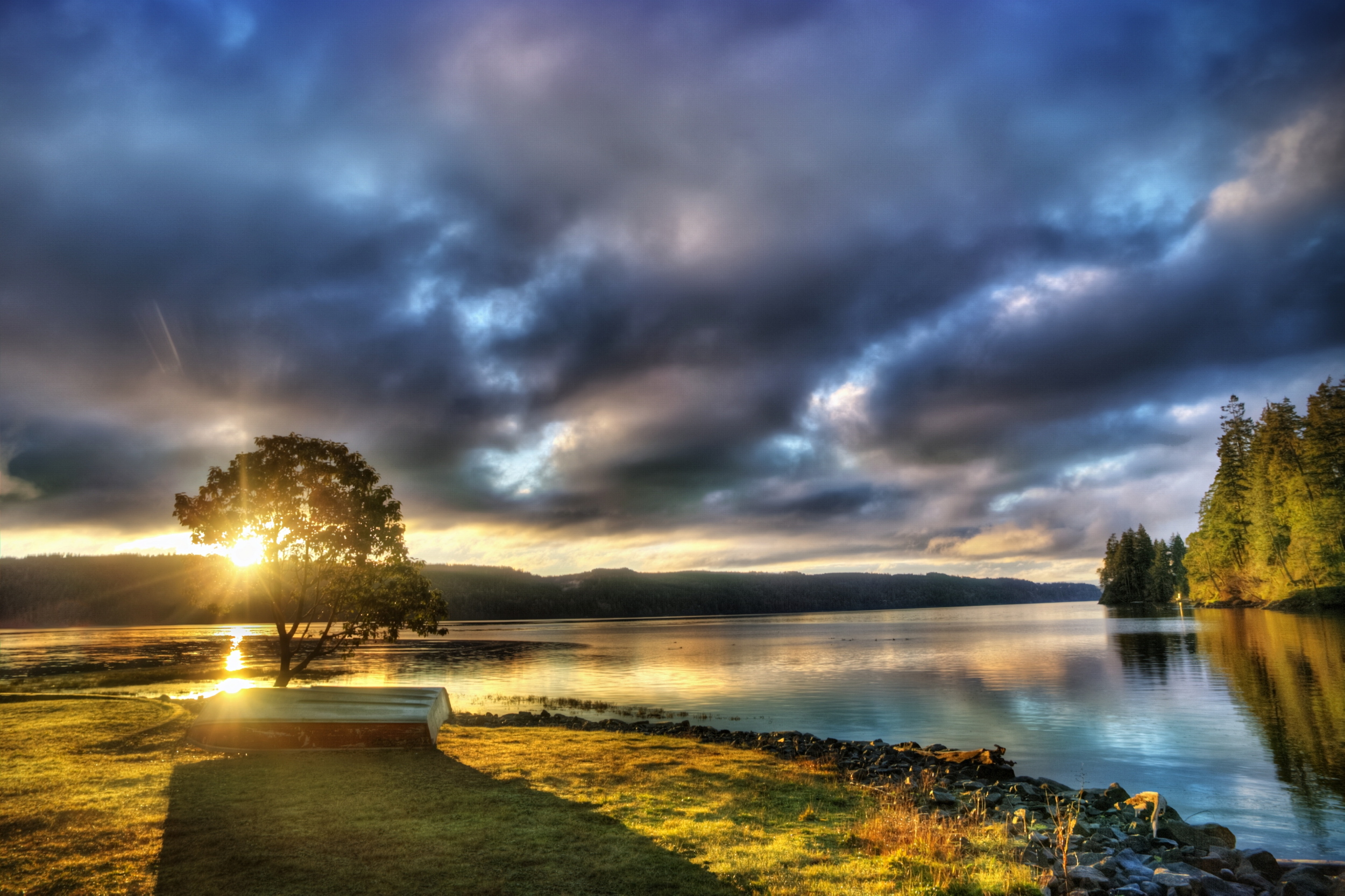
Do you know someone who delights in shooting the under-trodden nooks of Hood Canal? Someone who sleeps with a tripod and welcomes the sunrise DSLR-in-hand? Is this person you? We’re on the hunt for those who love to shoot the Hood Canal. Get in touch with us, and you might be featured as next month’s Spotlight Photographer.
Until then, keep an eye out for photographic inspiration on Facebook, Twitter, Instagram, and Pinterest, and be sure to tag your creations with #wildsideWA so we can keep tabs on your travels about the Olympic Peninsula.

The Mountains are calling... ANSWER!
A weekend warrior is a 21st century beast whose population seems to be exponentially growing. As the “rolley chair blues” epidemic proliferates across the Pacific Northwest, so does the drive to combat it with an epic 48-hour adventure.
A weekend warrior is a 21st century beast whose population seems to be exponentially growing. As the “rolley chair blues” epidemic proliferates across the Pacific Northwest, so does the drive to combat it with an epic 48-hour adventure.
Here’s to those who burn the midnight oil finishing up reports and rise with the birds to knock presentations out of the park. This one’s for those who are at the gym until it closes so that their lungs are ready to be filled with alpine air come Saturday morning.
For those that simply cannot wait to escape Seattle’s concrete jungle when the clock hits 5 on a Friday, we have good news: Hood Canal is waiting for you in your backyard.

How to Get to Union, Washington
The Bremerton Ferry sets sail from Pioneer Square in the heart of Seattle over 15 times a day. As it scoots around Bainbridge Island, the impressive Olympic Mountains rise ever higher off of the water as your weekend playground draws ever nearer.
A short 45 minutes from the Bremerton Ferry Terminal lands you at Alderbrook Resort & Spa. But you’re a weekend warrior—you’ll take the extra half-hour trip to Lake Cushman. Or possibly even forge on a bit further in order to get in the thick of it with a visit to Staircase in Olympic National Park.

How to Make the Most of it
Breathe in, breathe out. You made it. Waking up underneath behemoth, moss-covered, primordial-looking trees and a tangle of lacy moss is what makes it all worthwhile. And you’ve got two whole diems to carpe!
Access to the Olympic National Park is second-to-none from Staircase Campground and it just so happens that some of our favorite biking trails are just down the road. The Lower South Fork Skokomish Trail #873 is bar-none one of the best trails around.
If a two-wheeled ride is not your pick of weekend poisons, Mt. Ellinor is a short drive away. An intrepid 6 miles of trail give way to breathtaking 360 degree summit views. And, as one of the more notable peaks in the area, bagging this peak will earn some serious bragging rights.
There is a wealth of adventure waiting around every twist of trail in Hood Canal. For more ideas, check out our extensive To-Do list.

How to Celebrate in Shelton, Washington
During a weekend away, we think just about anything is cheers-worthy. The good news? There’s no lack of handcrafted libations in Hood Canal. If you’re a gin or whiskey drinker, The Hardware Distillery crafts some of the best spirits in the Northwest. Their tasting room is open from 11am to 6pm Friday through Sunday.

If you find yourself drawn to a glass of wine made with locally sourced grapes as an after-adventure drink, Walter Dacon Wines in Shelton makes some of the best wine in the area and is dedicated to Rhone and Mediterranean styles. Their tasting room is open Wednesday through Sunday from noon until 6pm.
As weekend warriors ourselves, we revere those who rise early on Saturday and Sunday to take advantage of the precious weekend freedom. We’d love to see what you get into in our neck of the woods; tag your photos on social media with #wildsideWA, and be sure to find us on Facebook, Twitter, Instagram, and Pinterest for more.