
FJORDIN CROSSIN | JUNE 13
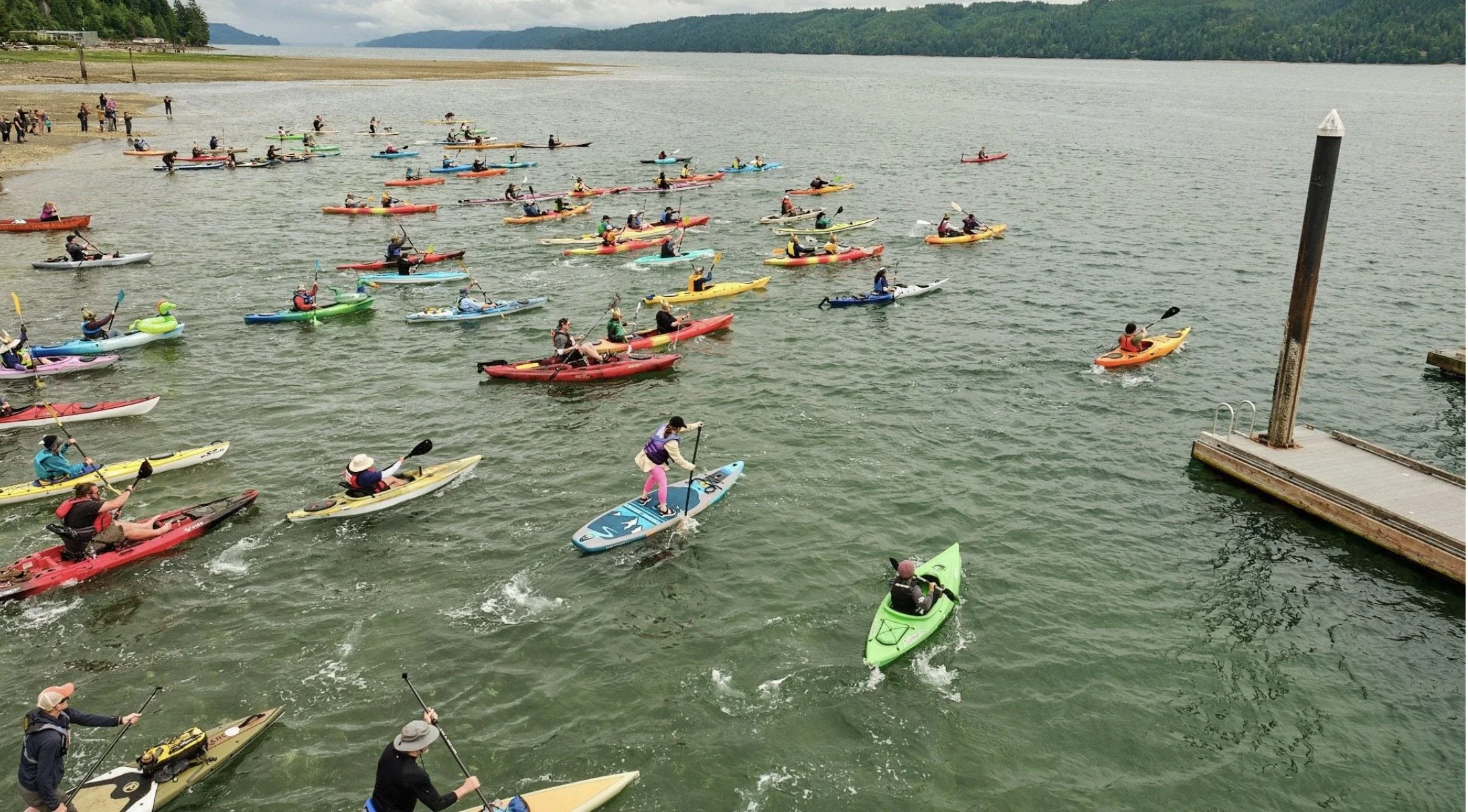
Fjordin Crossin embraces an old world Scandinavian tradition of the spirit “aquavit”, with a series of unique events at the beach in Hoodsport, WA – a nordic parade, a barrel crossing, a family-friendly paddle race, drinks, vendors and food and, after the tide pushes the celebration back to the shore, the after-party continues on the streets of Hoodsport.
Fjordin Crossin embraces an old world Scandinavian tradition of the spirit “aquavit”, with a series of unique events at the beach in Hoodsport, WA – a nordic parade, a barrel crossing, a family-friendly paddle race, drinks, vendors and food and, after the tide pushes the celebration back to the shore, the after-party continues on the streets of Hoodsport.
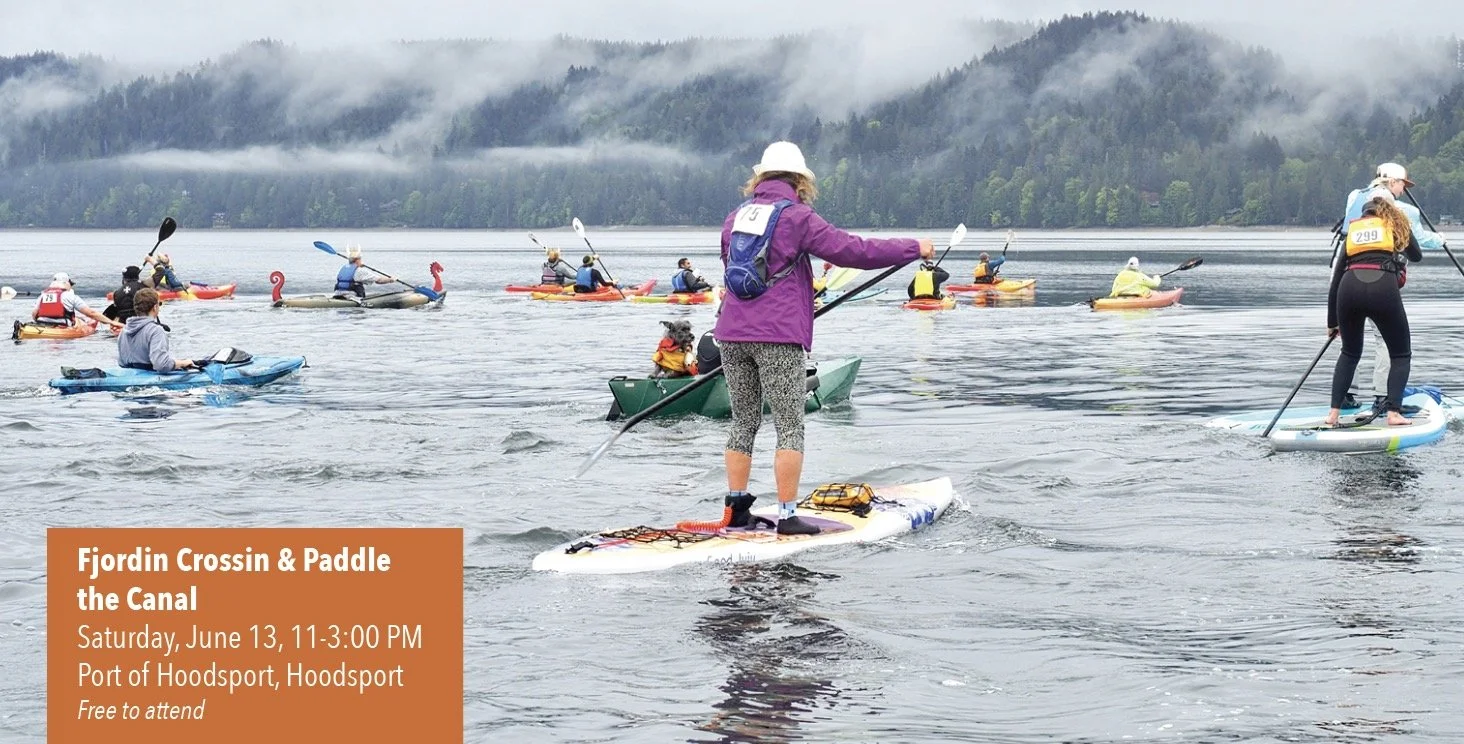
When explorer George Vancouver charted the area in 1792, he mistakenly labeled it a canal. What he had actually encountered was something far rarer: the only true fjord in the contiguous United States. Carved by glaciers thousands of years ago, Hood Canal plunges to depths exceeding 600' in places, its steep forested walls and saltwater currents giving it the same geological features as the famed fjords of Norway and Alaska.
And every summer, the waterfront town of Hoodsport leans into Nordic connection with one of the Pacific Northwest’s most delightfully eccentric celebrations: Fjordin Crossin.
Part kayak festival, part Scandinavian homage, and part small-town beach party, the event has evolved into a beloved tradition where aquavit barrels sail across the fjord, paddlers skim over cold saltwater, and accordion music drifts through town alongside the scent of grilling oysters.
At the center of it all is The Hardware Distillery, the craft distillery founded by Jan and Chuck Morris. Over the lat two decades the distillery has become known for its small-batch spirits crafted with Washington-grown ingredients and glacier-fed water flowing from the nearby Olympic Mountains.
background
Seven years ago, inspired by the centuries-old Scandinavian tradition of Linie aquavit — a spirit historically aged during long sea voyages — Chuck and Jan decided Hood Canal deserved its own version of the ritual. In Norway, barrels of aquavit famously cross the equator and return transformed by months of rolling ocean travel. In Hoodsport, the journey is shorter but no less spirited: a barrel of dill aquavit is ceremoniously launched across Hood Canal from Hoodsport toward Tahuya and back again. What began as a playful nod to Nordic heritage has grown into one of the canal’s signature summer gatherings.Today, Fjordin Crossin transforms Hoodsport’s marina waterfront park into a lively festival layered with Scandinavian flair and Northwest charm.
The centerpiece is the Paddle the Canal Challenge, hosted by Hood Canal Events, where kayakers, paddleboarders, canoes, and small sailboats follow the aquavit barrel across the fjord in a colorful flotilla of non-motorized craft. Some competitors arrive in sleek touring kayaks; others paddle in costume, leaning fully into the event’s Viking spirit.
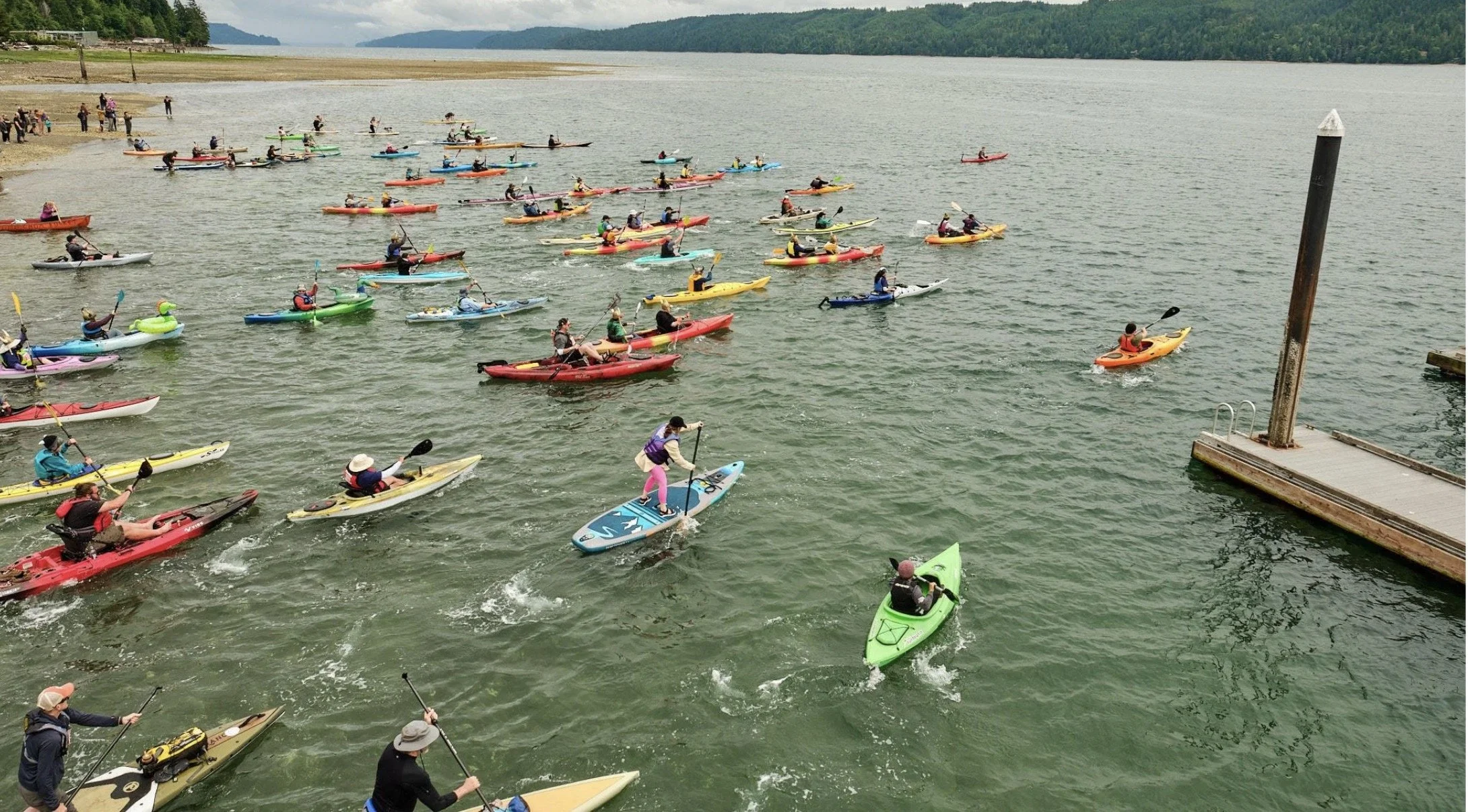
Participants can bring their own boats or rent kayaks from local outfitter Hood Canal Adventures right at the beach. This year’s timed paddle includes a knit cap for racers, with reasonable early-bird registration rates for families and casual adventurers alike.
But Fjordin Crossin is as much about gathering on shore as it is crossing the water. By late morning, the marina fills with local artisans, oyster vendors, craft booths, and families wandering between beach games and live music. A walking parade heralds the beginning of the ceremonies as fiddlers, accordion players, and participants dressed in Scandinavian attire escort the barrel toward the dock.
the launch
As the barrel begins its symbolic voyage across Hood Canal, spectators line the waterfront cheering paddlers into the water. Nearby, the Aquavit Garden pours cocktails featuring herbaceous aquavit, local wines, and craft beer. The salty air smells faintly of smoked seafood, evergreen forests, and citrus peels crushed into summer drinks.
after-Tide gathering
Eventually, as the tide come in, the celebration shifts inland. The party migrates naturally into Hoodsport where tasting rooms, galleries, breweries, and restaurants keep festivities rolling into the evening. The festival carries the easy authenticity of a community celebrating the place it loves most — equal parts quirky, maritime, and deeply rooted in local identity. And while the aquavit barrel may be symbolic, the pride behind it is not.
For one weekend each year, Hood Canal embraces its identity as America’s hidden fjord — a place where Nordic traditions feel surprisingly at home beneath Douglas firs. In Hoodsport, Fjordin Crossin isn’t simply a festival. It’s a love letter to the fjord itself.

Escape to Jarrell Cove State Park | Harstine Island, WA
Located on the northwest tip of Harstine Island in Mason County, Washington, Jarrell Cove State Park is a peaceful, saltwater playground with forested campsites, moorage for boaters, and plenty of space to kayak, paddleboard, or unwind by the water.
Located on the northwest tip of Harstine Island in Mason County, Washington, Jarrell Cove State Park is a peaceful, saltwater playground with forested campsites, moorage for boaters, and plenty of space to kayak, paddleboard, or unwind by the water.
In this video, Jeff Slakey from Explore Hood Canal explores the park with Ranger Liesl Plomski and Park Aid Lucas Marin to uncover its hidden history, local wildlife, and everything that makes Jarrell Cove one of the South Sound’s best-kept secrets.
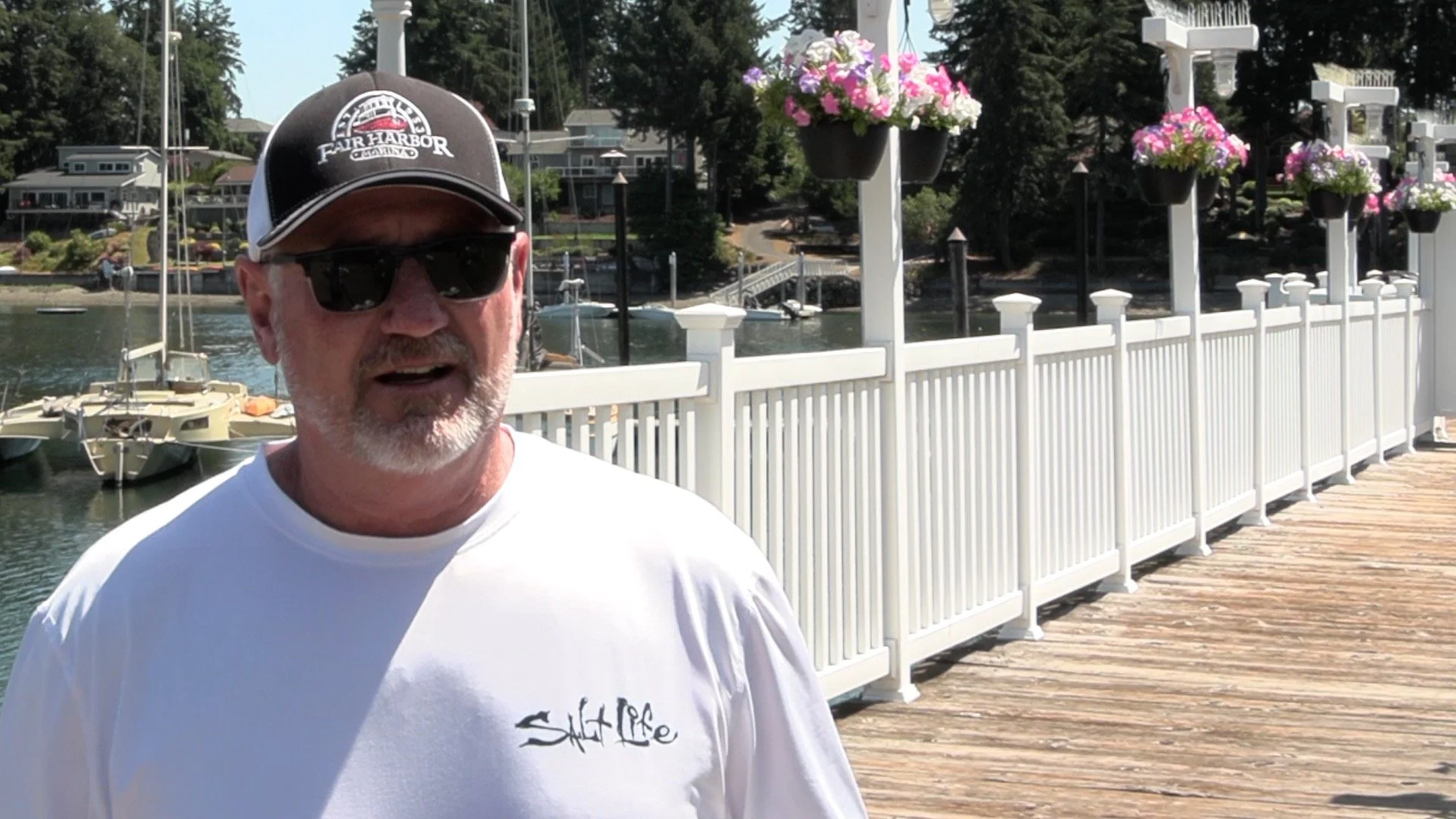
Fair Harbor Marina - A Boaters Destination
The Fair Harbor Marina, located at the Port of Grapeview, continues to grow in popularity. Managed by Kelly Granger and his team, the marina offers 82 slips with power, water, showers, and laundry facilities; making it a convenient stop for boaters. The marina's beauty has drawn comparisons to Cape Cod and Roache Harbor on San Juan Island, and it has become a venue for weddings, corporate events, and more. An additional 8-minute dingy ride gets you to the Port of Allyn, where you can find dining and drinks.
The Fair Harbor Marina, located at the Port of Grapeview, continues to grow in popularity. Managed by Kelly Granger and his team, the marina offers 82 slips with power, water, showers, and laundry facilities; making it a convenient stop for boaters. The marina's beauty has drawn comparisons to Cape Cod and Roache Harbor on San Juan Island, and it has become a venue for weddings, corporate events, and more. An additional 8-minute dingy ride gets you to the Port of Allyn, where you can find dining and drinks.
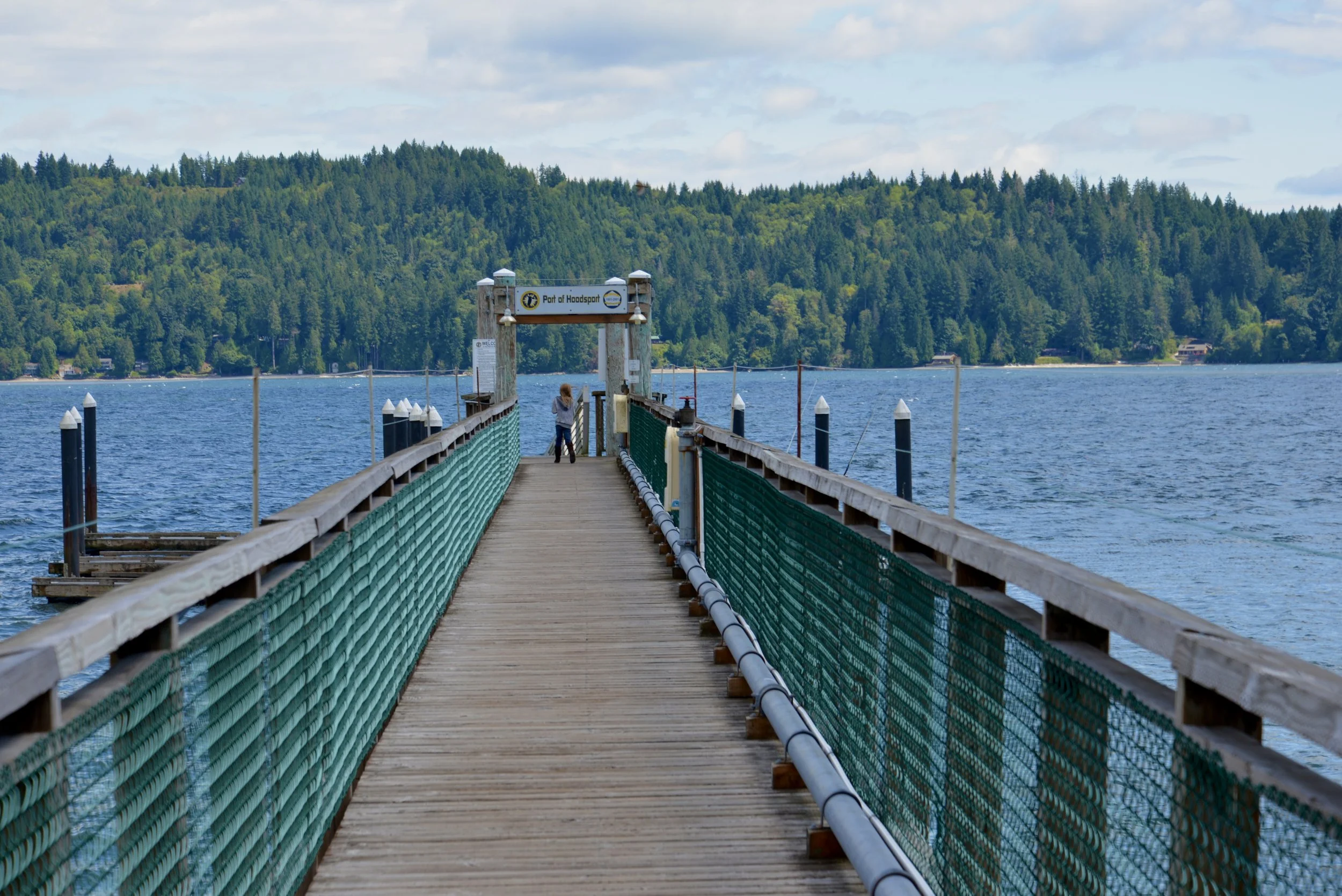
The Port Of Hoodsport Welcomes Divers, Disc Golfers and Visitors to the area
Port Of Hoodsport Commissioner Cody Morris talks about the Port of Hoodsport public dock, its recent updates, and future plans. After structural failures last winter, they secured emergency funding for repairs just in time for shrimp season. The dock is a popular spot for divers, fishermen, and visitors to downtown Hoodsport's shops and restaurants.
Port Of Hoodsport Commissioner Cody Morris talks about the Port of Hoodsport public dock, its recent updates, and future plans. They've been working on modernizing the dock to meet safety and environmental standards, replacing old materials, and making it more resilient to weather. After structural failures last winter, they secured emergency funding for repairs just in time for shrimp season. The dock is a popular spot for divers, fishermen, and visitors to downtown Hoodsport's shops and restaurants. Additionally, The Port of Hoodsport manages a disc golf course and a trail system up the Cushman Road.
If you had attended Fjordin Crossin in June, you may know that the Port has been working on modernizing the dock to meet safety and environmental standards, replacing old materials, and making it more resilient to weather. After structural failures last winter, they secured emergency funding for repairs just in time for shrimp season. The dock is a popular spot for divers, fishermen, and visitors to downtown Hoodsport's shops and restaurants.
"We are in negotiations with DNR to renew our lease," Cody Morris explained to Jeff, "and part of that stipulates that we need to modernize the material being used here. Our dock is quite old, and so it is very out of code, both for safety and environmental standards. So two of the main things we’re looking at is the materials."
Morris spoke regarding the winter dock closures, "we had some extreme structural failures, and for the safety, the port had to close it down and seek emergency funding from the state to hire a contractor to do the repairs. We were lucky that we were able to get repairs done just in the time of shrimp season. That’s definitely when this dock gets the most use. The second most use is during the salmon season."
Although the Port was able to make temporary repairs, Morris realizes there is still a lot of work to be done.
"As the dock is currently configured," he continued, "it kind of more or less has a self-destruct button. And that’s mostly from the fact that the dock itself doesn’t flex. It creates an insane amount of tension during the tidal changes, and those much gnarlier waters in the winter."
Regardless of the pending long term upgrades to the docks that will take some time and funds, Morris attests that the docks are an important asset to the Port of Hoodsport not just for the basic needs of accessibility but also for tourism. The local retail and restaurants in the area benefit greatly from the summer day traffic arriving by water.
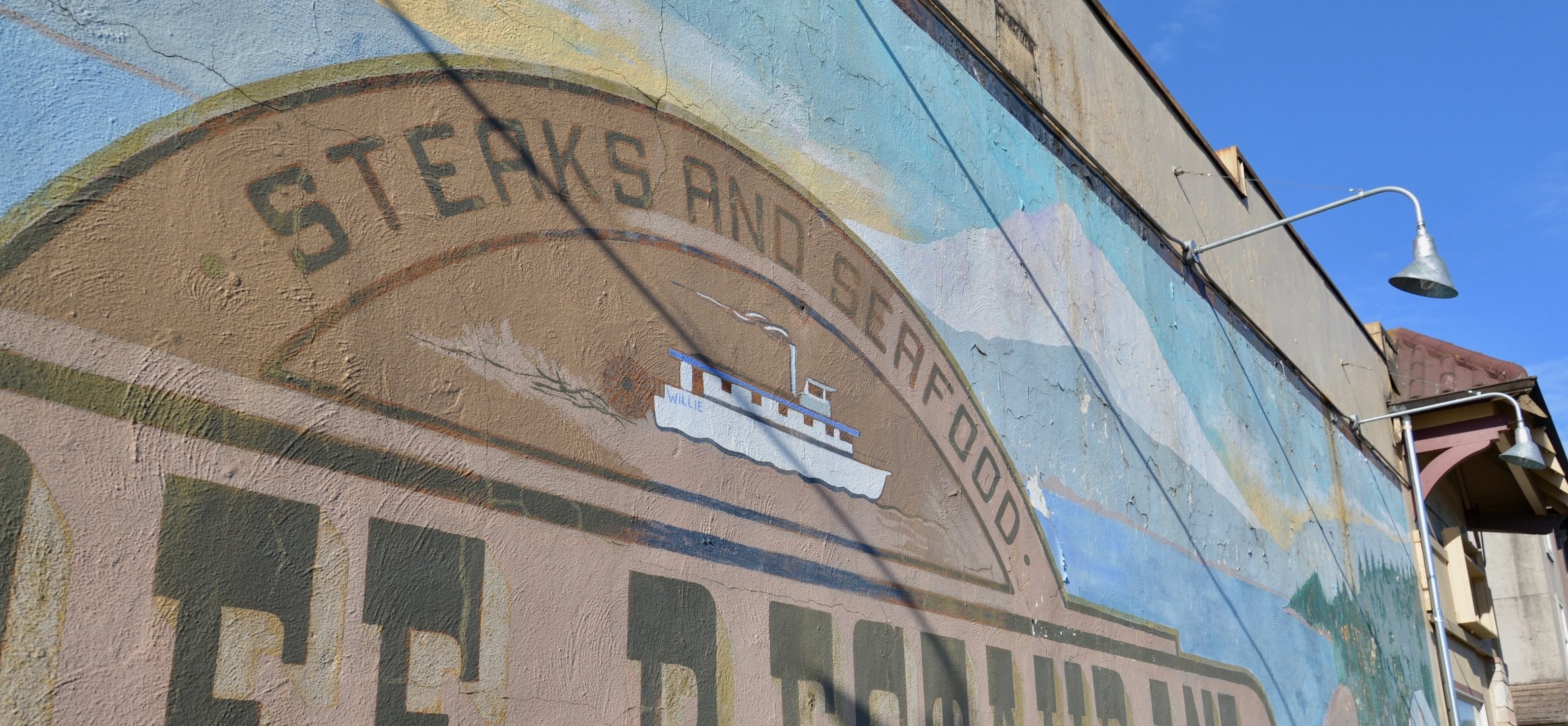
When Waterways were Highways | Mosquito Fleet
Before automobiles and highways paved the way to land transport, the waterways of Puget Sound were essential for transporting goods and people. During the early 1900’s Hood Canal and the inlets of South Puget Sound were alive with a network of ships affectionately dubbed the “mosquito fleet.”
Before automobiles and highways paved the way to land transport, the waterways of Puget Sound were essential. When settlers first came to these inlets to homestead, Native American canoes and small watercrafts were the best method of transport. But this method of passage often required Native American guides, traveling in an open canoe for several hours and the man-powered craft was at the mercy of the strong tides, currents and weather of the Puget Sound waterways.
Towards the turn of the 19th century, the canoes were replaced as steam powered sternwheelers, side-wheelers and propeller crafts became available—which were capable of comfortably taking many passengers and freight.
These crafts became so ubiquitous and plentiful that they have been dubbed the Mosquito Fleet of Puget Sound. Later, as ships became tailored for these routes, more luxurious on-board amenities were provided, such as white table cloth dining and unusually, aboard the Eliza Anderson, the steam engine was put to further use as it powered a calliope – a keyboard instrument similar to an organ with music produced through a series of steam whistles. In many areas, such as the route between Seattle and Tacoma, the Mosquito Fleets established the routes later followed by the Washington State Ferries.

117' sternwheeler, S.G. Simpson in Oakland Bay, Shelton, circa 1911, making the trip from Shelton to Olympia in just 90 minutes on a outgoing tide. photo: Mason County Historical Society.
Perched on the Hood Canal, Case Inlet and Hammersley Inlet, Mason County, in particular, relied on the ships of the Mosquito Fleet to connect it with the hubbub of the rest of the State. Mail, supplies and later tourists were brought in by ship and local products such as oysters, salal, timber and canned fish were shipped out. Shelton and its early lumber industry was serviced by several ships, connecting it to Olympia. The Willie, Clara Brown, The Doctor, The Josephine, City of Shelton, Irene, Agnes, S.G. Simpson, Marie and the Emrose were just a few of these ships serving Shelton, Oakland Bay and Hammersley Inlet from the 1880s to the mid-1920s.

City of Shelton at Shelton Harbor on Oakland Bay
The 110-foot sternwheeler City of Shelton was built in 1895 in Shelton for the Shelton Transportation Company to replace the Willie on the Shelton-Olympia Route. According to historical gossip, the nick-name for the City of Shelton, propagated by the competing crew of the Marie was “Old Wet-Butt,” as she was built without a guard for her paddles causing water to splash up her stern. Captain and crew of these boats had to travel without the modern aids of GPS and sonar, using landmarks, compasses and problematic techniques such as rudimentary echolocation. As such, there were many marine accidents – some resulted in tragic loss of life and others were harmless such as the grounding of the City of Shelton on the tidal flats of Arcadia Point. Coming too close to shore on a low tide, in a thick fog, the City of Shelton was grounded for some time as the passengers and crew had to wait for the tide to rise to free her. Seizing upon the opportunity, the cook had himself lowered ashore on a bosun’s chair where he harvested three geoducks. Before the tide had risen he had made chowder to the delight of the passengers and the slight annoyance of the Captain who is recorded to have remarked: “Yah, you t’ink a steamer iss to dig clams.”
In 1907, the City of Shelton was replaced by the 117-foot sternwheeler, S.G. Simpson named after the logging pioneer Sol G. Simpson. The S.G. Simpson was much more efficient, she could make the trip from Shelton to Olympia in 90 minutes on a good tide. She served for many years, and she was the last of the Mosquito Fleet to run the route between Shelton and Olympia.
The communities of the Hood Canal provided many “whistle stops”—or quick stopovers—for the Mosquito Fleet. Boat day was an important occasion as freight, mail and news came in from the outside world. The story of the propeller steamer, the Dode and her stalwart skipper offers a snapshot into the enterprising services each of these ships struggled to provide. Originally called the William Bryant, she had previously been used as a “coffin-ship” transporting desperate gold-miners to Alaska in the 1890s. She was purchased in 1898 and renamed the Dode by Capt. Dan Troutman after his wife Dora Wells Troutman (1860-1937). This was the second ship of their flotilla and it was to be run by Dora who was also a licensed captain. She was highly respected and could do everything from setting the boilers to manning the tiller, to unloading freight. The Dode had an extensive overnight route, traveling from Pier 3 (now Pier 54) in Seattle to Union City, with stops along the way in Kingston, Port Gamble, Seabeck, Brinnon, Holly, Dewatto, Lilliwaup Falls and Hoodsport.
As well, the Troutmans were instrumental in delivering the mail and installing the postal system along the Hood Canal. The Troutmans picked out potential post offices and postmasters and gained direct approval for these choices from US Mail representatives whom they transported out to the Hood Canal to inspect their selections.
In 1899, Dora was met with crushing debt when her husband suddenly disappeared. Although she hired detectives, he could not be found—but it was discovered that before he left, Dan had sold their first boat the Delta and these funds were missing with him. It was rumored that he took the money and made for England.

Dode, wrecked in Puget Sound, 1910
The Dode was seized for arrears. Dora managed to have the Dode released back to her, and she operated her for another year attempting to get ahead of the debt, but in-the-end Dora was left with no option but to file for bankruptcy. Dora was forced to sell the Dode and a large part of their farm in Lilliwaup. However, on her remaining property in Lilliwaup she turned her hand to hospitality, and built a hotel in 1910, which she ran successfully until 1927.
Other ships of the Mosquito Fleet filled the gaps lefts by the Dode and Dora in the Hood Canal, and in 1914 early roadworks began to connect these places by car. In fact, Dora was the first woman to drive by automobile from Lilliwaup to Port Townsend along the newly completed Olympic Highway – an accomplishment of which she was very proud.

Mosquito Fleet Winery tasting room is located in Belfair WA, and is open every Saturday 12-5 PM and Sunday 12-4 PM.
Although the practicality has passed away, the romance and legend of the Mosquito Fleet still lives on in Belfair. Mosquito Fleet Winery takes inspiration from the stories of ingenuity and endurance that made these little ships connect small communities with the major metropolises of Olympia and Seattle. Each of the winery’s award-winning vintages has a specially illustrated ship of the Mosquito Fleet adorning its label that share the stories of these little ships-that-could with a wider audience.