
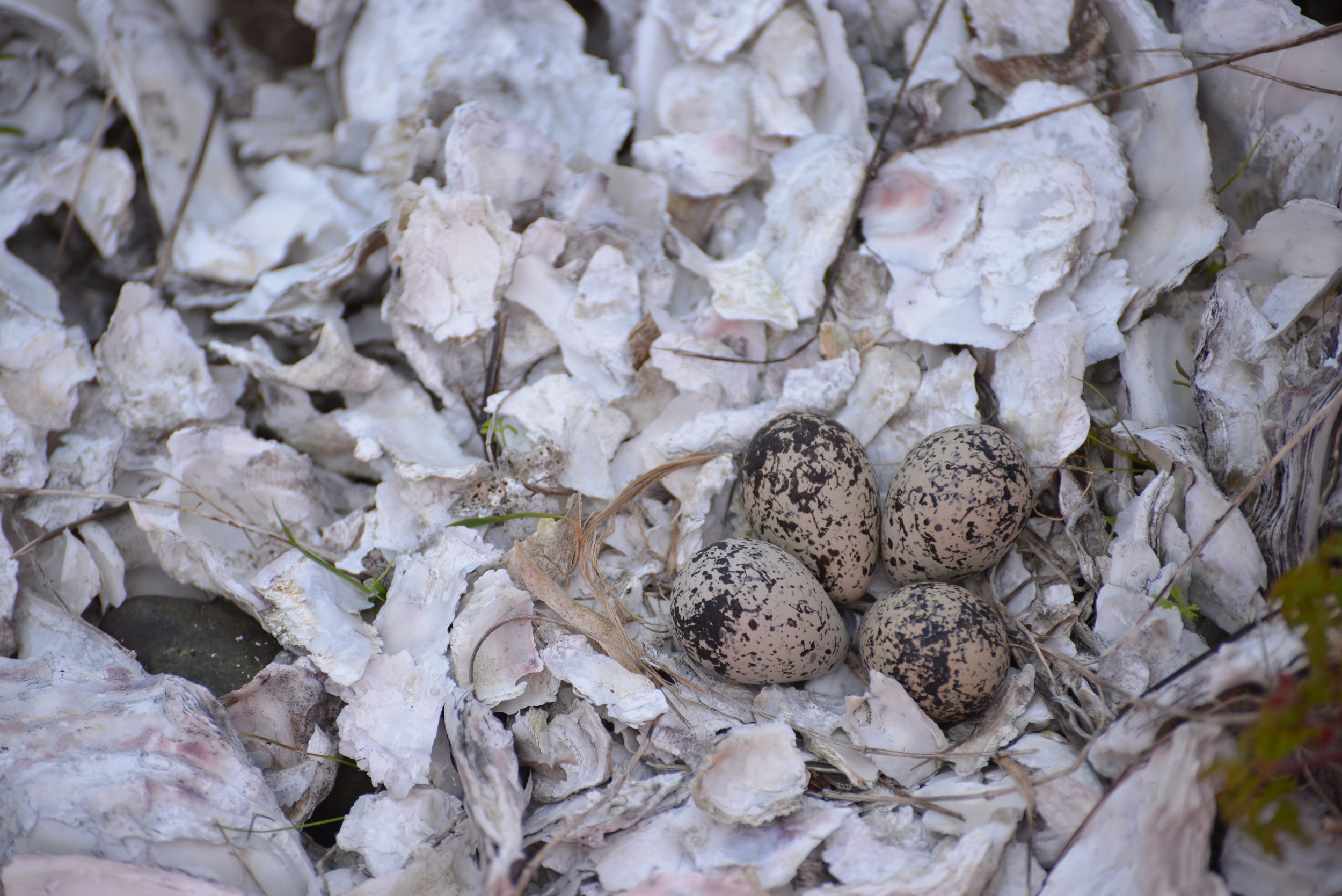

Sacred Waters Retreat in Union WA | Healing, Art, and Community Above Hood Canal
Welcome to Sacred Waters Retreat, a hidden sanctuary perched above the shores of Hood Canal in Union, Washington. Formerly known as Harmony Hill, this sacred space has been a source of healing, reflection, and community for nearly four decades. With a legacy rooted in cancer retreats, grief support, yoga, and meditation, Sacred Waters continues that mission, now with open arms to the entire community.
Welcome to Sacred Waters Retreat, a hidden sanctuary perched above the shores of Hood Canal in Union, Washington. Formerly known as Harmony Hill, this sacred space has been a source of healing, reflection, and community for nearly four decades. With a legacy rooted in cancer retreats, grief support, yoga, and meditation, Sacred Waters continues that mission, now with open arms to the entire community.
This video tells the story of Sacred Waters’ transition, from its beginnings as Harmony Hill to its preservation through the generous support of local donors and its new stewardship by St. Andrew’s House. You’ll hear from longtime facilitators, volunteers, and artists who share how this land continues to inspire peace, transformation, and connection.
From the 150-year-old sequoia at the heart of the labyrinth to the windphone, where visitors can speak to loved ones who’ve passed, every inch of this eight-acre property invites stillness and renewal. Visitors can walk the gardens, attend a retreat, volunteer, or simply sit in the shade and take in panoramic views of the Olympic Mountains and Hood Canal.
As part of its new community outreach, Sacred Waters is hosting its first Art & Community Fair on July 20, 2025, from 11 AM to 4 PM. This free, family-friendly event features live music from Chris Eakes, handmade works from regional artists, delicious food by Kern’s Kitchen, and booths from organizations like the YMCA, Mason County Historical Museum, and the Hood Canal Improvement Club.
Whether you’re looking for a quiet place to reflect or a new way to connect with your neighbors, Sacred Waters is here for you. Everyone is welcome.

Mixed-Use Art Space, Graffiti, Opening Soon In Shelton.
The art scene in Shelton is expanding, with new galleries, murals, and the upcoming opening of Graffiti, a mixed-use art space run by Nicole Frazier. Graffiti aims to be fully accessible, offering art classes and opportunities for both children and adults. The space will host a variety of art forms, from glasswork to woodworking, and will feature resident artists teaching and selling their work. Some of the plans include offering Native American culture classes and having a Lending Library to make art accessible for all who wish to teach or create.
The art scene in Shelton is expanding, with new galleries, murals, and the upcoming opening of Graffiti, a mixed-use art space run by Nicole Frazier. Graffiti aims to be fully accessible, offering art classes and opportunities for both children and adults. The space will host a variety of art forms, from glasswork to woodworking, and will feature resident artists teaching and selling their work. Some of the plans include offering Native American culture classes and having a Lending Library to make art accessible for all who wish to teach or create.
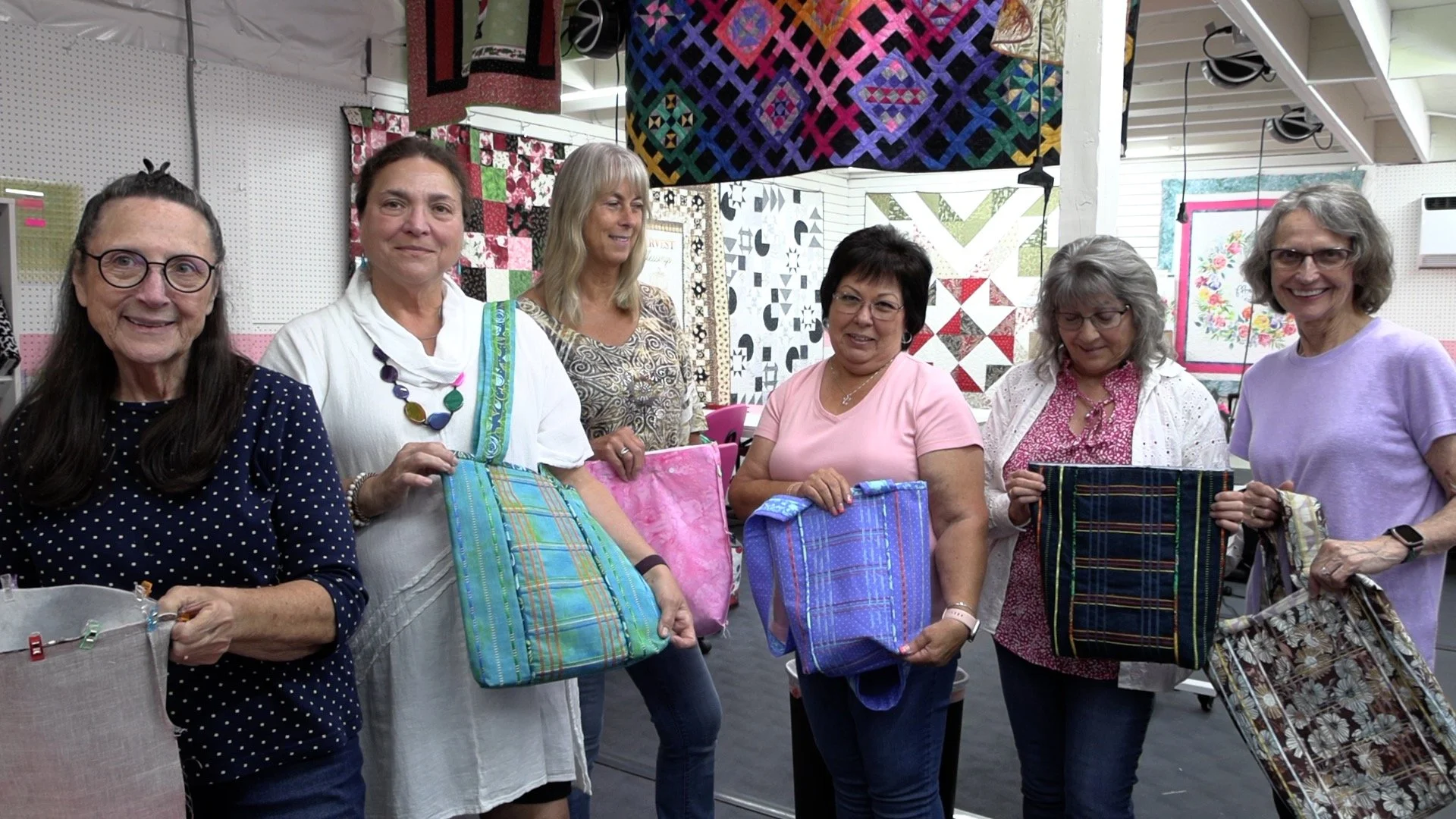
Annie's Quilt Shoppe, a tourist activity? It sure is!
Annie's Quilt Shop on Olympic Highway North In Shelton, WA is a destination for quilting enthusiasts, attracting thousands of visitors annually. Quilting is a growing industry, projected to reach $5 billion in the next few years. Customers travel to Annie's from across and outside the state for the new patterns and fabrics while locals enjoy personalized lessons and group classes to get the most out of their hobby.
Annie's Quilt Shop on Olympic Highway North In Shelton, WA is a destination for quilting enthusiasts, attracting thousands of visitors annually. Quilting is a growing industry, projected to reach $5 billion in the next few years. Customers travel to Annie's from across and outside the state for the new patterns and fabrics while locals enjoy personalized lessons and group classes to get the most out of their hobby.
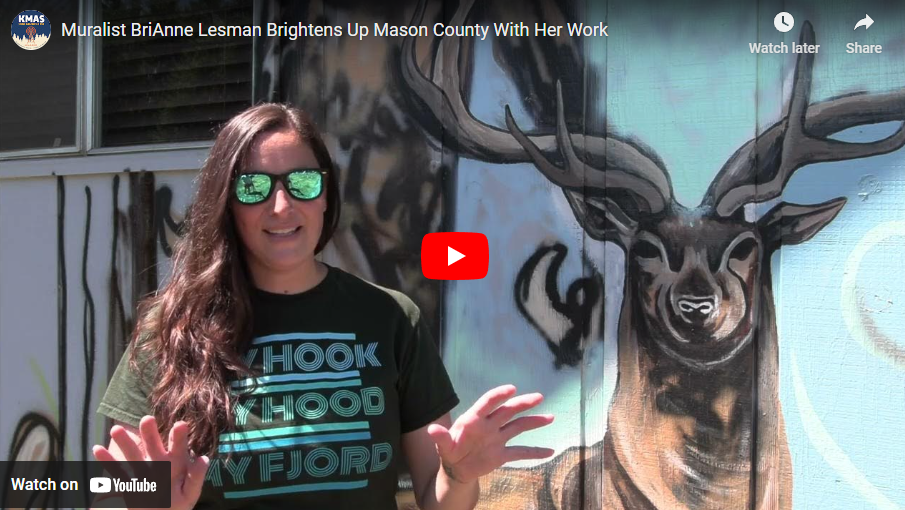
Muralist BriAnne Lesman Brightens Up Mason County With Her Work
BriAnne Lesman's first job was in 2015 at the El Sarape Cantina, and it's blossomed from there. Getting some input from the business owners helps her start the idea and after that, she's off and painting.
Drive around Mason County for a little bit and you'll start to notice murals on many of the buildings in the county. BriAnne Lesman's first job was in 2015 at the El Sarape Cantina, and it's blossomed from there. Getting some input from the business owners helps her start the idea and after that, she's off and painting. Different aspects of Mason County end up in her art, including the shellfish, foliage, and Sasquatch.

Union City: Hood Canal town steeped in history
Hosting a rich tradition spanning generations of first people and settlers, Union hosts fantastic views of the Olympics and Canal while embracing the arts and community. It is little wonder it was voted one of the 20 Prettiest Towns in USA by Forbes Traveller.
Stella Wenstob, featured columnist
Descriptions of Union, WA usually run along the lines of "inspired by nature." The first time I encountered that aphorism I took it as artistic whimsy, but by the third website I read about Union, I became curious. Is only one person writing all of this advertising content? Maybe. Or perhaps there is something more here. Perhaps there is something inspirational about Union’s situation near the bend of the Hood Canal with uninterrupted views of Mount Washington, Mount Constance and the iconic Brothers.
Maybe there is a muse in this coastal, Mediterranean microclimate colored by the luscious, green foliage of salal bushes and the imposing Western Red Cedar and the bright red trunks of the Madrona trees. Possibly more is fed than the stomach on Hood Canal seafood. At Union maybe the soul is fed too. When I started to examine the history of the extraordinary people that lived in this area, I began to see this inspired lifestyle stretching back countless generations.

Union, circa 1910; Mason County Historical Society
The members of the Skokomish Tribe are descendants of the Twana people whose traditional territory covered an extensive area along the Hood Canal, inland to the peaks of the Olympic Mountains. The Skokomish River on the Eastern side of the Olympic Peninsula with its productive salmon run and valuable grasses for weaving baskets was especially important to the Skokomish. When their lands were limited to a small section of the Skokomish River by the Treaty of Point No Point in 1855 one elder from the area, S’Hau-at-Seha-uk, voiced his fear of losing his home and way of life, “I do not want to leave the mouth of the River. I do not want to leave my home; and my burying ground; I am afraid I shall die if I do.” Despite losing traditional lands and the damaging effects of colonialism – the Skokomish are a thriving people.
Skokomish Community Centre
Skokomish arts and culture are informed and shaped by nature. Bear grass basket making, though threatened by development of the traditional picking sites on the Skokomish river, is an intricate example of natural resources, ingenuity and art coming together along with cedar carvings, dugout canoes, drum songs and traditional dance. To see a beautiful display of the technique and intricacy of the Skokomish basket makers or the ornate carvings drop in on the newly built Skokomish Community Centre (located just off of Highway 101).
Opened in 2017 and located just outside of Union on the Skokomish Reserve, this intriguing hybrid building is a handsome example of Indigenous informed design – combining traditional plank, big-house style architecture with modern needs and conveniences—such as a gym, a meeting hall and a commercial kitchen. With over 400 solar panels on its roof the Skokomish Community Centre also offers a marvelous example of environment informing design.
The Ultimate Road Trip

If you continue traveling Highway 101 past the Skokomish Salmon Hatchery and take the turn on to Highway 106 you will find yourself on a winding highway following the Skokomish River as it meets up with Hood Canal.
After about twelve minutes of mossy delta and interesting views of cottages clinging to the thin strip of land between the road and the gently eroding riverbank reminiscent of a scene from Ken Kesey’s Sometimes a Great Notion you will head around the headland that opens up until the area we now recognize as Union.
Known as duxWhLu’qWat3d to the Twana people, then called Skokomish by early settlers, in 1889 it was renamed Union City by lumberman, developer and legislator John McReavy to celebrate Washington’s declaration of statehood.
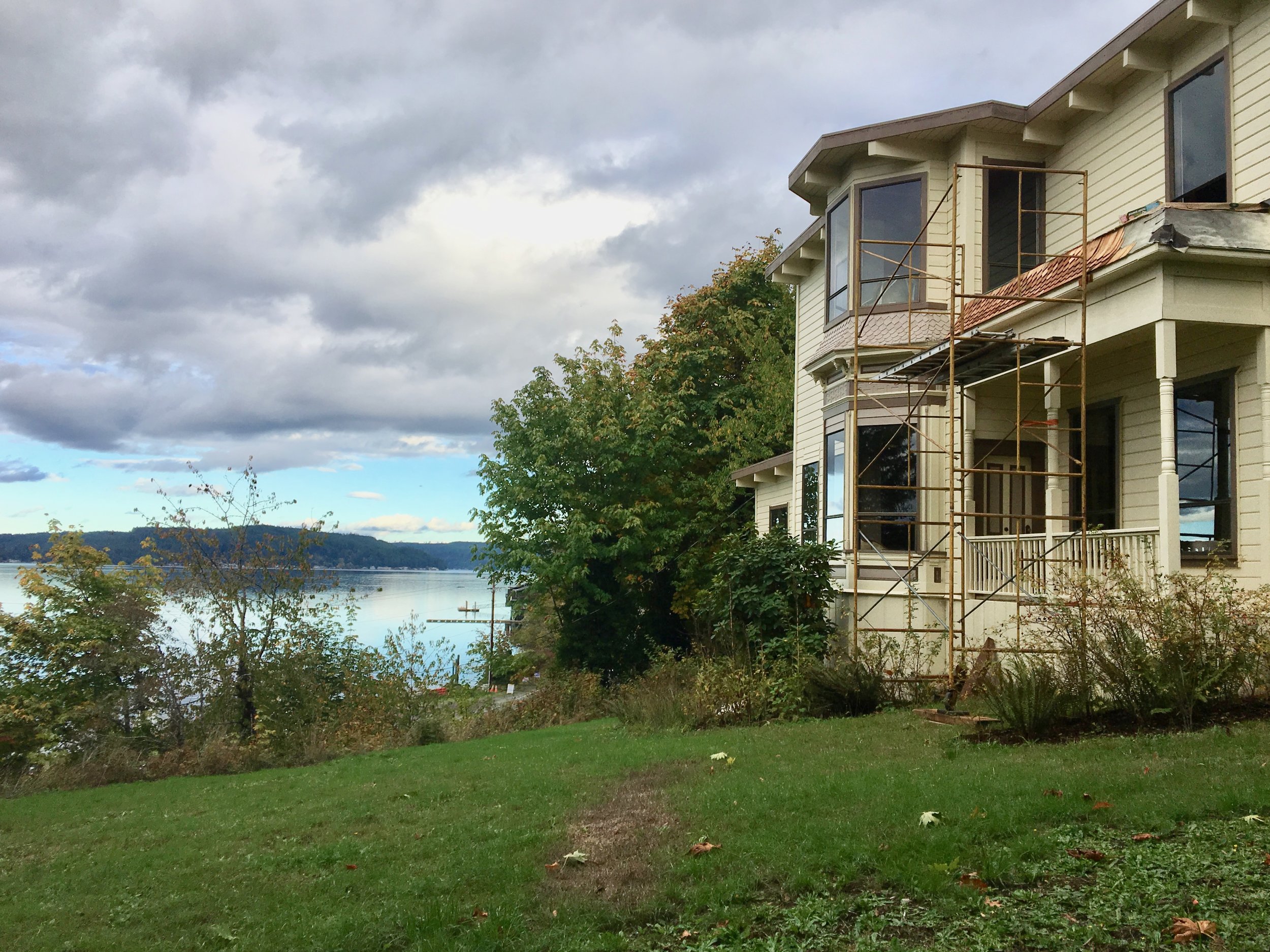
McCreavy was a boom and bust figure who had dreams of creating the “Venice of the Pacific” in Union. His mansion built in 1890 on the bluff overlooking Union is the site of a loving restoration project and is purported to be the oldest pioneer house on Hood Canal–and of course hosts a few ghosts.
As you continue on the East State Route 106 you will pass shops and a general store.
Along the highway you will find the remnants of Olympus Manor, Washington’s first artist’s colony created in the 1920s by the charismatic artist and musician Orre Nobles and his family. Influenced by an Asian -Art Deco aesthetic Olympus Manor was resplendent with a music room enclosed with rescued stain glass, a pipe organ and rich oriental rugs underfoot. The grounds were complete with a Torri gate that was crowned with a Native American dugout canoe.

Orre Nobles sketches in studio - UW Libraries, Special Collections
Although destroyed in a fire in 1952 the glamorous stories of the artists, musicians, actors, and stars that came to partake in the Hood Canal’s delights at Olympus Manor are the stuff of legends.
For a colorful and fascinating account of this early historical era of Union pick up a copy of Michael Fredson’s The Artist Colony on Hood Canal: Pixley, Orre Nobles & Waldo Chase (2011).
Another honorable mention found along this highway is the Robin Hood Village and Restaurant, built in 1934 by Don Beckman. A set designer from Hollywood, Beckman is known for working on the set for the classic Robin Hood starring Errol Flyn. In fact, one of the Robin Hood Village's early visitors was Errol Flyn himself.
The area has retained its reputation as an artsy community and guests of Robin Hood Village have the option of staying in the new cabins or historic cottages, one of which is rumored to be the cottage where Flynn stayed after he finished filming the classic tale and came to visit his old friend Beckham. The Restaurant and Pub carry on the arts tradition in Union with their year-round live entertainment feature local and visiting musicians.
After the sharp bend in the highway you head a bit inland and encounter the refurbished Dalby Waterwheel. Originally built in the 1920s, Edwin J. Dalby created the first source of hydroelectric power on the Hood Canal to provide electricity for his Seattle bride, Ethel. Ed Dalby was raised on the Canal and an adapt linguist speaking Skokomish and the Chinook Trade language. While studying at the University of Washington he worked as a researcher for the photographer Edward S. Curtis on his controversial The North American Indian (1907-1930) which strove to document in twenty volume images of the purported vanishing culture of the Native Americans. Now considered overtly racist in the project’s main philosophy that indigenous culture and identity was slated to be subsumed by Euro-American culture and many of the photographs Curtis produced are criticized for being too contrived, there is however an artistic, romantic quality to many of the pictures that transcends this. Dalby introduced Curtis to the Skokomish Tribe and, with the assistance of Skokomish brothers Frank and Henry Allen, persuaded local tribe members to pose in costumes, in imaginative scenes.

washingtonhistory.org
The misty shot of two women standing near a reed tent and beautiful cedar dugouts is iconic and quintessential. However, it is–like most romantic notions– highly contrived. Skokomish people in 1912 did not wear reed clothing or live in reed tents, being more accustomed at this time to western clothes and plank houses.
Henry Allen continued to assist Curtis and Dalby accompanying them in their work as far as North Dakota. Henry Allen’s voice was also recorded by Curtis on wax discs singing traditional songs. Curtis combined the recorded music of many different Native American voices and their photographs to create a musical slide show which he dubbed a “Picture Opera.” Curtis took his “Picture Opera” on tour across the country and played to a packed audience at Carnegie Hall in NY.
Skokomish music continues to influence Carnegie worthy works. On May 24, 2019 Union’s Great Bend Chorale and Youth Chorale led by Matthew Blegen will be performing at Carnegie Hall as part of the Distinguished Concerts in New York series. They will be performing a commissioned piece by conductor John Muehleisen inspired by early Salish recordings.
The hybrid work titled Borders begins with a Salish song of welcome, then Muehleisen weaves together European, African, Asian, and Latin American folk songs with his own settings of the poetry of Emma Lazarus, Brian Bilston, and Alberto Ríos in a powerful and moving musical journey that explores the historical roots of immigration and the modern relevance of America’s identity. The work takes up the question: How are we to treat the stranger, the foreigner, the outsider, and the “Other” amongst us? The local debut will be June 1 in Shelton and June 2 in Bremerton.
Hosting a rich tradition spanning generations of first people and settlers, Union hosts fantastic views of the Olympics and Canal while embracing the arts and community. It is little wonder it was voted one of the 20 Prettiest Towns in USA by Forbes Traveller. Whether it is the people, the history, the music, the food or the natural beauty, Union has something inspiring for everyone.

Get Your Carve On: George Kenny’s Chainsaw Carving School
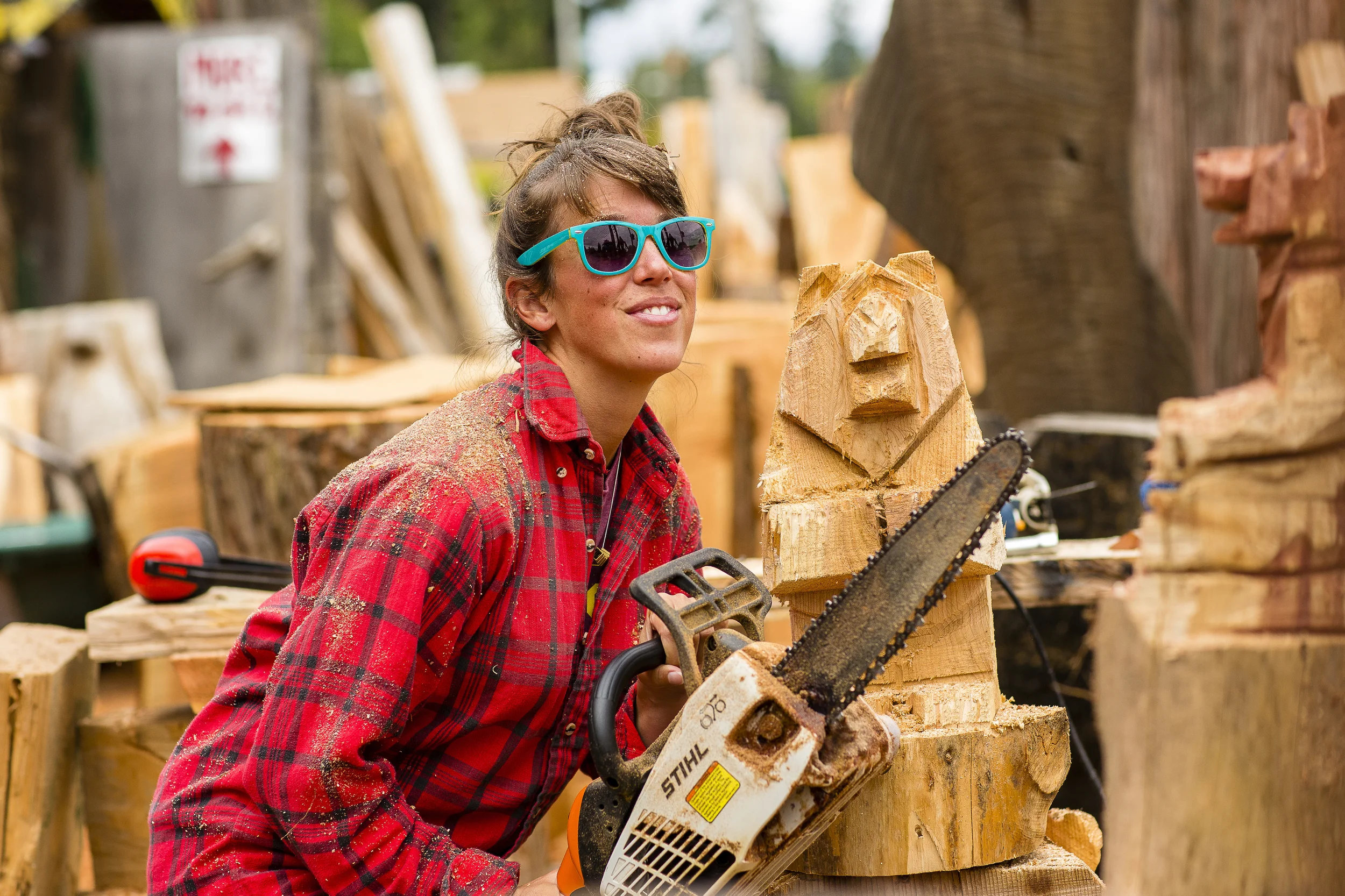
That funky wooden bear was a staple to your grandparent’s front yard, and there’s always the one quirky neighbor on the block that has one—but did you know there are entire competitions centered on chainsaw carvings? Did you know there exists a chainsaw carving school in Allyn that will teach you how to make one of your own? Truth and truth.
That funky wooden bear was a staple to your grandparent’s front yard, and there’s always the one quirky neighbor on the block that has one—but did you know there are entire competitions centered on chainsaw carvings? Did you know there exists a chainsaw carving school in Allyn that will teach you how to make one of your own? And almost always has a live demonstration going on? Truth, truth, and truth.

George Kenny and his wife Diane own a combination wine shop and chainsaw carving school in Hood Canal, and people flock from all over for a chance to have at an old log with a chainsaw. As Brian Ruth, professional chainsaw artist was noted as saying, “If Michelangelo had had a chainsaw, he probably would have used it.”
There’s a whole culture centered on chainsaw carving, and George is equipped with over 20 years of experience creating and teaching. His introduction class teaches a myriad of skills and equips students with the know-how to keep at this quirky art form.
At the time of its first settlement, the Olympic Peninsula depended, and came to thrive on one of its most prolific natural resources—wood. Founded in 1890, Simpson Lumber Company, operating out of Shelton (just a short jump from Allyn) is one of the oldest, continuously operating lumber companies in the Pacific Northwest.
A history rooted in woodcraft breeds artistic culture centered on it. The primitive craft of woodcarving has evolved over time coinciding with the invention of technology like the chainsaw. Contemporarily, chainsaw carving encompasses a sweeping variety of styles, skill levels and themes—some artists prefer to be strictly performance artists.
George Kenny is a wealth of historical, artistic, and technical information when it comes to chainsaw carving. It’s surely reflected in the varied and intricate carvings that fill the yard surrounding his school, and studied by the staggering number of people that have taken his class over the years.

If perusing mind-blowingly intricate, carved wooden oddities is up your alley, the Kennys care to host, boasting an extensive sculpture garden chock full of quirky creations ranging from NW native creatures, to native inspired works of art, to classic bears and more. To peek at this spectacle, stop by any day of the week between 9am and 5pm.
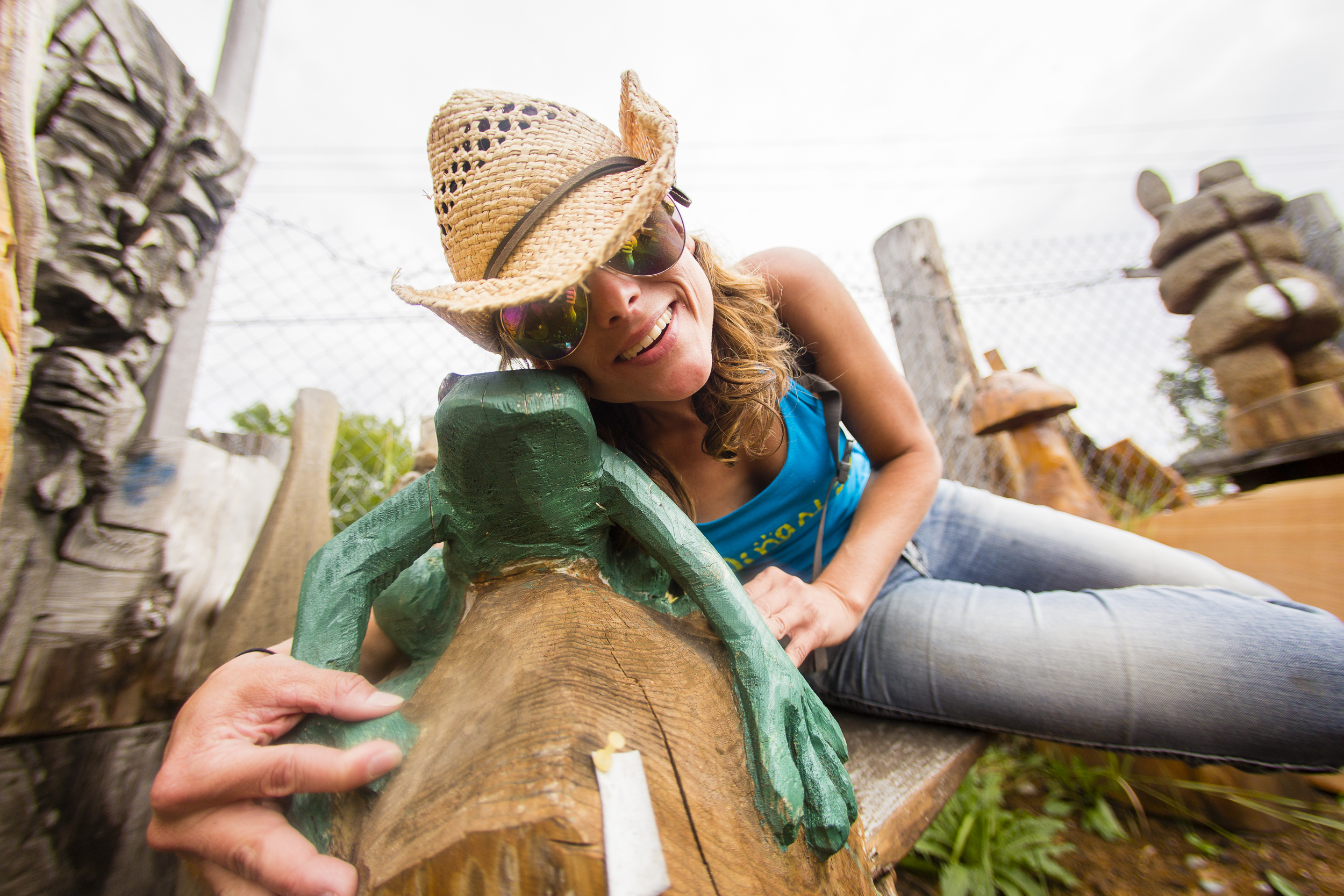
And, at the end of an afternoon poking around all corners filled with over 600 carvings, bounce next door to Top of the Cork for a tasty sampling of locally sourced wines.
There’s never a lack of fun, new, sometimes out-there things to do in Hood Canal. Keep up with us on Instagram, Facebook, Twitter, and Pinterest.
5 Paintings - Five Olympic Tales
A visit to the newly restored Hamilton-Worthington House in Quilcene, just might indeed leave you speechless. One of the final acts in this remarkable decade-long volunteer project by the Quilcene Historical Museum is the hosting of a painting collection by Northwest artists whose heydays coincided with that of the mansion.
“If you could say it in words, there would be no reason to paint.”
–Edward Hopper
Brian Cullen | Story
Background content on the painting collection provided by Allan Kollar.
A visit to the newly restored Victorian mansion, the Hamilton-Worthington House in Quilcene, just might indeed leave you speechless. One of the final acts in this remarkable decade-long volunteer project by the Quilcene Historical Museum is the hosting of a painting collection by Northwest artists whose heydays coincided with that of the mansion.
The sixteen painting collection is on loan from Allan and Mary Kollar of A.J. Kollar Fine Paintings, LLC. Both Allan and Mary, volunteers since 2011, share a commitment to the cultural and educational mission of Worthington Park. They are also in large part responsible for the historical furnishings in the mansion.
“We would like to thank the Kollars for the loan of these lovely paintings and for the amazing support they have given the project since 2011.”
Chair of the Museum, Christine Satterlee.
In 2021 the Museum is exploring ways now to showcase the mansion interiors, including this extraordinary art collection, to the public. What follows are five representative paintings culled from the collection for their significance.
Women artists of the 19th and early 20th century had an uphill battle in a world of practicing artists. The Academies were founded by men. The exhibitions were judged by men. Women had to rise above the norm to break into art establishments. The Hamilton-Worthington House is exhibiting four paintings by three women artists of the period: Abby Hill, Harriet Beecher, and Eliza Barchus. Two of those artists’ works are profiled below.

Abby Hill, Cedars Above Trout Lake, Mt Adams
Photo: Jeff Childs
Abby Hill (Am. 1861-1943)
Cedars Above Trout Lake, Mt Adams
Abby Hill moved to Tacoma, Washington from Iowa in 1889. She exhibited her art in the 1893 Columbian Exposition at the Chicago World’s Fair, the 1904 World’s Fair in St. Louis, the 1905 Lewis & Clark Centennial Exposition in Portland, and in many other national art exhibitions. She won two gold medals in the 1909 Alaska-Yukon Pacific Exposition in Seattle. Her great fame was established by her numerous landscape commissions from the Northern Pacific and Great Northern Railways to promote tourism. She left her personal painting inventory to the University of Puget Sound in Tacoma, WA.

Harriet Foster Beecher, Pondering, 1895
Photo: Jeff Childs
Harriet Foster Beecher (Am. 1854-1915)
Pondering, 1895
Harriet Beecher moved from Indiana to San Francisco to study at the School of Design. She moved to Port Townsend in 1880, and later moved to Seattle in 1893. Beecher was considered one of the most noted female artists of the 19th and 20th century in America. She was one of the first women artists to be selected to serve on the Panama-Pacific International Exposition’s Advisory Board. Her works were exhibited nationally and she was the recipient of numerous awards.
This romantic young lady in an interior, represents a signature work of the Victorian Era in America. The sitter’s formal dress is a sign of classic upper-middle class. The writing desk as a symbol of communication, and the roses, a symbol of love, present us with a young woman pondering a possible suitor.
In addition to these outstanding works by regional women artists, there are also several notable paintings in the collection by their male colleagues, Paul Morgan Gustin.

Paul Morgan Gustin, Mount Olympus, Cascade Range, WA, 1923
Photo: Jeff Childs
Paul Morgan Gustin (Am. 1886-1974)
Mount Olympus, Cascade Range, WA, 1923
Paul Gustin was born in Fort Vancouver, Washington. He was a painter and printmaker of Northwest landscapes. His work has been exhibited in New York galleries, the Art Institute of Chicago, the Pan-Pacific International Exposition in the San Francisco (1915), Pennsylvania Academy of Fine Art, the Corcoran Gallery in Washington, D.C. as well as the Seattle Art Museum. He taught at the University of Washington in the 1920’s. He has murals in many Northwest buildings.

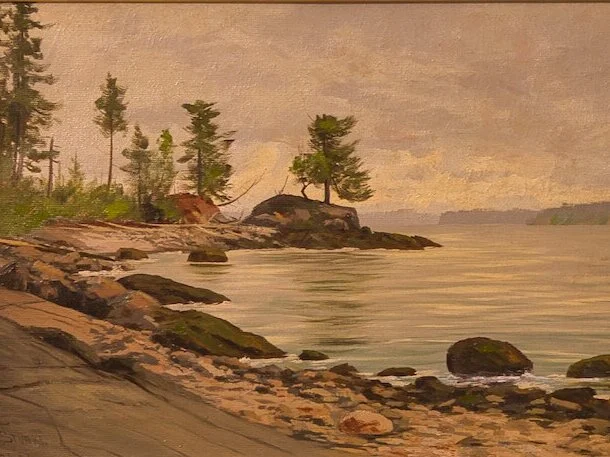
James Everett Stuart, Windy Point Hood Canal, 1891
Photo: Jeff Childs
James Everett Stuart (Am. 1852-1941)
Windy Point Hood Canal, 1891
Stuart painted several paintings in the Hood Canal area in 1891. He started painting at eight years of age. He titled and dated his work on the reverse of his canvases, and is reported to have painted over 5,000 landscapes, many in the Pacific Northwest. He was the grandson of America’s famous 19th century portrait painter Gilbert Stuart, and his paintings have appeared in the White House.

William Samuel Parrott, Northwest Territory
Photo: Jeff Childs
William Samuel Parrott (Am 1844-1915)
Northwest Territory
Parrott was considered one of the most accomplished artists of the Northwest. He opened his first studio in Portland, Oregon, in 1867. In 1887, he closed his studio and painted in the woodlands of northern California, Oregon, and Washington.
He moved to Klickatat, Washington, in the 1890’s, but exhibited widely in New York City, Paris, and London. He eventually settled in Goldendale, Washington, where he spent the rest of his life painting the beautiful Northwest. He did not sign many of his donated paintings as he wanted his style and imagery to speak for itself.

Christina Satterlee, Quilcene Museum Chair
Worthington Park Mansion
Quilcene, WA
Visit worthingtonparkquilcene.org to learn about the Worthington and Hamilton families and their legacies, how the estate came to be acquired by the Quilcene Historical Museum, and view images of the extensive restoration of the mansion to its original architectural style.
Quilcene, on the edge of Hood Canal, is a great place to begin your fjord explorations. Besides the museum and extensive grounds (which incidentally host some great events all year when its not COVID climate) there are restaurants, shops, a bank, and a great community spirit which is evident around every corner.
Head south to summit Mt Walker and then descend on a fantastic entrance to a view of Hood Canal. Mt. Walker is the only peak facing Puget Sound that has both a road and trail to its summit. The trail is easily accessed year-round, though the summit road is subject to seasonal closure. At the summit there are picnic tables and restrooms available.
Places to Stay Nearby

Eldon House, Waterfront on Hood Canal | Lilliwaup, WA
Disconnect from the world with stunning views from the large two story windows and large new deck with stairs down to the beach. Check availability

Cozy A-Frame Cottage near Lake Cushman | Hoodsport, WA
Nestled the forest in small friendly community just three miles from Lake Cushman (and very near the Staircase entrance to the Olympic National Park), this updated sweet cottage is the perfect place to begin your Hood Canal adventure. Small on size but big on charm! Check availability