
After the Fire, the Forest Begins Again
A year after the Bear Gulch Fire swept through the forests above Lake Cushman, a walk into Staircase in the Olympic National Park reveals something unexpected among the blackened trees: life. Lots of it.
Jeff Slakey | Story
A year after the Bear Gulch Fire swept through the forests above Lake Cushman, a walk into Staircase in the Olympic National Park reveals something unexpected among the blackened trees: life. Lots of it.
I made the trek up to Staircase at the end of August. It had been on my list all summer, but somehow summer has a way of filling itself, and the trip kept getting pushed to another day.
I had forgotten what a beautiful drive it is. Lake Cushman appeared through the trees, impossibly blue in the late-summer sunshine. Boats dotted the water. Families lingered along the shoreline, squeezing a little more out of August. Near the north end of the lake, I pulled over for a moment simply to look.
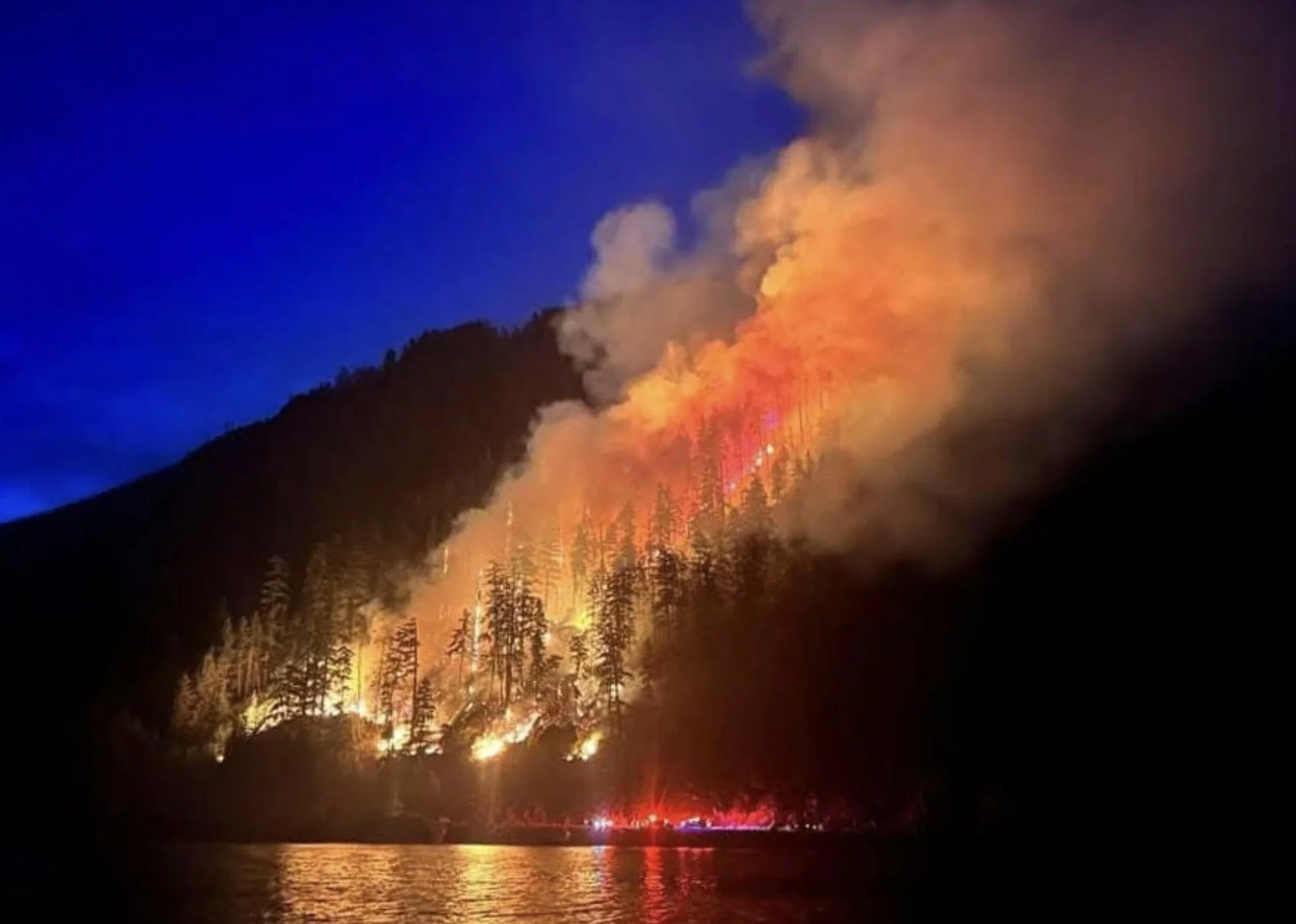
A year earlier, this had been a very different place. On July 6, 2025, a human-caused fire ignited the steep, rocky southwestern slope of Mount Rose above Lake Cushman. It would become known as the Bear Gulch Fire. What began in Olympic National Forest grew through a hot, dry summer. By late July, the fire had moved toward Olympic National Park, crossed the North Fork Skokomish River and entered wilderness areas. Hot, dry weather and easterly winds fueled periods of rapid wildfire growth in August and again in September. By the time it was declared fully contained on November 12, the Bear Gulch Fire had become the largest wildland fire on the Olympic Peninsula since 1951.
For those of us who live around Hood Canal, watching it unfold was painful. As media we were offered daily updates from the fire service and each report was more grim as the weeks ensued. Staircase isn't simply another entrance to a national park. It is our backyard swimming hole, Sunday hike, picnic spot and the place we take visiting relatives when we want to casually remind them how lucky we are to live here.
Then, for nearly a year, it was closed.
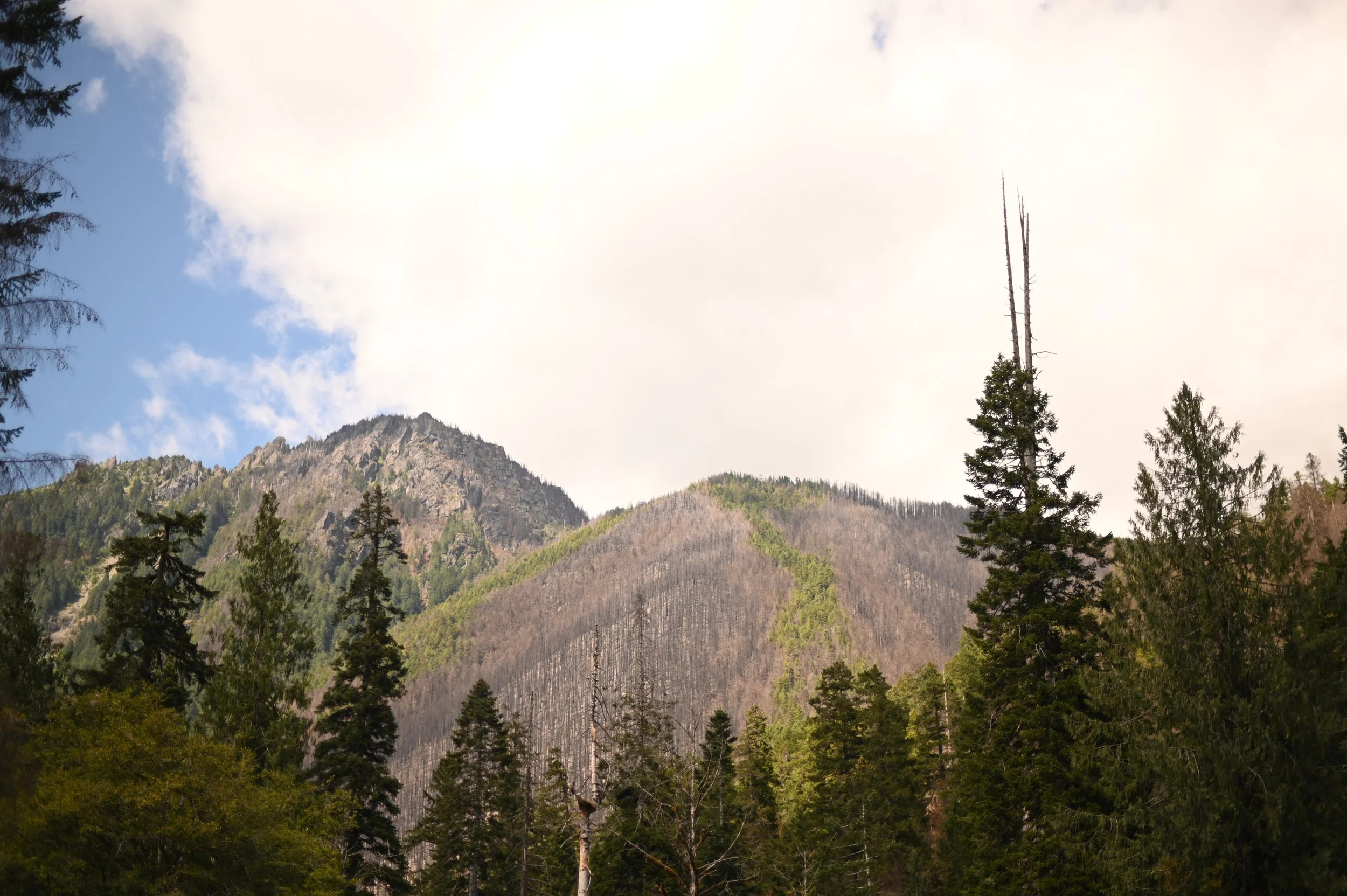
On July 8, 2026, Staircase welcomed visitors back. The road, campground, ranger station, developed facilities and Staircase Rapids Loop Trail reopened, although wilderness trails farther into the burned area remain closed while crews continue assessing hazards and repairing damaged infrastructure.
It isn't the Staircase we remember.
But perhaps that's the point.
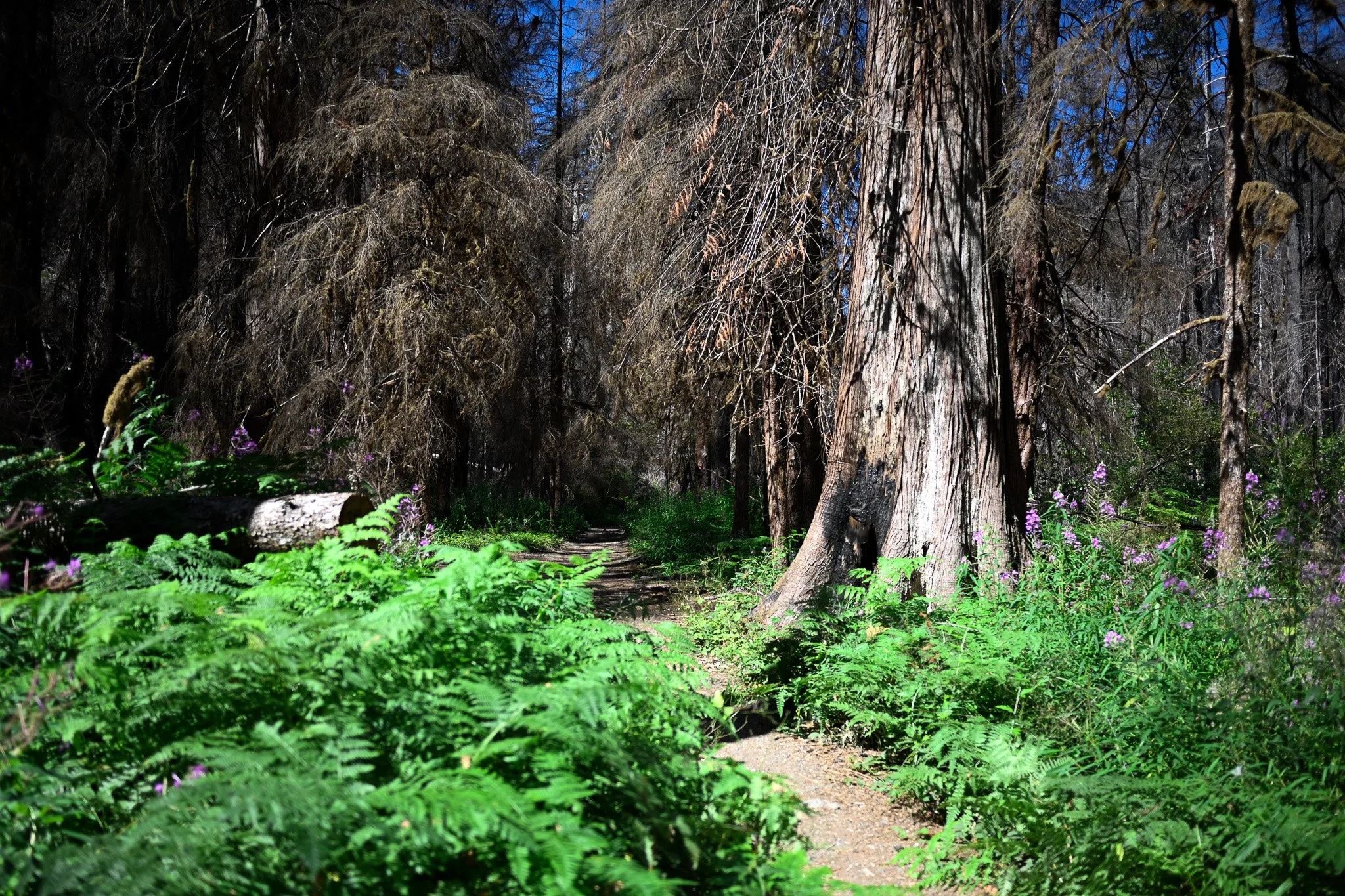
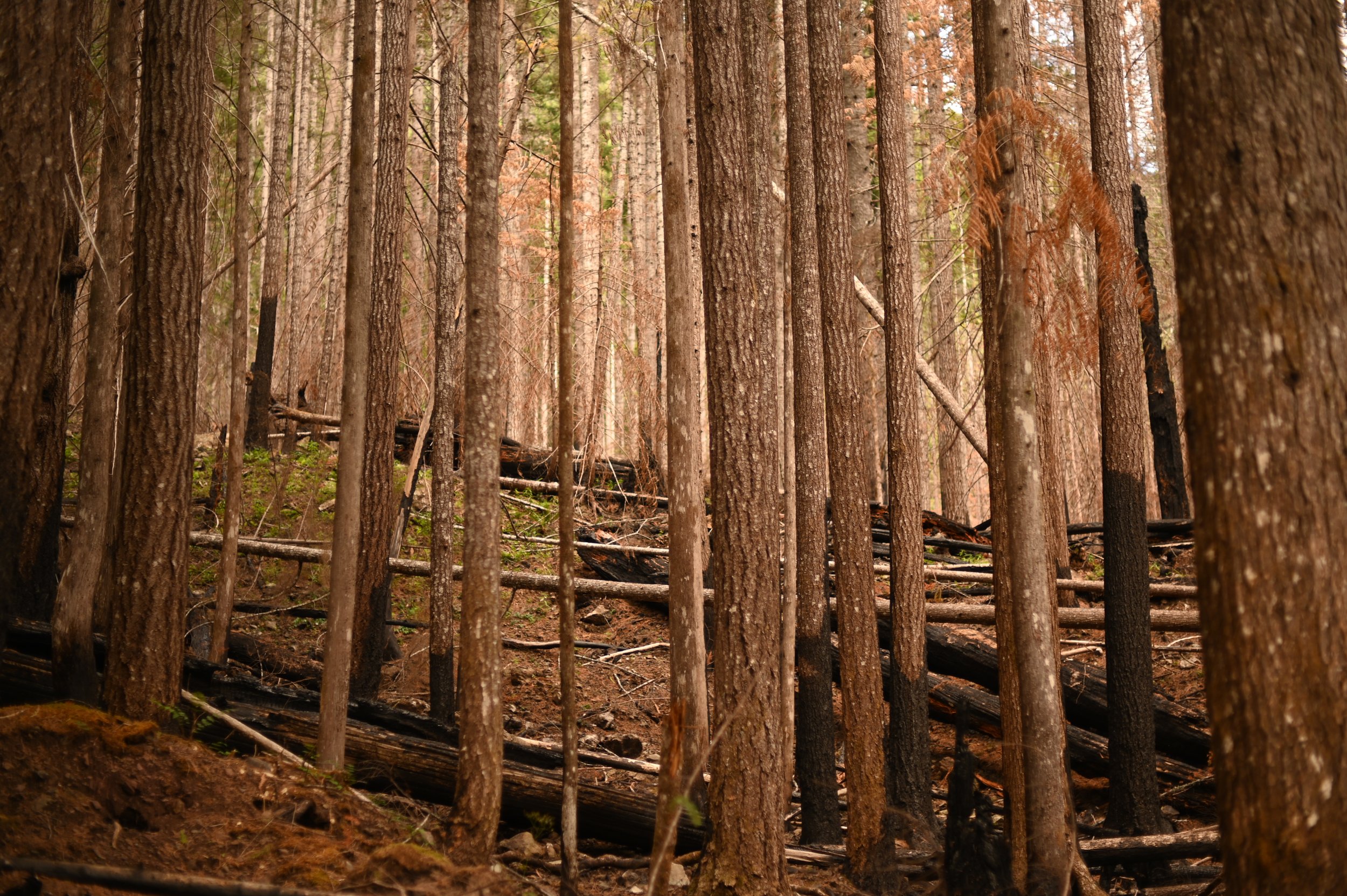
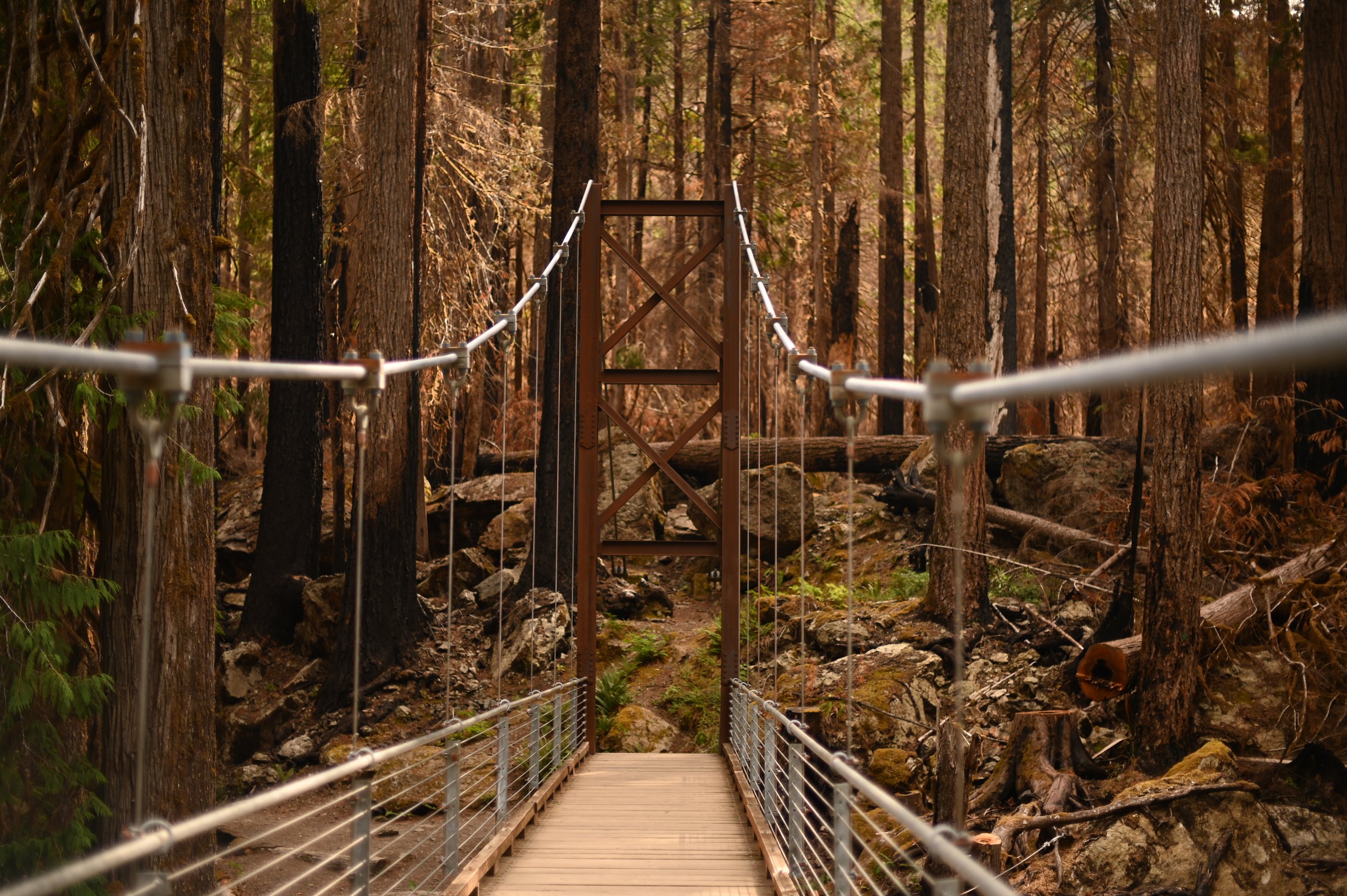
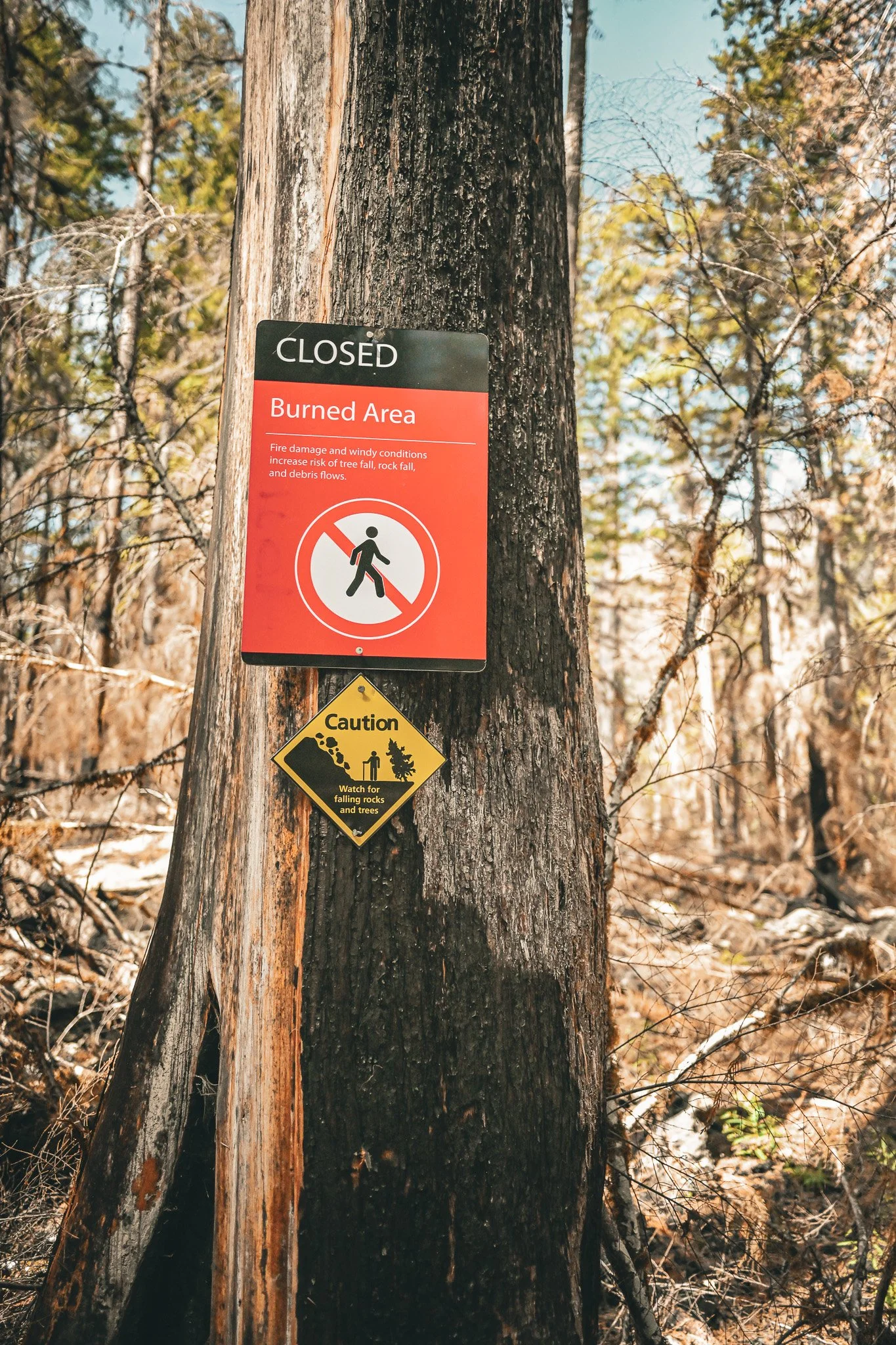
Signs of the fire appear immediately. Some are literal signs—warnings marking closed or burned areas and reminding visitors that hazards remain. Others are written across the landscape. Along the Rapids Trail, trunks stand blackened against the sky. Fallen trees lie where they came down. In places, the forest floor is startlingly open where dense vegetation once crowded the trail. The scale of it is sobering. And then you notice something else.
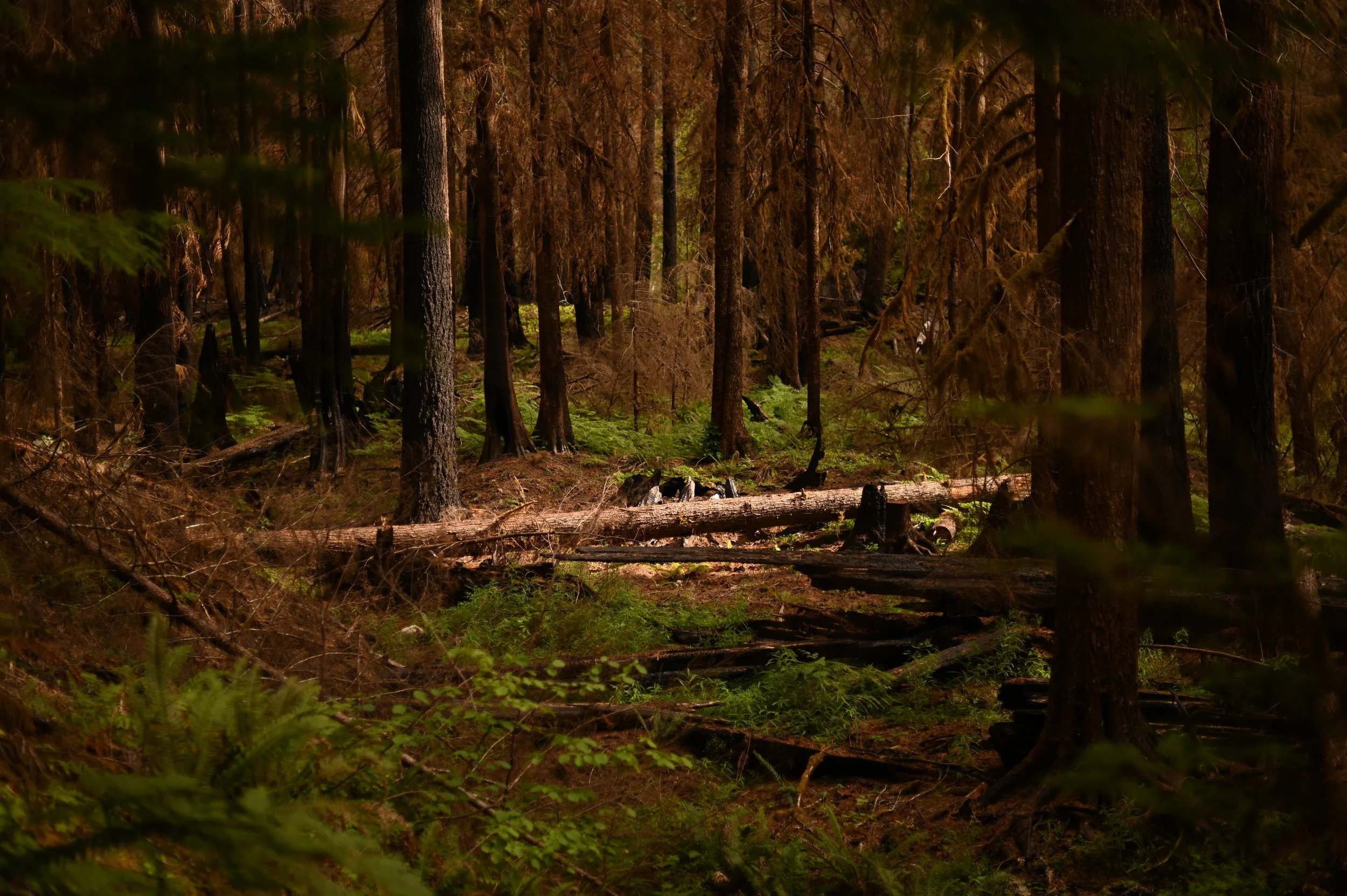
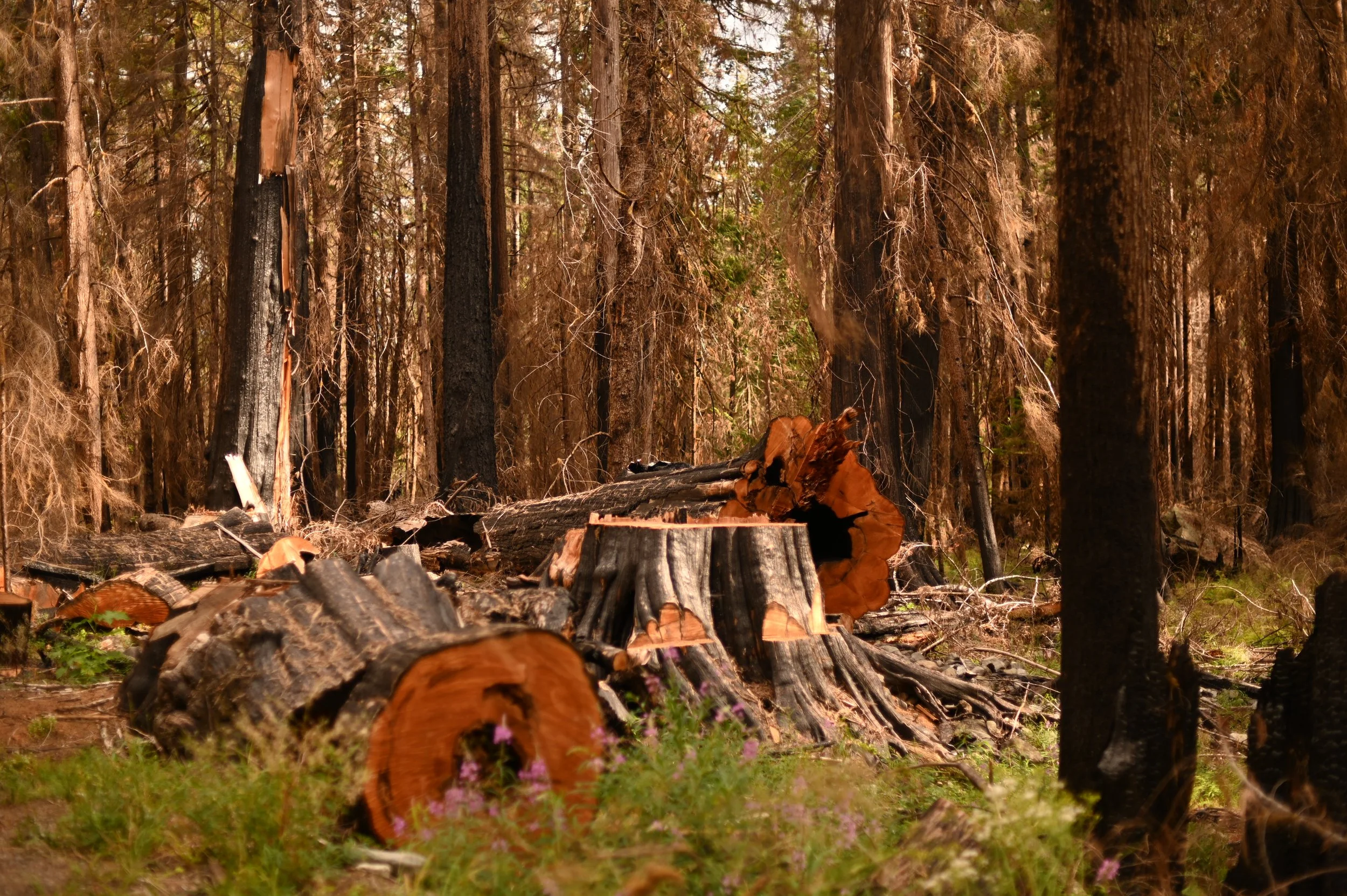
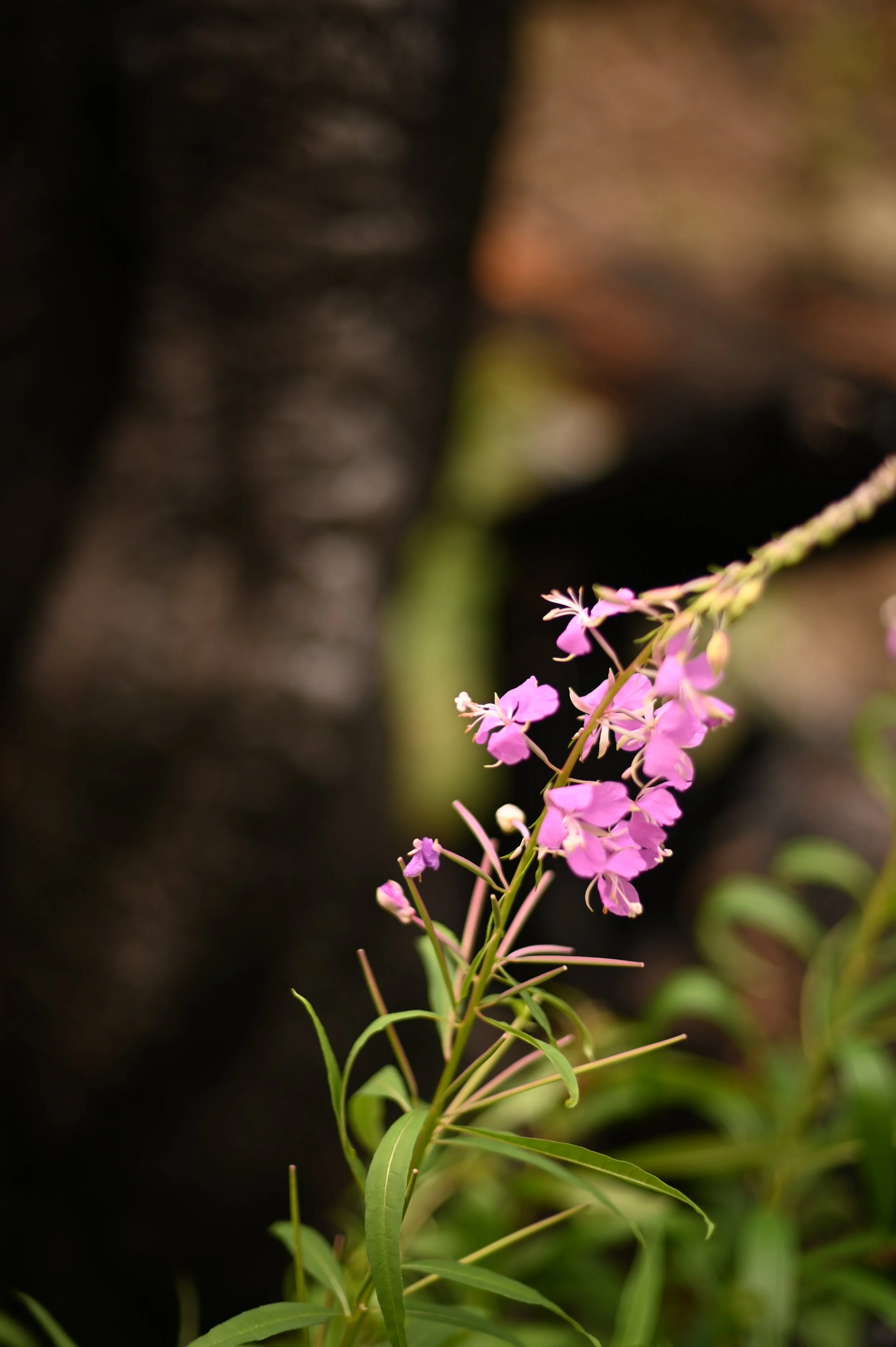
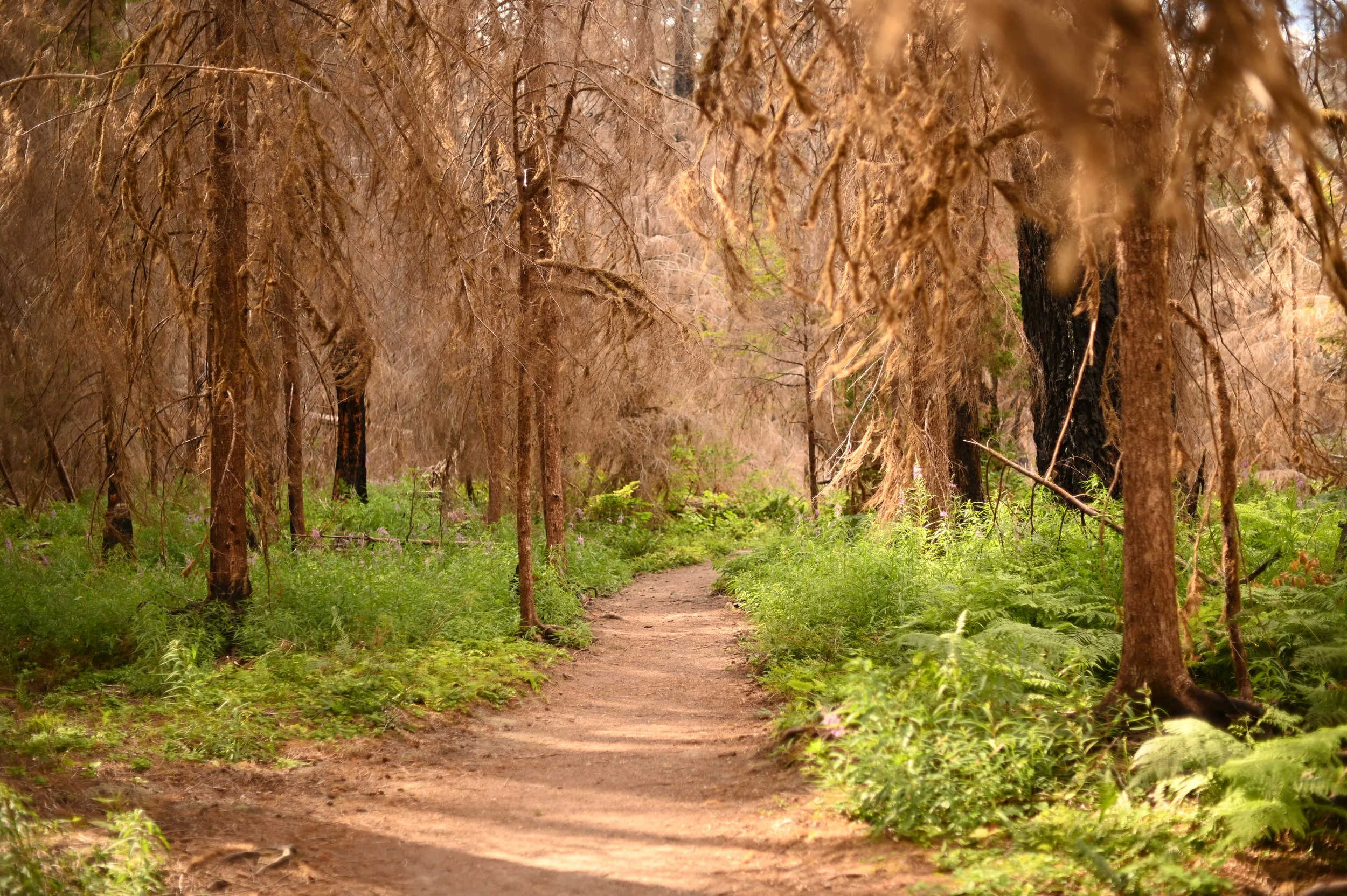
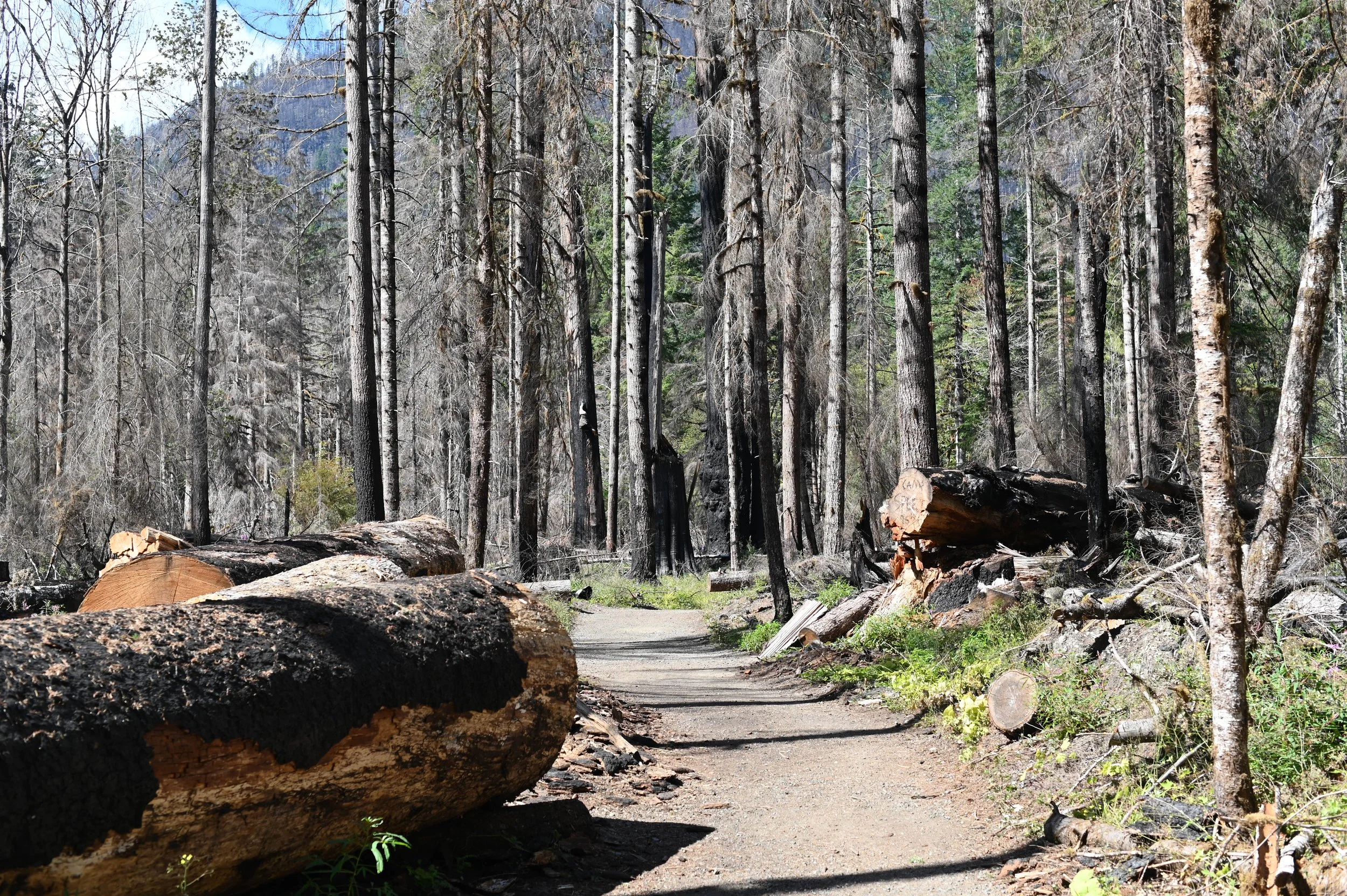
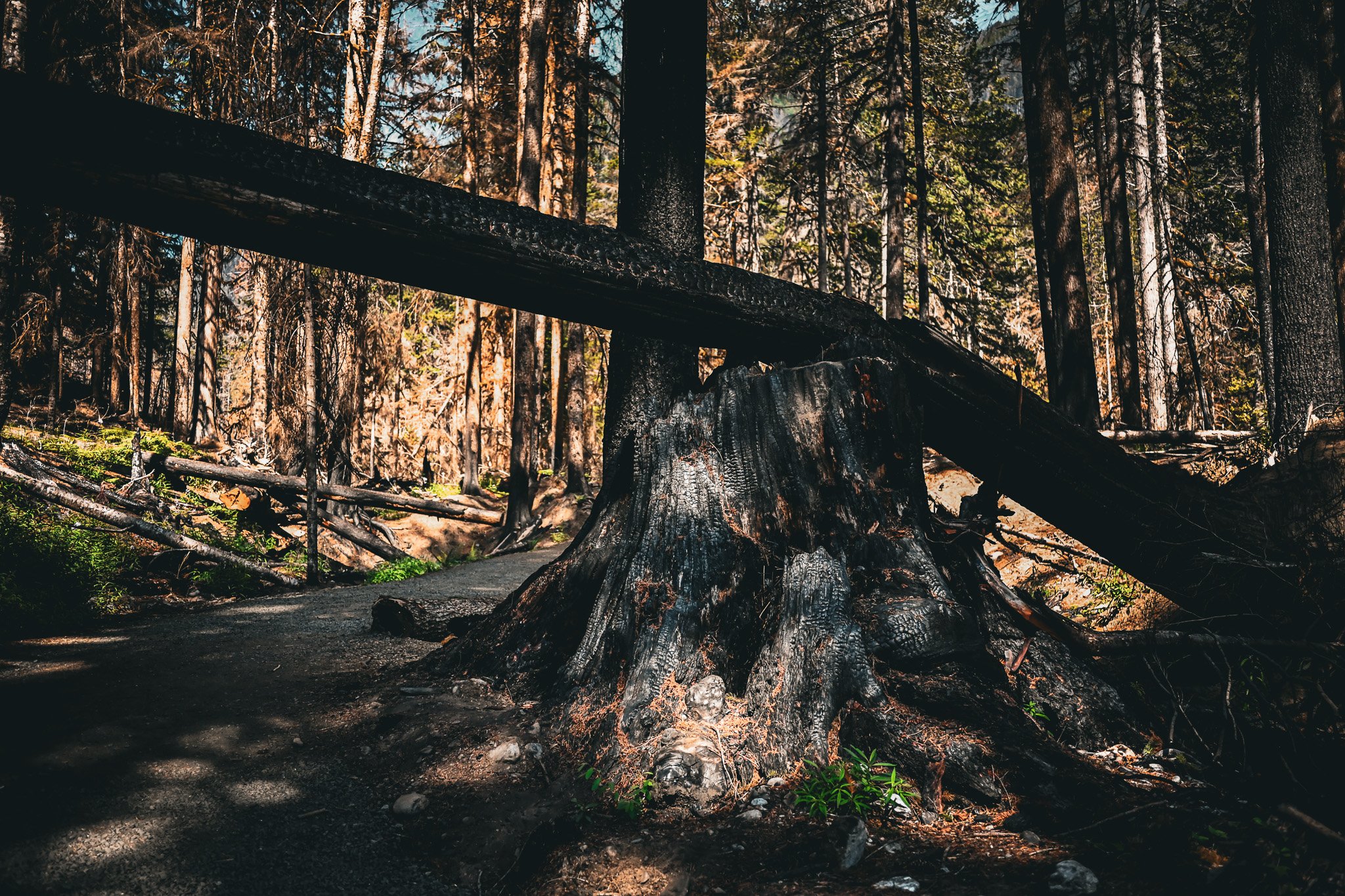
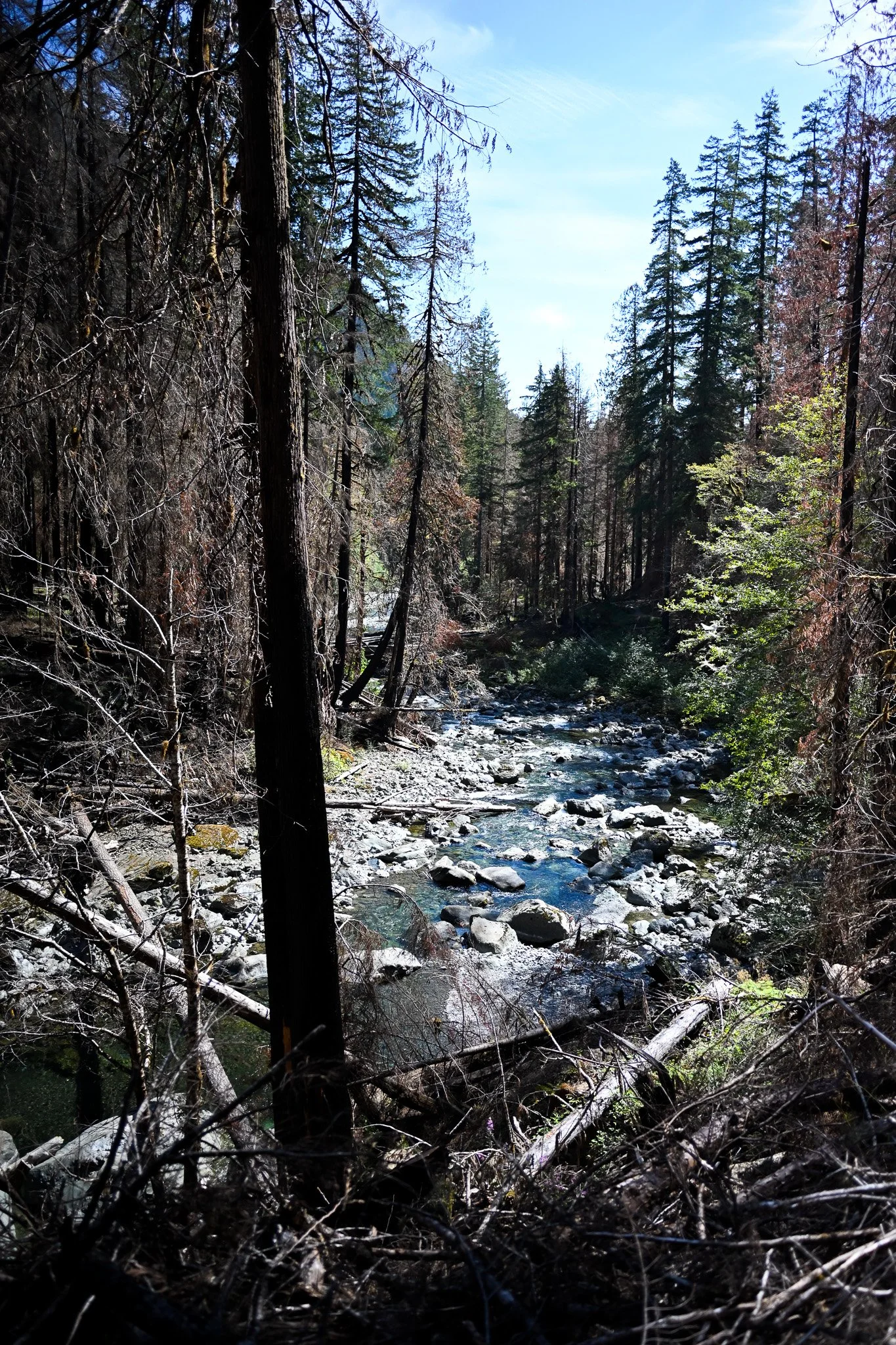
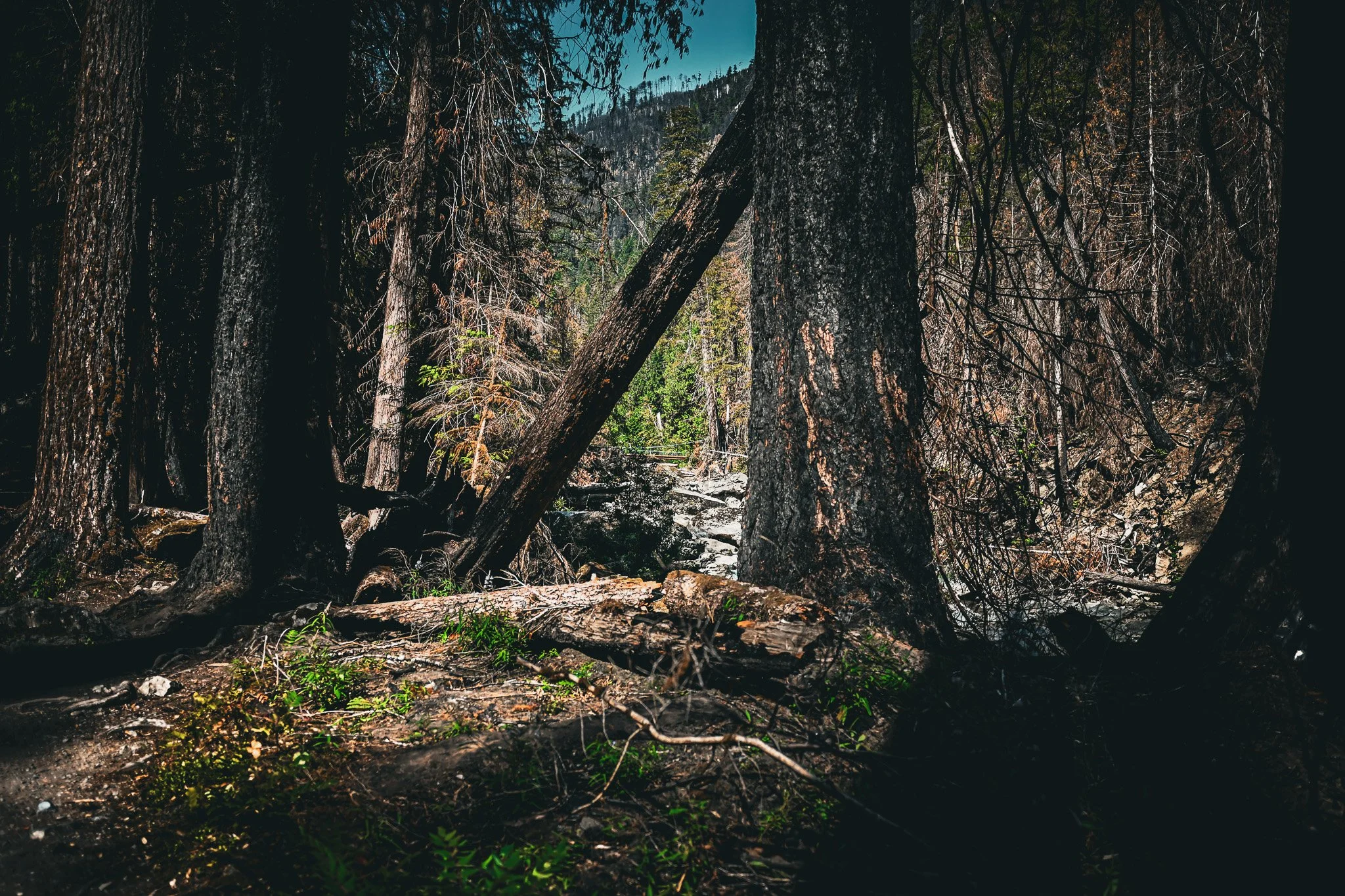
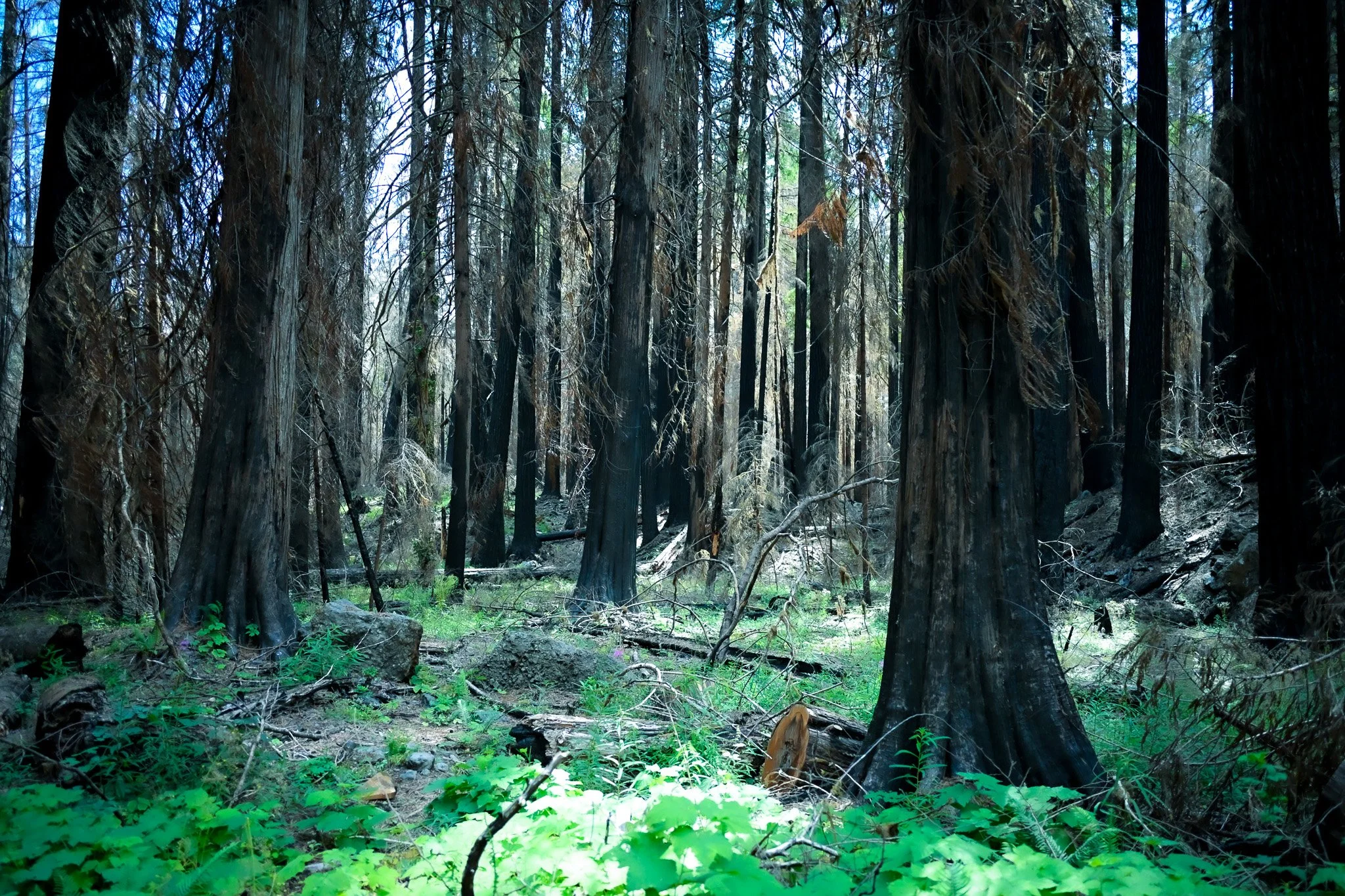
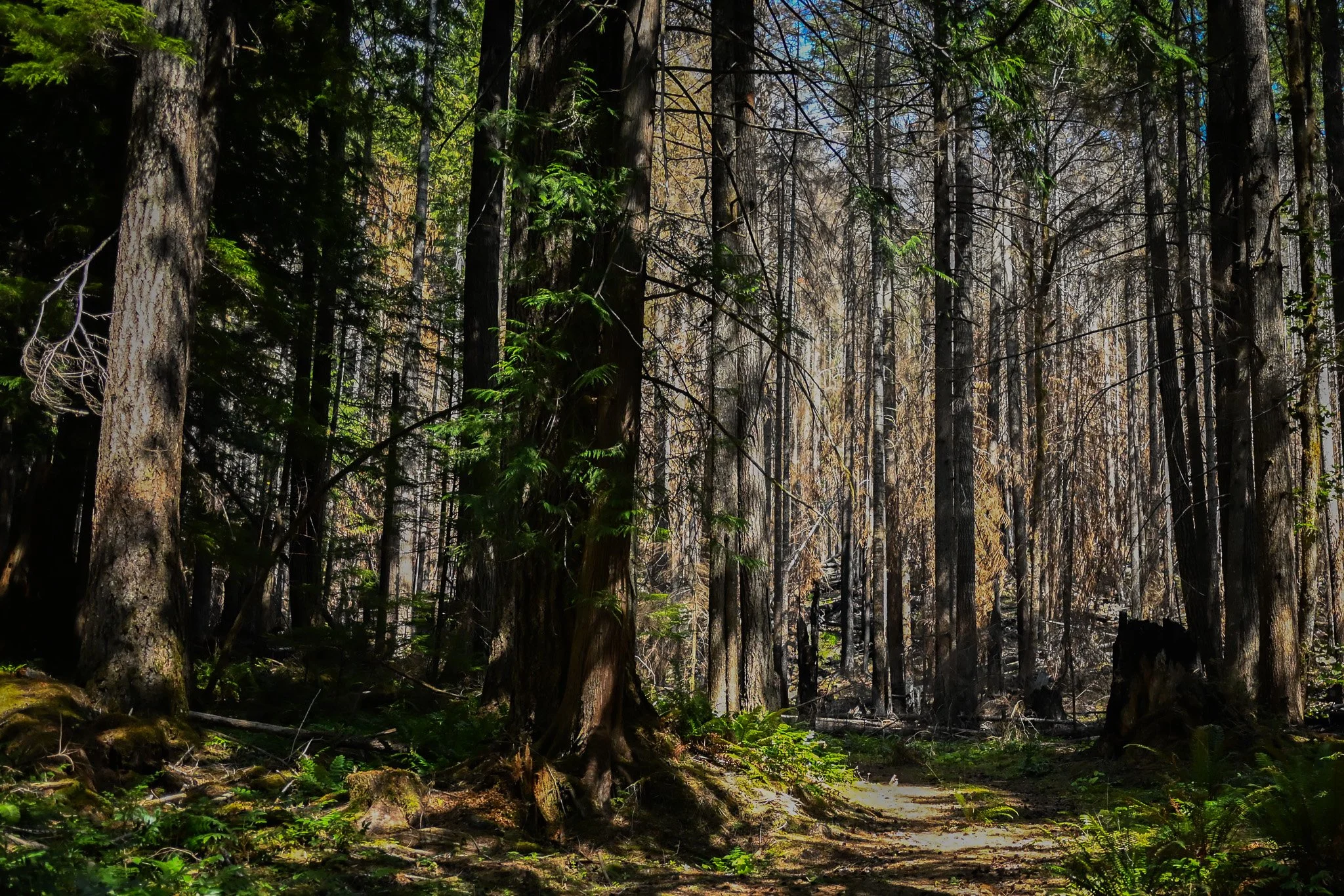
Green. A fern unfurling beside a burned stump. Flowers blooming in newly opened sunlight. Birds moving through branches overhead. And perhaps most fascinating are the places the fire simply missed. Fire does not move through a forest like a paint roller. It skips, turns and changes intensity with wind, moisture, slope and fuel. One patch can be scorched while another nearby remains green. The result is a mosaic—black, brown and every imaginable shade of green.
It looks chaotic to us. To a forest, it is an ancient pattern.
We tend to think of the Olympic Peninsula as a place defined by water: moss-draped trees, swollen rivers, dripping ferns and forests so green they almost glow. But fire has been part of this landscape for thousands of years.
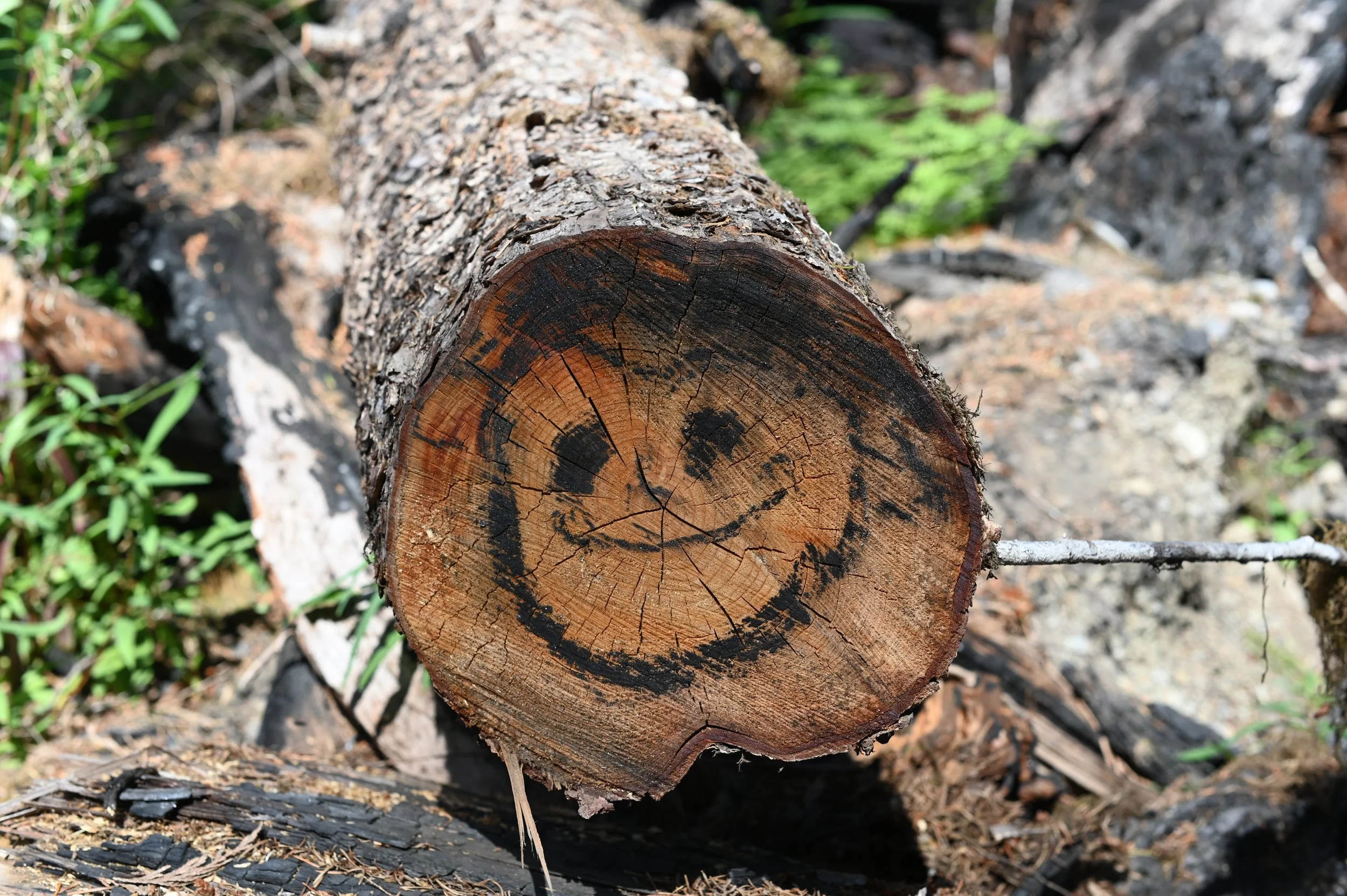
Scientists find its history in charcoal, tree rings, fire scars and the ages of forest stands. Evidence suggests enormous portions of the north, east and south Olympic Peninsula burned during major fire episodes roughly 300 to 500 years ago, with another cycle affecting many eastern watersheds about 250 years ago. Some of the forests we now consider timeless wilderness grew from those fires. Walk through parts of the Elwha and Morse Creek drainages, for example, and relatively young stands of Douglas-fir reveal the outlines of burns that occurred generations ago.
The Olympics have always lived on a rhythm far longer than our own. On the wetter western side of the peninsula, centuries may pass between major fires. On the drier eastern and southern slopes, fire has historically returned more frequently. Douglas-fir, with its thick protective bark, is particularly well suited to this relationship.
Fire opens the canopy and sunlight reaches into places that may have been shaded for decades. Nutrients locked inside vegetation return to the soil.Shrubs, grasses and wildflowers move into newly opened spaces. Eventually young trees follow. What looks at first like an ending is also succession.
Not every fire is beneficial, of course. Human-caused wildfires are preventable, and the Bear Gulch Fire brought real costs—to wildlife habitat, recreation, park infrastructure, firefighting resources and the people and businesses connected to this corner of the peninsula. We should learn from it. But we can also recognize that the forest knows what to do next.
Standing there among the burned trees, I kept thinking about a line from one of my favorite movies, Jurassic Park. Dr. Ian Malcolm, played by Jeff Goldblum, famously observes: “Life finds a way.” It certainly has at Staircase.
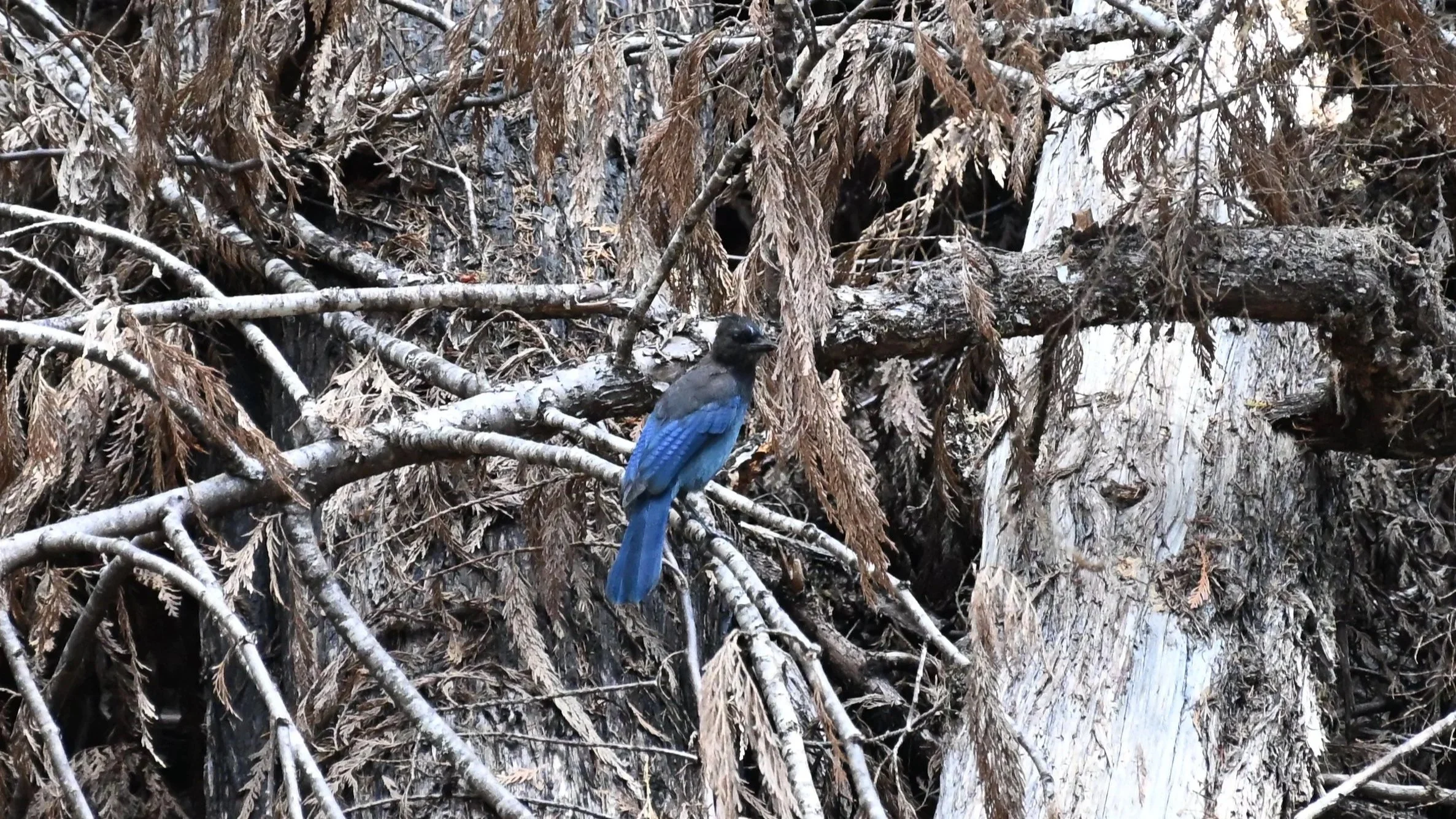
The more time I spent looking, the less the landscape seemed dead. It was busy. Birds called from the trees. Insects moved among flowers. New foliage crowded around old trunks. Plants took advantage of patches of sunlight that hadn't touched the forest floor in years.
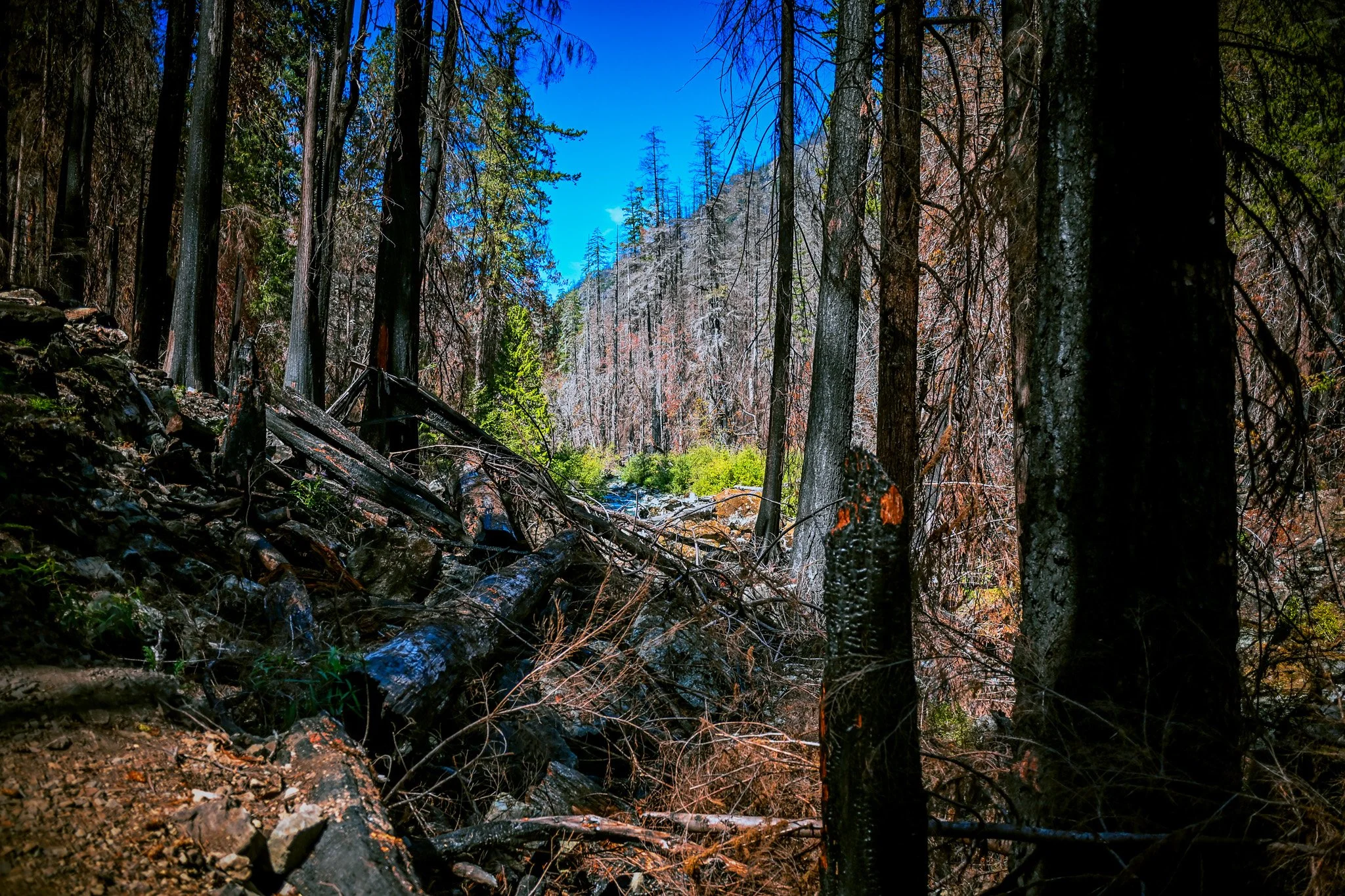
Even the surviving trees seemed more remarkable because of what surrounded them. A burned landscape makes you pay attention and look at the forest not as a finished picture, but as a process.
“It would be easy to mourn what Staircase looked like before the Bear Gulch Fire. And there is nothing wrong with doing that. But forests aren't museums. They don't stay frozen in the version we first fell in love with. They flood. Trees fall. Rivers change course. Windstorms open the canopy. Fire arrives. And the forest responds.”
Thanks to the extraordinary work of firefighters, park employees, road crews and many partner agencies, visitors can once again drive to Staircase, stop at the ranger station, cross the bridge over that astonishingly clear North Fork Skokomish River and walk beneath the towering trees.
Some of those trees are green. Some are black. Some are gone altogether. And beneath them, the next forest has already begun. Perhaps that is the reason to visit Staircase now. Not despite the fire. Because this is a rare opportunity to watch one of the oldest stories in the Pacific Northwest unfold in real time.
Come back next summer and it will be different. Come back in five years and shrubs and young trees will have changed the view again. Bring your grandchildren decades from now and the forest they walk through may bear little resemblance to the one we see today.
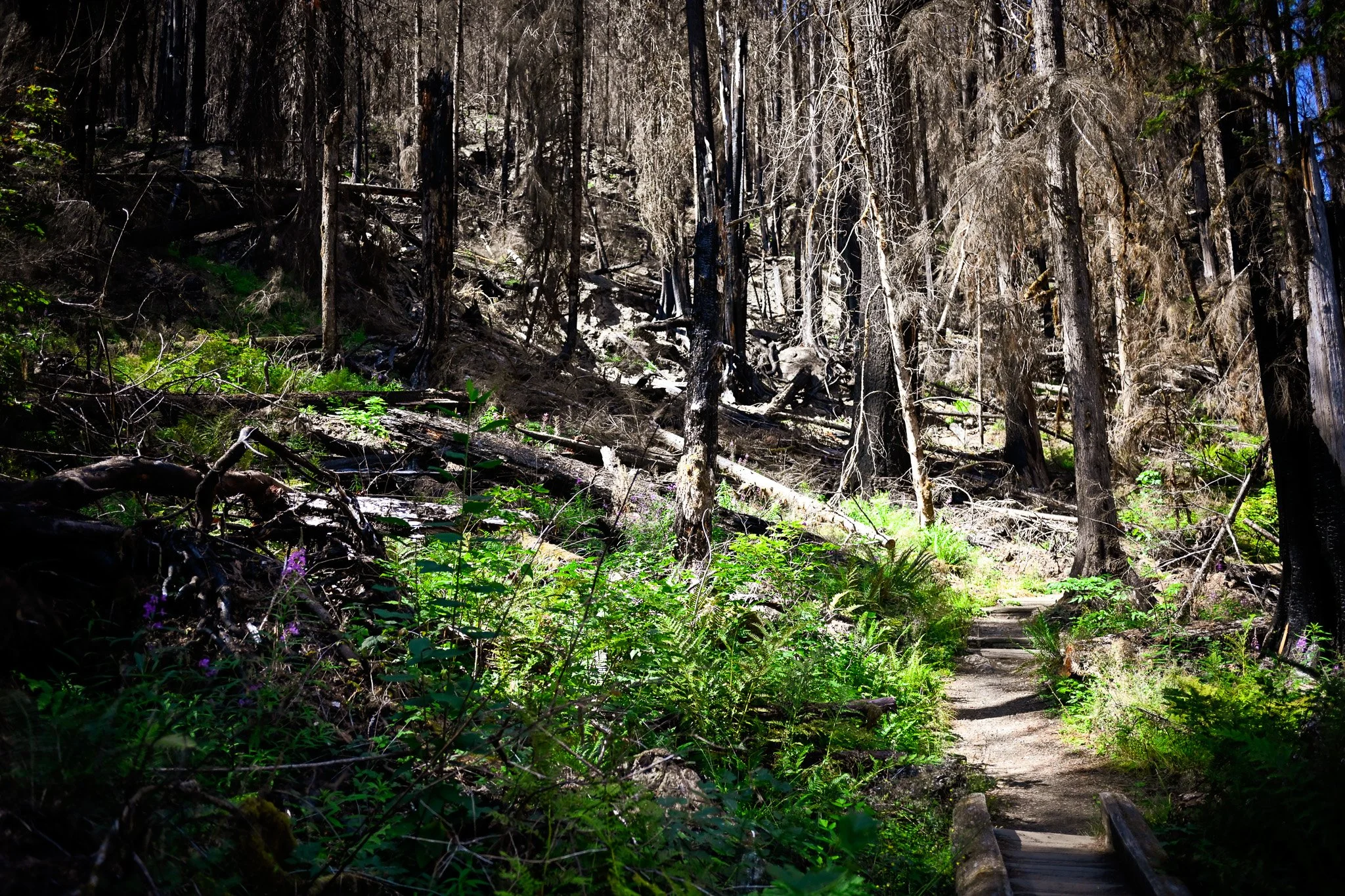
The blackened giants will eventually fall. New trees will rise among them. The scars will soften beneath moss, fern and salal. And somewhere beneath all that green, charcoal will remain in the soil—the quiet signature of the Bear Gulch Fire of 2025. A reminder that a forest is never really finished. It is always becoming.
Spring day at Staircase
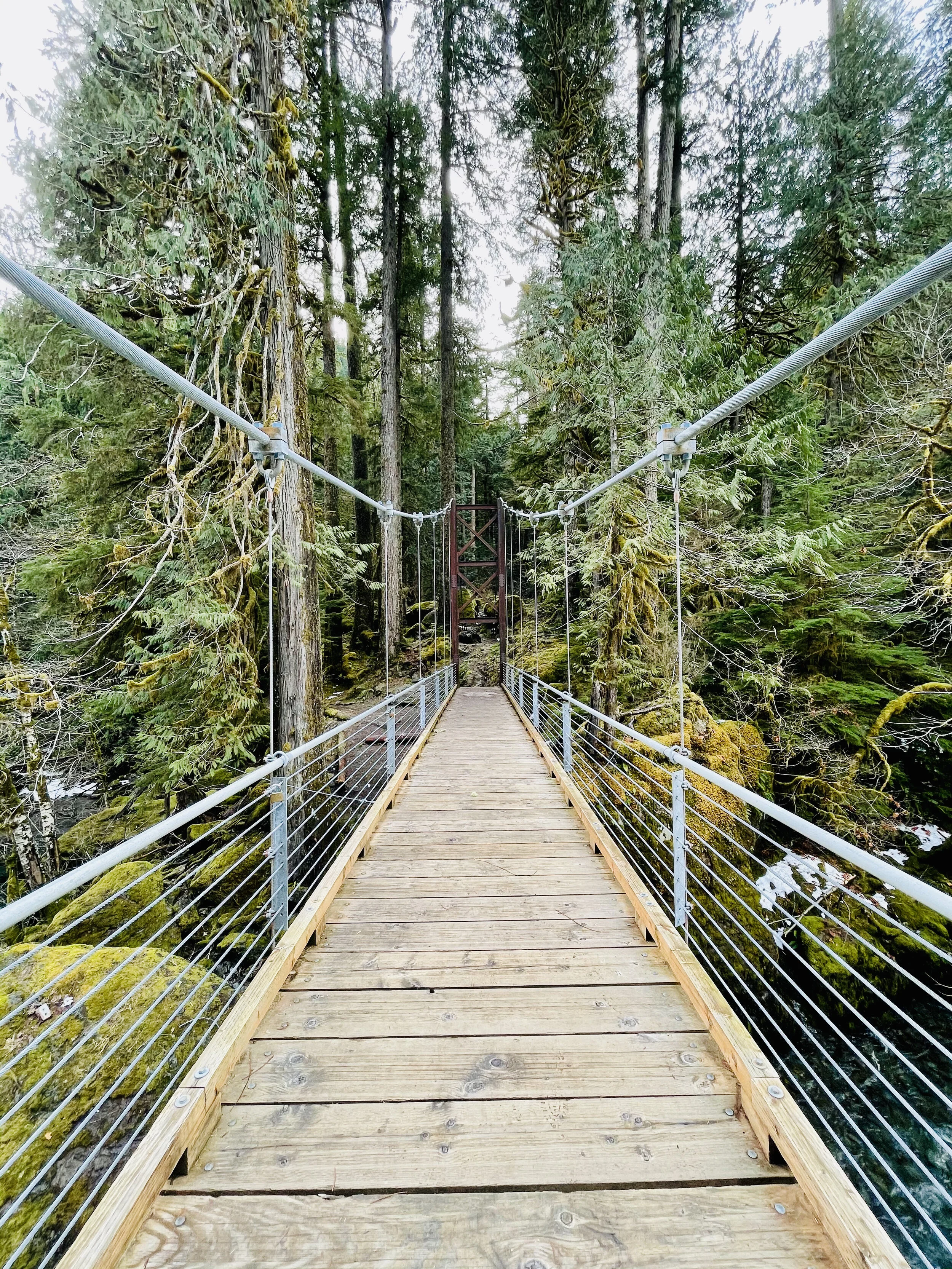
This easy 2-mile trail winds through old growth forest to a bridge over the North Fork Skokomish River with only a 200-foot elevation gain.
During spring the Staircase Entrance of the National Park offers some opportunity for great hikes with virtually no one else on them that early in the season! Take the kids or friends and plan a mountain adventure. Build an igloo, go snowshoeing, or just have a snow ball battle. Although the lower reaches may be drowning in rain, if you head to the hills you might just find a drier, fluffier version.

Last spring we packed up a picnic and headed for the park. On a Sunday, first week of March, we saw about seven cars in the Staircase parking lot and passed about a dozen people on the Loop Trail. With the horror stories from overcrowding last summer during the peak of the lockdown – we were thrilled to have the trail practically to ourselves.
Getting There
The road from Hoodsport to Lake Cushman is narrow and windy. Be prepared to go slow as then you will find it charming and scenic with glimpses of the lake between the trees and driveways. Lake Cushman was originally a straight broadening of the North Fork of the Skokomish River that was naturally dammed by gravel and debris deposited by glacial movement during the last ice age. This small lake was artificially dammed in the 1920s to meet the increased power needs after World War I.
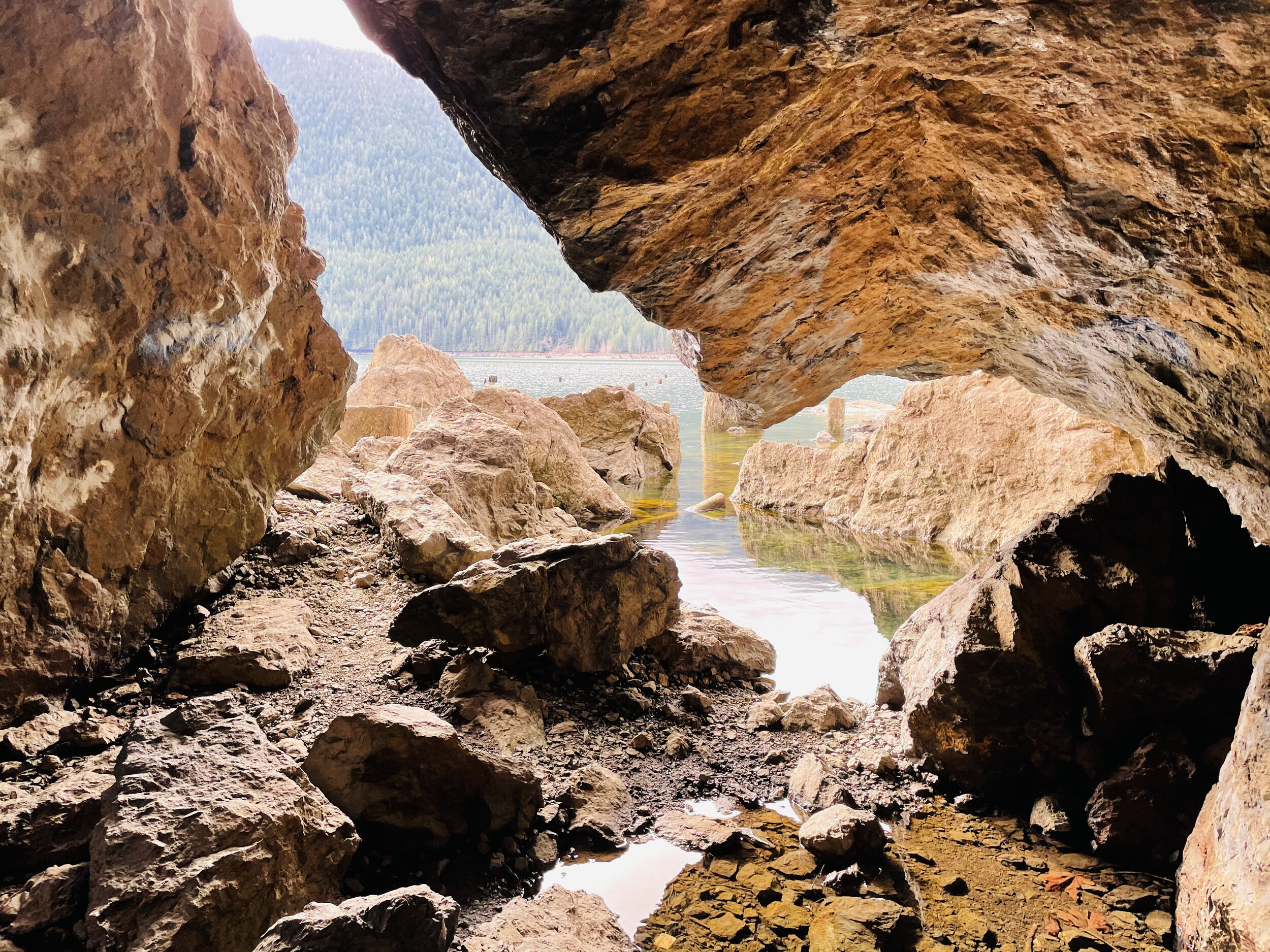
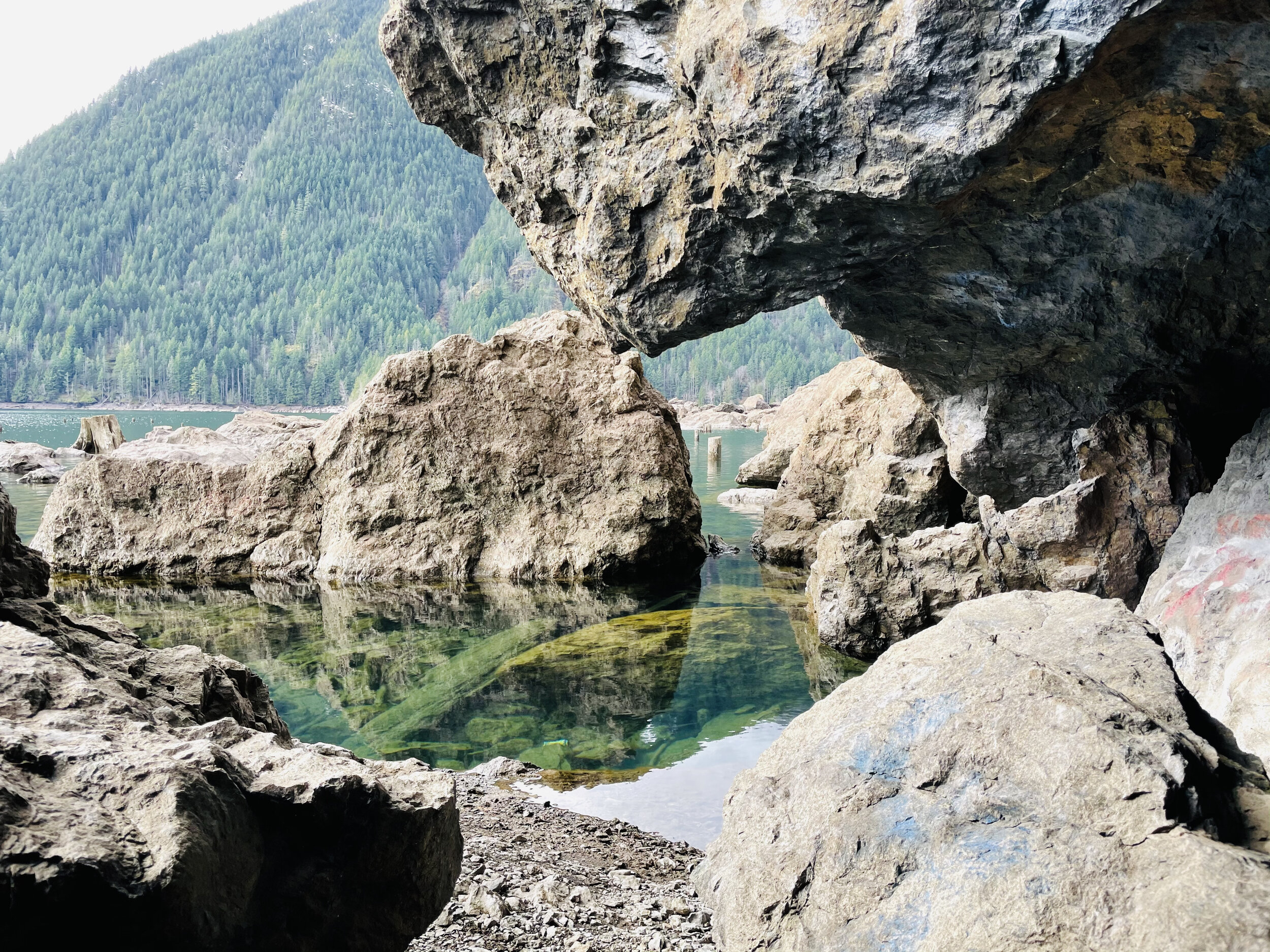
The evidence of the forest that once was is prominent in the incredibly low water of the lake.. This is a natural occurrence in early spring – late winter, but the effect was astonishing. Surrounded by a sea of first growth stumps and rock "islands," the giant boulder renown as ‘The Big Rock’ was perched on smaller rocks creating a magical grotto with reflecting pools magnifying the beauty of the snow dusted treed hillsides plunging sharply into Lake Cushman. We scrambled around the rocks and enjoyed a whole new experience.
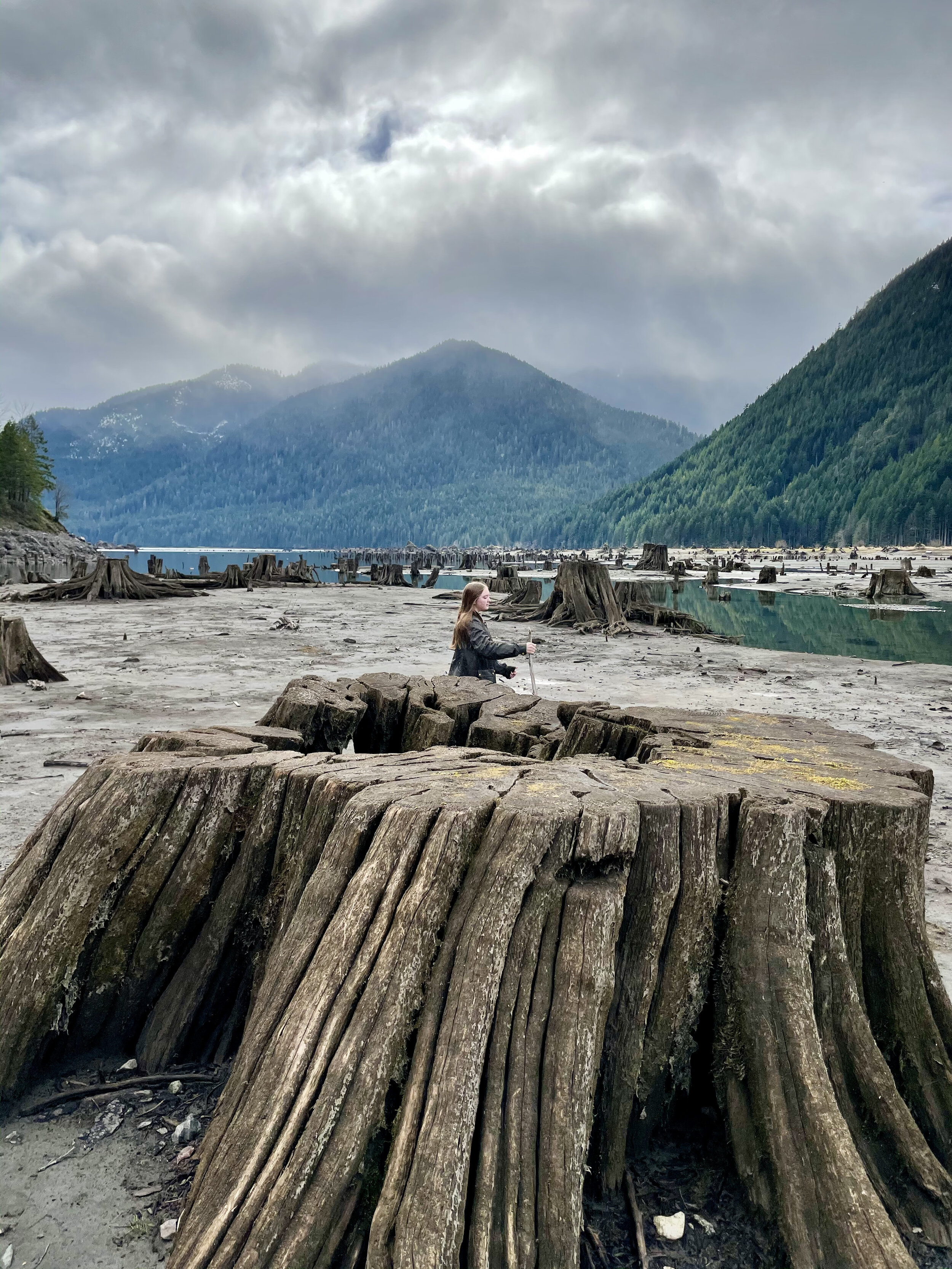
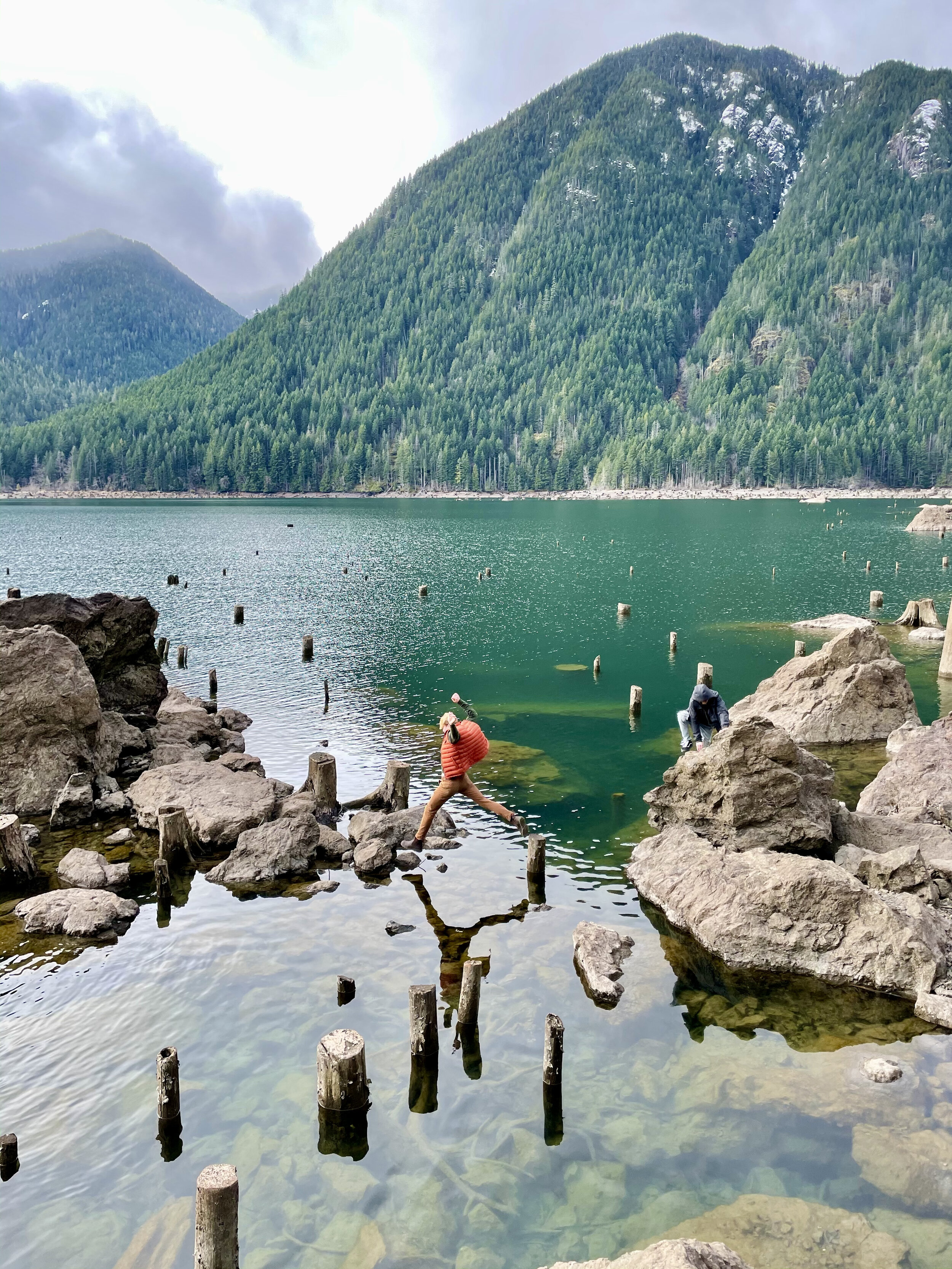
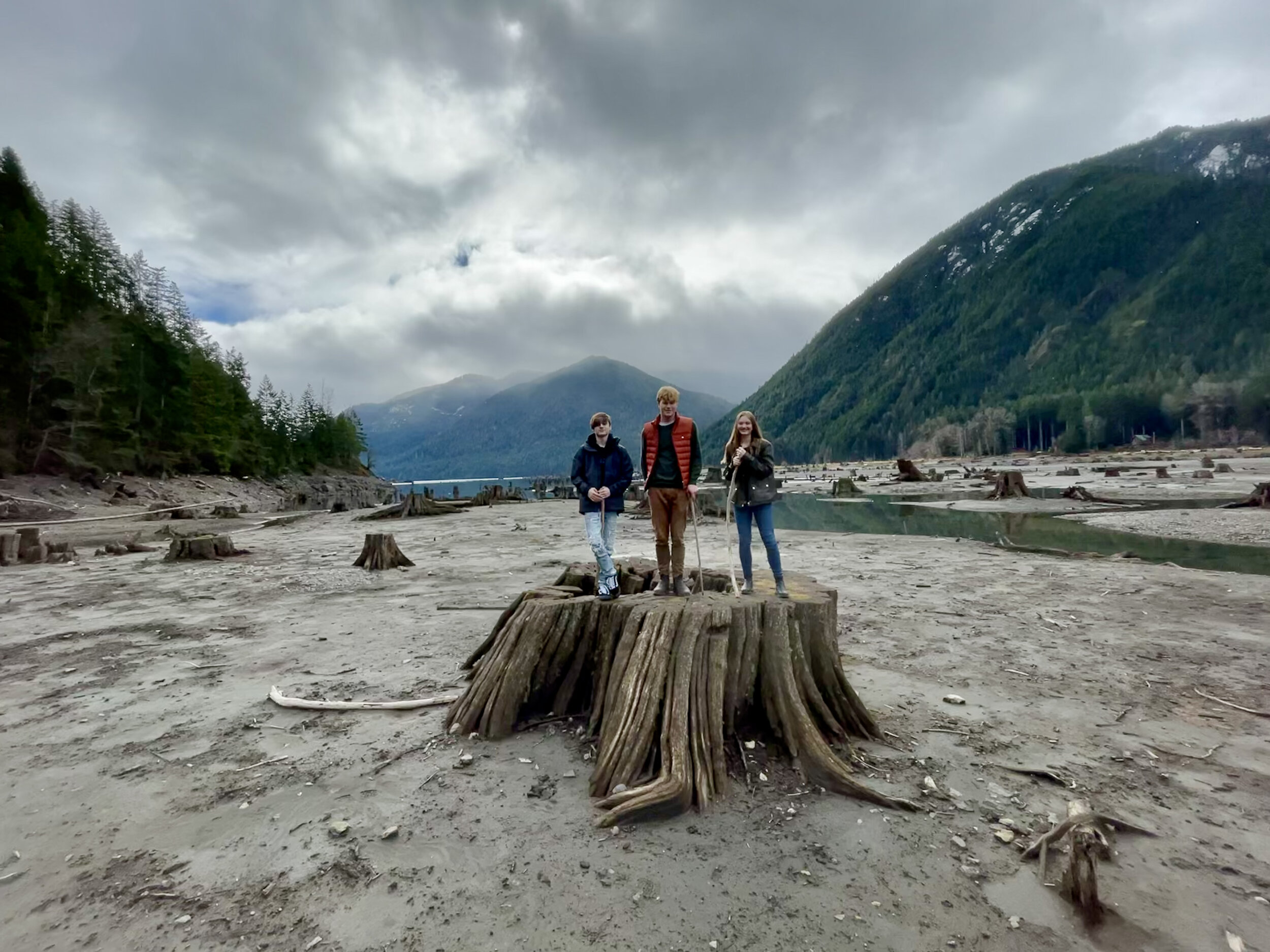
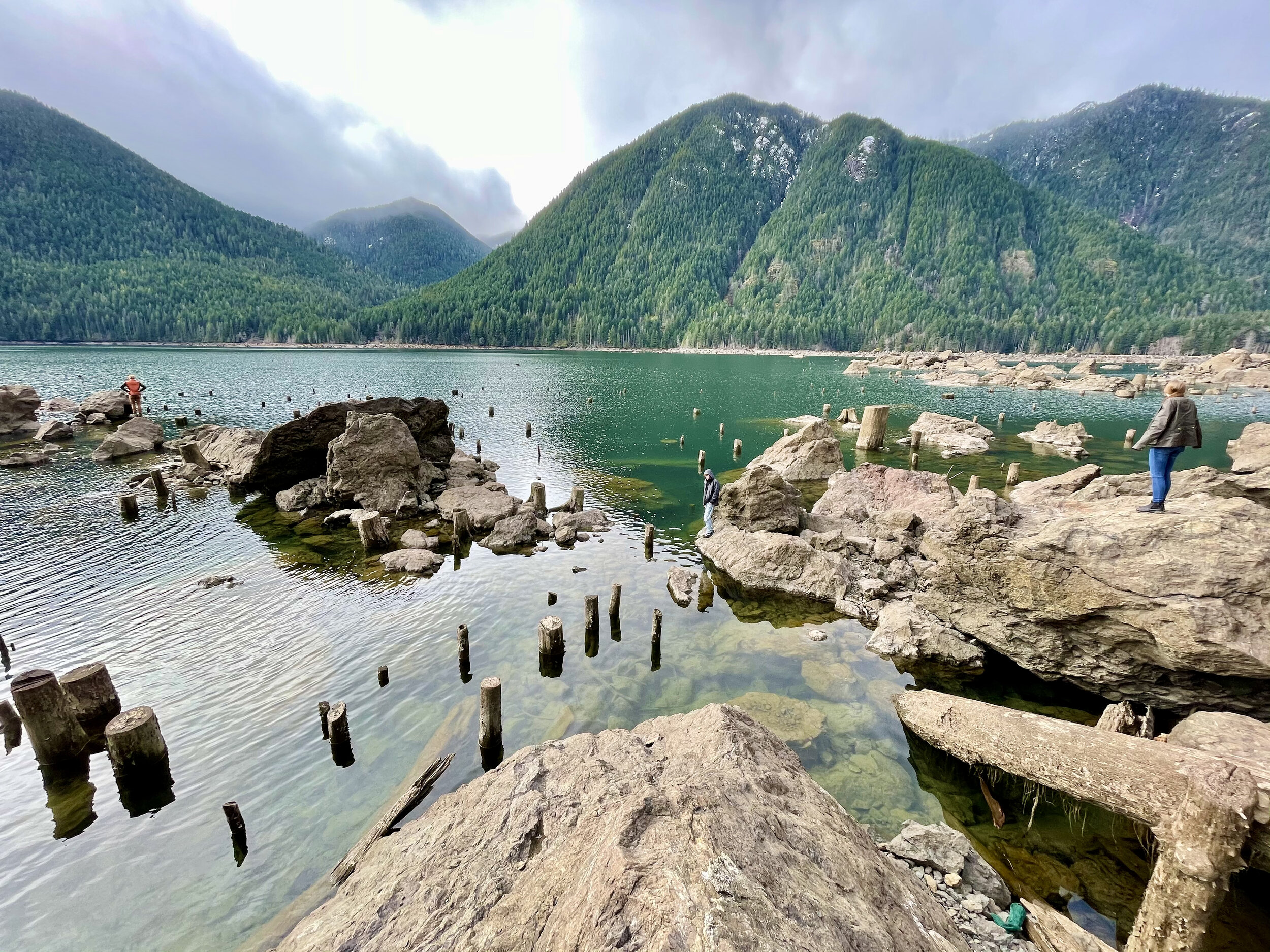
A little further down the road is a pull out at the end of the lake. Here the “sea” of stumps is even more fantastic. The landscape is great for exploring and dramatic photos. The springboard holes used by the early foresters as they cleared the valley are perfectly archived.
Staircase Loop Trail
The entrance to Staircase was un-manned when we arrived. There were just a few cars parked in the lot. You will need to have a pass to park. We recently purchased the America The Beautiful Annual Pass. This pass covers federally managed recreation lands such as National Parks, National Forests, National Wildlife Refuges, and Bureau of Land Management Recreation Areas throughout the country.If you purchase this pass you may use it for both the Olympic National Park and for trailheads requiring a NW Forest Pass. The pass covers all people in your vehicle and covers two pass signers at walk-in locations, so at $80 per year, it’s a pretty good value and takes a lot of guesswork out of what passes needed when exploring the Olympic National Forest and Park.

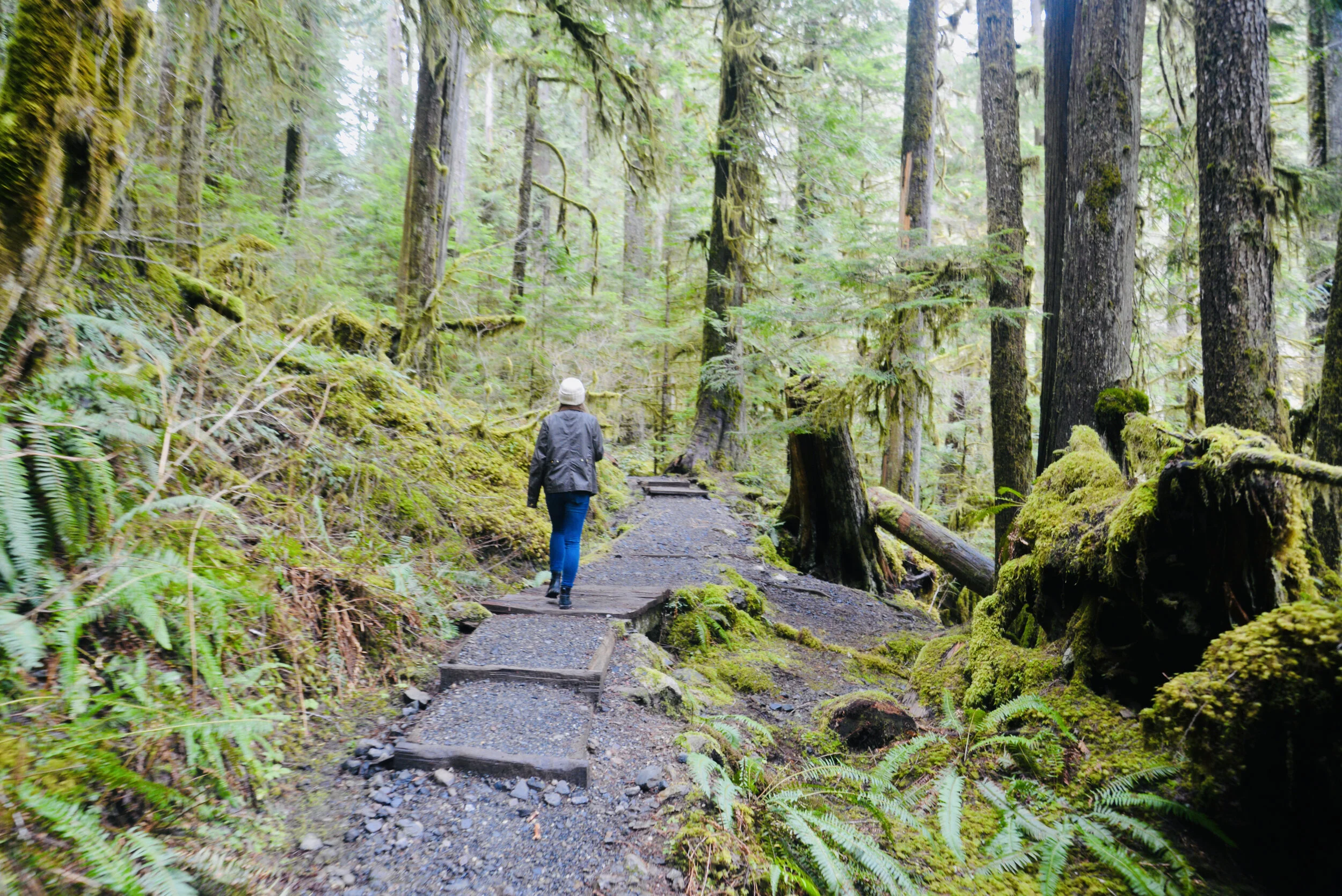
Near the parking lot there are vault toilets and information boards. The trails go in a multitude of directions but we took the standard Staircase Loop. It’s less than two miles and follows the curves of the North Fork of Skokomish River. We love loops. Something different around every bend and when you drop back in the parking lot you are still wanting more.
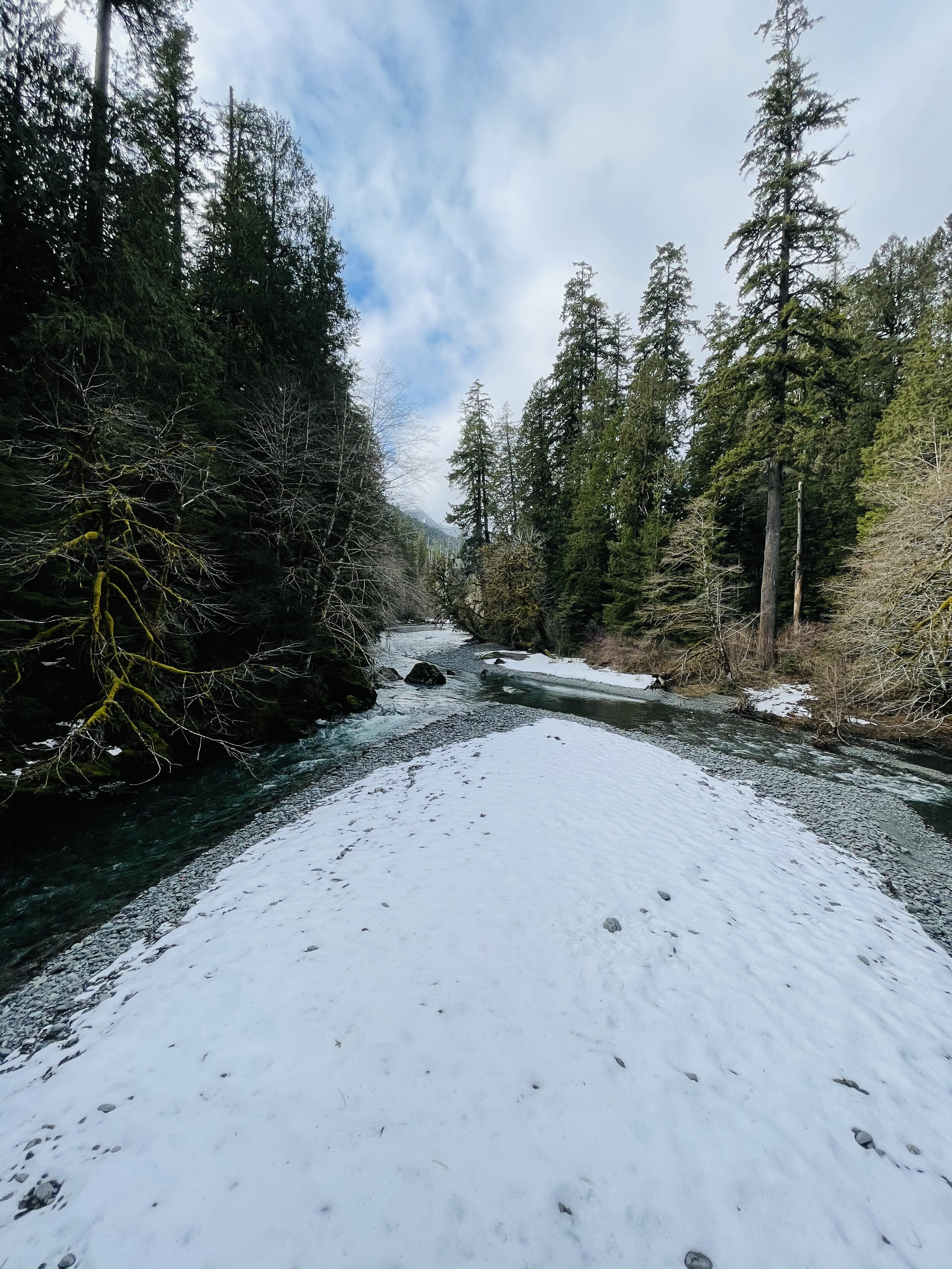
There was enough snow on the trail, peeping through the breaks in the dense canopy, to make it perfect contrast for photos against the mossy green – and the odd snowball to break the reflection.
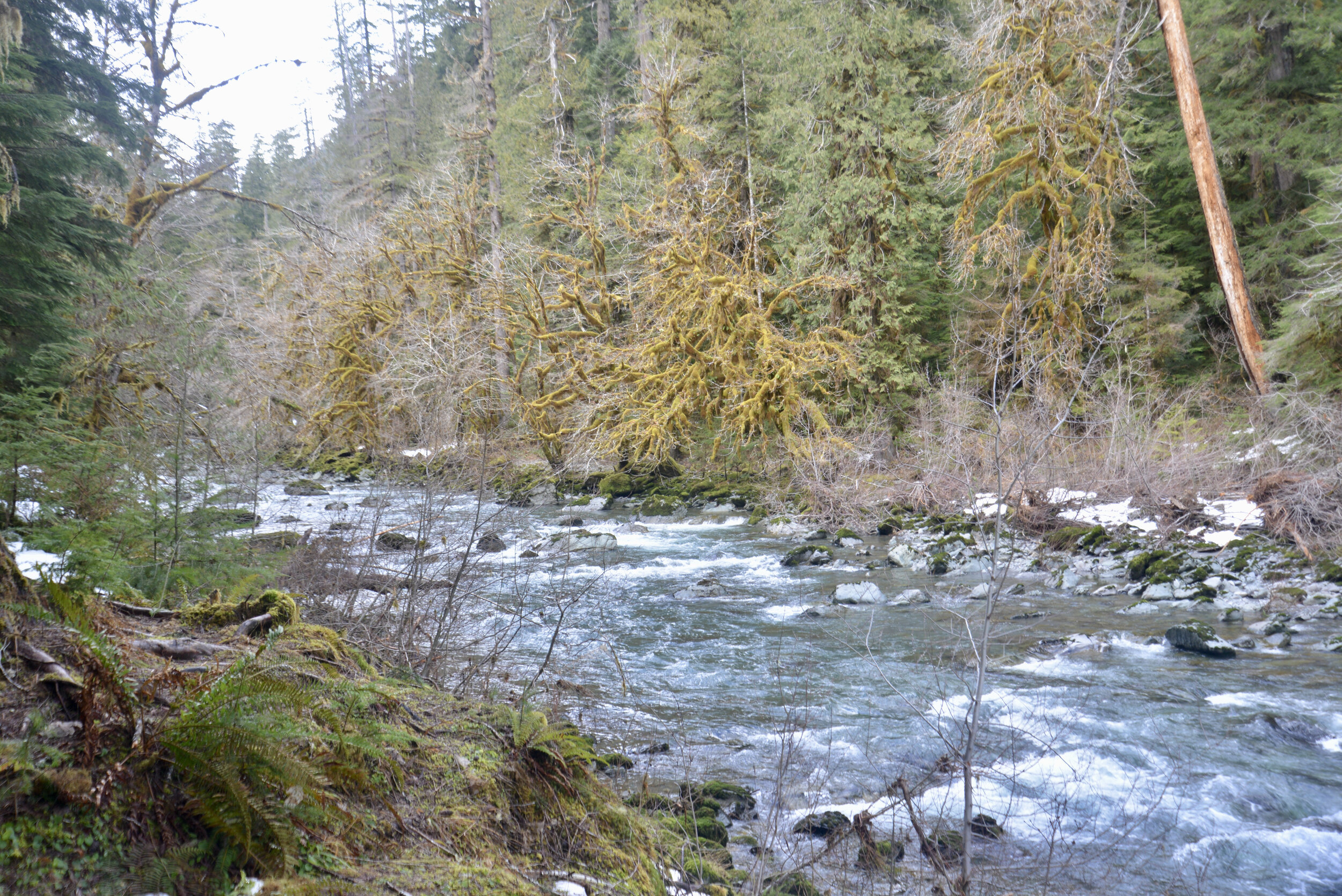
Heads up…you will see no staircase at Staircase today. In 1890, when Lt. O’Neil and his crew blazed their trail through the Skokomish wilderness, the rock bluff across the river from the campground was a major obstacle. To get over it they built a cedar staircase. Until the nearby Shady Lane Trail was built in 1911, the ‘Devil’s Staircase’ was the only path over the bluff. The name, and O’Neil’s legacy, remains. However, as you follow the river with its tumbling force of river over huge basalt boulders – you can kind of imagine the rapids are staircase of sorts.

We stopped off by the river at the “swimming hole” to make lunch on the beach. With a Jetboil and some hot freeze dried meals, it was sublime. They’ve come a long way from what I remember as an instant meal. Having hot tea after in the chill of the forest was magical too.

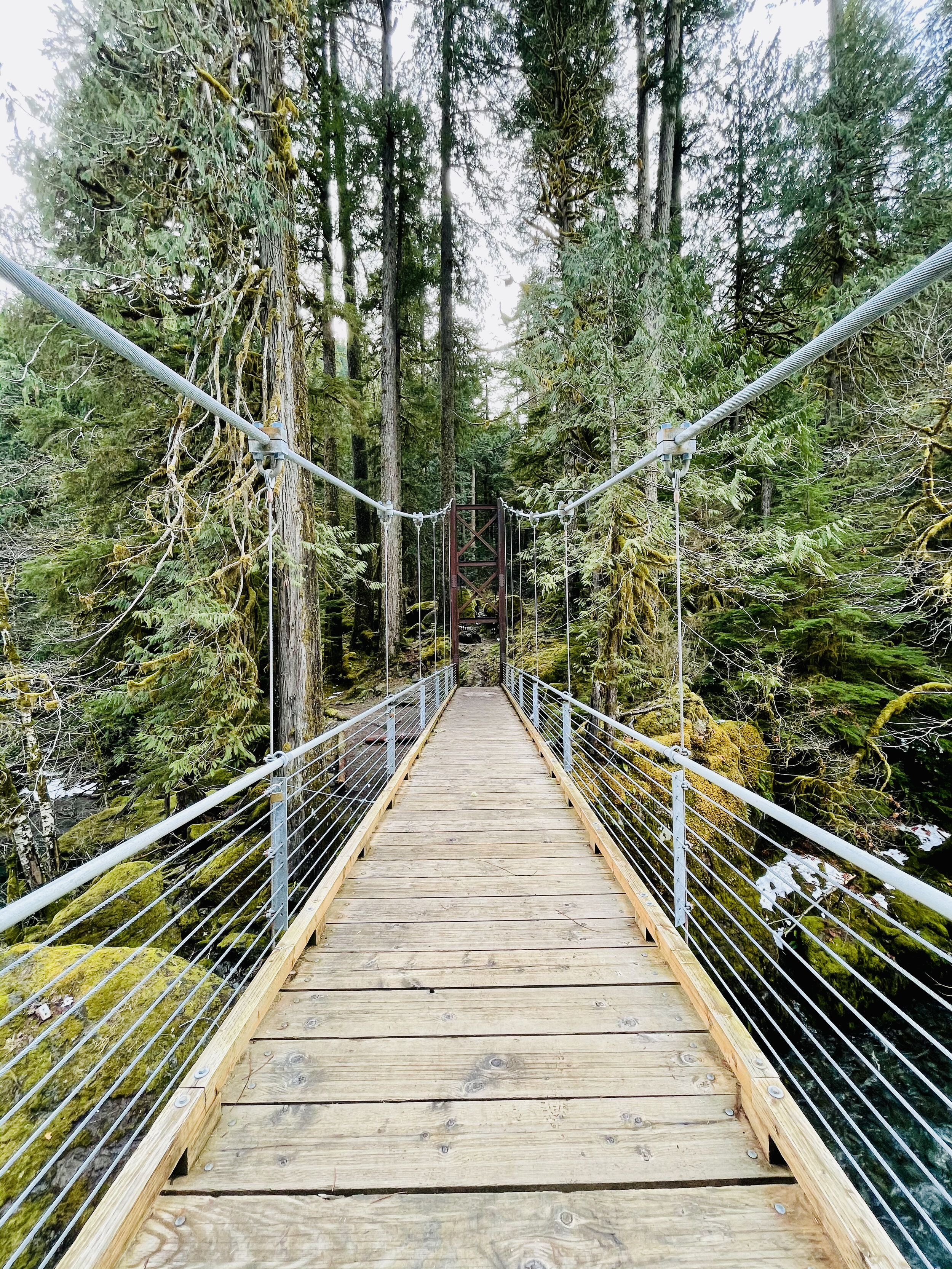
The trail crosses over the river at a dramatic suspension bridge. Here the view opens up and you can see a few snow covered glacial peaks of the Olympics. Despite their jutting appearance, the Olympic Mount Range are not volcanic. This is surprising given the proliferation of volcanic ranges in the Pacific Northwest, for example Mount Baker and Mount Rainer. As evidenced by the marine fossils found in the summits of the range, the Olympic Range once was part of the ocean floor. Approximately 120 million years ago, the Pacific Tectonic Plate crashed into the North American Plate and created the Olympic Range.
Journey Back
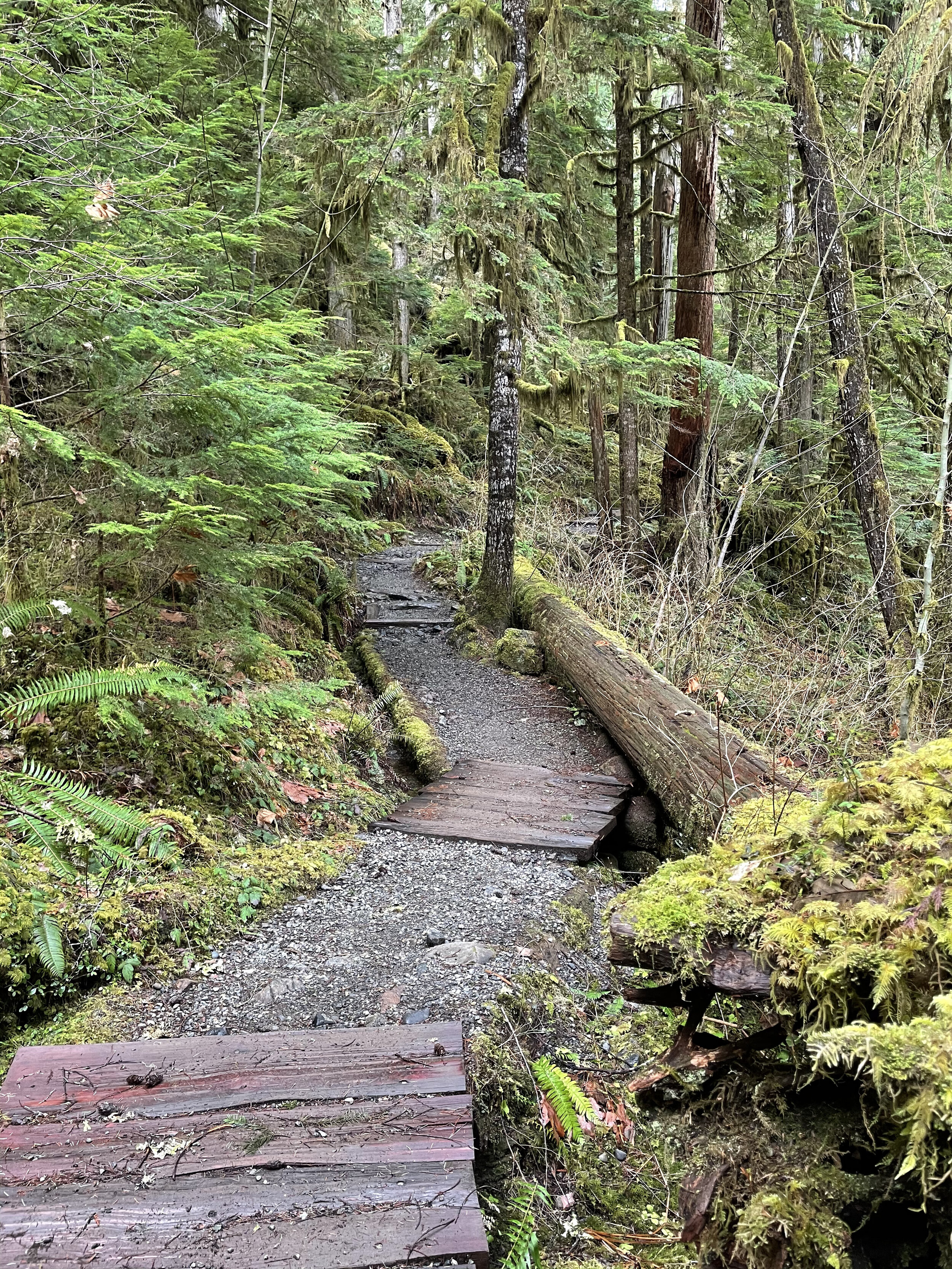
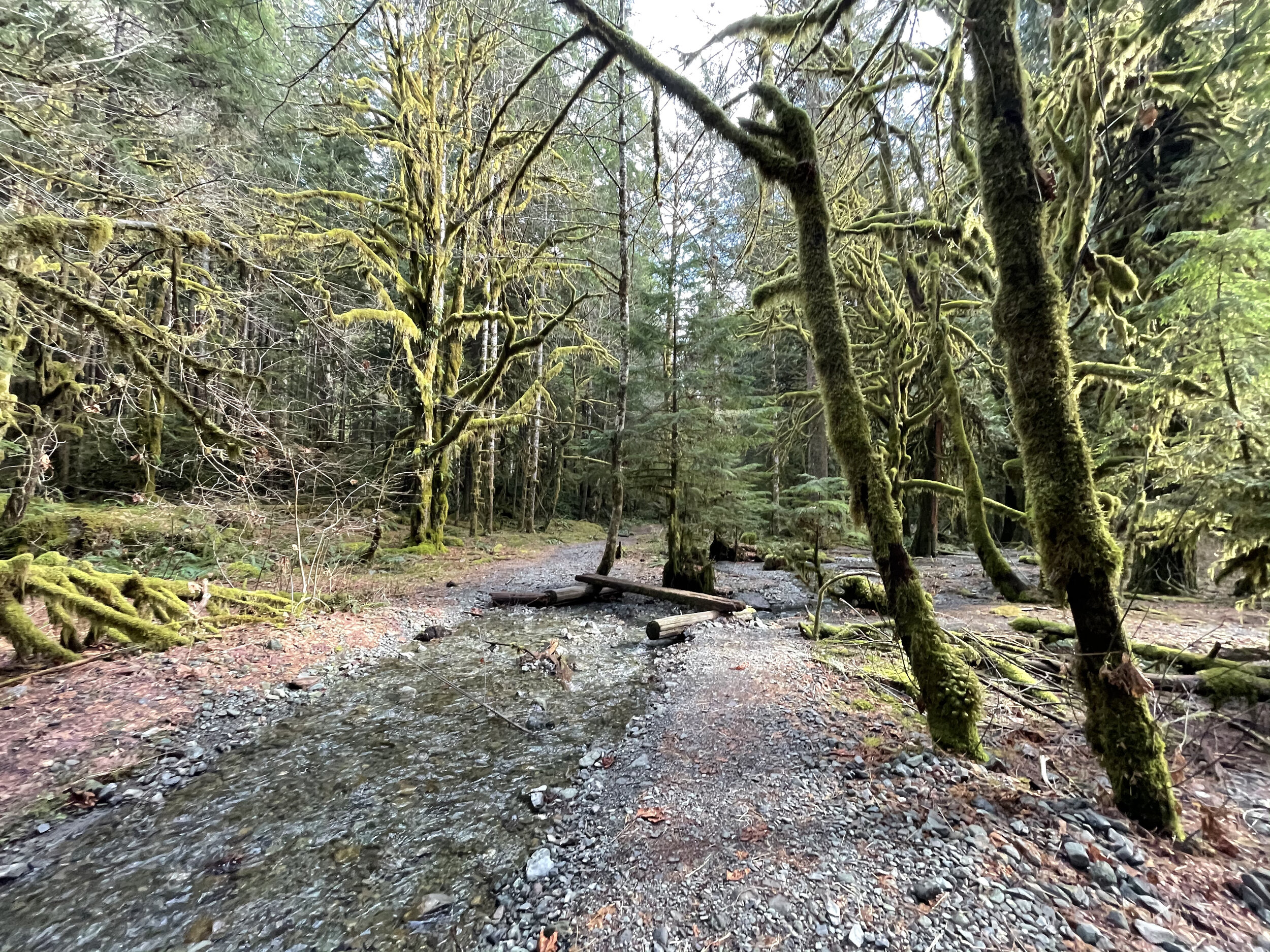
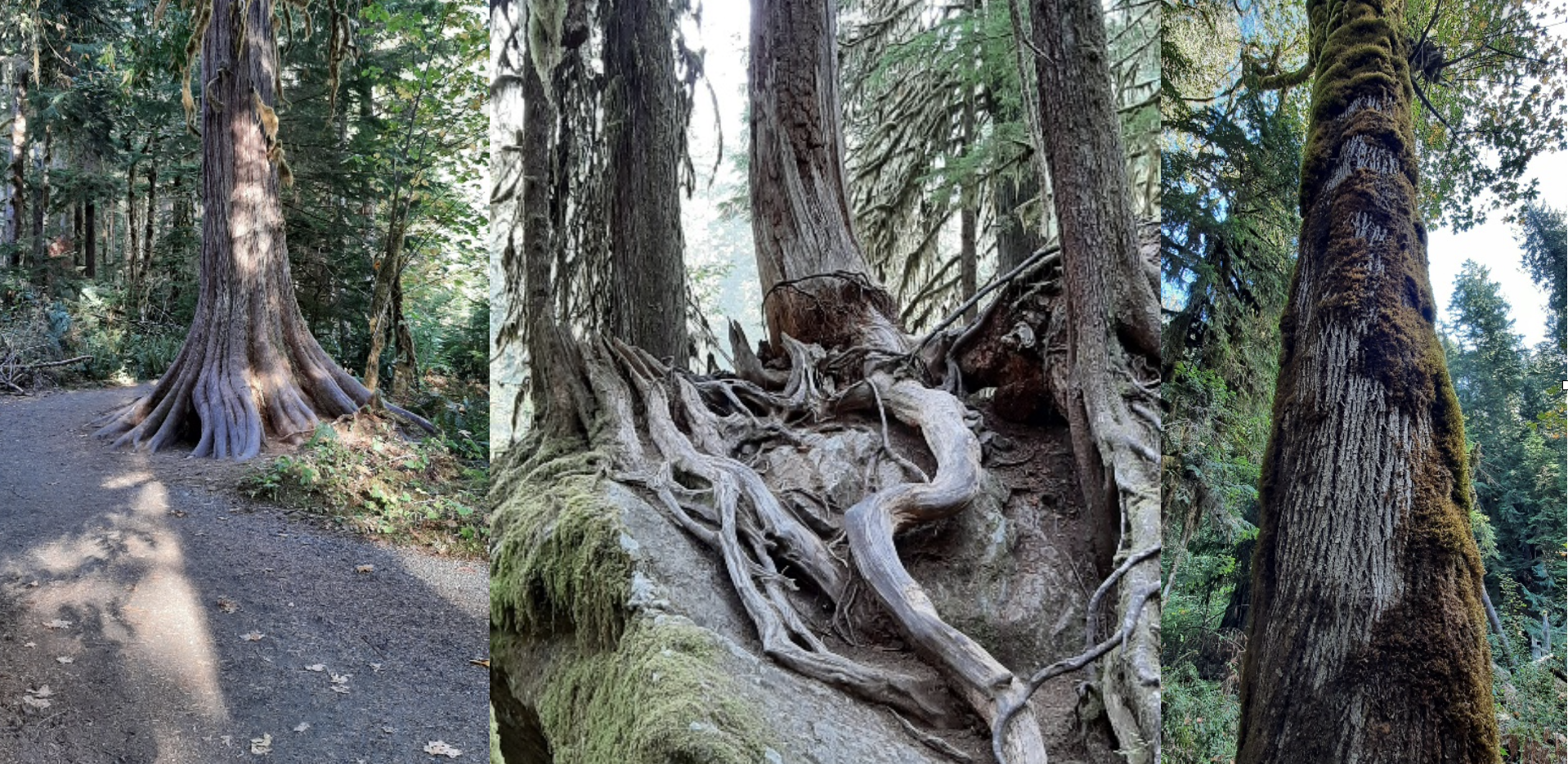
The trail back on the opposite shore is a vast contrast to winding hummocks covered in moss and ferns. The path now follows an old road bed peppered by giant cedars, firs and fallen nurse logs. At two points you cross log bridges to ford the gentle streams coming down from the hills above. The trail ascends up a makeshift timber “staircase” and then drops back into the parking lot near the ranger station.

Troll hunting on Olympic's Staircase trail
Mary and Jill set out on a day adventure at Olympic National Park’s Staircase Entrance above Lake Cushman. Here’s a glimpse of their trek as they were inspired to search for a river troll.

Guest Post: Mary Thygeson
“The weather has been so beautiful that I decided to head out without my fearless leader, Jeff Slakey. My friend Jill and I headed to Staircase for a hike.“
The ride from Olympia to the Olympic National Park Staircase Entrance above Lake Cushman was easy and well-marked and we arrived in a little over an hour. Once there, there were several options, but we chose the shortest, the Rapids Bridge Loop.


An ear to the ground.
As we began our walk, we noticed right away that someone was listening and probably watching so the quest was on to find a River Troll.
The trail itself was easy and followed along the river. Flat in most places with a few rock and man-made stairs.

As well as a few surprises here and there…
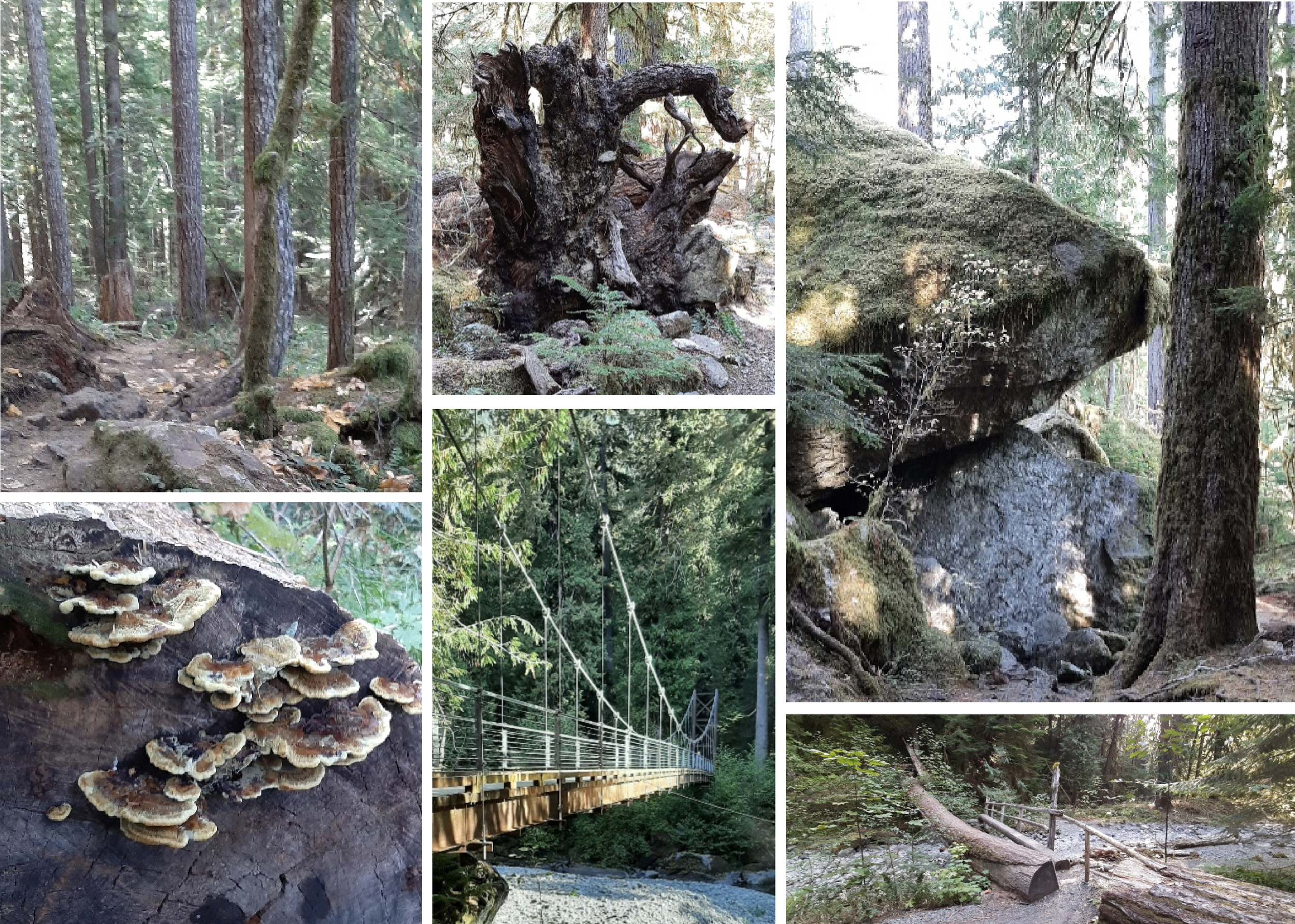
The river is low this time of year, but it revealed some beautiful rock formations.

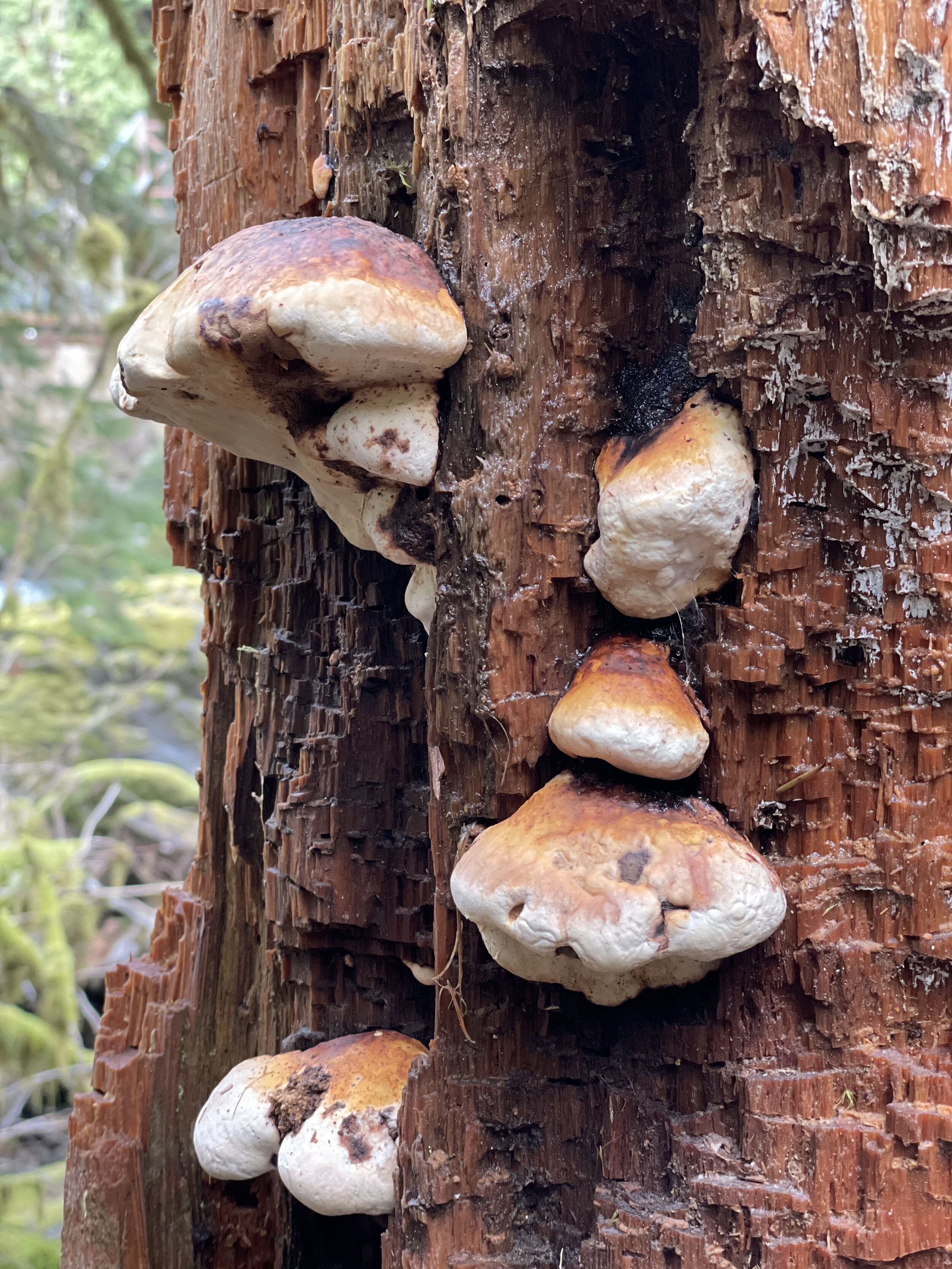
The trees were fascinating as well. Fun to find faces in the bark – but no troll yet!

The whole loop took us a little longer than advertised, but with stopping for pictures and troll hunting it took us about and hour and half. So much to see in such a short and easy hike and well worth it on a beautiful Fall day.
We will definitely be going back in the Spring to see the changes!
But wait… we finally found two shaggy-haired trolls. Can you see them too?

An Autumn Trek to Black and White Lakes
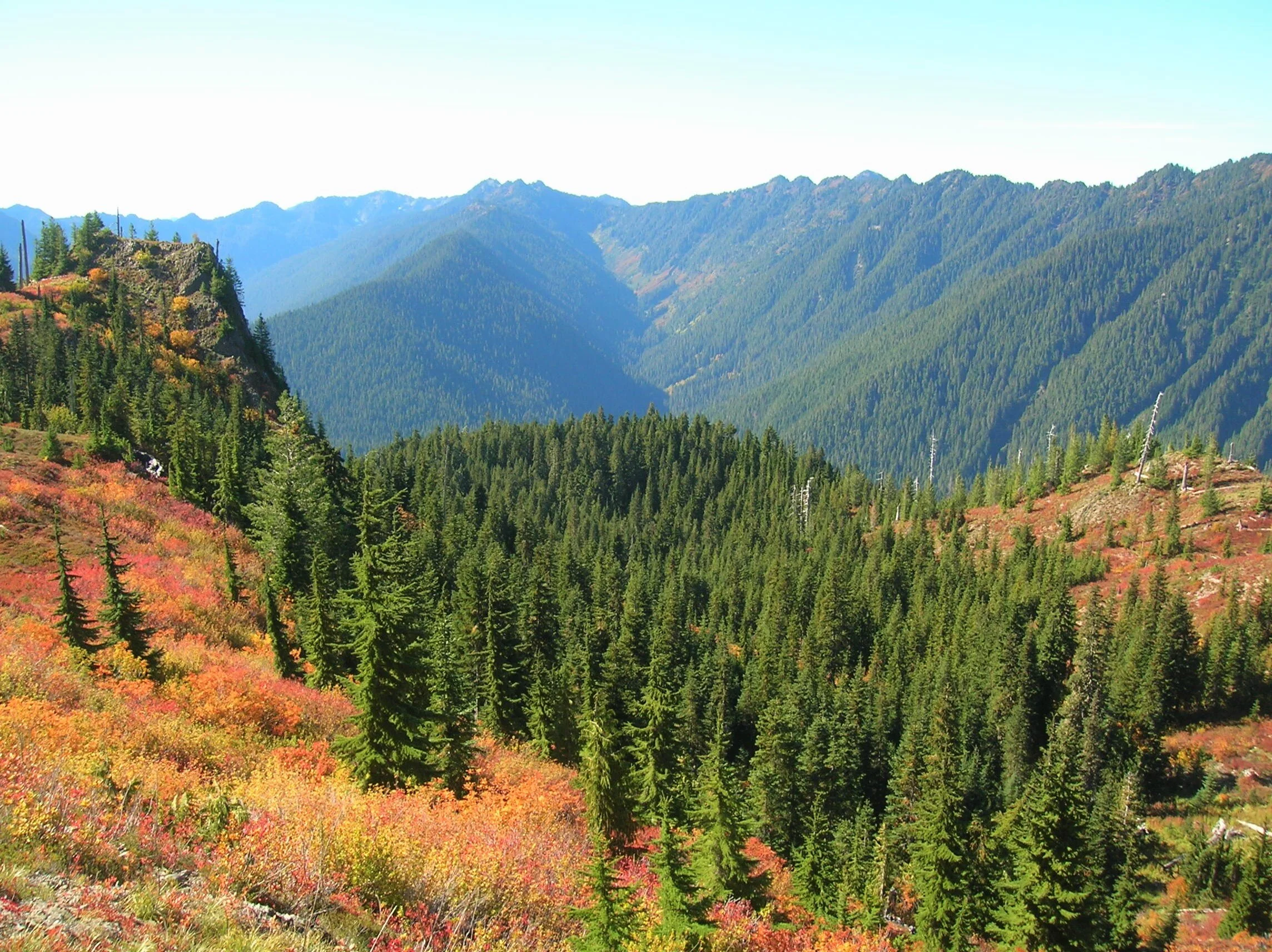
Visit the Black and White Lakes in late September and discover a surrounding landscape far from black and white. Revel instead in an alpine world of living color. The lakes sit in a basin long burned of its forest cover and since carpeted in berry bushes, mountain ashes and other shrubs that burst with brilliant hues of red, orange and yellow.
Craig Romano | Story & Pictures
Craig Romano has written more than 25 outdoor guide books including "Day Hiking Olympic Peninsula."
Visit the Black and White Lakes in late September and discover a surrounding landscape far from black and white. Revel instead in an alpine world of living color. The lakes sit in a basin long burned of its forest cover and since carpeted in berry bushes, mountain ashes and other shrubs that burst with brilliant hues of red, orange and yellow come the autumn equinox. It’s a grunt to reach them, but chance are good you won’t have too much company — unless you count gregarious ground squirrels, docile deer, and inquisitive bears.

Craig Romano Photo
Hit the Trail
While the Black and White Lakes lie on the trail less traveled, you must first hike some well-trodden paths. Start your journey on the North Fork Skokomish River Trail, which begins on an old road that was decommissioned in the 1970s. Hike through wild country, much like what U.S. Army Second Lieutenant Joseph P. O’Neil saw in the 1880s on his exploratory trips into the Olympic Mountains. But something O’Neil saw that you won’t were legendary fish runs. Before the North Fork Skokomish’s flow was dammed by Tacoma Power in the 1920s, this river was one of the largest salmon-rearing waterways on the peninsula.
Hike upstream on a wide path and gentle grade crossing several side creeks. Traverse a luxuriant bottomland of big cedars, Douglas-firs, and moss-cloaked big-leaf maples. Pass the Staircase Rapids Loop Trail and consider taking it on the return for a slight variation. After passing Slide Camp, hike across the Beaver Fire of 1985, caused by an illegal campfire during a drought and resulting in 1400 acres of old growth going up in flames.

Craig Romano Photo
The trail then pulls away from the river. At 3.6 miles, reach a junction just before Spike Camp. Now head right on the Flapjack Lakes Trail and slowly climb out of the valley along the old burn line. After a few switchbacks, the trail turns northward on a fairly gentle course. Admire a big cedar grove along the way, then cross Madeline Creek on a sturdy bridge.
The creek cascades below through a narrow ravine. Now start heading up steeper and rockier terrain and follow alongside cascading Donahue Creek. At 7.1 miles comes to a junction. The way to the right is where most folks head—to the Flapjack Lakes and Gladys Divide. You want to head left instead on the less-traveled trail.
Cross a pair of creeks, and then steeply climb, rounding a ridge to emerge at a 1936 burn site, now blanketed in berry bushes and mountain ash. After passing the log foundation of an old cabin, come to a junction with the Black and White Way Trail at 8.2 miles.
The old cabin was once part of a long mining operation here at the lakes. By the mid-1970s it had collapsed leaving only the rotting foundation behind. As you continue to hike into the lake basin, look around for evidence of old mining operations in the form of tailings, pits and cuts.

Craig Romano Photo
Now continue straight another 0.2 mile to an unmarked junction. The trail continues for one mile dropping into a forested basin housing Smith Lake. You want to go right and immediately reach the largest of the trio of Black and White Lakes. The lake is small but pretty with a couple of primitive campsites nearby. The other two lakes are not much more than pothole ponds tucked a little higher in the surrounding basin.
While the lakes aren’t stunning, the views from the open basin are—especially of the surrounding wilderness. Particularly striking is Wonder Mountain and the Three Sisters to the south, Six Ridge to the southwest, and Mount Steel to the northwest.

Craig Romano Photo
In autumn, this basin transforms into a mosaic of dazzling reds, oranges, and yellows.
So where did the name Black and White come from? There are a handful of name origin theories that include the lakes being named after a brand of whiskey, the last names of the original prospectors, and a way of describing manganese found at the site.
In any case the mining history here goes back to claims made in 1907. Copper was the original mineral mined. Getting the copper to market from this remote and rugged location however proved to be a challenge. A proposed flume was never built to help get the ore to the North Fork Skokomish Valley from where it was transported to Tacoma via roads. The mine’s claims were sold several times over the years. In the 1940s the mine’s owners dug a 200 foot tunnel. By the 1960s however mining activity had pretty much ceased at the lakes.

Craig Romano Photo
When you are ready to leave this beautiful and interesting place, retrace your steps 0.2 mile back to the junction near the old cabin remains. Then return the way you came or consider hiking out via the Black and White Way Trail. It’s a shorter route, but a knee knocker dropping more than 2600 feet in 2.2 incredibly steep miles. While the way is knee-jarring, the tread is smooth and not rocky.
The way trail ends at the North Fork Skokomish Trail at the junction with the spur to Big Log Camp. From here it’s 5.4 miles back to the trailhead via the North Fork Skokomish Trail.
Black and White Lakes hike:
Distance: 16.8 miles roundtrip
Elevation Gain: 3,800 feet
High Point: 4,515 feet
Difficulty: moderately difficult
Snow free: mid-June – Oct
Trailhead Pass Needed: National park entrance fee.
Olympic NP wilderness camping permit required if backpacking.
Notes: Dogs prohibited. No campfires above 3500 feet.
GPS waypoints: Trailhead: N47 30.968 W123 19.691
Black and White Lakes: N47 34.493 W123 20.556
Features: magnificent old-growth forest, wildlife rich backcountry lake, exceptional autumn foliage, excellent alpine views, historic mining area.
Land Agency Contact:
Olympic National Park, Wilderness Information Center, Port Angeles, (360) 565-3100, www.nps.gov/olym;
Recommended Guidebooks:
Backpacking Washington 2nd edition (Romano, Mountaineers Books)
Trailhead directions:
From Shelton, travel north on US 101 for 15 miles to Hoodsport. Turn left onto State Route 119 and drive 9.3 miles to a T intersection with Forest Road 24. Turn left, continuing on SR 119 which becomes FR 24 for 5.4 miles. Then bear right, coming to the Staircase Ranger Station in 1.2 miles and the trailhead.

5 Reasons Why Olympic National Park Should Top Your To-Do List
Even someone as determined as John Muir couldn’t have poked around every nook in the 876,447 acres of this boundless wilderness haven. Here are our 5 reasons why you can’t afford to miss it—especially if you’re a Seattleite.
This mystical winter wonderland, full of a wildly varied flora and fauna, occupies a behemoth slice of our favorite state. The Olympic National Park, with its 3,000 miles of twisting, cascading rivers and streams (some even frozen in the heart of winter), its 611 miles of switchbacking, lesser-trodden trails, and only 168 miles of road, may be more enchanting and alluring than any other place we know. Even someone as determined as John Muir couldn’t have poked around every nook in the 876,447 acres of this boundless wilderness haven. Here are our 5 reasons why you can’t afford to miss it—especially if you’re a Seattleite.
1. Meet the locals (The furry ones!)
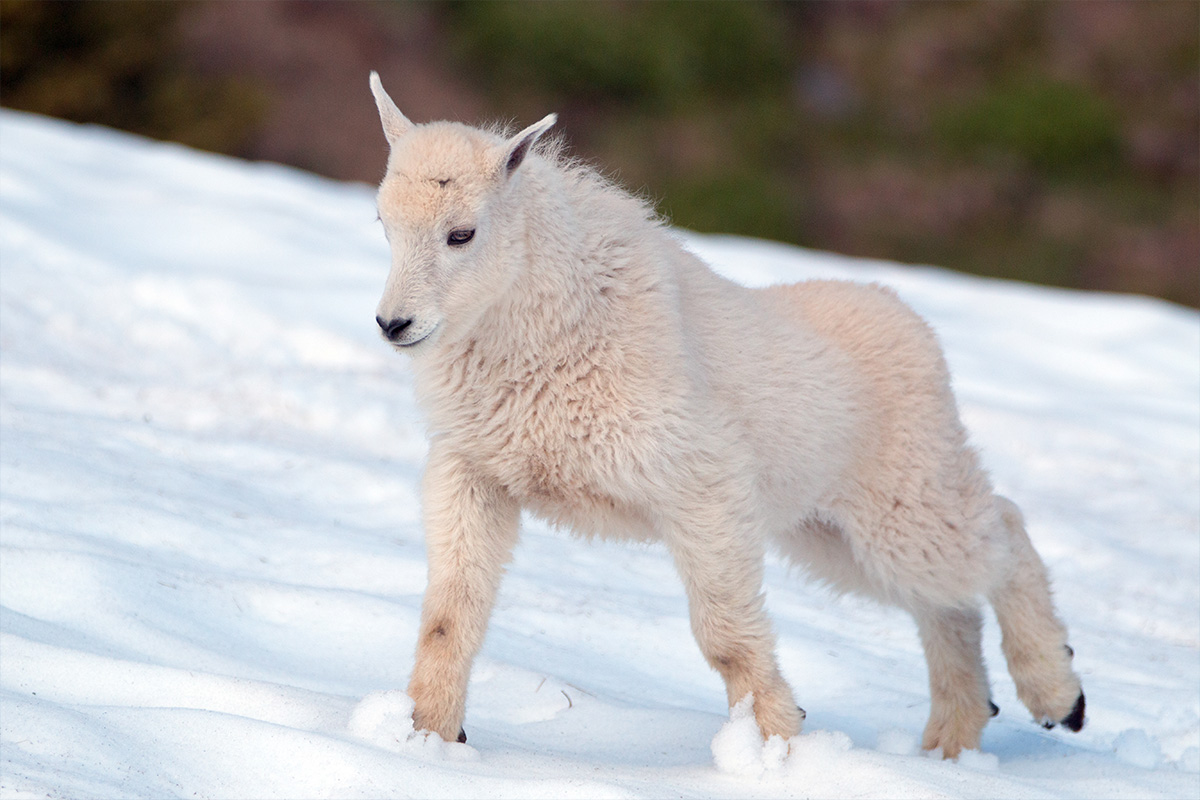
Massive bugling elk roam the dense and snowy woods while mountain goats own the craggy peaks. Over 300 species of birds soar through the skies (Washington Audubon has sketched out the perfect birder’s road trip map), and the ancient salmon runs are completing their runs as the first snow falls. That’s not to mention the infamous and somewhat legendary giant Pacific octopi that inhabit the Hood Canal–yes you heard us right.
2. Climb Mt. Ellinor in the snow
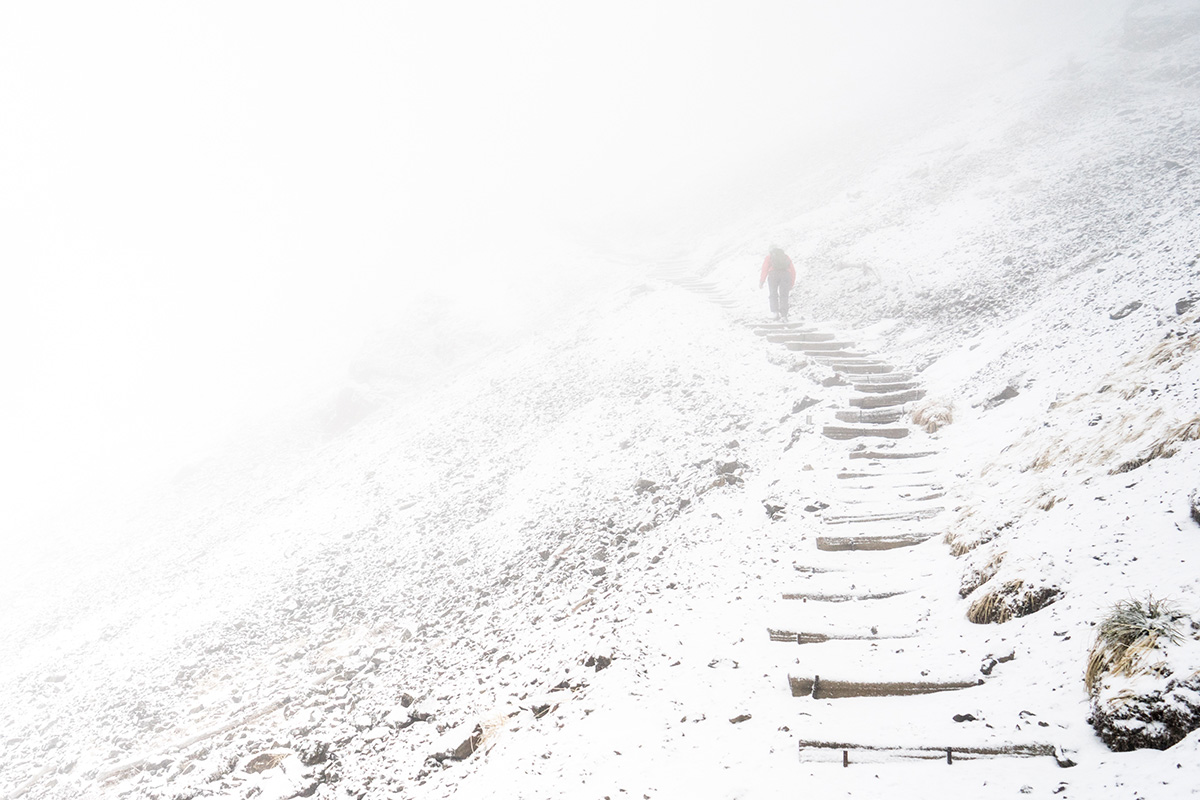
Going for the summit of Mt. Ellinor in the snow is a staggeringly beautiful experience. Meandering through quiet old growth forests and alongside craggy peaks, this hike serves up some serious views. A strenuous 6.2 miles round trip earns access to some seriously picturesque views of Hood Canal and beyond (assuming you're lucky enough to catch it on a clear day). Doable for all those with proper gear and plenty of time, it’s a must-not-miss. And that’s only one tiny slice of the 3,000 miles of beautiful trail contained within the park.
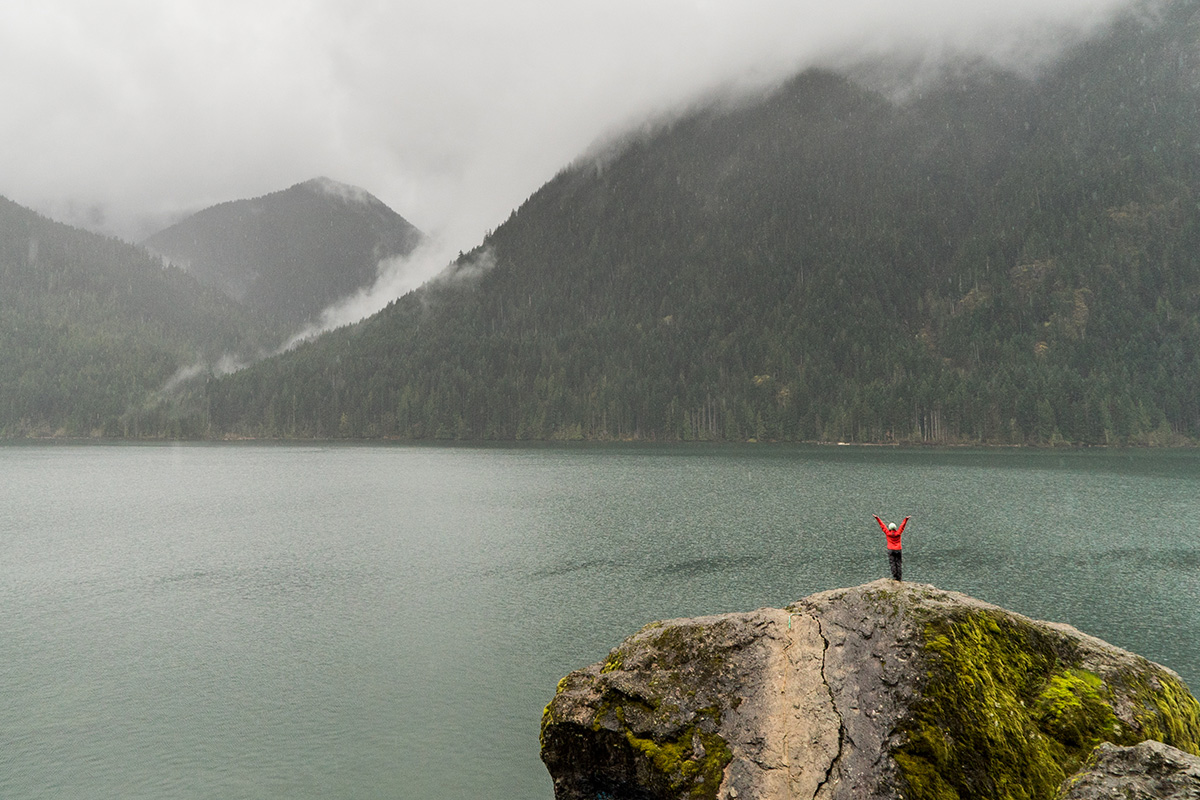
3. Climb The Big Rock at Lake Cushman
Lake Cushman, just outside the Staircase entrance to the park is host to kokanee salmon and cutthroat trout fishing in the summertime, and stunning views in the wintertime. A slew of other cold-weather activities like kayaking (with ALL of the proper gear) with Blue Horizons Paddlesports or climbing up the famed Big Rock and swearing to yourself that you'll be back during the summertime to jump off.
4. Stop for a warm up at Alderbrook Resort in Union, Washington
With all of the boundless opportunities for adventure in the Olympic National Park, face it: you’re going to be pooped (and probably cold). Lucky for you, there are a myriad places to rest your weary explorer’s head. If you’re hankering for a sojourn in a relaxing spa and a hot beverage afterwards, then Alderbrook Resort & Spa is for you! Though, if you’re feeling a quaint VRBO-style rent-a-home on a back road in the woods is up your alley then we have just the place. Click here for an extensive list of options.

5. Geting to Hoodsport is so easy
Staircase, one of the grandest entrances to the southeastern corner of the park is situated just outside of Shelton, a 45 minute drive from Olympia and two hours from Seattle. Hood Canal’s Hoodsport is an ideal launching point for an adventure in the park by way of Staircase, and the intrepid adventurers can hit the Staircase Rapids or snowshoe along the river after the snow starts to fall. With Hoodsport Coffee to properly fuel a morning’s adventure and Hardware Distillery’s handcrafted libations to cheers after a successful day tromping around the forested nooks, it’s worth checking out.
We’re convinced: life is about creating yourself. We choose to do it in one of the most beautiful places on earth. Adventure is spilling out of every nook. Plan your trip to come visit Hood Canal and the Olympic National Park.
For more adventuresome inspiration and ideas, keep up with us on Facebook, Twitter, Pinterest and Instagram.

The Mountains are calling... ANSWER!
A weekend warrior is a 21st century beast whose population seems to be exponentially growing. As the “rolley chair blues” epidemic proliferates across the Pacific Northwest, so does the drive to combat it with an epic 48-hour adventure.
A weekend warrior is a 21st century beast whose population seems to be exponentially growing. As the “rolley chair blues” epidemic proliferates across the Pacific Northwest, so does the drive to combat it with an epic 48-hour adventure.
Here’s to those who burn the midnight oil finishing up reports and rise with the birds to knock presentations out of the park. This one’s for those who are at the gym until it closes so that their lungs are ready to be filled with alpine air come Saturday morning.
For those that simply cannot wait to escape Seattle’s concrete jungle when the clock hits 5 on a Friday, we have good news: Hood Canal is waiting for you in your backyard.

How to Get to Union, Washington
The Bremerton Ferry sets sail from Pioneer Square in the heart of Seattle over 15 times a day. As it scoots around Bainbridge Island, the impressive Olympic Mountains rise ever higher off of the water as your weekend playground draws ever nearer.
A short 45 minutes from the Bremerton Ferry Terminal lands you at Alderbrook Resort & Spa. But you’re a weekend warrior—you’ll take the extra half-hour trip to Lake Cushman. Or possibly even forge on a bit further in order to get in the thick of it with a visit to Staircase in Olympic National Park.

How to Make the Most of it
Breathe in, breathe out. You made it. Waking up underneath behemoth, moss-covered, primordial-looking trees and a tangle of lacy moss is what makes it all worthwhile. And you’ve got two whole diems to carpe!
Access to the Olympic National Park is second-to-none from Staircase Campground and it just so happens that some of our favorite biking trails are just down the road. The Lower South Fork Skokomish Trail #873 is bar-none one of the best trails around.
If a two-wheeled ride is not your pick of weekend poisons, Mt. Ellinor is a short drive away. An intrepid 6 miles of trail give way to breathtaking 360 degree summit views. And, as one of the more notable peaks in the area, bagging this peak will earn some serious bragging rights.
There is a wealth of adventure waiting around every twist of trail in Hood Canal. For more ideas, check out our extensive To-Do list.

How to Celebrate in Shelton, Washington
During a weekend away, we think just about anything is cheers-worthy. The good news? There’s no lack of handcrafted libations in Hood Canal. If you’re a gin or whiskey drinker, The Hardware Distillery crafts some of the best spirits in the Northwest. Their tasting room is open from 11am to 6pm Friday through Sunday.

If you find yourself drawn to a glass of wine made with locally sourced grapes as an after-adventure drink, Walter Dacon Wines in Shelton makes some of the best wine in the area and is dedicated to Rhone and Mediterranean styles. Their tasting room is open Wednesday through Sunday from noon until 6pm.
As weekend warriors ourselves, we revere those who rise early on Saturday and Sunday to take advantage of the precious weekend freedom. We’d love to see what you get into in our neck of the woods; tag your photos on social media with #wildsideWA, and be sure to find us on Facebook, Twitter, Instagram, and Pinterest for more.