
Crossing the Bar - McMicken Island
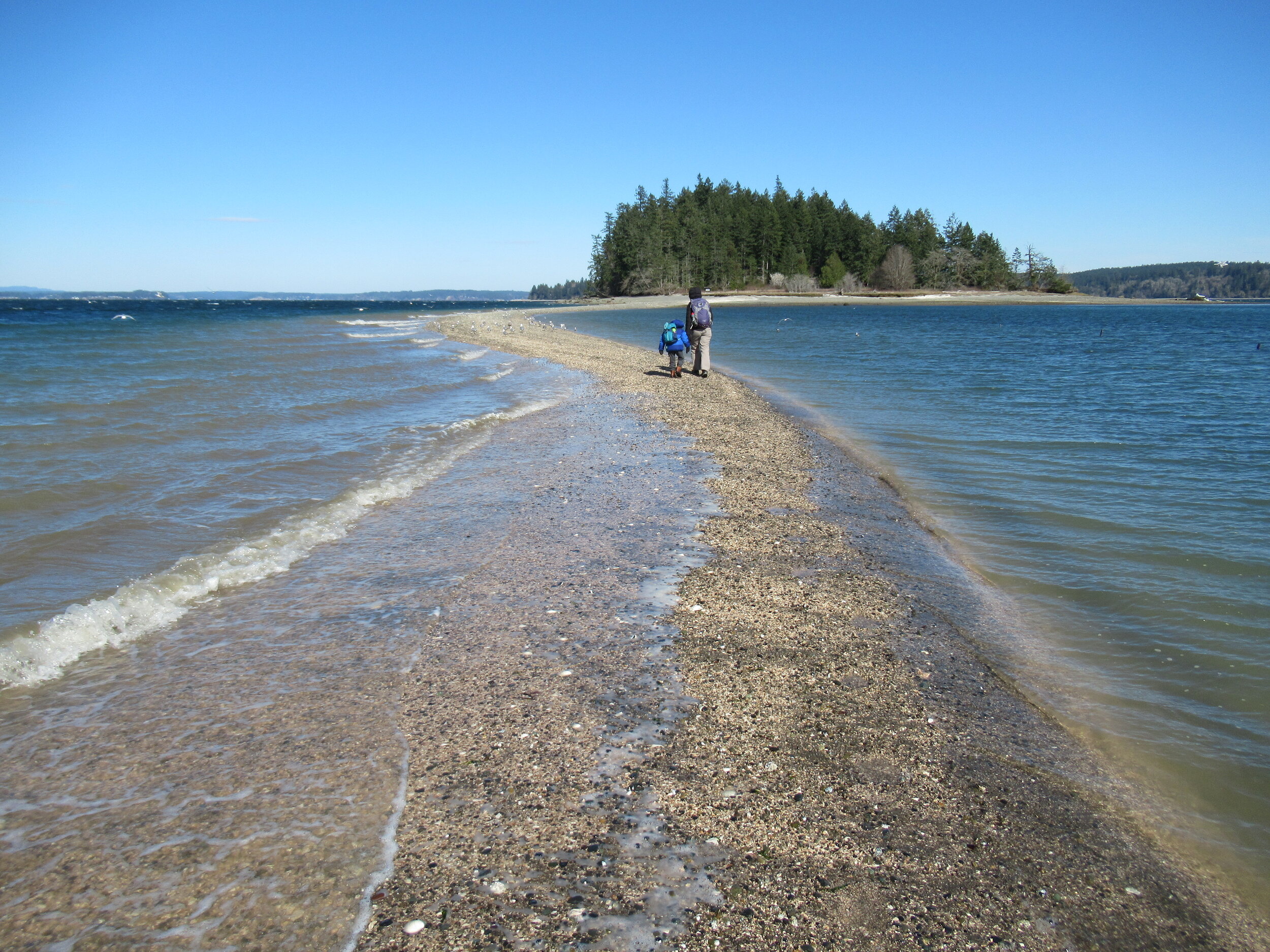
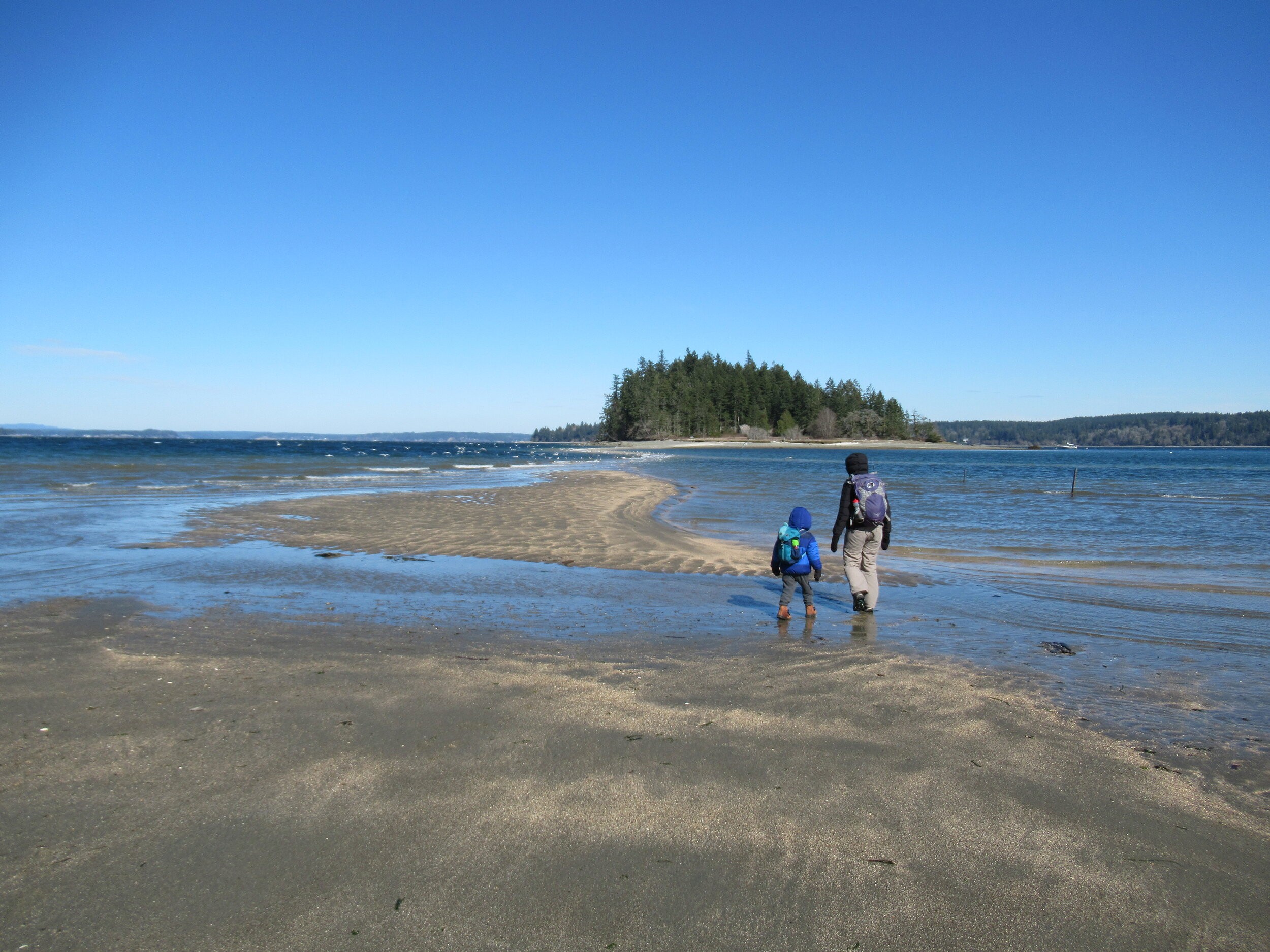
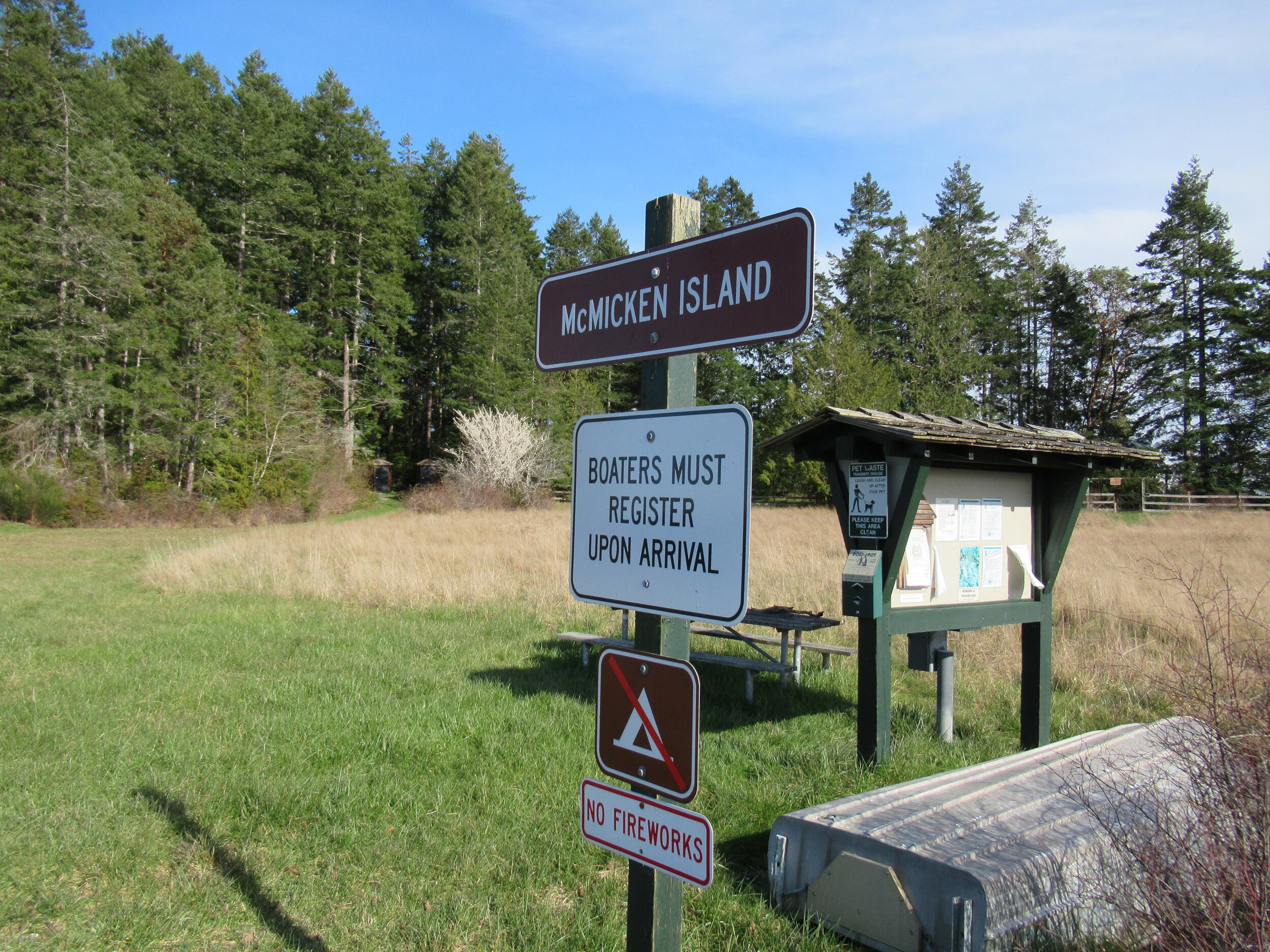
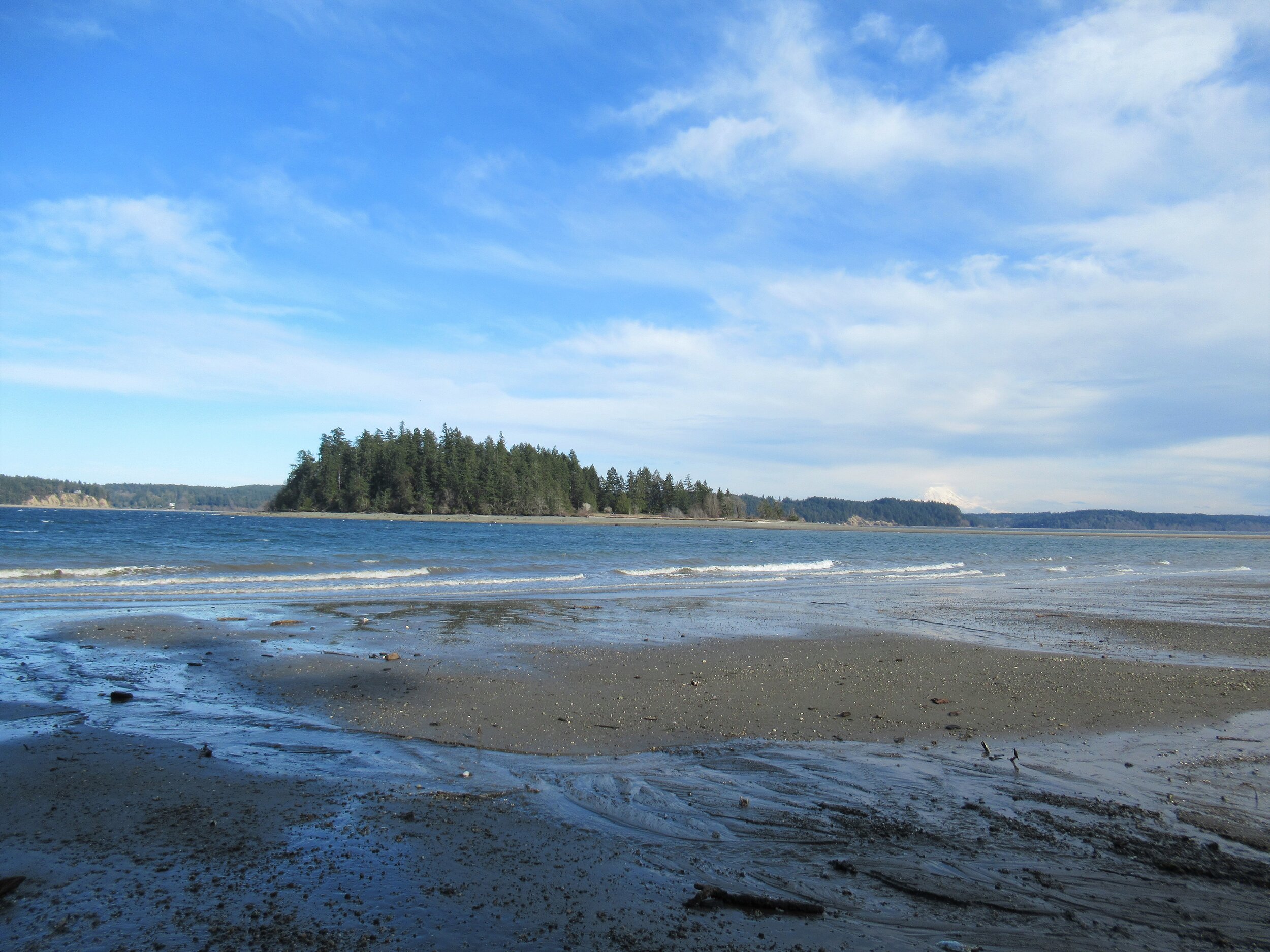
There are no bridges or causeways to little McMicken Island in Case Inlet. No ferry service either. But you don’t need a kayak or boat to visit. You can easily hike to this island which lies about 0.2 mile off of the eastern shore of Harstine Island. It’s all in the timing.
Craig Romano | Story & images
There are no bridges or causeways to little McMicken Island in Case Inlet. No ferry service either. But you don’t need a kayak or boat to visit. You can easily hike to this island which lies about 0.2 mile off of the eastern shore of Harstine Island. It’s all in the timing.

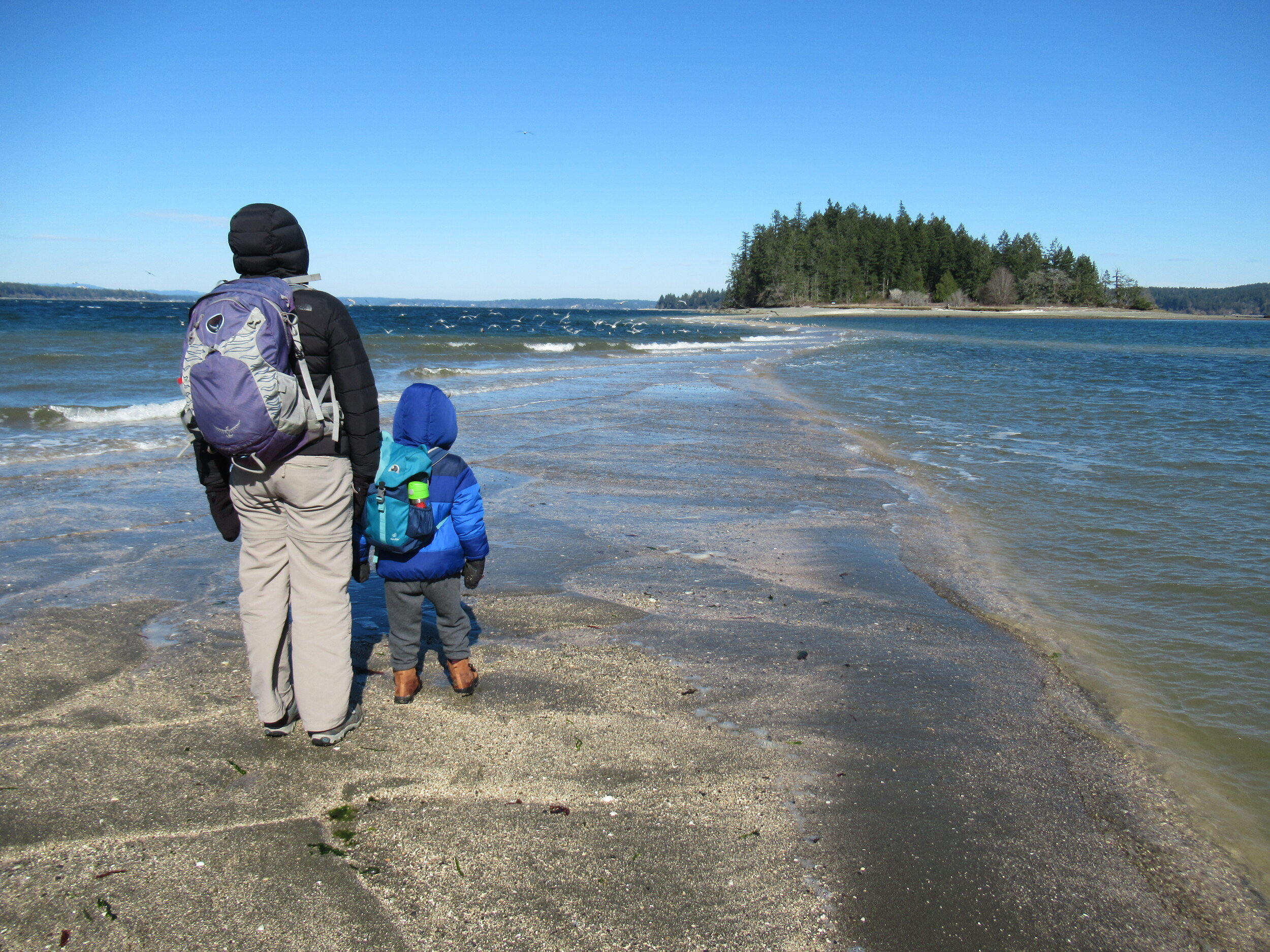
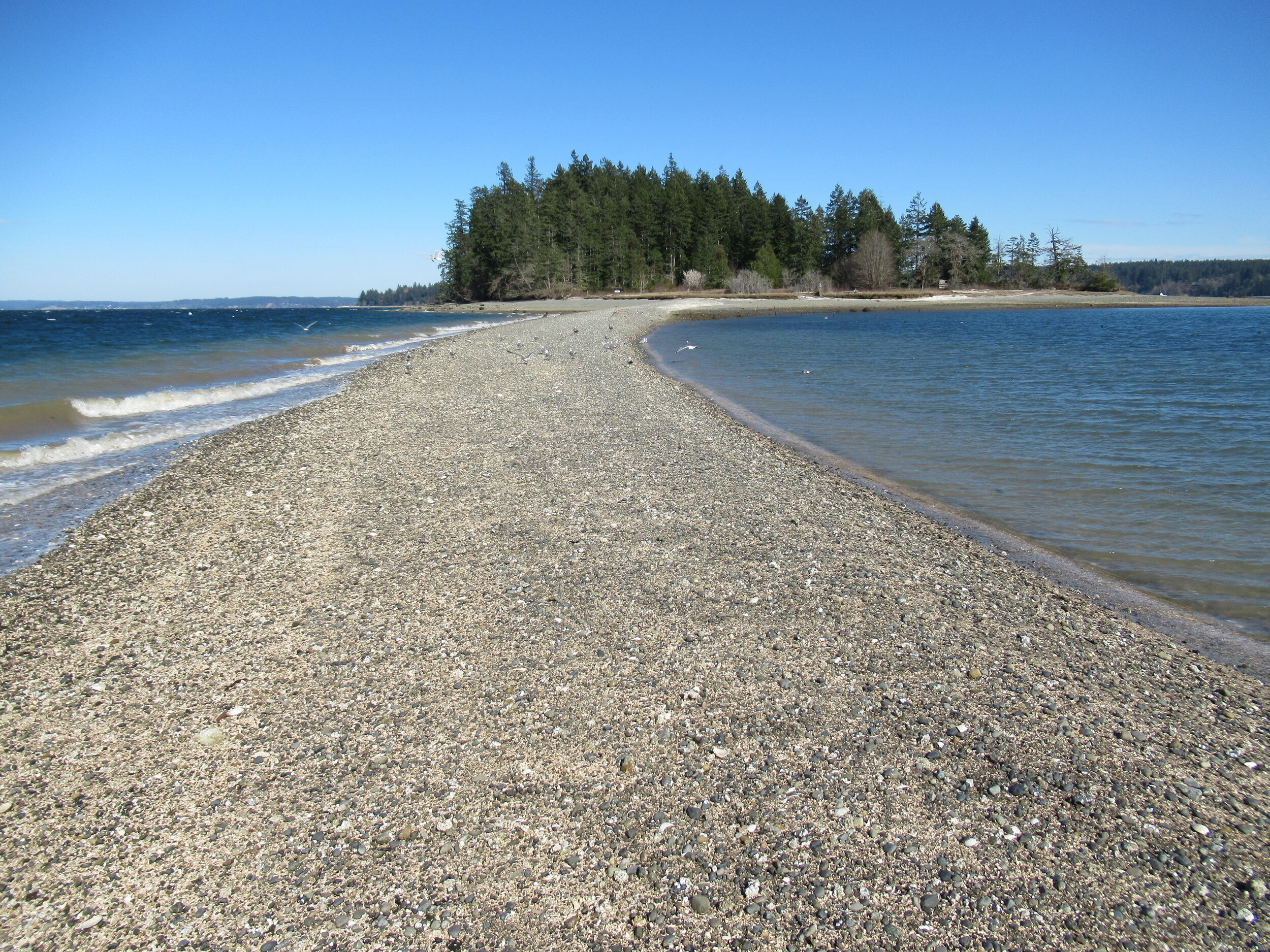
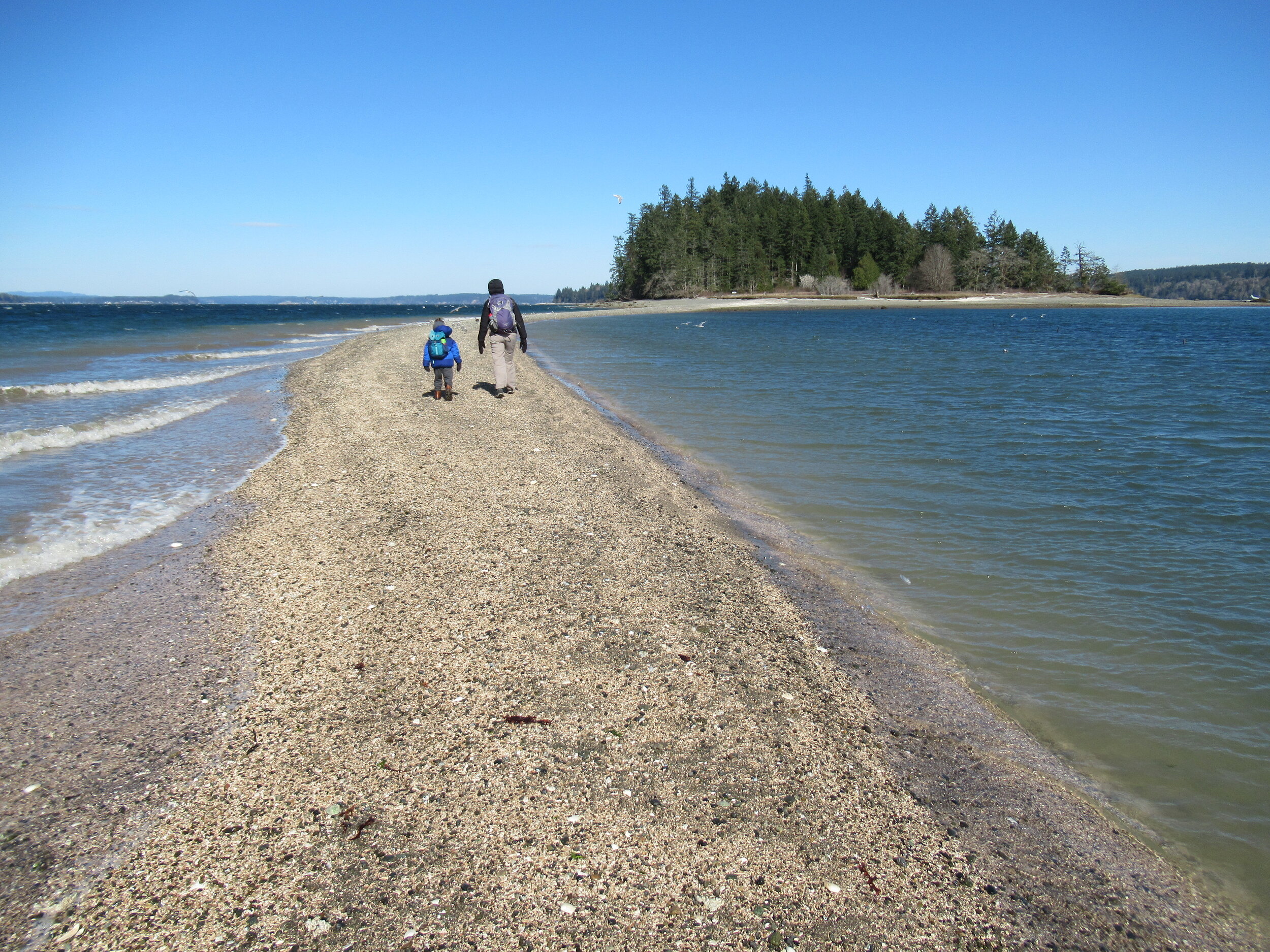
When the tide is low, a tombolo (a sandbar connecting the island to the mainland—or in this case another island) is exposed allowing you dry foot access to the island. You then can hike the island’s small half mile trail, picnic in its small meadow, or explore big barnacle-encrusted rocks in its intertidal zone. Just mind the incoming tide lest you make a big splash on your island exodus.


Hit the Trail
The hike to little 11.5 acre McMicken Island begins from the 300-acre Harstine Island State Park. A former Washington DNR property, most of the old timber was logged off, but small groves of old-growth remains on the property.
You want to head to the park’s beach reachable by the two trails taking off south from the parking lot. Take the one on the eastern end of the lot (away from the kiosk) for the more direct route.
The trail heads towards Case Inlet soon reaching the edge of a 100 foot high forested bluff. Continue along the bluff taking in glimpses of the remote beach below. The way then descends into a cool and dark ravine graced with big cedars and firs and reaches a junction.
The trail to the right loops back to the other main trail leaving the parking lot. Consider taking it upon your return from McMicken Island.
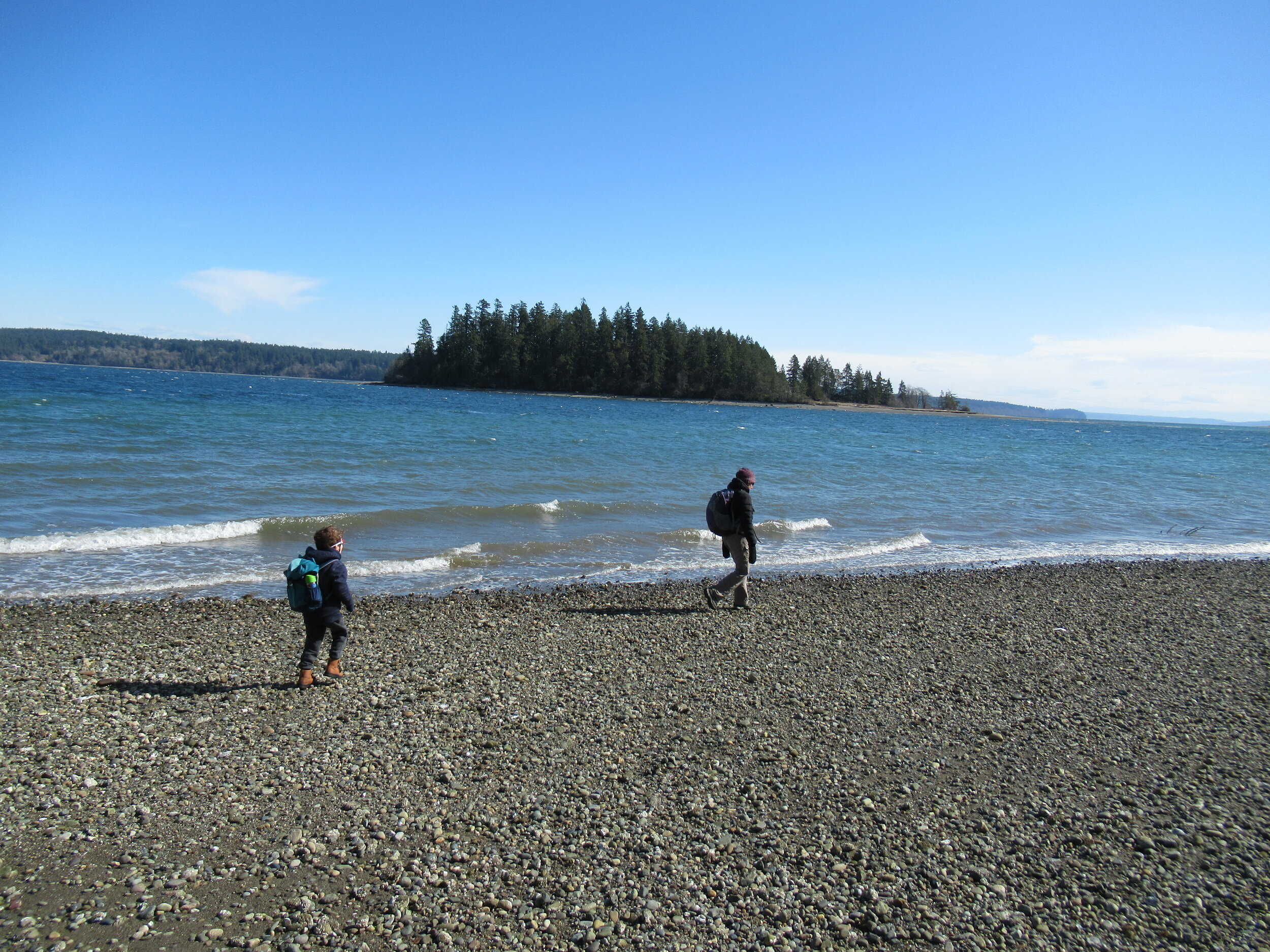
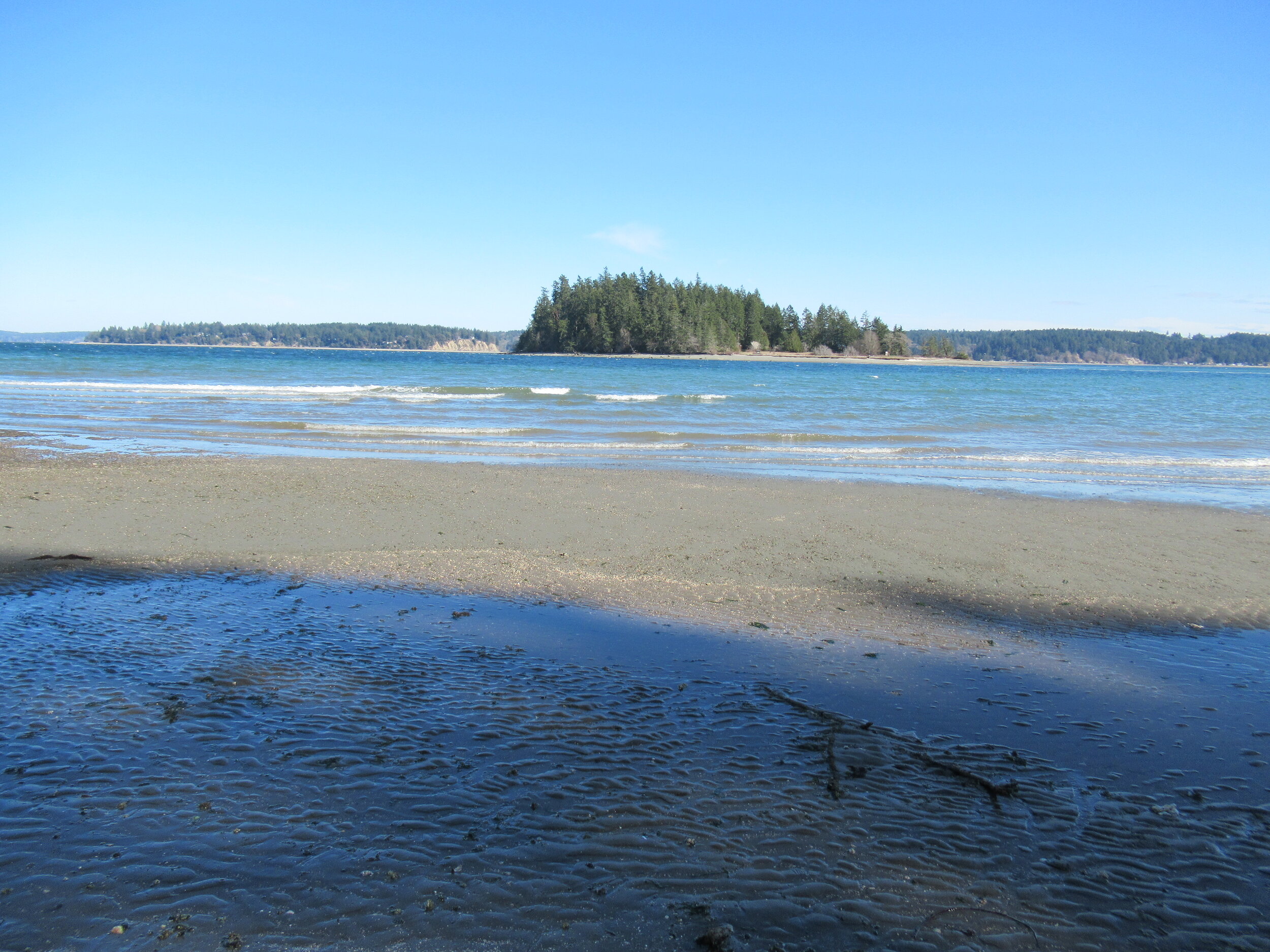
Head left through a row of big cedars and via a series of steps descend deeper into the ravine. After crossing a little creek the way emerges on a deserted beach. Look directly across Case Inlet to Herron Island and the Key Peninsula. Then look south and spot McMicken Island set against a backdrop of big beautiful Mount Rainier. If the tide is high, you’ll have to wait to hike the beach as overhanging trees prohibit passage. But in a low tide, a big wide easy to walk beach awaits your footprints.
Walk for more than a mile undulating between cobbles, mud and sand. Watch for sand dollars scatted across the tide flats. Look too for eagles, herons and a myriad of seabirds. Harstine is a wet place and plenty of side creeks fan out on the beach. You should be able to keep your shoes dry, but a pair of waterproof boots is not a bad idea. The entire way to the tombolo is on public tidelands. But there is a parcel of private property located between two large state park properties abutting the shoreline. Respect posted private property.
The tombolo is pretty distinctive in low tides—fairly wide and several feet raised above inlet waters. In high tides it’s completely submerged, although breakers will help you locate its position. It’s really fun to hike it when a receding tide first reveals it. Tap your inner Moses and part the seas watching the land bridge emerge as you amble along it.
Reaching the island
Once across the .2 mile sandy strip, reach McMicken Island. All of the little island except for a small fenced parcel with a couple of cabins is state park property. The private holding belongs to the family that once owned the entire island. They sold the island to the state withholding this small lot. Please keep out of it. The rest of the island however you are free to explore.
At the island’s western end is a small picnic area in a grassy opening. Here find some rare Garry oaks growing on a low bluff above the surf. Near a composting toilet at the eastern edge of the field is a small nature trail. Hike it! It weaves a half mile through towering firs and madronas to blufftop views on the eastern end of the island.
Be sure to explore the rocky tide flats surrounding the island too, and check out the large erratics scattered about. There is a particularly large one on the south side of the island. Enjoy your island wanderings and explorations—more than likely sharing it with no more than just a couple of other happy hikers. And be sure to keep track of the time and incoming tide so you don’t get trapped on the island.

Places to Stay
Waterfront cabin located on Harstine Is with beach access and a panoramic view of the Puget Sound, Mt. Rainier and McMicken island. Check availability
Hike back to Harstine Island State Park and call it a day or consider walking some more. The park contains three miles of trails. They traverse thick fir forests and swampy cedar groves and are family and dog-friendly.
McMicken Island Notes:

Forest Setting with Beach Access
Cross the bridge to Harstine Is. and enjoy a beautiful and quiet retreat in the woods. Relax in the comfortably furnished cabin or enjoy exploring the 5 acre property with meandering trails through a lovely forest. Check availability
Distance: 4.0 miles round trip
Difficulty: easy, pay attention to tides! Hike is only possible in low tides. Consult tide tables and plan accordingly. Dogs permitted on leash.
Trailhead Pass Needed: Discover Pass
GPS Waypoints: Harstine Island State Park Trailhead: N47 15.737 W122 52.236 McMicken Island Trailhead: N47 14.865 W122 51.780
Features: Kid and dog friendly, beach hiking, undeveloped coastline, small island reached via a sandbar, good bird watching, sublime views of Mount Rainier over Case Inlet.
Trailhead directions: From Olympia, head north on US 101 to Olympic Highway (SR 3) Exit in Shelton. Then turn and follow SR 3 east for 11.0 miles. Turn right onto Pickering Road (Signed for Harstine Island) and drive 3.3 miles. Then bear left onto Harstine Bridge Road and come to a T-junction upon entering Harstine Island. Go left on North Island Drive and after 3.0 miles turn right at the island community hall onto East Harstine Island Road. Proceed for one mile and turn left onto Yates Road. Continue 0.9 mile and turn right into Harstine Island State Park. Reach trailhead parking in 0.2 mile.
A Case Study of Islands in the Inlet
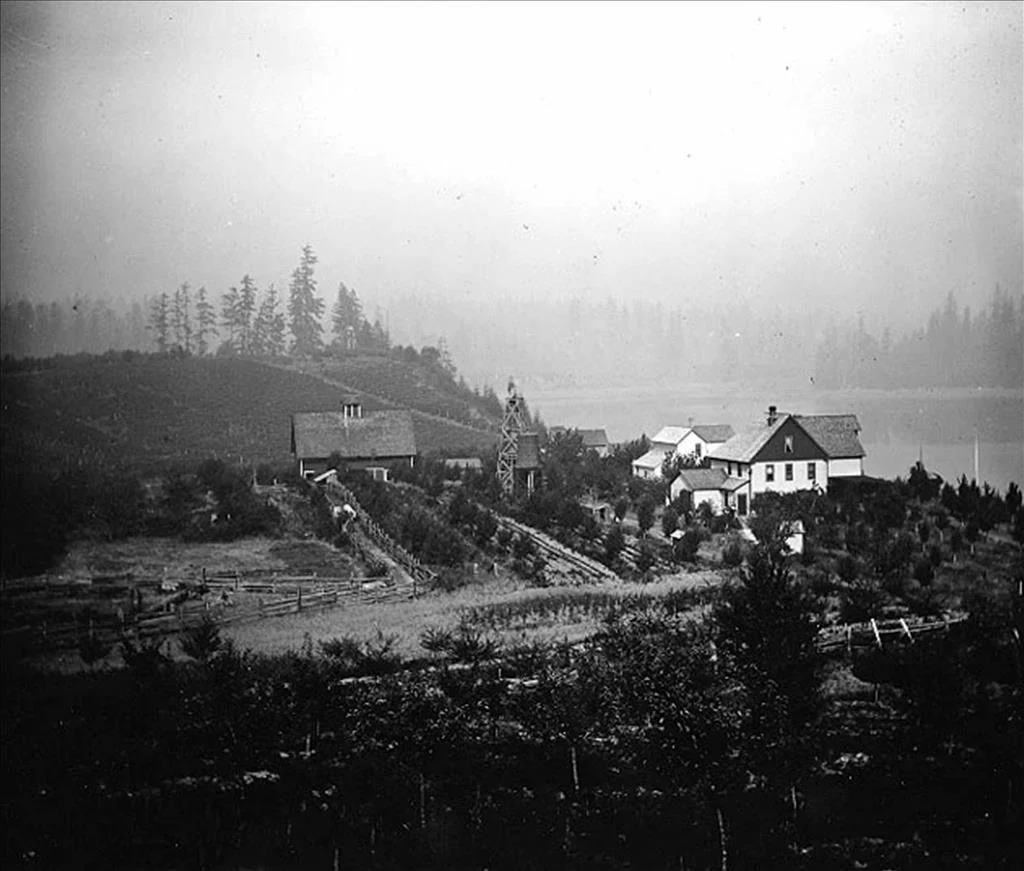
Case Inlet, at the mariner’s northeastern edge of Mason County, is home to many magical island getaways. Reach Island (AKA Treasure Island), verdant Stretch Island, secretive Herron Island, tiny McMicken Island, and Harstine Island all have interesting histories and unique characters.
Case Inlet, at the mariner’s northeastern edge of Mason County, is home to many magical island getaways. Reach Island (AKA Treasure Island), verdant Stretch Island, secretive Herron Island, tiny McMicken Island, and Harstine Island all have interesting histories and unique characters.
The water access provided by Case Inlet linked the early forestry and settlement farming of this area to Tacoma and Olympia. In the beginning Squaxin dugout canoes, row boats and temperamental sailboats were the main transportation. Small side-wheel freight ships (powered by coal, wood, and later diesel), known as the Mosquito Fleet, came to replace these early methods. They transported freight and passengers, shipped milled lumber, and even towed logs, connecting these remote communities and homesteads.
Reach Island
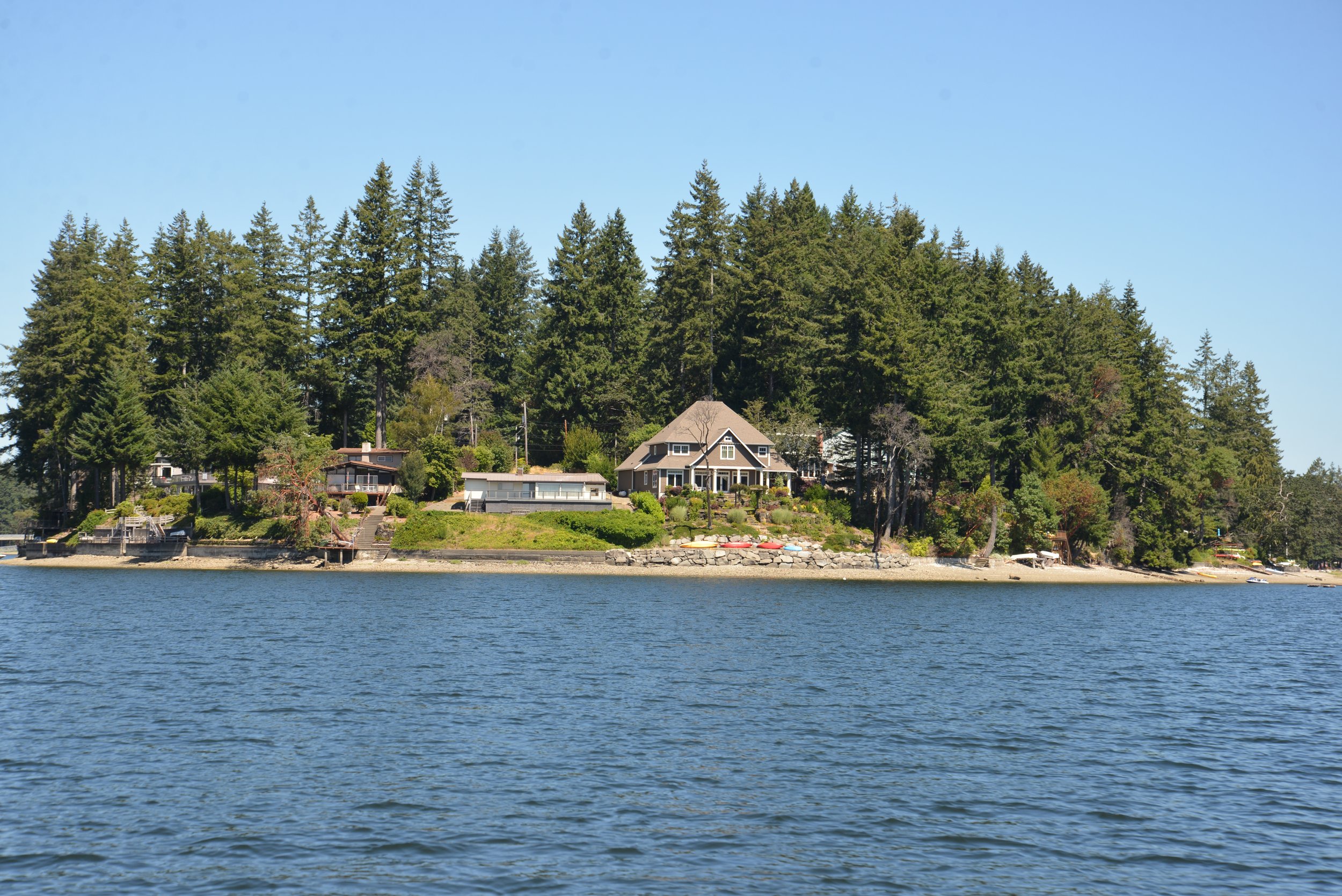
The first island we encounter heading from north to south down Case Inlet is Reach Island. The entirety of Reach Island was pre-empted and homesteaded by Joseph Pickford in 1885. By 1905, it was an established farm run by the Zizz family with cows, chickens, and fruit trees. Little farms like this were a major part of the Washington economy. Grapevines early on became important players in the agricultural scene of Case Inlet, or as it came to be known in the mid-1920s – the “grape belt of Washington.”
Stretch Island
Stretch Island saw the first efforts of grape growing on the inlet. Civil War veteran, Lambert Evans is credited with introducing the first concord grapevines to the island 150 years ago this year. Adam Eckert arriving in 1889 developed these into Washington’s own hybrid the Island Belle. This purply-red variety was hardier and ripened more successfully in the coastal climate.
Freight ships, such as the Skookum Chief would transport the Eckert Fruit Company’s fruit juice and grapes packed in round 6-pound wooden baskets to market in Shelton, Olympia, Tacoma, and Seattle.
After Adam Eckert passed away his lands and extensive grapevines were purchased by Charles Somers in 1918. Somers in partnership with his brother Frank expanded the business and began shipping to San Francisco. In 1922, the town of Detroit changed its name to Grapeview to reflect this growing resource.
In 1933, when the Federal laws known as Prohibition were lifted, Charles Somers was the very first applicant to be granted a winery permit in the 15th District (this included Washington, Oregon, Idaho, and Montana). St. Charles Winery started small with a French vintner overseeing the first casks of the only 3,000 gallons produced. Charles Somers’ sons Charles W. "Bill" Somers and Howard Somers joined the family business and by 1935 they were producing 38,000 gallons. Bill oversaw growing the fruit and harvesting and Howard (who specialized in chemical engineering at UW) took over the fermentation.

Charles Somers Vineyard
Vineyards throughout the area, especially on Harstine Island and along Pickering Passage added to their supply of grapes. In 1955, St. Charles processed over 500 tons of grapes from Mason County and another almost 300 tons from Yakima Valley. Although by 1965, the St. Charles winery had sold and the wine with it, there still exists on the Somers’ property on Stretch Island the original vine planted by Lambert Evans in 1872. Though not as popular, local vineyards still grow Island Belle and u-pick grape yards were a popular fall pastime until the 1980s. Hoodsport Winery still ferments Puget Sound Island Belle grapes. The wine is described as “a red wine bursting with flavors of fresh raspberries and cherries. A perfect wine for picnics and barbecues.”
Harstine Island
Just a little South of Stretch Island is Harstine Island. At over 18 squares miles it is the third largest island in the inland Puget Sound (after Bainbridge and Vashon), yet it is a sleepy wooded island with a population barely touching 1,500. Historically, residents were pioneer loggers (like Robert G. Jarrell of Jarrell Cove State Park fame), farmers, oystermen, fishermen and opportunistic captains (and many residents were all the above). Since the Island was only connected to the mainland in 1969 by bridge, traveling by water was very important to all aspects of life. Many famed Mosquito fleet captains lived here, building business and homes. The historic Community Hall was built in 1914.

According to the Harstine Island Community Club website, easy trees were harvested along the shores for lumber which was towed by Ed Cowan’s Levina and Raymond and John Haskell’s 40-foot launch the Marie to the sawmill at Taylor Bay.
The Community Hall held many popular dances and events with people coming by boat all the way from Agate, Stadium and Vaughn to attend. To this day it is a popular gathering spot for the Harstine community.
In 1922, the county established a ferry service crossing Pickering Passage. The 40-foot scow, the Island Belle (named for the popular grape) was their first ferry. She was built by Ira Libby of Hammersley Inlet with the help of Earl Harriman. She was designed from a ferry in operation on Lake Crescent.
With two load aprons she could carry three cars at a time, which would drive through on one end and unload on the other. She made the crossing in 30 minutes with her Fairbanks-Morse 10-horsepower engine, which drove by belt two side-paddle wheels.

She was replaced in 1929 by Earl Harriman who built his own log ferry to increase the capacity. Donette Glaser remembers that “ Earl was a pioneer of ferries. In those days, whenever we needed a new ferry Earl would tow a few logs and start building a new conveyance.” (Shelton Mason County Journal, March 26, 1959). This was soon replaced by the County’s Harstine I , and then the Harstine II in 1945 (eight car capacity).
Earl Harriman and his wife Mabel (daughter of Captain John Haskell above) were a staple of the community. Earl drove the ferry for 27 years and Mabel assisted him deck-handing when necessary. Mabel was also the chief local correspondent of Harstine Island, Pickering and Agate for the Shelton Mason County Journal for many years.
Captain Glenn Yates ran the Harstine II on her last crossing on Sunday, June 22, 1969 at 2 PM as the new Harstine bridge opening was celebrated with a parade, boat flotilla, and punch at the Harstine Community Hall. The traffic lined up on the mainland side of the bridge was further than any local had ever seen at a ferry wait. As the Captain’s wife, Carmen Yates, remarked at the time:
“The Island… saw its first major traffic jam that day. If anyone would have told me 25 years ago when I came to the island that one day I’d be involved in a traffic snarl that would take three deputies to unravel I would have just laughed at such an idea….And talk about waiting in line for a ferry How about that line that formed to go across the bridge? It extended from the bridge all the way past the ferry-landing as far as any of the longest ferry lines ever reached.” (Shelton Mason County Journal June 26, 1969).
With the new bridge, development on the island picked up as new residents and vacationers were attracted to the island life. This coincided with a popular developmental trend during the late 50s to 60s for logging companies such as Talbot & Sons Ltd. and Weyerhaeuser to revitalize their unique land holdings into private residential gated communities.
The entirety of Reach and Herron Island and the northern tip of Harstine Island experienced such development. Herron Island is only accessible by a private ferry from the Kitsap Peninsula, and you must be endorsed by a community member to visit. The development on Treasure (Reach) and Harstine Islands, however, are much more public as both are connected to the mainland by bridge and many cabins and houses in the community are available for short term rental. Much of Harstine Island offer excellent island diversions for a dat trip.
A Day on the Islands
Harstine Island is home to the Wild Felid Advocacy Center. Scheduled tours gets you right you right up close with about 50 wild cats from 13 species including a pair of tigers named Suri and Tabbi, a cougar, different leopards, and many others from five continents around the world. Visit wildfelids.org for more information on the different tours you can reserve.
On Harstine Island Jarrell Cove State Park is popular with boaters and campers alike; less developed Harstine Island Park offers tranquil beach time; and McMicken Island Marine Park offers a unique low tide hike across a tidal land bridge.
Not to be forgotten, Stretch Island has one state park which is accessible only by water. Community, history, great enterprises, and the importance of bridges all make up the waters of this meandering "Case" study on an Inlet’s islands.

