
BIRDS OF A FEATHER FLOCK TOGETHER
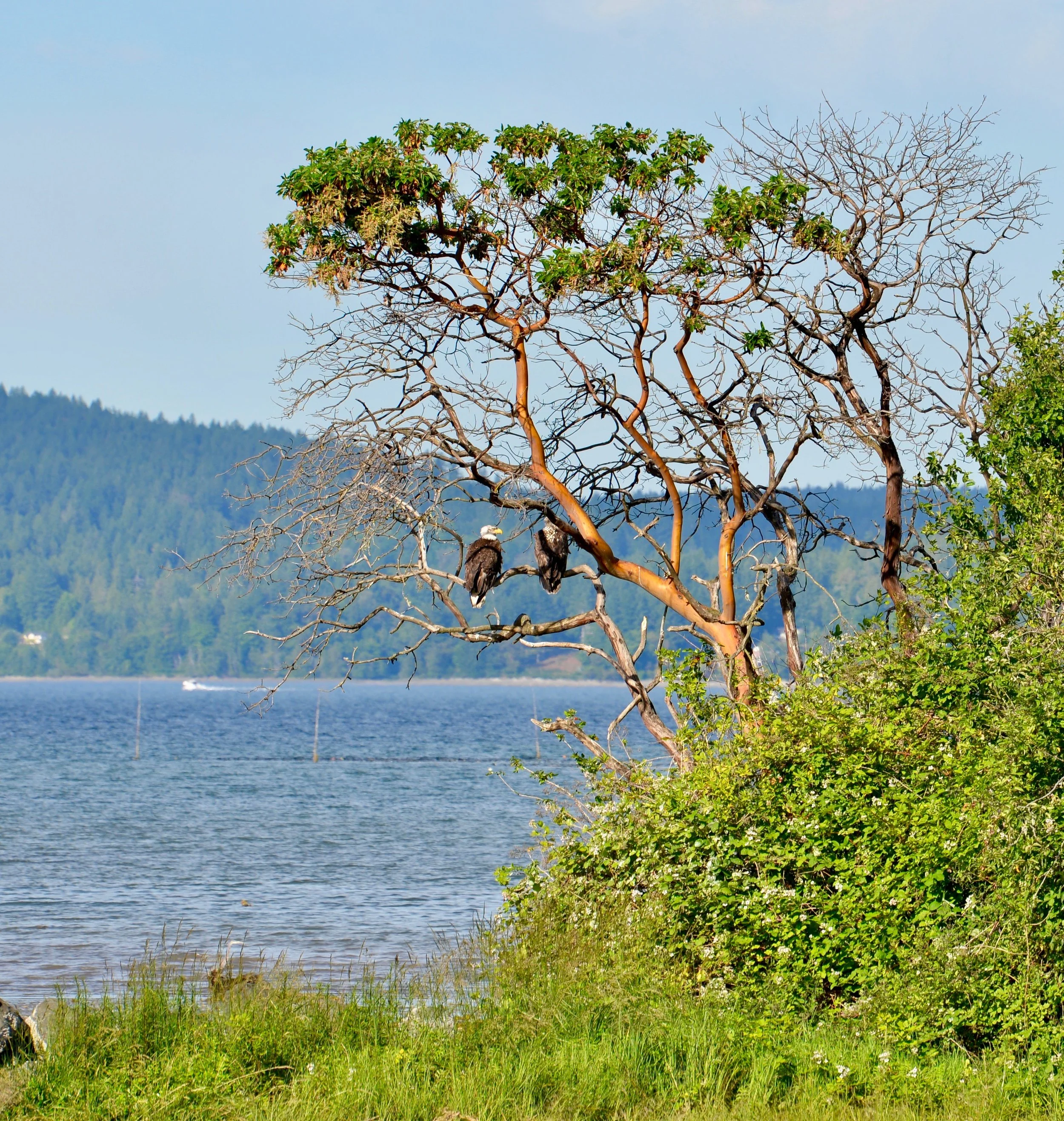
H/T Tracing The Fjord | Winter ‘25 | STELLA WENSTOB | olympicbirdtrail.com
Those folks obsessed with bird identification? Yes, birders—and they’re far cooler than the stereotype suggests.
Once caricatured as binocular-toting nerds with overstuffed packs and dubious dried banana chips, today’s birders are more likely carrying a smartphone than a color-coded guidebook. Nerdy, it turns out, is in. Modern birding trades paper for sleek apps like iBird and iNaturalist, making it easy to identify, log, and even crowdsource sightings—all while contributing to real scientific understanding.
In the Pacific Northwest, with its remarkable variety of birdlife, birding is about far more than snacks and checklists. It’s an inviting way to slow down, look up, and connect with the natural world.
Getting Started
The Audubon Society is a great place to start if you’re just dipping your webbed foot into the vast waters of birding. Their website offers a free birding app, engaging articles, and access to hundreds of local chapters—five in the Olympic-Kitsap Peninsula area alone—that host birding classes, walks, and events.
One of those events is the longest-running bird census in the world: the Christmas Bird Count. Now entering its 125th year, the count gathers data from volunteer birders across North and South America. It was developed as a replacement for the old holiday “side hunt,” a competitive tradition among hunters that focused on the most game taken over the season.
Learning From the Nest
If the weather is too nasty to head outside, stay in your nest and feather it with avian knowledge. The Audubon Society offers online courses, including interactive Zoom lectures with local experts. The Cornell Lab of Ornithology provides more in-depth, accredited bird identification courses, along with plenty of solid free basics.
The Washington Ornithological Society and American Birding Association also offer a digital, up-to-date version of A Birder’s Guide to Washington. While it doesn’t help with identification, it provides an exhaustive list of where to find species and helps plan productive birding adventures.
Birding Mason County
If you’re ready to venture out in wintery weather, Mason County is teeming with migratory and year-round resident birds. Hit the trails and start scanning the skies, vegetation, and waterways.
Pack binoculars, a scope, digital camera, or smartphone (with iBird and Audubon maps downloaded). Old-school works too—just a notepad and pencil. Wear good walking shoes and weather-appropriate clothing.
Almost every green space—backyard or state park—offers birding potential. To honor the spirit of road trips and the hallowed practice of list-making, here are a few favorite local birding haunts.
For the Birds
Hilburn Preserve
The Capitol Land Trust Hilburn Preserve, just off Highway 101 west of Shelton, features an easy half-mile loop beside the lively Goldsborough Creek. The wooded habitat is ideal for spotting woodland birds such as Red-breasted Sapsucker, Hutton’s Vireo, Pacific Wren, and Cedar Waxwing.
Bayshore Preserve
Leaving Hilburn, head east on Railroad Avenue toward downtown Shelton, then north on Olympic Highway South. Turn right onto Highway 3 (East Pine Street), which follows Oakland Bay to the Bayshore Preserve.
This Capitol Land Trust property is part of the Great Washington State Birding Trail. Oak savannas border the shoreline and Johns Creek outflow. Peregrine Falcons have been spotted perched in the oaks, while Great Blue Herons frequent the open areas. Scan the bay for waterfowl diving in warmer waters.
Mary Theler Wetlands Nature Preserve
Located just outside Belfair (22641 WA-3), this 139-acre preserve protects estuarine habitat along the Union River delta. Marshlands, meadows, forests, and tidal waters support impressive wildlife diversity.
Five trails highlight different habitats, some with views of the southern Olympic Mountains. The River Estuary Trail—built atop breached dikes—offers sightings of river otters, Belted Kingfishers, and Great Blue Herons. Pools host Northern Pintail, Green-winged Teal, Common Merganser, and a wide range of shorebirds. Bald Eagles are commonly seen.
Twanoh State Park & Skokomish River Delta
Backtrack along Highway 106 toward Hood Canal to reach Twanoh State Park. With over 182 acres of forest and shoreline, it offers both terrestrial and marine birding. The 2.5-mile inland trail is reliable for Red Crossbills and Brown Creepers.
Continuing through Union brings you to the Skokomish River delta, rich with waterfowl such as Mallard, Northern Pintail, Red-breasted Merganser, and large flocks of American Wigeon. Bald Eagles are frequent here.
Hood Canal Corridor
Heading north on Highway 101 keeps you alongside Hood Canal, with strong birding stops at Potlatch State Park, Lilliwaup Creek, Eagle Creek, and Jorsted Creek.
At Jorsted Creek, pilings from an old log dump serve as roosts for all three species of cormorants. Lacking water-repellent oils, these birds are often seen perched with wings spread to dry.
The Hamma Hamma River estuary is another productive area and home to a nearby Great Blue Heron rookery.
Dosewallips State Park
The final stop on this list, Dosewallips State Park spans more than 1,000 acres of river, estuary, shoreline, and mature forest. Known for Roosevelt Elk and curious seals offshore, it also supports a wide range of bird species.
The North Tidal Trail crosses marshes and offers excellent winter views of migrating Trumpeter Swans.
The parks and preserves of the Pacific Northwest offer outstanding birding opportunities. Birds of a feather flock together—and birders are never far behind.
For more information on fjord birding, visit olympicbirdtrail.com.